
The image of the vineyard, and this Sunday we keep it present in the entire liturgy of the Word, always leads me to think about the Church, and the (bad) treatment we give her. I can’t believe how often I hear people who call themselves Catholic make explicit statements of unfaithfulness. It usually goes something like: “I love the Catholic Church and I believe most of what She teaches. I just disagree on a few of Her positions.” (Usually the disagreements revolve around sexual morality, sins against the 6th and 9th commandments, and marriage). This is a much more serious stance than might otherwise be assumed in this age of hypersensitivity. To choose to disagree with the teaching of Holy Mother Church when one claims to be a Catholic has natural consequences that follow as surely as water flows down a stream. When people who call themselves “Catholic” pick and choose what doctrines, dogmas and articles of faith they are willing to believe, they are called by the modern world “cafeteria Catholics. God’s brightest and most beautiful angel Lucifer caught a glimpse of his own beauty and chose himself over his Creator. He was the first subjectivist, because he arrogated to himself the authority to reject God’s authority. Lucifer willfully declared, “I will not serve.” When Catholics reject one of the unchanging and unchangeable teachings of the Church, they echo the original declarative rejection. As simple as this. This is an age of disbelief, material reductionism, and subjectivism. It is increasingly difficult to give our full assent to Holy Mother Church’s teaching because they are difficult to reconcile with our modern ethos. One may rightfully object that there are many things about which men of good will can disagree, but the unchanging, dogmatic articles of faith of the Church are not among them. And this, we have forgotten. Sadly. If we are going to be authentically Catholic, we are not at liberty to dictate what Christ would have us believe. To give assent to the fullness of the Faith is an all or nothing proposition. Here there is no gray: either it is white, or it is black. Either we are with Christ, or we are not. And as that marvelous Mexican saying goes: «Whoever wants the cabbage, wants the leaves.» It is time to tell the truth, to propose it with love and firmness, without offending or trampling, and before that, to ask for humility to remain firm and loyal to our faith that we profess in the womb of our Mother: The Church that is One , Holy, Catholic and Apostolic • AE
XVII Domingo del Tiempo Ordinario (Ciclo A).
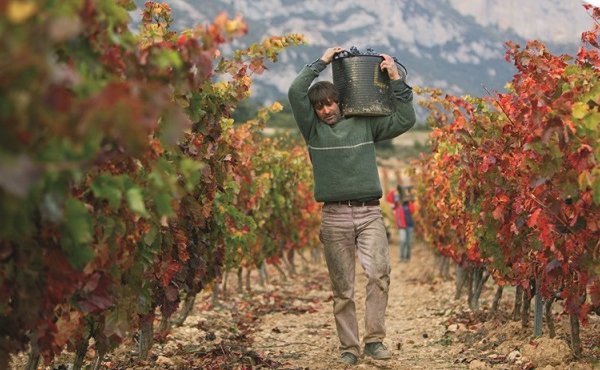
Si leemos atentamente la canción de la viña, si oímos seriamente la parábola de hoy, descubrimos que se trata de nosotros mismos, de nuestra propia historia consistente en haber recibido de Dios una serie de posibilidades que no hemos sabido aprovechar. Lo hemos recibido todo, hemos sido cuidados amorosamente por Dios, se nos han dado talentos, unas posibilidades y lógicamente se nos ha pedido, a cambio, una respuesta que no es otra sino la utilización de esas posibilidades. Nuestra respuesta ha sido deficiente, desagradecida, muchas veces rebelde. Pero a esta conclusión llegamos por nosotros mismos si sabemos oír la Palabra de Dios. La parábola en el evangelio de hoy podría ayudarnos a captar con el corazón que todo lo debemos a la donación de Dios. No somos ni independientes ni autónomos. Gratis lo hemos recibido todo y sólo somos autónomos en el agradecimiento, en la respuesta. Y esto nos lleva a un punto que cada uno ha de resolver personalmente. Estamos ante Dios y debemos responder con acción, con fidelidad, con gratitud. Debemos administrar lo dado. Primero hemos de valorarlo, luego saberlo gastar con generosidad. Solamente llevados por la gratitud podemos emplear magnánimamente lo recibido. Cada uno de nosotros tenemos una cuestión personal con Dios que es inaplazable. Nuestra vida, en el fondo, es un «conflicto con Dios»: O nos consideramos herederos que han de dar cuenta de gratitud o nos consideramos dueños de lo que nos han dado. La rebeldía está siempre escondida en nuestro interior. Espera cualquier oportunidad y la aprovecha con los mejores argumentos. A la luz de esta parábola confrontemos nuestras actitudes con respecto a Dios, con respecto a la Iglesia, con respecto a nuestra vocación. Preguntémonos en qué medida enfocamos nuestra vida como algo dado de lo que hemos de dar cuentas o como algo nuestro de lo que podemos hacer lo que nos parezca bien, a veces sin norma y sin mirar siquiera al cielo. Es muy dura y exigente la llamada de hoy. Nos pide no una conclusión de receta práctica sino un autoanálisis duro, exigente, para el que se necesita valor, y sobre todo humildad • AE

Fr. Agustin’s Schedule for October 3-4, 2020
(Twenty-seventh Sunday in Ordinary Time)
Saturday, October 3, 2020.
4.00 p.m. Sacrament of Confession & 5.30 p.m. English Mass
@ St. Peter Prince of the Apostles Catholic Church.
Sunday October 4, 2020.
10.30 a.m. English Mass @ Our Lady of Grace (Outdoors mass)
12.00 p.m. English Mass @ Our Lady of Grace (Main church)
5.00 p.m. English Mass @ Trinity University (Margarite B. Parker Chapel)



 LA MEDITACION DE LA ESPOSA