Second Sunday of Easter (or Sunday of Divine Mercy)

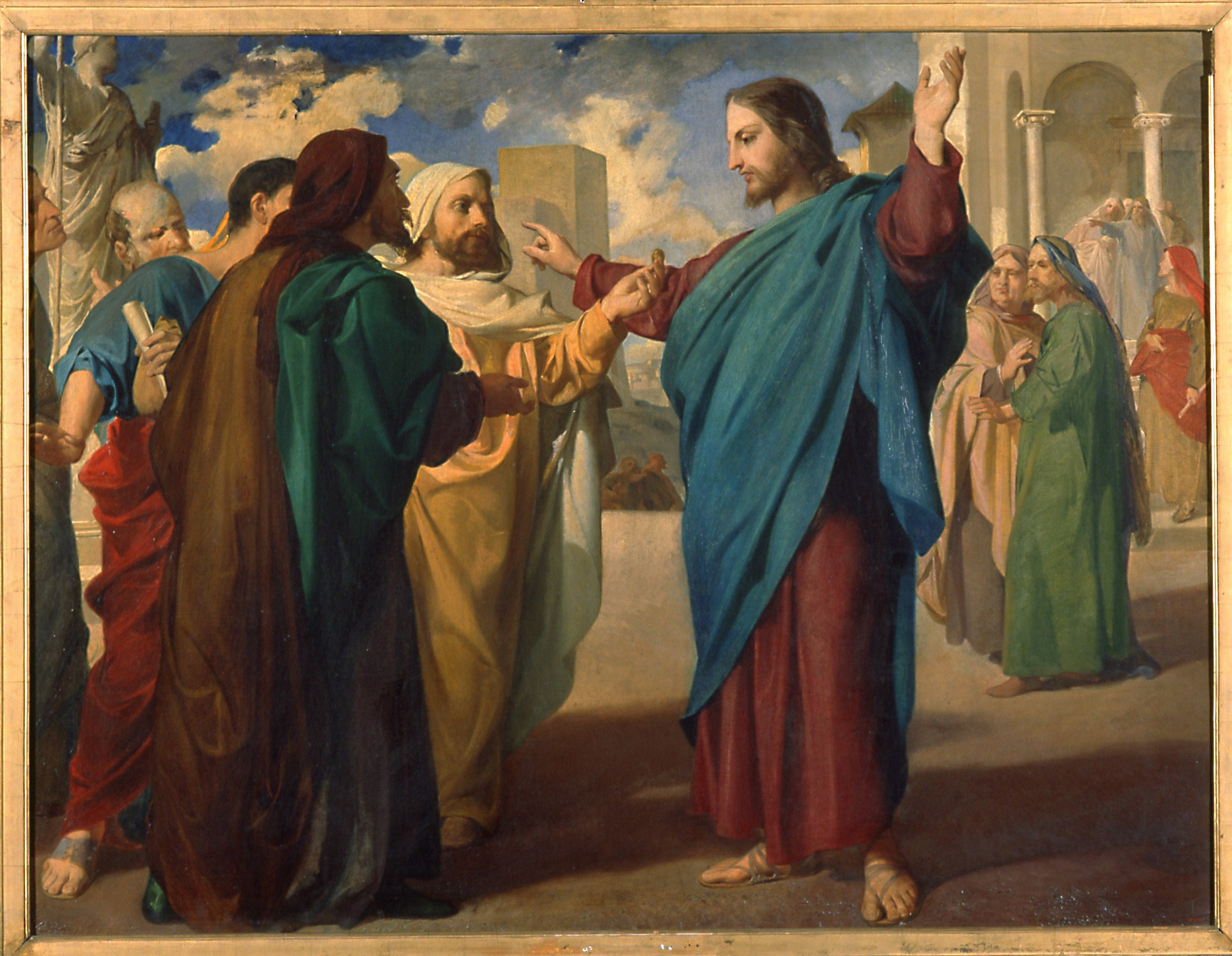
Unknown artist, Doubting Thomas, 20th century. Oil on board.

It happened behind closed doors. Not in triumph, but in fear. The disciples were gathered together, carrying the weight of everything that had just happened—the cross, the silence, the uncertainty. The resurrection had been announced, but not yet understood. And then, without warning, Jesus stood in their midst. No knocking. No explanation. Just presence. “Peace be with you.” Not as a polite greeting, but as a gift spoken into hearts still trembling. He shows them His wounds—not erased, but transformed. The marks of suffering remain, now radiant with meaning. It is one of the most tender and unsettling moments in the Gospel: the Risen Christ does not come back to erase the past, but to redeem it. Thomas was not there. And when he hears, he cannot accept it easily. He wants to see, to touch, to be certain. There is something deeply honest in that. Faith is not always immediate. It often feels like standing at the edge of something we cannot yet explain, like the quiet unfolding of Mahler’s Adagietto from his Fifth Symphony, where longing and trust slowly learn to breathe together. And when Jesus returns, He meets Thomas exactly there—not with reproach, but with invitation. “Do not be afraid. Believe.” This is how Easter continues: not in perfect clarity, but in encounters that unfold within our doubts. The mercy of God does not wait for us to be ready. It enters anyway. And once it does, nothing remains the same

Mahler’s Adagietto from his Fifth Symphony is one of the most intimate pieces ever written—quiet, suspended, almost fragile. Scored only for strings and harp, it unfolds slowly, without urgency, as if searching for something just beyond reach. Often interpreted as a love letter, it carries a sense of longing that does not rush to resolution, but learns to trust in what it cannot yet fully grasp. That is why it resonates so deeply with this Gospel: like Thomas, we stand between doubt and faith, between absence and presence. The Adagietto teaches us that sometimes the heart must remain in that tension… until it finally learns to believe


St. Joseph Catholic Church (Dilley, TX) • Weekend Schedule

Fr. Agustin E. (Parish Administrator)

Saturday, April 11, 2026

5.00 p.m. Sacramento de la Confesión

6.00 p.m. Santa Misa, Coronilla de la Divina Misericordia

y Bendición con el Santísimo Sacramento.

Sunday, April 12, 2026

8.00 a.m. Sacrament of Reconciliation

8.30 a.m. Holy Mass.

10.30 p.m. Sacrament of Reconciliation.

11.00 a.m. Holy Mass, Divine Mercy Chaplet

and Benediction with the Most Blessed Sacrament.


II Domingo de Pascua (Domingo de Divina Misericordia)

Iconógrafo anónimo, La incredulidad de Santo Tomás (La semana de Tomás), s. XVIII–XIX. Temple sobre tabla. Tradición eslava.

No fue un día luminoso. Fue en una habitación cerrada. El Evangelio de este domingo no nos lleva a multitudes ni a proclamaciones, sino a un pequeño grupo herido, reunido más por miedo que por esperanza. Han visto demasiado. Han perdido demasiado. Y, sin embargo, allí, en ese espacio estrecho donde todo parece detenido, sucede lo impensable: Jesús se hace presente. No atraviesa la puerta como quien invade, sino como quien conoce el interior del corazón humano; Jesus, lleno de ternura y de paciencia. Aparece sin pedir explicaciónes, regalando una palabra que reconstruye desde dentro: paz. No la paz ingenua que ignora el dolor, sino la que nace precisamente en medio de él. Les muestra las heridas. No han desaparecido. Permanecen, pero ya no son signo de derrota. Son memoria transformada. Tomás, ausente, se convierte en voz de todos nosotros. No se conforma con palabras prestadas. Quiere certeza. Quiere tocar. Y Jesús no lo rechaza. Vuelve, se acerca, y lo invita a cruzar ese umbral donde la duda deja de ser obstáculo y se convierte en camino. Así avanza la fe: no como una luz que lo ilumina todo de golpe, sino como una presencia que, poco a poco, nos enseña a confiar AE


Lecturas (y música) para el tiempo de Pascua


The Resurrection of the Lord (2026)

Anonymous, The Resurrection, 13th century. Illuminated manuscript leaf from a German Psalter. Berlin.

Sequence – Victimæ paschali laudes

Christians, to the Paschal Victim
Offer your thankful praises!
A Lamb the sheep redeems;
Christ, who only is sinless,
Reconciles sinners to the Father.
Death and life have contended in that combat stupendous:
The Prince of life, who died, reigns immortal.
Speak, Mary, declaring
What you saw, wayfaring.
“The tomb of Christ, who is living,
The glory of Jesus’ resurrection;
bright angels attesting,
The shroud and napkin resting.
Yes, Christ my hope is arisen;
to Galilee he goes before you.”
Christ indeed from death is risen, our new life obtaining.
Have mercy, victor King, ever reigning!
Amen. Alleluia

It began in the dark. The Gospel of Easter morning does not open with triumph or certainty, but with a quiet and fragile moment: Mary Magdalene walking toward the tomb while it was still dark. She carries grief, confusion, and love. The cross is still painfully close, and death still seems to have the final word. Yet something is different. The stone has been moved. She runs to tell Peter and the other disciple, and soon they too are running through the pale light of early morning. It is one of the most human scenes in the Gospel: two men running toward a mystery they do not yet understand. The beloved disciple arrives first, bends down, and sees the linen cloths, but waits. Peter arrives and goes straight inside. The tomb is empty. The burial cloths lie there, and the cloth that had covered Jesus’ head is folded separately, quietly resting where death thought it had triumphed. And then the Gospel tells us, with disarming simplicity, that the other disciple entered, “and he saw and believed.” They did not yet understand everything. The Scriptures had not yet fully opened before them. But faith had begun. Easter often begins this way: not with perfect clarity, but with a sudden intuition that death has not won. The joy of that discovery is something like the soaring brightness of Mozart’s Exsultate, jubilate, where the voice seems to rise effortlessly into light, as if the heart itself had learned to sing again. Dante once wrote that love is the force that “moves the sun and the other stars.” Easter is the moment when that love reveals its deepest power: it is stronger than the grave. The tomb is empty. Christ is alive. And with that discovery, the first light of a new creation begins to spread quietly across the world •

Mozart composed Exsultate, jubilate in Milan in 1773, when he was only seventeen years old. Written for the celebrated castrato Venanzio Rauzzini, the piece is a sacred motet in Latin that invites the soul to rejoice and praise God with radiant joy. The music moves with remarkable lightness and brilliance. From the opening call to rejoice to the soaring final “Alleluia,” the voice seems almost to dance, rising freely and effortlessly, as if joy itself had taken sound. It is music that feels unmistakably Easter-like: bright, confident, full of life. In the final Alleluia, Mozart captures something rare—the sense that praise is not forced, but simply bursts forth, like light at dawn. Listening to Exsultate, jubilate is like standing at the threshold of morning, when the heart suddenly remembers how to sing •


St. Joseph Catholic Church (Dilley, TX) • Weekend Schedule

Saturday, April 4, 2026

7.00 p.m. Holy Saturday At the Easter Vigil in the Holy Night of Easter

Sunday, April 5, 2026

8.30 a.m. Holy Mass @ St. Mary’s Chapel

11.00 a.m. Holy Mass @ St. Joseph Catholic Church


Domingo de Pascua La Resurrección del Señor (2026)

Secuencia

Ofrezcan los cristianos
ofrendas de alabanza
a gloria de la Víctima
propicia de la Pascua.

Cordero sin pecado,
que a las ovejas salva,

a Dios y a los culpables
unió con nueva alianza.

Lucharon vida y muerte
en singular batalla,
y, muerto el que es la vida,
triunfante se levanta.

“¿Qué has visto de camino,
María, en la mañana?”
“A mi Señor glorioso,
la tumba abandonada,

los ángeles testigos,
sudarios y mortaja.
¡Resucitó de veras
mi amor y mi esperanza!

Vengan a Galilea,
allí el Señor aguarda;
allí verán los suyos
la gloria de la Pascua”.

Primicia de los muertos,
sabemos por tu gracia
que estás resucitado;
la muerte en ti no manda.

Rey vencedor, apiádate
de la miseria humana
y da a tus fieles parte
en tu victoria santa

La Pascua comienza en silencio, antes del sol, antes de las certezas, antes incluso de que alguien entienda lo que está ocurriendo. María Magdalena camina hacia el sepulcro mientras todavía es de noche. El Evangelio insiste en ese detalle: “cuando aún estaba oscuro.” La fe cristiana nace precisamente en esa frontera entre la noche y la luz. Ella no va buscando un milagro; va buscando a Jesús, o más bien lo que queda de Él. El Maestro ha muerto y la cruz parece haber cerrado la historia. Pero al llegar descubre algo desconcertante: la piedra ha sido removida. Corre entonces hacia los discípulos, y pronto Pedro y el otro discípulo están corriendo también hacia el sepulcro. Es una escena profundamente humana: dos hombres que corren con el corazón agitado, entre el miedo y la esperanza, hacia un misterio que todavía no saben nombrar. Dentro del sepulcro no hay nada espectacular: no hay resplandor ni señales grandiosas. Solo los lienzos y el silencio. Y sin embargo, en ese silencio ocurre algo decisivo. El Evangelio lo dice con una sobriedad que atraviesa los siglos: “vio y creyó.” La fe en la resurrección comienza así, con una intuición que se abre paso lentamente en medio del desconcierto. Todavía no lo comprenden todo, todavía no saben explicarlo, pero algo ha cambiado para siempre: el sepulcro está vacío. Dante, al final de su viaje en la Divina Comedia, hablaba del amor que “mueve el sol y las demás estrellas.” La Pascua es la revelación de ese amor, un amor tan fuerte que ni siquiera la muerte puede detenerlo. Cristo ha vencido a la tumba, y desde aquella madrugada, cuando la oscuridad empezaba apenas a retirarse de Jerusalén, una luz nueva ha comenzado a extenderse por el mundo •


lEcTurAs dE pAScuA


Good Friday of the Lord’s Passion (2026)

Unknown Master, Crucifixion with the Blood and Water from Christ’s Side, c. 14th–15th century. Tempera and gold on panel. Private collection.

On Good Friday, the liturgy of the Church fixes her gaze on the Cross at Calvary, meditating on the fact that Christ has won our redemption. In the solemn ceremonies of Good Friday (the Adoration of the Cross, the chanting of the Reproaches, the proclamation of the Passion of the Lord and in receiving Holy Communion) we unite ourselves to Jesus and we contemplate our own death to sin. The liturgy, stripped of its ornaments, the altar bare, and with the door of the empty tabernacle standing open, is as if in mourning. This is a day of sorrow. No Mass is celebrated today. The desolate quality of the rites of this day reminds us of Christ’s humiliation and suffering during his Passion, therefore should be a day of profound silence, a day of penance, a day to dedicate to reflection and recollection. Good Friday is the day when the Lord consummated the redemptive sacrifice of humanity on the Cross which, from then on, would become a symbol of salvation for us Christians: Ave crux, spes unica! (Hail to the Cross, our only hope).

I am not moved, my God, to give you love

by thoughts of heaven that you’ve promised me;

nor am I moved by thoughts of dreaded hell

for that alone, to cease offending thee.

You are what moves me, Lord; I’m moved to see

you on a cross and mocked with every breath;

I’m moved to see your body racked with wounds;

I’m moved by your affronts and by your death.

I’m moved, in sum, by love for you so great

that I would love you were not heaven there,

and I would fear you, if there were no hell.

You need give me no prize to love you thus,

for even if what I hope I hoped not,

as I now love you I would love you still •


Musica para el Viernes Santo

Este video corresponde a la Celebración de la Pasión del Señor en la Basílica Vaticana, el Viernes Santo 30 de marzo de 2018. Durante esta liturgia sobria y profundamente contemplativa, mientras se descubre y se venera la Cruz, se cantan los antiguos Improperios, entre ellos el célebre Popule meus en la polifonía de Giovanni Pierluigi da Palestrina. En este texto, es Cristo mismo quien habla: “Pueblo mío, ¿qué te he hecho?” No es un grito airado, sino un lamento de amor herido. La música de Palestrina — clara, equilibrada, sin dramatismos excesivos — deja que el texto respire y que el silencio haga su obra. En el día en que la Iglesia no celebra la Eucaristía, sino que contempla la Cruz, este canto se convierte en oración, examen interior y adoración silenciosa ante el Crucificado •


Viernes Santo de la Pasión del Señor (2026)

Autor desconocido, The Good Thief, St. Gerlachus Church, Limburg (Paises Bajos).

Hay una salvación que llega en el último instante. El Viernes Santo está lleno de silencio, de abandono y de una aparente derrota. Cristo cuelga de la cruz entre dos criminales. La escena parece el final de todo. Sin embargo, en medio de ese fracaso visible, sucede uno de los encuentros más sorprendentes del Evangelio. Un hombre condenado reconoce algo que nadie más ve con claridad. Mientras otros insultan o se burlan, él mira a Jesús y dice simplemente: “Acuérdate de mí cuando llegues a tu Reino.”No pide milagros. No pide bajar de la cruz. Solo pide ser recordado. Y la respuesta de Cristo es inmediata, desbordante: “Hoy estarás conmigo en el paraíso.” Los Padres de la Iglesia veían en este momento un signo inmenso de esperanza. San Juan Crisóstomo decía que el Buen Ladrón fue el primer hombre que entró en el paraíso después de que Cristo lo abriera con su propia sangre. Mientras el mundo contempla un condenado, Dios reconoce a un creyente. Esta escena nos recuerda algo esencial del Viernes Santo: la cruz no es solo el lugar del sufrimiento de Cristo; es también el lugar donde nace la misericordia. Incluso en la hora más oscura. Incluso en el último momento. Basta una mirada de fe •


Holy Thursday-Evening Mass of the Lord’s Supper (2026)

Paulo Medina, Last Supper, 2023. Acrylic on canvas. Private collection.

On Holy Thursday, the mystery of the Eucharist is not presented as an idea, but as a gift placed into human hands. Christ takes bread, gives thanks, breaks it — and gives Himself. No spectacle. No display of power. Only words that will echo through centuries: “This is my body.” The infinite chooses to remain under the form of something fragile, breakable, and ordinary. God does not impose His presence; He entrusts it. But the night does not end at the table. It moves toward the garden. After the gift comes the invitation: “Stay here, and keep watch with me.” The Eucharist is not only received; it is accompanied. To adore is to remain. To remain is to love without distraction. Saint Thomas Aquinas gave the Church words for this trembling reverence in the hymn Adoro te devote, where faith confesses what the senses cannot grasp: sight, touch, and taste fail — yet the heart believes. The hymn does not explain the mystery; it bows before it. And in that bowing, theology becomes prayer. Holy Thursday does not ask us to solve the mystery. It asks us to kneel. To receive. And to keep watch in the quiet presence of the One who chose to remain

Adoro te devote was composed by St. Thomas Aquinas in the 13th century for the Feast of Corpus Christi, at a time when the Church sought to give poetic voice to her Eucharistic faith. The hymn is deeply theological yet profoundly personal: it moves from adoration to longing, from doctrine to intimacy. In one striking line, Aquinas calls Christ the “loving Pelican.” Drawing on a medieval image, he refers to the legend that a pelican would pierce its own breast to feed its young with its blood. For Aquinas, this became a symbol of the Eucharist — Christ giving His own life to nourish ours. The image is tender rather than dramatic: a quiet reminder that the One we adore is the One who sustains us with His own self-giving love


St. Joseph Catholic Church (Dilley, TX) • Easter Triduum 2026

HOLY THURSDAY OF THE LORD’S SUPPER, APRIL 2
6:00 p.m. Mass of the Lord’s Supper (Bilingual)
(Adoration of the Most Holy Sacrament until 10:00 p.m. @ Chapel)

FRIDAY OF THE PASSION OF THE LORD (Good Friday), APRIL 3
10:00 a.m. Los Siete Dolores de la Santísima Virgen María
11:30 a.m. Live Performance of the Passion of the Lord
(We start @ the police station and end @ St. Joseph grounds)
6:00 p.m. Liturgical Celebration of the Lord’s Passion (Bilingual)

HOLY SATURDAY, APRIL 4
7:00 p.m. The Easter Vigil in the Holy Night (Bilingual)

EASTER SUNDAY OF THE RESURRECTION OF THE LORD, APRIL 5
8:30 a.m. English Mass @ St. Mary’s Chapel
11:00 a.m. English Mass @ Church


Jueves Santo. Misa vespertina de la Cena del Señor (2026)

Autor desconocido (Matthäusmaler), La Última Cena (1425–1430), Iluminación sobre pergamino, Ottheinrich-Bibel, Bayerische Staatsbibliothek (Múnich)

Silencio cae en la tarde morada,
huele a incienso y a azahar la acera;
late Sevilla en su noche entera,
con cera viva y luna derramada.

Cristo se queda en pan consagrada,
amor humilde que el alma espera;
mientras la plaza calla y se altera
la voz del paso, lenta y sagrada.

Suena un suspiro por la saeta,
y el barrio entero contiene el llanto;
Dios se arrodilla en forma discreta.

Jueves que arde de amor tan santo:
mesa y cruz en la misma meta,
y un corazón velando en su manto.

Hay noches que no se entienden desde la luz del día. El Jueves Santo no es solo el recuerdo de una cena; es el comienzo de una entrega que no retrocede. Jesús no improvisa lo que está por venir. Sabiendo lo que le espera, toma el pan, pronuncia la bendición y se da. La Eucaristía no nace del entusiasmo, sino de una decisión libre de amar hasta el extremo. San Agustín decía que en el altar recibimos aquello que somos y nos convertimos en aquello que recibimos: Cuerpo de Cristo. No se trata solo de un gesto devocional, sino de una transformación. La Eucaristía no es el premio para los perfectos o invictos, sino el Pan que alimenta en el camino; la medicina el enfermo. No es trofeo para los fuertes, sino alimento para los que saben que necesitan ser sostenidos. Después de la cena, el silencio del huerto. El que se dio como pan pide compañía. “Velad conmigo.” El papa Francisco nos recordó muchas veces que Dios no se cansa de permanecer, que es Él quien da el primer paso y quien sostiene nuestra fidelidad frágil. La adoración nace precisamente ahí: en quedarse cuando no hay aplausos, cuando no hay emoción, cuando solo queda el amor que no huye. El Jueves Santo nos coloca frente a una pregunta sencilla y radical: ¿estamos dispuestos a quedarnos? No solo cuando todo es claro, sino cuando la noche avanza. Cristo permanece. Y espera que también nosotros aprendamos a hacerlo
Mozart compuso el Ave verum corpus en 1791, pocos meses antes de morir. Es una pieza breve, casi transparente, escrita para la solemnidad del Corpus Christi, pero profundamente vinculada al misterio que celebramos el Jueves Santo. No hay grandiosidad ni dramatismo excesivo; hay una sencillez luminosa que parece arrodillarse ante el sacramento. El texto —“Salve, verdadero Cuerpo nacido de la Virgen María, que verdaderamente padeciste y fuiste inmolado en la cruz”— une la mesa y el Calvario, la Eucaristía y la Pasión. Escucharlo en este día nos ayuda a comprender que el pan consagrado no es símbolo distante, sino presencia real del mismo Cristo que se entrega por amor. La música no explica el misterio; lo rodea con delicadeza y nos invita a adorarlo en silencio


Palm Sunday of the Lord’s Passion (2026)

K. Althoff, Palmsonntag (Palm Sunday), 2002. Watercolor and tinted paper on canvas. Private collection, Berlin.

Palm Sunday begins with branches, with acclaim, with the fragile joy of a crowd that believes it understands what is happening. But the narrative moves quickly, almost relentlessly, toward betrayal, denial, and silence. Matthew does not soften the descent. The same voices that cry “Hosanna” fade into the distance as Jesus walks a path that grows narrower, lonelier, and more exposed. What makes this Passion so unsettling is not only the suffering, but the isolation. One by one, the supports fall away. Judas hands Him over. Peter denies Him. The disciples scatter. Even the sky seems to withdraw its light. At the cross, Jesus does not speak in triumph but in desolation: “My God, my God, why have you forsaken me?” And yet, this cry is not the collapse of faith, but its deepest expression. It echoes the psalm that begins in abandonment and ends in trust. The Church has long recognized in this moment not despair, but solidarity — the Son entering fully into the human experience of distance, fear, and loss. Something of this descent is mirrored in Bach’s St Matthew Passion, where sorrow is not rushed toward resolution but allowed to unfold in its full gravity; and in another register, Dante’s journey through darkness reminds us that the path toward redemption often passes first through the experience of apparent abandonment. Palm Sunday invites us to walk with Him through that narrowing path. Not to explain it. Not to rush toward Easter. But to remain near as the story unfolds — to see how love persists even when recognition fails. The question is not whether we will carry palms. It is whether we will stay when the road leads to the cross

Bach’s St Matthew Passion sets the Gospel of Matthew’s account of Christ’s suffering to music, first performed on Good Friday in 1727. This is not just a musical retelling, but a way of entering the Passion. Bach allows the sorrow and abandonment of the Gospel to unfold slowly, helping us stay with Christ on the road to the cross rather than rushing past it toward the Resurrection


St. Joseph Catholic Church (Dilley, TX) • Weekend Schedule

Fr. Agustin Estrada (Parish Administrator)

Saturday, March 29, 2026

5.00 p.m. Sacramento de la Confesión

6.00 p.m. Santa Misa y bendición de las palmas

Sunday, March 29, 2026

8.00 a.m. Sacrament of Reconciliation

8.30 a.m. Holy Mass and palm´s blessing

10.30 a.m. Sacrament of Reconciliation

11.00 a.m. Holy Mass


Domingo de Ramos “De la pasión del Señor” (2026)

Palmas al viento, grita la ciudad,
entra el Señor sobre un asno humilde;
la gente canta, la esperanza vive,
todo parece pura claridad.

Mas pronto cambia la multitud,
calla el fervor, se enfría la voz;
el que hoy aclaman como Dios,
mañana carga la cruz en soledad.

Hosanna suena como ilusión,
mientras la noche gana el lugar;
el triunfo pasa, queda la pasión.

Seguir al Rey no es solo aclamar:
es caminar con su corazón
cuando el camino lleva al pesar.

La entrada en Jerusalén está llena de movimiento, de expectativas, de una multitud que parece haber comprendido quién es Jesús. Pero el relato de la Pasión según san Mateo nos lleva rápidamente más allá de esa superficie, hacia un terreno donde las certezas se desvanecen. La fidelidad prometida se fractura, la cercanía se transforma en distancia, y el camino se vuelve cada vez más solitario. Lo que impresiona no es solo el sufrimiento físico, sino el desmoronamiento de las relaciones. La traición no viene de los enemigos lejanos, sino del círculo cercano. El abandono no sucede de golpe, sino poco a poco. Y en medio de esa desolación, el grito de Jesús en la cruz no es el final de la confianza, sino la expresión más radical de una fe que se mantiene incluso cuando todo parece perdido. La tradición espiritual ha visto en este momento no solo la historia de Cristo, sino el espejo de toda vida humana que atraviesa la oscuridad sin entender su sentido. Como en tantas páginas de la literatura que exploran el descenso antes de la redención, el paso por la noche no es negación del amor, sino su prueba. El Domingo de Ramos nos sitúa en ese umbral. No solo para acompañar el inicio, sino para recorrer el camino completo. Porque el verdadero desafío no es aclamar al comienzo, sino permanecer cuando la historia se vuelve incomprensible


¿Qué Lees?