Fifth Sunday of Easter (Cycle A)

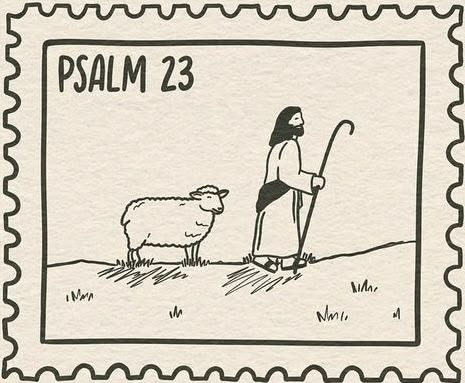
There is a question that sounds simple but is not: why is Christ the way? Not a way, not one option among many, but the way. Because if that is true, then everything changes. We often imagine “the way” as a set of directions—a path we must figure out, a sequence of right decisions. But the Gospel of this Fifth Sunday of Easter breaks that idea completely. Christ does not give directions; He gives Himself. “I am the way.” Which means the path is not something outside of Him—the path is Him. And that matters, because a set of directions can be misunderstood or ignored; a person must be encountered, followed, stayed with. That is why Christianity is not primarily about knowing what to do, but about knowing who to remain with. Christ is the way because He actually leads to the Father—not in theory, but in reality. His life is the path, His obedience is the path, His cross is the path—not because suffering is the goal, but because love that gives itself completely is the only thing that reaches the Father. And that love has a concrete form: to love as Jesus loves, to forgive as Jesus forgives, to serve as Jesus serves, to sacrifice as Jesus sacrifices—that is what makes Him the way. This cannot remain an idea; it must be lived. Which is why the way is not self-designed. It has a shape: it looks like forgiveness when it would be easier to close off, like truth when it would be easier to adjust, like fidelity when it would be easier to walk away. And none of that is invented—it is received and lived within a communion that Christ Himself has given, His Church. Not perfect, not always easy, but real. Because without that, “the way” becomes whatever I decide it is—and then it stops leading anywhere. So the question is no longer “what is the right path?” but “am I actually walking with Him?” Close enough to be led, close enough not to get lost. Because Christ is the way not because He explains life, but because He is the only life that reaches the Father •

This piece has accompanied Christian prayer for centuries, its name is “Jesus Bleibet Meine Freude”, is part from a cantata by Johann Sebastian Bach. Written for the liturgy, its title—“Jesus remains my joy”—is not simply poetic, but a statement of faith. In a world marked by uncertainty, this music expresses a quiet certainty: that what sustains the Christian life is not having everything resolved, but remaining in Christ. And if He is the way, as we have heard, then He is not only the one who leads, but the one who sustains us along the path •


St. Joseph Catholic Church (Dilley, TX) • Weekend Schedule

.

Fr. Agustin E. (Parish Administrator)

Saturday, May 1, 2026

5.00 p.m. Sacramento de la Confesión

6.00 p.m. Santa Misa.

Sunday, May 2, 2026

8.00 a.m. Sacrament of Reconciliation

8.30 a.m. Holy Mass.

10.30 p.m. Sacrament of Reconciliation.

11.00 a.m. Holy Mass.


V Domingo de Pascua (Ciclo A)
A veces la vida no se rompe de golpe. Simplemente se va llenando de decisiones, de pendientes, de pequeñas incertidumbres que no terminan de resolverse. Todo sigue funcionando… pero por dentro aparece una pregunta que no siempre sabemos formular: ¿hacia dónde voy realmente? No en teoría, sino en lo concreto de cada día: en lo que elijo, en cómo respondo, en lo que permito y en lo que evito. Y entonces, casi sin darnos cuenta, la fe puede convertirse en una búsqueda constante de claridad: entender más, asegurar mejor, controlar el rumbo. Pero el Evangelio de este Domingo no entra en ese juego. No ofrece un mapa, ni un método, ni una serie de pasos bien definidos. Hace algo más radical: desplaza el centro. No se trata de encontrar un camino claro, sino de reconocer a quién seguir. “Yo soy el camino.” No como una frase bonita, sino como una afirmación que cambia el modo de vivir. Porque entonces el problema ya no es la falta de dirección, sino la distancia. No se trata tanto de ver con claridad, sino de permanecer cerca. Y eso tiene consecuencias muy concretas. Permanecer en Cristo no es una idea abstracta ni un sentimiento difuso. Se vuelve visible en la forma en que uno vive: en la paciencia cuando sería más fácil cortar, en la verdad cuando sería más cómodo ajustar, en la fidelidad cuando todo invita a moverse. Amar como Él, perdonar como Él, servir como Él, incluso cuando cuesta—ahí el camino deja de ser una teoría y toma forma. La fe, entonces, no consiste en tener todo resuelto, sino en mantenerse—con una cierta sencillez y una cierta firmeza—dentro de esa relación. No porque todo esté claro, sino porque Aquel que conduce no se equivoca. Nunca •

Esta pieza de Jean-Philippe Rameau -“Tendre Amour”, de la ópera Les Indes galantes– es una maravilla. Nacida en el contexto refinado del barroco francés, explora la delicadeza del afecto, la belleza del amor expresado con elegancia y medida. Y, sin embargo, al escucharla desde lo que venimos reflexionando, adquiere otra profundidad. Porque el cristianismo no niega el amor humano, pero lo purifica y lo conduce más lejos. Si Cristo es el camino, entonces también lo es en la forma de amar. No cualquier amor, no un amor a la medida del sentimiento o de la conveniencia, sino un amor que aprende a permanecer, a entregarse, a sostenerse en el tiempo. Esta música, con toda su ternura, se convierte así en una puerta: no hacia un ideal romántico, sino hacia una pregunta más exigente—¿cómo está siendo formado mi modo de amar?


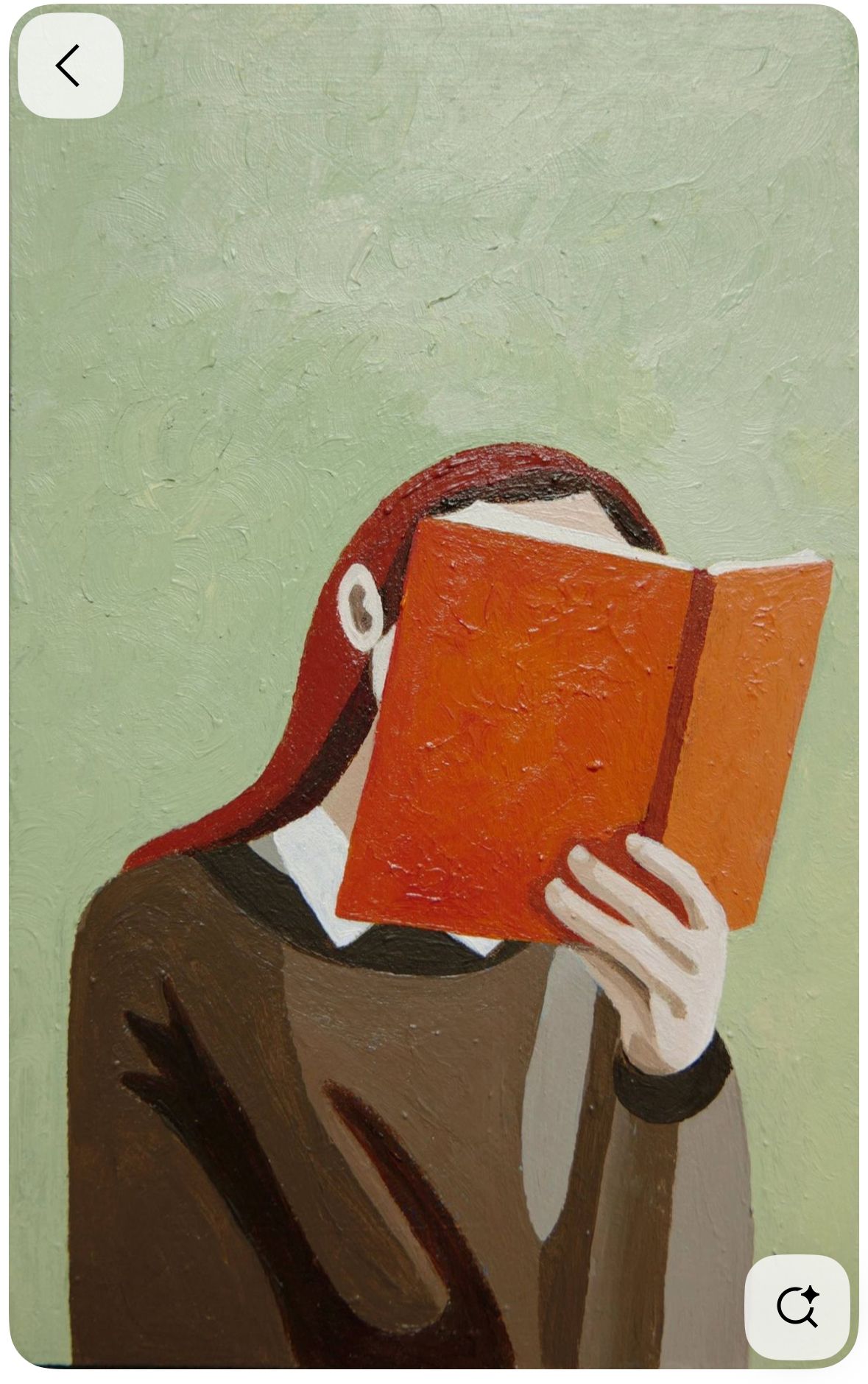
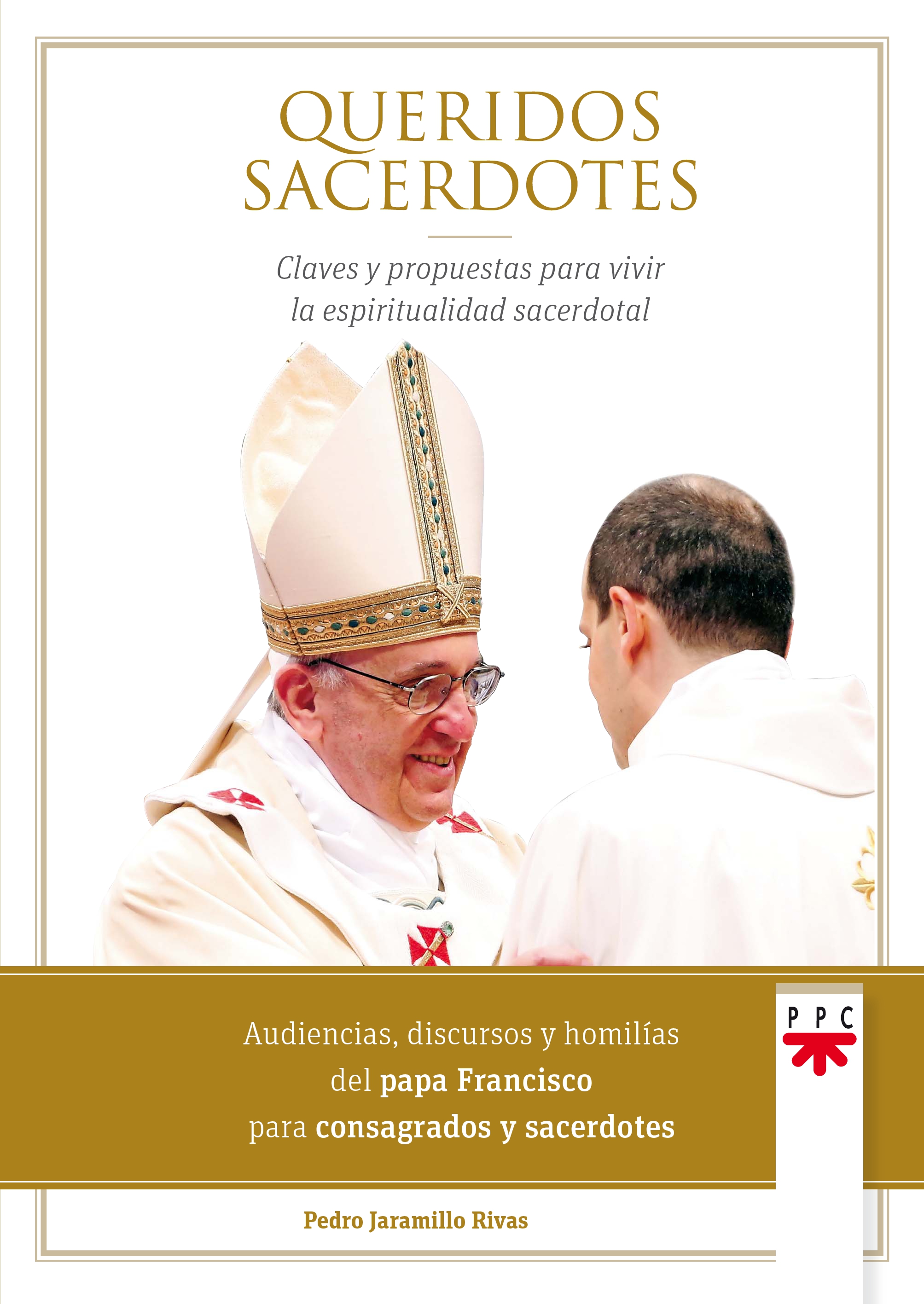
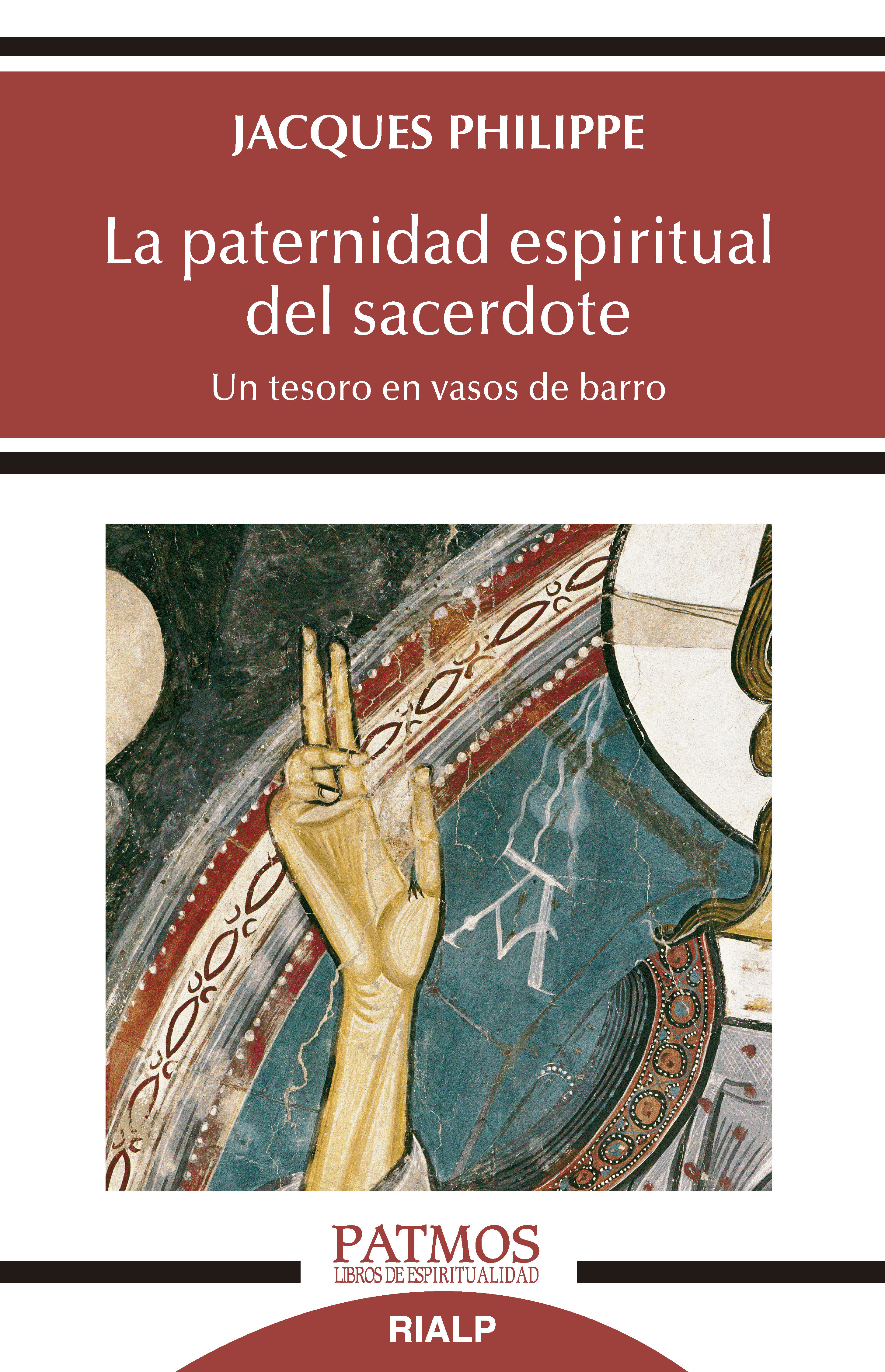
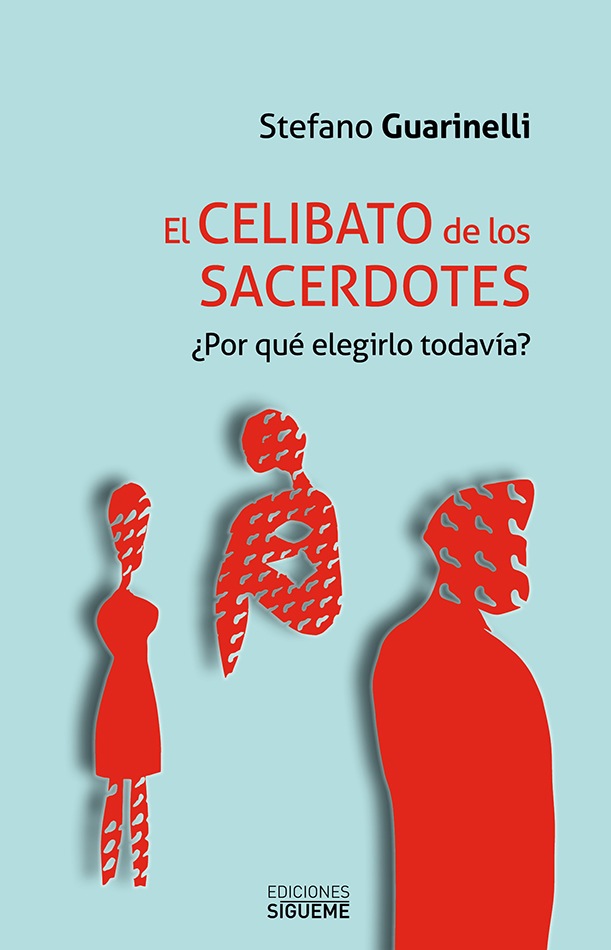
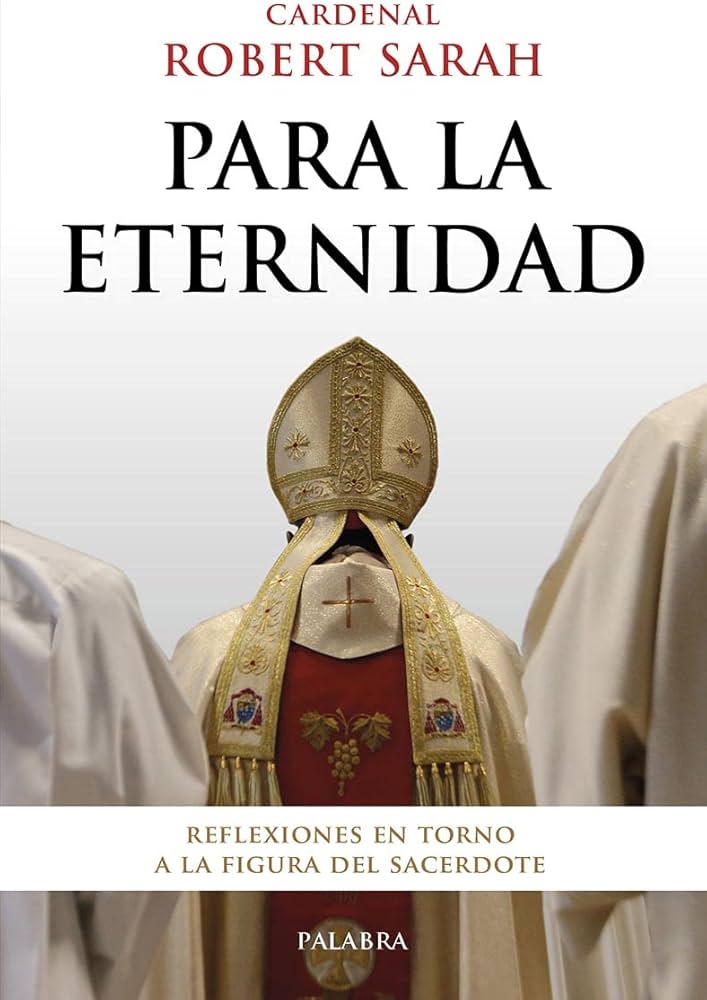
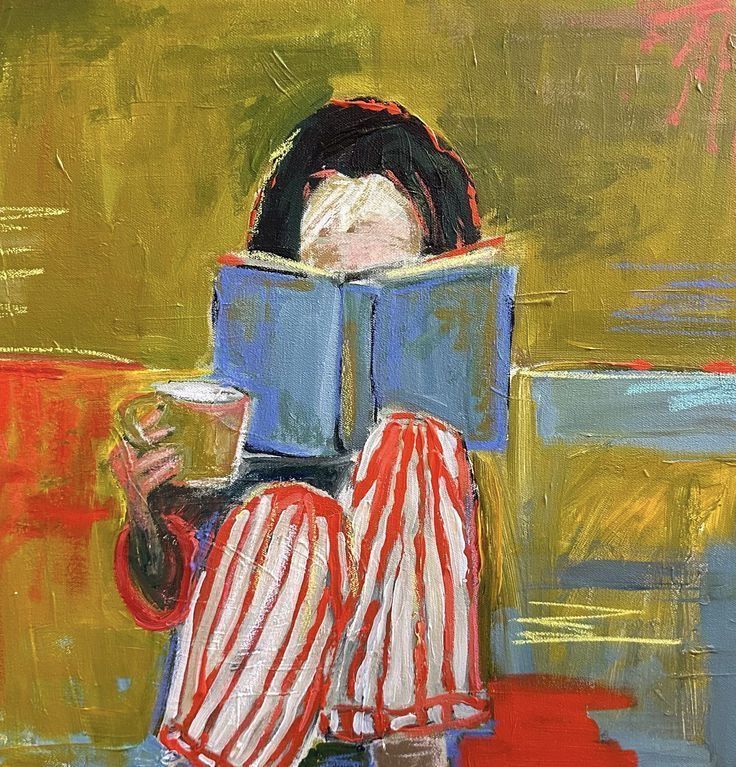
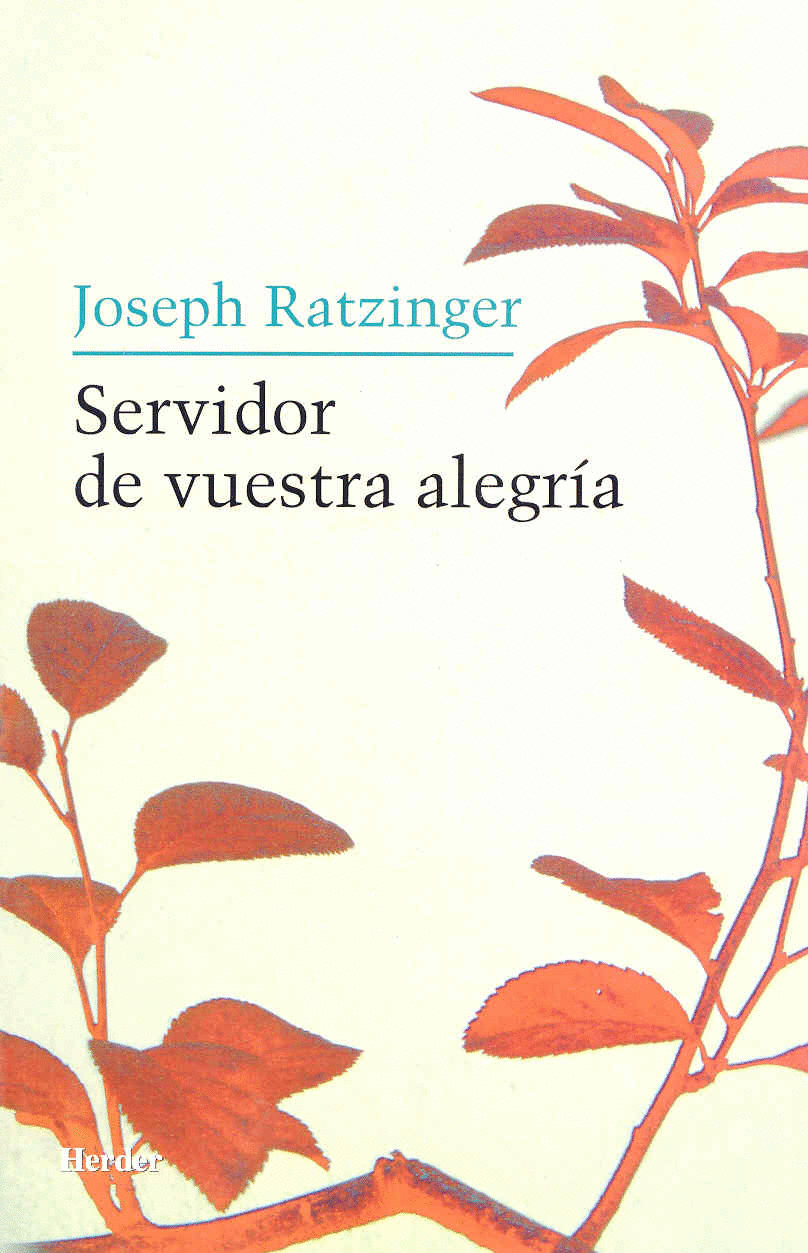
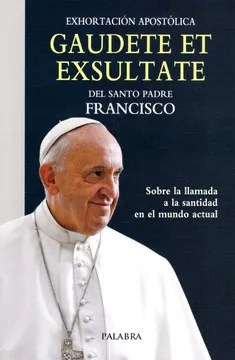
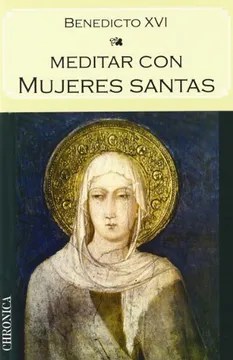
Y tú, ¿qué lees estos días?


Fourth Sunday of Easter (Good Shepherd Sunday)

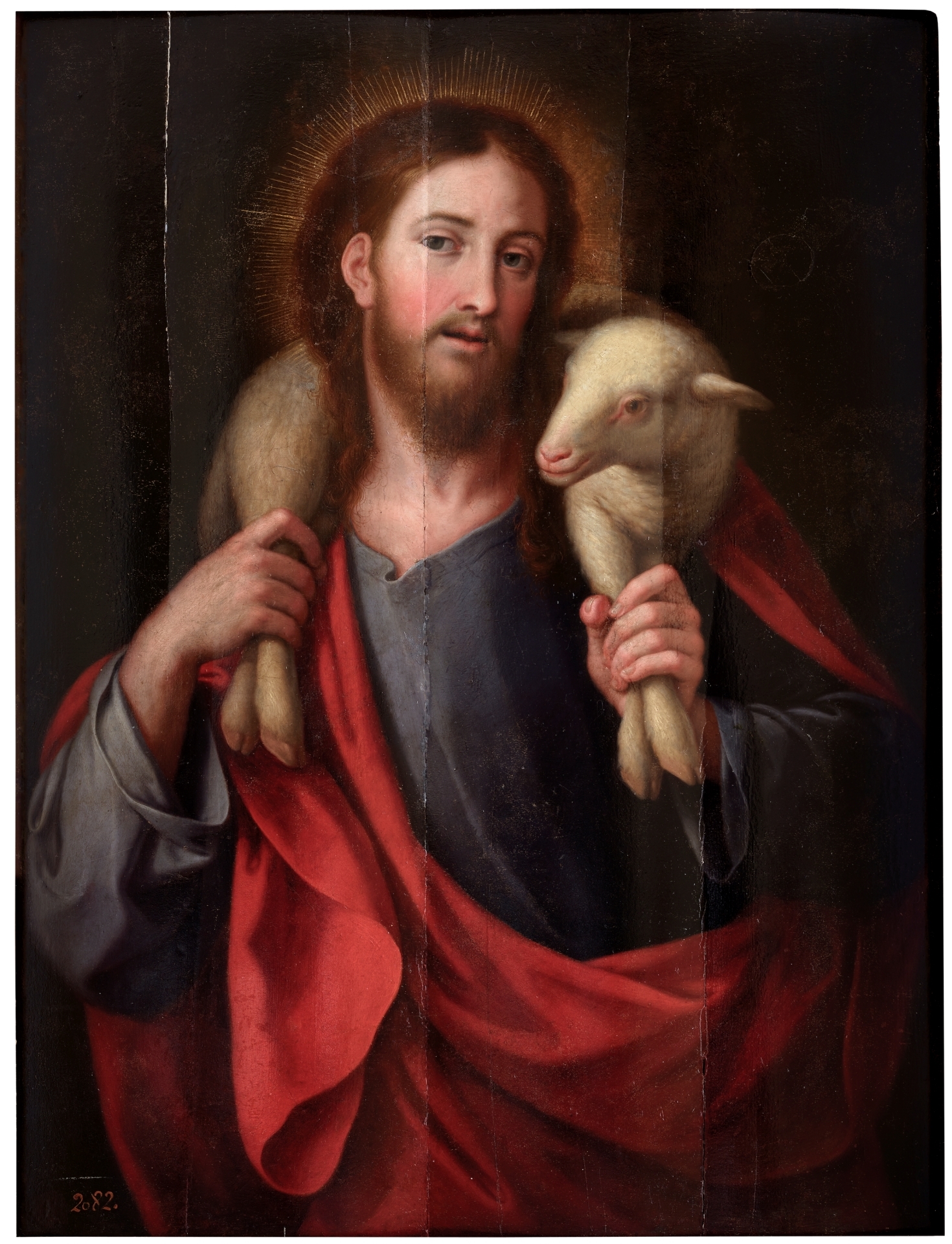
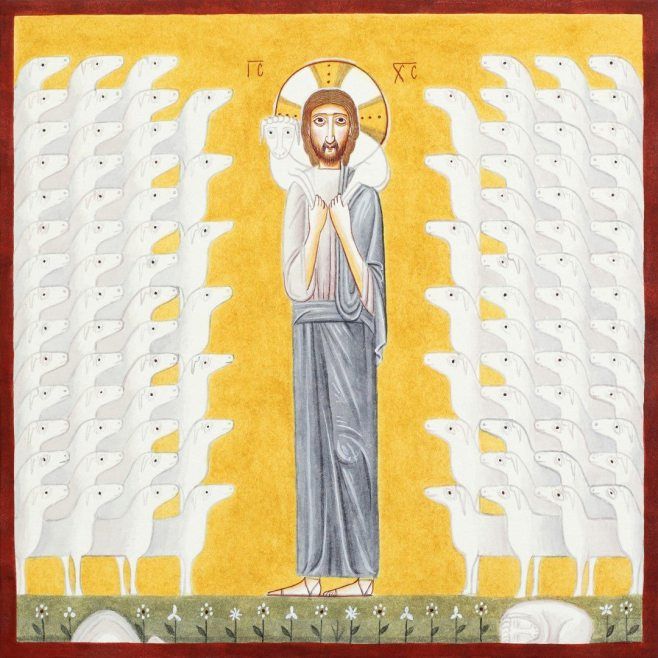
Attributed to José Vergara, The Good Shepherd (18th century), oil on panel. Royal Collection (Madrid, Spain)

There is a kind of noise that does not sound loud—but slowly disorients the soul. It comes dressed as urgency, as novelty, as the next thing one must read, hear, or attend. And without noticing, faith begins to drift into a restless search: the best book, the trending podcast, the latest conference. But the Gospel of this Fourth Sunday of Easter (John 10:1–10) cuts through that illusion with disarming simplicity: the door is not an idea, nor a method, nor even a collection of insights—it is a Person. Christ does not offer Himself as one voice among many, but as the one through whom life is actually entered. And He does not leave us to find that door on our own: He gathers a people, He forms a flock, He gives us the Church—real, visible, at times demanding—because He has willed that we belong, that we be guided, that we not wander alone. To listen to His voice, then, is also to remain within that communion, to accept its shape, even its tensions, with trust. To believe is not to curate spiritual resources endlessly, but to recognize a voice, to trust it, and to step—quietly but decisively—through the only door that leads somewhere real: the life He shares with us in His Church

As we reflect on Christ who goes before us as the Good Shepherd, this simple and deeply prayerful piece invites us into that same movement of trust. Da pacem, Domine—“Grant us peace, O Lord”—is not a demand, but a quiet plea that rises from a heart willing to be led. In the music of Arvo Pärt, nothing is rushed, nothing is forced; each note seems to wait, to listen, to follow. And that is precisely the posture of the sheep who recognize the Shepherd’s voice. As you listen, let this prayer become your own. Ask not only for peace in the world, but for the interior peace that comes from knowing that Christ walks ahead—and that, in following Him, you are not lost


St. Joseph Catholic Church (Dilley, TX) • Weekend Schedule

Fr. Agustin E. (Parish Administrator)

Saturday, April 24, 2026

10.00 a.m. First Communions 2026.

3.00 p.m. Sacrament of Holy Matrimony for Brittany & Roland

5.00 p.m. Sacramento de la Confesión

6.00 p.m. Santa Misa.

Sunday, April 25, 2026

8.00 a.m. Sacrament of Reconciliation

8.30 a.m. Holy Mass.

10.30 p.m. Sacrament of Reconciliation.

11.00 a.m. Holy Mass.


IV Domingo de Pascua (Domingo del Buen Pastor)

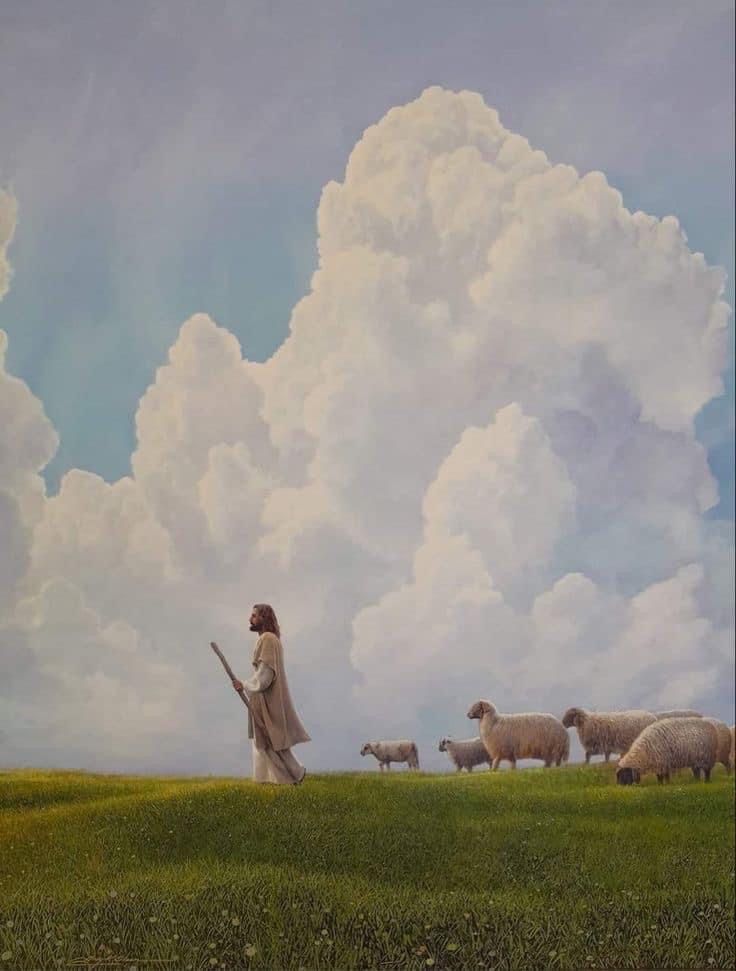
No somos nosotros quienes abrimos camino. No somos nosotros quienes vemos más lejos. En el Evangelio de este domingo, Jesús no se presenta simplemente como alguien que acompaña desde atrás, corrigiendo o empujando: Él va delante. Camina primero. Se expone primero. Y desde ahí, guía. Esa es la diferencia decisiva. Porque muchas veces imaginamos la fe como un esfuerzo propio—elegir bien, entender más, acertar en decisiones complejas. Pero Cristo no se ofrece como una idea que hay que descifrar, sino como un Pastor que conoce el terreno, que ha recorrido el camino, y que invita a seguirle con confianza. No elimina la incertidumbre del paisaje, pero sí elimina la soledad. Y ese pastoreo no es abstracto. Cristo ha querido que su guía permanezca visible en la historia: en su Iglesia. Por eso, pertenecer a ella no es un añadido opcional, sino parte del mismo camino. En ella escuchamos su voz, en ella somos sostenidos, en ella aprendemos a no caminar a solas. Y dentro de esa comunión, el Papa—Vicario de Cristo y cabeza visible de la Iglesia—no sustituye a Cristo, sino que sirve a su presencia, custodiando la unidad y confirmando a sus hermanos en la fe. Seguir a Cristo no es perder libertad, es dejar de vagar. Es aceptar que no todo depende de nosotros, y que hay una voz que merece ser reconocida y obedecida. Una voz que no confunde, que no dispersa, que no promete atajos… pero que siempre conduce a la vida. Y por eso va delante: no para imponerse, sino para que, al verle, sepamos hacia dónde ir

Antes de escuchar, una clave para situarnos: no todo lo que parece ligero es superficial, ni todo lo sencillo es vacío. Durante años, Hélène Grimaud evitó a Mozart porque sentía que esa “ligereza” no le decía nada. Hoy, sin embargo, ha vuelto a él desde otro lugar, poniéndolo en diálogo con Valentin Silvestrov, un compositor contemporáneo que escribe casi como quien escucha ecos, memorias, susurros. No es una combinación evidente, pero precisamente por eso ilumina: una música ayuda a escuchar mejor la otra. Algo parecido ocurre en la vida de fe. No siempre reconocemos la voz de Cristo porque esperamos otra cosa: más fuerza, más espectacularidad, más evidencia. Pero el Buen Pastor no grita; va delante y llama. Y su voz, como esta música, puede parecer discreta, incluso frágil… hasta que uno se detiene de verdad a escuchar. Entonces todo empieza a ordenarse. Deja que esta pieza abra ese espacio interior. No para buscar algo nuevo, sino para reconocer mejor una voz que ya te precede y te guía


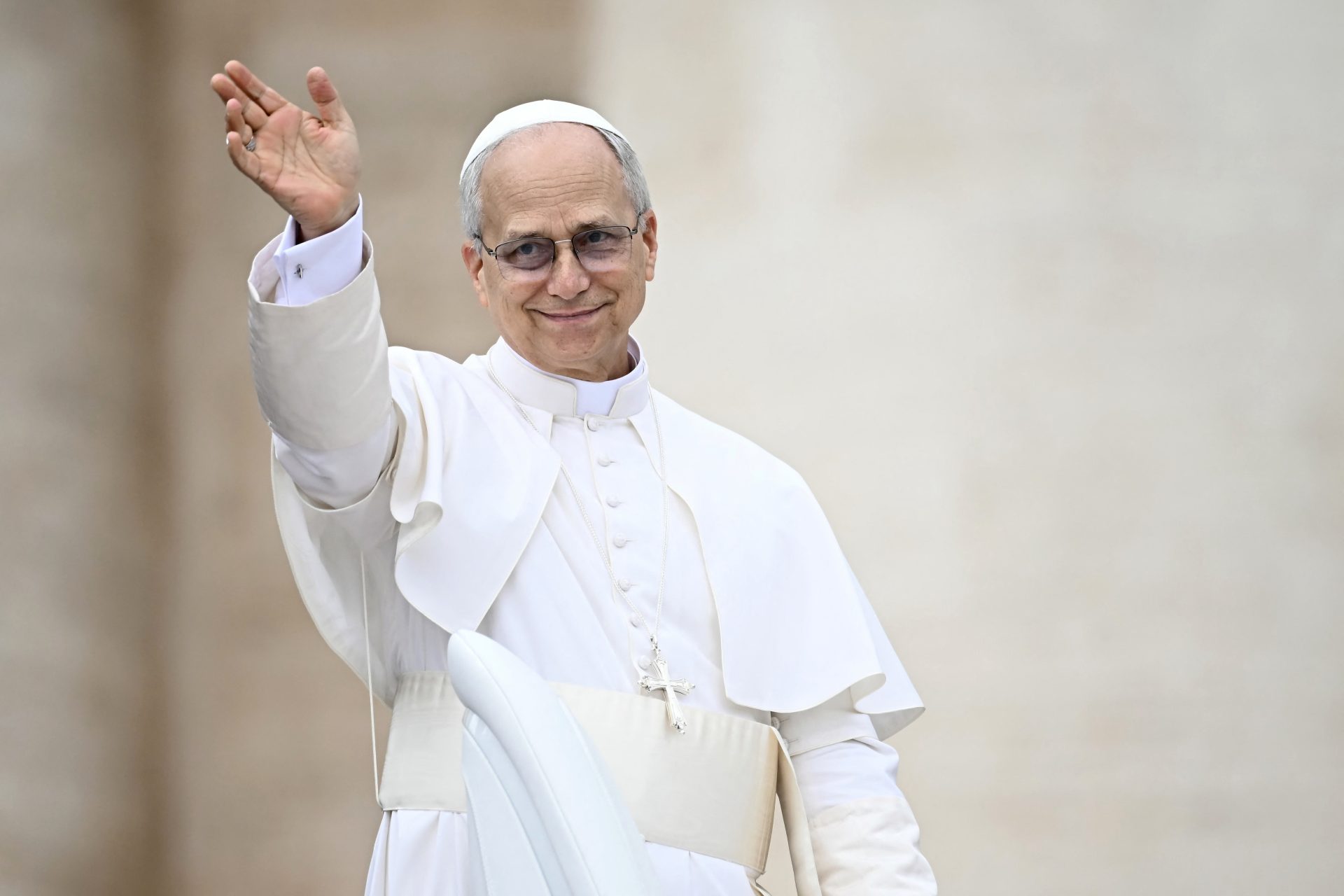
Prayer for Pope Leo XIV on Good Shepherd Sunday

Lord Jesus, Good Shepherd,
you never cease to guide your Church.
Look with love upon Pope Leo XIV,
whom you have called to shepherd your people.

Strengthen him in faith,
sustain him in hope,
and make him a gentle and courageous pastor after your own heart.

Keep him faithful in leading your flock,
and bring us all to the fullness of life in you.
Amen.


¿Qué lees estos días?


Third Sunday of Easter (Cycle A)

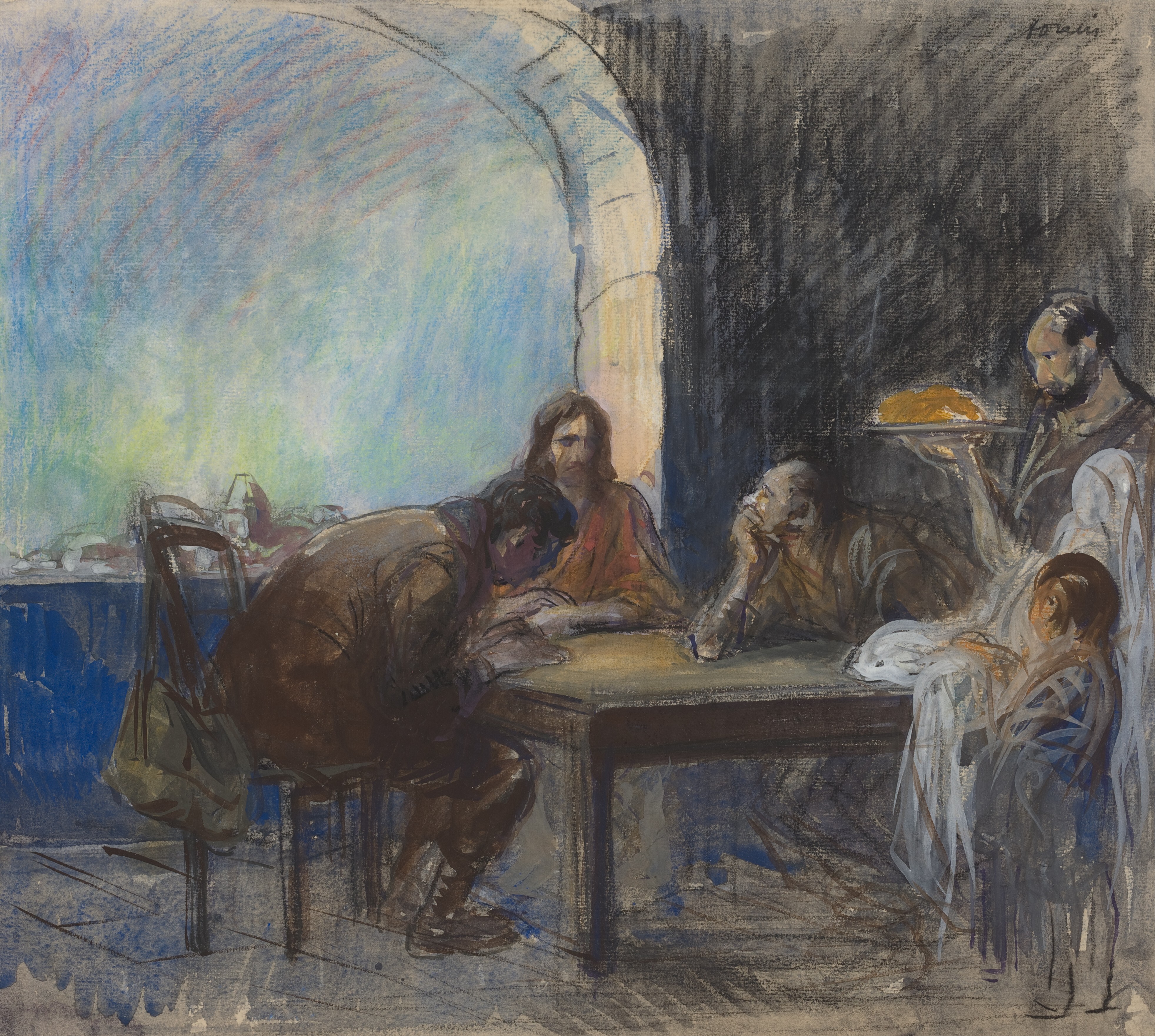
J. L. Forain, The Supper at Emmaus, (1913), oil on canvas. National Gallery (London)

There is a quiet honesty in the Gospel of the road to Emmaus: sometimes, when everything collapses, we do not rebel—we simply walk away; the two disciples are not making a dramatic decision, they are just leaving Jerusalem behind, carrying disappointment, confusion, and a faith that no longer seems to make sense, and it is precisely there, in that slow retreat, that Christ comes to meet them, not with force but by walking beside them, listening, and gently reordering their story until something within them begins to awaken again, quietly, without spectacle, the way certain passages of Frédéric Chopin seem to say more in a few restrained phrases than others in entire movements; they do not recognize Him immediately, and perhaps that is the point, because God rarely imposes Himself, but comes with a kind of discretion that respects our freedom, and when at last they recognize Him in the breaking of the bread, everything changes—not because their situation improves, but because they see differently, and that shift is enough to make them turn back, to begin again, something that echoes the simple but demanding spiritual realism of Jacques Philippe, who reminds us that God often works in us quietly, patiently, through what seems small, almost unnoticed

One of Chopin’s most beloved works, this nocturne unfolds with remarkable simplicity and grace. A lyrical, almost vocal melody floats above a gentle, steady accompaniment, creating an atmosphere that is intimate rather than dramatic. Its beauty lies not in complexity, but in nuance—the delicate ornamentation, the subtle shifts of color, and the natural, unhurried flow of the line. Marked Andante, it invites a calm, reflective listening. The music does not seek to impress; it seeks to remain. It moves with quiet elegance, allowing each phrase to breathe, and in doing so, draws the listener into a space of stillness and attentive presence


St. Joseph Catholic Church (Dilley, TX) • Weekend Schedule

Fr. Agustin E. (Parish Administrator)

Saturday. April 18, 2026

10.00 a.m. First Confessions 2026 (CCD Kids)

5.00 p.m. Sacramento de la Confesión

6.00 p.m. Santa Misa.

Sunday, April 19, 2026

8.00 a.m. Sacrament of Reconciliation

8.30 a.m. Holy Mass

10.30 p.m. Sacrament of Reconciliation

11.00 a.m. Holy Mass


III Domingo de Pascua (Ciclo A)

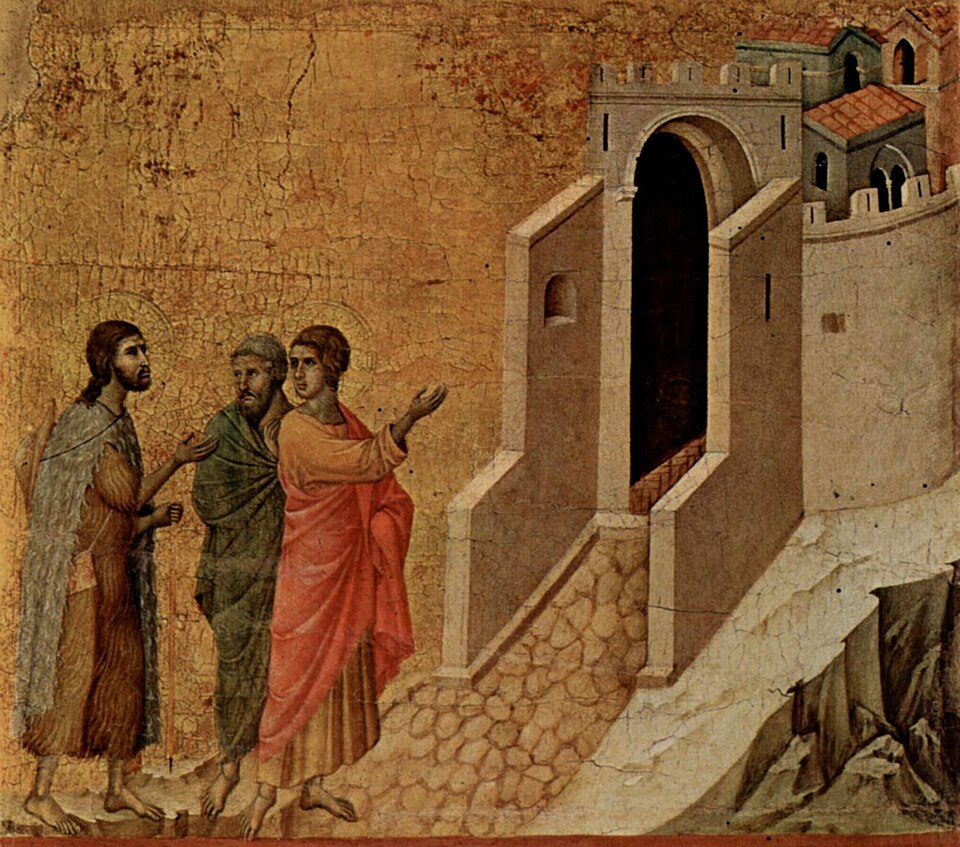
Duccio di Buoninsegna, Jesús y los dos discípulos en el camino de Emaús (c. 1308), tempera sobre tabla, Museo dell’Opera del Duomo (Milán)

Andando por el camino, te tropezamos, Señor,
te hiciste el encontradizo, nos diste conversación;
tenían tus palabras fuerza de vida y amor,
ponían esperanza y fuego en el corazón.

Te conocimos, Señor, al partir el pan.
Tú nos conoces, Señor, al partir el pan.

Llegando a la encrucijada, Tú proseguías, Señor;
te dimos nuestra posada, techo, comida y calor;
sentados como amigos a compartir el cenar,
allí te conocimos al repartirnos el pan.

El Evangelio del camino de Emaús tiene una estructura sorprendentemente precisa, casi pedagógica: primero, dos discípulos se alejan de Jerusalén; después, Jesús se acerca sin ser reconocido; más adelante, les explica las Escrituras; y finalmente, lo descubren al partir el pan. No es un relato improvisado, sino una verdadera síntesis de la vida cristiana. El detalle inicial no es menor: se están alejando de Jerusalén, es decir, del lugar de la cruz, de la comunidad, de donde Dios ha actuado; no es solo un trayecto físico, es un movimiento interior. Luego, Cristo no se impone: escucha, pregunta, deja que expresen su decepción y solo después ilumina su historia a la luz de la Escritura, mostrando que lo que parecía fracaso era, en realidad, cumplimiento. Pero el reconocimiento no llega en el camino, sino en la mesa: en el gesto concreto de partir el pan. Ahí se abren los ojos. Y entonces viene el último movimiento, quizá el más importante: regresan. El encuentro con Cristo no termina en consuelo, sino en cambio de dirección. Esa es la clave del relato: la fe no consiste solo en comprender mejor, sino en volver, en rehacer el camino, en reintegrarse a la comunión de la que, casi sin darnos cuenta, tantas veces nos hemos ido alejando


¿Qué lees estos días?

Second Sunday of Easter (or Sunday of Divine Mercy)

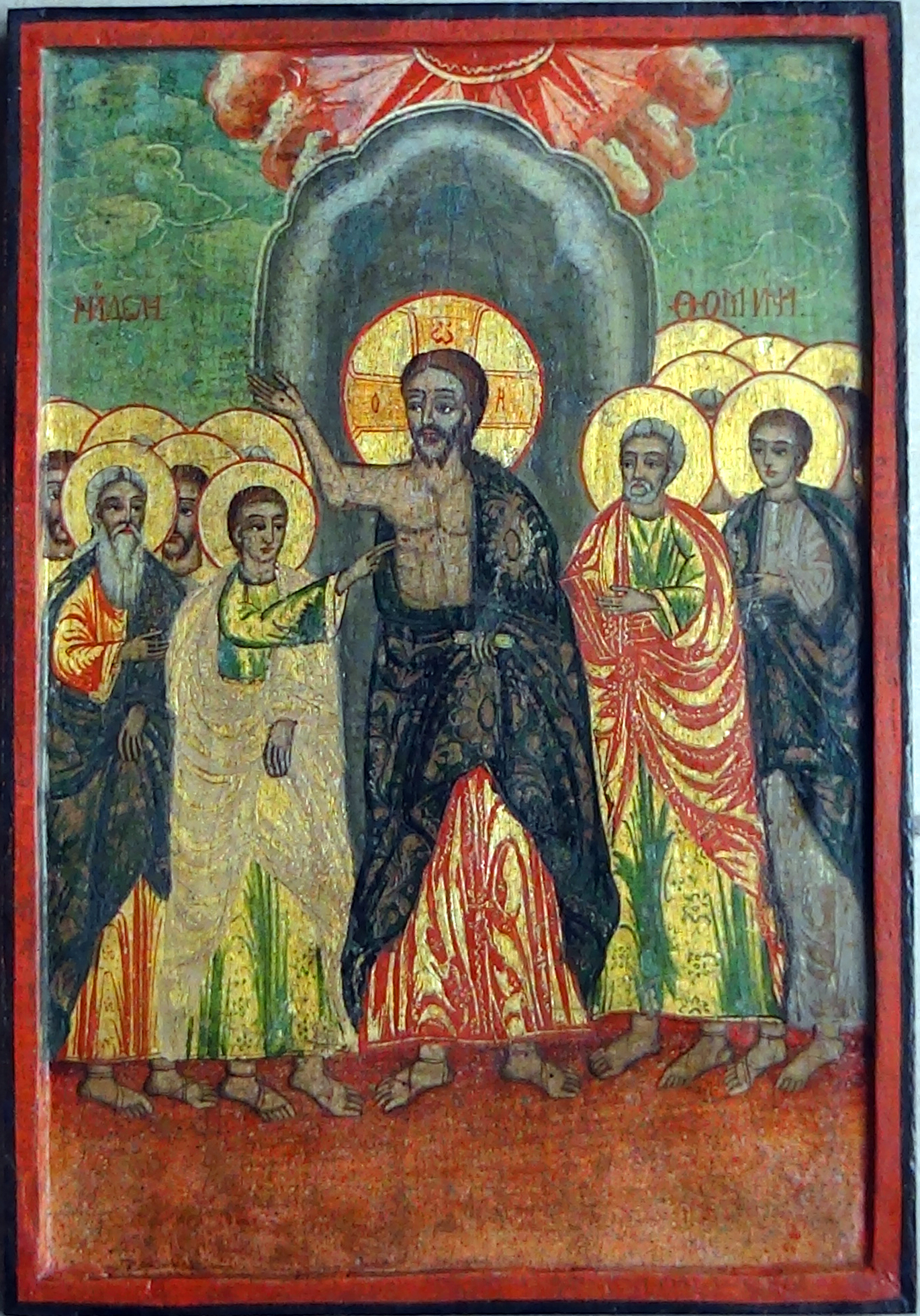
Unknown artist, Doubting Thomas, 20th century. Oil on board.

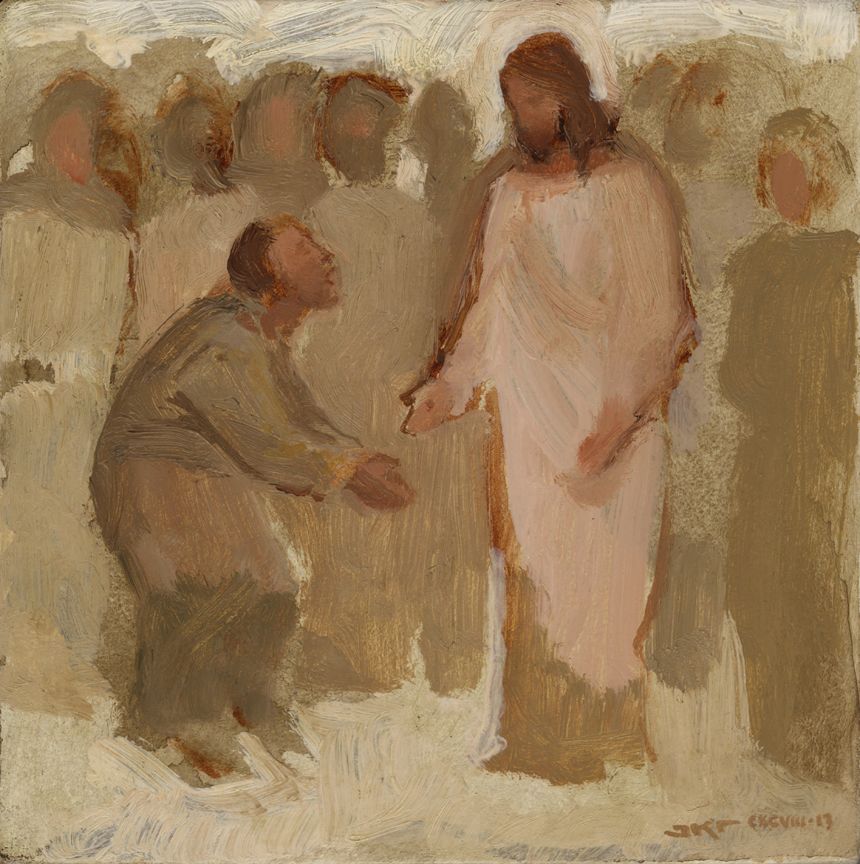
It happened behind closed doors. Not in triumph, but in fear. The disciples were gathered together, carrying the weight of everything that had just happened—the cross, the silence, the uncertainty. The resurrection had been announced, but not yet understood. And then, without warning, Jesus stood in their midst. No knocking. No explanation. Just presence. “Peace be with you.” Not as a polite greeting, but as a gift spoken into hearts still trembling. He shows them His wounds—not erased, but transformed. The marks of suffering remain, now radiant with meaning. It is one of the most tender and unsettling moments in the Gospel: the Risen Christ does not come back to erase the past, but to redeem it. Thomas was not there. And when he hears, he cannot accept it easily. He wants to see, to touch, to be certain. There is something deeply honest in that. Faith is not always immediate. It often feels like standing at the edge of something we cannot yet explain, like the quiet unfolding of Mahler’s Adagietto from his Fifth Symphony, where longing and trust slowly learn to breathe together. And when Jesus returns, He meets Thomas exactly there—not with reproach, but with invitation. “Do not be afraid. Believe.” This is how Easter continues: not in perfect clarity, but in encounters that unfold within our doubts. The mercy of God does not wait for us to be ready. It enters anyway. And once it does, nothing remains the same

Mahler’s Adagietto from his Fifth Symphony is one of the most intimate pieces ever written—quiet, suspended, almost fragile. Scored only for strings and harp, it unfolds slowly, without urgency, as if searching for something just beyond reach. Often interpreted as a love letter, it carries a sense of longing that does not rush to resolution, but learns to trust in what it cannot yet fully grasp. That is why it resonates so deeply with this Gospel: like Thomas, we stand between doubt and faith, between absence and presence. The Adagietto teaches us that sometimes the heart must remain in that tension… until it finally learns to believe


St. Joseph Catholic Church (Dilley, TX) • Weekend Schedule

Fr. Agustin E. (Parish Administrator)

Saturday, April 11, 2026

5.00 p.m. Sacramento de la Confesión

6.00 p.m. Santa Misa, Coronilla de la Divina Misericordia

y Bendición con el Santísimo Sacramento.

Sunday, April 12, 2026

8.00 a.m. Sacrament of Reconciliation

8.30 a.m. Holy Mass.

10.30 p.m. Sacrament of Reconciliation.

11.00 a.m. Holy Mass, Divine Mercy Chaplet

and Benediction with the Most Blessed Sacrament.


II Domingo de Pascua (Domingo de Divina Misericordia)

Iconógrafo anónimo, La incredulidad de Santo Tomás (La semana de Tomás), s. XVIII–XIX. Temple sobre tabla. Tradición eslava.

No fue un día luminoso. Fue en una habitación cerrada. El Evangelio de este domingo no nos lleva a multitudes ni a proclamaciones, sino a un pequeño grupo herido, reunido más por miedo que por esperanza. Han visto demasiado. Han perdido demasiado. Y, sin embargo, allí, en ese espacio estrecho donde todo parece detenido, sucede lo impensable: Jesús se hace presente. No atraviesa la puerta como quien invade, sino como quien conoce el interior del corazón humano; Jesus, lleno de ternura y de paciencia. Aparece sin pedir explicaciónes, regalando una palabra que reconstruye desde dentro: paz. No la paz ingenua que ignora el dolor, sino la que nace precisamente en medio de él. Les muestra las heridas. No han desaparecido. Permanecen, pero ya no son signo de derrota. Son memoria transformada. Tomás, ausente, se convierte en voz de todos nosotros. No se conforma con palabras prestadas. Quiere certeza. Quiere tocar. Y Jesús no lo rechaza. Vuelve, se acerca, y lo invita a cruzar ese umbral donde la duda deja de ser obstáculo y se convierte en camino. Así avanza la fe: no como una luz que lo ilumina todo de golpe, sino como una presencia que, poco a poco, nos enseña a confiar AE


Lecturas (y música) para el tiempo de Pascua


The Resurrection of the Lord (2026)

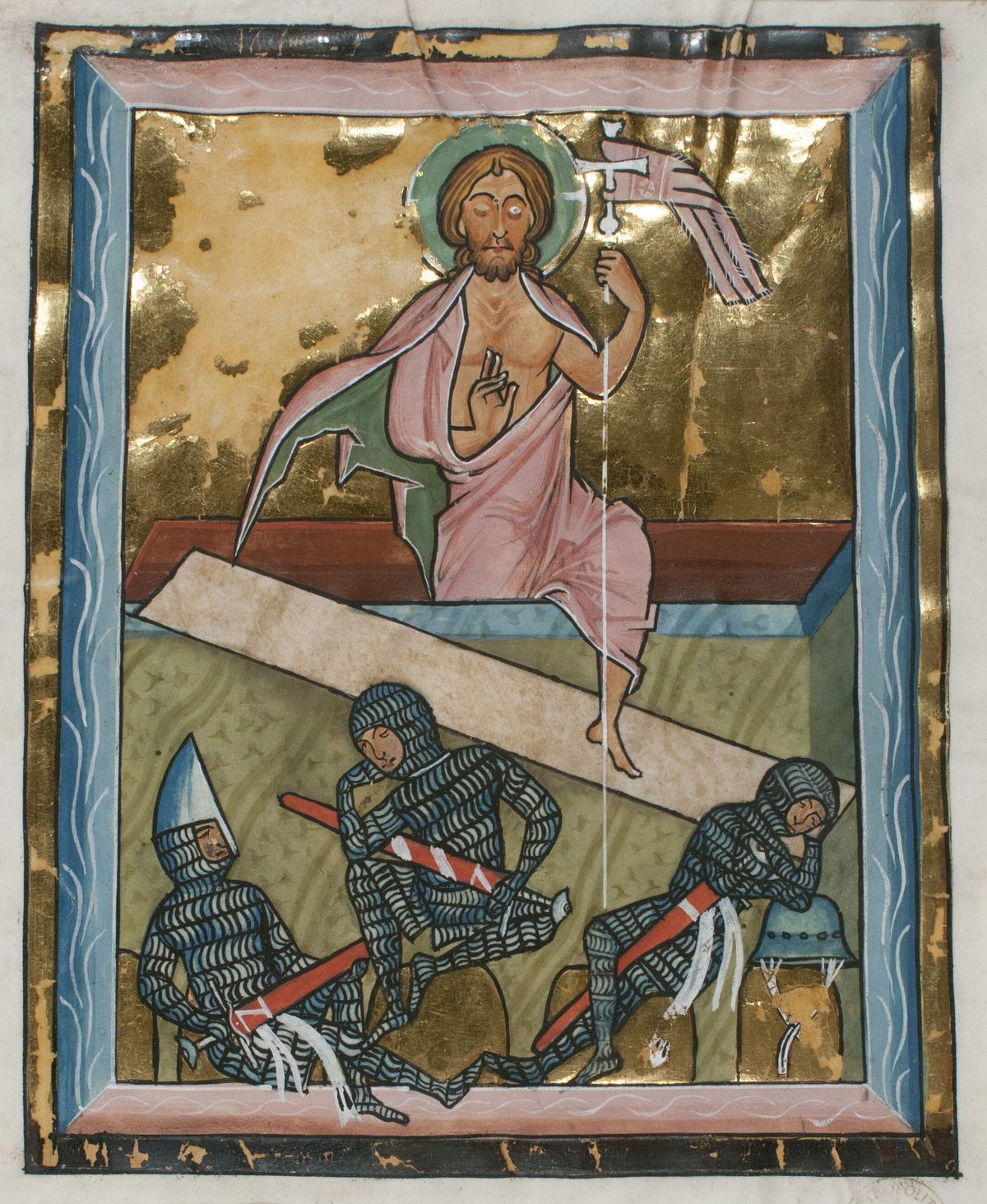
Anonymous, The Resurrection, 13th century. Illuminated manuscript leaf from a German Psalter. Berlin.

Sequence – Victimæ paschali laudes

Christians, to the Paschal Victim
Offer your thankful praises!
A Lamb the sheep redeems;
Christ, who only is sinless,
Reconciles sinners to the Father.
Death and life have contended in that combat stupendous:
The Prince of life, who died, reigns immortal.
Speak, Mary, declaring
What you saw, wayfaring.
“The tomb of Christ, who is living,
The glory of Jesus’ resurrection;
bright angels attesting,
The shroud and napkin resting.
Yes, Christ my hope is arisen;
to Galilee he goes before you.”
Christ indeed from death is risen, our new life obtaining.
Have mercy, victor King, ever reigning!
Amen. Alleluia

It began in the dark. The Gospel of Easter morning does not open with triumph or certainty, but with a quiet and fragile moment: Mary Magdalene walking toward the tomb while it was still dark. She carries grief, confusion, and love. The cross is still painfully close, and death still seems to have the final word. Yet something is different. The stone has been moved. She runs to tell Peter and the other disciple, and soon they too are running through the pale light of early morning. It is one of the most human scenes in the Gospel: two men running toward a mystery they do not yet understand. The beloved disciple arrives first, bends down, and sees the linen cloths, but waits. Peter arrives and goes straight inside. The tomb is empty. The burial cloths lie there, and the cloth that had covered Jesus’ head is folded separately, quietly resting where death thought it had triumphed. And then the Gospel tells us, with disarming simplicity, that the other disciple entered, “and he saw and believed.” They did not yet understand everything. The Scriptures had not yet fully opened before them. But faith had begun. Easter often begins this way: not with perfect clarity, but with a sudden intuition that death has not won. The joy of that discovery is something like the soaring brightness of Mozart’s Exsultate, jubilate, where the voice seems to rise effortlessly into light, as if the heart itself had learned to sing again. Dante once wrote that love is the force that “moves the sun and the other stars.” Easter is the moment when that love reveals its deepest power: it is stronger than the grave. The tomb is empty. Christ is alive. And with that discovery, the first light of a new creation begins to spread quietly across the world •

Mozart composed Exsultate, jubilate in Milan in 1773, when he was only seventeen years old. Written for the celebrated castrato Venanzio Rauzzini, the piece is a sacred motet in Latin that invites the soul to rejoice and praise God with radiant joy. The music moves with remarkable lightness and brilliance. From the opening call to rejoice to the soaring final “Alleluia,” the voice seems almost to dance, rising freely and effortlessly, as if joy itself had taken sound. It is music that feels unmistakably Easter-like: bright, confident, full of life. In the final Alleluia, Mozart captures something rare—the sense that praise is not forced, but simply bursts forth, like light at dawn. Listening to Exsultate, jubilate is like standing at the threshold of morning, when the heart suddenly remembers how to sing •


St. Joseph Catholic Church (Dilley, TX) • Weekend Schedule

Saturday, April 4, 2026

7.00 p.m. Holy Saturday At the Easter Vigil in the Holy Night of Easter

Sunday, April 5, 2026

8.30 a.m. Holy Mass @ St. Mary’s Chapel

11.00 a.m. Holy Mass @ St. Joseph Catholic Church


Domingo de Pascua La Resurrección del Señor (2026)

Secuencia

Ofrezcan los cristianos
ofrendas de alabanza
a gloria de la Víctima
propicia de la Pascua.

Cordero sin pecado,
que a las ovejas salva,

a Dios y a los culpables
unió con nueva alianza.

Lucharon vida y muerte
en singular batalla,
y, muerto el que es la vida,
triunfante se levanta.

“¿Qué has visto de camino,
María, en la mañana?”
“A mi Señor glorioso,
la tumba abandonada,

los ángeles testigos,
sudarios y mortaja.
¡Resucitó de veras
mi amor y mi esperanza!

Vengan a Galilea,
allí el Señor aguarda;
allí verán los suyos
la gloria de la Pascua”.

Primicia de los muertos,
sabemos por tu gracia
que estás resucitado;
la muerte en ti no manda.

Rey vencedor, apiádate
de la miseria humana
y da a tus fieles parte
en tu victoria santa

La Pascua comienza en silencio, antes del sol, antes de las certezas, antes incluso de que alguien entienda lo que está ocurriendo. María Magdalena camina hacia el sepulcro mientras todavía es de noche. El Evangelio insiste en ese detalle: “cuando aún estaba oscuro.” La fe cristiana nace precisamente en esa frontera entre la noche y la luz. Ella no va buscando un milagro; va buscando a Jesús, o más bien lo que queda de Él. El Maestro ha muerto y la cruz parece haber cerrado la historia. Pero al llegar descubre algo desconcertante: la piedra ha sido removida. Corre entonces hacia los discípulos, y pronto Pedro y el otro discípulo están corriendo también hacia el sepulcro. Es una escena profundamente humana: dos hombres que corren con el corazón agitado, entre el miedo y la esperanza, hacia un misterio que todavía no saben nombrar. Dentro del sepulcro no hay nada espectacular: no hay resplandor ni señales grandiosas. Solo los lienzos y el silencio. Y sin embargo, en ese silencio ocurre algo decisivo. El Evangelio lo dice con una sobriedad que atraviesa los siglos: “vio y creyó.” La fe en la resurrección comienza así, con una intuición que se abre paso lentamente en medio del desconcierto. Todavía no lo comprenden todo, todavía no saben explicarlo, pero algo ha cambiado para siempre: el sepulcro está vacío. Dante, al final de su viaje en la Divina Comedia, hablaba del amor que “mueve el sol y las demás estrellas.” La Pascua es la revelación de ese amor, un amor tan fuerte que ni siquiera la muerte puede detenerlo. Cristo ha vencido a la tumba, y desde aquella madrugada, cuando la oscuridad empezaba apenas a retirarse de Jerusalén, una luz nueva ha comenzado a extenderse por el mundo •


lEcTurAs dE pAScuA