Palm Sunday of the Lord’s Passion (2026)

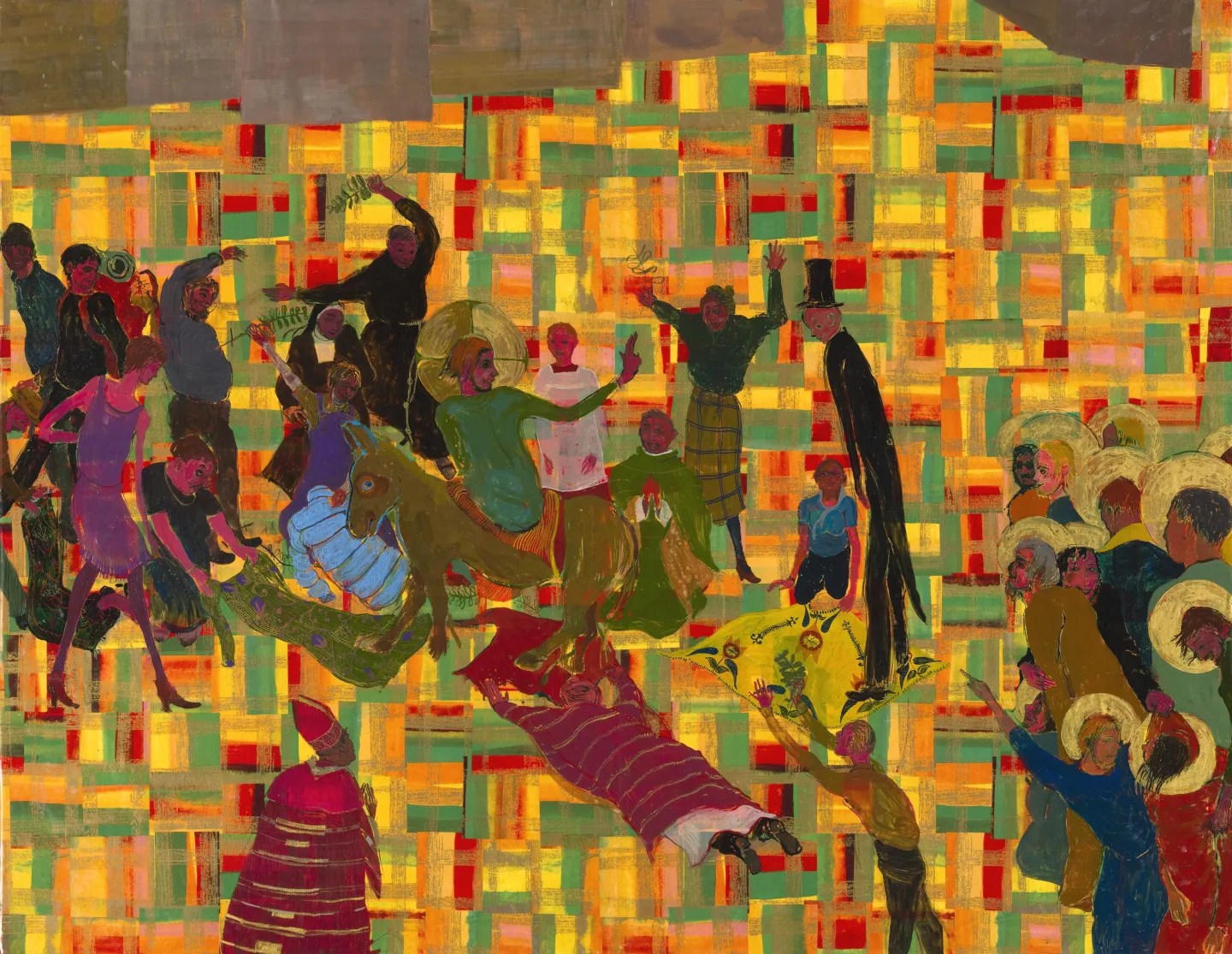
K. Althoff, Palmsonntag (Palm Sunday), 2002. Watercolor and tinted paper on canvas. Private collection, Berlin.

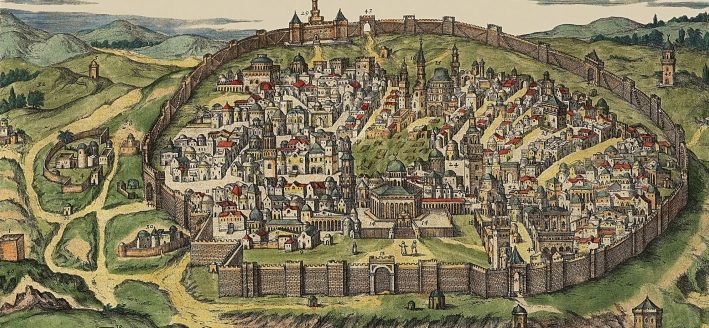
Palm Sunday begins with branches, with acclaim, with the fragile joy of a crowd that believes it understands what is happening. But the narrative moves quickly, almost relentlessly, toward betrayal, denial, and silence. Matthew does not soften the descent. The same voices that cry “Hosanna” fade into the distance as Jesus walks a path that grows narrower, lonelier, and more exposed. What makes this Passion so unsettling is not only the suffering, but the isolation. One by one, the supports fall away. Judas hands Him over. Peter denies Him. The disciples scatter. Even the sky seems to withdraw its light. At the cross, Jesus does not speak in triumph but in desolation: “My God, my God, why have you forsaken me?” And yet, this cry is not the collapse of faith, but its deepest expression. It echoes the psalm that begins in abandonment and ends in trust. The Church has long recognized in this moment not despair, but solidarity — the Son entering fully into the human experience of distance, fear, and loss. Something of this descent is mirrored in Bach’s St Matthew Passion, where sorrow is not rushed toward resolution but allowed to unfold in its full gravity; and in another register, Dante’s journey through darkness reminds us that the path toward redemption often passes first through the experience of apparent abandonment. Palm Sunday invites us to walk with Him through that narrowing path. Not to explain it. Not to rush toward Easter. But to remain near as the story unfolds — to see how love persists even when recognition fails. The question is not whether we will carry palms. It is whether we will stay when the road leads to the cross

Bach’s St Matthew Passion sets the Gospel of Matthew’s account of Christ’s suffering to music, first performed on Good Friday in 1727. This is not just a musical retelling, but a way of entering the Passion. Bach allows the sorrow and abandonment of the Gospel to unfold slowly, helping us stay with Christ on the road to the cross rather than rushing past it toward the Resurrection


St. Joseph Catholic Church (Dilley, TX) • Weekend Schedule

Fr. Agustin Estrada (Parish Administrator)

Saturday, March 29, 2026

5.00 p.m. Sacramento de la Confesión

6.00 p.m. Santa Misa y bendición de las palmas

Sunday, March 29, 2026

8.00 a.m. Sacrament of Reconciliation

8.30 a.m. Holy Mass and palm´s blessing

10.30 a.m. Sacrament of Reconciliation

11.00 a.m. Holy Mass


Domingo de Ramos “De la pasión del Señor” (2026)
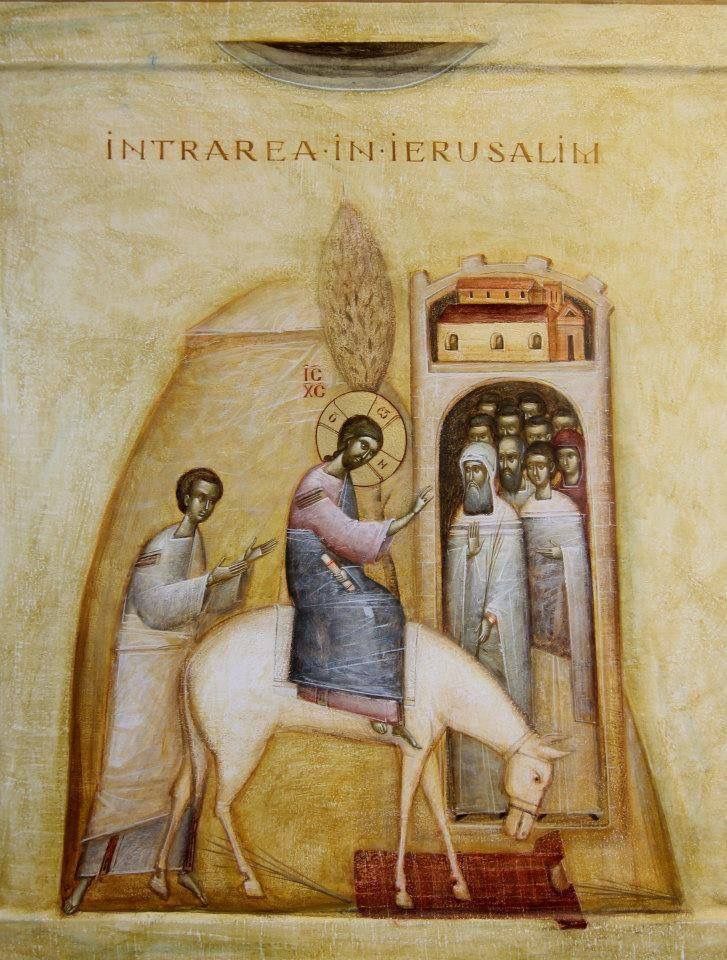
Palmas al viento, grita la ciudad,
entra el Señor sobre un asno humilde;
la gente canta, la esperanza vive,
todo parece pura claridad.

Mas pronto cambia la multitud,
calla el fervor, se enfría la voz;
el que hoy aclaman como Dios,
mañana carga la cruz en soledad.

Hosanna suena como ilusión,
mientras la noche gana el lugar;
el triunfo pasa, queda la pasión.

Seguir al Rey no es solo aclamar:
es caminar con su corazón
cuando el camino lleva al pesar.

La entrada en Jerusalén está llena de movimiento, de expectativas, de una multitud que parece haber comprendido quién es Jesús. Pero el relato de la Pasión según san Mateo nos lleva rápidamente más allá de esa superficie, hacia un terreno donde las certezas se desvanecen. La fidelidad prometida se fractura, la cercanía se transforma en distancia, y el camino se vuelve cada vez más solitario. Lo que impresiona no es solo el sufrimiento físico, sino el desmoronamiento de las relaciones. La traición no viene de los enemigos lejanos, sino del círculo cercano. El abandono no sucede de golpe, sino poco a poco. Y en medio de esa desolación, el grito de Jesús en la cruz no es el final de la confianza, sino la expresión más radical de una fe que se mantiene incluso cuando todo parece perdido. La tradición espiritual ha visto en este momento no solo la historia de Cristo, sino el espejo de toda vida humana que atraviesa la oscuridad sin entender su sentido. Como en tantas páginas de la literatura que exploran el descenso antes de la redención, el paso por la noche no es negación del amor, sino su prueba. El Domingo de Ramos nos sitúa en ese umbral. No solo para acompañar el inicio, sino para recorrer el camino completo. Porque el verdadero desafío no es aclamar al comienzo, sino permanecer cuando la historia se vuelve incomprensible


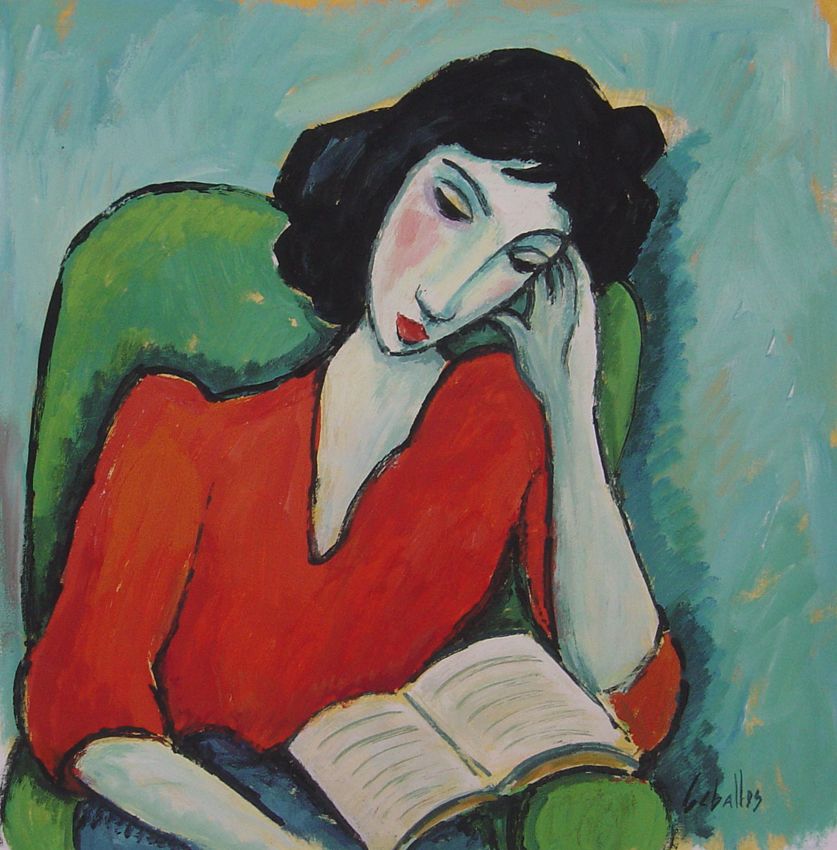
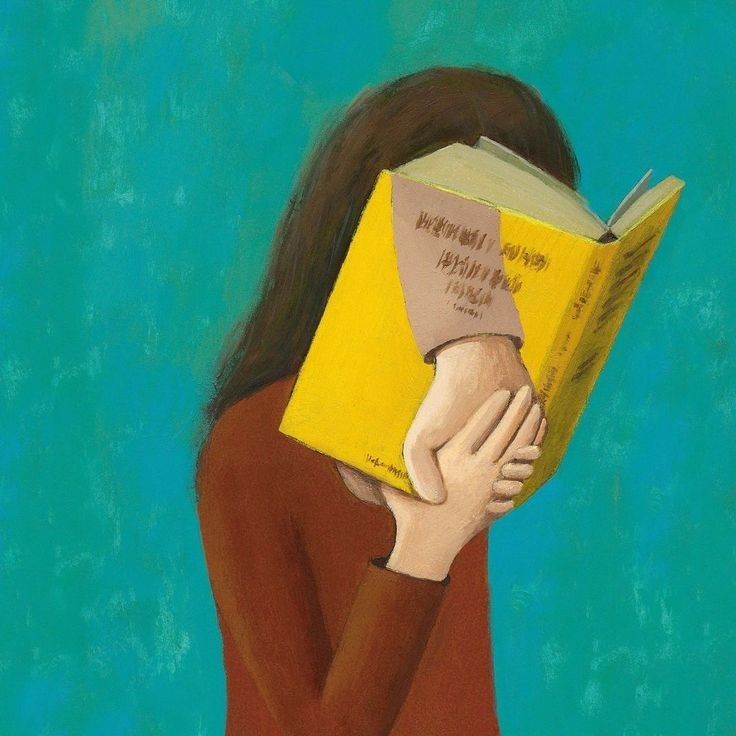
¿Qué Lees?


Solemnity of the Annunciation of the Lord (2026)

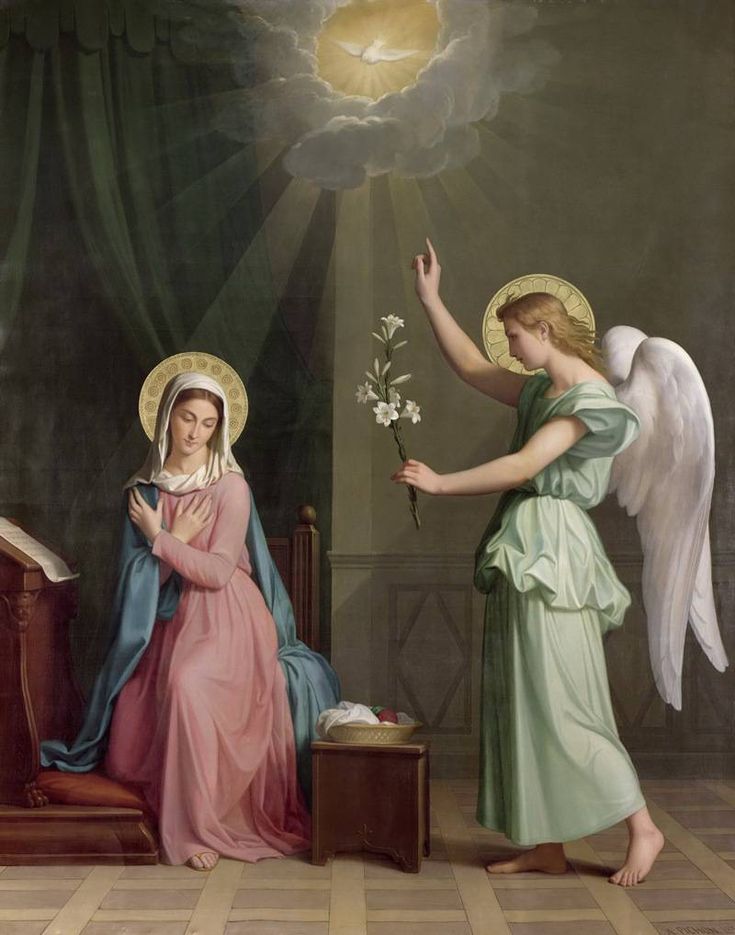
Auguste Pichon, The Annunciation, 1859. Oil on canvas. Particular collection.

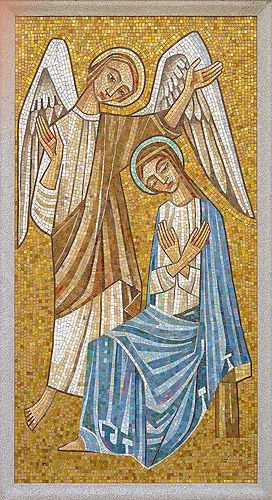
God enters the world quietly. Not through spectacle, not through power, but through a question and a consent. The Annunciation is not the story of an interruption, but of an invitation. Mary is greeted not with certainty, but with a call: to receive what she does not yet understand, to allow her life to become the place where God takes flesh. What begins in Nazareth is not a grand event, but a hidden “yes.” The Incarnation does not arrive by force; it waits for freedom. Mary’s response is not the resolution of every doubt, but the offering of trust: “Let it be done to me according to your word.” The Church has long understood that this moment is not only about Mary, but about the way God continues to act — entering history through openness rather than control. The mystery unfolds in silence before it becomes visible in the world. And in another language, the Credo of the Mass — especially at the words Et incarnatus est — slows and deepens, as if time itself pauses before the wonder of God made man. Like Mary’s consent, the music does not proclaim loudly, but bows in reverence before the mystery it receives. The Annunciation reminds us that salvation begins not with achievement, but with availability. God speaks. Grace waits. And the world changes through a quiet yes

The Credo of the Missa de Angelis, a Gregorian chant that has been sung for centuries across the Church’s liturgy, carries a simplicity that is both historical and deeply pastoral. Emerging from the medieval tradition yet remaining beloved in parishes and cathedrals alike, its gentle unfolding invites the community not just to recite belief, but to dwell within it. At the words Et incarnatus est, the melody naturally softens and lingers, as if echoing the Church’s quiet reverence before the mystery of God made flesh — a musical pause that mirrors Mary’s own attentive “yes.”


Solemnidad de la Anunciación del Señor (2025)

En Nazaret llegó la luz callada,
un ángel trajo voz y decisión;
no fue mandato, fue invitación
que aguardó libre ser escuchada.

María escucha, el alma inclinada,
pregunta humilde sin condición;
y en su silencio, la Encarnación
nace en su fe confiada.

“No temas”, dice el mensajero fiel,
y el mundo espera su respuesta:
un sí que no exige saber.

Con ese gesto, Dios entra en él,
y la historia se hace promesa:
lo eterno empieza a crecer.

El anuncio no sucede en un templo ni ante una multitud, sino en lo cotidiano. Una casa. Una jovencita. Una palabra que irrumpe sin imponerse. La solemnidad de la Anunciación nos sitúa ante un momento en que el futuro de la historia depende de un acto profundamente humano: la escucha. La Virgen no actúa por impulso ni por entusiasmo; pregunta, discierne, se sitúa ante lo que le es propuesto. El misterio no anula su libertad, la convoca. Aquí no se trata de una intervención que desplaza al mundo, sino de una presencia que comienza a habitarlo desde dentro. El Verbo no entra como conquista, sino como germen. Todo empieza en lo pequeño, en lo que no llama la atención. Los grandes relatos espirituales han insistido en que la transformación no suele comenzar en lo visible, sino en lo disponible. En ese sentido, el momento de la Anunciación no es solo una escena del pasado, sino un modo de comprender cómo actúa Dios: no sustituyendo la historia, sino atravesándola. La respuesta de María no resuelve el camino que vendrá, pero lo inaugura. No explica el misterio, pero le da lugar. Y con ese gesto, lo invisible empieza a tomar forma


Fifth Sunday of Lent (Cycle A)

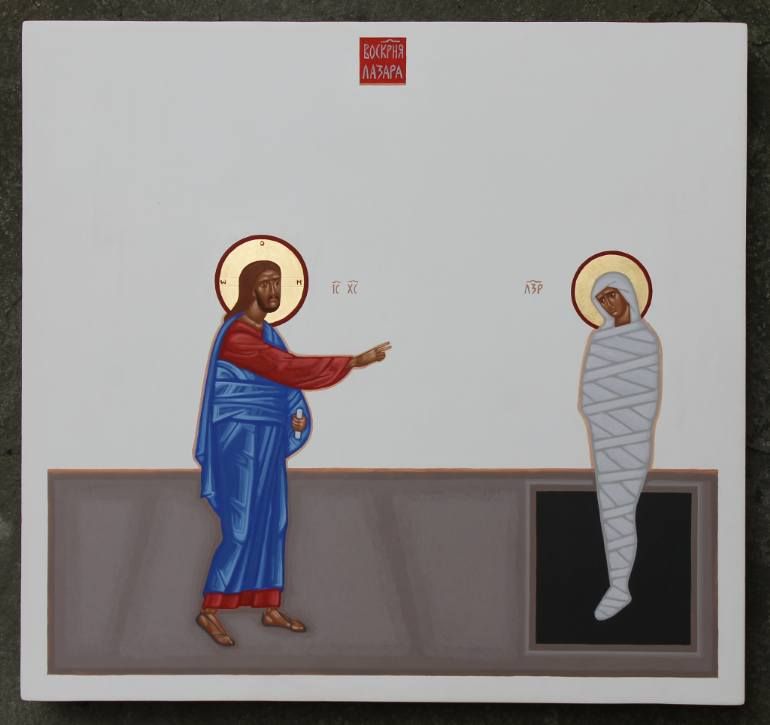
Danilo Movchan (b. 1979), The Raising of Lazarus, Contemporary icon.

Jesus does not stand before death as a stranger — He stands there weeping. Before the stone is moved, before the voice that will call Lazarus forth, there are tears. Christ does not rush past grief on the way to resurrection; He enters it. He allows Himself to feel the ache of loss, the silence of absence, the heaviness that settles when hope seems sealed behind a stone. This is where the mystery begins: not in power, but in compassion. The One who proclaims “I am the Resurrection and the Life” first shares our sorrow, showing us that there is no shame in mourning those we love. If the Son of God Himself wept, then our tears are not a failure of faith, but an expression of love. The Fathers saw in this moment the story of every heart. St. Augustine spoke of the Lord’s voice as the one that reaches us even when we feel buried beneath fear, fatigue, or disappointment — calling us by name from the places we thought were final. Resurrection is not only a future promise; it is the quiet awakening that begins when Christ’s voice meets our wounds. And in another language, the gentle lines of Palestrina’s Sicut cervus seem to breathe that same longing: a thirst that moves the soul toward the One who alone can restore life. This scene is not only about Lazarus. It is about us — and the Christ who weeps with us before He calls us into new life

Palestrina’s Sicut cervus sets to music the ancient words of Psalm 42: “As the deer longs for streams of water, so my soul longs for you, O God.” Written in the sixteenth century at the heart of the Church’s liturgical renewal, its flowing lines do not dramatize grief or resolve it; they simply express a deep, steady yearning. This quiet longing mirrors the moment at Lazarus’ tomb, where sorrow and hope coexist — where tears are not opposed to faith, but become the place from which the desire for life rises toward Christ


St. Joseph Catholic Church (Dilley, TX) • Weekend Schedule

Fr. Agustin E. (Parish Administrator)

Saturday, March 21, 2026.

5.00 p.m. Sacramento de la Confesión

6.00 p.m. Santa Misa.

Sunday, March 22, 2026

8.00 a.m. Sacrament of Reconciliation

8.30 a.m. Holy Mass.

10.30 a.m. Sacrament of Reconciliation.

11.00 a.m. Holy Mass.


V Domingo de Cuaresma (Ciclo A)

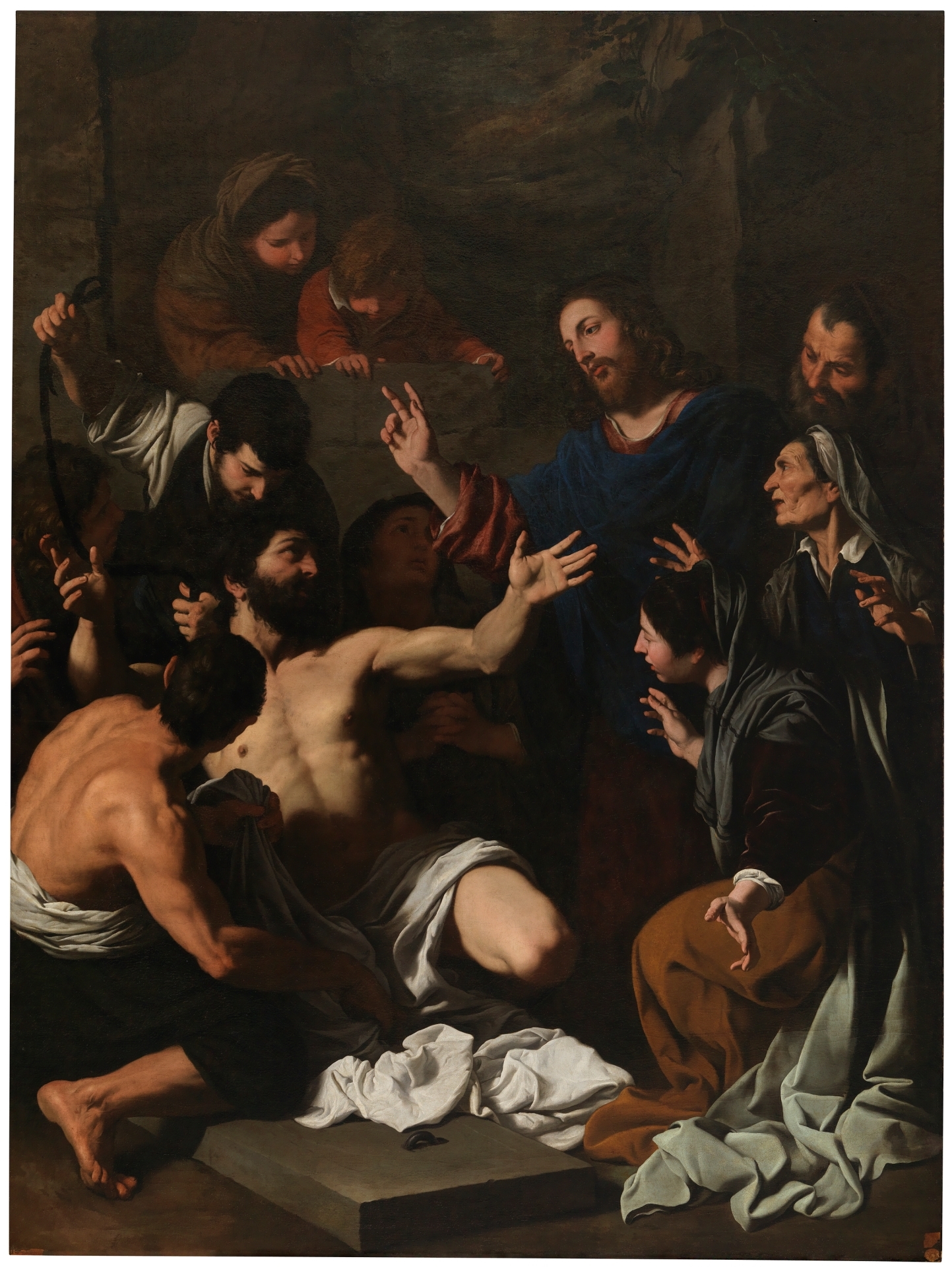
P. Novelli, La Resurrección de Lázaro (1635), óleo sobre tela, Museo Nacional del Prado (Madrid)

Ante el sepulcro, Cristo se detuvo,
y el llanto habló donde reinaba el fin;
la muerte parecía decir “así”,
y el corazón humano se contuvo
.

Mas no quedó su voz en lo que hubo,
pues llamó vida donde no hay jardín;
“¡Lázaro, sal!” — y al borde del confín
la noche retrocedió sin escudo.

Salió del fondo envuelto en su prisión,
y el aire volvió a su respiración,
venciendo al miedo oscuro y su amenaza.

Así también resuena su clamor,
cuando nos llama el vivo Salvador:
ninguna tumba puede con su gracia
.

Cuando todo parece terminado, Cristo todavía puede llamar. Ante la tumba de Lázaro no hay primero un gesto de poder, sino lágrimas. Jesús llora. No evita el dolor ni lo disfraza con frases rápidas de consuelo. Se detiene en él. Comparte el peso de la pérdida, el silencio que deja la ausencia. Y allí, en ese momento tan humano, aparece la frase más dura del relato: “Señor, ya huele…”. Es decir: ya es demasiado tarde. Ya no hay nada que hacer. Pero es precisamente ahí donde comienza la esperanza. No cuando todo está intacto, no cuando aún creemos que hay solución, sino cuando el final parece definitivo. Lázaro no solo estaba muerto: estaba en descomposición. Y aun así, Cristo llama. No a la muerte en abstracto, sino a un amigo por su nombre: “¡Lázaro, sal!”. Los Padres de la Iglesia veían en esto el signo de que ninguna situación está tan cerrada que Dios no pueda abrirla. San Agustín recordaba que esa voz sigue resonando en las tumbas de nuestras resignaciones, de nuestras pérdidas, de nuestras historias que creemos irrecuperables. La esperanza cristiana no nace de la evidencia, sino de la presencia de Cristo que no se retira ante lo que parece perdido. Este episodio no es solo sobre un regreso físico a la vida. Es sobre el anuncio de que incluso donde ya “huele”, donde pensamos que todo se ha descompuesto, Cristo puede hacer brotar vida. Siempre hay esperanza. Porque Él no llama antes de la muerte, sino desde dentro de ella


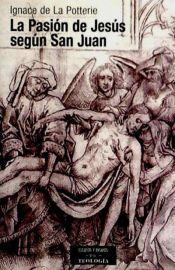
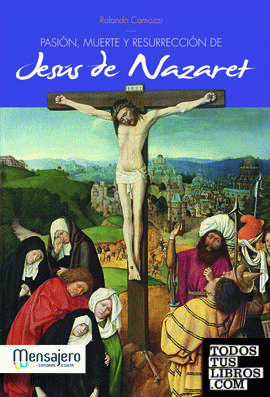
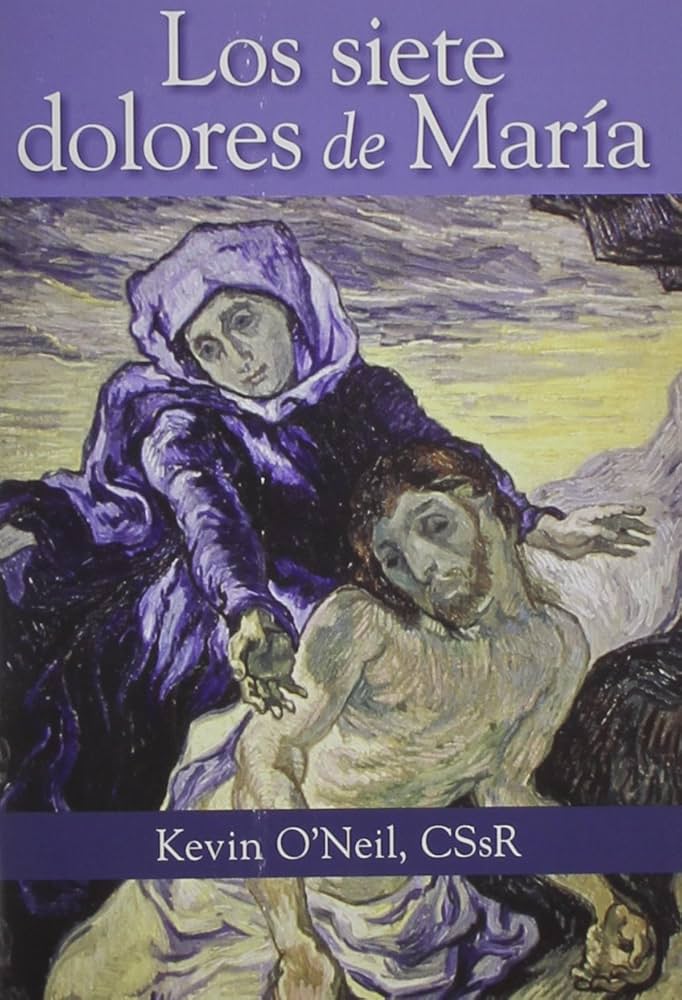
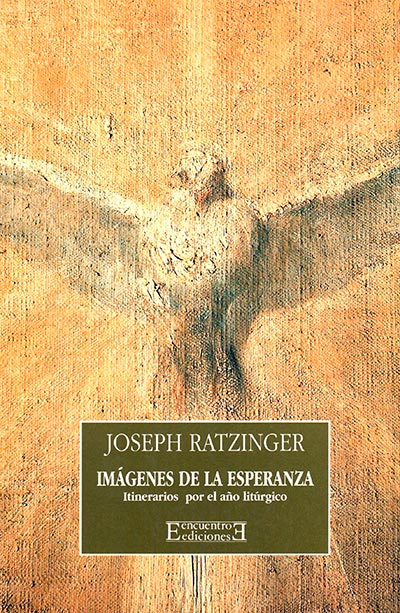
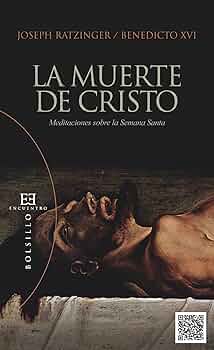
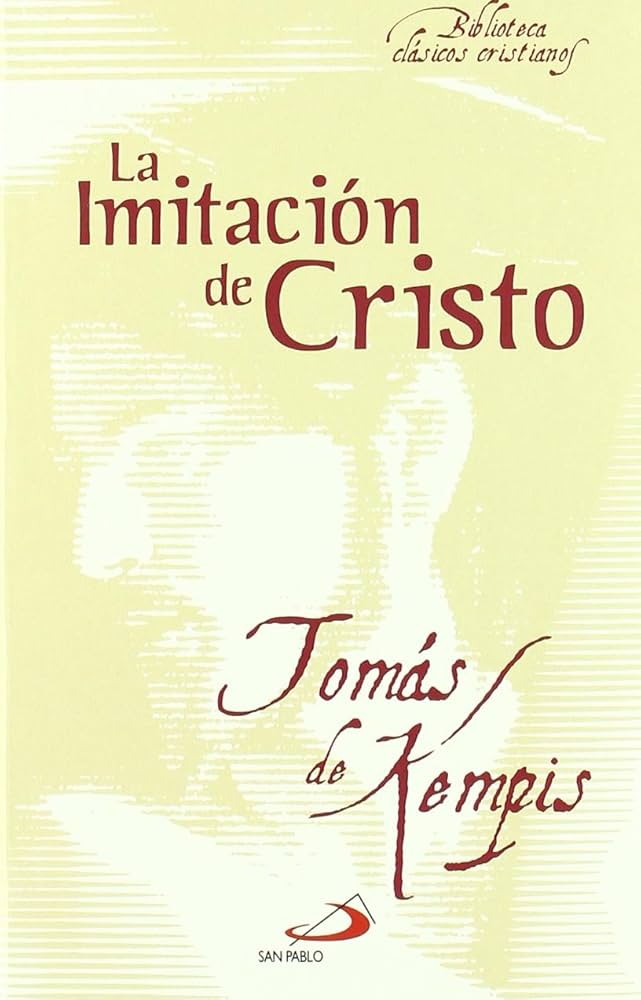
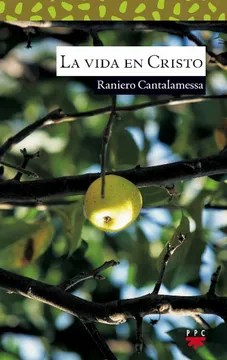
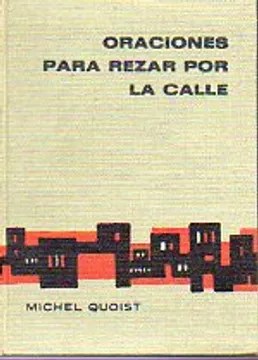
¿Qué leer al final de la Cuaresma y en la Semana Santa?


Solemnity of Saint Joseph, Spouse of the Blessed Virgin Mary (2025)

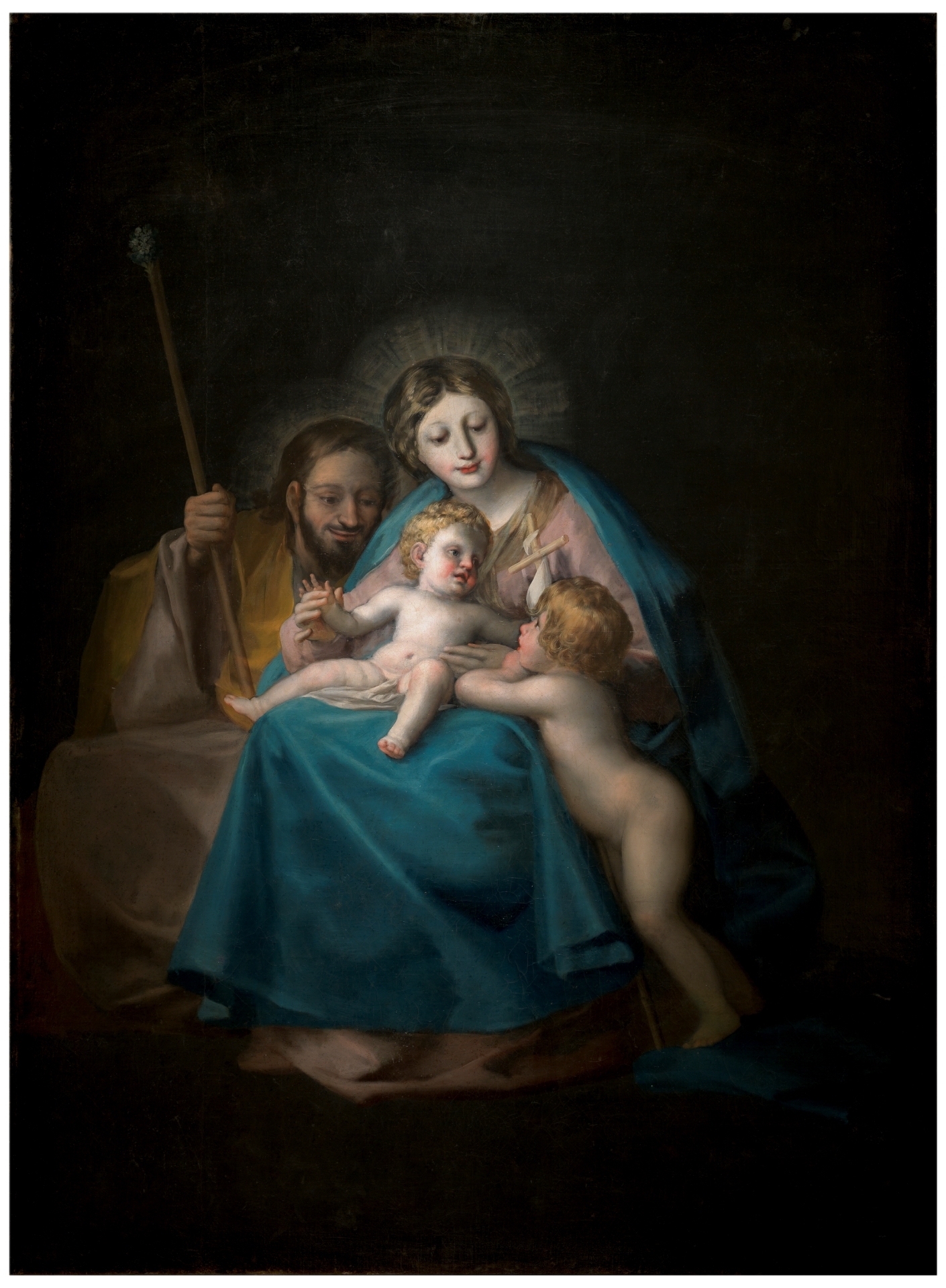
Francisco de Goya, The Holy Family with the Child Saint John the Baptist (1780), oil on canvas, Museo del Prado (Madrid)

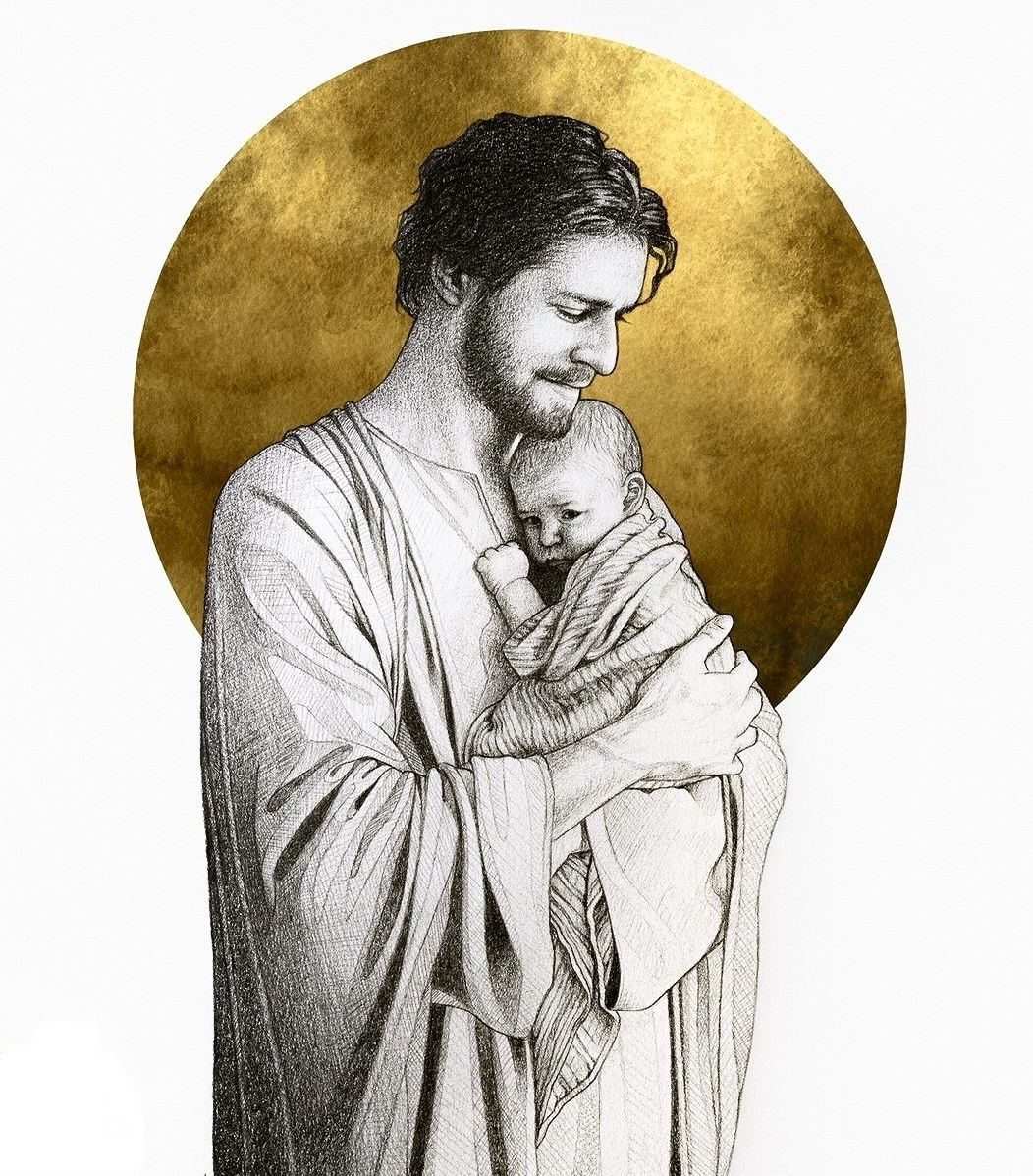
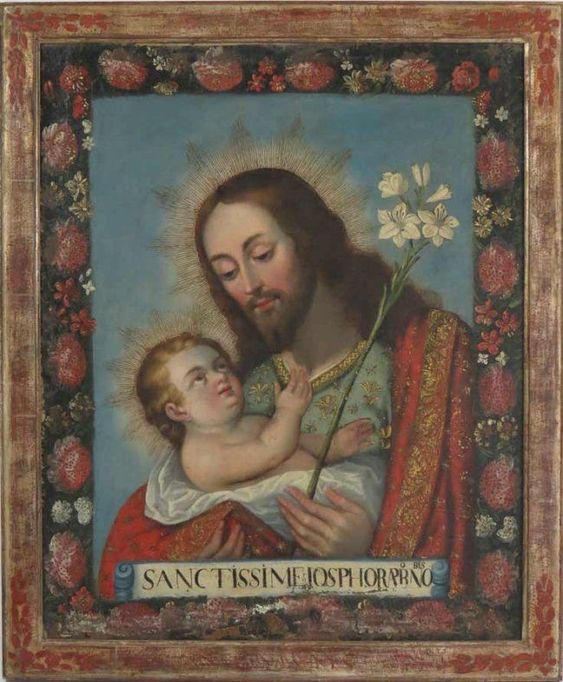
Joseph never speaks in the Gospel, and yet his silence becomes the place where God’s plan finds shelter. Faced with confusion and the risk of shame, he chooses mercy before certainty, intending to step aside quietly to protect Mary; but when the angel tells him, “Do not be afraid to take Mary into your home,” Joseph responds not with debate but with trust. He wakes and does what he is asked, welcoming into his ordinary life a mystery he does not fully understand. In that simple decision, he becomes the one who makes space for Christ to enter the world. His righteousness is not about control, but about openness — and for a parish that bears his name, his example is an invitation to receive God’s work with the same quiet courage, even when it arrives in ways that unsettle our plans and call us beyond our expectations


Solemnidad de San José, esposo de la Bienaventurada Virgen María (2026)

Señor, ten piedad.
Cristo, ten piedad.
Señor, ten piedad

Cristo, óyenos.
Cristo, escúchanos.

Dios Padre del cielo,
— ten piedad de nosotros.
Dios Hijo, Redentor del mundo,
— ten piedad de nosotros.
Dios Espíritu Santo,
— ten piedad de nosotros.

Santa María,
— ruega por nosotros.

San José,
— ruega por nosotros.
Custodio del Redentor,
— ruega por nosotros.
Esposo fiel de María,
— ruega por nosotros.
Hombre justo,
— ruega por nosotros.
Varón del silencio,
— ruega por nosotros.
Protector del hogar,
— ruega por nosotros.
Guardián de la vida oculta,
— ruega por nosotros.
Defensor de la dignidad,
— ruega por nosotros.
Modelo de obediencia,
— ruega por nosotros.
Servidor humilde del plan de Dios,
— ruega por nosotros.
Padre en la ternura,
— ruega por nosotros.
Refugio de los trabajadores,
— ruega por nosotros.
Amparo de las familias,
— ruega por nosotros.
Consuelo de los afligidos,
— ruega por nosotros.
Esperanza de los que confían,
— ruega por nosotros.

Cordero de Dios que quitas el pecado del mundo,
— perdónanos, Señor.
Cordero de Dios que quitas el pecado del mundo,
— escúchanos, Señor.
Cordero de Dios que quitas el pecado del mundo,
— ten piedad de nosotros.

Ruega por nosotros, San José,
— para que seamos dignos de las promesas de Cristo.

Oremos:
Oh Dios, que confiaste a San José el cuidado de tu Hijo y de su Madre, concédenos vivir con su misma fe y disponibilidad, para acoger tu voluntad en nuestra vida cotidiana. Por Jesucristo nuestro Señor. Amén


Fourth Sunday of Lent (Cycle A)

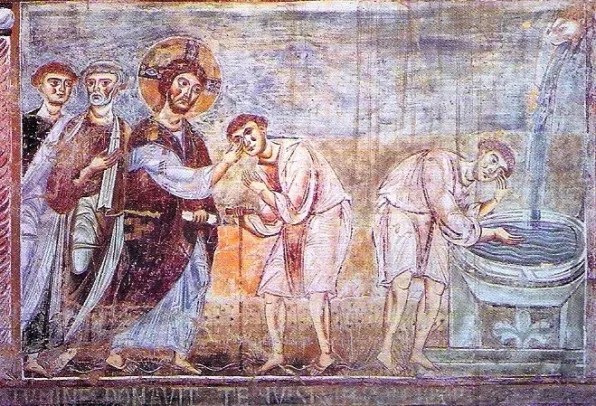
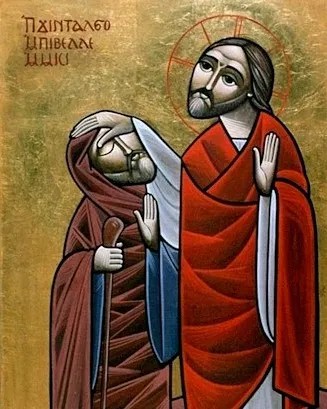
Anonymous artist, Christ and the Man Born Blind (13th century).

Light rarely arrives with thunder — more often, it unsettles quietly — and this Fourth Sunday of Lent places us inside that moment of disturbance. The man Jesus meets has never seen; his world has always been shaped by touch, sound, and memory, and Christ does not begin with a speech but with a gesture that is almost uncomfortable in its earthiness: he makes mud, places it on the man’s eyes, and sends him to wash. The light comes not as an idea but as a process — something that requires movement, trust, and time. Yet the real tension begins after he sees, because clarity unsettles those who were once comfortable in their certainty, while the man who was blind now speaks with disarming simplicity: “The one called Jesus gave me sight.” The tradition has long known that illumination is not merely about brightness but about transformation; Dante imagined the soul’s journey as a passage from shadow into a vision that changes everything, and in another register Debussy’s Clair de lune suggests how light can emerge gently, revealing what was always present rather than overwhelming it. So too does Christ act — not by forcing, but by quietly illuminating — and this Sunday invites us to ask where we may still prefer the safety of dimness, even when the light is already waiting to be received •

Debussy’s Clair de lune does not overwhelm with brilliance; it lets light appear slowly. Composed at the turn of the twentieth century, in a time that had begun to distrust dramatic certainties, the piece moves gently between shadow and illumination. Its quiet glow does not eliminate the darkness, but allows forms to emerge within it — much like the man in the Gospel, whose sight comes not as a sudden triumph but as a gradual awakening. The music helps us sense that true illumination is not about spectacle, but about learning to recognize what has been present all along •


St. Joseph Catholic Church (Dilley, TX) • Weekend Schedule

Fr. Agustin E. (Parish Administrator)

Saturday, March 14, 2026

5.00 p.m. Sacramento de la Confesión

6.00 p.m. Santa Misa.

Sunday, March 15, 2026

8.00 a.m. Sacrament of Reconciliation

8.30 a.m. Holy Mass.

10.30 a.m. Sacrament of Reconciliation.

11.00 a.m. Holy Mass.

Thursday, March 19, 2026

Solemnity of Saint Joseph, Spouse of the Blessed Virgin Mary

6.00 p.m. Holy Mass


IV Domingo de Cuaresma (Ciclo A)

Ante Él aparece un hombre que nunca ha visto, y el gesto que sigue no es grandioso ni espectacular: Jesús toma barro, lo coloca sobre sus ojos y lo envía a lavarse. La luz llega como camino, no como idea; como una experiencia que transforma desde dentro. Y cuando el hombre comienza a ver, el verdadero conflicto no está en sus ojos abiertos, sino en quienes no pueden reconocer la obra de Dios delante de ellos. Porque la luz de Cristo no se limita a iluminar lo exterior: toca la verdad del corazón. San Gregorio de Nisa hablaba del crecimiento espiritual como una entrada progresiva en la luz que no se agota, donde ver a Dios no es poseerlo, sino dejarse atraer más profundamente por Él; y en otro lenguaje, el Lux Aeterna de György Ligeti parece sostener esa misma sensación de claridad que no deslumbra ni domina, sino que envuelve silenciosamente. Así, este precioso pasaje del evangelio no trata simplemente de curación, sino de encuentro: Cristo abre los ojos para que podamos reconocer su presencia en nuestra propia historia. La pregunta no es si necesitamos luz —todos la necesitamos—, sino si estamos dispuestos a dejarnos mirar por Él para comenzar a ver de verdad •

Compuesta en 1966 para coro a capela, Lux Aeterna pertenece al período en que György Ligeti exploraba nuevas formas de escritura vocal tras su huida de la Hungría soviética hacia Occidente. En lugar de melodías tradicionales, utiliza una técnica llamada micropolifonía, donde muchas voces se mueven lentamente en líneas casi imperceptibles, creando una textura sonora continua, como un resplandor que no tiene borde. Esta búsqueda de una “luz sin contornos” marcó profundamente la música contemporánea de la posguerra y encontró incluso eco cultural al aparecer años después en el cine de Stanley Kubrick. Su atmósfera suspendida no describe la luz: la sugiere desde dentro, como una claridad que se descubre más que se impone •


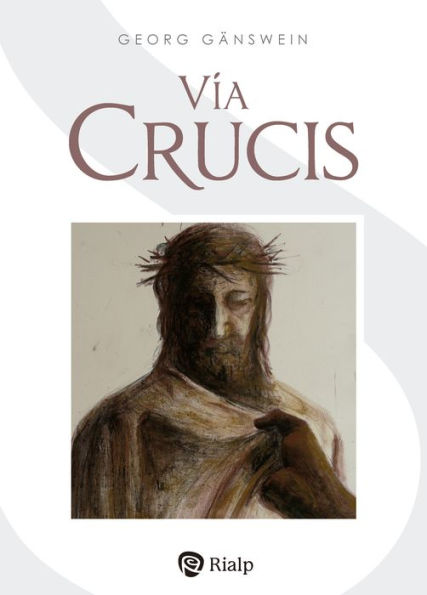
¿Qué lees estos días de Cuaresma?