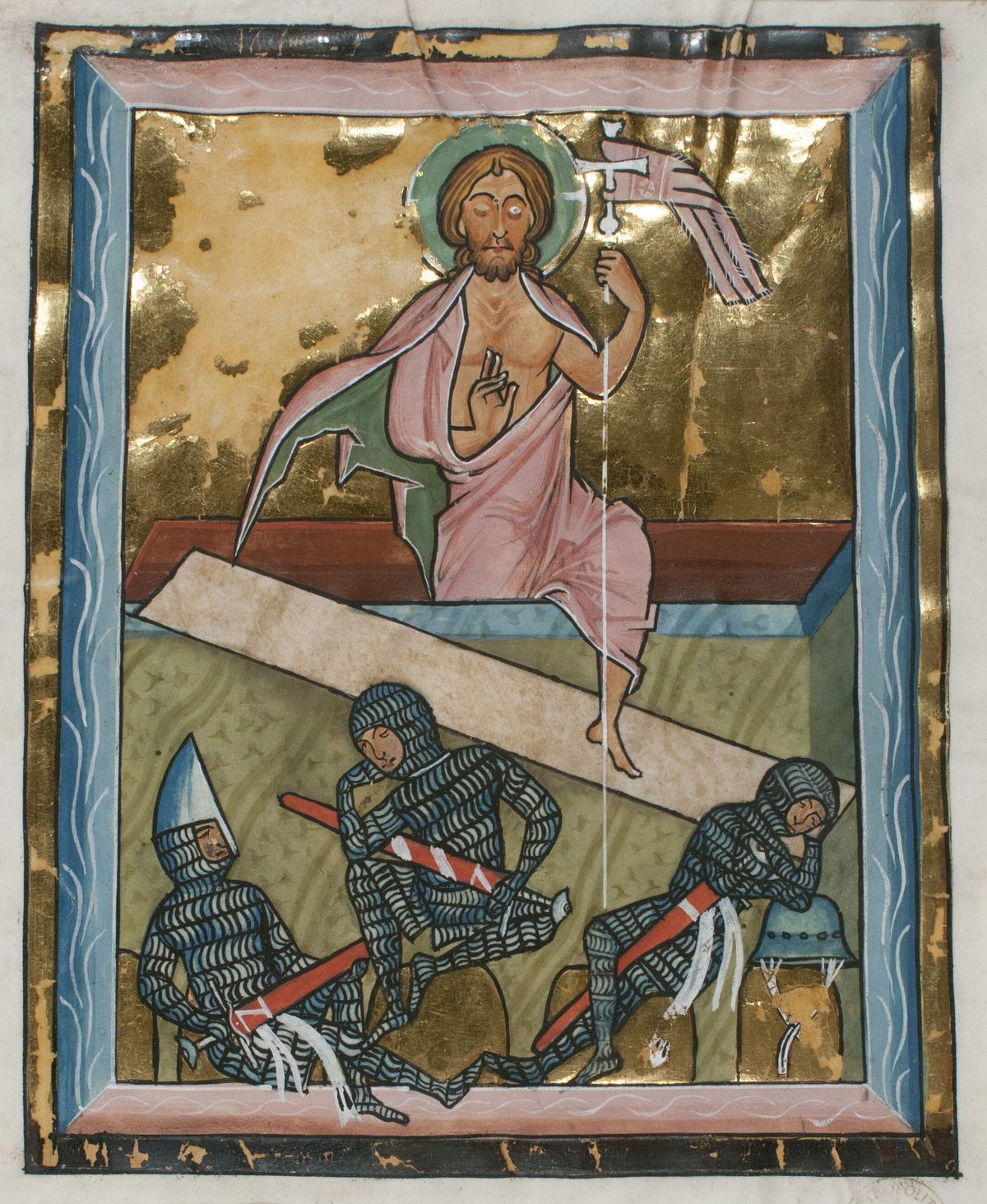
Anonymous, The Resurrection, 13th century. Illuminated manuscript leaf from a German Psalter. Berlin.
Sequence – Victimæ paschali laudes
Christians, to the Paschal Victim
Offer your thankful praises!
A Lamb the sheep redeems;
Christ, who only is sinless,
Reconciles sinners to the Father.
Death and life have contended in that combat stupendous:
The Prince of life, who died, reigns immortal.
Speak, Mary, declaring
What you saw, wayfaring.
“The tomb of Christ, who is living,
The glory of Jesus’ resurrection;
bright angels attesting,
The shroud and napkin resting.
Yes, Christ my hope is arisen;
to Galilee he goes before you.”
Christ indeed from death is risen, our new life obtaining.
Have mercy, victor King, ever reigning!
Amen. Alleluia •
It began in the dark. The Gospel of Easter morning does not open with triumph or certainty, but with a quiet and fragile moment: Mary Magdalene walking toward the tomb while it was still dark. She carries grief, confusion, and love. The cross is still painfully close, and death still seems to have the final word. Yet something is different. The stone has been moved. She runs to tell Peter and the other disciple, and soon they too are running through the pale light of early morning. It is one of the most human scenes in the Gospel: two men running toward a mystery they do not yet understand. The beloved disciple arrives first, bends down, and sees the linen cloths, but waits. Peter arrives and goes straight inside. The tomb is empty. The burial cloths lie there, and the cloth that had covered Jesus’ head is folded separately, quietly resting where death thought it had triumphed. And then the Gospel tells us, with disarming simplicity, that the other disciple entered, “and he saw and believed.” They did not yet understand everything. The Scriptures had not yet fully opened before them. But faith had begun. Easter often begins this way: not with perfect clarity, but with a sudden intuition that death has not won. The joy of that discovery is something like the soaring brightness of Mozart’s Exsultate, jubilate, where the voice seems to rise effortlessly into light, as if the heart itself had learned to sing again. Dante once wrote that love is the force that “moves the sun and the other stars.” Easter is the moment when that love reveals its deepest power: it is stronger than the grave. The tomb is empty. Christ is alive. And with that discovery, the first light of a new creation begins to spread quietly across the world •
Mozart composed Exsultate, jubilate in Milan in 1773, when he was only seventeen years old. Written for the celebrated castrato Venanzio Rauzzini, the piece is a sacred motet in Latin that invites the soul to rejoice and praise God with radiant joy. The music moves with remarkable lightness and brilliance. From the opening call to rejoice to the soaring final “Alleluia,” the voice seems almost to dance, rising freely and effortlessly, as if joy itself had taken sound. It is music that feels unmistakably Easter-like: bright, confident, full of life. In the final Alleluia, Mozart captures something rare—the sense that praise is not forced, but simply bursts forth, like light at dawn. Listening to Exsultate, jubilate is like standing at the threshold of morning, when the heart suddenly remembers how to sing •

St. Joseph Catholic Church (Dilley, TX) • Weekend Schedule
Saturday, April 4, 2026
7.00 p.m. Holy Saturday At the Easter Vigil in the Holy Night of Easter
Sunday, April 5, 2026
8.30 a.m. Holy Mass @ St. Mary’s Chapel
11.00 a.m. Holy Mass @ St. Joseph Catholic Church

Domingo de Pascua La Resurrección del Señor (2026)
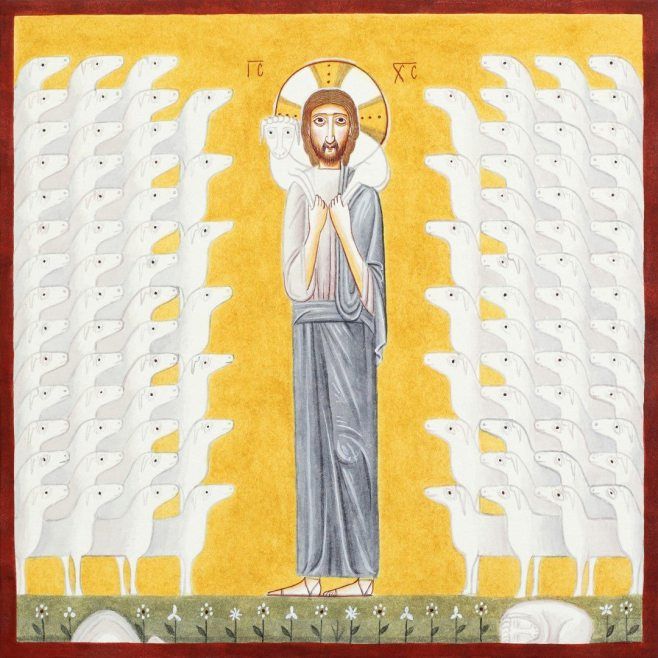
Secuencia
Ofrezcan los cristianos
ofrendas de alabanza
a gloria de la Víctima
propicia de la Pascua.
Cordero sin pecado,
que a las ovejas salva,
a Dios y a los culpables
unió con nueva alianza.
Lucharon vida y muerte
en singular batalla,
y, muerto el que es la vida,
triunfante se levanta.
“¿Qué has visto de camino,
María, en la mañana?”
“A mi Señor glorioso,
la tumba abandonada,
los ángeles testigos,
sudarios y mortaja.
¡Resucitó de veras
mi amor y mi esperanza!
Vengan a Galilea,
allí el Señor aguarda;
allí verán los suyos
la gloria de la Pascua”.
Primicia de los muertos,
sabemos por tu gracia
que estás resucitado;
la muerte en ti no manda.
Rey vencedor, apiádate
de la miseria humana
y da a tus fieles parte
en tu victoria santa •
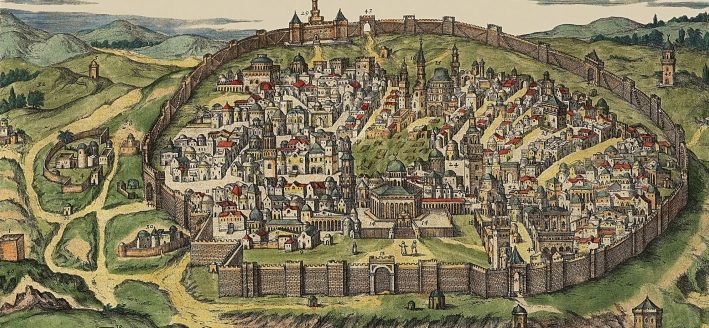
La Pascua comienza en silencio, antes del sol, antes de las certezas, antes incluso de que alguien entienda lo que está ocurriendo. María Magdalena camina hacia el sepulcro mientras todavía es de noche. El Evangelio insiste en ese detalle: “cuando aún estaba oscuro.” La fe cristiana nace precisamente en esa frontera entre la noche y la luz. Ella no va buscando un milagro; va buscando a Jesús, o más bien lo que queda de Él. El Maestro ha muerto y la cruz parece haber cerrado la historia. Pero al llegar descubre algo desconcertante: la piedra ha sido removida. Corre entonces hacia los discípulos, y pronto Pedro y el otro discípulo están corriendo también hacia el sepulcro. Es una escena profundamente humana: dos hombres que corren con el corazón agitado, entre el miedo y la esperanza, hacia un misterio que todavía no saben nombrar. Dentro del sepulcro no hay nada espectacular: no hay resplandor ni señales grandiosas. Solo los lienzos y el silencio. Y sin embargo, en ese silencio ocurre algo decisivo. El Evangelio lo dice con una sobriedad que atraviesa los siglos: “vio y creyó.” La fe en la resurrección comienza así, con una intuición que se abre paso lentamente en medio del desconcierto. Todavía no lo comprenden todo, todavía no saben explicarlo, pero algo ha cambiado para siempre: el sepulcro está vacío. Dante, al final de su viaje en la Divina Comedia, hablaba del amor que “mueve el sol y las demás estrellas.” La Pascua es la revelación de ese amor, un amor tan fuerte que ni siquiera la muerte puede detenerlo. Cristo ha vencido a la tumba, y desde aquella madrugada, cuando la oscuridad empezaba apenas a retirarse de Jerusalén, una luz nueva ha comenzado a extenderse por el mundo •

lEcTurAs dE pAScuA