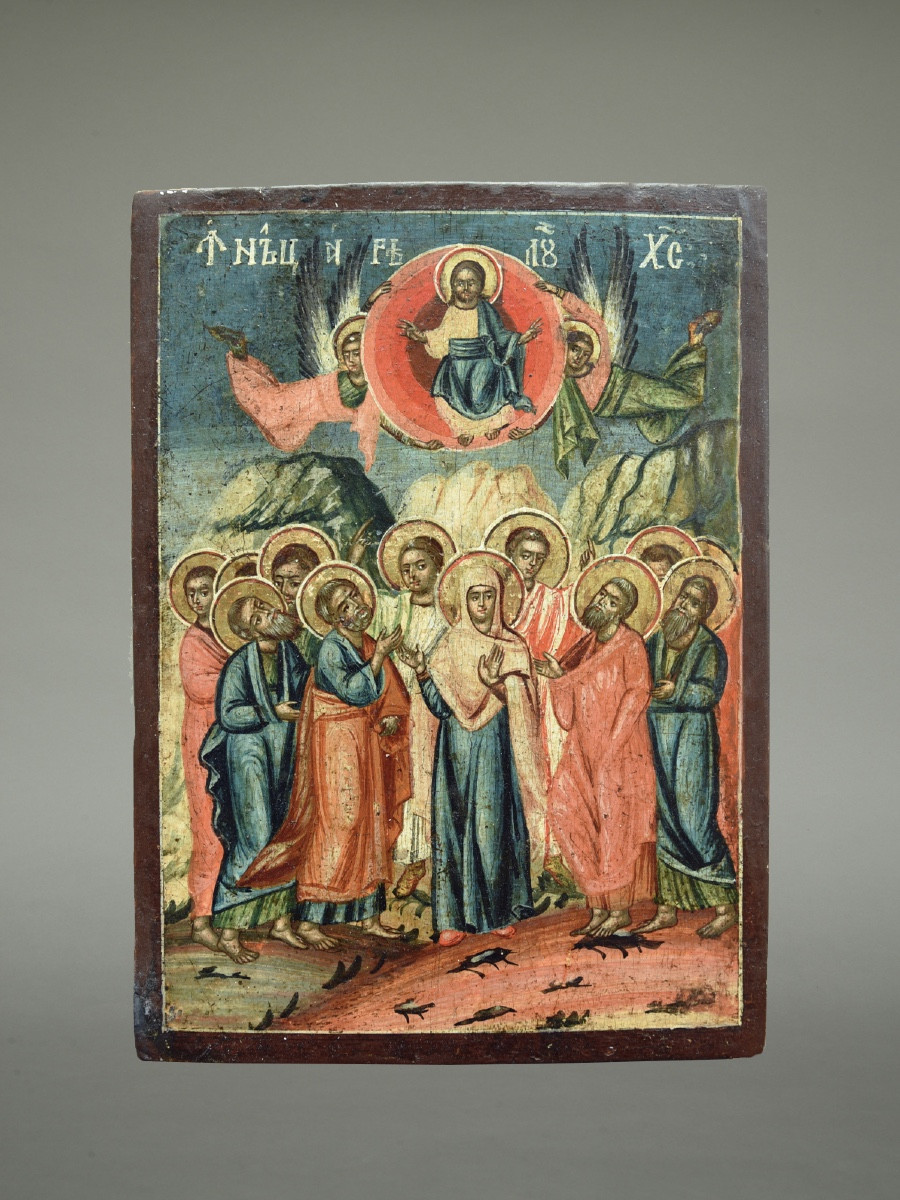
Anonymous, The Ascension Of Christ (18th century, Greece), tempera on levka on wood panel, Galerie D’antiquités Martin Puch, Oberhaching (Munich).
The Ascension of the Lord can feel, at first, like a strange kind of feast. Christ rises into heaven, the disciples remain on earth, and the scene carries something almost bittersweet about it. We understand presence; we struggle with absence. And yet the Church celebrates this moment not with sadness, but with joy. Why? Because the Ascension is not the story of Jesus abandoning the world, but the revelation of humanity’s destiny in Him. In Christ, our human nature has entered the very life of God. Heaven is no longer a distant religious idea or vague symbol of comfort; it now bears a human face. The wounds Christ carried through suffering and death are now glorified at the right hand of the Father. That changes the meaning of history itself. Our lives are not trapped inside an endless cycle of anxiety, distraction, achievement, disappointment, and death. Something of us has already gone ahead. And yet the Gospel does not allow the disciples to remain motionless, staring into the sky. They are sent back into the world. That is the tension at the heart of the Christian life: our hearts belong to heaven, but our vocation is lived here—in ordinary responsibilities, fragile families, hidden sacrifices, unnoticed acts of fidelity, and a culture often tempted to live as though God were unnecessary. The Ascension teaches us that hope is not escape. Christians do not withdraw from the world because Christ ascended; they learn to live within it differently, carrying the quiet certainty that history ultimately belongs not to chaos, ideology, power, or fear, but to the risen Lord. Perhaps that is why this feast feels especially important now, in an age constantly pulling our attention downward—toward noise, outrage, vanity, and exhaustion. The Ascension lifts the gaze of the Church again. Not so that we flee the earth, but so that we remember its true destiny. Christ remains present: in the Eucharist, in the Scriptures, in His Church, in the poor, and in the hidden work of grace within ordinary lives. And from that presence comes the mission entrusted to every disciple: to live in such a way that others begin to see, even faintly, that heaven is real, and that human life was made for communion with God •
Few sacred works capture the majesty and cosmic confidence of the Ascension quite like George Frideric Händel’s Dixit Dominus. Composed when Händel was barely in his twenties, the piece sets Psalm 110 — “The Lord said to my Lord: Sit at my right hand” — a text the Church has long associated with the exaltation and kingship of Christ after His Resurrection and Ascension. The music does not sound sentimental or introspective. It sounds triumphant, almost overwhelming at times, as though heaven itself were breaking open. Voices and instruments move with urgency, fire, and grandeur, reflecting not only the glory of the risen Christ, but the conviction that history now belongs to Him. That is precisely why the work feels deeply connected to the Ascension. The feast is not about absence, but enthronement. Christ ascends not to retreat from the world, but to reign over it — carrying our humanity into the life of God. Händel’s Dixit Dominus gives musical form to that vision: exaltation, authority, radiance, and the strange, joyful certainty that heaven and earth are no longer separated in the same way again •

St. Joseph Catholic Church (Dilley, TX) • Weekend Schedule

Fr. Agustin E. (Parish Administrator)
Saturday, May 16, 2026
4.00 p.m. Sacrament of Matrimony for Natalie & Dionicio.
5.00 p.m. Sacramento de la Confesión
6.00 p.m. Santa Misa.
Sunday, May 17, 2026
8.00 a.m. Sacrament of Reconciliation
8.30 a.m. Holy Mass.
10.30 a.m. Sacrament of Reconciliation.
11.00 a.m. Holy Mass.
12.30 Sacrament of Baptism for Anastasia Ines Garcia
Solemnidad de la Ascensión del Señor (2026)
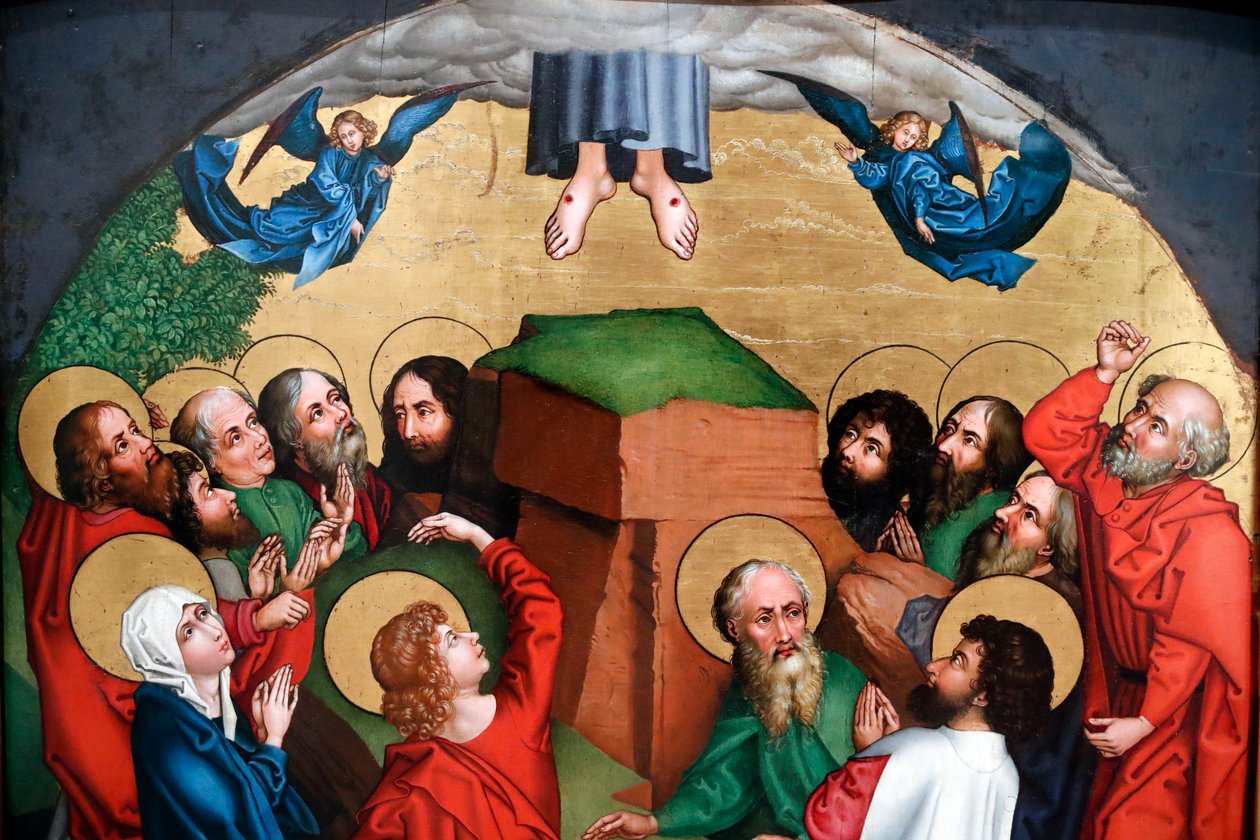
M. Schongauer, La Ascensión de Jesucristo (ca. 1480), óleo sobre tela, Museo Unterlinden (Colmar, Francia)
¿Y dejas, Pastor santo,
tu grey en este valle hondo, escuro,
con soledad y llanto;
y tú, rompiendo el puro
aire, ¿te vas al inmortal seguro?
Los antes bienhadados,
y los agora tristes y afligidos,
a tus pechos criados,
de ti desposeídos,
¿a dó convertirán ya sus sentidos?
¿Qué mirarán los ojos
que vieron de tu rostro la hermosura,
que no les sea enojos?
Quien oyó tu dulzura,
¿qué no tendrá por sordo y desventura?
Aqueste mar turbado,
¿quién le pondrá ya freno? ¿Quién concierto
al viento fiero, airado?
Estando tú encubierto,
¿qué norte guiará la nave al puerto?
¡Ay!, nube, envidiosa
aun deste breve gozo, ¿qué te aquejas?
¿Dó vuelas presurosa?
¡Cuán rica tú te alejas!
¡Cuán pobres y cuán ciegos, ay, nos dejas!
(Fray Luis de León, Oda XVII en la Ascención del Señor)
La Ascensión del Señor corrige una tentación muy humana: pensar que Dios solo está presente en lo extraordinario. Los discípulos habrían querido quedarse mirando al cielo, suspendidos en el instante, reteniendo una experiencia luminosa. Pero el Evangelio no termina allí. Cristo asciende y, casi inmediatamente, comienza el tiempo de la Iglesia: el tiempo de volver a Jerusalén, de esperar, de rezar, de anunciar, de construir comunidad, de partir el pan, de aprender a reconocer la presencia de Dios en lo cotidiano. Quizá por eso la Ascensión es una fiesta profundamente madura. Obliga a pasar de una fe apoyada solamente en emociones visibles, a una fe capaz de permanecer incluso cuando no todo se siente claro o consolador. Jesús ya no será tocado como antes, pero estará presente de un modo más profundo. No menos real. Más interior. Más universal. Hay algo también muy humano en esta escena. Cristo asciende bendiciendo. Ese detalle importa. No se va con reproches hacia sus discípulos frágiles, confundidos y todavía llenos de miedo. Se va bendiciendo. Como si la última imagen que quisiera dejar grabada en sus corazones fuera precisamente esa: sus manos levantadas sobre ellos. Y quizá nosotros necesitamos recordar eso más de lo que pensamos. Porque vivimos en un tiempo marcado por el cansancio, la saturación y la sensación constante de incertidumbre. La Ascensión no elimina mágicamente las dificultades del mundo, pero sí cambia la dirección de la mirada. Nos recuerda que la historia no está cerrada sobre sí misma; que el ser humano no fue creado solamente para producir, consumir, competir y desaparecer; que nuestra vida tiene una apertura hacia lo eterno. Por eso esta fiesta no invita a desentendernos de la tierra, sino a habitarla de otra manera: con más serenidad, con menos desesperación, con más libertad interior. El cristiano sigue trabajando, sufriendo, amando y luchando como todos los demás, pero sabe que el horizonte último de la vida no termina en el vacío. Cristo ha entrado en la gloria llevando consigo nuestra humanidad. Y desde allí, sigue bendiciendo al mundo •
Compuesta por uno de los grandes músicos católicos del siglo XX, esta obra musical no intenta describir la Ascensión de manera dramática o triunfalista; más bien crea una atmósfera de contemplación, silencio y misterio. Hay en su música una sensación de altura, de luz y de eternidad que parece levantar lentamente el corazón sin arrancarlo de la tierra. Precisamente por eso dialoga tan bien con esta fiesta: una fe que mira al cielo, pero que aprende a permanecer fiel en medio de la vida cotidiana •

¿Qué lees?