Solemnity of All Saints (2020)

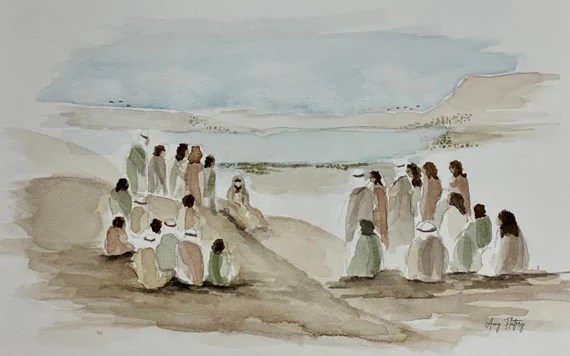
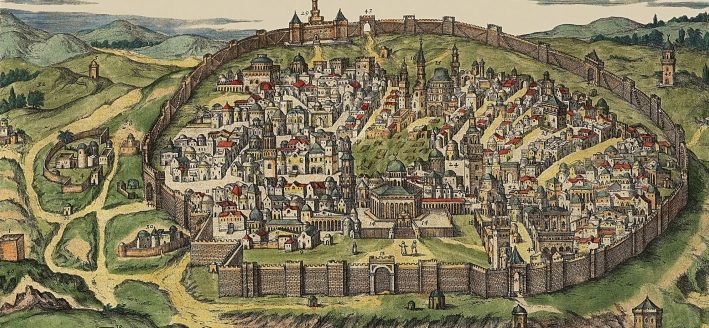
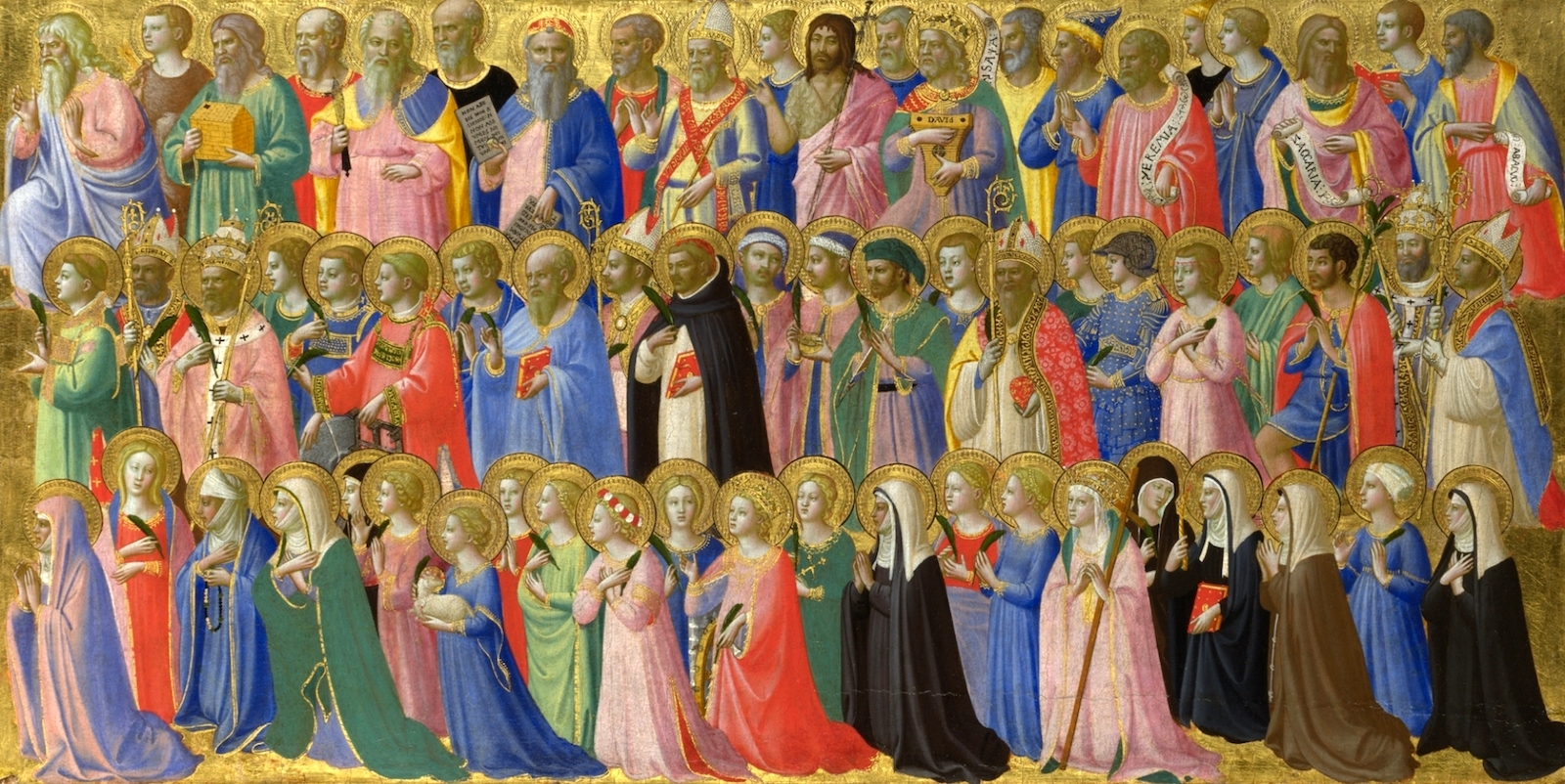
Today the Lord Jesus calls us to be heroes. On the Mountain of the Beatitudes, today’s Gospel, he calls us away from being self-centered to being God centered.  He calls us to be poor in Spirit.  Whether we are rich or poor or somewhere in between, the center of our lives must be God, not money.  He tells us that we cannot close our eyes to the atrocities of the world.  «Blessed are those who mourn.»  The Lord wept over Jerusalem because it refused to recognize the presence of God in its mist.  We mourn over a society that allows a million and a half abortions a year.  The meek who inherit the earth are those who are not going to allow hatred to dominate their lives. They will fight for what is right, but they will be merciful, they will be sincere, they will be peacemakers for the sake of the Lord. Finally the beatitudes speak about those who are willing to suffer the mockery of the world, those who would rather be in the minority who choose God than be in the majority of those who go along with the pagan materialism of society. The saints, whom we honor today, give us an example of people emptying themselves to allow God’s plan to work in them, people who have the courage to be genuine heroes. They are not plaster or plastic statues of unreal people in pietistic poses.  They are real people from every walk of life who met the challenge of Christianity and conquered.  They are  priests and nuns, like Francis of Assisi and Catherine of Sienna, married people and single people, like Thomas More and Rose of Lima, very old and very young, like Theresa of Avila and Theresa of Liseaux, They are the wealthy, like Thomas Beckett, the middle class, like Ignatius Loyola, and poor like Peter Claver.  They were geniuses, like Thomas Aquinas, and people of simple intelligence but vast wisdom, like John Vianney. All of these and all whom I could not possibly name accepted the challenge of Christianity and had the courage to wash their baptismal robes in the Blood of the Lamb, as Revelation says.  They had the courage to live the sacrifice of Christ in their lives.  They had the courage to make the love of God real in the world. The Book of Revelations also notes that there is a throng of people before the throne of the lamb, people from every race and nation, a number too numerous for anyone to count.  These are those who have gone before us, who live now and who will live in the future who are willing to sacrifice everything for the Kingdom of God.  These are the true heroes following the greatest of all heroes, Jesus Christ.  Am I among that number?  Are you? Do we have the courage to proclaim God’s love with our lives? Well, that is why we pray today on the Solemnity of All Saints. We pray for the courage to follow the Lord.  We pray for the courage to put God first in our lives.  May the Lord help us to stand for him and with him. Today  we pray for the courage to be genuine heroes • AE


Fr. Agustin’s Schedule for the Solemnity of All Saints and The Commemoration of All the Faithful Departed(All Souls)

Saturday, October 31, 2020.

4.00 p.m. Sacrament of Confession

5.30 p.m. English Mass @ St. Peter Prince of the Apostles Catholic Church.

Sunday November 1, 2020.

10.30 a.m. English Mass @ Our Lady of Grace Catholic Church (Outdoors mass)

12.00 p.m. English Mass @ Our Lady of Grace Catholic Church (Main church)

4. 00 p.m. Sacrament of Confession

5.00 p.m. English Mass @ Trinity University (Margarite B. Parker Chapel)

Monday, November 2

5.30 p.m. English Mass @ St. Peter Prince of the Apostles Catholic Church.


Solemnidad de Todos los santos (2020)

El santo es un bienaventurado, un hombre o una mujer feliz. La santidad, antes que otra cosa, es una experiencia compartida de la felicidad de Dios. Donde hay experiencia de gracia hay siempre expresión de alegría. Se nos acusa, a veces, a los cristianos de ir por la vida con un talante mesiánico. Queremos salvar a todos: a los pobres de su pobreza; a los pecadores de su pecado; a los no creyentes de su ateísmo. No hay esfuerzo creíble de salvación sin una experiencia gozosa de haber sido salvados. Los esfuerzos que no brotan de una sobreabundancia de felicidad suelen ser fruto del resentimiento o de la autosuficiencia. Es asi. No pueden ser expresión de evangelio, de la Buena Bueva. ¡Menos salvadores y más salvados! ¡Menos luchadores y más santos! Este parece ser el grito profético que resuena en un día como hoy. Hablar de santos felices no es hablar de gente que no se ha manchado las manos, que ha vivido sin problemas. Nos estamos refiriendo a millones de mártires, vírgenes, confesores, profetas, padres y madres de familia … que, en medio de debilidades y problemas, supieron aceptar la elección de Dios. Como decía Henry Nouwen “la gran batalla espiritual empieza -y nunca termina- por afirmar nuestra condición de elegidos. Mucho antes de que ninguna persona nos hablara en este mundo, se dirigió a nosotros la voz del amor eterno. Nuestra condición de seres valiosísimos, únicos en nuestra individualidad, no se nos ha dado por aquellos a los que hemos encontrado en el reloj del tiempo -el de nuestra breve existencia cronológica- sino por el Uno que nos ha elegido con su amor terno, un amor que existió desde toda la eternidad y durará para siempre”. Hay unos famosos versos endecasílabos que son un buen recordatorio de nuestro fin último, y dicen más o menos asín: ¿Yo para qué nací? Para salvarme./ Que tengo que morir es infalible./ Dejar de ver a Dios y condenarme / triste cosa será, pero posible./ ¿Posible, y río y duermo y quiero holgarme? / ¿Posible, y tengo amor a lo visible? / ¿Qué hago, en qué me ocupo, en qué me encanto? / Loco debo de ser, pues no soy santo. La santidad de la que habla el poema tiene que ver claramente con una huida de todo lo visible y profano. Quiere ser reflejo del Dios tres veces santo, justo y trascendente. En esa perspectiva, salvarse implica, en cierta medida, despreciar esta vida visible en la que nos ha tocado vivir y desear intensamente la futura invisible: Porque sé que nací para salvarme / y tengo que morir -es infalible-,/ porque dejar de verte y condenarme / sólo con otro Dios será posible,/ por eso río, duermo, quiero holgarme,/ Señor, y tengo amor a lo visible./ Y sólo me pregunto en qué me encanto / cuando huyo de la vida por ser santo. Los santos que hoy conmemoramos no huyeron de la vida, sino que supieron descubrir en ella al Dios de la vida que no acaba. Por eso acercarse a ellos es contagiarse de ganas de vivir y de desvivirse. Los santos son nuestros mejores aliados para ir creando una “cultura de la vida” en las condiciones de muerte que, con frecuencia, tenemos que afrontar. “Ponga un santo en su vida y acabará siendo como él” • AE



Thirtieth Sunday in Ordinary Time (Cycle A)

What can we say about love? I mean, everything has been said so often! Love here, love there. He loves me, he loves me not. Love, love, love. You get kind of tired of the word love. And perhaps we get a little tired of the word love because we use it so carelessly #superficially And the things that really aren’t love, but a disguise for love or a pretence for love, are easy on the lips. In today’s gospel they bring a question, “What is the most important Commandment?”. Today the same question is addressed to you and me. All that writing, all that talking, all those sermons on Sunday, have only one subject and that is: love God with your whole heart and love your neighbour as yourself. What does it mean to love your neighbour as yourself? He’s saying, “Love your neighbour because your neighbour is yourself, and if you hate your neighbour you’re hating yourself, and if you misuse your neighbour you’re misusing yourself, and if you’re going to war you’re warring against your neighbour, you see.” Because there’s only one kind of love and that love is the love of God. And there is no limitations, choices, in the use of the word love for one who says, “God loves me and I love.” And we forget that there’s no such thing as me just loving. Loving is a verb. It has an object: “I love this. I love that. I love you. I love him. I love God.”And to love means to give your whole self, holding nothing back. If you’re holding things back, you really don’t know what love is yet. Love is a totality of surrender. How do we know this? “God so loved the world that He gave His only begotten Son.” And what did His Son do? He died on a cross, a failure. And why did he do that? So that we might understand the great mystery is not that God loves us, but the kind of love that he loves us with. He would die and suffer and give his whole being as a human being, as a life. He would do that just for one of us. And what does that say about us? Well, we shouldn’t walk around saying we’re nothing and try to be humble. Yes, we should be humble in the way God is humble. The whole Gospel is teaching us how to love. And the only way we learn is letting Jesus come into our hearts and carrying him with us in the ordinariness of our lives. Heaven is here because God is here. And God is here because His people are here. And every one of us is made in the image and the likeness of God. And then we say quickly, “And God is love.” And that’s why today we come together each day, and come together whenever we come together, no matter where we are. This is the great secret, the great secret that comes with a baby born in a hopeless little country with a hopeless little village, in a hopeless little barnyard, to teach us one thing: the magnificence and greatness of life. To become man, to bring God to each and every person in this whole world, that they might experience, not only in their hearts but in their families and their friends, the lovely greatness of God Himself. And we are all doing that all the time. Do we fail? Yes. The Bible says the good man falls seven times a day. So God isn’t expecting miracles in that kind of way. What is He expecting? He’s expecting that every time we fall and refuse to love, we get up again and keep moving forward. And every step forward brings all of civilisation one step closer to realising our destiny, our importance, but most of all, how much we are loved by a Creator who will not let go of us for all eternity • AE


Fr. Agustin’s Schedule for Thirtieth Sunday in Ordinary Time.

Sunday, October 25, 2020.

9.00 a.m. English Mass @ St. Peter Prince of the Apostles Catholic Church

11.00 a.m. English Mas @ St. Peter Prince of the Apostles Catholic Church

5.30 p.m. English Mas @ St. Peter Prince of the Apostles Catholic Church


XXX Domingo del Tiempo Ordinario (Ciclo A)

Se ha ido extendiendo cada vez más entre nosotros la convicción de que una persona es verdaderamente sana y adulta cuando sabe liberarse de las represiones que impiden la expansión de sus impulsos. La corriente de pensamiento que sigue las ideas de Freud propuso que nada mejor para alcanzar la libertad que  rompiendo con cualquier normativa ética que pudiera «bloquear» el libre dinamismo de sus instintos, así es la satisfacción del placer la que conducirá a los hombres a la libertad y la revolución sexual la que nos traerá la verdadera liberación (la idea es de W. Reich[1]). ¿Cuál ha sido el resultado? Lejos de encontrarnos hombres y mujeres más sanos y maduros somos testigos de nuevas neurosis, de hombres y mujeres obsesionados por el placer, encerrados en una soledad cada vez mayor, incapaces de amar y abrirse al otro. ¿Qué libertad es ésta que consiste en liberarnos de las represiones para quedar sometidos a la esclavitud de los instintos? ¿No es ésta una liberación sin libertad? ¿Una liberación engañosa de la que no surge un hombre realmente dueño de su destino? En el corazón del mensaje del Señor hay una llamada a abrirnos radicalmente al amor, y el camino es muriendo a nosotros mismos y siguiéndolo a Él. La de Jesus es una llamada que nos recuerda que si prescindimos del amor, del sacrificio y del esfuerzo, siempre volveremos a la esclavitud. Un hombre incapacitado para amar no es libre, por mucho que proclame su libertad. Los cristianos estamos llamados, hoy más que nunca, a mostrar que el amor, la entrega generosa y la solidaridad, lejos de hacernos vivir de manera reprimida y enfermiza, son el camino acertado para saborear con gozo la existencia, y para crecer como hombres sanos, libres y felices y, al final, al atardecer de la vida, el pasaporte para vovler a Él, el Amor eterno • AE

[1] Wilhelm Reich (1897- 1957) fue un médico, psiquiatra y psicoanalista austriaco, de origen judío, nacionalizado estadounidense. Es célebre por sus contribuciones a la sexología, a la terapia psicoanalítica, su compromiso en favor de la liberación sexual y sus investigaciones sobre la «energía de orgón»


Twenty-ninth Sunday in Ordinary Time (Cycle A)

Titian, Cristo della moneta (1516), Gemäldegalerie Alte Meister, Dresden

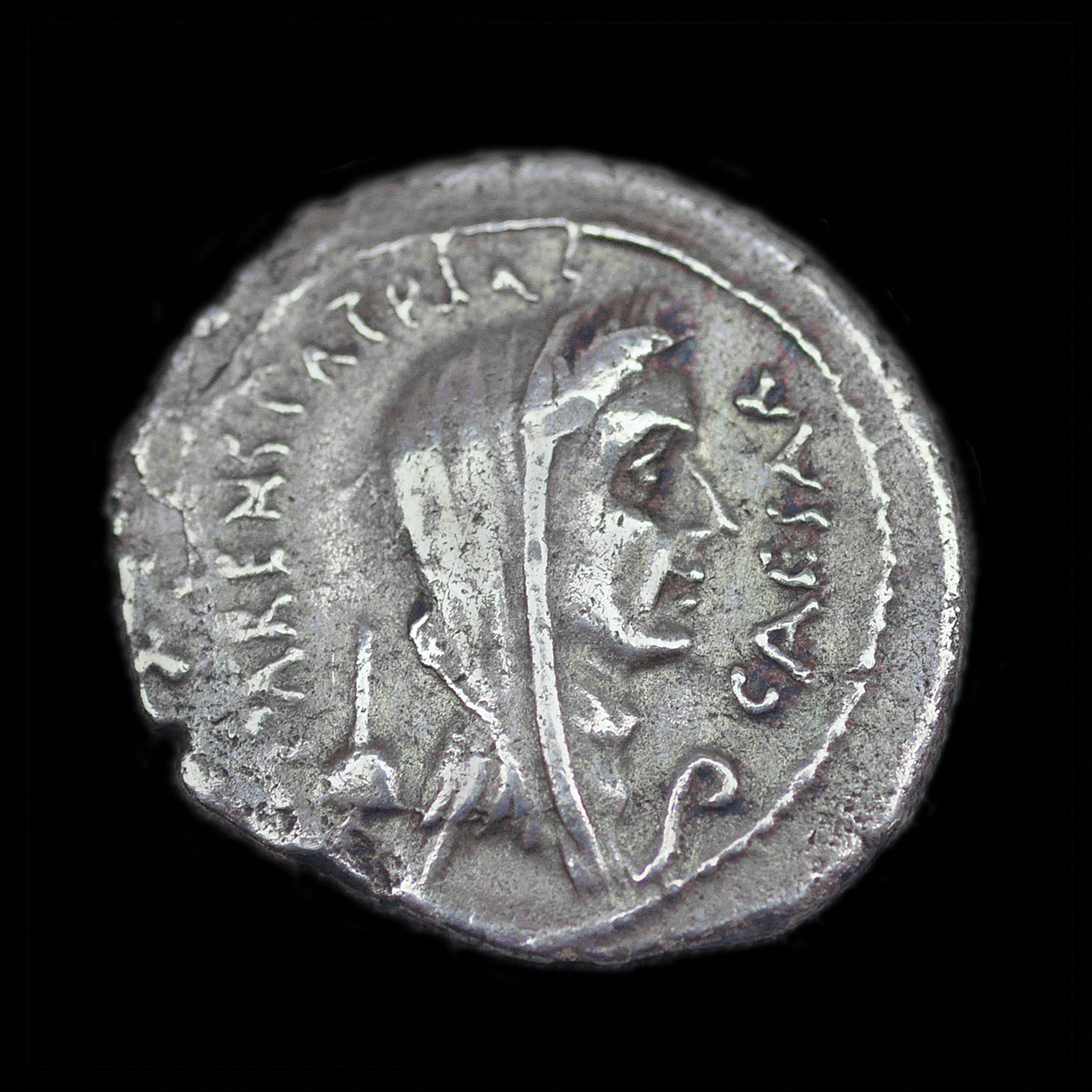
Today’s gospel, in which Jesus’ enemies try to entrap him by asking whether they should pay tax to Caesar or not, is often read as making a distinction between politics and religion. There is Caesar’s world and that of God. Priests should keep out of politics and stick to spirituality. But this to misunderstand what Jesus is saying. Every human being is made in the image of God and so belongs to God. For Christians, politics is building the polis, the community, in which God’s own children can live in dignity and happiness, as we await God’s gift of the heavenly city. Religion cannot be reduced to politics, but it has consequences for how we understand the point of politics. So what is this clash between Jesus and his enemies about? They give us the clue: ‘Teacher, we know that you are sincere, and teach the way of God in accordance with truth, and show deference to no one; for you do not regard people with partiality.’ They contrast two ways of seeing the world: God’s true way, and a human way, in which everything is viewed through the prism of wealth and status. Jesus’s opponents are caught up in that human way, speedily producing Caesar’s coin from their pocket, although that image would have polluted them. The Herodians especially belonged to the world of wealth and power. They are so blinded that they do not see that the man they are trying to trap is himself the very image of God made human. If one sees the world through the spectacles of status and money, the poor disappear. Etienne Grieu SJ wrote: ‘A world dominated by competition engages in a formidable task of classification, not only of performances but also of people. Right at the bottom of the chart are those who are not efficient enough. They thus become invisible to others, as they are unable to demonstrate their usefulness in any of the various exchanges we take part in… They also feel humiliated because they scarcely can have the means to say who they are or to make people notice the unique treasure they bear.’ We are all, in varying degrees, bifocal. Sometimes we are bewitched by the Caesars of our time, the wealthy and the famous, and lose sight of the beauty of those who do not count. Let God’s grace cleanse our eyes! • AE


Fr. Agustin’s Schedule for Sunday October 18, 2020.

Twenty-ninth Sunday in Ordinary Time.

Sunday, October 18, 2020.

12.00 a.m. English Mas @ Our Lady of Grace Catholic Church (indoors mass)

5.00 p.m. English Mas @ Trinity University (Margarite B. Parker Chapel)


XXIX Domingo del Tiempo Ordinario (Ciclo A)

Pocas frases de Jesús han sido objeto de interpretaciones más interesadas e, incluso, de manipulaciones como ésta que escuchamos en el evangelio de hoy: «Dad al César lo que es del César y a Dios lo que es de Dios». Estas palabras de Jesús han sido utilizadas para establecer una frontera clara entre lo político y lo religioso y defender así la autonomía absoluta del estado ante cualquier interpelación hecha desde la fe. Según esta interpretación, Jesús habría colocado al hombre, por una parte, ante unas obligaciones de carácter cívico-político y, por otra, ante una interpelación religiosa. Como si el hombre tuviera que responder de los asuntos socio-políticos ante el poder político y de los asuntos religiosos ante Dios. Pero el verdadero sentido de las palabras del Señor es otro. El acento de las palabras de Jesús está en la parte final. Le han preguntado insidiosamente por el problema de los tributos y Jesús resuelve prontamente el problema. Si tienen una moneda que pertenece al césar, habrán de someterse a las consecuencias que ello implica. Pero Jesús introduce una idea nueva que no aparecía en la pregunta de los adversarios. De forma inesperada, introduce a Dios en el planteamiento. La imagen de la moneda pertenece al césar, pero los hombres no han de olvidar que llevan en sí mismos la imagen de Dios y, por lo tanto, sólo le pertenecen a El. Aquí es cuando podemos entender mejor al Señor. «Dad al césar lo que le pertenece a él, pero no olvidéis que vosotros mismos pertenecéis a Dios». Para Jesús, el césar y Dios no son dos autoridades de rango semejante que se han de repartir la sumisión de los hombres. Dios está por encima de cualquier césar y éste no puede nunca exigir lo que pertenece a Dios. En unos tiempos en que crece el poder del estado de manera insospechada y a los ciudadanos les resulta cada vez más difícil defender su libertad en medio de una sociedad burocrática donde casi todo está dirigido y controlado perfectamente, los creyentes no hemos de dejarnos robar nuestra conciencia y nuestra libertad por ningún poder. Hemos de cumplir con honradez nuestros deberes ciudadanos, pero no hemos de dejarnos modelar ni dirigir por ningún poder que nos enfrente con las exigencias fundamentales de la fe • AE


Twenty-eighth Sunday in Ordinary Time (Cycle A)

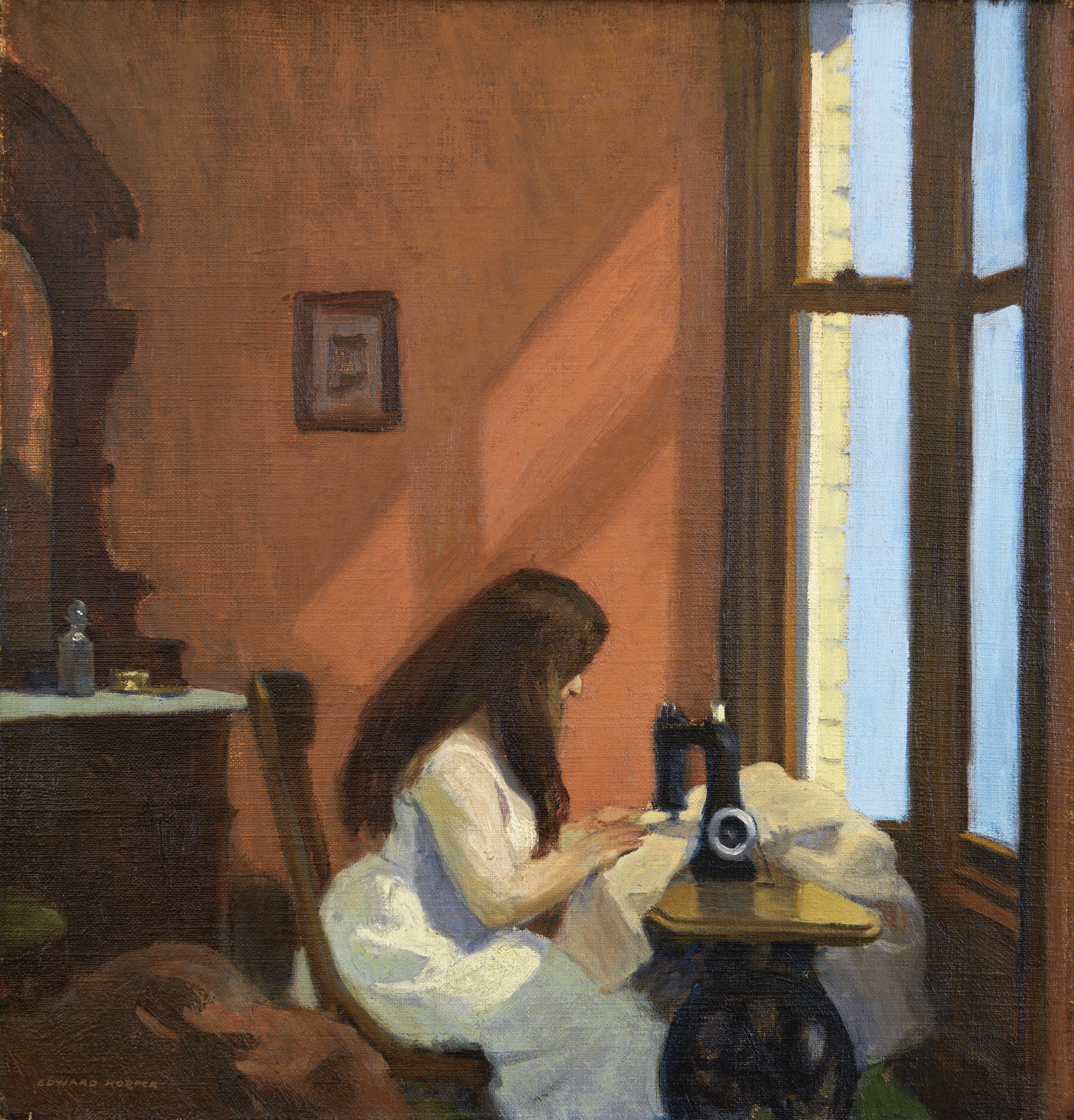
E. Hopper, Girl at a Sewing Machine (ca. 1921), oil on canvas, Museo Thyssen-Bornemisza (Madrid)

The gospel talks about the wedding banquet that a king prepares for his son, only to have the invited guests refuse to come and even mistreat his servants.  The King then invites strangers to the meal, who have a great time. Then, in what really is a second parable, the king spots a man without the proper wedding garment. He throws the man out into the streets, away from the Banquet of Love, where there will be a weeping a gnashing of teeth. Perhaps you might wonder «Why is the Host so upset over this man’s clothes?»  After all, this is a traveler.  How can he be expected to have a fine wedding garment? That would be missing the point for the sake of the detail, something we always have to be careful of regarding scripture.  This parable is not about wearing clothes. It is about wearing Jesus Christ. «Clothe yourselves with the Lord Jesus Christ,» St. Paul tells the Romans, the Galatians, the Colossians, and the Ephesians[1]. The man who came without the proper clothes is the Christian in name only, who refuses to put on Jesus Christ throughout his life. This is the person who accepts the invitation of the Lord, but refuses to exercise his or her responsibility in the Christian community. This is the point. We are invited to share the intimacy of the Banquet of Heaven. We are invited into God’s presence. God expects us to wear our Christianity. The way we respond to His Love must be evident to the world. People should know that we are Christians by the way we live our lives! As Christians we know that cannot just say we are Christians. We have to live our Christianity. Now this living of our Christianity may not always be public, but, and this sounds like a contradiction but isn’t, living our Christianity is always evident, even when not public. Wearing our Christianity is a solution to the problem of polarization in our society. When we identify ourselves first as Christians rather than as members of this or that political party or as liberal or conservative, then our primary mode of action will be to treat others with the kindness of Jesus Christ. Jesus Christ alone is the solution to all our society’s needs! If we really want to heal our country’s ills, we need to wear the garment of the Lord, so this morning let us ask the Lord for the grace to live an active Christianity. May we truly put on Christ, first in our homes, among God’s people, and in our world. Like our patron, the apostle Peter, may we live and die wearing the wedding garment of Christ • AE


Fr. Agustin’s Schedule for Sunday October 11, 2020.

Twenty-eight Sunday in Ordinary Time.

Saturday, October 10, 2020.

4.30 p.m. Sacrament of Confession

5.30 p.m. English Vigil Mass @ St. Peter Prince of the Apostles Catholic C.

Sunday, October 11, 2020.

11.00 a.m. English Mas @ St. Peter Prince of the Apostles Catholic Church

5.30 p.m. English Mas @ St. Peter Prince of the Apostles Catholic Church


XXVIII DOMINGO DEL TIEMPO ORDINARIO (Ciclo A)

De los invitados al banquete la parábola dice que “no hicieron caso. Uno se fue a su campo, otro a su negocio”. Son cada vez más los que entre nosotros se confiesan increyentes. Pero si observamos con cuidado, quizás haya que decir que su increencia no es tanto fruto de una decisión responsable cuanto resultado de una vida superficial, donde el espíritu vive aletargado. Vivimos un estilo de vida donde ni siquiera aparece la necesidad de dar un sentido último a la existencia. Como dice F. Jeanson, ateo contemporáneo, «somos nosotros los que tenemos que dar un sentido a nuestra vida, viviéndola». Dios no tiene la última palabra. Y al vivir buscando un bienestar material cada vez mayor, interesados únicamente en tener dinero y adquirir símbolos de prestigio, preocupados siempre por ser algo y no por ser alguien, vamos perdiendo la capacidad para escuchar la voz de Dios y, eventualmente, las voces de los hermanos, sin oídos para cualquier rumor que no sea el que proviene de su mundo de intereses ni ojos para percibir otras dimensiones que no sean las del bienestar material, la posesión y el prestigio social. Como diría Max Weber, son hombres que «carecen de oído para lo religioso». La parábola de este domingo nos recuerda que la perene invitación por parte de Dios a buscar la libertad y la plenitud está siempre presente. Nuestra mayor equivocación podría ser desoír esa llamada, esa invitación, poniendo atención a nuestras tierras y nuestros negocios. Los hombres seguiremos huyendo de nosotros mismos, perdiéndonos en mil formas de evasión, tratando de olvidarnos de nosotros mismos y de Dios, evitando cuidadosamente tomar en serio la vida. Aún con todo, la invitación sigue, y seguirá presente siempre, porque el Señor no se cansa de buscarnos.  ¿No se esconde un temor al cambio que necesariamente se tendría que producir en nuestra vida si incluyéramos a Dios en nuestra vida? Sin duda se encierra una gran verdad en aquella inolvidable invocación de San Juan de la Cruz: «Señor, Dios mío, tú no eres extraño a quien no se extraña contigo. ¿Cómo dicen que te ausentas tú?» • AE