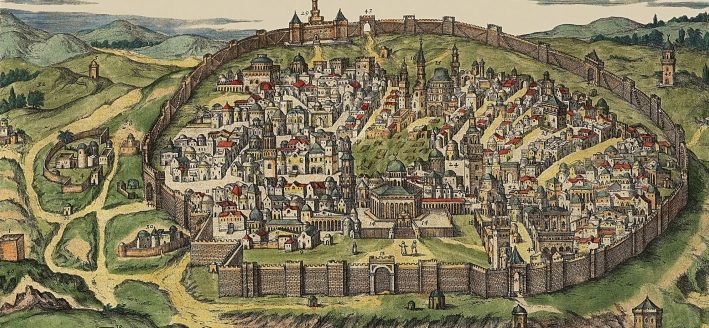
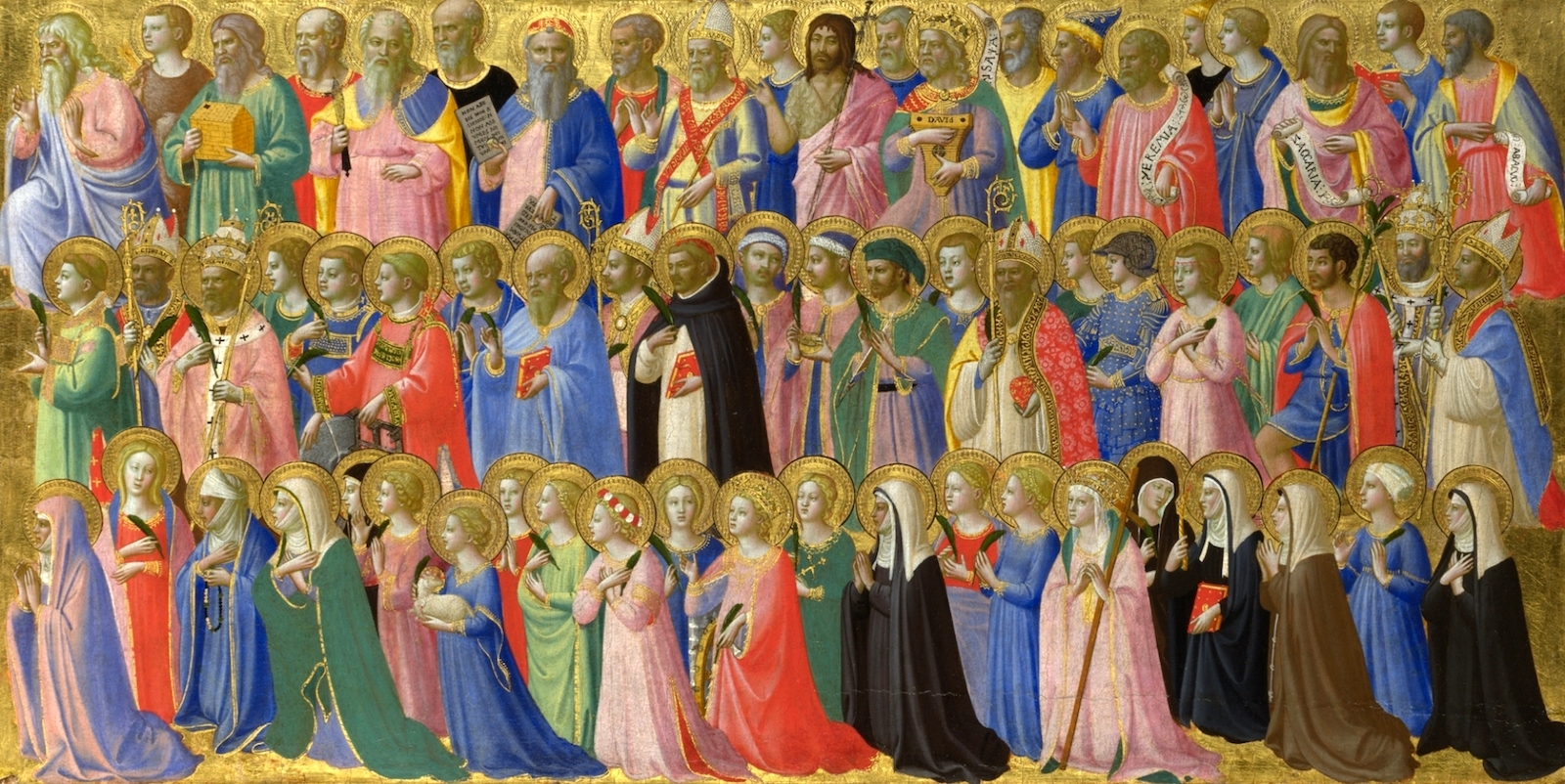
Today the Lord Jesus calls us to be heroes. On the Mountain of the Beatitudes, today’s Gospel, he calls us away from being self-centered to being God centered. He calls us to be poor in Spirit. Whether we are rich or poor or somewhere in between, the center of our lives must be God, not money. He tells us that we cannot close our eyes to the atrocities of the world. «Blessed are those who mourn.» The Lord wept over Jerusalem because it refused to recognize the presence of God in its mist. We mourn over a society that allows a million and a half abortions a year. The meek who inherit the earth are those who are not going to allow hatred to dominate their lives. They will fight for what is right, but they will be merciful, they will be sincere, they will be peacemakers for the sake of the Lord. Finally the beatitudes speak about those who are willing to suffer the mockery of the world, those who would rather be in the minority who choose God than be in the majority of those who go along with the pagan materialism of society. The saints, whom we honor today, give us an example of people emptying themselves to allow God’s plan to work in them, people who have the courage to be genuine heroes. They are not plaster or plastic statues of unreal people in pietistic poses. They are real people from every walk of life who met the challenge of Christianity and conquered. They are priests and nuns, like Francis of Assisi and Catherine of Sienna, married people and single people, like Thomas More and Rose of Lima, very old and very young, like Theresa of Avila and Theresa of Liseaux, They are the wealthy, like Thomas Beckett, the middle class, like Ignatius Loyola, and poor like Peter Claver. They were geniuses, like Thomas Aquinas, and people of simple intelligence but vast wisdom, like John Vianney. All of these and all whom I could not possibly name accepted the challenge of Christianity and had the courage to wash their baptismal robes in the Blood of the Lamb, as Revelation says. They had the courage to live the sacrifice of Christ in their lives. They had the courage to make the love of God real in the world. The Book of Revelations also notes that there is a throng of people before the throne of the lamb, people from every race and nation, a number too numerous for anyone to count. These are those who have gone before us, who live now and who will live in the future who are willing to sacrifice everything for the Kingdom of God. These are the true heroes following the greatest of all heroes, Jesus Christ. Am I among that number? Are you? Do we have the courage to proclaim God’s love with our lives? Well, that is why we pray today on the Solemnity of All Saints. We pray for the courage to follow the Lord. We pray for the courage to put God first in our lives. May the Lord help us to stand for him and with him. Today we pray for the courage to be genuine heroes • AE


Fr. Agustin’s Schedule for the Solemnity of All Saints and The Commemoration of All the Faithful Departed(All Souls)
Saturday, October 31, 2020.
4.00 p.m. Sacrament of Confession
5.30 p.m. English Mass @ St. Peter Prince of the Apostles Catholic Church.
Sunday November 1, 2020.
10.30 a.m. English Mass @ Our Lady of Grace Catholic Church (Outdoors mass)
12.00 p.m. English Mass @ Our Lady of Grace Catholic Church (Main church)
4. 00 p.m. Sacrament of Confession
5.00 p.m. English Mass @ Trinity University (Margarite B. Parker Chapel)
Monday, November 2
5.30 p.m. English Mass @ St. Peter Prince of the Apostles Catholic Church.
Solemnidad de Todos los santos (2020)

El santo es un bienaventurado, un hombre o una mujer feliz. La santidad, antes que otra cosa, es una experiencia compartida de la felicidad de Dios. Donde hay experiencia de gracia hay siempre expresión de alegría. Se nos acusa, a veces, a los cristianos de ir por la vida con un talante mesiánico. Queremos salvar a todos: a los pobres de su pobreza; a los pecadores de su pecado; a los no creyentes de su ateísmo. No hay esfuerzo creíble de salvación sin una experiencia gozosa de haber sido salvados. Los esfuerzos que no brotan de una sobreabundancia de felicidad suelen ser fruto del resentimiento o de la autosuficiencia. Es asi. No pueden ser expresión de evangelio, de la Buena Bueva. ¡Menos salvadores y más salvados! ¡Menos luchadores y más santos! Este parece ser el grito profético que resuena en un día como hoy. Hablar de santos felices no es hablar de gente que no se ha manchado las manos, que ha vivido sin problemas. Nos estamos refiriendo a millones de mártires, vírgenes, confesores, profetas, padres y madres de familia … que, en medio de debilidades y problemas, supieron aceptar la elección de Dios. Como decía Henry Nouwen “la gran batalla espiritual empieza -y nunca termina- por afirmar nuestra condición de elegidos. Mucho antes de que ninguna persona nos hablara en este mundo, se dirigió a nosotros la voz del amor eterno. Nuestra condición de seres valiosísimos, únicos en nuestra individualidad, no se nos ha dado por aquellos a los que hemos encontrado en el reloj del tiempo -el de nuestra breve existencia cronológica- sino por el Uno que nos ha elegido con su amor terno, un amor que existió desde toda la eternidad y durará para siempre”. Hay unos famosos versos endecasílabos que son un buen recordatorio de nuestro fin último, y dicen más o menos asín: ¿Yo para qué nací? Para salvarme./ Que tengo que morir es infalible./ Dejar de ver a Dios y condenarme / triste cosa será, pero posible./ ¿Posible, y río y duermo y quiero holgarme? / ¿Posible, y tengo amor a lo visible? / ¿Qué hago, en qué me ocupo, en qué me encanto? / Loco debo de ser, pues no soy santo. La santidad de la que habla el poema tiene que ver claramente con una huida de todo lo visible y profano. Quiere ser reflejo del Dios tres veces santo, justo y trascendente. En esa perspectiva, salvarse implica, en cierta medida, despreciar esta vida visible en la que nos ha tocado vivir y desear intensamente la futura invisible: Porque sé que nací para salvarme / y tengo que morir -es infalible-,/ porque dejar de verte y condenarme / sólo con otro Dios será posible,/ por eso río, duermo, quiero holgarme,/ Señor, y tengo amor a lo visible./ Y sólo me pregunto en qué me encanto / cuando huyo de la vida por ser santo. Los santos que hoy conmemoramos no huyeron de la vida, sino que supieron descubrir en ella al Dios de la vida que no acaba. Por eso acercarse a ellos es contagiarse de ganas de vivir y de desvivirse. Los santos son nuestros mejores aliados para ir creando una “cultura de la vida” en las condiciones de muerte que, con frecuencia, tenemos que afrontar. “Ponga un santo en su vida y acabará siendo como él” • AE

 LA MEDITACION DE LA ESPOSA