
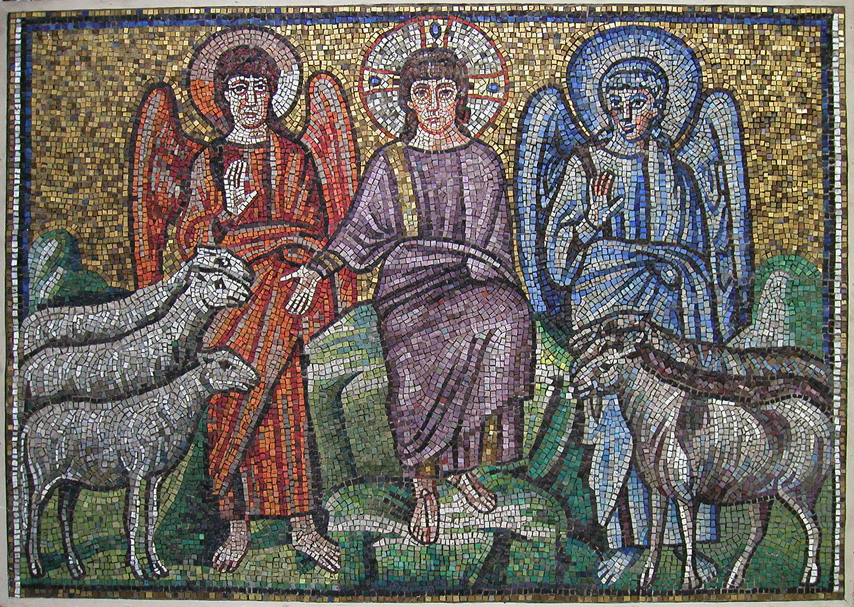
One more parable. The third one. This time about goats and sheep. And we hear it on the last Sunday in Ordinary Time, when we celebrate Christ as King of the Universe. It could be a good opportunity to meditate on the Kingdom of God on earth and our belonging to the Church. First, the Church is not just a humanitarian organization. The Church is the Mystical Body of Christ on earth[1]. It looks to serve Christ and to be Christ in every area of its life. Humanitarians are concerned with the good of their fellow men. This is wonderful. The world has certainly benefitted from the determination of so many rich individuals who have given a great deal of their wealth for worthy causes. God sees them. God will reward them. But what we do in the Church is far more than humanitarian. We seek the very presence of the Lord in those who are hurting. When He tells the sheep that they will be rewarded or the goats that they will be condemned, the Lord does not just say that those who are suffering are important to Him. No, He identifies Himself with them. He says, “I was hungry; I was thirsty; I was naked; I was a stranger; I was sick; I was in prison[2].” Our charity is not just something we do. It is our caring for the presence of Jesus Christ in those with profound needs. We are Christians, servants of the One who identifies Himself with the marginalized. Secondly, we cannot be satisfied just with encouraging the government to care for all who are suffering. Yes, it is kind of patriotic for the Church to demand that our government be just and moral. But efforts to change the laws of the country do not supplant our responsibility to care for the weakest of our society ourselves. Whether the country is just or unjust, we must always be charitable. Thirdly, we must respond to what we have received from the Lord. We have received mercy. We have received reconciliation. We have received acceptance as sons and daughter of God. It is a challenge for us to live out the gratitude we owe God. We demonstrate our gratitude in the way in which we treat those who are abandoned in the world today. What is often called the preferential option for the poor is then something we undertake not out of a sense of duty, but out of a sense of gratitude for the extraordinary gift of God’s love. Love is amazing. We receive love only by giving love. We receive God’s love by sharing his love with others, particularly with those people with whom Jesus Christ has said he is present in a special way. Our American society is suffering from extreme polarization: liberals vs conservatives, Republicans vs Democrats. Each side sees little good in the other side and little wrong in their side. Many people, including Catholics, are identifying themselves with political parties and political ideals. My brother, my sister, this is wrong. The Lord did not call us into a political party. He called us into the Kingdom of God. The way we need to identify ourselves is as authentic followers of Jesus Christ. It is from here that our identity is clear and we can be well equipped to serve others, and make what we say at the end of the Lord’s Prayer every Sunday come true: For the Kingdom, the Power and the Glory are His, forever and ever. Amen • AE
Illustration: ANONYMOUS AUTHOR, SEPARATION OF SHEEP AND GOATS (6TH CENTURY), TESSERAE, GLASS IN WOODEN FRAME, METROPOLITAN MUSEUM OF ART (NEW YORK).
[1] Cfr. 1 Cor 12:27.
[2] https://bible.usccb.org/bible/readings/112220.cfm

Fr. Agustin’s Schedule for the Solemnity of Our Lord Jesus Christ, King of the Universe (2020)

Saturday, November 21, 2020.
4.00 p.m. Sacrament of Confession
5.30 p.m. English Mass @ St. Peter Prince of the Apostles Catholic Church
Sunday, November 22, 2020.
9.00 a.m. English Mass @ St. Peter Prince of the Apostles Catholic Church
11.00 a.m. English Mas @ St. Peter Prince of the Apostles Catholic Church
5.30 p.m. English Mas @ St. Peter Prince of the Apostles Catholic Church.

Solemnidad de Nuestro Señor Jesucristo, Rey del Universo (último domingo del Tiempo Ordinario)

La celebración del último domingo del Tiempo Ordinario, la solemnidad de Cristo Rey, quizá trae a nuestra mente la imagen del Cristo Majestad sentado entre ángeles bizantinos y oros, o aquellas imágenes de los solemnes mosaicos de las grandes basílicas orientales. Para otros la imagen de Cristo Rey está unida a esa pequeña estatua de pasta presente en muchos hogares. Habrá quien recuerde, como Teresa de Jesús, a ese Jesús-Rey, coronado de espinas y llagas, burlado por los soldados y ofrecido en almoneda a un pueblo despectivo e implacable. Otros recordarán el (tristemente) famoso Jesucristo Superstar, arrojando a los mercaderes de ese templo. Y así tantas y tantas imágenes de nuestra devoción y de nuestro particular afecto y concepción de la fe. La pregunta es ¿Es que hay muchos Cristos? ¿Hay alguno con el cual tengamos que conformarnos hoy? La Liturgia, con su bimilenria sabiduría, nos brinda esta mañana una gran ayuda. Tanto con la Liturgia de la Palabra[1] como las oraciones propias, nos revelan el rostro que hoy y aquí tiene Jesús. Hoy vemos a Jesús como el Señor de la Historia. El criterio de pertenencia (o exclusión) de su Reino está en el compromiso por aquellos que tenemos cerca “Lo que hicisteis con un hermano mío de esos más humildes, lo hicisteis conmigo”[2]. Celebrar a Cristo Rey por tanto es volver a ver y a escuchar a Jesús, pobre hombre entre los hombres, sencillo maestro de la humanidad y a pensar cómo vamos a ser más solidarios y más cercanos con los maltratados, los indefensos y ¡ay! la víctimas de nuestra propia capacidad de humillar o dignificar. En menos palabras: el Reino de Jesús se entra, sí, por una adhesión a su Persona, pero sobre todo por una práctica de vida y un real servicio a los demás • AE
[1] https://bible.usccb.org/es/bible/lecturas/112220.cfm
[2] Idem.

 LA MEDITACION DE LA ESPOSA