

Where is the joy of Jesus Christ? Our Holy Father tried to change the tone of the preaching in the Church when he issued his great apostolic exhortation The Gospel of Joy[1]. The Pope’s exhortation took the world by storm. It committed the Church to reassess its methods and goals. He called us to communicate the joy of the Gospel to the world. He told us that the main concern of the Church must be to bring the joy of Jesus Christ to the entire world. For too long our Church has been associated with expounding the same moral topics over and over again. Many Bishops, Priests and Deacons have reduced the vast richness of our faith to our positions on topics such as abortion and gay marriage. As a result, instead of being encouraged to bring the joy of the Gospel to the world, people are confronted, even harangued with these topics, sometimes as often as once a month. Sometimes every week. How are people to experience and communicate the joy of the Gospel when all they hear from the pulpit are negatives? Pope Francis was not telling us to back down from Church teaching. He simply told us to stop pounding our positions into the people. This Sunday is Gaudete Sunday. Rejoice, this Sunday tells us. The Rose vestments remind us that this is a time of great expectations. We have every reason to be full of joy. Rejoice, Christmas is almost here. Rejoice, not so much that we have found Christ, but rejoice that He has found us. There are times that each of us feel lost. There are times that we feel alone. But we are not lost. He has found us. We are not alone. He is with us. With Jesus in our lives, the crises we face become challenges, but not devastating events. A loved one becomes sick, or even dies. We become sick and receive the diagnosis that our condition is terminal. A marriage falls apart. A job is lost. A friend is lost. Whatever the crisis, we know that the final result will be union with God. Jesus is with us always, particularly in the worst of our times. Rejoice in the Lord. Jesus is there. He has found us. Now, the whole focus of our lives has changed. With Jesus in our lives, we are mature adults, living in His Love. Rejoice in the Lord. We were all lost, but He found us. His Grace is Amazing. How can we be anything other than positive? Let us Rejoice! • AE
[1] http://www.vatican.va/content/francesco/en/apost_exhortations/documents/papa-francesco_esortazione-ap_20131124_evangelii-gaudium.html
Fr. Agustin’s Schedule for the
Third Sunday of Advent.

Saturday, December 12, 2020.
4.00 p.m. Sacrament of Confession
5.30 p.m. English Mass @ St. Peter Prince of the Apostles Catholic Church.
Sunday December 13, 2020.
9.00 a.m. English Mass @ St. Peter Prince of the Apostles Catholic Church.
11.00 a.m. English Mass @ St. Peter Prince of the Apostles Catholic Church.
5.30 p.m. English Mass @ St. Peter Prince of the Apostles Catholic Church.

III Domingo de Adviento
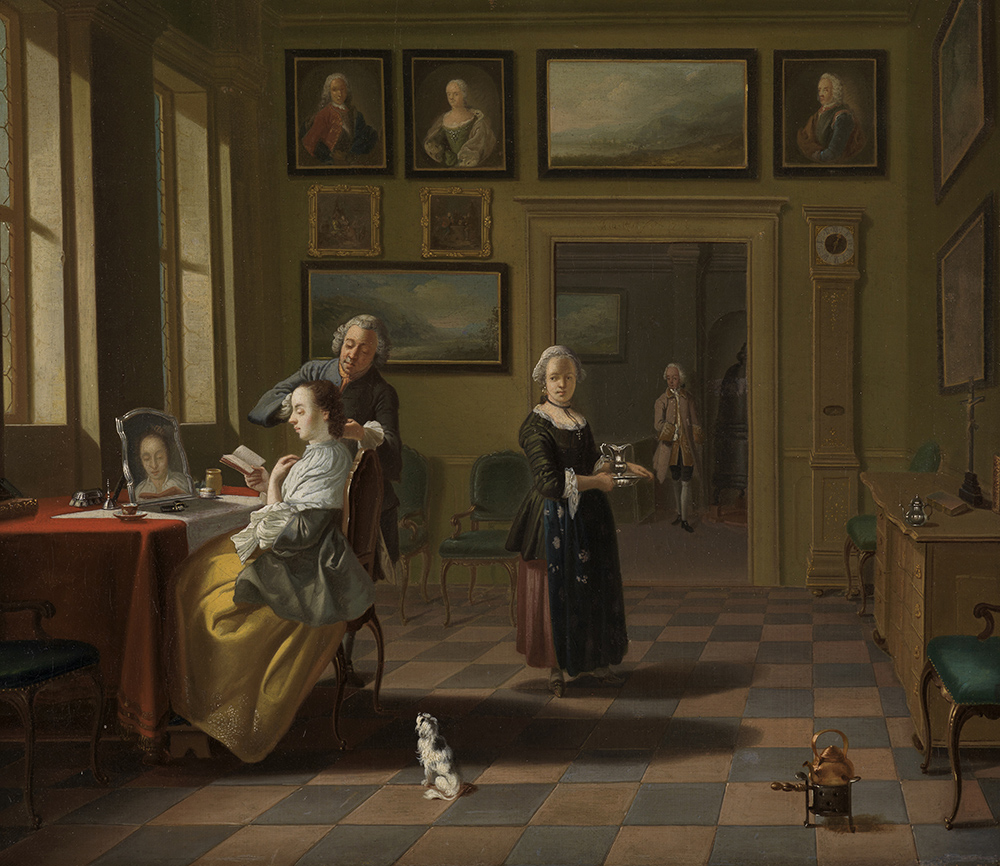
Justus Juncker, En el baño de la mañana (1752), óleo sobre tela, Galería de arte de Karlsruhe.
Decía Chesterton que la alegría es el gigantesco secreto del cristiano. Verdad vieja. Tan vieja como las cartas de san Ignacio de Antioquía que aun cuando ya se sabía trigo de Cristo y próximo al martirio se dirigía a sus fieles deseándoles «muchísima alegría»[1]. En el mundo también hay alegría, sí, pero es una alegría que a veces resulta falsa, y que dura poco. La fuente de nuestra alegría debe brotar más hondo. El motivo de nuestra alegría es porque Dios está cerca, y porque viene a nosotros como Salvador. Esta es la razón de nuestro gozo: en que hemos sido rescatados del poder del maligno y trasladados a un mundo inundado por la gracia. En que Dios se ha hecho de nuestra carne y de nuestra sangre. En que su madre es nuestra madre y su vida es nuestra vida. En que somos pequeños y miserables, y llenos de defectos, pero al mismo tiempo en nosotros resplandecen el poder y la misericordia de Dios. El evangelio de este domingo, el tercero del tiempo de Adviento, nos presenta la figura del Bautista. Toda su vida -áspera y dura- está comprendida por dos soledades: la del desierto y la soledad de la prisión, donde termina su vida. Pero si hemos puesto atención, la Sagrada Escritura nos dice que su vida estuvo también marcada por el júbilo y la alegría. Dice su madre Isabel: «Apenas llegó a mis oídos la voz de tu saludo saltó de gozo el niño en mi seno»[2]. Años más tarde, en su predicación, él mismo afirma: «El que tiene a la novia es el novio; pero el amigo del novio, el que asiste y le oye, se alegra mucho con la voz del novio. Esta es, pues, mi alegría que ha alcanzado su plenitud»[3]. La Navidad ya está cerca, y todos corremos el riesgo de quedar atrapados por el trajín de los días previos a las fiestas y dejar que la auténtica alegría se marchite. Podríamos dedicar un tiempo más largo al silencio, a la oración, para poder vivir lo que vamos a celebrar. Hoy, al escuchar el anuncio de Juan, podríamos también echar un vistazo al termómetro de la alegría. ¿Hay rincones de nuestra vida espiritual en los que aún hay miedo, donde la desconfianza se niega a ser desalojada, donde permanece agazapada la tristeza de quien nada espera de nadie? Cuando nos miramos a solas al espejo, sin maquillaje, sin máscara de forzada sonrisa, cuando nos vemos tal y como somos, ¿qué imagen es la que vemos? O, ¿qué imagen damos hacia fuera?, Los demás ¿qué ven en nosotros? Los sacerdotes, ¿rebosamos el gozo de una vida ofrecida a Dios y a los hermanos? Los laicos, ¿somos puntos de luz, de esperanza, en el mundo del trabajo, de la política, de la familia? Las personas consagradas, ¿damos la impresión de ser inmensamente felices porque el Señor, sólo Él, es la porción de nuestra herencia? ¡Que los cristianos demos testimonio de ser lo más alegres, los partidarios del optimismo, del gozo compartido, de la entrega feliz y generosa • AE
[1] http://www.vatican.va/content/benedict-xvi/es/audiences/2007/documents/hf_ben-xvi_aud_20070314.pdf
[2] Lc 1, 44.
[3] Jn 3, 29.
 LA MEDITACION DE LA ESPOSA