Where is the joy of Jesus Christ? Our Holy Father tried to change the tone of the preaching in the Church when he issued his great apostolic exhortation The Gospel of Joy[1]. The Pope’s exhortation took the world by storm. It committed the Church to reassess its methods and goals. He called us to communicate the joy of the Gospel to the world. He told us that the main concern of the Church must be to bring the joy of Jesus Christ to the entire world. For too long our Church has been associated with expounding the same moral topics over and over again. Many Bishops, Priests and Deacons have reduced the vast richness of our faith to our positions on topics such as abortion and gay marriage. As a result, instead of being encouraged to bring the joy of the Gospel to the world, people are confronted, even harangued with these topics, sometimes as often as once a month. Sometimes every week. How are people to experience and communicate the joy of the Gospel when all they hear from the pulpit are negatives? Pope Francis was not telling us to back down from Church teaching. He simply told us to stop pounding our positions into the people. This Sunday is Gaudete Sunday. Rejoice, this Sunday tells us. The Rose vestments remind us that this is a time of great expectations. We have every reason to be full of joy. Rejoice, Christmas is almost here. Rejoice, not so much that we have found Christ, but rejoice that He has found us. There are times that each of us feel lost. There are times that we feel alone. But we are not lost. He has found us. We are not alone. He is with us. With Jesus in our lives, the crises we face become challenges, but not devastating events. A loved one becomes sick, or even dies. We become sick and receive the diagnosis that our condition is terminal. A marriage falls apart. A job is lost. A friend is lost. Whatever the crisis, we know that the final result will be union with God. Jesus is with us always, particularly in the worst of our times. Rejoice in the Lord. Jesus is there. He has found us. Now, the whole focus of our lives has changed. With Jesus in our lives, we are mature adults, living in His Love. Rejoice in the Lord. We were all lost, but He found us. His Grace is Amazing. How can we be anything other than positive? Let us Rejoice! • AE
5.30 p.m. English Mass @ St. Peter Prince of the Apostles Catholic Church.
Sunday December 13, 2020.
9.00 a.m. English Mass @ St. Peter Prince of the Apostles Catholic Church.
11.00 a.m. English Mass @ St. Peter Prince of the Apostles Catholic Church.
5.30 p.m. English Mass @ St. Peter Prince of the Apostles Catholic Church.
III Domingo de Adviento
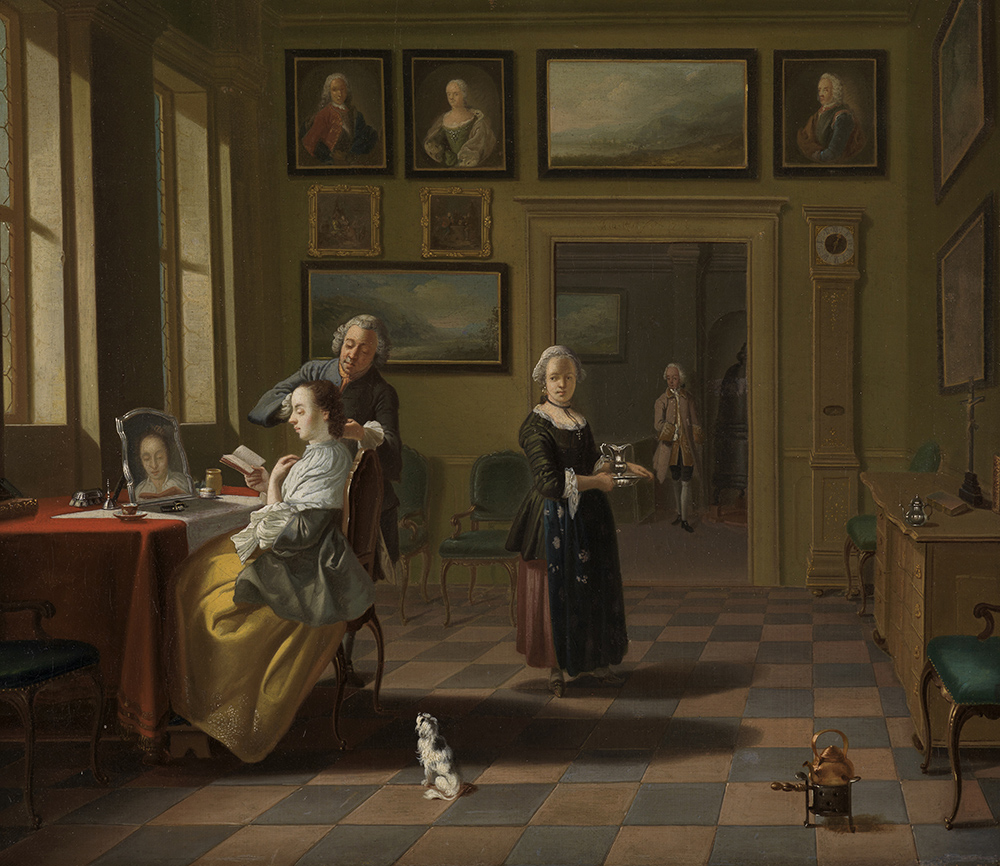
Justus Juncker, En el baño de la mañana (1752), óleo sobre tela, Galería de arte de Karlsruhe.
Decía Chesterton que la alegría es el gigantesco secreto del cristiano. Verdad vieja. Tan vieja como las cartas de san Ignacio de Antioquía que aun cuando ya se sabía trigo de Cristo y próximo al martirio se dirigía a sus fieles deseándoles «muchísima alegría»[1]. En el mundo también hay alegría, sí, pero es una alegría que a veces resulta falsa, y que dura poco. La fuente de nuestra alegría debe brotar más hondo. El motivo de nuestra alegría es porque Dios está cerca, y porque viene a nosotros como Salvador. Esta es la razón de nuestro gozo: en que hemos sido rescatados del poder del maligno y trasladados a un mundo inundado por la gracia. En que Dios se ha hecho de nuestra carne y de nuestra sangre. En que su madre es nuestra madre y su vida es nuestra vida. En que somos pequeños y miserables, y llenos de defectos, pero al mismo tiempo en nosotros resplandecen el poder y la misericordia de Dios. El evangelio de este domingo, el tercero del tiempo de Adviento, nos presenta la figura del Bautista. Toda su vida -áspera y dura- está comprendida por dos soledades: la del desierto y la soledad de la prisión, donde termina su vida. Pero si hemos puesto atención, la Sagrada Escritura nos dice que su vida estuvo también marcada por el júbilo y la alegría. Dice su madre Isabel: «Apenas llegó a mis oídos la voz de tu saludo saltó de gozo el niño en mi seno»[2]. Años más tarde, en su predicación, él mismo afirma: «El que tiene a la novia es el novio; pero el amigo del novio, el que asiste y le oye, se alegra mucho con la voz del novio. Esta es, pues, mi alegría que ha alcanzado su plenitud»[3]. La Navidad ya está cerca, y todos corremos el riesgo de quedar atrapados por el trajín de los días previos a las fiestas y dejar que la auténtica alegría se marchite. Podríamos dedicar un tiempo más largo al silencio, a la oración, para poder vivir lo que vamos a celebrar. Hoy, al escuchar el anuncio de Juan, podríamos también echar un vistazo al termómetro de la alegría. ¿Hay rincones de nuestra vida espiritual en los que aún hay miedo, donde la desconfianza se niega a ser desalojada, donde permanece agazapada la tristeza de quien nada espera de nadie? Cuando nos miramos a solas al espejo, sin maquillaje, sin máscara de forzada sonrisa, cuando nos vemos tal y como somos, ¿qué imagen es la que vemos? O, ¿qué imagen damos hacia fuera?, Los demás ¿qué ven en nosotros? Los sacerdotes, ¿rebosamos el gozo de una vida ofrecida a Dios y a los hermanos? Los laicos, ¿somos puntos de luz, de esperanza, en el mundo del trabajo, de la política, de la familia? Las personas consagradas, ¿damos la impresión de ser inmensamente felices porque el Señor, sólo Él, es la porción de nuestra herencia? ¡Que los cristianos demos testimonio de ser lo más alegres, los partidarios del optimismo, del gozo compartido, de la entrega feliz y generosa • AE
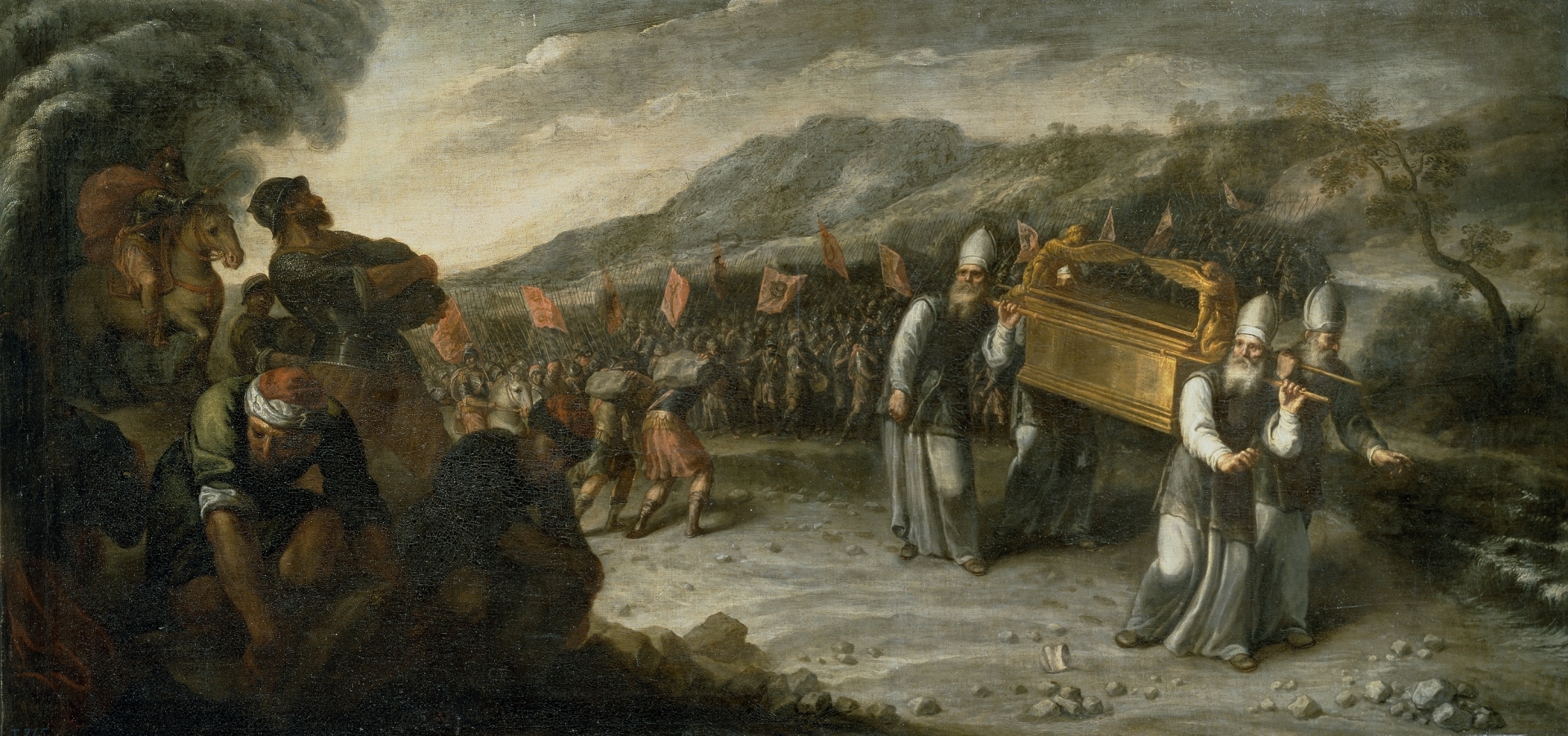
J. Montero de Rojas, The crossing of the Jordan River with the Ark of the Covenant (1667), oil on canvas, Museo Nacional del Prado (Madrid)
In the Gospel today, the Archangel Gabriel came to Mary in Nazareth, bearing the Good News of God’s salvation. Why is it that Mary is so special? That is because God has prepared her to be part of His plan for the salvation of His people, as she was to be the one who would bear the Messiah, the Savior of the world inside her. For this special role, God is certainly able to give an exception to Mary among all mankind, that for her alone, she was conceived, and born of her parents without the taints of the original sin of man. And this special grace is related to the role she played in our salvation, as the one who bore God within herself. In order to understand this better, we must know that Mary is the New Ark, bearing the New Covenant of God. The old Ark of the Covenant was built by Moses from precious metals and materials, and adorned to be worthy of bearing the Law of God and His Covenant, and the Ark came to represent God’s presence among His people, so much so that it is hallowed and no one may touch it without dropping dead. That is why the Ark had to be carried on two poles born by four people. And if this old Ark is made by the hands of man, carved and designed by man, and bearing within it, two slabs of stone upon which the Ten Commandments were written, and was considered so holy and precious, then all the more that the New Ark bearing the New Covenant must be hallowed, pure and holy. Thus, God has prepared Mary, who is to be the mother of God, and made her holy and pure, clean from any taint of the original sins of man. And this New Ark is all the more precious, far surpassing the old Ark, because Mary, as all men and women are, she was crafted and designed by the Lord Our God. And she bore within her womb for nine months, none other than the Lord Himself, who has willingly come down upon us in human flesh, Jesus Christ, Son of God. That is why today the whole universal Church rejoice together celebrating this wonderful mystery of the Immaculate Conception of the Blessed Virgin Mary, for through Mary, the final defeat of the devil and his forces have been made a reality, as the promises God has made about our salvation has been fulfilled in their entirety. And even more so, in Mary, the devil has encountered a great enemy, who is always thwarting his plans all the time. That is because Mary is also the greatest of all the saints of God, and she is the one ever closest to her Son in heaven. She is, as the Queen Mother of heaven, a close advisor to her Son, and she is always active trying to help the people of God to return to Him. She appeared several times to us, in various places and ways, appealing to us mankind to repent from our sins. Through her example of obedience and commitment to fulfil God’s will, walking faithfully in His ways throughout her whole life, Mary has become a great example for each and every one of us, on how we should behave and act in this life, in obedience to God. Ultimately, through our renewed obedience, and by believing in the Savior, Our Lord Jesus Christ, we shall be saved and redeemed from our past sins. Let us today therefore, by following the examples of Mary, mother of God, conceived without sin, dedicate ourselves anew to the Lord. Let us abandon our sinful ways and put our trust in God from now on, striving to live worthily in accordance with God’s words. May the Lord be with us all, and may our mother Mary intercede for us sinners, that we may find our way towards God and His salvation • AE
Fr. Agustin´s schedule for the Solemnity of the Immaculate Conception of the Blessed Virgin Mary (2020)
Monday, December 7
5.30 p.m. Vigil mass at St. Peter Prince of the Apostles Catholic Church
Tuesday, December 8
7:00 a.m. St. Peter Prince of the Apostles Catholic Church
8.00 a.m. School mass St. Peter Prince of the Apostles Catholic Church
5.30 p.m. St. Peter Prince of the Apostles Catholic Church
Solemnidad la Inmaculada Concepción de la Santísima Virgen María
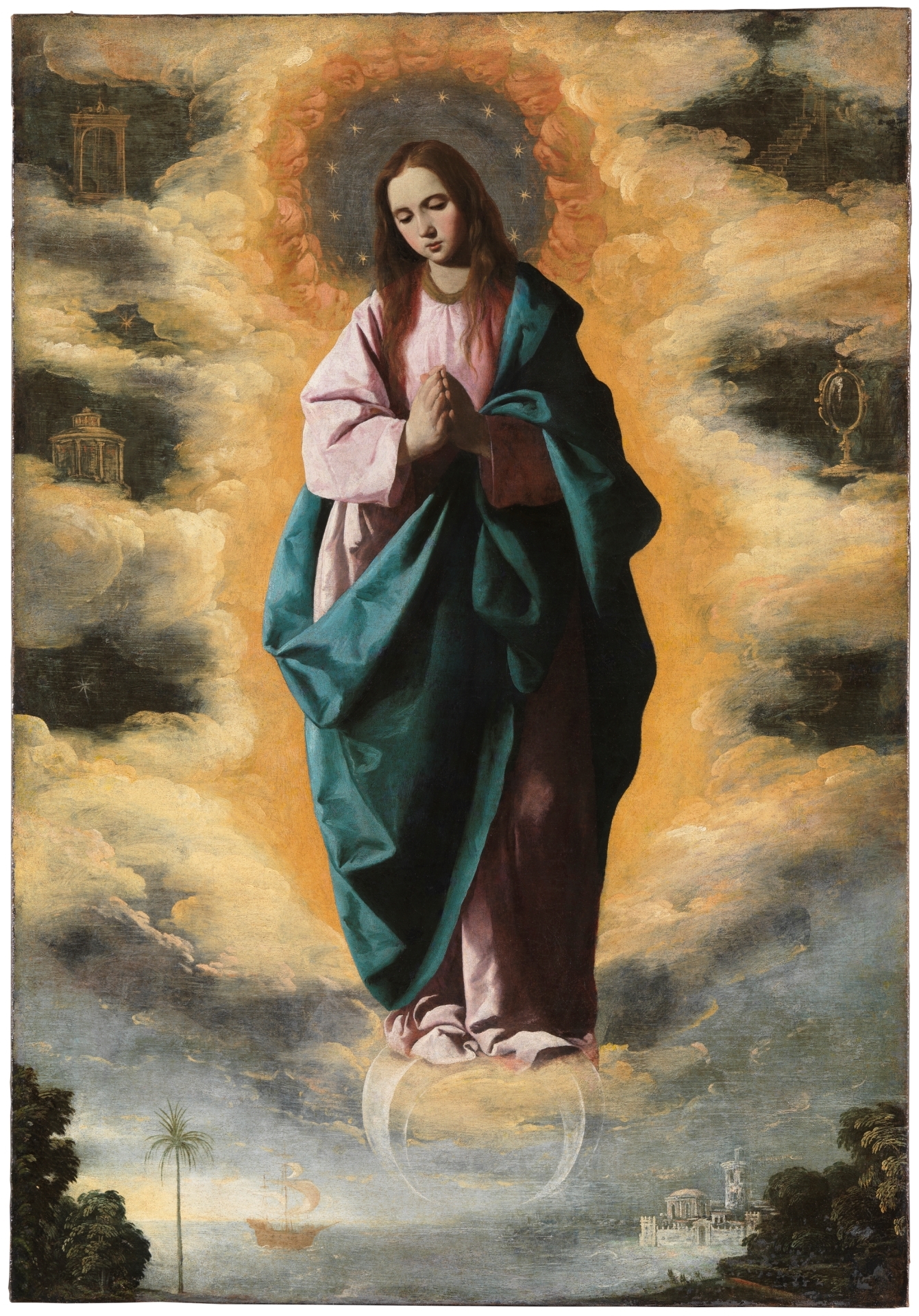
F. de Zurbarán, Inmaculada Concepción (1628), óleo sobre tela, Museo del Prado (Madrid)
Tú eres toda hermosa Oh madre del Señor Tú eres de Dios gloria La obra de su amorOh rosa sin espinas Oh vaso de elección De ti nació la vida Por ti nos vino DiosSellada fuente pura De gracia y de piedad Bendita cual ninguna Sin culpa original María, MaríaPureza inmaculada Espejo del Señor Oh fuente de la gracia Unida al redentorBelleza sin manzilla Encanto virginal Tú eres la alegría La gloria del mortalSellada fuente pura De gracia y de piedad Bendita cual ninguna Sin culpa original.
La liturgia elige, para esta hermosísima solemnidad de la Inmaculada Concepción de la Santísima Virgen María, un fragmento de la Carta a los efesios en el que nos presenta el destino final al que estamos llamados los cristianos[1]. Vendrá un día en que encontraremos la plenitud. Mientras tanto, proclamar a María Inmaculada es afirmar que, «en la persona de Cristo», ella fue bendecida plenamente con toda clase de bienes espirituales y celestiales; fue elegida para ser santa e irreprochable por el amor; fue destinada a la plenitud de la gracia. Por eso es, sin esperar al fin de los tiempos y desde su concepción, inmaculada, la sin pecado. Y todo ello, «en la persona de Cristo», por los méritos de Cristo, por el que nos viene la redención universal. Lo que Dios podía hacer –potuit-; lo que era oportuno que hiciese –decuit-; realmente lo hizo en María –fecit– «en la persona de Cristo»[2]. Hoy confesamos a María Inmaculada y nos sentimos atraídos por la limpieza, la frescura, la inocencia y la verdad de aquella mujer en que se hizo realidad plena esa santidad a la que lo mejor del corazón humano se siente elegido y destinado. Hoy, en tiempos de ambigüedad, hipocresía y falsedad, de tanto barro y miseria sentimos la atracción por la verdad pura de la que la Purísima. Pero María no sólo fue negativamente inmaculada, la sin-mancha, la sin-pecado. María fue mucho más que incontaminación, pureza o inocencia. María fue sobre todo irreprochable en el amor. Amor es entregarse a uno mismo, es volcar la propia vida en los otros. La actitud humilde y confiada de la Virgen, que acepta ser la Madre de Dios, nos motiva a entregarnos también al Señor, llenos de esperanza. Esta celebración tan luminosa y tan bonita puede ser la ocasión para preguntarnos si con nuestra vida diaria buscamos una unión más íntima y más personal con el Señor • AE
[2] El 8 de diciembre de 1854, el beato Pío IX proclamó el dogma que reconocía la Concepción Inmaculada de María como «una verdad divinamente revelada», zanjando una controversia de casi diecinueve siglos. La famosa Disputa de la Sorbona, que mantuvieron en 1305 los dominicos partidarios de la «menos pia opinión» maculista, y los inmaculistas franciscanos, representados por Duns Escoto, convirtió a este último en vencedor de la discusión con su célebre argumento «Potuit, decuit, ergo fecit»: «Podía hacerlo, convenía hacerlo, pues lo hizo».
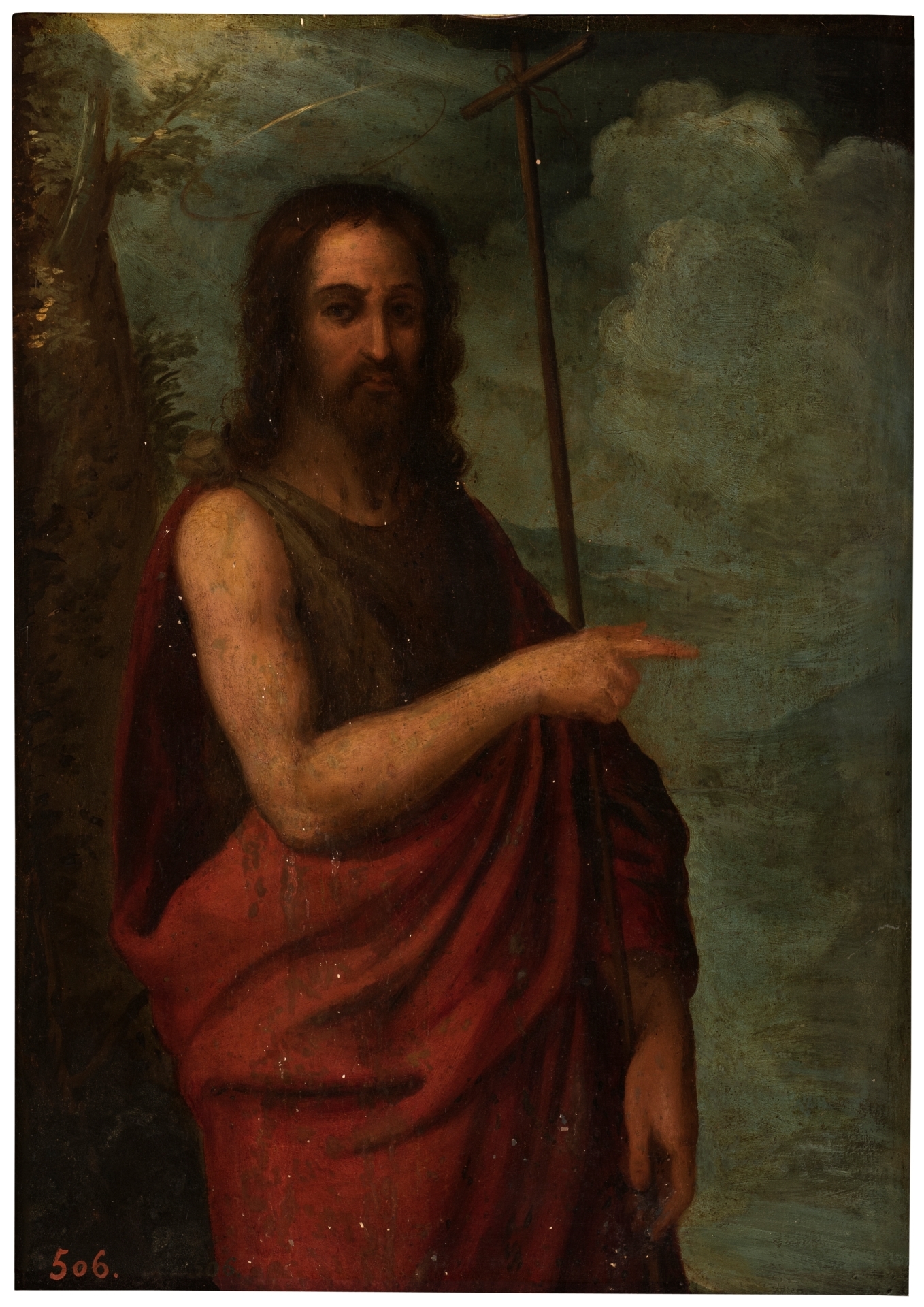
Anonymous 16th century author, John the Baptist with the Lamb of God, Museo Nacional del Prado (Madrid)
The people of the first reading were the Chosen People. They celebrated their deliverance from Egypt every Passover. But they still pushed God aside, even out of their lives. They had become wealthy. They thought they had less need for God than ever before. It was almost as though they forgot about Him. Certainly, they were too proud to recognize their own weakness. The nations around them saw them as an important military ally. Full of themselves, they made treaties with the pagans. They worshiped the pagan gods of these nations. Then, everything fell apart. In their worst nightmare, they never thought their lives could get so bad. First, the Northern Kingdom, Israel, was defeated and taken into captivity by the Assyrians. Then the Babylonians conquered the Southern Kingdom, Judah. The people were led off into slavery, bound together with hooks in their noses. The Temple and the Holy City were destroyed. They wanted to be like the pagans. Now they were forced to live in a pagan land and serve pagans. But in their poverty they became rich. They turned from their pagan ways. They embraced their identity as devout followers of God. They had no power except their faith in the All Powerful One. And they realized that they had more power than they could ever need. And God witnessed their conversion. He heard their prayers. He sent His prophet to preach consolation for Israel: Comfort, give comfort to my people, says your God. Speak tenderly to Jerusalem and proclaim to them that their service is at an end, their guilt is expiated. Indeed, they have received double for their sins. But , now a voice cries out in the desert, ‘Prepare the way of the Lord. God will come with mercy. Over and over in the history of God’s people as well as in our personal histories, the events that led to the Babylonian captivity are repeated. We think that we have it all. We allow evil to creep into our lives. We allow something to destroy us. Actually, we destroy ourselves by relying on our own abilities instead of the Power of God. But then we find ourselves completely alone. Through the Grace of God, through the prayers of others, we come to the Wisdom that we are only alone when we forget about Him who said He would always be with us. We are people of faith. We realize that no matter how bad life might have become, no matter how deep we or someone else may have sunk, there is no depth that God will not descend to in order to pick us up and grasp us to Himself. We just need to have the humility to seek forgiveness, to let Him enter into our lives. What is it that we have done that has been so terrible? Have we destroyed others? Have we taken a life? Have we participated in an abortion? Have we destroyed our own lives? We are tempted to think that our sins are too great or too habitual for God to have compassion on us. Do we feel this way? Do we know others who feel this way? There is nothing that the Lord does not want to forgive! Jesus came to bring forgiveness, to bring mercy, to bring comfort. Give comfort, comfort to my people, the prophet is instructed. Sometimes we underestimate God. We think that maybe God can help us a bit, but to get Him to solve our dilemma, well that is asking too much. And to request over and over again that He forgive the same problem, well, that seems to be way beyond the limit of His compassion. We forget that God sets no limits to His Love. Perhaps we think that we do not deserve His mercy and compassion. We are correct there. We do not deserve Him, but that does not mean that He does not give Himself totally for us. Let us look at the cross! How can we underestimate what our God will do out of Love for us? “Prepare the way of the Lord,” both the prophet of the first reading and John the Baptist in the Gospel proclaim. There is no limit to God’s love, to His Mercy. Pope Francis reminds us that the only limit there is to God’s mercy is the limit that we put on His Mercy. In this season of gift giving, we can give a wonderful gift to ourselves and to others. This gift is the reassurance that Jesus loves us and loves them. We need to prepare ourselves and we need to prepare others to turn to Jesus, to trust in the Lord • AE
Comfort ye my people! (Is 40:1-5, 9-11)
Kiko Arguello, The Good Sheperd (1979), oil on wood, Private Collection.
Comfort, give comfort to my people, says your God. Speak tenderly to Jerusalem, and proclaim to her that her service is at an end, her guilt is expiated; indeed, she has received from the hand of the LORD double for all her sins.
A voice cries out: In the desert prepare the way of the LORD! Make straight in the wasteland a highway for our God! Every valley shall be filled in, every mountain and hill shall be made low; the rugged land shall be made a plain, the rough country, a broad valley. Then the glory of the LORD shall be revealed, and all people shall see it together; for the mouth of the LORD has spoken.
Fr. Agustin’s Schedule for the Second Sunday of Advent.
Saturday, December 5, 2020.
4.00 p.m. Sacrament of Confession
5.30 p.m. English Mass @ St. Peter Prince of the Apostles Catholic Church
Sunday, December 6, 2020.
9.00 a.m. English Mass @ St. Peter Prince of the Apostles Catholic Church
11.00 a.m. English Mas @ St. Peter Prince of the Apostles Catholic Church
12.00 p.m. Celebration of the Sacrament of Baptism.
5.30 p.m. English Mas @ St. Peter Prince of the Apostles Catholic Church.
II Domingo de Adviento (Ciclo B)
Fue en Londres y el año era 1741. En aquellos días George Frederick Handel le ponía música a las hermosas y esperanzadoras palabras del profeta Isaías que escuchamos en la primera de las lecturas y que nos hablan ¡ay! del consuelo de Dios, de ese consuelo que tanto necesita nuestro atribulado corazón:
Consuelen, consuelen a mi pueblo,
dice nuestro Dios.
Hablen al corazón de Jerusalén
y díganle a gritos que ya terminó el tiempo de su servidumbre
y que ya ha satisfecho por sus iniquidades,
porque ya ha recibido de manos del Señor
castigo doble por todos sus pecados.
Sí, Dios viene a consolar a su pueblo. ¿Nos detenemos de vez en cuando a pensar en la ternura de Dios? No quiere que uno solo de los suyos se pierda, ni que viva en la oscuridad o la desesperación. Nuestro Dios es ese Pastor apacienta a su rebaño y esto debería de llenarnos de paz y de alegría. La liturgia de la Palabra de éste segundo domingo de Adviento nos anuncia a ese Dios que ya viene. En aquel tiempo, cuando el destierro de Babilonia había arrebatado al pueblo el último resto de valor, era necesario que Dios le consolara. Sí: había valles que levantar, montes que abajar, escarpaduras que salvar y caminos tortuosos que enderezar: no faltaban trabajos. Pero Dios, con una palabra que no podía fallar, prometía que él mismo se pondría al frente de la caravana y caminaría a su paso. En nuestros días quedan muchas murallas por derribar y muchos obstáculos por superar para que podamos vivir en paz en un mundo en el que los más pequeños sean los más queridos, y las relaciones humanas pasen por el corazón más que por las armas. La tarea parece imposible y vivimos como exiliados, lejos de un Evangelio que ha perdido su sabor de Buena Noticia por eso hoy la Palabra de Dios de éste domingo es fuente de consuelo. Necesitamos descubrir de nuevo la ternura de Dios, su amor, su paciencia, su dulzura. Necesitamos que Dios nos tome en sus brazos; debemos reconocernos heridos y necesitados de su amor, su ternura y su misericordia. La buena noticia es que Dios viene diario a cambiarlo todo con su gracia y su perdón ¡Dichosos si acoremos su venida con un con corazón sencillo y bueno! • AE










 LA MEDITACION DE LA ESPOSA