
Fourth Sunday in Ordinary Time (Year B)

On this Fourth Sunday of ordinary time, the liturgy of the Church continues to encourage us to listen attentively to Christ. He is our teacher who speaks with authority. Unfortunately, today there are many who claim to be God’s prophets. God knew this beforehand that such false prophets will arise. So, He was clear about their fate: “Those who presume to say in my name what I have not commanded them to say, shall die” The question is, how do we know and distinguish false prophets? Matthew gives us a clue: “Beware of false prophets…You will know them by their fruits”[1]. So, this calls for vigilance, discernment and paying attention the Church´s teachings. In today’s gospel, Jesus was passionate to his people. He never deceived them or made false claims. Rather, in contrast to the scribes and Pharisees, He taught with authority. This was not based on worldly credentials, or his ability to cite precedents. His only credential was that he is the Son of God. His authority came from his father. Hence, a true prophet should rely principally on God. Therefore, it is important that we discern every prophecy and evaluate them based on the word of God in the scriptures. Whatever is against the plain sense of the scripture, or any prophesy that promotes unhealthy life style and shallow spirituality, obviously cannot be from God. As simple as this. Unfortunately, even an authentic prophet can also err. Surely, he can, when a he loses focus, and becomes very proud. When he stops listing to Christ, he begins to listen to himself. Then, in order to make up for his emptiness, he gives his own word in God’s name. Let us continue to listen to Jesus and, pay attention only to his authentic prophets who speak for God, mainly the Magisterium of the Church, and may the Psalm be a reality in our life: “O that today you listen to his voice, harden not your hearts”[2] • AE

[1] Cf 7: 15-20 [2] Cf Ps 95


Fr Agustin´s Schedule for the Fourth Sunday in Ordinary Time.

SATURDAY JANUARY 30, 2021

4.30 p.m. Sacrament of Confession @ St. Peter Prince of the Apostles Catholic Church

5.30 p.m. English Mass @ St. Peter Prince of the Apostles Catholic Church

SUNDAY JANUARY 31, 2021. 

9.00 a.m. English Mass @ St. Peter Prince of the Apostles Catholic Church

11.00 a.m. English Mas @ St. Peter Prince of the Apostles Catholic Church

5.30 p.m. English Mas @ St. Peter Prince of the Apostles Catholic Church


IV Domingo del Tiempo Ordinario (Ciclo B)
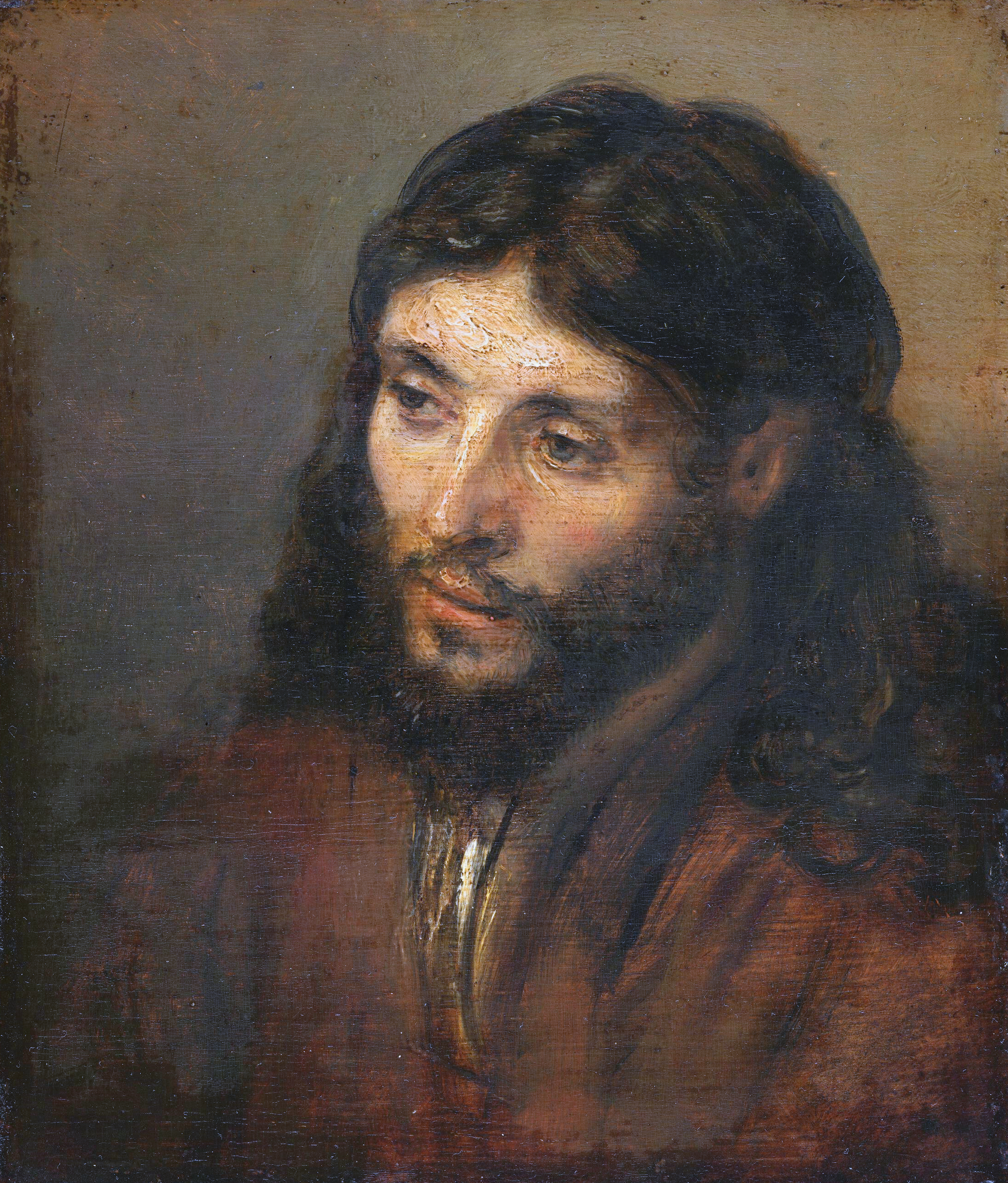
Rembrandt Harmenszoon van Rijn, Rostro de Cristo (ca. 1648), óleo sobre tela, Gemäldegalerie (Berlin)

Jesús no fue un maestro de la ley, era más bien un predicar itinerante que, con su palabra clara, directa, auténtica, explicaba los misterios de Dios al pueblo sencillo que rápidamente comprendió la autoridad con la que hablaba. En muchos esa palabra encontró eco y así nació la fe. La palabra del Señor era ¡es! una llamada, un mensaje vivo que provoca impacto y se abre camino en el corazón de las personas. El pueblo quedaba asombrado «porque no enseña como los letrados sino con autoridad». Esta autoridad no está ligada a ningún título o poder social. No proviene tampoco de las ideas que expone o la doctrina que enseña. La fuerza de su palabra es él mismo, su persona, su espíritu, su libertad. En menos palabras: el Señor no es un vendedor de ideologías, ni un repetidor de lecciones aprendidas de antemano. Es un maestro de vida que coloca al hombre ante las cuestiones más decisivas y vitales, enseñándole a vivir. Hoy las nuevas generaciones no sólo no se encuentran con Jesús, sino que tampoco encuentran maestros de vida a quienes poder escuchar. ¿Qué autoridad pueden tener las palabras de muchos políticos, dirigentes o responsables civiles y religiosos, si no están acompañadas de un testimonio claro de honestidad y responsabilidad personal? Por otra parte, ¿qué vida pueden encontrar nuestros jóvenes en una enseñanza mutilada, que proporciona datos, cifras y códigos, pero no ofrece respuesta alguna a las cuestiones más vitales? Difícilmente ayudará a crecer a los alumnos una enseñanza reducida a información científica. Nuestra sociedad necesita profesores de existencia, hombres y mujeres que enseñen el arte de abrir los ojos, maravillarse ante la vida e interrogarse con sencillez por el sentido último de las cosas, maestros que, enamorados del Maestro y con su testimonio personal de vida, siembren inquietud, contagien vida y ayuden a hacerse preguntas. Hace tiempo A. Robin, escribía algo que debería hacernos pensar: «En nuestra sociedad se suprimirá la fe en nombre de la luz; después se suprimirá la luz. Se suprimirá el alma en nombre de la razón; después se suprimirá la razón. Se suprimirá la caridad en nombre de la justicia; después se suprimirá la justicia. Se suprimirá el espíritu de verdad en nombre del espíritu crítico; después se suprimirá el espíritu crítico»[1]. El Evangelio de Jesús, su Palabra y por ende su autoridad, no es algo superfluo e inútil para una sociedad en la que corremos estos riesgos. ¿Qué vamos a hacer para que ese evangelio, el que escuchamos domingo a domingo en la celebración de la Eucaristía, sea conocido por todos? • AE


[1] J. A. Pagola, Buenas Noticias, Navarra, 1985, p. 187 ss.


Third Sunday in Ordinary Time

Today’s first reading invites us to consider God’s call and the exigency, the necessary immediacy of our response. The Ninevites didn’t need to hear Jonah’s prophecy for three days, as soon as they heard Jonas words, they repented. In the Gospel, they leave their boats and follow him immediately. The strongest message of demanding an immediate response, though, flows from our second reading. It is very clear that we must make the best use of the time that the Lord gives us. This is a stunning contrast to the attitude of so many who set aside an hour a week for the Lord feeling that somehow or other they have kept God happy in a mere 60 minutes. God does not need our prayers for an hour a week.  We do not pray to keep God happy. We pray to keep ourselves happy, and we pray for others to be happy. We need to pray, and we need to pray continually.  We have to make the best use of our time. Our time is not our own. It belongs to God. Time is part of creation. Time only exists in the physical world.  It is entrusted to us to be used wisely. We have to set aside time for many different activities–for sleeping, for working, for exercising and, especially, for praying. In fact, we should all have a schedule for prayer in our daily lives, a schedule that we keep. It is important also that we set aside time for relaxing. Some of us live in a state of continual stress. We need to fight off stress usually through physical activity. Either we take care of stress or stress takes care of us–and everyone around us.  We have to set aside time for others, sometimes that means caring for others, but usually we simply need to be with others. Sadly, we often waste time. My great fear is that God looks at me and says, “Is that the best you can do with your day?” We have a responsibility to use whatever time we have left well.  Most of us do not know when our days on earth are coming to an end.  We can live another 50 years, or just another 50 days. That is why we have to live our lives in a way that we are always ready to give an account for how well we use the time the Lord has given us to all this we have to add that when the Lord gives us a particular call, a particular mission, He calls us to address this Grace immediately.  There is an exigency to His call.  When we put off responding to this grace, then the unheeded call can very well dissipate and an opportunity to further the Kingdom of God will be lost. The earth is the Lord’s and its fullness thereof, we pray in Psalm 24. This world belongs to God. He has set us in this world to do his work, but He only gives us a brief time to accomplish His tasks. We pray today that we make the best use of the time He gives us • AE


Fr. Agustin’s Schedule for the Third Sunday in Ordinary Time.

Saturday, January 23, 2021.

4.00 p.m. Sacrament of Confession

5.30 p.m. English Mass @ St. Peter Prince of the Apostles.

Sunday January 24, 2021.

8.30 a.m. English Mass @ Our Lady of Grace (Outdoors mass)

10.30 a.m. English Mass @ Our Lady of Grace (Outdoors mass)

12.00 p.m. English Mass @ Our Lady of Grace (Main church)

5.30 p.m. English Mass @ St. Peter Prince of the Apostles.


III Domingo del Tiempo Ordinario (Ciclo B)

Muchos cristianos quedarían un tanto sorprendidos si escucharan con atención que el cristianismo consiste fundamentalmente en descubrir una Persona y sus buenas noticias. Para ellos, las cosas han sucedido de otra manera. Se han encontrado en la vida siendo «cristianos», sin que se hayan planteado nunca por qué creen y sin que la fe les haya ayudado a experimentar nada especialmente gozoso en la vida. Su fe no ha crecido. Ha quedado embotada y vacía. Más bien, la religión ha sido un peso del que se han ido desprendiendo poco a poco, más que por razones convincentes, por comodidad, cansancio o aburrimiento. Sí, es verdad: es fácil abandonar la fe, abandonándose uno mismo a la superficialidad y al olvido, pero no supone más coraje, más verdad ni más alegría. Otros han reducido la fe al mínimo. Su religión está impregnada de desconfianza y sospecha, más que de fe gozosa y entregada. Para ellos, Dios es cualquier cosa menos una Buena Noticia capaz de alegrar su existencia. ¿Es posible descubrir bajo un cristianismo aparentemente complejo, complicado, sobrecargado, desfigurado y triste, algo sencillo, elemental y bueno, que pueda iluminar nuestro corazón fatigado y triste? ¡Vaya pregunta! Karl Rahner en ese libro tan bonito titulado ¿Crees en Dios?, escribía así: «Dios es y sigue siendo el misterio inefable. Lo único que se sabe de Dios es la experiencia del misterio obtenida en la adoración. El único medio de acercarse a Él es la humildad, es decir, la verdad de nuestra existencia humana»[1]. ¿No estará ahí la clave para entender? Cuántos hombres y mujeres sencillos saben de Dios más que teólogos y dogmáticos ilustrados. Personas que no hacen gala de una fe grande y pura, pero que se confían humildemente al misterio de Dios. Personas que viven el amor al prójimo sin aspavientos ni ostentación alguna. Cristianos humildes, conscientes de su limitación y su pecado pero que se saben en la presencia bondadosa de Dios[2]. No sabrán decirnos cosas demasiado elaboradas o teológicas de Él, pero han acertado en lo más importante: Lo han acogido como gracia, como regalo, y saben vivir delante de Él con sencillez y alegría, han respondido a la llamada de Jesús de creer en la buena noticia ¡Ay quien nos regalara el vivir asín! • AE


[1] Karl Rahner S.J. (Friburgo de Brisgovia, Imperio Alemán, 5 de marzo de 1904 – Innsbruck, Austria, 30 de marzo de 1984) fue un teólogo católico alemán considerado como uno de los más importantes del siglo XX. Su teología influyó al Segundo Concilio Vaticano. Su obra Fundamentos de la fe cristiana (Grundkurs des Glaubens), escrita hacia el final de su vida, es su trabajo más desarrollado y sistemático, la mayor parte del cual fue publicado en forma de ensayos teológicos. Rahner había trabajado junto a Yves Congar, Henri de Lubac y Marie-Dominique Chenu, teólogos asociados a una escuela de pensamiento emergente denominada Nouvelle Théologie, los elementos de que se había criticado en la encíclica Humani Generis del papa Pío XII .

[2] J. A. Pagola, Buenas Noticias, Navarra 1985, p. 185 ss.


Second Sunday of Ordinary Time

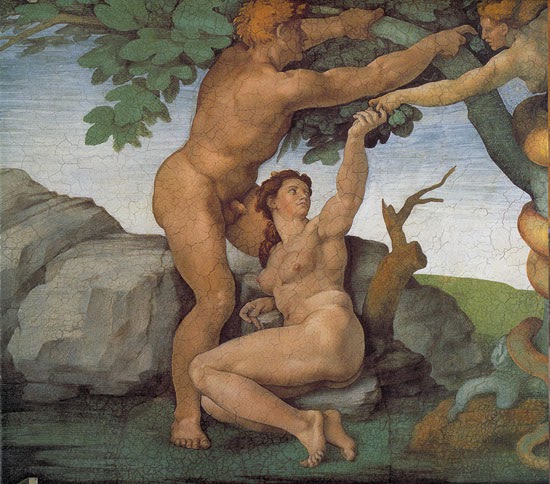
Michelangelo, The Falen of Adam and Eve, Sistine Chapel, Vatican City.

Corinth was the ancient equivalent of Sin City.  Most of the people of the pagan world engaged in blatant immorality, but some of the worst were those in Corinth. They even had their own saying to justify their behavior.  No, it was not, “What happens in Corinth stays in Corinth.”  It was, “Food is for the stomach and the stomach for food.”  It was like saying, “You have no choice: you gotta eat, and you have no choice: you’ve got to behave immorally.” Paul tells them and us that we are so much better than that. Our bodies belong to the Lord.  We are members of the Body of Christ. We are far more than animals with nothing but animal instincts.  We share in the Body of Christ. He goes on to use a very important phrase: our bodies are Temples of the Holy Spirit.  If we are immoral, we are sinning against our own bodies, sinning against our union with Christ. That is a beautiful concept: we are Temples of the Holy Spirit. That is why we avoid immorality, particularly sexual immorality. It is not a matter of some sort of Catholic no no, rules that a person might not understand but does his or her best to follow. This whole area of morality is far more important than that.  It goes to the heart of whom we are. We are Christ and He is ours.  So, we do our best to fight off our temptations because we are united to Christ.  He flows through us.  We are not animals.  We are so much better than that. Let us take a mental tour of Rome, specifically the most beautiful chapel in the world, the Sistine chapel. The chapel is beautiful not because on its architecture, it is rather plain that way.  It is beautiful because of the artwork inside it. Here in this relatively small building attached to St. Peters Basilica in the Vatican complex in Rome, we come upon frescos by Michelangelo, Botticelli, Ghirlandaio, Perugino, and others. The cardinals who meet in conclave to pick a new pope also do so under these magnificent frescos. The paintings are often shocking to people who depict Catholics as sexually inhibited prudes.  The frescos are, as you know, nudes. They emphasize the beauty of the human body with God himself as the source of this beauty.  In the frescos, the creation of man begins with God touching Adam’s hand and concludes with the creation of Eve.  Adam needed Eve and Eve needed Adam to overcome the loneliness of the human condition. They needed to give themselves totally to each other.  And here is the message behind these frescos: the only way that we can find ourselves is by giving ourselves away. We are made in the image of God. God is a Trinity of Love, Father, Son and Spirit, forming a community of self-giving love for all eternity. We are created in the image of this love, in the image of God. When Adam and Eve gave themselves to each other, they felt no shame.  They could be naked.  Shame came when they began to use each other. St. John Paul II spoke about this in the lectures that make up the Theology of the Body.  He said that human happiness depends on self-giving, not self-assertion.  That is the difference between love and lust.  Love makes a gift of oneself to another for his or her good.  Lust is taking from another for personal pleasure.  For us Catholics, sexual morality is more than self-control.  It is self-mastery.  For us sexual morality is the mastery of the desire that allows us to give ourselves to another in a way that affirms the other. Married love is the human reality that best images the commitment, the intensity and the passion of Christ’s love for the Church, for whom He laid down His Life. Using others to fulfill selfish wants is no different than the sexuality of animals. We have been created for love, love freely given and freely received, love which is based on a commitment for life.  Chastity is a virtue that frees us to love another person as a person, not an object. We are called to holiness, to be separated from the world.  Sexual morality itself is one of the many ways that we express this holiness.  It takes a lot of determination and courage to be a Catholic. It takes determination and courage to love • AE


Fr. Agustin’s Schedule for Second Sunday in Ordinary Time.

Saturday, January 16, 2021.

4.30 p.m. Sacrament of Confession

5.30 p.m. English Mass @ St. Peter Prince of the Apostles Catholic Church

Sunday, January 17, 2021.  

9.00 a.m. English Mass @ St. Peter Prince of the Apostles Catholic Church

11.00 a.m. English Mas @ St. Peter Prince of the Apostles Catholic Church

1.00 p.m. Funeral Mass for Eduardo Altamirano @ St. Peter Prince

of the Apostles Catholic Church.

5.30 p.m. English Mas @ St. Peter Prince of the Apostles Catholic Church


II DOMINGO DEL TIEMPO ORDINARIO

M. Chagall, El jóven Samuel con Elías el sacerdote (1958), grabado a color.

Samuel, en el silencio de la noche y en la quietud nocturna del santuario, oye que pronuncian su nombre y, como era de esperar, cree que es Elí el que llama; pero se equivoca. No es Elí, es el Señor. Esfuerzo le cuesta a a Samuel reconocerlo, pero cuando lo hace la respuesta fue perfecta: “Habla, Señor, que tu siervo escucha”. Y el Señor le habló. Surgió así el profeta Samuel. Aunque no lo creamos eso puede sucedernos a cada uno de nosotros. Vivimos tan inmersos en un mundo masificado, igualitario y unidimensional, que hemos olvidado algo impresionante: nuestra llamada personal por parte de Dios. Hemos olvidado el sentido de nuestra identidad, hemos olvidado eso tan maravilloso que es estar convencido de que hemos sido llamados personalmente por Dios, elegidos por Él para caminar un camino muy específico, un camino que no será igual al de ningún. El problema está en que seamos capaces de discernir la llamada, y es que estamos tan llenos de cosas, tan entretenidos, tan preocupados por tantos problemas, tan inquietos por tantos desasosiegos, que difícilmente encontramos un rato de silencio y tranquilidad para que la voz del Señor nos llegue a lo más profundo del corazón y nos despierte del sueño que nos invade. Pero la llamada existe. Esto es lo importante y puede quedar sin respuesta a causa de nuestra pertinaz sordera. Pero si respondemos, si somos capaces de decir como Samuel, con toda la sinceridad del corazón, «habla, Señor, que tu siervo escucha», se producirá el milagro de convertirnos en hombres y mujeres de Dios, en hombres capaces de hacer que el Reino de Dios que tanto anunciamos sea una realidad. Si respondemos, puede realizarse el milagro de convertirnos en hombres pacíficos, que reparten bondad, que se empeñan conscientemente en quitar las tinieblas que rodean el mundo para invadirlo de luz, una luz que hoy aparece nítidamente en el Jordán y que, si respondemos a la llamada de Dios, nos puede invadir para siempre • AE


The Baptism of the Lord

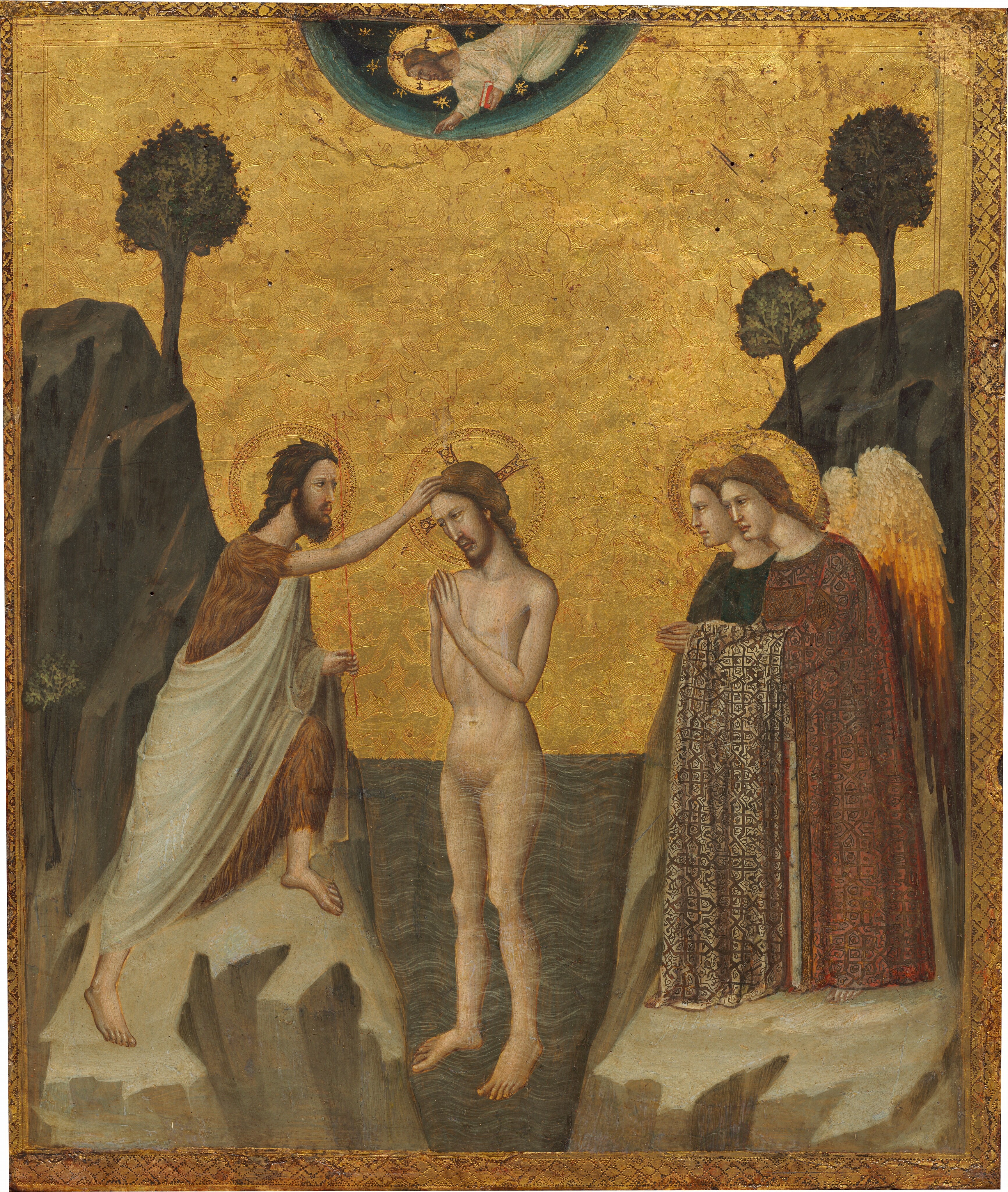
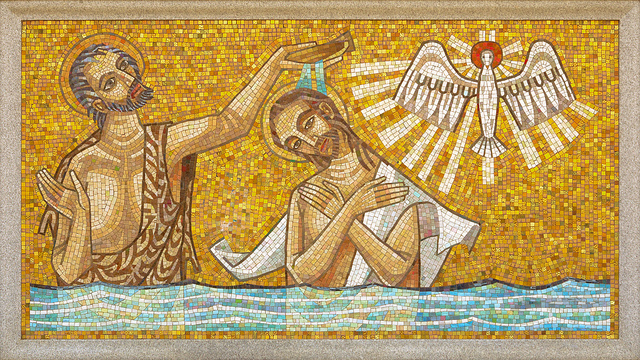
G. Baronzio, The Baptism of Christ (c. 1335), tempera on panel, The National Gallery of Art (Washington)

The Christmas season ends today with the Feast of the Baptism of the Lord.  On Christmas, we celebrate God becoming one of us, taking upon himself a human nature.  On the Feast of the Baptism, we celebrate the public proclamation that Jesus is more than just one of us.  He has more than a human nature.  He has a Divine Nature.  He is the Son of God, in whom the father in well pleased. Today’s Gospel, from the Gospel of Mark, advances the story 30 years.  We come upon John, teaching and baptizing at the Jordan River.  He is demanding an end to evil in the world and calling the people to accept his baptism as a sign that they will join him in the fight for the Kingdom of God.  He also speaks about the one to come.  And, suddenly, Jesus chooses to be baptized by John to show that he is one with all those who are fighting against evil and fighting for the Kingdom of God.  John says that he himself does not deserve to unfasten Jesus’ sandals, but Jesus demands he be baptized.  The people of the world who long for the Kingdom must see that their King is one of them.  So, what does this mean to us? It means that our union with Jesus is a union with God.  It means that Jesus is not just another man, not even another extraordinary man. He is God.  He has a human nature given to him through Mary, and a divine nature eternally at one with the God.  The One who is our brother is also the Second Person of the Holy Trinity.  We don’t just give him the title God.  He is God. When we call upon Jesus to help us, we are praying to God.  When we receive communion, we receive God within us.  When we seek forgiveness, we are forgiven not by the priest but by God. Do you remember the disciples on Lake Gennesaret, being tossed about in the storm?  Like the disciples, in the middle of these storms, we can call on Jesus to bring calm, serenity, and peace of mind. So, when we think our situation is hopeless — we need to call on Jesus. When we cannot see our way through — we need to call on Jesus. When we feel totally overwhelmed — we need to call on Jesus. When we feel that we are the worst person on the earth — we need to call on Jesus. When we feel that no one loves us and nobody care for us — we need to call on Jesus. Jesus is not just another human being.  He is God.  Yet he is one of us.  He knows all the emotions that we feel.  He has felt them in his human nature.  Through His divine nature, he can and does heal us.  We go down into the water with John the Baptist, determined to fight for the Kingdom of God, and we leave the water with Jesus Christ, our Divine Champion. The Feast of the Baptism of the Lord is an Epiphany.  God is manifested to us in Jesus Christ.  We need to pray to Him.  We need to trust in Him • AE


Fr. Agustin’s Schedule for the Feast of Baptism of the Lord (First Sunday in Ordinary Time)

Saturday, January 9, 2021.

4.00 p.m. Sacrament of Confession

5.30 p.m. English Mass @ St. Peter Prince of the Apostles Catholic Church.

Sunday January 10, 2021.

9.00 a.m. English Mass @ St. Peter Prince of the Apostles Catholic Church.

11.00 a.m. English Mass @ St. Peter Prince of the Apostles Catholic Church.

5.30 p.m. English Mass @ St. Peter Prince of the Apostles Catholic Church.


El Bautismo del Señor

El Señor baja al rio Jordán y se hace bautizar por Juan para que quede bien claro quién es Él y a qué viene. El bautismo de Jesús, que diríamos en el lenguaje taurino, es como un espaldarazo, es algo así como su presentación solemne como Mesías, como Ungido. Ante Juan, que bautiza en el Jordán, va desfilando todo tipo de personas: soldados que han aceptado la consigna de no abusar de su poder, publicanos que están dispuestos a no robar; gente sencilla que ha llegado a descubrir una manera diferente de vivir: compartiendo el pan y la mesa. Pero hay también algunos -los fariseos- que se van saliendo de la fila: la dura palabra de Juan, que invita a dar frutos de conversión, rebota en sus corazones obstinados. Llega Jesús, y entra en la fila. Como queriendo subrayar la importancia de esa ceremonia tan sencilla que está haciendo Juan con la gente: moverlos, con el agua, a que se arrepientan de sus pecados. Jesús, que no tiene pecado, entra en la fila de los que buscan el perdón de los suyos. Entra en la fila, y recibe ese bautismo. Y lo hace como uno más. Y ahí precisamente le espera el Padre, para presentarlo con toda solemnidad ante la historia. «Tú eres mi Hijo amado, mi preferido». Toda esta manifestación de Jesús -una auténtica epifanía- ya había sido anunciada por el profeta Isaías: «No gritará, no clamará, no voceará por las calles. La caña cascada no la quebrará…» Estas palabras, unidas al gesto sencillo de Jesús esperando su turno para ser bautizado nos hablan de una salvación que nos va a llegar por una puerta inesperada y que va a realizarse de una manera un tanto original. ¿Cómo? Cristo viene a salvar, pero no viene a imponer esa salvación. No quiere reinar sobre un pueblo que no le haya aceptado primero, libremente, en su corazón. No quiere escoger el camino fácil de obligar; prefiere el de ofrecer. Sabe que es un camino más lento, menos triunfalista. Pero sabe también que, a la larga, es el único camino auténtico. Por eso Cristo se abaja, conviviendo con sus hermanos. Entra en la fila de los necesitados, del pueblo llano, de los que tienen que esperar su turno en todas las ventanillas del mundo, de los que nada pueden exigir ¡Entra en la fila de los pobres! Jesús viene a salvar, sí, pero no con una salvación postiza; sino desde dentro, tomando en serio al hombre, con toda su oculta grandeza[1]. Asumiendo -para elevarnos- ese rescoldo que queda todavía, medio escondido, en nuestros corazones. Soplando sobre esas brasas. Pacientemente, amorosamente. Así es el hijo de Dios que quiso habitar entre nosotros[2] • AE

[1] J. Guillén García, Al Hilo de la Palabra. Comentario a las lecturas de domingos y fiestas, ciclo B, Granada, 1993, p. 35 ss. [2] Cfr. Jn 1, 14. 


The Epiphany of the Lord

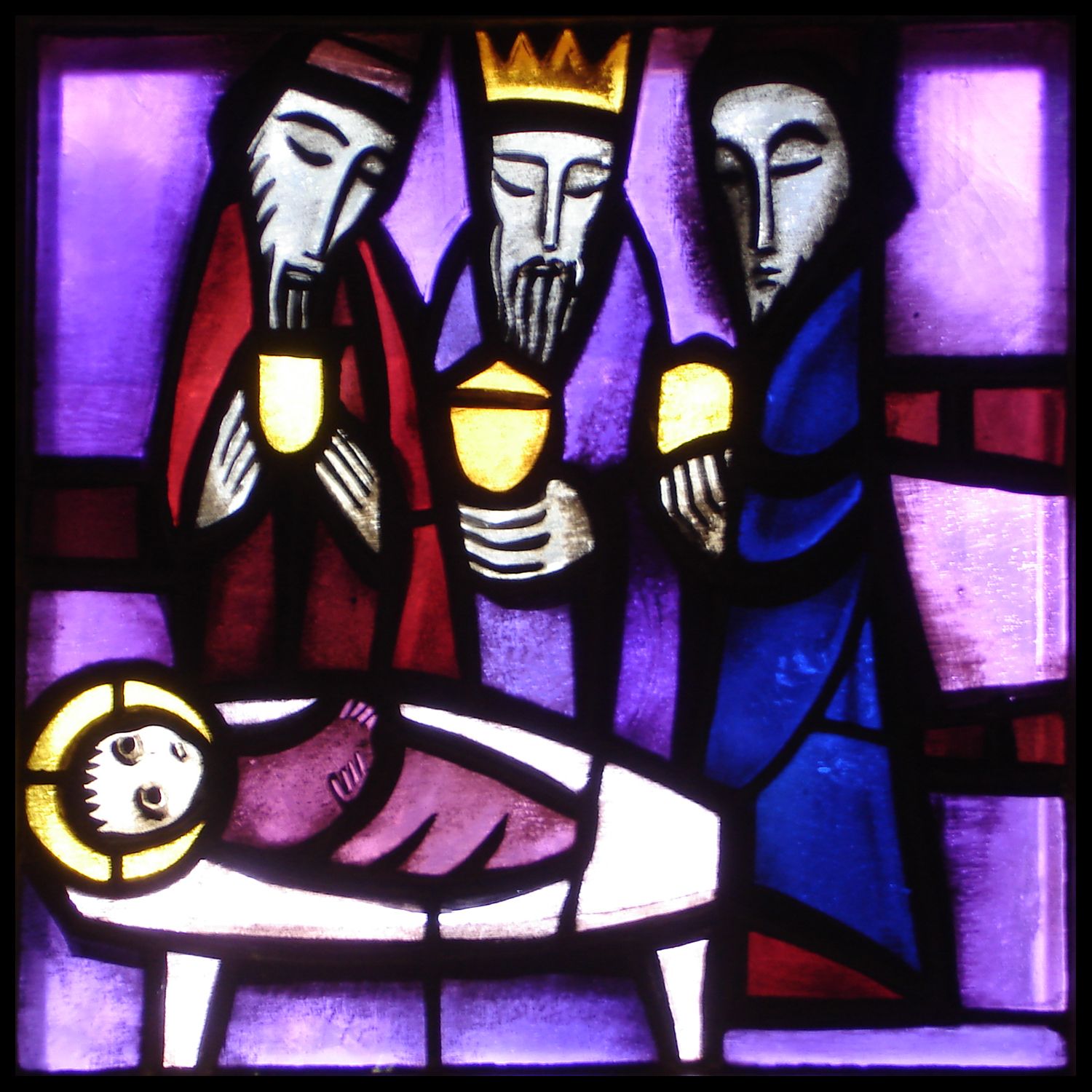
The Adoration of the Magi, stainless steel window, Community of Taizé (France)

The solemnity of the Epiphany celebrates Jesus showing himself (that is what Epiphany means) to those whose faith lead them to him, to those who wish to see him. The wise men who did not know God were searching for him. They found him. The Jewish scholars who had the help of scripture were not searching for him, and they missed his presence on earth. So, this feast leads us to ask ourselves about our own attitudes in life.  Are we really searching for God?  Do we really want to find him?  That is a very important question, because finding God necessitates changes in our lives. Let us remember the Confessions of St. Augustine.  Augustine wrote that before his conversion he practiced every kind of immorality. He did not want to convert to Christianity because he was afraid, he might take it too seriously. He figured he would probably end up forcing himself to change his ways, and he did not want to do that. Every experience of God demands a change in the status quo of our lives. If on Christmas we feel drawn closer to the Lord, then we have to refine our lives so we can enjoy his presence. If we are not willing to come closer to Christ, then Christmas is just a week full of empty sentiment. Jesus is calling all of us to come before his presence! This presence is not just in Bethlehem, but in the many places of our everyday lives. His is present in the members of our family who are hurting depressed or going through difficult times in their lives. He is present in all who are struggling to get by in difficult times. He is present in each of us as we stop to listen to our consciences rather than just go with our emotions. “The wise still seek him,” the Christmas cards say.  if we really want the Lord in our lives, we will continue the search, the journey towards a new experience of his presence. May our Lady the Virgin Mary be our inspiration and our intercessor before the Lord! • AE


Fr. Agustin’s Schedule for the Solemnity

of Epiphany of the Lord

Saturday, January 2, 2021.

4.00 p.m. Sacrament of Confession

5.30 p.m. English Mass @ St. Peter Prince of the Apostles.

Sunday January 3, 2021.

8.30 a.m. English Mass @ Our Lady of Grace (Outdoors mass)

10.30 a.m. English Mass @ Our Lady of Grace (Outdoors mass)

12.00 p.m. English Mass @ Our Lady of Grace (Main church)

5.30 p.m. English Mass @ St. Peter Prince of the Apostles.


Solemnidad de la Epifanía del Señor

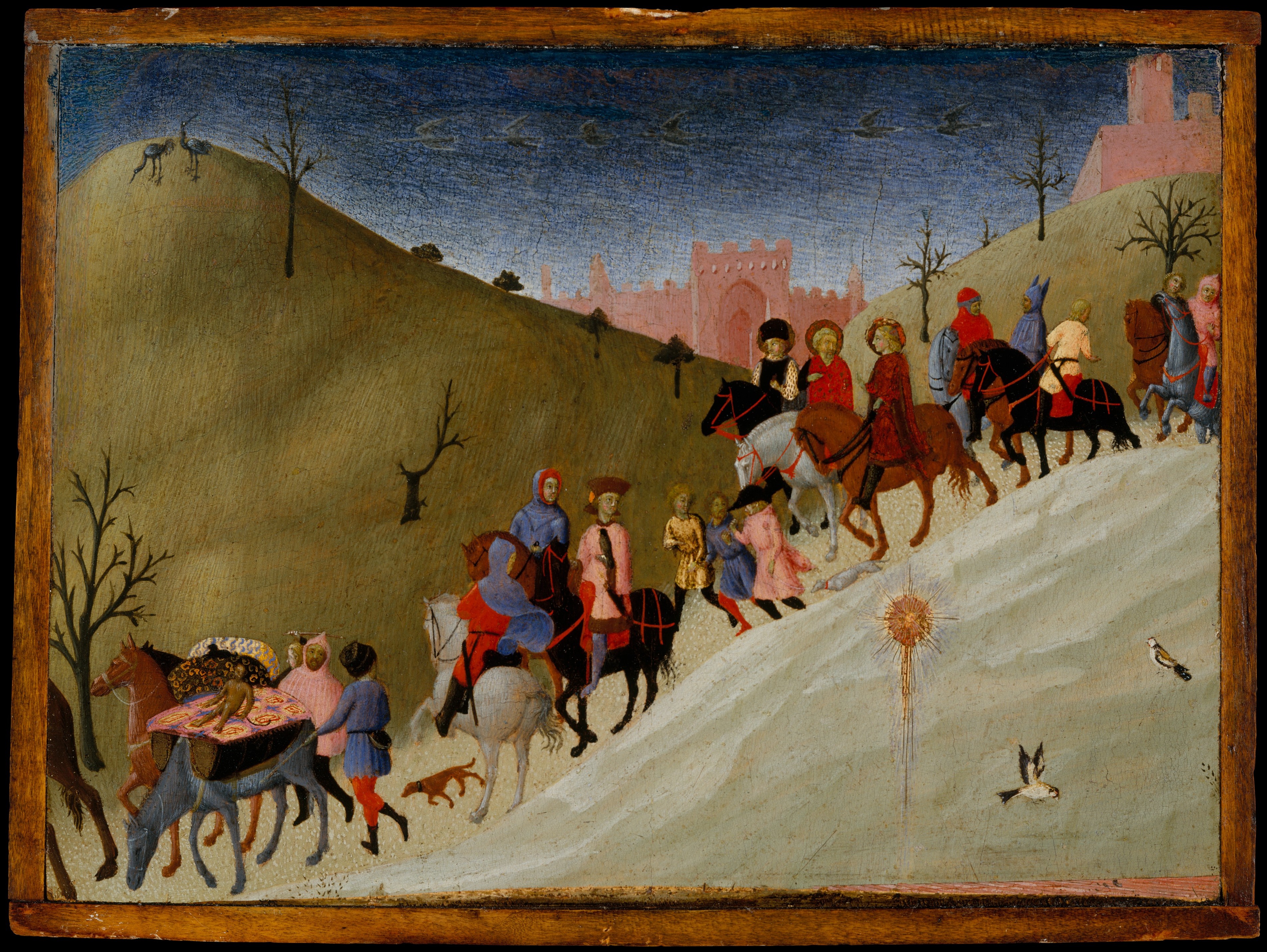
Stefano di Giovanni, El viaje de los Magos (1433), tempera y oro sobre madera, Metropolitan Museum of Art (New York)

Decía Paul Tillich que nuestra gran tragedia es haber perdido la dimensión de profundidad: ya no somos capaces de preguntar de dónde venimos ni a dónde vamos ni qué debemos hacer en el tiempo que va del día en que nacemos al día en que morimos[1]. Los jóvenes se plantean cada vez menos estas cuestiones con la seriedad y hondura con que lo han hecho las generaciones pasadas, y muchos prefieren seguir caminando en tinieblas. Hoy más que nunca hemos de volver a recordar que ser creyente es, antes que nada, preguntarnos apasionadamente por el sentido de la vida y estar abiertos a una respuesta, aun cuando ésta tarde en llegar y caminemos en medio de la oscuridad. El relato de los magos que la liturgia nos presenta en esta solemnidad de la Epifanía es el de unos hombres que, aun viviendo en las tinieblas del paganismo, fueron capaces de responder fielmente a la luz que los llamaba a la fe. Nuestra vida transcurre con frecuencia en la corteza de la existencia: trabajos, reuniones, encuentros, ocupaciones diversas nos llevan y traen, y la vida se nos va pasando, llenando cada instante con algo que hemos de hacer, decir, ver o planear. Corremos el riesgo de perder nuestra propia identidad, convertirnos en una cosa más entre otras y no saber ya en qué dirección caminar. ¿Hay una luz capaz de orientar nuestra existencia? ¿Hay una respuesta a nuestros anhelos y aspiraciones más profundas? Ciertamente esa respuesta existe. Esa luz brilla ya en ese Niño nacido en Belén: Jesucristo, redentor de la humanidad. Lo importante es descubrir que vivimos en tinieblas. Que hemos perdido el sentido fundamental de la vida. Quien descubre esto se encuentra ya muy cerca del verdadero camino. El Señor Jesús nos regale esta mañana de enero la luz y la fortaleza que necesitamos para vivir sin perder la capacidad de estar abiertos a toda luz que pueda iluminar nuestra existencia, a toda llamada que pueda dar profundidad a nuestra vida, y que María Santísima interceda por nosotros • AE


[1] Paul Johannes Tillich (1886- 1965) fue un filósofo existencialista cristiano y teólogo protestante luterano germano-estadounidense ampliamente considerado como uno de los teólogos más influyentes del siglo XX. Entre el público general es mejor conocido por sus obras The Courage to Be (1952, El coraje de ser) y Dynamics of Faith (1957, Dinámica de la fe) que introdujeron temas de teología y cultura moderna entre los lectores.