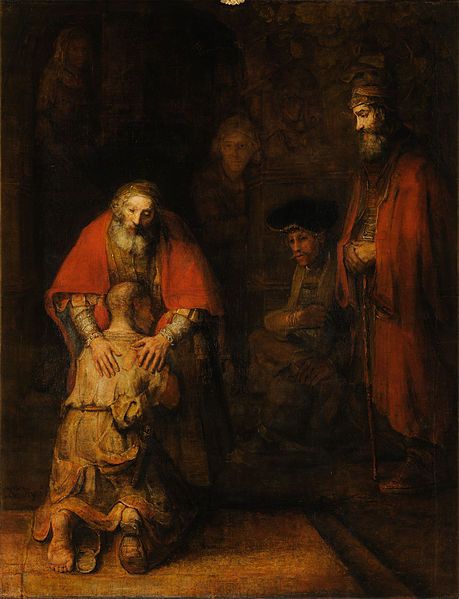
Rembrandt Van Rijn, The Return of the Prodigal Son (1662), oil on canvas, Hermitage Museum (St Petersburg)
My fellow Parishioers: I am available to celebrate the Sacrament of Confession at the following places and times:
Monday at Our Lady of Grace from 6.00 a.m. to 6.50 a.m. (@ Eucharistic Chapel) Tuesday at St. Peter Prince of the 6.00 a.m. to 6.50 a.m. (@ Eucharistic Chapel) Wednesday at Our Lady of Sorrows from 7.30 a.m. to 8.00 a.m. (@ Confessional) and at St. Peter Prince of the Apostles from 4.00 p.m. to 5.30 p.m. (@ Confessional) Friday at Our Lady of Grace from 4.00 pm to 6.00 pm (@ Confessional) Saturday at Our Lady of Grace from 7.00 a.m. to 8.00 a.m. (@ Confessional) Saturday at St. Peter Prince of the Apostles from 4.00 p.m. to 5.30 p.m. (@ Confessional)
If none of these spots works well for you, please send me an email (agusestrada@gmail.com) to arrange a convenient day and time for you. Peace! Fr. AE
Caravaggio, The Sacrifice of Isaac (1603), oil on canvas, Uffizi (Florence)
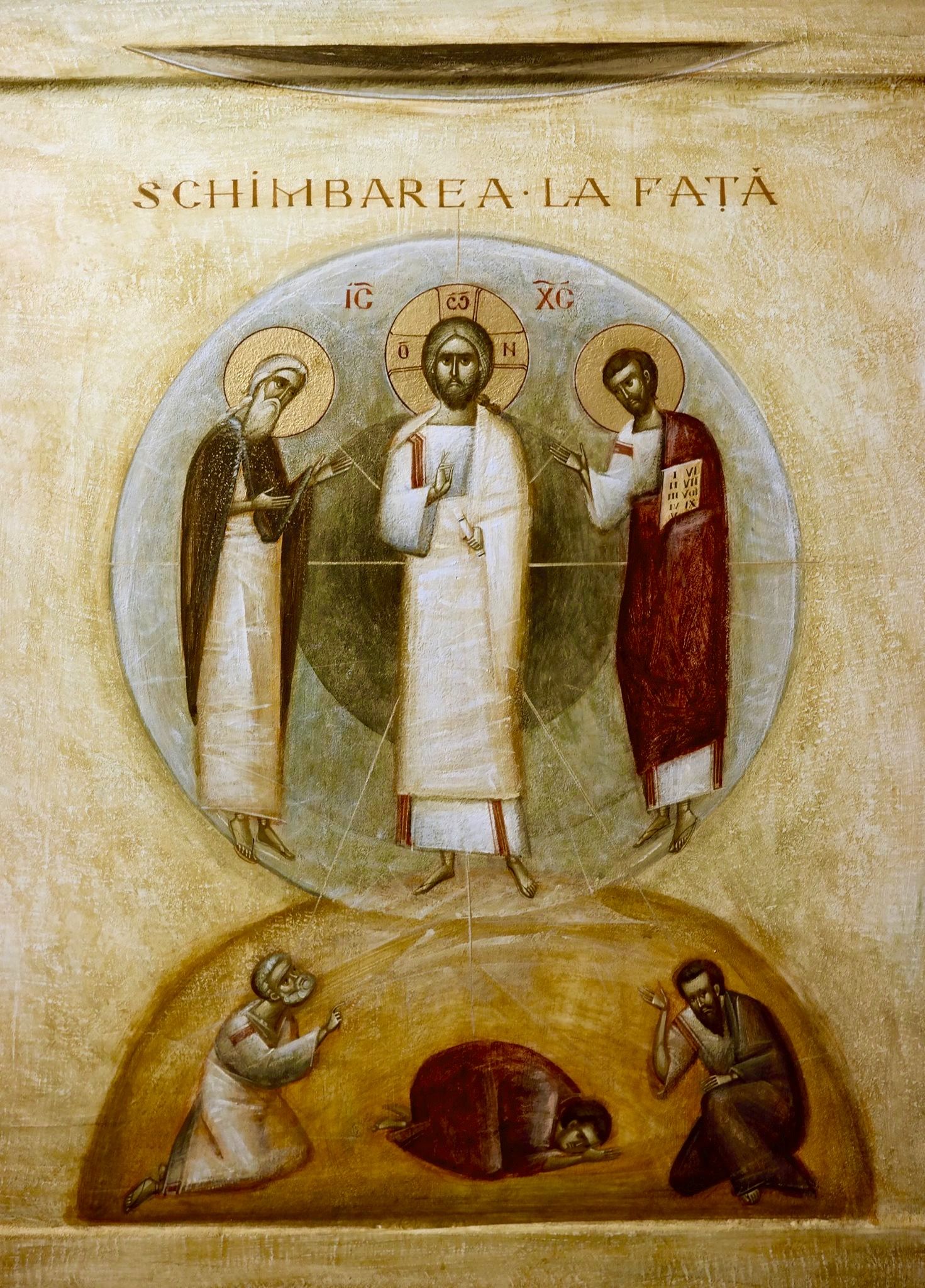
The teachers of Jesus’ time compared Isaac to the Jewish martyrs who died for their faith during the Maccabean revolt against the Syrians. Second Maccabees tells the story of the seven sons and the esteemed elder who would rather die than deny their faith and defile themselves[1]. The scholars taught that like those martyrs, Isaac did not value his life over the completion of God’s plan. Later, Christians would see in Isaac’s carrying the wood for the sacrifice up the mountain a prophecy of Jesus carrying the cross up to Golgotha. It is in this light that we can relate the story of Abraham and Isaac with the Transfiguration, today’s Gospel. On that mountain of mystery, Jesus met with Moses and Elijah. Why Moses and Elijah? Moses was the lawgiver. During the Exodus he showed the Hebrews how they could serve God. He told them they were God’s chosen people. God had a plan for them, one by which He would deliver them out of slavery and to the place He set aside for them. Elijah was the greatest of the prophets. The time had come on the mountain of the Transfiguration. Jesus was there on that mountain. He was ready and willing to sacrifice himself for His Father’s plan to become a reality. He would die for the good of all. His sacrifice would lead to the glory of the Kingdom of God. His life, obscure in the eyes of the world, and His death, which the world would view as dishonorable, freed others, freed us, to live and die in grace. What does all this mean to us? It means that as followers of Christ we also must offer ourselves up for the good of others. When Jesus said that we cannot be His followers unless we were ready to take up our crosses[2], He was not using symbolic imagery. He meant it. As Christians, we are called to sacrifice ourselves for others. That means that we have to reject the world’s diabolical egocentricity. Egocentricity is putting ourselves first before all others, the “It’s all about number one, me.” That is the way of the world. It is diabolical because the devil is determined to fight God’s plan for us by using us against ourselves. Something wonderful happens when we step out of ourselves and give ourselves to others. We receive more than we give. We have all realized that whenever we are truly charitable, we feel a huge joy, a joy so real that we are convinced that what we did was insignificant to what we received. In those moments of joy, we become one with the Lord. We are transfigured with Him. We become people completely different because we are happier, infinitely happier. Just as the Transfiguration of the Lord was a touch of heaven and a foreshadowing of the glory to come, our own transfigurations are a touch of heaven and a tangible prediction of the eternal joy to come. Lent is a time for us to take a close look at ourselves and consider what we have to do to conquer selfishness and sin in our own lives. The various exercises of Lent help us to dive deeper into our commitment to the Lord. Lent helps us to take those steps we need to be bound to God’s plan. We pray today for the grace to be part of the plan, part of the sacrifice, and part of the Glory • AE
Fr. Agustin’s Schedule for the Second Sunday of Lent 2021
Saturday, February 27, 2021.
4.00 p.m. Sacrament of Confession
5.30 p.m. English Mass @ St. Peter Prince of the Apostles Catholic Church.
Sunday February 28, 2021.
9.00 a.m. English Mass @ St. Peter Prince of the Apostles Catholic Church
11.00 p.m. English Mass @ St. Peter Prince of the Apostles Catholic Church
5.30 p.m. English Mass @ St. Peter Prince of the Apostles Catholic Church.
II Domingo de Cuaresma (2021)
La tentación de hacer tres tiendas como sugiere Pedro está y estará siempre presente[1]. Es curioso: nos preocupamos siempre por construir una casa a Dios ¡y la realidad es que él mismo ha bajado a la tierra para vivir en las casas de los hombres![2] Hoy podrimos volver a meditar con calma que Dios no tiene tanta necesidad de metros cuadrados para iglesias como de acogida en el corazón humano. Él querría vivir en familia con los hombres, andar entre nuestros pucheros, como decía la santa Madre Teresa. El Dios-con-nosotros no es un producto de un mercado al que se acude cuando se necesitan servicios religiosos. Dios no es un objeto de consumo. Él es la vida misma del hombre, pero nosotros nos empeñamos en confinarlo en su casa, en lugar de tenerlo como compañero continuo en el camino de la vida. El Padre de Jesús no se mantiene en alturas celestiales, sino que nos señala, a través del Hijo, en la dirección al mundo en la que quiere que nos encarnemos. Además de nuestra condición de hombres, hay algo que refuerza nuestro interés por el mundo: nuestra fe y el servicio a los demás. El Concilio Vaticano II lo dijo de una manera maravillosa: «Los gozos y las esperanzas, las tristezas y las angustias de los hombres de nuestro tiempo, sobre todo de los pobres y de cuantos sufren, son a la vez los gozos y las esperanzas, tristezas y angustias de los discípulos de Cristo»[3] • AE
[1] Cfr. Mc 9, 2-10 [2] Cfr Jn 1,1 [3] Constitución Gaudium et Spes, 1.
Michelangelo Buonarroti, The Torment of Saint Anthony (1487), Tempera on panel, The Kimbell Art Museum (Forth-Worth, Texas)
Lent begins this year with a reading from the Noah section of Genesis[1]. The Noah story begins with a notice of the depravity of the people. And how God protected Noah’s family and his creation from the flood. At the end of the story, to demonstrate that he would never destroy man again, God sets his bow in the sky. The main point is that God will not give up on man. This is the covenant with Noah and us. God will not give up on us. And we can’t give up on ourselves! That is the real problem: very often we give up on ourselves. We have fallen in the past, and we convince ourselves that we do not have the power to fight off sin when temptation shows up. The question arises, though, «In the face of temptation, are we powerless?» If a person allows himself or herself to be exposed to an intense temptation, then his or her ability to withstand it is greatly reduced. For example, an alcoholic is tempted to drink every day of his or her life, even if it has been years since he or she had a drink. But if that person is alone on a business trip, is lonely, and goes to a bar, the temptation may be far more than the person can withstand. The person, though, is not powerless because the person can choose not to go to that bar. Although we have the power to withstand temptation, the greatest source of our power is not within us as much as it is in the strength we receive from the Lord. People who fight off temptations do so due to the power of God. God promised Noah and us that he will never give up on us. He loves us too much to give us up. No matter what our particular temptation in life is, we can withstand it as long as we face up to it with the Lord. We have to take responsibility for our actions. We have to recognize that we can do evil and we can hurt others. We have to pray continually. The rainbow, the sign given to Noah, is God’s promise that he knows our weaknesses but will never let us go. Although we are tempted continually, and although we may have failed in the past, we have no right to give up on ourselves. We have no right to beat our personalities into submission and consider ourselves unfit to do the right thing. No matter what mistakes we may have made, God still is there trying to keep us from falling into the same hole the third, fourth or fifth time, or seventy-seventh time. If God refuses to give up on us, then what right do we have to give up on ourselves? Jesus was out in the desert with the wild beasts[2]. During Lent we reflect on what the wild beasts are in our lives. What are the particular things that devour our spiritual life? Big question! This passage of the Gospel always reminds me of the great Saint Anthony of the desert and how Christian iconography represents him in the desert surrounded by demons. With the help of the angels, with God’s love we can and will fight them off. True, we have to want to fight. We have to want to change for the better. That is what Lent is all about: spending forty days putting up the fight, fighting off the beasts, preparing to announce the Kingdom. We can do it. If we reflect on how easy it is for us to slip into our old habits, and have that negative thought that we have no chance of changing, then we have only to look at the rainbow and know that God will never give up on us. We can change. We must change. His mission for us demands it. His love for us makes it possible. Together let us pray that this holy season of Lent we allow God to work his wonders in us as we struggle against those elements of our lives that would keep us from fulfilling God’s mission for us. Let us look at the rainbow. God has not given up on us. We cannot give up on ourselves • AE
Fr. Agustin’s Schedule for the First Sunday of Lent (2021)
Saturday, February 20, 2021.
4.00 p.m. Sacrament of Confession 5.30 p.m. English Mass
@ St. Peter Prince of the Apostles Catholic Church.
Sunday February 21, 2021.
8.30 a.m. English Mass @ Our Lady of Grace Catholic Church (Outdoors mass)
10.30 p.m. English Mass @ Our Lady of Grace Catholic Church (Outdoors mass)
5.30 p.m. English Mass @ St. Peter Prince of the Apostles Catholic Church. RCIA Rite of Sending
I Domingo de Cuaresma (2021)
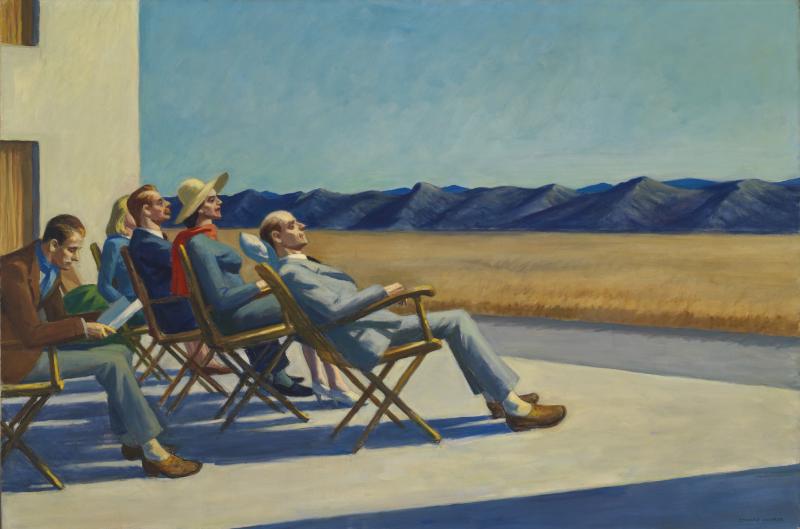
E. Hopper, People in the Sun (1960), óleo sobre tela, Smithsonian American Art Museum (Washington)
Lo mejor que tiene la noche es la esperanza del amanecer. Pero es necesaria la noche: sin ella, la luz del nuevo día no tendría ese sabor a victoria. Sería como un vaso de agua sin sed; o como un descanso que no ha sido deseado largamente desde la fatiga. El diluvio fue una larga noche. ¿Noche, o muerte? Noche, porque una débil esperanza -el arca de Noé- se negaba a morir. Al final de aquella noche, el arco iris fue, para aquella familia que se salvó, como un amanecer de victoria, como una señal de alianza con el Señor. El pecado es noche también. Y el bautismo, para Pedro, es como el arca; una señal de que esa noche tendrá también su amanecer. ¿Quién lo garantiza? Cristo, pasando de la noche de su muerte al alba de su resurrección: «Como Cristo era hombre, lo mataron; pero como poseía el Espíritu, fue devuelto a la vida»[1]. El desierto era, para el pueblo judío, como otro nombre de la noche. Lugar de paso hacia una tierra que un día sería su tierra, pero que aún quedaba lejos. Lugar de purificación y de esperanza. Buen lugar para las grandes batallas y para los grandes encuentros. Por eso Jesús, que quería entrar hasta el fondo de nuestra noche, quiso vivir la experiencia del desierto. «El Espíritu impulsó a Jesús a retirarse al desierto», dice el evangelio de hoy[2]. Y en el desierto entró como un hombre más, empezó a librar su gran batalla. A solas con su limitación y con su miedo; cercado por una naturaleza que se hacía difícil, sin seguridades en que apoyarse, desgastado por el hambre y por la sed. Una batalla que no será vencida de una vez para siempre, sino que habrá que continuar ganando cada día, palmo a palmo, cada vez más dura y más dramática, hasta el acoso de Getsemaní, hasta el fracaso de la cruz. Con la Cuaresma entramos pues en el desierto. En él, junto con la sed y el silencio, nos vamos preparando para saborear un día el agua viva de la Pascua. En él nos vamos convenciendo de la inutilidad de tantas cosas que antes creímos necesarias, de lo débiles que eran nuestros puntos de apoyo. En él, al ver nuestra radical pobreza, podríamos acabar descubriendo que Dios es nuestra única esperanza. Entremos, pues, sin miedo en ese desierto. Dispuestos a aguantar la sed y el hambre. Dejando pesos inútiles que nos impedirían caminar: comodidades que nos acaban enmoheciendo la disponibilidad, consumismo que pone en peligro toda nuestra escala de valores, seguridades que nos tientan a que apartemos los ojos del que es nuestra única seguridad: el Señor[3]. Entremos en la Cuaresma sin miedo al silencio. Sin miedo a lo que el Señor nos diga en la oración. Sin miedo a vernos tal cual somos, como cuando el sol, implacable, acabe derritiendo nuestros complicados maquillajes • AE
[1] 1 Pt 3, 18-22. [2] Mc 1, 12-15 [3] J. Guillén García, Al hilo de la Palabra, Comentario a las lecturas de domingos y fiestas. Ciclo B, Granada, 1993, p. 38 ss.
Braggers are so…let’s say… annoying! You know, those folks who always seem to do things better than the rest of us; they always know the answer to the issue – ‘Oh, I wouldn’t have done it that way!’. Braggers get you down. I’m sitting in a meeting that’s coming to an end. The leader says we must make a date for the next one. Pockets and cases are rifled, and we all stare intently at our smart phones or diary tablets. “How about …?” “Oh No, I can’t make that. A terrible week, so busy.”. Well, Lent is a time to bring some reality and some humility into our lives, and not to brag about it. If you’re trying to put some extra effort into this business of living the life of faith that’s great but please do not advertise your self-denial, your self-examination, your striving after what you know you’ve missed. So, says Jesus: if you’re going to fast, wash your face, slap on the oil so you look as if you’re blooming, and smiling don’t let on what a struggle such a discipline is. Don’t even mention it. That way what you’re doing won’t be seen by anyone, only your Father who is in secret; and your Father who is in secret will reward you[1]. And if that’s true about fasting, it’s also true about every religious practice like giving and praying, but also silence and study and reflection and meditation and compassion and practical encouragement, and whatever else you might do to develop and test your faithfulness. What does Jesus make such a big thing of this secret action and thought? Well, three reasons mainly. First, to emphasize the fact that real faith is not about outward differences but inward differences. It’s about intention, motivation, love and the rest; and these things are inward things. Second. Self-denial isn’t self-denial when its object is to be talked about. Being talked about doesn’t contribute one little thing to what you as a person really are. You may enjoy being talked about but what does it do for your personal growth? What does it do to your nearness to God? What does it do to your strengthening as a person? And third, the encouragement to secrecy is not an encouragement not to do these things. Jesus doesn’t say “don’t fast; don’t pray, don’t give alms”. No, he says, “when you …, when you give alms, when you pray, when you fast….” Do these things and more, but don’t do them ostentatiously. Be quiet about them and you’ll find that some of the quiet of God will rub off on you! Do something. There’s wisdom in taking something on in Lent; in giving something up in Lent; and in giving more away in Lent, but that wisdom isn’t found in show and flamboyance. It’s found in a quite blessedness: and your Father who sees in secret will reward you • AE
Fr. Agustin’s Schedule for Ash Wednesday 2021 (2-17)
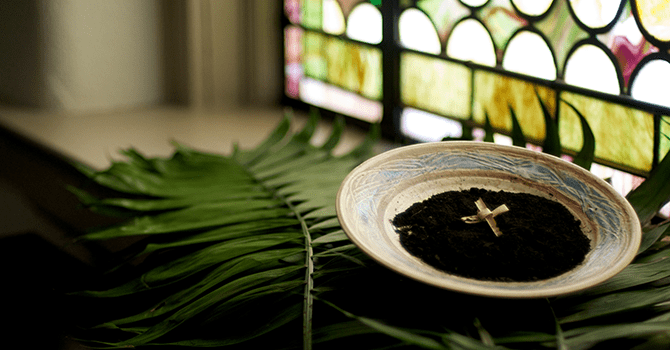
Ash Wednesday is a Christian holy day of prayer, fasting, and repentance. Ash Wednesday derives its name from the placing of repentance ashes on the foreheads of participants to either the words «Repent, and believe in the Gospel» or the dictum «Remember that you are dust, and to dust you shall return.» The ashes may be prepared by burning palm leaves from the previous year’s Palm Sunday celebrations •
8.00 a.m. Holy Mass with imposition of ashes @ St. Peter Prince of the Apostles Catholic Church (School Mass)
12.00 p.m. Imposition of ashes @ St. Peter Prince of the Apostles Catholic Church
4.00 p.m. to 5.30 p.m. Sacrament of Reconciliation @ St. Peter Prince of the Apostles Catholic Church
5.30 p.m. Holy Mass with imposition of ashes @ St. Peter Prince of the Apostles Catholic Church
7.00 p.m. Imposition of ashes @ St. Peter Prince of the Apostles Catholic Church
Miércoles de Ceniza 2021
Exposicion retrospectiva de Elisabeth Louise Vigée Le Brun en el Grand Palais (Paris)
Con sencillez y alegría la liturgia de este día nos invita a reconocer nuestra debilidad. ¡Cuánta distancia hay entre nosotros y el Evangelio y entre nosotros y la fidelidad del Señor! Hoy, si volvemos la mirada sobre nosotros mismos, sobre nuestra manera de vivir, de actuar, brotarán desde lo más hondo de nuestro corazón aquellas palabras que decíamos en el salmo: Misericordia, Dios mío, por tu bondad, por tu inmensa compasión borra mi culpa; lava del todo mi delito, limpia mi pecado[1]. La invitación de hoy es pues a ser sinceros con nosotros mismos. Si nos ponemos ante Dios no podremos gloriamos de nada. ¡Cuánto nos dominan nuestros deseos y nuestros intereses! ¡Cuántas ganas tenemos de imponer nuestro criterio y nuestra voluntad! ¡Qué poca capacidad de renuncia (de dinero, de tiempo, de tranquilidad) para el servicio a los demás! ¡Qué poco nos esforzamos por comprender a los que no son o piensan como nosotros! Y además de reconocer la propia infidelidad también hoy es un buen momento para levantar los ojos a Dios con confianza, con fe: ¡Misericordia, Dios mío, ¡por tu bondad! En este inicio de la Cuaresma, podríamos intentar mirarnos por dentro y reconocer nuestro pecado, y al mismo tiempo, mirar hacia Dios, nuestro Padre, y reafirmar nuestra confianza en su amor. Hoy, la imposición de la ceniza sobre nuestra cabeza será esta señal de reconocimiento. Será como decir: somos débiles, somos pecadores, no acabamos de salir de esta situación, de este estado. Pero no será decírnoslo a nosotros mismos, no será decirnos que no hay nada que hacer, que no hay salida. Será decirlo ante Dios, reconocerlo delante de él. En realidad, es el único camino para llegar, llenos de gozo, a la noche de la celebración de la Pascua • AE
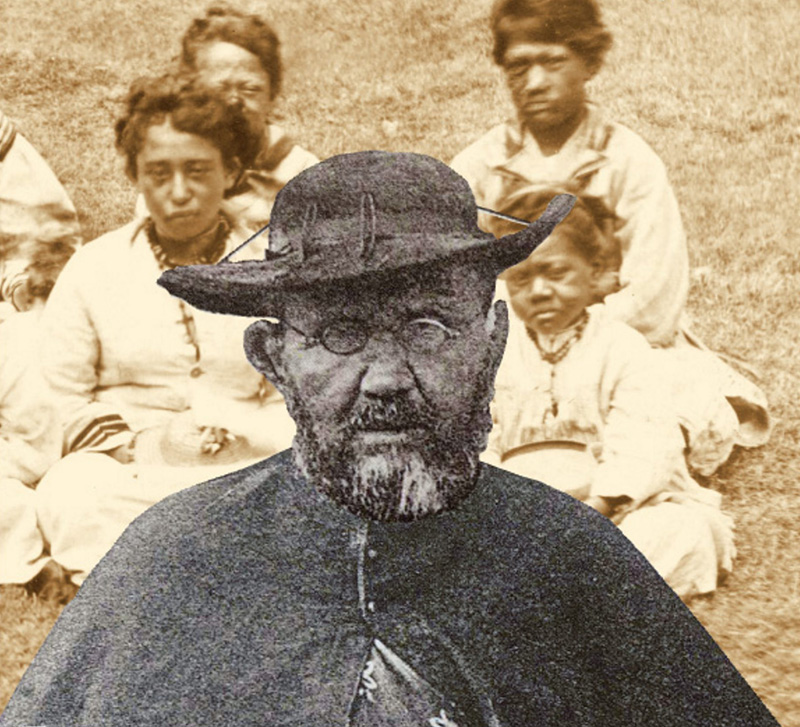
Up to seventy years ago, leprosy was feared and treated with a form of superstition. The people afflicted with leprosy were treated as though they were criminals. In Hawaii, as in other places throughout the world, hospitals would not treat lepers. Instead, the lepers were forced to live in colonies with laws separating them from society similar to those laws we heard in the first reading for today. In Hawaii the lepers were put into cages, shipped off to Molokai, and dumped into the ocean. Only those well enough to swim to shore would live. Once on shore, the lepers faced total chaos. Everyone was sick. There was no medicine, no doctors, no shelters, no blankets. Now, on the big island of Hawaii, there was a young priest from Belgium named Damien de Veuster. He had been a carpenter before he became a priest. Fr. Damien had built numerous small churches on the Big Island. The Bishop asked Fr. Damien to go to Kaluapapa and reassemble the little church that had been sent there. Fr. Damien was to have no contact with the lepers. The bishop did not have many priests, and he did not want to lose Fr. Damien. He told him that he was not to anoint or hear confessions of the lepers or to bury them or to have any contact with them at all. When Fr. Damien first saw the lepers, he was frightened. But he was different. He did not see the disease. He saw the people who were suffering. Fr. Damien was the first non-leper to stay overnight on Kaluapapa. He immediately began building shelters for the people. He constructed the Church and began saying Mass. He was the first to show Christ’s love to them. A ship came to pick up Fr. Damien after his 30-day medical visa expired, but the story goes that the lepers fought off the crew preventing them from landing and taking Fr. Damien. After six months, no one wanted Fr. Damien to leave the leper colony. The medical people in Honolulu were convinced that after being there that long, he probably already had contracted leprosy. So, Fr. Damien stayed. He built shelters, a water system, and turned Kaluapapa into a little functioning community. He planted over a thousand trees to protect the people from the elements. He built the Church and prayed for the people and with the people. Although leprosy is not as contagious as feared, Fr. Damien contracted leprosy, probably because he did not pay much attention to caring for his own health. Towards the end of his life Mother Marianne, St. Marianne Cope, and a group of sisters from Utica, New York, joined him on the island to continue his work and to build a hospital right there in Kaluapapa. On a little hill of Kaluapapa there is a cross with a few words from scripture that sums up what was at the heart of Fr. Damien’s work. The words are from St. Paul’s First Letter to the Corinthians «Love never fails». In 1864 the United States Congress invited each state to erect two statues of prominent citizens in Statuary Hall and throughout the Capital building in Washington D. C. Since then, all the states have followed this custom, some replacing statues with others such as California replacing one of its statues with one to honor Ronald Regan and Michigan doing the same to honor Gerald Ford. The State of Hawaii erected a statue of its unifying king, King Kamehameha, and a statue of its greatest citizen, St. Damien. What he and St. Marianne Cope did, their heroism, was extraordinary. They brought Jesus Christ to outcasts of society. Who are the outcasts of our society? Are the outcasts people with AIDS or other terrible illnesses? Are the outcasts the immigrants? Are we willing to reach out to them? Are we willing to touch the outcast, or are we afraid that we might become unclean? Perhaps, if we resume friendship with that difficult cousin, the rest of our family will have nothing to do with us. Or if we become advocates for migrants who work hard to send money to their impoverished families, then we will be accused of being aligned with the few bad among them who have done horrible things, even if the percentage of bad people among them is far less the percentage of evildoers who are American citizens. Still, some will say to those who reach out to the immigrants. The example of St. Damien and the message of our gospel, is that we can reach out to those who are suffering and touch them with the healing power of Jesus Christ. Yes, by doing this we may open ourselves up to insult and attack from those around us. But we have been empowered with the healing touch of Jesus Christ. And that healing touch can conquer the pain around us. The point is that Love never, ever fails • AE
Fr. Agustin’s Schedule for the Sixth Sunday in Ordinary Time
Saturday, February 13, 2021.
4.30 p.m. Sacrament of Confession @ St. Peter Prince of the Apostles Catholic Church
5.30 p.m. English Mass @ St. Peter Prince of the Apostles Catholic Church
Sunday, February 14, 2021
9.00 a.m. English Mass @ St. Peter Prince of the Apostles Catholic Church
11.00 a.m. English Mas @ St. Peter Prince of the Apostles Catholic Church
5.30 p.m. English Mas @ St. Peter Prince of the Apostles Catholic Church
VI Domingo del Tiempo Ordinario (Ciclo B)
La confianza del leproso es extraordinaria: «Si tú quieres, puedes curarme»[1]. Es exactamente la misma fe de la cananea, del centurión, del padre del muchacho epiléptico[2]. Hoy vemos a Jesús conmovido por esta fe, en un diálogo breve e intenso. Dos palabras le bastan al leproso para para revelar su fe y una palabra para señalar el efecto de esta fe. En este diálogo se encuentran frente a frente la terrible situación de un hombre y la fuerza del amor. La lepra inspiraba tanto miedo en aquella época que era considerada como un castigo de Dios y un contagio terrible; lo que importaba era no tocar a aquellos malditos. Y el evangelista nos dice que Jesús lo toca. Y lo cura. Eso es precisamente lo que pensaba el leproso: él puede todo lo que quiere. Al Señor no hay miseria alguna que lo escandalice, pero él espera nuestro «Si tú quieres…» que debería ser casi tan poderoso como el amor con que está dispuesto a acogernos. Hoy pienso en los leprosos de nuestros días, en los despreciados, en los marginados, en aquellos que se sienten avergonzados de su cuerpo, de su corazón, de su vida, de sus afectos. Y pienso también – ¡y pido perdón! – en mí mismo: ¿Acaso estoy sano? ¿De verdad estoy Limpio? Quizá mis encuentros con Jesús han sido inútiles porque nada me impulsaba a suplicarle: «Si tú quieres, puedes curarme», y es que para decir esto, con una fuerza capaz alcanzar un milagro, es necesario sentirnos leprosos y necesitados de su gracia. Este doble despertar de nuestra vergüenza y de nuestra fe es sin duda la mejor preparación para un encuentro[3]. Como cuando decimos, al inicio de la celebración de la Eucaristía: «Para celebrar dignamente éstos sagrados misterios reconozcamos humildemente nuestros pecados». Hoy podríamos pedir al Espíritu de Dios esa gracia tan particular de prepararnos para encontrarnos con el Señor Jesús reconociéndonos leprosos delante de Él, y esperando con alegría su bendita misericordia • AE
[1] Cfr. Mc 1, 40-45. [2] Cfr. Mt 15, 21-28; Lc 7, 1-10; Mt 17, 14-27. [3] Cfr. A. Seve, El Evangelio de los Domingos, Edit. Verbo Divino (Estella). 1984, p. 78, ss.










 LA MEDITACION DE LA ESPOSA