
Lent begins this year with a reading from the Noah section of Genesis[1]. The Noah story begins with a notice of the depravity of the people. And how God protected Noah’s family and his creation from the flood. At the end of the story, to demonstrate that he would never destroy man again, God sets his bow in the sky. The main point is that God will not give up on man. This is the covenant with Noah and us. God will not give up on us. And we can’t give up on ourselves! That is the real problem: very often we give up on ourselves. We have fallen in the past, and we convince ourselves that we do not have the power to fight off sin when temptation shows up. The question arises, though, «In the face of temptation, are we powerless?» If a person allows himself or herself to be exposed to an intense temptation, then his or her ability to withstand it is greatly reduced. For example, an alcoholic is tempted to drink every day of his or her life, even if it has been years since he or she had a drink. But if that person is alone on a business trip, is lonely, and goes to a bar, the temptation may be far more than the person can withstand. The person, though, is not powerless because the person can choose not to go to that bar. Although we have the power to withstand temptation, the greatest source of our power is not within us as much as it is in the strength we receive from the Lord. People who fight off temptations do so due to the power of God. God promised Noah and us that he will never give up on us. He loves us too much to give us up. No matter what our particular temptation in life is, we can withstand it as long as we face up to it with the Lord. We have to take responsibility for our actions. We have to recognize that we can do evil and we can hurt others. We have to pray continually. The rainbow, the sign given to Noah, is God’s promise that he knows our weaknesses but will never let us go. Although we are tempted continually, and although we may have failed in the past, we have no right to give up on ourselves. We have no right to beat our personalities into submission and consider ourselves unfit to do the right thing. No matter what mistakes we may have made, God still is there trying to keep us from falling into the same hole the third, fourth or fifth time, or seventy-seventh time. If God refuses to give up on us, then what right do we have to give up on ourselves? Jesus was out in the desert with the wild beasts[2]. During Lent we reflect on what the wild beasts are in our lives. What are the particular things that devour our spiritual life? Big question! This passage of the Gospel always reminds me of the great Saint Anthony of the desert and how Christian iconography represents him in the desert surrounded by demons. With the help of the angels, with God’s love we can and will fight them off. True, we have to want to fight. We have to want to change for the better. That is what Lent is all about: spending forty days putting up the fight, fighting off the beasts, preparing to announce the Kingdom. We can do it. If we reflect on how easy it is for us to slip into our old habits, and have that negative thought that we have no chance of changing, then we have only to look at the rainbow and know that God will never give up on us. We can change. We must change. His mission for us demands it. His love for us makes it possible. Together let us pray that this holy season of Lent we allow God to work his wonders in us as we struggle against those elements of our lives that would keep us from fulfilling God’s mission for us. Let us look at the rainbow. God has not given up on us. We cannot give up on ourselves • AE

Fr. Agustin’s Schedule for the First Sunday of Lent (2021)

Saturday, February 20, 2021.
4.00 p.m. Sacrament of Confession 5.30 p.m. English Mass
@ St. Peter Prince of the Apostles Catholic Church.
Sunday February 21, 2021.
8.30 a.m. English Mass @ Our Lady of Grace Catholic Church (Outdoors mass)
10.30 p.m. English Mass @ Our Lady of Grace Catholic Church (Outdoors mass)
5.30 p.m. English Mass @ St. Peter Prince of the Apostles Catholic Church. RCIA Rite of Sending
I Domingo de Cuaresma (2021)
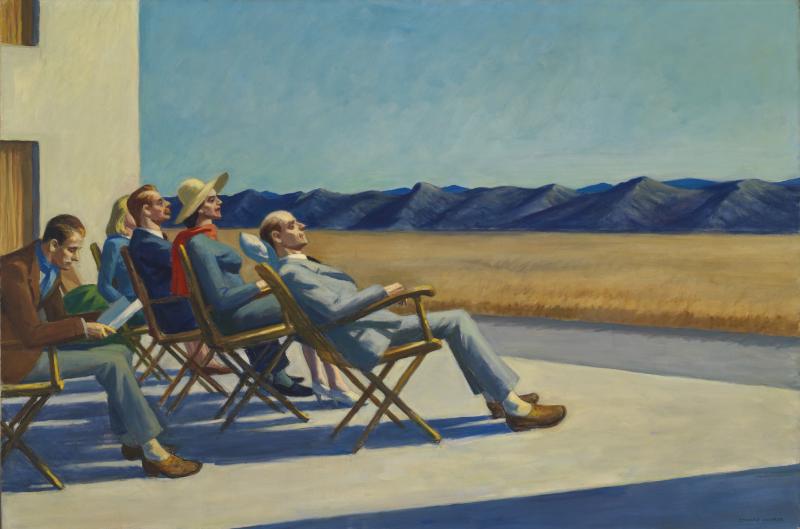
E. Hopper, People in the Sun (1960), óleo sobre tela, Smithsonian American Art Museum (Washington)
Lo mejor que tiene la noche es la esperanza del amanecer. Pero es necesaria la noche: sin ella, la luz del nuevo día no tendría ese sabor a victoria. Sería como un vaso de agua sin sed; o como un descanso que no ha sido deseado largamente desde la fatiga. El diluvio fue una larga noche. ¿Noche, o muerte? Noche, porque una débil esperanza -el arca de Noé- se negaba a morir. Al final de aquella noche, el arco iris fue, para aquella familia que se salvó, como un amanecer de victoria, como una señal de alianza con el Señor. El pecado es noche también. Y el bautismo, para Pedro, es como el arca; una señal de que esa noche tendrá también su amanecer. ¿Quién lo garantiza? Cristo, pasando de la noche de su muerte al alba de su resurrección: «Como Cristo era hombre, lo mataron; pero como poseía el Espíritu, fue devuelto a la vida»[1]. El desierto era, para el pueblo judío, como otro nombre de la noche. Lugar de paso hacia una tierra que un día sería su tierra, pero que aún quedaba lejos. Lugar de purificación y de esperanza. Buen lugar para las grandes batallas y para los grandes encuentros. Por eso Jesús, que quería entrar hasta el fondo de nuestra noche, quiso vivir la experiencia del desierto. «El Espíritu impulsó a Jesús a retirarse al desierto», dice el evangelio de hoy[2]. Y en el desierto entró como un hombre más, empezó a librar su gran batalla. A solas con su limitación y con su miedo; cercado por una naturaleza que se hacía difícil, sin seguridades en que apoyarse, desgastado por el hambre y por la sed. Una batalla que no será vencida de una vez para siempre, sino que habrá que continuar ganando cada día, palmo a palmo, cada vez más dura y más dramática, hasta el acoso de Getsemaní, hasta el fracaso de la cruz. Con la Cuaresma entramos pues en el desierto. En él, junto con la sed y el silencio, nos vamos preparando para saborear un día el agua viva de la Pascua. En él nos vamos convenciendo de la inutilidad de tantas cosas que antes creímos necesarias, de lo débiles que eran nuestros puntos de apoyo. En él, al ver nuestra radical pobreza, podríamos acabar descubriendo que Dios es nuestra única esperanza. Entremos, pues, sin miedo en ese desierto. Dispuestos a aguantar la sed y el hambre. Dejando pesos inútiles que nos impedirían caminar: comodidades que nos acaban enmoheciendo la disponibilidad, consumismo que pone en peligro toda nuestra escala de valores, seguridades que nos tientan a que apartemos los ojos del que es nuestra única seguridad: el Señor[3]. Entremos en la Cuaresma sin miedo al silencio. Sin miedo a lo que el Señor nos diga en la oración. Sin miedo a vernos tal cual somos, como cuando el sol, implacable, acabe derritiendo nuestros complicados maquillajes • AE
[1] 1 Pt 3, 18-22. [2] Mc 1, 12-15 [3] J. Guillén García, Al hilo de la Palabra, Comentario a las lecturas de domingos y fiestas. Ciclo B, Granada, 1993, p. 38 ss.
 LA MEDITACION DE LA ESPOSA