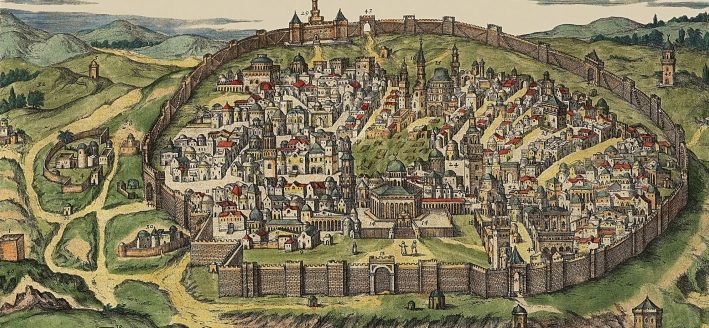
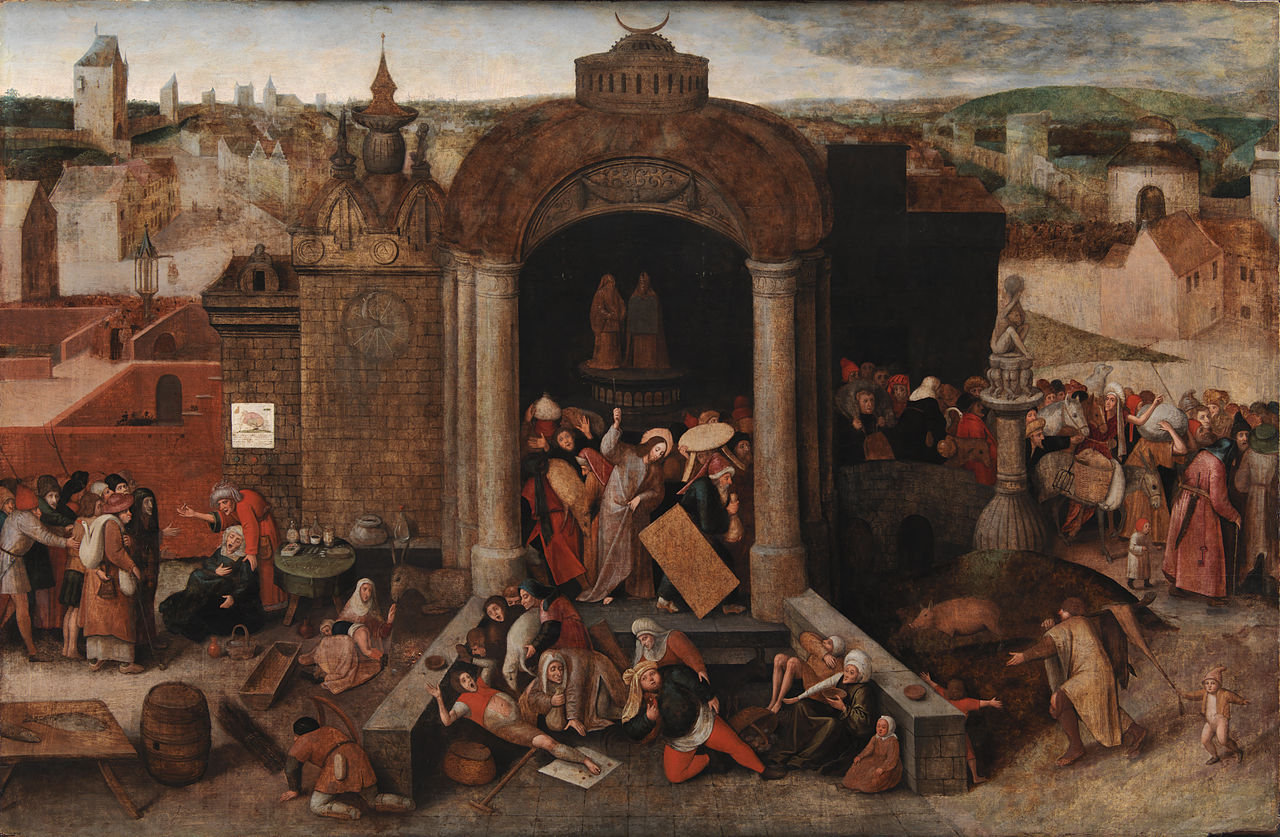
All the Gospels speak of this bold and provocative gesture of Jesus within the temple grounds of Jerusalem. It was probably not very spectacular. He ran over a group of pigeon sellers, overturned the tables of some money changers and tried to interrupt the activity for a few moments. He couldn’t do much more. Yet it was that specific gesture, charged with prophetic force, that triggered his arrest and his swift execution. To attack the temple was to attack the heart of the Jewish people: the center of their religious, social and political life. The Temple was untouchable. There dwelt the God of Israel. What would the town be without his presence among them? How could they survive without the Temple? For Jesus, however, it was the great obstacle to welcoming the kingdom of God as he understood and proclaimed it. His gesture called into question the economic, political and religious system sustained from that «holy place.» What was that temple? Was it a sign of the kingdom of God and its justice or a symbol of collaboration with Rome? A house of prayer or a storehouse for the tithes and first fruits of the peasants? A sanctuary of God’s forgiveness or justification of all kind of injustices? This was a «den of thieves.» While in the surroundings of the «house of God» wealth accumulated, in the villages the misery of his children grew. No. God would never legitimize a religion like that. The God of the poor could not reign from that Temple. With the arrival of his reign, he lost his reason for being. So, this act of the Lord in this third Sunday of Lent is an invitation to meditate about the religion we are cultivating in our assemblies. If it is not inspired by Jesus, it can become a «holy» way of closing ourselves to God’s project that Jesus wanted to promote in the world. The first thing is not religion, but the kingdom of God. So, what religion is ours? Does it increase our compassion for those who suffer or allow us to live calmly in our well-being? Does it feed only our own interests or does it put us to work for a more human and livable world? If our faith and our spirituality resemble that of the Jewish Temple, we could be sure that Jesus would not bless it. Let us think about it • AE

Fr. Agustin’s Schedule for the Third Sunday of Lent (2021)

Saturday, March 6, 2021.
2.00 p.m. Sacrament of Matrimony for Martha & Angel @ St. Peter Prince of the Apostles Catholic Church.
4.00 p.m. Sacrament of Confession @ St. Peter Prince of the Apostles Catholic Church.
5.30 p.m. English Mass @ St. Peter Prince of the Apostles Catholic Church.
Sunday March 7, 2021.
On the occasion of Spring Break 2021, Fr. Agustin will be out of town for a few days.
Parishes continue their Sunday liturgies on their regular schedule.
Tercer Domingo de Cuaresma (2021)

Cuando Jesús entra en el templo de Jerusalén se encuentra con un comercio religioso. Su actuación no es sino la reacción del Profeta que ve la religión convertida en mercado. Aquel templo llamado a ser el lugar en que se había de manifestar la gloría de Dios y su amor fiel al hombre, se ha convertido en lugar de engaño y abusos donde reina el afán de dinero y el comercio interesado. No es de extrañar la indignación del Señor. Jesús siempre habla de la gratuidad con la que Dios que ama a los hombres, por eso una vida convertida en mercado donde todo se compra y se vende, incluso la relación con el misterio de Dios, es la perversión más destructora de lo que Jesús quiere promover entre los hombres. Es cierto que nuestra vida sólo es posible desde el intercambio y el mutuo servicio. Todos vivimos dando y recibiendo. El riesgo está en reducir todas nuestras relaciones a comercio interesado, pensando que en la vida todo consiste en vender y comprar, sacando el máximo provecho a los demás. Casi sin darnos cuenta, nos podemos convertir en vendedores y cambistas que no saben hacer otra cosa sino negociar. Hombres y mujeres incapacitados para amar, que han eliminado de su vida todo lo que sea dar. Es fácil entonces la tentación de negociar incluso con Dios. Se le obsequia con algún culto para quedar bien con él, se pagan misas o se hacen promesas para obtener de él algún beneficio, se cumplen ritos para tenerlo a nuestro favor. Lo grave es olvidar que Dios es amor y el amor no se compra. Por algo repetía Jesús que Dios quiere amor y no sacrificios[1]. Hoy podríamos meditar, aunque fuera solo un momento, en la gratuidad de del amor y la compasión de Dios. En un mundo convertido en mercado donde nada hay gratuito y donde todo es exigido, comprado o ganado, sólo lo gratuito puede seguir fascinando y sorprendiendo pues es el signo más auténtico del amor. Los creyentes hemos de estar más atentos a no desfigurar a un Dios que es amor gratuito, haciéndolo a nuestra medida, tan triste, egoísta y pequeño como nuestras vidas mercantilizadas. Quien conoce la sensación de la gracia y ha experimentado alguna vez el amor sorprendente de Dios, se siente invitado a irradiar su gratuidad y, probablemente, es quien mejor puede introducir algo bueno y nuevo en esta sociedad donde tantas personas mueren de soledad, aburrimiento y falta de amor • AE
[1] Mt 12,7
 LA MEDITACION DE LA ESPOSA