

With the exception of the angels among us, which would be just the infants and little children, we often shock ourselves with how easily we go off the deep end, losing our tempers, our patience, engaging tongue before brain, doing that which we said we would no longer do, again and again. Without rattling off a long list of negatives, suffice it to say that we are all frail human beings. Sometimes, though, we hide behind our humanity to justify our actions. We say, “Well, you know, I’m only human” But that is never an acceptable excuse for our behavior. We are not only human. We are also spiritual. Through the grace of our baptism, our acceptance of the New Life of the Resurrection, God dwells within each of us. We are infinitely more than human. We are sons and daughters of God. Our God sent His Son to become one of us. One of us. Think about the cross: Along with the physical pain, Jesus knew what it was like to feel completely abandoned. All of us suffer from feelings that we are all alone. Even the mother in a house full of children and a caring husband often feels all alone. Jesus felt alone too. But this was more than that, He felt abandoned. With the exception of Mary, John and a small handful of people, He was all alone on Calvary. On the cross he was praying the psalm that declares that no matter what the world is doing to Him, His Father would never abandon Him[1]. So, Jesus also knew how the world tempts us to hate and how easy it is to take a small step and go from disagreeing with another person to hating that person because of his or her opinions. He must look at us Americans in 2021 and say, “Hey guys, disagree in your political positions if you must, but stop being hateful to each other and start respecting each other.” Jesus even knew what it was like to wake up in the morning and feel crabby! Moods are part of our human condition and Jesus was one of us in all things but sin. Granted, He controlled His moods, and we often don’t control our moods, but He did know that bad moods seem to come from nowhere. He also shared our other frailties. Back to today’s Gospel, Jesus knew how Thomas was frustrated with the other disciples and how disappointed he was.The Lord knew what Thomas was going through and He forgave him. The Lord knows what each of us is going through in our lives and forgives us. Well, He forgives us as long as we are willing to take a step outside of ourselves and our wants, and recognize our need for His Presence in our lives. When the night is darkest, the sun comes comes. When our failures and falls make us feel desperate, the mercy of the Lord appears, like a dawn. On this Divine Mercy Sunday, we are reminded that when we say with our lives as well as with our tongues, “My Lord and my God,” then are we only human? No, we are not only human! His grace allows us to be infinitely more than just human. Through His mercy we can be the spiritual beings that He created us to be. “I am not good enough,” all of us are inclined to say, particularly when we know we need to serve God in the Church, in our home, our workplace, our school or our neighborhood. “I am not good enough”, we say to ourselves and others not just to have an excuse for avoiding something, but far deeper, because we know our own frailty. We are wrong. All of us are wrong. We are all good enough! With his mercy and compassion He makes us good enough! This is the message of Divine Mercy Sunday • AE
[1] Cf Psalm 22

Fr. Agustin’s Schedule for the Second Sunday of Easter 2021.

Saturday, April 10, 2021
10.00 a.m. First Communions Mass @ St. Peter Prince of the Apostles
4.00 p.m. Sacrament of Reconciliation @ St. Peter Prince of the Apostles
5. 30 p.m. Mass @ St. Peter Prince of the Apostles
Sunday April 11, 2021
9.00 a.m. Mass @ St. Peter Prince of the Apostles
11.00 a.m. Mass @ St. Peter Prince of the Apostles
5. 30 p.m. Mass @ St. Peter Prince of the Apostles
Segundo Domingo de Pascua. Domingo de la Divina Misericordia
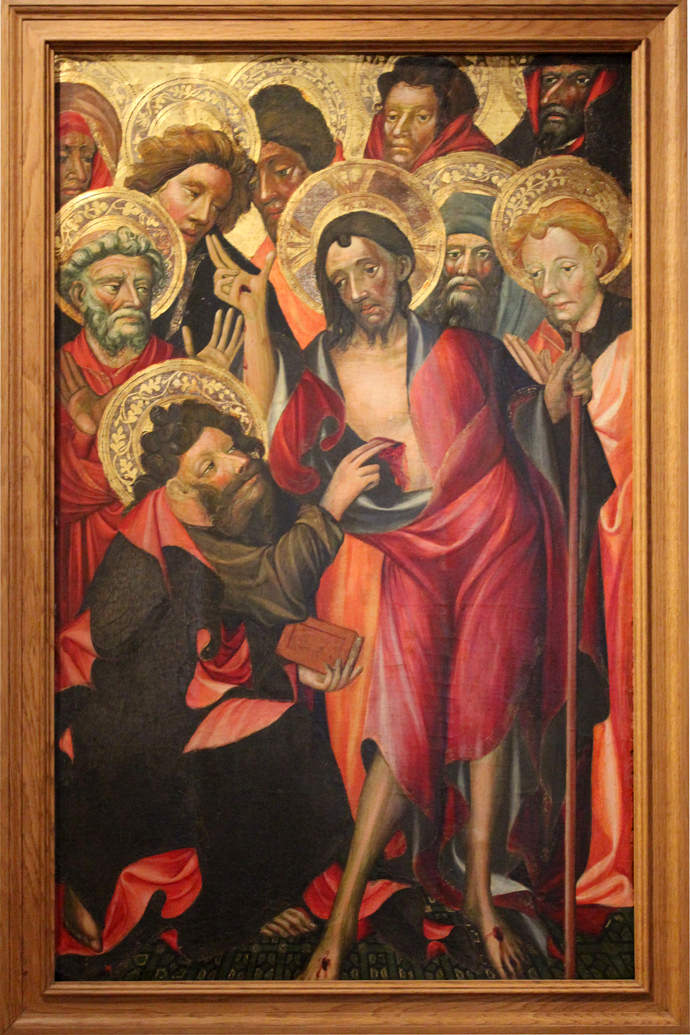
La cruz y la muerte habían llevado la tristeza, el desánimo y el miedo a los corazones de los apóstoles. Ahí estaban: paralizados por el miedo, con los cerrojos echados, y sin esperanza e ilusiones[1]. En realidad, el sepulcro vacío no estaba resolviendo el problema. Lo que realmente iba a transformar la vida de los discípulos es lo que ha dado en llamarse la experiencia pascual, es decir, sentirse resucitados con la fuerza del Resucitado. Aquel día el Señor Jesús aparece con su paz. Nada mejor podían recibir aquellos corazones atribulados y con un (explicable) complejo de culpabilidad. Pero, atención, no viene Jesús a echarles en cara su traición. No. Un aire nuevo irrumpe en la casa con la presencia de Jesús: el perdón de los pecados y el Espíritu Consolador. El evangelio de hoy habla de dos apariciones de Jesús, la primera tiene todo el perfume de la celebración de un sacramento: el domingo, al atardecer, los discípulos perdonados y llenos del Espíritu Santo, que son enviados a llevar a los hombres el amor y el perdón de que han sido testigos[2]. Tres años de intimidad con Jesús de Nazaret; catequesis escuchadas y comentadas después en la intimidad; signos y prodigios de Jesús… Todo pudo haberse quedado en la estupenda experiencia de haber conocido de cerca un gran Maestro y Profeta suscitador de esperanzas, que había acabado -como acaba todo- con la muerte. Pero la experiencia pascual los hace cristianos: Testigos de la Resurrección que proclaman que Jesús de Nazaret es el Cristo Señor[3]. No es preciso, para confirmar la fe, tocar físicamente a Jesús. Él ha dejado, al alcance y servicio de todas las generaciones, la experiencia pascual. Y Tomás. ¡Ay Tomás! Tomás era uno de los doce, pero aquel día no estaba con sus hermanos. Se había ido a hacer la guerra por su cuenta. Pero ¿qué podría llevar Tomás al mundo sin ser testigo de la Resurrección? Pues lo mismo con nosotros: ¿Qué podríamos aportar hoy, cargados de ideas, pero sin la experiencia del Señor? Quizá repartir teorías, y poco más[4]… ¡Dichoso el que viva hoy la experiencia pascual! Dichoso quien no haya visto al Señor y así lo ame y crea en Él y se alegra con un gozo indecible, transfigurado, alcanzando así la meta de la fe: la propia salvación; la vida en comunión que nos hace testigos de cómo Dios sigue salvando. Los sacramentos que Él nos dejó, celebrados con alegría como acontecimiento salvador, ponen al alcance de la mano el poder exclamar igual como hizo Tomás ¡Señor mío y Dios mío! • AE
[1] Cfr. Jn 20, 19-31
[2] Ídem.
[3] Cfr. Hch 4, 32-35
[4] M. Flamarique Valerdi, Escrutad las Escrituras. Reflexiones sobre el ciclo A, Ed. Desclée de Brouwer, Bilbao, 1989, p. 79 ss.
 LA MEDITACION DE LA ESPOSA