
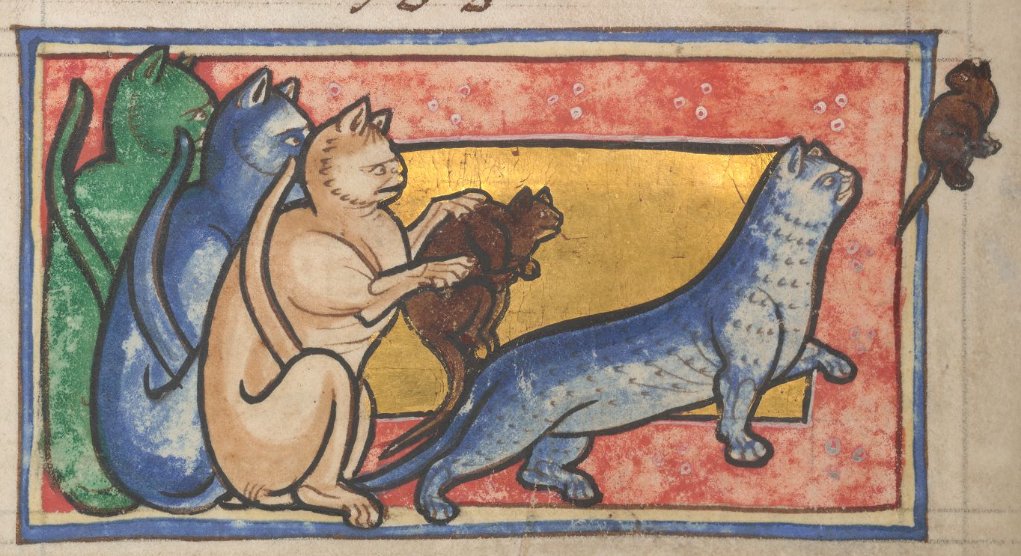
In 1939 the poet T. S. Elliot wrote a book of poems called the Old Possums Book of Practical Cats. His poems were taken word for word and transformed by Andrew Lloyd Weber into a musical play which first appeared in London, then became a hit in New York, where it ran for nineteen years. You are probably familiar with the musical: Cats. In his poems, T.S. Elliot says that all cats have three names. The first name is the name that the people the cat lives with give it. You will notice I did not say the people who own the cat. No one ever owns a cat, they just find a way to live with the cat the best they can. Anyway, the guests in the cat’s home give the cat a name Like Fluffy or Bitsy or Garfield. According to T.S. Elliott, the cat has a name that other cats know. The cat might be called by the others, Mephistopholes, the magical cat, etc. But, Elliott says, the cat also has a third name. This is a secret name that reflects all that the cat really is. In the poetry, the cat spends all his life contemplating his real name before God. T. S. Elliott was not writing about cats. He was writing about people. In some ways we all can be thought of as having three names. There is the formal name we receive from our parents. There is the name our friends use. And then, there is that special name which we receive from God that reflects who we really are. For example, I have a formal name, Fr. Agustin Estrada. My second name is the one my friends call me, Fader. I have another name, a third name, that I do not thoroughly know. That is the name that states who I am in my relationship with God. I received this name from God at my baptism. It expresses my deepest intimacy with God. This name states in a simple voice the unique reflection of God I was created to bring to the world. I was given this name at my baptism. I don’t thoroughly know this name. I will have to spend the rest of my life coming to a deeper and deeper knowledge of who I am before God. I will have to spend the rest of my life learning what my name is. You also have three names. The first is your formal name. The second is the one that those who know you use. The third is the name that proclaims to the world your unique relationship with God. On Trinity Sunday we consider the name of God, Father Son and Spirit. This is more than a theological dogma about God. It is also a doctrine about us. It is an expression of who we are. We are baptized in the name of God. The goal of our lives is to find the particular, unique expression of God’s love that we have been empowered to make present in the world. The goal of our lives is to reveal our most profound name. All who are baptized in the name of the Trinity are called to the Father in Christ though the Holy Spirit. We are called to the Father. The journey of our lives is a journey to God. This journey may follow the paths of marriage and parenthood, as many of you have taken. This journey may follow the path of the committed single Christian. The path might be that of religious life or holy orders. All journeys derive their meaning from their final destination. The journey of our lives is full of minor chores and major events. Even our routine chores derive their meaning from their final destination. Changing your baby’s diaper, telling your child for the hundredth time to clean up his or her room, putting up with your spouse’s moods, giving up going out with your friends so you can spend some extra time as a big brother or big sister, going to work and all that entails, going to school and completing all its tasks, all take their meaning as part of our journey to the Father. We are called to the Father in Christ. Jesus Christ is the Word of God Become Flesh. Our Christmas celebration is a celebration of His Presence not just among us but as one of us. He teaches us who the Father is and how we can best serve Him. Jesus teaches us with His life what love really is. Love, true love, is sacrificial, even to death on a cross. When we journey to the Father through Jesus, we are united to the Tremendous Lover in His eternal sacrifice of himself to the Father. The greatest steps we take in our journey to God are the steps we take away from our own selfishness. Christian is our name and our claim. We seek God not through the loss of personality like so many cults, or through attaining a clear state of consciousness like Scientology, or even through a loss of all thoughts. We don’t look for God in some sort of inner energy. We seek God through sacrificial love. We are called to the Father through Jesus Christ, the Tremendous Lover. We are called to the Father through the Son in the Holy Spirit. We are given the power and the grace to love as God loves so others might experience the presence of God working in us. We are the vehicles of the Holy Spirit. Our journey to God is not merely a matter of our individual relationship with God. We journey to God so that others might join us in the journey that gives meaning to life. We journey to God so others can see Him in us and also be led to His presence. The intimate name we have received is the name that best reflects our unique sharing in the Blessed Trinity. Baptized in the name of the Father, Son and Holy Spirit, we are called to allow our lives to have meaning by being faithful to our name. A hundred years from now, a thousand years from now, ten thousand years from now, our participation in all the petty wants and desires and ambitions the world has decreed are the marks of a successful person will be forgotten. No one will recall if we owned a Rolls and a yacht, or a Hyundai and a canoe. But a hundred years from now, a thousand years from now, ten thousand years from now, the world will still enjoy the impact of our lives if we have illuminated the world with our own unique reflection of God. The world will be a better place if we make the journey, approaching the Father through the Son with the power of the Holy Spirit • AE
Fr. Agustin’s Schedule for the Solemnity of the Most Holy Trinity of 2021

Fr. Agustin will be out of town. Parishes communities will continue in their regular mass schedule. Fr. Agustin will resume this regular schedule on Tuesday June 1, 2021.
Solemnidad de la Santísima Trinidad (2021)

… en el nombre del Padre y del Hijo y del Espíritu Santo.
¿Es necesario creer en la Trinidad, ¿se puede?, ¿sirve para algo?, ¿no es una construcción intelectual innecesaria?, ¿cambia en algo nuestra fe en Dios y nuestra vida cristiana si no creemos en el Dios trinitario? Hace dos siglos Kant escribía estas palabras: «Desde el punto de vista práctico, la doctrina de la Trinidad es perfectamente inútil». Nada más lejos de la realidad. La fe en la Trinidad cambia no sólo nuestra manera de mirar a Dios sino también nuestra manera de entender la vida. Confesar la Trinidad de Dios es creer que Dios es un misterio de comunión y de amor. Dios no es un ser frío, cerrado e impenetrable, inmóvil e indiferente. Dios es un foco de amor insondable. Su intimidad misteriosa es sólo amor y comunicación. Consecuencia: en el fondo último de la realidad dando sentido y existencia a todo no hay sino Amor. Todo lo existente viene del Amor. El Padre es Amor originario, la fuente de todo amor. Él empieza el amor: «Sólo él empieza a amar sin motivos, es más, es él quien desde siempre ha empezado a amar»[1]. El Padre ama desde siempre y para siempre, sin ser obligado ni motivado desde fuera. Es el «eterno Amante». Ama y seguirá amando siempre. Nunca retirará su amor y fidelidad. De él sólo brota amor. Consecuencia: creados a su imagen, estamos hechos para amar. Sólo amando acertamos a vivir plenamente. El ser del Hijo consiste en recibir el amor del Padre. Él es el «Amado eternamente» antes de la creación del mundo. El Hijo es el Amor que acoge, la respuesta eterna al amor del Padre. El misterio de Dios consiste pues en dar y en recibir amor. En Dios, dejarse amar no es menos que amar. ¡Recibir amor es también divino! Consecuencia: creados a imagen de Dios, estamos hechos no sólo para amar sino para ser amados. El Espíritu Santo es la comunión del Padre y del Hijo. Él es el Amor eterno entre el Padre amante y el Hijo amado, el que revela que el amor divino no es cerrazón o posesión celosa del Padre ni acaparamiento egoísta del Hijo. El amor verdadero es siempre apertura, don, comunicación hasta sus criaturas. «El amor de Dios ha sido derramado en nuestros corazones por el Espíritu Santo que nos ha sido dado»[2]. Consecuencia: creados a imagen de ese Dios, estamos hechos para amarnos mutuamente sin acaparar y sin encerrarnos en amores ficticios y egoístas • AE
[1] E. Jüngel
[2] Rom 5, 5

 LA MEDITACION DE LA ESPOSA