Thirteenth Sunday in Ordinary Time


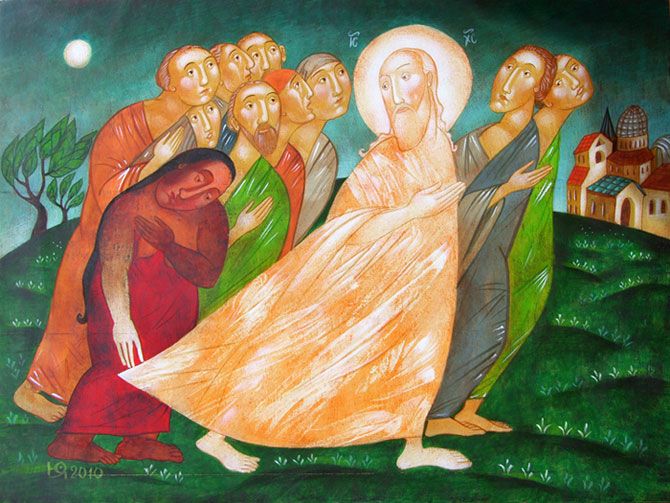
Julia Stankova (Bulgarian, 1954–), Christ healing the bleeding woman (2006), oil wooden panel.

We do not even know her name. She is an insignificant woman lost in the crowd that follows Jesus. She does not dare to speak to him like Jairus, the synagogue´s chief who has managed to get Jesus to go to her house[1]. She can never be that lucky. Nobody knows that she is a woman marked by a secret disease. The teachers of the Law have taught her to look at herself as an unclean woman as long as she has blood loss. She spent many years searching for a healer, but no one has managed to heal her. Where can she find the health she needs to live with dignity? Well, the same happen among us: humiliated by secret wounds that no one knows about, without the strength to entrust their «illness» to someone, our brothers and sisters seek for help, peace and comfort without knowing where to find them. This is one of the greatest tragedies of our time, and at some moments in the life of the Church we have not known how to help. They feel guilty when so often they are just victims; good people who feel unworthy to come to receive Christ in Holy Communion; Christians who have lived in unhealthy suffering because they were taught to see everything related to sex as dirty, humiliating and sinful. Today I remember the words of Pope Francis: «How are we treating the people of God? I dream of a church that is a mother and shepherdess. The church’s ministers must be merciful, take responsibility for the people and accompany them like the good Samaritan, who washes, cleans and raises up his neighbor. This is pure Gospel. God is greater than sin. The structural and organizational reforms are secondary—that is, they come afterward. The first reform must be the attitude. The ministers of the Gospel must be people who can warm the hearts of the people, who walk through the dark night with them, who know how to dialogue and to descend themselves into their people’s night, into the darkness, but without getting lost. The people of God want pastors, not clergy acting like bureaucrats or government officials. The bishops, particularly, must be able to support the movements of God among their people with patience, so that no one is left behind. But they must also be able to accompany the flock that has a flair for finding new paths. Instead of being just a church that welcomes and receives by keeping the doors open, let us try also to be a church that finds new roads, that is able to step outside itself and go to those who do not attend Mass, to those who have quit or are indifferent. The ones who quit sometimes do it for reasons that, if properly understood and assessed, can lead to a return. But that takes audacity and courage»[2]. According to the gospel narrative, this woman hears about Jesus and senses that she is before someone who can remove the impurity from her body, from her entire life. At the gospel, the Lord does not speak of dignity or unworthiness. His message speaks of love. His person radiates healing power. This is the point! SO, the woman seeks her own path to meet Jesus. She doesn’t feel strong enough to look into her eyes: she will come up behind her. She is ashamed to tell him about her illness: she will act quietly. She cannot physically touch him: she will touch only the mantle no matter what. Nothing else matters. To feel clean, that great trust in Jesus is enough. And then the miracle happens, and today we can be sure that Jesus has his ways to heal secret wounds, and to say to those who are looking for him: «Daughter, son, your faith has healed you. Go in peace and in health»[3] • AE


[1] Cf Mk 5:21-43 [2] INTERVIEW WITH POPE FRANCIS by Fr Antonio Spadaro: https://www.vatican.va/content/francesco/en/speeches/2013/september/documents/papa-francesco_20130921_intervista-spadaro.html [3] Cf Mk 5:21-43


Fr. Agustin’s Schedule for the Thirteenth Sunday in Ordinary Time.

Saturday, June 26, 2021

4.30 p.m. – 5.20 p.m. Sacrament of Reconciliation @ St. Peter Prince of the Apostles

(Due to the repairs and maintenance in the main church; the sacrament of Confession will be celebrated in the Bride’s Room, located in the Narthex of the main church during the months of June and July. The only access to this area is through the main doors of the parish; the side doors will remain closed until further notice)

5. 30 p.m. Mass @ St. Peter Prince of the Apostles (@ Parish Hall)

Sunday, June 27, 2021

9.00 a.m. Mass @ St Peter Prince of the Apostles (@ Parish Hall)

11.00 a.m. Mass @ St Peter Prince of the Apostles (@ Parish Hall)

5.30 p.m. Mass @ St. Peter Prince of the Apostles (@ Parish Hall)

This is the last Sunday that Fr. Agustin will celebrate the Holy Mass at St. Peter Prince of the Apostles. Effective Thursday, July 1, he will take his position as parochial vicar of St. Dominic Catholic Church.

This blog will remain active and updated.


XIII Domingo del Tiempo Ordinario
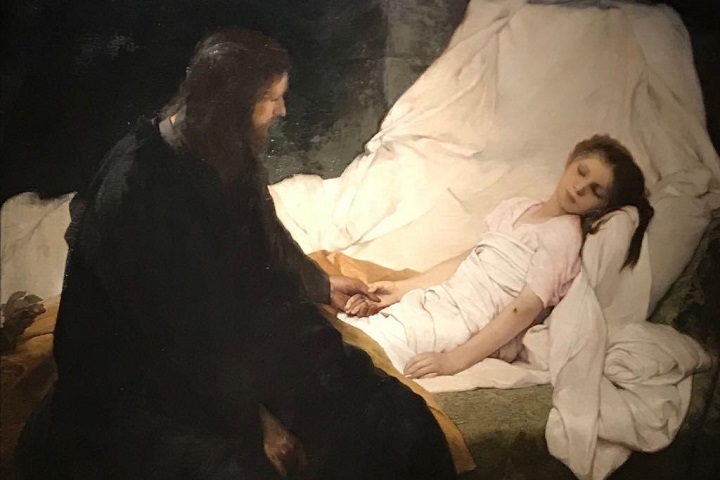
G. Max, La resurrección de la hija de Jairo (1878), óleo sobre tela, Museo de Bellas Artes de Montreal (Canadá)

La palabra «mortal» ha servido desde siempre para designar al hombre. Ésta es su condición. El ser humano es mortal: en cualquier momento puede morir y, ciertamente, cada instante lo acerca un poco más a su final. Lo decía Heidegger de manera muy gráfica: «Desde que nace, el hombre es lo bastante viejo para morir». Pero no es sólo que «puede» morir, sino que «tiene» que morir ¡Ninguno escapamos a la muerte! Es inútil nuestro afán de vivir, nuestro deseo de no enfermar, no envejecer, sobrevivir #Botox Durante muchos años se puede vivir sin sentir la amenaza de la muerte, pero llega un día en que la enfermedad, el mal funcionamiento de algún órgano o la jubilación comienzan a hacernos pensar que también nosotros estamos acercándonos a nuestro final. Casi siempre los humanos han tratado de olvidar la muerte, a ver si desaparece. Lo decía Pascal: «Los hombres, para ser felices, no ha hiendo podido encontrar remedio a la muerte… han tomado la decisión de no pensar en ella». Es asín, y aún peor: hemos convertido la muerte en el gran tabú: no hay que hablar de ella, no hay que pronunciar el nombre de ciertas enfermedades; hay que vivir como si fuéramos inmortales. Basta recordar el grito de Unamuno: «No quiero morirme, no, no quiero ni quiero quererlo; quiero vivir siempre, siempre, siempre, y vivir yo, este pobre yo, que me soy y me siento ahora y aquí»[1]. Queremos vivir, no desaparecer, no caer en la nada. Seguimos repitiendo los viejos caminos de siempre para eludir la certeza de su muerte. Algunos intentan vivir sin esperanza, aunque sin caer en una desesperación angustiosa. Otros se lanzan a vivir a tope lo inmediato cerrando los ojos a todo futuro. Hay quienes viven sin tomar en serio ningún amor y ninguna esperanza, sin arriesgarse en ninguna lucha, sin ligarse a nada ni a nadie. Cada uno sigue su camino, pero nadie puede sustraerse a ciertas preguntas: ¿qué me espera en la muerte?, ¿qué va a ser de mí y de todos mis anhelos?, ¿me aguarda la nada?, ¿hay algo o alguien que me espera para acoger mi deseo de vida y llevarme a una vida plena? El relato que el evangelio nos presenta este domingo, el décimo tercero dentro del Tiempo Ordinario, es de una belleza incomparable, vemos a Jesús devolviendo la vida a una niña a la que todos creían muerta[2]. Este evangelio es una invitación una confianza total en la fidelidad de Dios que, como dice Jesús, es “un Dios de vivos y no de muertos”[3]. El Señor posee la vida en plenitud: donde él actúa, se despierta la vida. También en el interior de la muerte. Estamos invitados pues a escuchar en silencio y en toda su hondura las palabras de Jesús a aquel hombre ante la muerte de su hija: “No temas. Solamente ten fe”[4] • AE


[1] Del sentimiento trágico de la vida, Cap. 3 [2] Cfr Mc 5, 21-43. [3] Cfr Mt 22, 32. [4] Cfr Mc 5, 21-43.


Twelfth Sunday in Ordinary Time (Year B)


Jan Brueghel, The Older, Christ in the Storm on the Sea of Galilee (1596), oil on copper, Museo Thyssen-Bornemiza (Madrid)

Why are you terrified? Do you not yet have faith?” These two questions are to be responded by the followers of Jesus, two questions that we hear in the midst of our crises. And one more (question): Where is the root of our cowardice? Why are we so afraid of the future? Is it because we lack faith in Jesus Christ? The gospel narrative today is quite short[1]. It all begins with an order from Jesus: «Let’s go to the other shore.» The disciples know that on the other shore of Lake Tiberias is the pagan territory of the Decapolis. A different and strange country. A culture hostile to their religion and beliefs. Suddenly a strong storm arises, a graphic metaphor of what happens in the heart of the apostles. The hurricane wind, the waves that break against the boat, the water that begins to invade everything, express the situation well: What will the followers of Jesus do before the hostility of the pagan world? Not only their mission is in danger, but even the very survival of the group. Awakened by his disciples, Jesus intervenes, the wind ceases and a great calm comes over the lake. What is surprising is that the disciples «are shocked.» Before they were afraid of the storm. Now they seem to fear Jesus. However, something decisive has happened in them: they have turned to Jesus; they have been able to experience in him a saving force that they did not know; they begin to wonder about his identity. They begin to discern that with him everything is possible. So, Christianity is today in the midst of a strong storm, and fear begins to seize us. We are afraid to go to the other shore? Modern culture is a strange and hostile country to us. The future scares us. Some says that is safer to look back in order to better go forward. Let us not forget that Jesus can surprise us all. Always. He has the strength to inaugurate a new phase in the history of Christianity. The only thing he asks of us is faith, a faith that frees us from fear and cowardice and that of course commits us to walk in his footsteps. Our Christian faith is not a psychological recipe to combat fear, but radical trust in a God the Father, and the experience of his unconditional and eternal love offer us the best spiritual basis to face life with peace. Freud said that «loving and being loved is the main remedy against all neuroses.» It’s true. For this reason, it does us good to listen to the words of Jesus to his disciples in the midst of the storm: «Why are you so cowardly? Still have no faith? May we know how to respond with love, and put all our trust in Him! • AE


[1] Mk 4:35-41


Fr. Agustin’s Schedule for The Twelfth Sunday in Ordinary Time.

Saturday, June 19, 2021

4.30 p.m. – 5.20 p.m. Sacrament of Reconciliation @ St. Peter Prince of the Apostles

(Due to the repairs and maintenance in the main church; the sacrament of Confession will be celebrated in the Bride’s Room, located in the Nartex of the church, during the months of June and July. The only access to this area is through the main doors of the Parish; the side doors will remain closed until further notice)

5. 30 p.m. Mass @ St. Peter Prince of the Apostles (@ Parish Hall)

Sunday, June 20, 2021

10.30 a.m. Mass @ Our Lady of Grace (indoors Mass)

12.00 p.m. Mass @ Our Lady of Grace (indoors Mass)

5.30 p.m. Mass @ St. Peter Prince of the Apostles (@ Parish Hall)


XII Domingo del Tiempo Ordinario (Ciclo B)


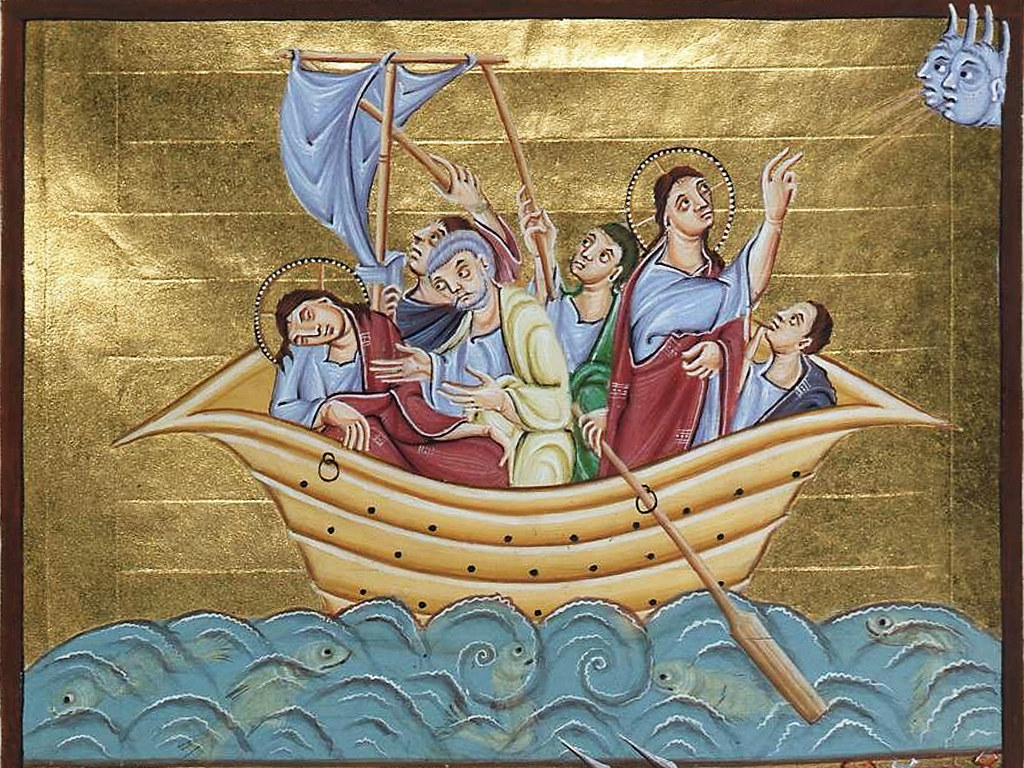
Maestro iluminador de la Abadía de Reichenau (Lago Constanza), Jesus duerme en la Barca, Evangeliario del Emperador Otto III (s. X), Clm 4453 fol-103v; page 43.

La barca en la que van Jesús y sus discípulos se ve atrapada por una de aquellas tormentas imprevistas que se levantan en el lago de Galilea al atardecer de algunos días de verano. El evangelista describe el episodio quizá para despertar la fe de las comunidades cristianas que viven momentos difíciles. El relato no es una historia tranquilizante para consolarnos a los cristianos de hoy con la promesa de una protección divina que permita a la Iglesia caminar tranquila a través de la historia. Es más bien la llamada decisiva de Jesús para hacer con él la travesía en tiempos difíciles: «¿Por qué sois tan cobardes? ¿Aún no tenéis fe?». San Marcos prepara la escena desde el principio. Nos dice que «era al atardecer». Pronto caerán las tinieblas de la noche sobre el lago. Es Jesús quien toma la iniciativa de aquella extraña travesía: «Vamos a la otra orilla». La expresión tiene su aquello. Jesús les pide que vayan juntos, en la misma barca, hacia otro mundo, más allá de lo conocido: la región pagana de la Decápolis. De pronto se levanta un fuerte huracán y las olas rompen contra la frágil embarcación inundándola de agua. La escena es muy singular: en la parte delantera, los discípulos luchando impotentes contra la tempestad; a popa, en un lugar algo más elevado, Jesús durmiendo tranquilamente sobre un cojín[1]. Aterrorizados, los discípulos despiertan a Jesús. No entienden aún la confianza de Jesús en el Padre, lo único que perciben es una increíble falta de interés por ellos. Están llenos de miedo: «Maestro, ¿no te importa que nos hundamos?». Jesús no se justifica. Se pone de pie y pronuncia una especie de exorcismo: el viento cesa de rugir y se hace una gran calma. Jesús aprovecha esa paz y silencio grandes para hacerles dos preguntas que hoy llegan hasta nosotros: «¿Por qué tenían tanto miedo? ¿Aún no tienen fe?». ¿Qué nos está sucediendo a los cristianos? ¿Por qué tenemos tanto miedo para afrontar estos tiempos cruciales, y tan poca nuestra confianza en Jesús? ¿No es el miedo a hundirnos el que nos está bloqueando? ¿No es la búsqueda ciega de seguridad la que nos impide hacer una lectura lúcida, responsable y confiada de estos tiempos? ¿Por qué nos resistimos a ver que Dios está conduciendo a la Iglesia hacia un futuro más fiel a Jesús y su Evangelio? ¿Por qué buscamos seguridad en lo conocido y establecido en el pasado, y no escuchamos la llamada de Jesús a «pasar a la otra orilla» para sembrar humildemente su Buena Noticia en un mundo indiferente a Dios, pero tan necesitado de esperanza? ¡Ojalá tengamos el tiempo de sentarnos conversar con el Señor de todo esto; te aseguro, hermano mío, que Él esta vez no duerme, en la popa, reclinado sobre un cojín • AE


[1] Mc 4, 35-41.


Eleventh Sunday in Ordinary Time

Jean-François Millet,The Gleaners (Des glaneuses), 1857, Oil on canvas (33 in × 44 in), Musée d’Orsay (Paris). 

Farmers have to be patient. Farmers also have to recognize that they really can’t do things themselves.  They have to depend upon nature. The gospel reading, from Mark, contains two parables that farmers would certainly understand, but which drive city guys like do not. The first is the parable of the seed. The farmer plants the seed and goes about his routine day, day after day.  Eventually the seed grows, not because the farmer does something special, but because nature took its course. The second parable is that of the mustard seed which seems insignificant, but with the growth that God gives becomes a plant, probably 8 to 10 feet, large enough to shelter the birds of the sky. These two parables of the Kingdom of God tell us that we have to trust in God to give growth to the Kingdom. Furthermore, the growth He gives will be greater than we could ever imagine. The kingdom that we trust God to give growth to could be the Kingdom of our church in the world, the Kingdom of our parish right here, or, particularly, the Kingdom of our home. There are many times that we expect too much of ourselves and others. To make matters worse, we expect too much to happen too soon. Sometimes parents expect their 15 year olds to act like 21 year olds. Sometimes we get thoroughly disappointed in ourselves because we are not the perfect people we like to imagine ourselves being.  Sometimes we are impatient with how we or others are progressing in life.  We may be upset with our home situations, our marriages, our families, our jobs, or what have you. What we have to understand is that none of us are self-made men and women. If we trust in God, He will give growth! This growth might be very subtle, nothing we can put our fingers on. But after a while it suddenly occurs to us: God has brought us a long way.  If we trust in God the growth that He gives us will be more than we could imagine.  We are all small seeds, but God can make of us great trees.  However, if we think that we can do everything ourselves, and if we don’t trust in God, we won’t get anywhere.  None of us can make ourselves or others grow. Let me be a bit more specific with something that we all want: peace in our families. We have to pray to God and trust Him to bring his peace. To think we can cause peace to happen in our homes or anywhere without God is to give ourselves power we don’t have. We must trust Him to form us in people more beautiful than we could have ever imagined. After all, He does a pretty good job with flowers • AE


Fr. Agustin’s Schedule for the Eleventh Sunday in Ordinary Time

Fr. Agustin will be out of town June 11-13, 2021. Parish communities will continue in their regular mass schedule. Fr. Agustin will resume this regular schedule on Monday June 14, 2021 until Tuesday June 29, 2021. Starting Thursday, July 1, he will be working as a parochial vicar at St. Dominic Catholic Church (San Antonio, TX)


XI Domingo Ordinario (Ciclo B)

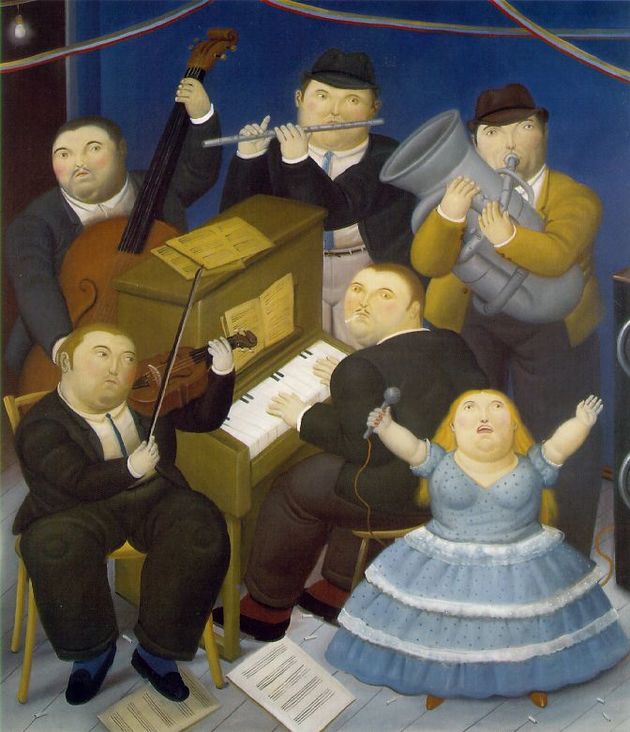
F. Botero, Los músicos (1991), óleo sobre lienzo (200 cm x 172 cm), colección privada.

Casi todo nos invita hoy a vivir bajo el signo de la actividad y el rendimiento. Medimos las cosas (¡y las personas!) por su utilidad o practicidad. Hemos dejado que la logistica del mundo entre hasta lo más hondo de nuestro espiritu. En el fondo de nuestra conciencia moderna existe la convicción de que, para dar el máximo sentido y plenitud a nuestra vida, lo único importante es trabajar por sacarle el máximo rendimiento y utilidad. Eso que decía Sartre -el hombre no es más que lo que hace- se ha vuelto una realidad[1]. Con esta perspectiva, no deberiamos olvidar dos graves peligros que nos amenazan. El primero consiste en ahogarnos en el trabajo y el activismo. Supravalorando nuestro poder y nuestro obrar, terminamos por creernos indispensables, pues, en el fondo, pensamos que somos nosotros los que tenemos que hacerlo todo. El segundo peligro es hundirnos en el pesimismo y la resignación, al descubrir nuestra propia incapacidad y quedar aplastados por una tarea que nos desborda. El que solamente pone el sentido de su vida en la lucha, el trabajo y la acción eficaz, corre el riesgo de sentirse «inútil y desaprovechable» en el momento en que su esfuerzos no se ven coronados por el éxito. La parábola tan extraña que nos presenta hoy la liturgia donde se nos habla de una semilla que crece por sí sola sin que el labrador le proporcione con su trabajo la fuerza para germinar y crecer, seguramente nos parece incómoda[2]. Es una parábola que no se presta a aplicaciones prácticas ni nos dice lo que tenemos que hacer. Sólo nos recuerda que en la semilla hay algo que no ha puesto el labrador. Una fuerza vital que no se debe al esfuerzo del hombre. Somos como esclavos de programaciones y afanes organizativos, y olvidamos que la vida está impregnada de gracia, y que nuestra primera ocupación es respetar y acoger la acción del Espíritu capaz de hacer crecer nuestra existencia. En otras palabras: la vida no se reduce a actividad y trabajo. En su misterio más profundo, la vida es regalo, don maravilloso de Dios. Lo gratuito nos envuelve. Y el hombre no es sólo trabajador sino también «cantor de la irradiación de Dios», como tan poéticamente decía san Gregorio Nacianceno[3]. Por eso, nuestro mejor estado de ánimo no debería ser la lucha y el esfuerzo, sino la admiración maravillada y el gozo agradecido. A eso estamos invitados constantemente; el domingo es un momento maravilloso día para lograrlo ¿Estamos dispuestos? • AE


[1]Jean-Paul Sartre, fue un filósofo, escritor, novelista, dramaturgo, activista político, biógrafo y crítico literario francés, exponente del existencialismo y del marxismo humanista. El corazón de su filosofía era la noción de libertad y su sentido concomitante de la responsabilidad personal. Fue especialmente critico con el cristianismo. 

[2]Mc 4, 26-34. 

[3]Gregorio Nacianceno (329-389), también conocido como Gregorio de Nacianzo o Gregorio el Teólogo, fue un arzobispo cristiano de Constantinopla del siglo IV. Está ampliamente considerado como el más completo estilista retórico de la patrística. Como orador y filósofo formado en la tradición clásica, introdujo elementos helenísticos en la iglesia primitiva, estableciendo el paradigma de los teólogos y eclesiásticos bizantinos.


Sacrament of Reconciliation (updated 6.3.2021)

Napolitan master, The Return of the Prodigal Son (c.1630s), oil on canvas, Dulwich Picture Gallery (London)

Dear Parishioners, these are the last weeks that I can offer this time for the celebration of the Sacrament of Confession. As of July 1, 2021 I will be working as a parochial vicar at St. Dominic Catholic Church, in San Antonio. Right now I don’t know how my schedule will look like in this new pastoral assignment, but I do know that there will always be time to hear confession, so feel free to send me an e-mail if you are in need, in the meantime here is my schedule until the last day of June 2021. Fr. AE

Monday from 5.00 p.m. to 5.30 p.m. @ St. Peter Prince of the Apostles (Bride´s room at the Nartex; entrance by the main door)

Tuesday from 6.00 a.m. to 6.50 a.m. @ St. Peter Prince of the Apostles (Chapel)

Tuesday from 4.30 p.m. to 5.30 p.m. @ Our Lady of Grace (Confessional)

Wednesday from 6.00 a.m. to 6.50 a.m. @ Our Lady of Grace (see me at the Chapel)

Wednesday, from 4.00 p.m. to 5.30 p.m. @ St. Peter Prince of the Apostles (Bride´s room at the Nartex; entrance by the main door)

Thursday from 6.00 a.m. to 6.55 a.m. @ St. Peter Prince of the Apostles (Chapel)

Friday from 5.00 p.m to 5.30 p.m. at @ St. Peter Prince of the Apostles (Bride´s room at the Nartex; entrance by the main door)

Saturday at St. Peter Prince of the Apostles from 4.00 p.m. to 5.30 p.m. (Bride´s room at the Nartex; entrance by the main door)

(Sunday, sometimes beetween masses I could be available to hear confessions)

If none of these spots works for you, email me (agusestrada@gmail.com); we can arrange a convenient time for you • Fr. AE

The Solemnity of the Most Holy Body and Blood of Christ (2021)

A few years ago those who came to receive Holy Communion, after receiving the Lord they adopted a peculiar and beautiful attitude of silence and sacred recollection. Today, in general, this is not the case. Songs of praise and thanksgiving are sung, community participation is emphasized more, but we run the risk of losing that very important moment of personal communion with Christ. We lack that silence that would allow a livelier encounter with Jesus. The risk is obvious: we can turn Holy Communion into an external and routine rite that «announces» the near end of Mass. However, Holy Communion is not «doing something», but «meeting with Someone.» Sacramental communion is for us, Catholics, a personal encounter with Christ, charged with mystery, grace and faith! Christ comes to meet us and we go to meet Christ. And like all interpersonal encounters, this one also calls for conscious attention, confident surrender and, above all, love. It is true that, in the Eucharistic communion, Christ always offers himself, in a sure and unfailing way (classical theology spoke of the ex opere operato[1]). But, for this objective offering to become a personal reality in each believer, the free and conscious response of those who come to commune is necessary (the opus operantis that theologians speak of[2]). In other words: the Eucharistic encounter with Christ requires, first of all, our conscious attention: remembering Who I am going to meet, what I know about Christ, what I expect from him ands what He means to me. Holy Communion is not a «blind encounter.» As we approach Him, we know who we are looking for. But the meeting demands, above all, love and confidant dedication. People meet more fully when a trusting dialogue and friendly and cordial communication are established between them. Well, the same happens in the Eucharistic communion! The most important thing is the dialogue between Christ and the believer who seeks the presence of the loved one. All of this is not words. It is the experience of one who approaches with faith. The presence of Christ then becomes more real, his Person acquires a deeper meaning, and the trust of the believer grows! Christ is the Absolute that cannot be absent, the horizon of all experiences, the source that fills life with strength, peace and inner joy. Receiving Holy Communion every Sunday is not just another rite, it is not something else to do. Holy Communion can be the vital encounter that feeds and strengthens our faith. This beautiful Solemnity of the Most Holy Body and Blood of Christ is a wonderful invitation to rekindle our attitude towards the Sunday Eucharist, and above all to become aware of the great miracle of which we are witnesses, and of the enormous blessing that is the power to draw near to receive the Body and Blood of the Lord • AE


[1]Literally the expression means «from the work performed,» stating that grace is always conferred by a sacrament, in virtue of the rite performed and not as a mere sign that grace has already been given, or that the sacrament stimulates the faith of the recipient and thus occasions the obtaining of grace. The term was defined by the Council of Trent (1545) 

[2]Opus Operantis(Lat. literally the work of the worker), is a well-known theological phrase, intended to signify that the effect of a particular ministration or rite is primarily and directly due, not to the rite itself (opus), but to the disposition of the subject (operans).


Fr. Agustin’s Schedule for The Solemnity of the Most Holy Body and Blood of Christ (2021) 

Saturday, June 5, 2021

4.30 p.m. – 5.20 p.m. Sacrament of Reconciliation @ St. Peter Prince of the Apostles 

(Due to the repairs and maintenance in the main church; the sacrament of Confession will be celebrated in the Bride’s Room, located in the Nartex of the church, during the months of June and July. The only access to this area is through the main doors of the Parish; the side doors will remain closed until further notice)

5. 30 p.m. Mass @ St. Peter Prince of the Apostles (@ Parish Hall)

Sunday, June 6, 2021

10.30 a.m. Mass @ Our Lady of Grace (indoors Mass)

12.00 p.m. Mass @ Our Lady of Grace (indoors Mass)


Solemnidad del Cuerpo y la Sangre de Cristo (2021)


Al Salvador alabemos,
que es nuestro pastor y guía.
Alabémoslo con himnos
y canciones de alegría.

Alabémoslo sin límites
y con nuestras fuerzas todas;
pues tan grande es el Señor,
que nuestra alabanza es poca.

Gustosos hoy aclamamos
a Cristo, que es nuestro pan,
pues él es el pan de vida,
que nos da vida inmortal.

Doce eran los que cenaban
y les dio pan a los doce.
Doce entonces lo comieron,
y, después, todos los hombres.

Sea plena la alabanza
y llena de alegres cantos;
que nuestra alma se desborde
en todo un concierto santo.

Hoy celebramos con gozo
la gloriosa institución
de este banquete divino,
el banquete del Señor.

Ésta es la nueva Pascua,
Pascua del único Rey,
que termina con la alianza
tan pesada de la ley.

Esto nuevo, siempre nuevo,
es la luz de la verdad,
que sustituye a lo viejo
con reciente claridad.

En aquella última cena
Cristo hizo la maravilla
de dejar a sus amigos
el memorial de su vida.

Enseñados por la Iglesia,
consagramos pan y vino,
que a los hombres nos redimen,
y dan fuerza en el camino.

Es un dogma del cristiano
que el pan se convierte en carne,
y lo que antes era vino
queda convertido en sangre.

Hay cosas que no entendemos,
pues no alcanza la razón;
mas si las vemos con fe,
entrarán al corazón.

Bajo símbolos diversos
y en diferentes figuras,
se esconden ciertas verdades
maravillosas, profundas.

Su sangre es nuestra bebida;
su carne, nuestro alimento;
pero en el pan o en el vino
Cristo está todo completo.

Quien lo come no lo rompe,
no lo parte ni divide;
él es el todo y la parte;
vivo está en quien lo recibe.

Puede ser tan sólo uno
el que se acerca al altar,
o pueden ser multitudes:
Cristo no se acabará.

Lo comen buenos y malos,
con provecho diferente;
no es lo mismo tener vida
que ser condenado a muerte.

A los malos les da muerte
y a los buenos des da vida.
¡Qué efecto tan diferente
tiene la misma comida!

Si lo parten, no te apures;
sólo parten lo exterior;
en el mínimo fragmento
entero late el Señor.

Cuando parten lo exterior
sólo parten lo que has visto;
no es una disminución
de la persona de Cristo.

*El pan que del cielo baja
es comida de viajeros.
Es un pan para los hijos.
¡No hay que tirarlo a los perros!

Isaac, el inocente,
es figura de este pan,
con el cordero de Pascua
y el misterioso maná.

Ten compasión de nosotros,
buen pastor, pan verdadero.
Apaciéntanos y cuídanos
y condúcenos al cielo.

Todo lo puedes y sabes,
pastor de ovejas, divino.
Concédenos en el cielo
gozar la herencia contigo.
Amén.


Celebrar la eucaristía es revivir la última cena que Jesús celebró con sus discípulos la víspera de su ejecución. Ninguna explicación teológica, ninguna ordenación litúrgica, ninguna devoción interesada nos ha de alejar de la intención original de Jesús. ¿Cómo vivió él aquella cena? ¿Qué es lo que quería dejar grabado para siempre en sus discípulos? ¿Por qué y para qué debían seguir reviviendo una vez y otra vez aquella despedida inolvidable? Antes que nada, Jesús quería contagiarles su esperanza indestructible en el reino de Dios. Su muerte era inminente; aquella cena era la última. Pero un día se sentaría a la mesa con una copa en sus manos para beber juntos un «vino nuevo». Nada ni nadie podrá impedir ese banquete final del Padre con sus hijos. Celebrar la eucaristía es reavivar la esperanza: disfrutar desde ahora con esa fiesta que nos espera con Jesús junto al Padre. Jesús quería, además, prepararlos para aquel duro golpe de su ejecución. No han de hundirse en la tristeza. La muerte no romperá la amistad que los une. La comunión no quedará rota. Celebrando aquella cena podrán alimentarse de su recuerdo, su presencia y su espíritu. Celebrar la eucaristía es alimentar nuestra adhesión a Jesús, vivir en contacto con él, seguir unidos. Jesús quiso que los suyos nunca olvidaran lo que había sido su vida: una entrega total al proyecto de Dios. Se lo dijo mientras les distribuía un trozo de pan a cada uno: «Esto es mi cuerpo; recordadme así: entregándome por vosotros hasta el final para haceros llegar la bendición de Dios»[1]. Celebrar la eucaristía es, pues, comulgar con Jesús para vivir cada día de manera más entregada, trabajando por un mundo más humano. Jesús quería que los suyos se sintieran una comunidad. A los discípulos les tuvo que sorprender lo que Jesús hizo al final de la cena. En vez de beber cada uno de su copa, como era costumbre, Jesús les invitó a todos a beber de una sola: ¡la suya! Todos compartirían la «copa de salvación» bendecida por él. En ella veía Jesús algo nuevo: «Ésta es la nueva alianza en mi sangre». Celebrar la eucaristía es alimentar el vínculo que nos une entre nosotros y con Jesús • AE


[1]Cfr. Mc 14, 12-16. 22-26