

Jan Brueghel, The Older, Christ in the Storm on the Sea of Galilee (1596), oil on copper, Museo Thyssen-Bornemiza (Madrid)
Why are you terrified? Do you not yet have faith?” These two questions are to be responded by the followers of Jesus, two questions that we hear in the midst of our crises. And one more (question): Where is the root of our cowardice? Why are we so afraid of the future? Is it because we lack faith in Jesus Christ? The gospel narrative today is quite short[1]. It all begins with an order from Jesus: «Let’s go to the other shore.» The disciples know that on the other shore of Lake Tiberias is the pagan territory of the Decapolis. A different and strange country. A culture hostile to their religion and beliefs. Suddenly a strong storm arises, a graphic metaphor of what happens in the heart of the apostles. The hurricane wind, the waves that break against the boat, the water that begins to invade everything, express the situation well: What will the followers of Jesus do before the hostility of the pagan world? Not only their mission is in danger, but even the very survival of the group. Awakened by his disciples, Jesus intervenes, the wind ceases and a great calm comes over the lake. What is surprising is that the disciples «are shocked.» Before they were afraid of the storm. Now they seem to fear Jesus. However, something decisive has happened in them: they have turned to Jesus; they have been able to experience in him a saving force that they did not know; they begin to wonder about his identity. They begin to discern that with him everything is possible. So, Christianity is today in the midst of a strong storm, and fear begins to seize us. We are afraid to go to the other shore? Modern culture is a strange and hostile country to us. The future scares us. Some says that is safer to look back in order to better go forward. Let us not forget that Jesus can surprise us all. Always. He has the strength to inaugurate a new phase in the history of Christianity. The only thing he asks of us is faith, a faith that frees us from fear and cowardice and that of course commits us to walk in his footsteps. Our Christian faith is not a psychological recipe to combat fear, but radical trust in a God the Father, and the experience of his unconditional and eternal love offer us the best spiritual basis to face life with peace. Freud said that «loving and being loved is the main remedy against all neuroses.» It’s true. For this reason, it does us good to listen to the words of Jesus to his disciples in the midst of the storm: «Why are you so cowardly? Still have no faith? May we know how to respond with love, and put all our trust in Him! • AE
[1] Mk 4:35-41

Fr. Agustin’s Schedule for The Twelfth Sunday in Ordinary Time.

Saturday, June 19, 2021
4.30 p.m. – 5.20 p.m. Sacrament of Reconciliation @ St. Peter Prince of the Apostles
(Due to the repairs and maintenance in the main church; the sacrament of Confession will be celebrated in the Bride’s Room, located in the Nartex of the church, during the months of June and July. The only access to this area is through the main doors of the Parish; the side doors will remain closed until further notice)
5. 30 p.m. Mass @ St. Peter Prince of the Apostles (@ Parish Hall)
Sunday, June 20, 2021
10.30 a.m. Mass @ Our Lady of Grace (indoors Mass)
12.00 p.m. Mass @ Our Lady of Grace (indoors Mass)
5.30 p.m. Mass @ St. Peter Prince of the Apostles (@ Parish Hall)
XII Domingo del Tiempo Ordinario (Ciclo B)
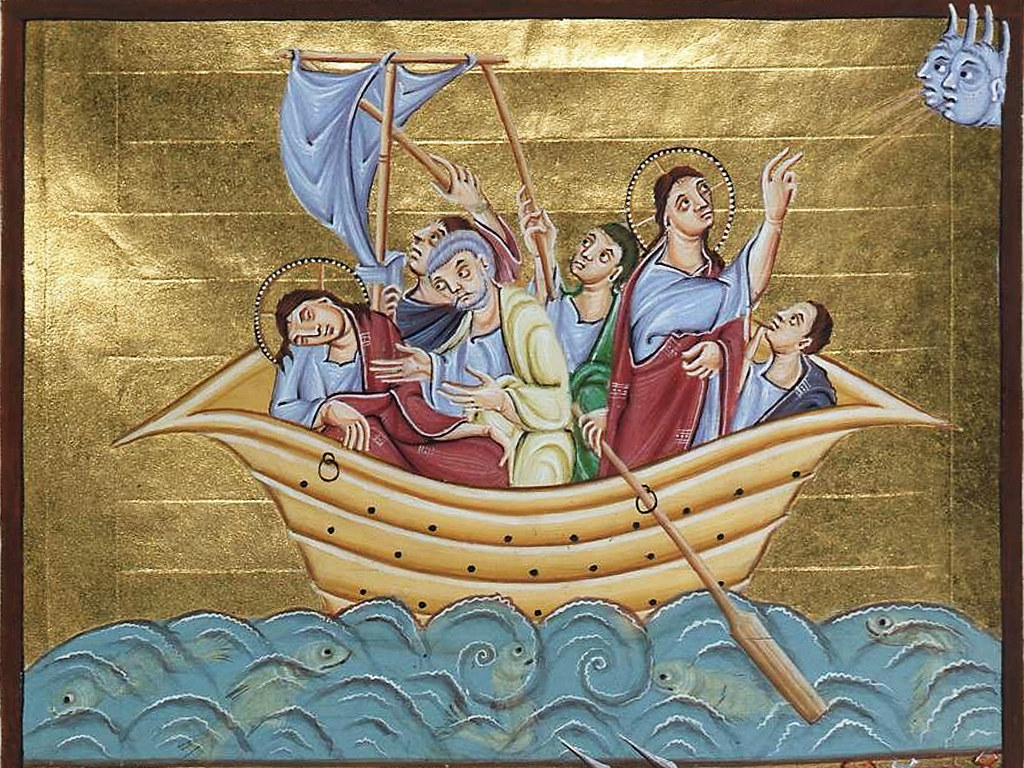
Maestro iluminador de la Abadía de Reichenau (Lago Constanza), Jesus duerme en la Barca, Evangeliario del Emperador Otto III (s. X), Clm 4453 fol-103v; page 43.
La barca en la que van Jesús y sus discípulos se ve atrapada por una de aquellas tormentas imprevistas que se levantan en el lago de Galilea al atardecer de algunos días de verano. El evangelista describe el episodio quizá para despertar la fe de las comunidades cristianas que viven momentos difíciles. El relato no es una historia tranquilizante para consolarnos a los cristianos de hoy con la promesa de una protección divina que permita a la Iglesia caminar tranquila a través de la historia. Es más bien la llamada decisiva de Jesús para hacer con él la travesía en tiempos difíciles: «¿Por qué sois tan cobardes? ¿Aún no tenéis fe?». San Marcos prepara la escena desde el principio. Nos dice que «era al atardecer». Pronto caerán las tinieblas de la noche sobre el lago. Es Jesús quien toma la iniciativa de aquella extraña travesía: «Vamos a la otra orilla». La expresión tiene su aquello. Jesús les pide que vayan juntos, en la misma barca, hacia otro mundo, más allá de lo conocido: la región pagana de la Decápolis. De pronto se levanta un fuerte huracán y las olas rompen contra la frágil embarcación inundándola de agua. La escena es muy singular: en la parte delantera, los discípulos luchando impotentes contra la tempestad; a popa, en un lugar algo más elevado, Jesús durmiendo tranquilamente sobre un cojín[1]. Aterrorizados, los discípulos despiertan a Jesús. No entienden aún la confianza de Jesús en el Padre, lo único que perciben es una increíble falta de interés por ellos. Están llenos de miedo: «Maestro, ¿no te importa que nos hundamos?». Jesús no se justifica. Se pone de pie y pronuncia una especie de exorcismo: el viento cesa de rugir y se hace una gran calma. Jesús aprovecha esa paz y silencio grandes para hacerles dos preguntas que hoy llegan hasta nosotros: «¿Por qué tenían tanto miedo? ¿Aún no tienen fe?». ¿Qué nos está sucediendo a los cristianos? ¿Por qué tenemos tanto miedo para afrontar estos tiempos cruciales, y tan poca nuestra confianza en Jesús? ¿No es el miedo a hundirnos el que nos está bloqueando? ¿No es la búsqueda ciega de seguridad la que nos impide hacer una lectura lúcida, responsable y confiada de estos tiempos? ¿Por qué nos resistimos a ver que Dios está conduciendo a la Iglesia hacia un futuro más fiel a Jesús y su Evangelio? ¿Por qué buscamos seguridad en lo conocido y establecido en el pasado, y no escuchamos la llamada de Jesús a «pasar a la otra orilla» para sembrar humildemente su Buena Noticia en un mundo indiferente a Dios, pero tan necesitado de esperanza? ¡Ojalá tengamos el tiempo de sentarnos conversar con el Señor de todo esto; te aseguro, hermano mío, que Él esta vez no duerme, en la popa, reclinado sobre un cojín • AE
[1] Mc 4, 35-41.
 LA MEDITACION DE LA ESPOSA