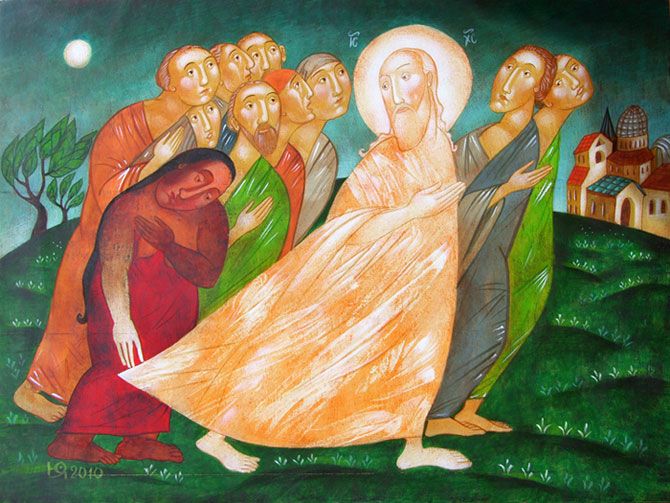
Julia Stankova (Bulgarian, 1954–), Christ healing the bleeding woman (2006), oil wooden panel.
We do not even know her name. She is an insignificant woman lost in the crowd that follows Jesus. She does not dare to speak to him like Jairus, the synagogue´s chief who has managed to get Jesus to go to her house[1]. She can never be that lucky. Nobody knows that she is a woman marked by a secret disease. The teachers of the Law have taught her to look at herself as an unclean woman as long as she has blood loss. She spent many years searching for a healer, but no one has managed to heal her. Where can she find the health she needs to live with dignity? Well, the same happen among us: humiliated by secret wounds that no one knows about, without the strength to entrust their «illness» to someone, our brothers and sisters seek for help, peace and comfort without knowing where to find them. This is one of the greatest tragedies of our time, and at some moments in the life of the Church we have not known how to help. They feel guilty when so often they are just victims; good people who feel unworthy to come to receive Christ in Holy Communion; Christians who have lived in unhealthy suffering because they were taught to see everything related to sex as dirty, humiliating and sinful. Today I remember the words of Pope Francis: «How are we treating the people of God? I dream of a church that is a mother and shepherdess. The church’s ministers must be merciful, take responsibility for the people and accompany them like the good Samaritan, who washes, cleans and raises up his neighbor. This is pure Gospel. God is greater than sin. The structural and organizational reforms are secondary—that is, they come afterward. The first reform must be the attitude. The ministers of the Gospel must be people who can warm the hearts of the people, who walk through the dark night with them, who know how to dialogue and to descend themselves into their people’s night, into the darkness, but without getting lost. The people of God want pastors, not clergy acting like bureaucrats or government officials. The bishops, particularly, must be able to support the movements of God among their people with patience, so that no one is left behind. But they must also be able to accompany the flock that has a flair for finding new paths. Instead of being just a church that welcomes and receives by keeping the doors open, let us try also to be a church that finds new roads, that is able to step outside itself and go to those who do not attend Mass, to those who have quit or are indifferent. The ones who quit sometimes do it for reasons that, if properly understood and assessed, can lead to a return. But that takes audacity and courage»[2]. According to the gospel narrative, this woman hears about Jesus and senses that she is before someone who can remove the impurity from her body, from her entire life. At the gospel, the Lord does not speak of dignity or unworthiness. His message speaks of love. His person radiates healing power. This is the point! SO, the woman seeks her own path to meet Jesus. She doesn’t feel strong enough to look into her eyes: she will come up behind her. She is ashamed to tell him about her illness: she will act quietly. She cannot physically touch him: she will touch only the mantle no matter what. Nothing else matters. To feel clean, that great trust in Jesus is enough. And then the miracle happens, and today we can be sure that Jesus has his ways to heal secret wounds, and to say to those who are looking for him: «Daughter, son, your faith has healed you. Go in peace and in health»[3] • AE
[1] Cf Mk 5:21-43 [2] INTERVIEW WITH POPE FRANCIS by Fr Antonio Spadaro: https://www.vatican.va/content/francesco/en/speeches/2013/september/documents/papa-francesco_20130921_intervista-spadaro.html [3] Cf Mk 5:21-43

Fr. Agustin’s Schedule for the Thirteenth Sunday in Ordinary Time.

Saturday, June 26, 2021
4.30 p.m. – 5.20 p.m. Sacrament of Reconciliation @ St. Peter Prince of the Apostles
(Due to the repairs and maintenance in the main church; the sacrament of Confession will be celebrated in the Bride’s Room, located in the Narthex of the main church during the months of June and July. The only access to this area is through the main doors of the parish; the side doors will remain closed until further notice)
5. 30 p.m. Mass @ St. Peter Prince of the Apostles (@ Parish Hall)
Sunday, June 27, 2021
9.00 a.m. Mass @ St Peter Prince of the Apostles (@ Parish Hall)
11.00 a.m. Mass @ St Peter Prince of the Apostles (@ Parish Hall)
5.30 p.m. Mass @ St. Peter Prince of the Apostles (@ Parish Hall)
This is the last Sunday that Fr. Agustin will celebrate the Holy Mass at St. Peter Prince of the Apostles. Effective Thursday, July 1, he will take his position as parochial vicar of St. Dominic Catholic Church.
This blog will remain active and updated.
XIII Domingo del Tiempo Ordinario
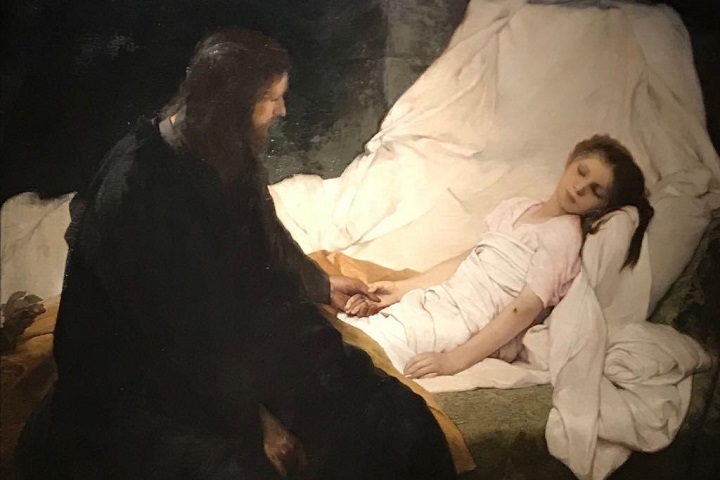
La palabra «mortal» ha servido desde siempre para designar al hombre. Ésta es su condición. El ser humano es mortal: en cualquier momento puede morir y, ciertamente, cada instante lo acerca un poco más a su final. Lo decía Heidegger de manera muy gráfica: «Desde que nace, el hombre es lo bastante viejo para morir». Pero no es sólo que «puede» morir, sino que «tiene» que morir ¡Ninguno escapamos a la muerte! Es inútil nuestro afán de vivir, nuestro deseo de no enfermar, no envejecer, sobrevivir #Botox Durante muchos años se puede vivir sin sentir la amenaza de la muerte, pero llega un día en que la enfermedad, el mal funcionamiento de algún órgano o la jubilación comienzan a hacernos pensar que también nosotros estamos acercándonos a nuestro final. Casi siempre los humanos han tratado de olvidar la muerte, a ver si desaparece. Lo decía Pascal: «Los hombres, para ser felices, no ha hiendo podido encontrar remedio a la muerte… han tomado la decisión de no pensar en ella». Es asín, y aún peor: hemos convertido la muerte en el gran tabú: no hay que hablar de ella, no hay que pronunciar el nombre de ciertas enfermedades; hay que vivir como si fuéramos inmortales. Basta recordar el grito de Unamuno: «No quiero morirme, no, no quiero ni quiero quererlo; quiero vivir siempre, siempre, siempre, y vivir yo, este pobre yo, que me soy y me siento ahora y aquí»[1]. Queremos vivir, no desaparecer, no caer en la nada. Seguimos repitiendo los viejos caminos de siempre para eludir la certeza de su muerte. Algunos intentan vivir sin esperanza, aunque sin caer en una desesperación angustiosa. Otros se lanzan a vivir a tope lo inmediato cerrando los ojos a todo futuro. Hay quienes viven sin tomar en serio ningún amor y ninguna esperanza, sin arriesgarse en ninguna lucha, sin ligarse a nada ni a nadie. Cada uno sigue su camino, pero nadie puede sustraerse a ciertas preguntas: ¿qué me espera en la muerte?, ¿qué va a ser de mí y de todos mis anhelos?, ¿me aguarda la nada?, ¿hay algo o alguien que me espera para acoger mi deseo de vida y llevarme a una vida plena? El relato que el evangelio nos presenta este domingo, el décimo tercero dentro del Tiempo Ordinario, es de una belleza incomparable, vemos a Jesús devolviendo la vida a una niña a la que todos creían muerta[2]. Este evangelio es una invitación una confianza total en la fidelidad de Dios que, como dice Jesús, es “un Dios de vivos y no de muertos”[3]. El Señor posee la vida en plenitud: donde él actúa, se despierta la vida. También en el interior de la muerte. Estamos invitados pues a escuchar en silencio y en toda su hondura las palabras de Jesús a aquel hombre ante la muerte de su hija: “No temas. Solamente ten fe”[4] • AE
[1] Del sentimiento trágico de la vida, Cap. 3 [2] Cfr Mc 5, 21-43. [3] Cfr Mt 22, 32. [4] Cfr Mc 5, 21-43.

 LA MEDITACION DE LA ESPOSA