Twenty-second Sunday in Ordinary Time (Cycle B)

We are back to St. Mark again. As you notice, we have left the Bread of Life — the five lovely, wonderful Sundays dedicated to Jesus, our Bread of Life and Light of the World — and now we’re back to basics with the gospel of St. Mark that is going to take us through the rest of the year in this Gospel[1]. And as Mark is, one thing can be said: he’s very practical. In today’s gospel, Jesus confronted the Pharisees because of their hypocrisy. They never observed the law that they multiplied for their people. This is a dangerous way of life that we (especially, priest and religious, the modern-day Pharisees), must be careful of. We must not live a hypocritical life, or even make life difficult for others. Furthermore, by saying that: “What comes out of a man is what defiles him,” the Lord is inviting us to do a deep examination of conscience. The malicious intentions, the hatred, pride, the corrupt tendencies we harbor in our heart are really what define and make us who we are. They are the vices that make us bad. We must evict them before they rock our spiritual boat. They are the real and hidden enemies that we must fight and defeat daily. The quality of our life is measured by the quality of our heart and mind. If our mind and heart are poisoned and sick, our body would be sick a thousand time more, even without one knowing it. So, the most important thing that God needs from us is a pure heart as Christ taught us: “Blessed are the pure in heart, for they shall see God”[2]. And the best way to be faithful to God’s command is to allow our hearts to be transformed by the grace of God. So, rather than pay excessive attention to the letters of the law and physical purity, let us pay attention and ponder on St. Paul’s advice: “Let your hearts be inwardly transformed, so that you will know the will of God”[3]. God’s will is his law. It must motivate us to love others, and to avoid evil. It must evoke true repentance and a sincere will to forgive others. It must keep us firm in faith. Above all, it must move us pursue only what is good, just, noble and holy. Easy? No. Impossible? No way! With the grace of God everything is possible! • AE

[1] When it comes to the Sunday Scripture readings, we have the three cycles A, B and C. These are sometimes called the Year of Matthew (Cycle A), the Year of Mark (Cycle B), and the Year of Luke (Cycle C). [2] Mt 5, 8. [3] Rom 12, 2.


Fr. Agustin’s Schedule for Twenty-second Sunday in Ordinary Time

Sunday, August 29, 2021.

7.30 a.m. English Mass @ St. Dominic Catholic Church

10.00 a.m. English Mass @ St. Dominic Catholic Church


XXII Domingo del Tiempo Ordinario (Ciclo B)
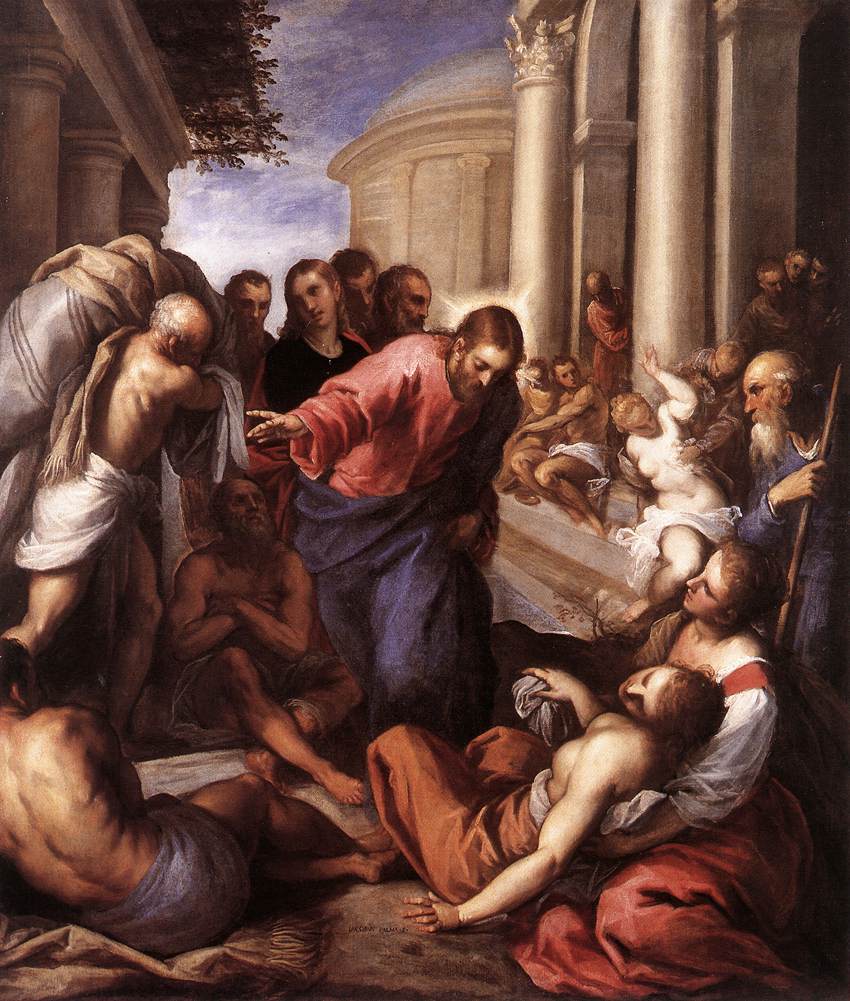
P. Giovane, Cristo curando al paralítico de la piscina de Betsaida (1592), óleo sobre tela, Museo de la Academia (Venecia).

Los primeros cristianos recordaban a Jesús, no como un hombre religioso, sino como un profeta y, desde luego, alguien cercano a los enfermos y a los oprimidos, como alguien que no vivía la observancia de la ley por encima de las personas, un hombre -que era Dios- que buscaba siempre hacer la voluntad de su Padre. Marcos, el evangelio más antiguo, presenta a Jesús en conflicto con los sectores piadosos de la sociedad judía. Entre sus críticas más radicales hay que destacar dos: el escándalo de una religión vacía de Dios, y el pecado de sustituir su voluntad, que sólo pide amor, por tradiciones humanas. En el evangelio de este domingo, Jesús cita al profeta Isaías: «Este pueblo me honra con los labios, pero su corazón está lejos de mí. El culto que me dan está vacío porque la doctrina que enseñan son preceptos humanos»[1], diciendo después dónde está la trampa: «Dejan a un lado el mandamiento de Dios para aferraros a la tradición de los hombres»[2]. Éste es el pecado en el que con tanta frecuencia caemos: una vez que hemos establecido nuestras normas y tradiciones las colocamos en el lugar que sólo debe ocupar Dios. Las respetamos por encima incluso de Su voluntad. No dejamos pasar la más mínima prescripción, aun cuando vaya contra la ley del amor. Seamos sinceros: honramos a Dios con los labios, pero a veces nuestro corazón está lejos de él; recitamos el Credo, pero creemos lo que nos conviene; cumplimos ritos, pero no hay una obediencia interior a Dios. Y es asín que poco a poco nos vamos olvidando de Dios, para luego olvidar que lo hemos olvidado. En otras palabras: empequeñecemos el evangelio para no tener que convertimos demasiado. Orientamos caprichosamente la voluntad de Dios hacia lo que nos interesa y olvidamos su exigencia absoluta de amor. Pasa el tiempo y ya no echamos en falta a Jesús; olvidamos qué es mirar la vida con sus ojos. En nuestro rato de oración en algún momento del fin de semana podríamos pedirle al Espíritu de Dios la claridad que necesitamos para distinguir lo esencial de lo accidental; la fuerza para cumplir la Ley de Dios lo mejor que nos sea posible, pero sin lastimar nunca la ley del amor • AE

[1] Mc 7, 1-8. 14-15. 21- [2] Ídem.


Twenty-first Sunday in Ordinary Time (Cycle B)

Jesus has just given the apostles a teaching that demanded their absolute trust in Him, their absolute faith in Him, even though this teaching was completely against what their eyes, ears and senses were telling them.  He told them that He was the Bread of Life.  He told them that they needed to eat His Flesh and drink His Blood for them to have eternal life. For some of them this was too hard to accept and so they left Jesus and returned to their previous lives. The Twelve told Jesus what was happening.  Perhaps they were implying that Jesus tone down His teaching some.  Maybe they were just pointing out that the Lord was losing followers #Whatever The fact is that Jesus was not going to rescind a word.  He came to make the spiritual real. He came to bring a reality to the world that was beyond the capacity of man to understand.  He came to bring the Gifts of God that were far greater than man’s fondest hopes. He would not compromise the truth.  “Will you go, also, Peter,” he asks the leader of his Twelve.  “Lord, where can we go, you alone have the words of eternal life.”  And with that confession of faith, Peter stays in good shape.  He did not know with his senses how it is possible for Jesus to give His Body and Blood for the food they would need for the journey to God. Peter did not know with his senses, but he knew with his heart that all was beautiful with Jesus and that it would be infinitely foolish to trust in the senses rather than trust in the Lord. We are called to believe in the Lord, to trust in Him.  We are called to give an infinitely greater credence to the spiritual we cannot see over the material we can see.  We are called to faith. It is quite normal for us to go through periods of doubting the teachings of the Lord.  It is normal for us to ask, “How is God only one, if the Father is God, the Son is God, and the Spirit is God?”  It is quite normal for us to ask: “How can Jesus be both fully God and fully man?”  It is quite normal for us to ask: “How can this bread and wine, material objects before the Mass, now be the Body and Blood of Jesus Christ?”  It is quite normal for us to want to stand on the material world of our senses and ignore the new world of the spiritual. When these types of doubts come to our mind, be they flashing through, or lingering and challenging us, we need to stop and consider the Gifts of the Lord.  We need to reflect on our Savior, Jesus Christ.  We reflect on the wonders He provides that are beyond our imagination, too good to be true, but, yes, they are true. We are children of God. We think about the peace that we have when we are united with Him and the chaos we have when we turn from Him.  And, so, we trust completely in the Lord.  We trust Him over our own senses. And so we believe.  We believe in that which we do not see.  We believe in that which our human senses cannot reveal. And we come to Church this Sunday and pray as we pray every day of our lives, we pray the prayer of the father of the epileptic boy whom Jesus asked, “Do you believe?” We join this man and pray, “I do believe, Lord, but help those parts of me that do not believe[1].” We are human, yes, but we have been entrusted with the mystery of the Divine. We have been given the Gift of the Eucharist. For sure we are tempted to trust only our senses.  We are tempted to stand on the material.  We are tempted to limit ourselves to the here and now.  We are human.  But we are also spiritual.  And deep within us, deep within every single one of us there is the Voice of Faith prodding us to exclaim with Peter, “I will not leave you Lord.  You alone have the words of eternal life.[2]” • AE

[1] in Mark 9:24 [2] Jn 6:60-69


Fr. Agustin’s Schedule for Twenty-first Sunday in Ordinary Time

Saturday, August 21, 2021

3.00 p.m. to 4.55 p.m. Sacrament of Confession

5.00 p.m. English Mass @ St. Dominic Catholic Church

Sunday, August 22, 2021.

12.30 p.m. English Mass @ St. Dominic Catholic Church

3.00 p.m. Spanish Mass @ St. Dominic Catholic Church


XXI Domingo del Tiempo Ordinario (Ciclo B)

Voy a tirar unas pocas piedras sobre mi propio tejado. En la sociedad moderna vivimos acosados por palabras, comunicados, imágenes y noticias de todo tipo. Ya no es posible vivir en silencio. Anuncios, publicidad, noticiarios, discursos y declaraciones invaden nuestro mundo interior y nuestro ámbito doméstico. Esta «inflación de la palabra» ha penetrado también en la vida de la Iglesia donde los clérigos hablamos y escribimos mucho. Demasiado, quizá. La pregunta que nos hemos de hacer es sencilla: ¿Qué capta la gente en nosotros?, ¿palabras llenas de espíritu y vida, como eran las de Jesús, o palabras vacías? Me da la sisca, que dicen mis amigos de Musquiz, que lo segundo. A lo largo de los años he oído muchas críticas a la predicación de la Iglesia. Se nos acusa de poca fidelidad al evangelio o al Magisterio; de alianza con una ideología política de un signo o de otro, de poca apertura a la modernidad, o demasiada… creo que no pocos que se alejan hoy de la Iglesia quieren saber si, al menos para nosotros, nuestras palabras significan algo. La palabra del Señor era diferente. Nacía de su propio ser, brotaba de su amor apasionado a su Padre y a sus hermanos. Era una palabra creíble, llena de vida y de verdad. Se entiende la reacción espontánea de Pedro: «Señor, ¿a quién vamos a acudir? Tú tienes palabras de vida eterna»[1]. Muchos hombres y mujeres de hoy no han tenido nunca la suerte de escuchar con sencillez y de manera directa sus palabras. Su mensaje les ha llegado, muchas veces desfigurado y distorsionado por demasiadas doctrinas, fórmulas ideológicas y discursos poco evangélicos. Uno de los mayores servicios que podríamos realizar en la Iglesia es poner la persona y el mensaje de Jesús al alcance de los hombres y mujeres de nuestros días. Ponerles en contacto con su persona. La gente no necesita escuchar nuestras palabras sino las suyas. Sólo ellas son verdadero espíritu y vida ¡Cuánto necesitamos los hombres de hoy esa palabra de Jesús capaz de dar un vigor y una fuerza nueva a nuestra vida; cómo necesitamos de creyentes que nos hablen, como Jesús, con palabras donde se transparente su experiencia, su fe, su amor • AE

[1] Cfr. Jn 6, 55. 60-69


Solemnity of the Assumption of the Blessed Virgin Mary (2021)

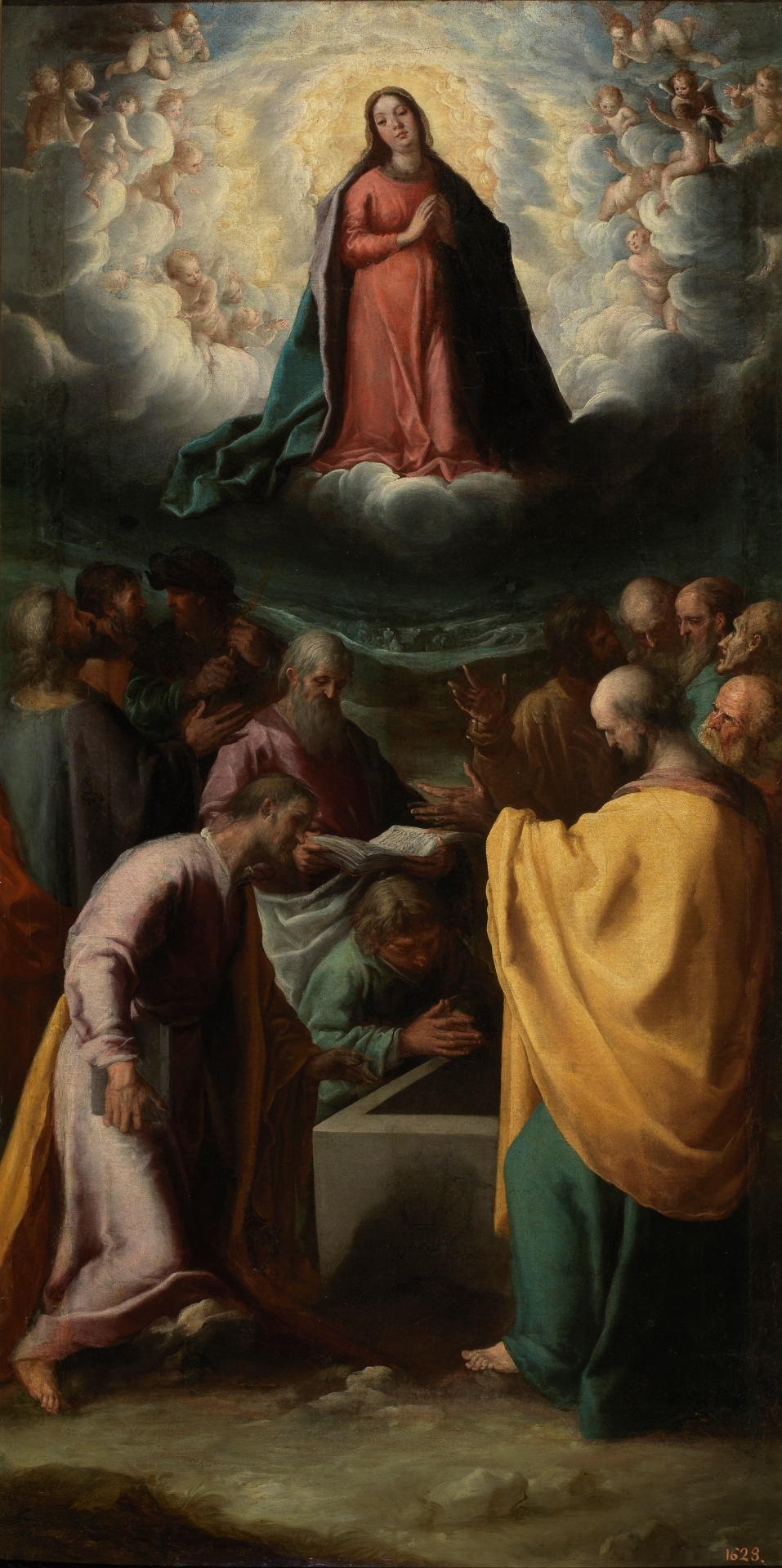
E. Cajés, The Assumption of the Virgin (1603), oil on canvas, Museo Nacional del Prado (Madrid)

How wonderful that this Sunday we can talk and meditate on our Mother the ever-blessed Virgin Mary! With the exception of Jesus Christ, who is the Eternal Word, conceived through the power of the Holy Spirit, she is the greatest person to ever exist.  She is the greatest person to be conceived through a human mother and a human father. She is greater of any of the great people of history. She is the one who was conceived without sin. She gave her life so we can have a Savior. She is the greatest of us all. The greatest of us all is a woman. Mary brought a new dignity to every woman who has ever lived and who ever will live. Women bring life into the world and nurture this life.  Because Mary sacrificed herself for us, our women bring unique reflections of God into the world and nurture His Image with their bodies and with their lives. Women are life givers. Christian women give life to the Divine. Women are sources of love, carriers of love and nourishers of love. In these days when the most lucrative industry in the world is the pornography industry, where mainly young girls are exploited, Our Lady reminds us of the Dignity and Respect that are the natural rights of every female among us. We men are reminded that it is our obligation to care for and protect our women, be they little girls, teens, wives, singles, widows or the elderly. All men need to pray for those among us whose biblical origin was a gift from God to Adam. In these days of the glorification of the self, Our Lady reminds us of a person whose body and spirit were created for another.  She said “Yes” to the angel at the Annunciation and allowed God to radically change her life. She nurtured and cared for the child that others wanted dead.  She supported Jesus as a young man when some thought he was deranged. She stood with Him as He was tortured to death to complete the Father’s plan of redemption. She accepted John the apostle and us into her heart and became our mother. For all this and more than we could ever imagine, Mary was rewarded with her total union with God at the conclusion of her earthly life. She was assumed into heaven. Now closest to her Son, the judge of the Living and the Dead, within whisper length from his ear, she brings our prayers before Him.  We can be sure of this! She brings the prayers we offer when we honor her in the Rosary.  She brings the prayers we offer when we just call out, “Mother, help us!” so today we pray to her and we celebrate, with hearts full of joy, that she was taken to heaven where she lives forever • AE


Fr. Agustin’s Schedule for the weekend of August 14-15, 2021,

Solemnity of the Assumption of the Blessed Virgin Mary

Saturday, August 14, 2021

4.00 p.m. Sacrament of Confession

5.00 p.m. Vigil Mass (English) @ St. Dominic Catholic Church

Sunday, August 15, 2021.

7.30 a.m. Mass (English) @ St. Dominic Catholic Church

10.00 a.m. Mass (English) @ St. Dominic Catholic Church


Solemnidad de Asunción de la Santísima Virgen María (2021)

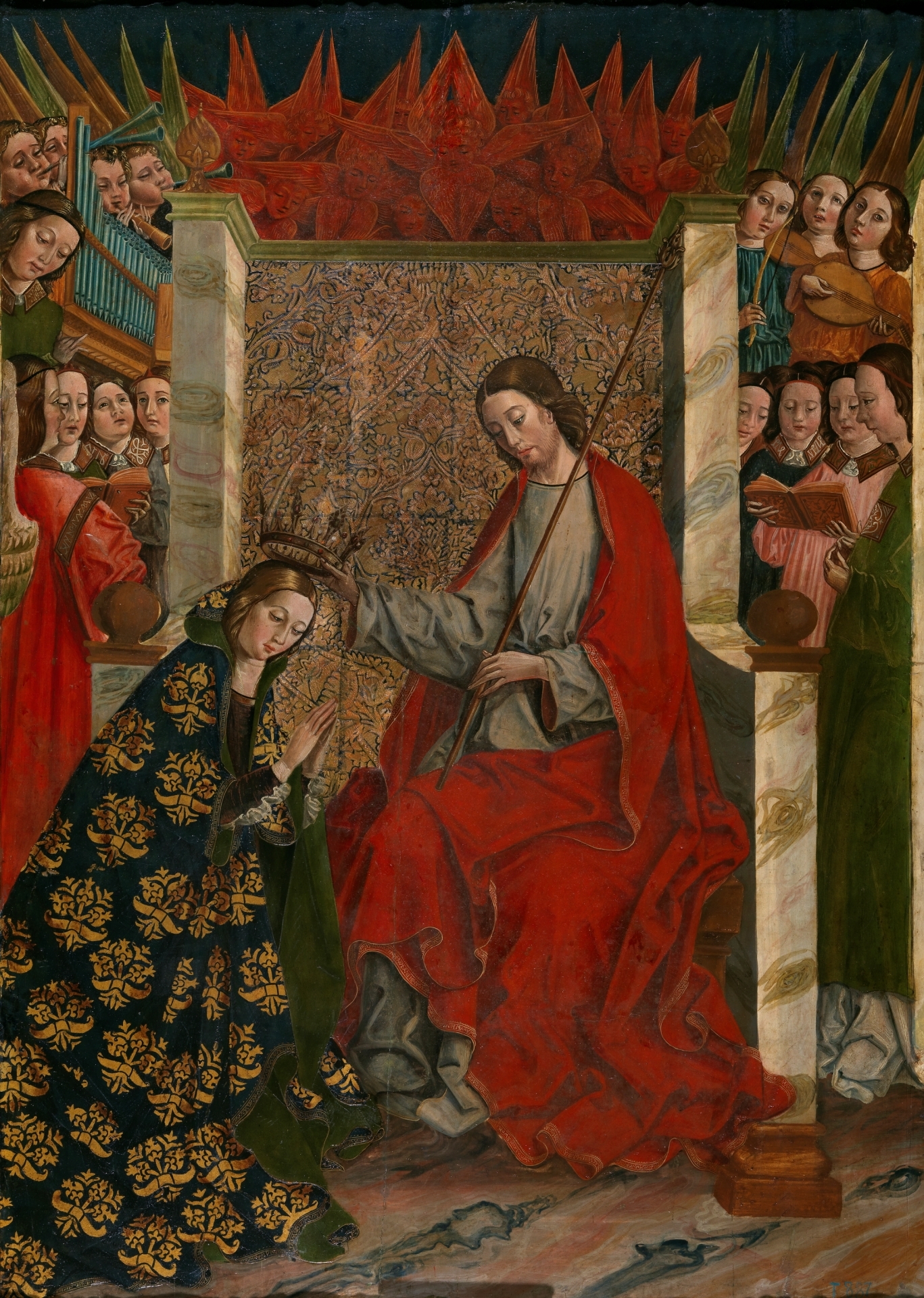
Maestro de las once mil virgenes, La Coronación de la Virgen (hacia 1490), óleo sobre tabla, Museo Nacional del Prado (Madrid)

Hoy es fiesta grande para los creyentes. Una fiesta que no es sino el eco del anuncio pascual: Cristo ha resucitado y María es llevada en cuerpo y alma a los cielos. Aquella mujer que supo acoger como nadie la salvación que se le ofrecía en su propio Hijo, ha alcanzado ya la vida definitiva. La que supo sufrir junto a la cruz la injusticia y el dolor de perder a su Hijo, comparte hoy su vida gloriosa de resucitado y nos invita a caminar por la vida con alegre esperanza. La Asunción de la Virgen es una fiesta que confirma nuestra esperanza cristiana: hay salvación para el hombre. Hay una vida definitiva que se ha cumplido ya en Cristo y que se le ha regalado ya a María en plenitud. Hay resurrección. María es la Madre de nuestra esperanza. Ella es «la perfectamente redimida», como solía decir Rahner. En ella se ha realizado ya de manera eminente y plena lo que esperamos un día vivir también nosotros. Pero María es sobre todo Madre de esperanza para los pobres y los rechazados de este mundo. Si María es grande y bienaventurada para siempre es porque Dios es el Dios de los pobres. María se alegra de que Dios sea así. El Dios de los pobres y los humillados. El que ha sabido mirar la humillación y bajeza de su esclava. El que no se ha detenido ante Popea o Cleopatra, sino que ha fijo su mirada en una pobre muchacha sin brillo ni riquezas. Al cantar hoy el Magníficat podríamos recordar quién es el Dios que ha glorificado a María y en el que ella ha puesto todo su gozo y su esperanza. No es el Dios lejano e indiferente en el que a veces pensamos, sino el Dios de los sencillos, aquel que «derriba del trono a los poderosos y enaltece a los humildes; el que coIma de bienes a los hambrientos, y a los ricos despide con las manos vacías». Estas palabras no son palabras de ningún profeta agresivo ni de ningún guerrillero violento, sino que han brotado de la ternura, la limpieza y el gozo que caben en el corazón de María santísima; ese corazón que había guardado la memoria y el gozo de Jesús, quien bendecía al Padre porque ha ocultado su reino a los aristócratas de la tierra y lo ha revelado a aquellos que aparentemente no valen nada, pero valen todo • AE


Nineteenth Sunday in Ordinary Time (Cycle B)

Sadly, it seems that when it comes to religion, many people resort to relativism.  They decide that they can determine what is a teaching of the Church, or what they feel is moral or immoral.  You see this reflected in today’s Gospel. In this the third of five weeks on the Sixth Chapter of John, people who have heard Jesus say that He is the bread that has come down from heaven do not want to listen to his teaching. Now this is after they had witnessed his multiplying the loaves and fish.  This is after they heard about his walking on the water.  This is after they had learned about the great signs Jesus worked in healing people.  He had a wonderful teaching for them.  He was offering them the gift of His Body and Blood. But they did not want to hear it.  They had decided for themselves who this Jesus was. “To me, the Jesus is just one of us.  He can’t be giving us a new teaching,” they said using the Ad Hominem argument, the attack on the person instead of considering the statement that person made. And so, they refused to hear Jesus explain that their prophets had predicted that they would be taught by God.  They would not consider that Jesus’ wonders were signs that He had come from the Father.  They were not open to hear that those who believed in Him would have eternal life. They scoffed at His declaration that He is the Bread of Life. They did not want to hear that those who eat this bread will live forever. They had decided for themselves what they would believe.  As a result, they rejected Jesus, His Teaching, and His Gift of eternal life. Many people are held captive to what Pope Emeritus Benedict XVI called the Dictatorship of Relativism. They decide for themselves what the truths of our faith are or what they should or should not do to live the Christian life.  They may not say those words, but we witness this in people who treat Holy Communion as a sacramental instead of as a sacrament.  A sacramental is a devotional object or practice to remind us of some aspect of our faith.  Signing ourselves with holy water is a sacramental.  It reminds us of our baptism.  Receiving ashes at the beginning of Lent is a sacramental.  This practice reminds us of our dependence on God.  Sacramentals are useful but are totally optional.  The Eucharist is not a sacramental.  It is a sacrament! It is the real presence of Jesus Christ uniting His Body and Blood to us and presenting us with Him to the Father. Holy Communion is the Bread of Life that we need to eat to have eternal life. Yet, some people will treat communion as a sacramental, an option that may or may not be received. So, they say, “To me Holy Communion is something I do when I go to Church, but it is not necessary for me to receive it; so, I do not attend Mass every Sunday.” People simply relegate the teaching of Jesus Christ as inferior to their own perception of the truths of the faith.  They are bound by the dictatorship of relativism. This also takes place in the Church’s teachings on morality.  Some people will say, “To me there is nothing wrong with two people who love each other having marital relations outside of marriage even though they are married to other people.” They refuse to accept the Church’s teaching #Magisterium on fidelity in marriage because it does not fit their own perception of morality. The “to me this teaching means….,” or “to me this or that is moral or immoral,” are the same faulty ways of understanding and living the faith that are reflected in today’s Gospel.  My brother, my sister: it is not up to us to decide what faith and morality is or is not.  It is our duty and responsibility to learn what the Church teaches and to follow these dictates.  Period. Does this sound too radical? It certainly is, but the following of Christ is radical! In doing this we are protecting ourselves from the relativism that renders all teaching superfluous, even that teaching which emanates from Christ Himself. May this weekend we find a little moment to meditate on this • AE


Nineteenth Sunday in Ordinary Time

Fr. Agustin’s will be out of town during the Nineteenth Sunday in Ordinary Time and he will resume his regular schedule on Monday August 9, 2021 with the 8.30 a.m. Mass.


XIX Domingo del Tiempo Ordinario (Ciclo B)

La incredulidad no es, como más de algun@ ha llegado a pensar, una «deformación perversa del espíritu», o algo propio de hombres malvados y retorcidos que pretenden enfrentarse con Dios. No. La incredulidad es una tentación que siempre estará presente en nuestra vida, y que empieza a echar raíces en nuestro corazón desde el momento mismo en que decidimos caminar de espaldas a Dios. Vivimos en una sociedad donde creer en Dios es como anticuado, como algo poco importante y fácil arrinconar en algún lugar muy secundario de nuestra vida. Lo sencillo es vivir como si Él no existiera ¿Qué puede significar hoy para muchos hombres y mujeres la invitación de Jesús a escuchar al Padre? Los que nos decimos creyentes hemos ido perdiendo la capacidad para escuchar a Dios. No es que Dios no hable, sino que llenos de ruido, posesiones y autosuficiencia, no sabemos ya percibir su voz. Esta es la mayor de nuestras tragedias porque al no escucharlo, lo echamos de nuestra conciencia. Cada vez más intentamos ocultarnos a su mirada amorosa. Preferimos otros dioses con quienes vivir con más tranquilidad. El Concilio Vaticano (¡siempre tan criticado!) nos recordaba que «la conciencia es el núcleo más secreto y el sagrario del hombre, en el que se siente a solas con Dios, cuya voz resuena en el recinto más íntimo de aquélla»[1]. Cuando perdemos la capacidad de escuchar la voz de Dios en el fondo de nuestra conciencia, corremos el riesgo de gritar colectivamente afirmaciones muy solemnes sobre el amor, la justicia, la solidaridad y honestidad, pero sin darles luego cada uno un contenido práctico en nuestras propias vidas, y así vivimos fracturados. Este domingo, en nuestro rato de oración, podríamos pedir al Espíritu de Dios que nos regale su luz y su sabiduría para no olvidar que vamos construyendo nuestra vida no tanto en los acontecimientos ruidosos sino en esas horas calladas en las que Él nos habla y nos invita a ser dóciles, obedientes. A confiar en Él • AE

[1] Constitución Pastoral Gaudium et Spes, sobre la Iglesia en el mundo actual, n. 16.