

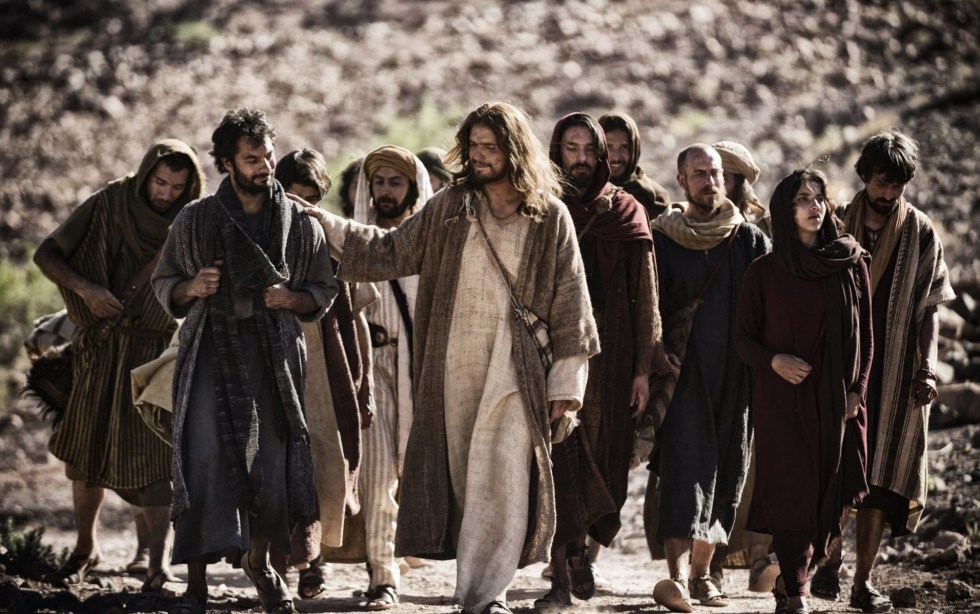
Jesus has just given the apostles a teaching that demanded their absolute trust in Him, their absolute faith in Him, even though this teaching was completely against what their eyes, ears and senses were telling them. He told them that He was the Bread of Life. He told them that they needed to eat His Flesh and drink His Blood for them to have eternal life. For some of them this was too hard to accept and so they left Jesus and returned to their previous lives. The Twelve told Jesus what was happening. Perhaps they were implying that Jesus tone down His teaching some. Maybe they were just pointing out that the Lord was losing followers #Whatever The fact is that Jesus was not going to rescind a word. He came to make the spiritual real. He came to bring a reality to the world that was beyond the capacity of man to understand. He came to bring the Gifts of God that were far greater than man’s fondest hopes. He would not compromise the truth. “Will you go, also, Peter,” he asks the leader of his Twelve. “Lord, where can we go, you alone have the words of eternal life.” And with that confession of faith, Peter stays in good shape. He did not know with his senses how it is possible for Jesus to give His Body and Blood for the food they would need for the journey to God. Peter did not know with his senses, but he knew with his heart that all was beautiful with Jesus and that it would be infinitely foolish to trust in the senses rather than trust in the Lord. We are called to believe in the Lord, to trust in Him. We are called to give an infinitely greater credence to the spiritual we cannot see over the material we can see. We are called to faith. It is quite normal for us to go through periods of doubting the teachings of the Lord. It is normal for us to ask, “How is God only one, if the Father is God, the Son is God, and the Spirit is God?” It is quite normal for us to ask: “How can Jesus be both fully God and fully man?” It is quite normal for us to ask: “How can this bread and wine, material objects before the Mass, now be the Body and Blood of Jesus Christ?” It is quite normal for us to want to stand on the material world of our senses and ignore the new world of the spiritual. When these types of doubts come to our mind, be they flashing through, or lingering and challenging us, we need to stop and consider the Gifts of the Lord. We need to reflect on our Savior, Jesus Christ. We reflect on the wonders He provides that are beyond our imagination, too good to be true, but, yes, they are true. We are children of God. We think about the peace that we have when we are united with Him and the chaos we have when we turn from Him. And, so, we trust completely in the Lord. We trust Him over our own senses. And so we believe. We believe in that which we do not see. We believe in that which our human senses cannot reveal. And we come to Church this Sunday and pray as we pray every day of our lives, we pray the prayer of the father of the epileptic boy whom Jesus asked, “Do you believe?” We join this man and pray, “I do believe, Lord, but help those parts of me that do not believe[1].” We are human, yes, but we have been entrusted with the mystery of the Divine. We have been given the Gift of the Eucharist. For sure we are tempted to trust only our senses. We are tempted to stand on the material. We are tempted to limit ourselves to the here and now. We are human. But we are also spiritual. And deep within us, deep within every single one of us there is the Voice of Faith prodding us to exclaim with Peter, “I will not leave you Lord. You alone have the words of eternal life.[2]” • AE
[1] in Mark 9:24 [2] Jn 6:60-69

Fr. Agustin’s Schedule for Twenty-first Sunday in Ordinary Time

Saturday, August 21, 2021
3.00 p.m. to 4.55 p.m. Sacrament of Confession
5.00 p.m. English Mass @ St. Dominic Catholic Church
Sunday, August 22, 2021.
12.30 p.m. English Mass @ St. Dominic Catholic Church
3.00 p.m. Spanish Mass @ St. Dominic Catholic Church
XXI Domingo del Tiempo Ordinario (Ciclo B)
Voy a tirar unas pocas piedras sobre mi propio tejado. En la sociedad moderna vivimos acosados por palabras, comunicados, imágenes y noticias de todo tipo. Ya no es posible vivir en silencio. Anuncios, publicidad, noticiarios, discursos y declaraciones invaden nuestro mundo interior y nuestro ámbito doméstico. Esta «inflación de la palabra» ha penetrado también en la vida de la Iglesia donde los clérigos hablamos y escribimos mucho. Demasiado, quizá. La pregunta que nos hemos de hacer es sencilla: ¿Qué capta la gente en nosotros?, ¿palabras llenas de espíritu y vida, como eran las de Jesús, o palabras vacías? Me da la sisca, que dicen mis amigos de Musquiz, que lo segundo. A lo largo de los años he oído muchas críticas a la predicación de la Iglesia. Se nos acusa de poca fidelidad al evangelio o al Magisterio; de alianza con una ideología política de un signo o de otro, de poca apertura a la modernidad, o demasiada… creo que no pocos que se alejan hoy de la Iglesia quieren saber si, al menos para nosotros, nuestras palabras significan algo. La palabra del Señor era diferente. Nacía de su propio ser, brotaba de su amor apasionado a su Padre y a sus hermanos. Era una palabra creíble, llena de vida y de verdad. Se entiende la reacción espontánea de Pedro: «Señor, ¿a quién vamos a acudir? Tú tienes palabras de vida eterna»[1]. Muchos hombres y mujeres de hoy no han tenido nunca la suerte de escuchar con sencillez y de manera directa sus palabras. Su mensaje les ha llegado, muchas veces desfigurado y distorsionado por demasiadas doctrinas, fórmulas ideológicas y discursos poco evangélicos. Uno de los mayores servicios que podríamos realizar en la Iglesia es poner la persona y el mensaje de Jesús al alcance de los hombres y mujeres de nuestros días. Ponerles en contacto con su persona. La gente no necesita escuchar nuestras palabras sino las suyas. Sólo ellas son verdadero espíritu y vida ¡Cuánto necesitamos los hombres de hoy esa palabra de Jesús capaz de dar un vigor y una fuerza nueva a nuestra vida; cómo necesitamos de creyentes que nos hablen, como Jesús, con palabras donde se transparente su experiencia, su fe, su amor • AE
[1] Cfr. Jn 6, 55. 60-69
 LA MEDITACION DE LA ESPOSA