First Sunday of Advent (Cycle C)

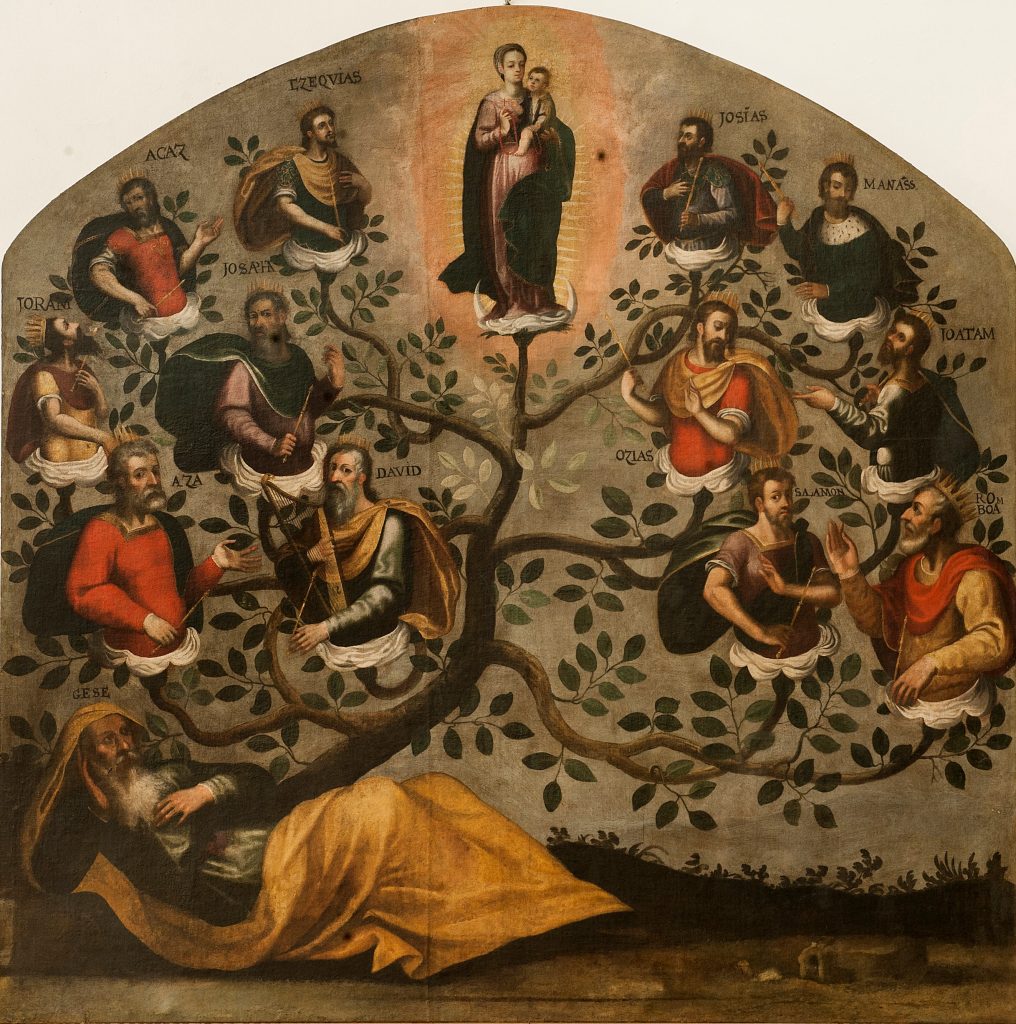
Anonymous author, The Tree of Jesse (1600), oil on canvas, San Martín de Tours Parish (Seville, Spain)

This first Sunday of Advent reminds that Christmas is just around the corner. We all have our hopes and aspirations for Christmas. This season of Advent waiting reminds us that everything is not quite right with our world. Our world is somewhat broken and needs fixing. The world is broken because it does not pay attention to the Lord or put him first. The only way to fix our broken world is to mend and repair it with Christ. Christ is the solution to our broken world! Jeremiah the prophet whom we read in the first reading today, was also living in a broken world[1]. In fact, he lived in pretty desperate times. He witnessed the Babylonians putting Jerusalem under siege and finally destroying it. He escaped with some of his fellow people down to Egypt. Yet despite all this destruction and chaos he was hopeful. In the first reading today, Jeremiah proclaimed to his fellow Jews that the Lord would fulfill the promise he had made[2]. What kind of promise? To make a righteous Branch grow up for David, to make a just Shoot grow up for David and that shoot will do what is right and just in the land. This means Jeremiah believes God will fulfill his promise to provide offspring for King David. But David had been king centuries before Jeremiah and Jeremiah in his own time saw the monarchy coming to an end right before his eyes when Jerusalem was destroyed and there was never again a king in Jerusalem. So, what could Jeremiah possibly mean that God would fulfill his promise to provide offspring for King David? Jeremiah was talking about Jesus, the Messiah. David was of the tribe of Judah and Jesus also was of the tribe of Judah. Jesus would be the answer to all the Jewish hopes of the Old Testament. Not only did Jeremiah foresee that God’s promise of Jesus would be fulfilled, but as we heard in the reading, Jeremiah also said the city of Jerusalem would be called, “The Lord is our justice.” Very often the prophets refer to a future glorious Jerusalem and they mean the Church of the New Testament[3]. So even though the city was attacked Jeremiah said God will send Jesus, and instead of this destroyed city being our home our future home will be the Church. Jeremiah saw that the answer to the chaos of his time was Jesus and that our future home would be the Church! Isn’t wonderful? Jeremiah looked to the future, to Christ. We too during Advent look to the future, and during this early part of Advent our liturgy looks forward to the Second Coming of Christ. Jesus himself talks about his Second Coming in the Gospel today[4], and he warns us to be vigilant[5]. There is really only one gift at Christmas and that gift is Jesus coming to us. What better gift can we give to Jesus at Christmas than to have lived Advent in union with him? What better gift can we give to Jesus at Christmas than to have removed from our lives this Advent anything and everything that keeps us apart from him? What better gift can we give Jesus at Christmas than to be able to say to him, “Lord, during Advent I reformed my life because I love you”? If there is anything therefore in our lives that is not pleasing to Jesus, we can use this time of Advent to break with sin and leave sin behind so that we can stay awake and pray waiting for Jesus. We want to give Jesus this gift of our lives because just as Jeremiah looked to Jesus as God’s promise we also look to Jesus this Advent as God’s promise in our lives • AE

[1] Cf Jer 33:14-16 [2] through the prophet Isaiah 11:1 [3] In Rev 21:2 the Church is described as the New Jerusalem [4] Cf Luke

21:25-28, 34-36 [5] Idem.


Fr. Agustin Schedule for the First Sunday of Advent

Sunday, November 28, 2021.

12.00 p.m. English Mass @ St. Dominic Catholic Church

3.00 p.m. Misa en Español @ St. Dominic Catholic Church


Primer Domingo de Adviento (Ciclo C)
Key West, Florida, verano del 2016 #RoadTrip #Miarma (foto © Moisés Ramirez)

Todos vivimos con la mirada puesta en el futuro. Siempre pensando en lo que nos espera. Y no sólo eso: andamos buscando algo mejor, una seguridad, un bienestar mayor. Queremos que todo nos vaya bien y, si es posible, que nos vaya mejor. Es esa confianza básica la que nos sostiene en el trabajo y los esfuerzos de cada día. Por eso, cuando la esperanza se apaga, se apaga también la vida. La persona ya no crece, no busca, no lucha. Al contrario, se empequeñece, se hunde, se deja llevar por los acontecimientos. Si se pierde la esperanza, se pierde todo. Por eso, lo primero que hay que cuidar siempre en el corazón de la persona, en el seno de la sociedad o en la relación con Dios es la esperanza. La esperanza no consiste en la reacción eufórica y optimista de un momento. Es más bien una forma de vivir, una manera de afrontar el futuro de forma positiva y confiada, sin dejarnos atrapar por la tristeza. El futuro puede ser más o menos favorable, pero lo propio del hombre de esperanza es su actitud positiva, su deseo de vivir y de luchar, su postura decidida y confiada. No siempre es fácil. La esperanza hay que trabajarla. Lo primero es mirar hacia adelante. No quedarse en lo que ya pasó. No vivir sólo de recuerdos y nostalgias. No quedarse añorando un pasado tal vez más dichoso, más seguro o menos problemático. Es ahora cuando hemos de vivir afrontando el futuro de manera positiva y esperanzada. La esperanza no es una actitud pasiva sino más bien un estímulo que impulsa a la acción. Quien vive animado por la esperanza no cae en la tristeza. Al contrario, se esfuerza por transformar la realidad y hacerla mejor. Quien vive con esperanza es realista, asume los problemas y las dificultades, pero lo hace de manera creativa dando pasos, buscando soluciones y contagiando confianza. La esperanza no se sostiene en el aire. Tiene sus raíces en la vida. Los cristianos vivimos de pequeñas esperanzas que se van cumpliendo o se van frustrando. Hemos de valorar y cuidar esas pequeñas esperanzas, pero el ser humano necesita una esperanza más radical e indestructible, que se pueda sostener cuando toda otra esperanza se hunde. Así es la esperanza en Dios, último salvador del hombre. Cuando caminamos con el corazón desalentado, hemos de detenernos un momento y recordar las palabras del Señor que acabamos de escuchar en la proclamación del evangelio: «Levanten la cabeza, porque se acerca la hora de su liberación»[1] • AE

[1] Lc 21, 25-28. 34-36.


The Solemnity of Our Lord Jesus Christ, King of the Universe

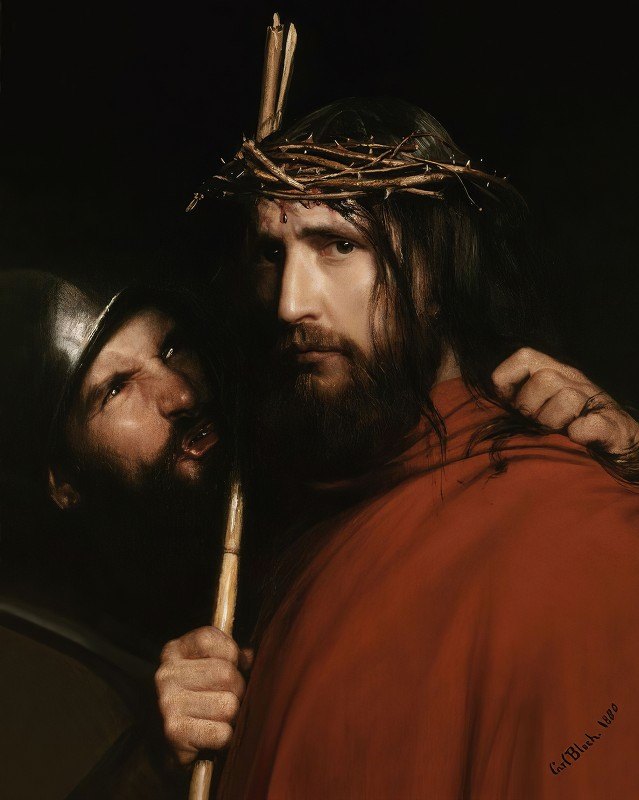
Carl Bloch, Christ with Mocking Soldier (1880), oil on canvas, particular collection (Salt Lake City, Utah)

What I have written, I have written[1]. This passage follows the dialogue between Pilate and Jesus presented in today’s Gospel. Pilate asked Jesus if he were a king. Jesus replied, “You yourself say so.” So, Pilate had the inscription put on the cross. He was being sarcastic. At some point Jesus said, “My Kingdom is not of this world.”  What was, what is his Kingdom? Up until a few centuries ago, no one could imagine a government that was not ruled by a king, queen, or some sort of emperor. Some people have a difficult time understanding today’s celebration because they see it as seeking an end of democracy and a return to monarchy. That is not the case. When we say Thy Kingdom Come, we are not concerned with any form of government. When we say Thy Kingdom Come, we are focusing on God having absolute power in our world. So, we say Thy Kingdom come. We say this so often that we skim through the words. We hardly notice them. Nor do we reflect on what we are asking for when we say it. What do we mean by this phrase? Do we really want this prayer answered? What are we doing to bring about the Kingdom of God? What do we mean by Thy Kingdom Come? The prayer is calling on God to transform the world into His Kingdom. That would mean an end to hatred, an end to greed, an end to materialism. In the Kingdom of God, all that would matter would be our union with God. The value system of the secular world would be scrapped. In the Kingdom of God, the goal of hard work would be to have more to give to those who have less. In the Kingdom of God, justice and charity would reign. All people would be good to each other. All would enjoy union with the King, union with God. When we say Thy Kingdom Come, we are being eschatological. There is a word you do not hear that often. Eschatology is the study of the last things, the end of time. When we say Thy Kingdom Come, we are praying for the second coming of the Lord at the end of time. At the end of the Church year, we pray for the end of time. This brings the prayers of the Church full circle, for at the beginning of Advent, as we will see next week, we pray, Maranatha, the most ancient prayer of the Church. Maranatha, come Lord Jesus! Do we want all this? Do we want Thy Kingdom Come in the full meaning of the prayer? Union with God. Peace in the world. Of course, we want that. But are we willing to pay the price? Do we want Christ to come again and bring the world to its conclusion? If we want Thy Kingdom Come, then what are we doing about it? How are we working for the Kingdom? Do we work hard to keep a union with God? Do we fight against all forms of hatred, bigotry, and prejudice? Do we look for ways that we can reach out to those who have less than we have? Do we live in such a way that others can say, “He, she, is certainly a Christian?”  Jesus stood before Pilate and said, “My Kingdom is not of this world.” We want Jesus! And so, we pray, Thy Kingdom Come! • AE

[1] John 19:19-22


Fr. Agustin Schedule for the Solemnity of Our Lord Jesus Christ, King of the Universe (Thirty-fourth Sunday in Ordinary Time)

Saturday, November 13, 2021.

3.00 p.m. Sacrament of Reconciliation

5.00 p.m. English Mass @ St. Dominic Catholic Church

Sunday, November 14, 2021.

7.30 a.m. English Mass @ St. Dominic Catholic Church

10.00 a.m. @ St. Dominic Catholic Church


Solemnidad de Nuestro Señor Jesucristo, Rey del Universo (2021)

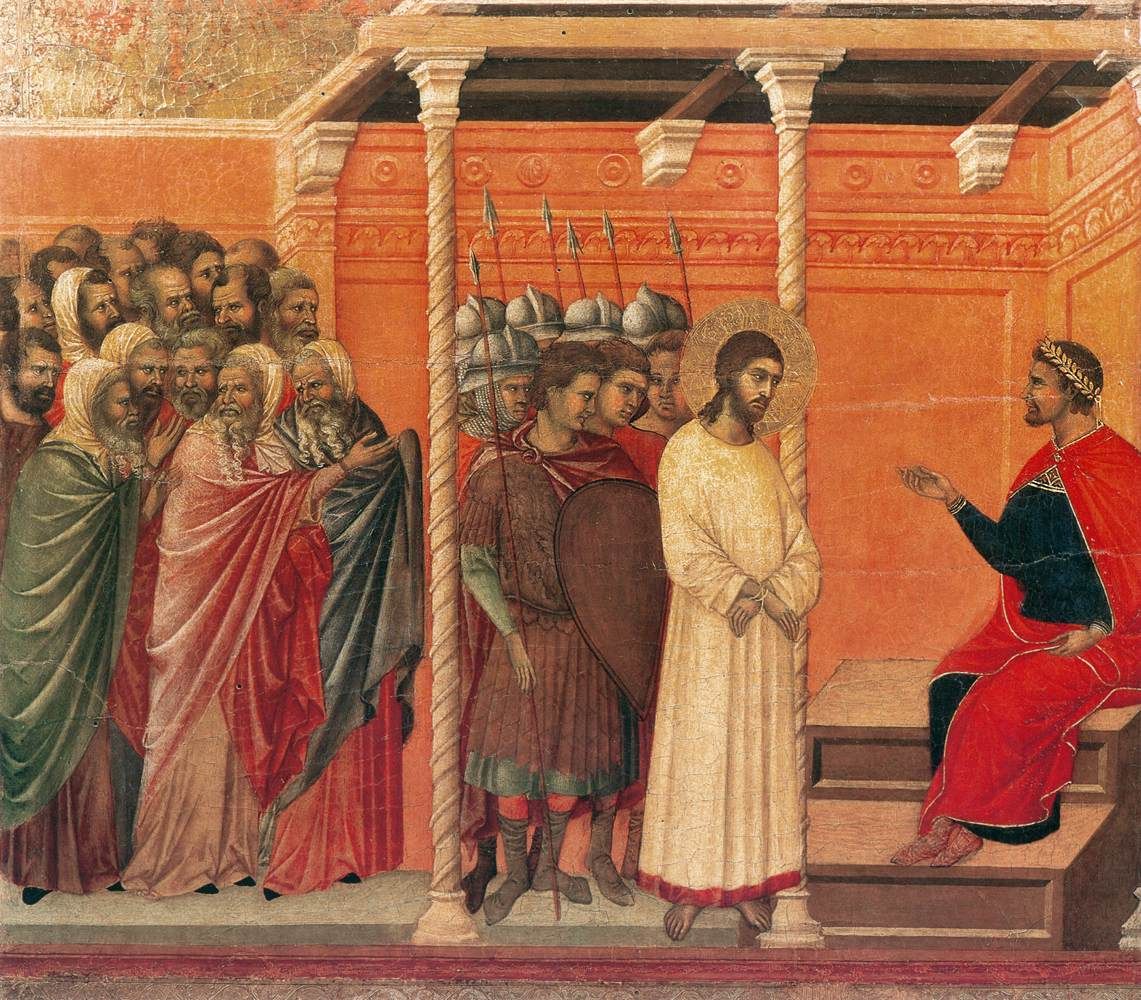
Duccio di Buoninsegna, Cristo frente a Pilato (1308-11), temple sobre tabla), Maestà, Museo dell’Opera Metropolitana del Duomo de Siena (Italia).

El juicio tiene lugar en el palacio donde reside el prefecto romano cuando viene a Jerusalén. Acaba de amanecer. Pilato ocupa la sede desde la que dicta sus sentencias. Jesús comparece maniatado, como un delincuente. Allí están frente a frente: el representante del imperio más poderoso, y el profeta del reino de Dios. A Pilato le resulta increíble que aquel hombre intente desafiar a Roma: « ¿Con que tú eres rey?». Jesús es muy claro: «Mi reino no es de este mundo». No pertenece a ningún sistema injusto de este mundo. No pretende ocupar ningún trono. No busca poder ni dinero. Pero no le oculta la verdad: «Soy Rey». Jesús vino a introducir verdad. Si su reino fuera de este mundo tendría guardias que lucharían por él con armas. Pero sus seguidores no son legionarios, sino discípulos que escuchan su mensaje y se dedican a poner verdad, justicia y amor en el mundo. El reino de Jesús no es el de Pilato, que vive para extraer las riquezas y cosechas de los pueblos y conducirlas a Roma. Jesús vive para ser testigo de la verdad. Su vida es todo un desafío: «todo el que es de la verdad, escucha mi voz». Pilato no es de la verdad. No escucha la voz de Jesús. Dentro de unas horas, intentará apagarla para siempre. Nosotros, los que seguimos al Señor, no somos guardianes de la verdad, sino testigos. Gran diferencia. No somos legionarios sino discípulos. No buscamos disputar, combatir y derrotar a los adversarios, sino vivir la verdad del evangelio y comunicar la experiencia de Jesús que cambia nuestra vida. Una vez más: no somos propietarios de la verdad, sino testigos. No imponemos nuestra doctrina, ni controlamos la fe de los demás, no pretendemos tener razón en todo. Los cristianos hemos de vivir convirtiéndonos a Jesús constantemente, contagiando la atracción que sentimos por él, ayudando a mirar en dirección del evangelio. En menos palabras: los cristianos atraeremos a la gente cuando vean que nuestro rostro se parece al de Jesús, y que nuestra vida recuerda a la suya • AE


Thirty-third Sunday in Ordinary Time

Michelangelo, The Last Judgment (1536), Fresco of the Sistine Chapel Vatican City (Italy)

Today’s readings are full of gloom and doom.  The first reading from the Book of Daniel talks about the end of time being a time of unsurpassed stress where some who die shall be in everlasting horror and disgrace.  The Gospel reading from the Apocalyptical sections of Mark presents the end of time as being the day of tribulations, when the earth will shake and even the stars will fall out of the sky.  Scary stuff, these end of the world readings.  But are they?  Look again at that first reading: Daniel prophesies that many will live forever.  The wise will shine brightly like the splendor of the firmament and those who lead the many to justice will be like the stars forever.  And in Mark Jesus adds, “the elect will be gathered from the four winds, from the end of the earth to the end of the sky.” The early Christians did not look at the Second Coming and end of time with terror.  Instead they saw it as a time when the Lord would return to his people and correct the injustices of the world.  Good people, Christians,  were being put to death for the Lord in the most horrible ways.  Throughout the world, little children were starving to death while rich people ate heartily. The conquering Romans, like the Greeks and Persians before them, had no respect for any life other than their own and killed the population of whole cities, men, women and children viciously and randomly.  This is not what God created the world to be.  The world was suffering from sin.  Therefore, the Christians prayed, “Come, Lord Jesus, Maranatha. Come and recreate your world into your image.” The world has not changed all that much in its barbarity.  People are still killed for whom they are.  We are still receiving accounts of genocide throughout the world.   Here, in our country, good people are still persecuted when they refuse to join the latest mores of society.  To become a federal judge in this country, a person has to be in favor of gay marriage and abortion, among the other darling positions of the extreme liberals.  Anyone who is not is held up to scorn.  On the other side of the spectrum, anyone who says that the way of war should not be the way of the most civilized, advanced country of the world, then has to be prepared to be labeled as not being patriotic, even treasonous.  The world has not changed that much.  People who hold their convictions tightly to themselves are still persecuted, even put to death. The world has not changed all that much.  And yet, it has.  The major change in the world is that with Jesus Christ there is hope.  There is hope that war will not have the last word.  There is hope that starvation will become a bad memory.  There is hope that racism and sexism will not in the end dance a jig together.  There is hope that oppression will not have a lasting foothold over the vulnerable.  There is hope that those who do evil will not prevail. Evil is not part of God’s plan.  But we are part of that plan. The visions we heard today rely on us to take a role in the conquest of the Kingdom.  We are assured that if we take up the battle of good against evil, good will prevail and we will join in the triumph of God’s forces.  Listen to the “then” section of the Gospel.  “Then you will see the Son of Man coming on the clouds with great power and glory.”  That’s the Good New, the Gospel.  We will see triumph of goodness and be present as the Lord gathers his own to himself. Believing in the Lord and hoping in this promise, we turn our attention to the work at hand: preaching the Gospel through our words and deeds, even to those in darkness.  Even when we feel ourselves engulfed by darkness.  Still, we proclaim the Gospel, for we believe that light is coming.  We do not know when.  We do not know where.  But we do know the He, the Lord of Light is coming.  And so we continue to pray in the prayer He taught us, “Thy Kingdom Come.” • AE


Fr. Agustin Schedule for the Thirty-third Sunday in Ordinary Time

Saturday, November 13, 2021.

3.00 p.m. Sacrament of Reconciliation

5.00 p.m. English Mass @ St. Dominic Catholic Church

Sunday, November 14, 2021.

12.00 p.m. English Mass @ St. Dominic Catholic Church

3.00 p.m. Misa en Español @ St. Dominic Catholic Church


XXXIII Domingo del Tiempo Ordinario (Ciclo B)

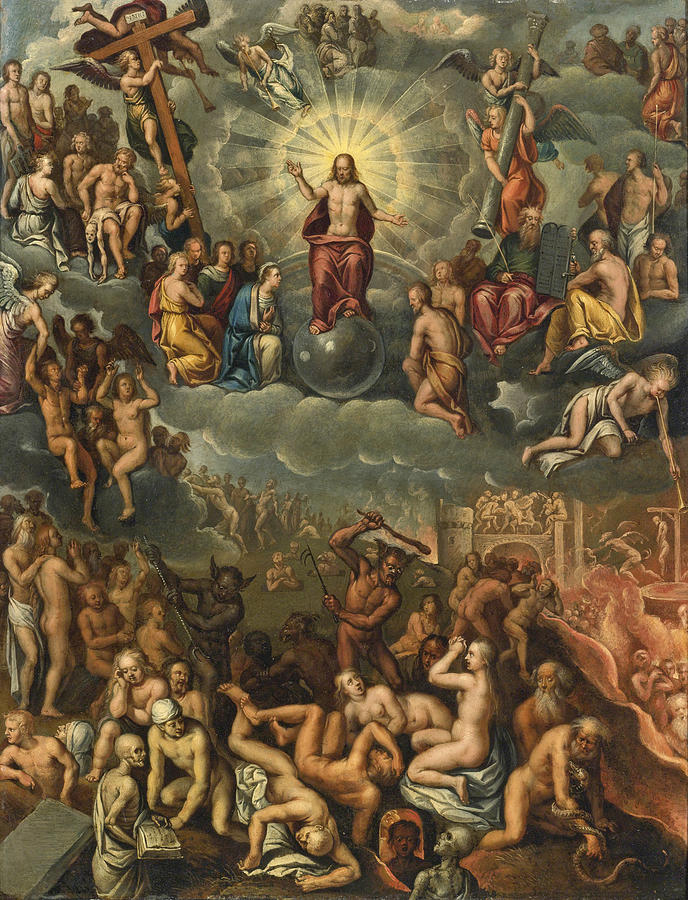
Crispin van den Broeck, El Juicio Universal (1573), óleo sobre madera, Museo de Bellas Artes de Amberes (Bélgica)

Al recitar el credo, los cristianos repetimos una y otra vez que Cristo “vendrá con gloria a juzgar vivos y muertos”. ¿Qué significa esta confesión que hacemos tantas veces de manera distraída y rutinaria? Probablemente muchos pensarán enseguida en un proceso judicial o discriminación última que decidirá la suerte final de los hombres en base a su comportamiento moral en esta vida. Pero el juicio final que esperamos los creyentes entraña algo más que la suerte última de cada individuo. Con fe humilde pero firme los cristianos proclamamos que Jesucristo es el destino último del mundo y de la humanidad. Nosotros creemos que en la raíz de la existencia no reina la soledad, la crueldad o el caos, sino el misterio de un Dios que se nos ha revelado en Cristo como destino final de la humanidad. Es cierto que la historia de los hombres está teñida de dramática ambigüedad y la existencia se nos presenta muchas veces como una maraña de contradicciones e incoherencias absurdas difícil de descifrar. Pero nosotros creemos que “las palabras de Cristo no pasarán». Un día se desvelará el sentido profundo de todo, las cosas quedarán en su sitio verdadero, se revelará el valor último del amor y se hará justicia a todos los vencidos, los humillados, los ofendidos, los pequeños, los olvidados y marginados. Ese será el verdadero juicio final que aclarará todas las ambigüedades y «justificará» todos los esfuerzos por caminar hacia una humanidad siempre mejor. El juicio que dejará en evidencia todos esos otros juicios con los que tantas veces los vencedores pretenden enjuiciar la historia anterior y condenar a los que los han precedido. Se terminarán entonces todos nuestros interrogantes y preguntas. Y descubriremos de dónde proviene esa voz que se hace oír ya en el interior de la vida y del mundo llamándonos hacia Dios. Entonces experimentaremos de alguna manera esa visión tan misteriosa y consoladora de la gran mística Juliana de Norwich: “Y todo estará bien; y todos estarán bien; toda clase de cosas estará bien» • AE

Thirty-second Sunday in Ordinary Time

Dante Gabriel Rossetti, Ecce Ancilla Domini (1850), oil on canvas, Tate Britain (London).

In the first reading today and in the Gospel reading we meet two widows who are very similar. Both are common, hardworking women. Both are poor. Both put their trust in God rather than in things. Both are rewarded for their faith. What these widows did is extremely difficult for all of us. No matter how great our faith is, it is extremely difficult to put our total trust in God. There is something within us all that looks for quick solutions to our problems outside of the realm of faith. Perhaps as rugged individualists we think that we can solve our own problems, conquer all obstacles ourselves. Certainly, we are all tempted to believe that the proper amount of cash applied in the right places can heal all life’s ills. At the same time, I know you will agree that the great fallacy of our age is that money can solve our problems. It is the job of advertisers to convince us that we can buy happiness. But this is a mirage, nothing more. The fact is that among those who have been blessed with material success the happiest are those who have no qualms about sharing their wealth. So, the message of today’s readings is that we must place our confidence in God rather than in our material possessions. As simple (and as difficult) as this! This is difficult for us to do because it demands our practicing the forgotten virtue of humility. Humility? Yes, humility. Only a humble person recognizes where he or she stands before God. Only a humble person recognizes his or her profound need for God. Only a humble person is certain that the presence of God in his or her life is fundamental to happiness. The two widows gave from their substance. They put their trust in God shouting with their actions that His presence in their lives was infinitely more important than anything they owned, even more important than everything they owned. They give us the example of ideal Christians, humbly trusting in God to care for them. Perhaps, someday, you and I will have faith so profound faith that we trust in God as these two widows trusted in God. But, then again, that is one of the reasons why we go to Church, isn’t it? We are here praying for faith… and humility. And we do it through the intercession of the humblest creature that has ever existed: Mary. She, who is the Mother of God, describes herself as the slave of the Lord, we have so much to learn from her! • AE


Fr. Agustin Schedule for the Thirty-second Sunday in Ordinary Time

Saturday, November 6, 2021.

3.30 p.m. Sacrament of Reconciliation

5.00 p.m. English Mass @ St. Dominic Catholic Church

Sunday, November 7, 2021.

7.30 a.m. English Mass @ St. Dominic Catholic Church

10.00 a.m. @ St. Dominic Catholic Church


XXXII Domingo del Tiempo Ordinario (Ciclo B)

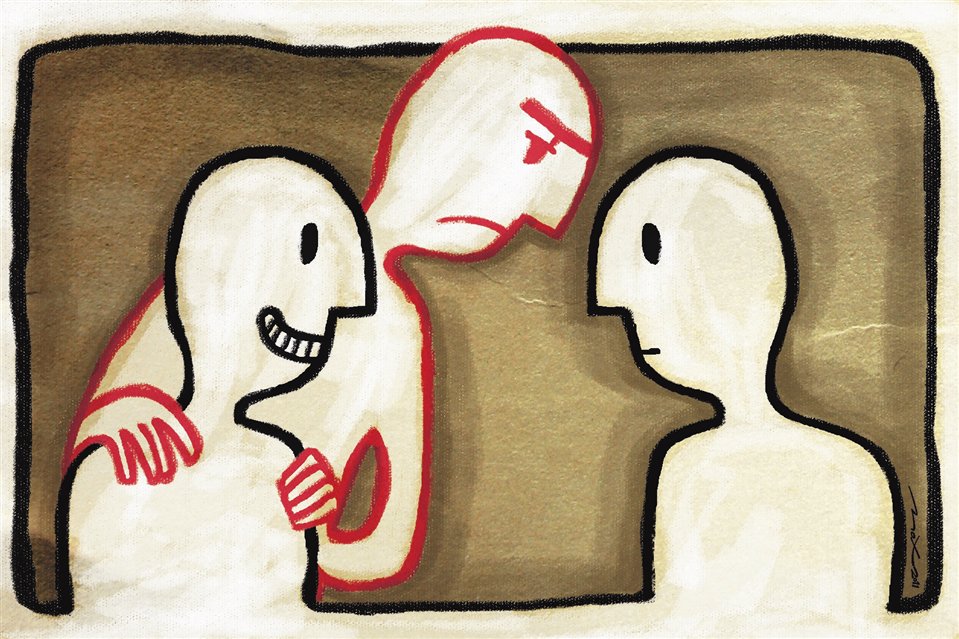
La envidia nos resulta vergonzosa e inconfesable, pero está muy extendida en nuestra sociedad. Todos la padecemos a lo largo de nuestra vida en mayor o menor medida, en unos momentos u otros según las circunstancias. En los niños aflora con más claridad porque todavía no han aprendido a disimularla. Los adultos sabemos maquillarla mejor y la ocultamos de diversas maneras bajo forma de desprecio, descalificación, necesidad de lucir mejores que los demás. La envidia, el único pecado que no produce ningún placer, es un proceso a veces bastante complejo y soterrado, que puede hacer a la persona profundamente desgraciada, incapacitándola para disfrutar de felicidad alguna. El envidioso nunca está contento consigo mismo, con lo que es, con lo que tiene. Vive resentido. Necesita mirar de reojo a los demás, compararse, añorar el bien de los otros, estar por encima. Vivimos en una sociedad que, con frecuencia, nos empuja a articular nuestras relaciones interpersonales en torno al principio de competitividad. Ya desde niños se nos enseña a rivalizar, competir, ser más que los demás. Hay quienes viven compitiendo eternamente. Uno de los medios más utilizados para ello es demostrar que se tiene más que los demás, que uno puede comprar un modelo de auto mejor, poseer una casa más lujosa; hacer unas vacaciones más exóticas. No nos atrevemos a confesarlo, pero en la raíz de muchas vidas dedicadas a ganar siempre más y a conseguir un nivel de vida siempre mejor, solo hay un incentivo: la envidia. El evangelio de este domingo nos muestra la reacción de Jesús ante aquellos que solo viven para aparentar, sobresalir y aprovecharse de los débiles. Y también su reacción ante aquella pobre viuda que se desprende de lo poco que tiene para ayudar a otros más necesitados. La invitación de hoy es a vivir humanamente, a disfrutar lo que tenemos y lo que somos, a compartirlo, tratando de vivir de cara a Dios • AE