The Octave Day of Christmas Solemnity of the Blessed Virgin Mary, the Mother of God (2022)

So, how can Mary, a human being, be the mother of the Infinite One? This mystery is best understood when we focus on Jesus Christ. He is the Eternal Second Person of the Trinity, and a human nature, He took on humanity through the Blessed Virgin Mary. Mary is the mother of his human nature, not his divine nature. Mary is not a goddess. She is a human being who was prepared to be the vessel through which the Word would become flesh. 

That is why we say Mary is the Mother of God. This is what we are celebrating today. What must it have been like for the Eternal Word, to take on the nature of a human within the Blessed Virgin? He had to feel her heart beating. He had to be aware of the experience of being a human when he was only a microscopic zygote, then an embryo, then a fetus. When during her pregnancy Mary prayed to God, the child within her heard and answered her prayers. The Incarnation began at the Annunciation. Life outside of His Mother began on Christmas. There is a Christmas hymn that explains the mystery Jesus and Mary in a very simple way. 

The baker woman in her humble lodge received a grain of wheat from God. For nine whole months the grain she stored. Behold the handmaid of the Lord. Make us the bread, Mary, Mary. Make us the bread, we need to be fed. The baker woman took the road which led to Bethlehem, the house of bread. To knead the bread she labored through the night, and brought it forth about midnight. Bake us the bread, Mary, Mary. Bake us the bread, we need to be fed. 

She baked the bread for thirty years by the fire of her love and the salt of her tears, by the warmth of a heart so tender and bright, and the bread was golden brown and white. Bring us the bread, Mary, Mary. Bring us the bread, we need to be fed. 

After thirty years the bread was done. It was taken to town by her only son; the soft white bread to be given free to the hungry people of Galilee. Give us the bread, Mary, Mary. Give us the bread, we need to be fed. 

For thirty coins the bread was sold, and a thousand teeth so cold, so cold, tore it to pieces on Friday noon when the sun turned black and red the moon. Break us the bread, Mary, Mary, Break us the bread, we need to be fed. 

And when she saw the bread so white, the living bread she had made at night, devoured as wolves might devour a sheep, the baker woman began to weep. Weep for the bread, Mary, Mary. Weep for the bread, we need to be fed. 

But the bakerwoman’s only son appeared to his friends when three days had run on the road which to Emmaus led, and they knew him in the breaking of bread. Lift up your head, Mary, Mary. Lift up your head, for now we’ve been fed. 

How beautifully this captures today’s Solemnity. Mary, Mother of God, baked the Bread of God within her, delivered this bread in Bethlehem, the city that means House of Bread, and watches as we are fed by the Bread. She is the Mother of Jesus, the Son of God. She is the Mother of God. So, Oh Holy Mary, Mother of God, pray for us sinners, now and at the hour of our death, Amen • AE


Fr. Agustin Schedule for

The Octave Day of Christmas: Solemnity of the Blessed Virgin Mary, the Mother of God (2022)

The Solemnity of the Epiphany of the Lord (2022)

Friday, December 31, 2021. 

Saturday, January 1, 2022. 

Sunday, January 2, 2022

TBD


ALMA REDEMPTORIS MATER

Alma Redemptoris Mater (Loving Mother of our Redeemer in English) is a Marian hymn, written in Latin hexameter, and one of four seasonal liturgical Marian antiphons sung at the end of the office of Compline (the other three being Ave Regina Caelorum, Regina Caeli and Salve Regina)

Alma Redemptoris Mater (Madre del Redentor) es un himno Mariano, escrito en latín, y una de las cuatro Antífonas Marianas que se cantan al final de la liturgia de las horas. Las otras tres son: Ave Regina Caelorum, Regina cœli y Salve Regina. Se cree que su autor fue Hermannus Contractus (“Herman el Cojo”; 1013–1054) quien se basaría en los escritos de los santos Fulgencio, Epifanio, e Irineo de Lyon.1​Este himno se menciona en «el cuento de la priora», uno de los relatos de Geoffrey Chaucer en los (preciosos) Cuentos de Canterbury. Antiguamente se recitaba en las completas sólo desde el primer domingo de Adviento hasta la Fiesta de la Candelaria o fiesta de la purificación de la Virgen (2 de febrero) •


Solemnidad de María Santísima, Madre de Dios (2021) 
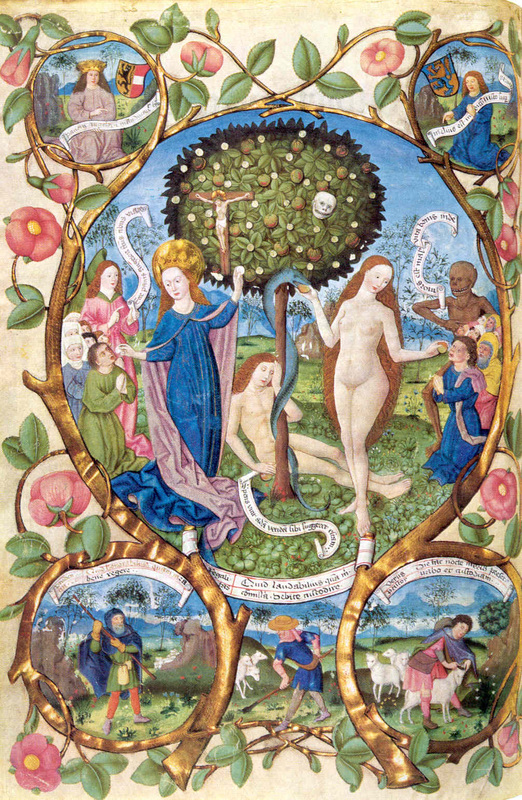
Autor anónimo, Eva y María, ilustración del Misal de Bernhard von Rohr, Arzobispo de Salzburgo (ca.1481), tempera sobre papel.

LA VISITADORA

Era Belén y era Nochebuena la noche. Apenas si la puerta crujiera cuando entrara. Era una mujer seca, harapienta y oscura con la frente de arrugas y la espalda curvada. Venía sucia de barro, de polvo de caminos. La iluminó la luna, y no tenía sombra. Tembló María al verla; la mula no, ni el buey, rumiando paja y heno igual que si tal cosa. Tenía los cabellos largos color ceniza, color de mucho tiempo, color de viento antiguo. En sus ojos se abría la primera mirada, y cada paso era tan lento como un siglo. Temió María al verla acercarse a la cuna. En sus manos de tierra, ¡oh Dios!, ¿qué llevaría…? Se dobló sobre el Niño, lloró infinitamente y le ofreció la cosa que llevaba escondida. La Virgen, asombrada, la vio al fin levantarse. ¡Era una mujer bella, esbelta y luminosa! El Niño la miraba. También la mula. El buey mirábala y rumiaba igual que si tal cosa. Era en Belén y era Nochebuena la noche. Apenas si la puerta crujió cuando se iba. María al conocerla gritó y la llamó: «¡Madre!» Eva miró a la Virgen y la llamó: «¡Bendita!». ¡Qué clamor, qué alborozo por la piedra y la estrella! Afuera aún era pura, dura la nieve y fría. Dentro, al fin, Dios dormido sonreía teniendo, entre sus dedos niños, la manzana mordida • A. Murciano

Feast of the Holy Family of Jesus, Mary and Joseph (2021)


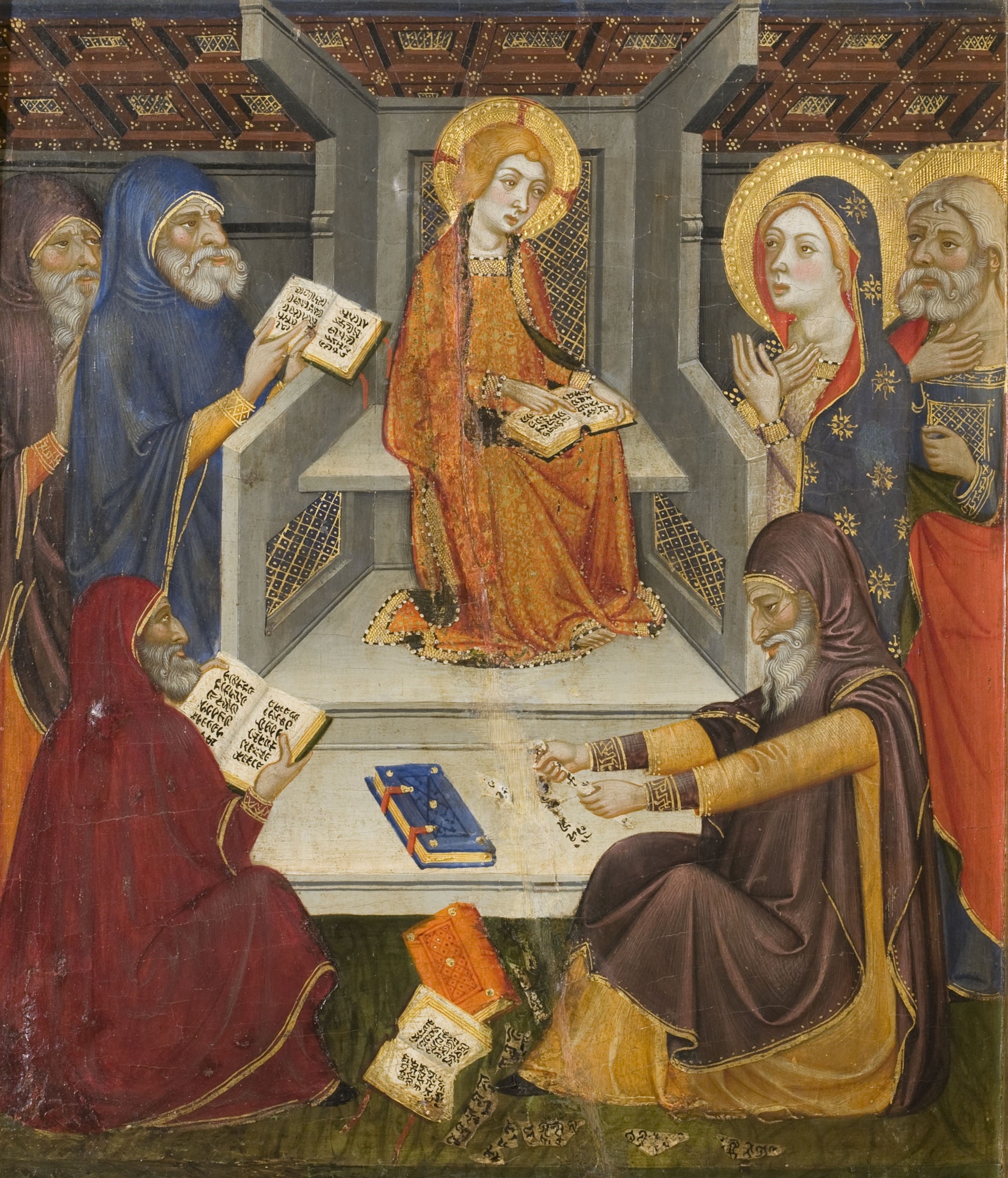
J. Serra, Jesus among the Doctors (c.1367), oil on wood, National Museum of Catalonia (Spain)

Most important for today’s feast, the Feast of the Holy Family is the conclusion of the reading: Jesus went back to Nazareth with his parents and was obedient to them, growing in wisdom, and age, and favor with the Father. So let us take a look at the family, the Catholic family. For the Catholic family to function as God meant it to function, there must be certain fundamentals. The family must be centered on the real presence of God’s love. This springs from a sacramental union of husband and wife. Sacramental union. Sadly, some people are more concerned with their wedding than they are with their marriage. They are willing sacrifice the sacrament of matrimony for a sunset. But just as the secular celebration of Christmas quickly fades away on December 26th, a secular marriage will quickly fade into a simple remembrance of a wonderful party. What is needed, what is necessary for a real marriage, a Christian marriage, a Catholic marriage, is the presence of Jesus. The sacrament of matrimony is the union of Jesus Christ to the love of the husband and wife. With Christ present in their marriage, the newly married couple joins the Lord in creating the Little Church. That is an expression that used to be popular in describing the Catholic Family. The Little Church exists as long as there is a sacramental union, even if the couple does not have children. If the husband and wife are blessed with children, then the children are brought up in the Little Church of their parents’ marriage. That is why we baptize infants. They are baptized in the faith of their parents. People are not ready to think about marriage unless they are ready to think about having children and raising them for God. Those who think that they are too young to have children are too young to marry. Parents have the responsibility of caring for their children in every aspect of their children’s lives. They feed them, keep them clean, care for them when they are sick, help them to learn how to have a good relationship with other children, help them as their minds develop, and in all ways protect them. The greatest responsibility that parents have, though, is to raise their children for God. They have to give their children the ability to become that unique reflection of God’s presence He created them to be. Parents bring their children to Church and prepare them to celebrate the second two sacraments of initiation, communion and confirmation. They make sure their home is a Little Church by keeping all that would destroy that Church out of their home. Jesus was subject to his parents and obedient to them. He allowed them to fulfill their responsibility to care for him in all ways. Children need to be taught that the authority of their parents comes from God. The Fourth Commandment, Honor you Father and Mother, is rooted in the responsibility God gives parents to lead their children to be all they can be: physically, mentally, emotionally, and most importantly spiritually. Jesus was the center of the Holy Family. Jesus must be the center of all our families • AE


Fr. Agustin Schedule for the Feast of the Holy Family of Jesus, Mary and Joseph (2021)

Sunday, December 26, 2021.

7.30 a.m. English Mass @ St. Dominic Catholic Church

10.00 a.m. English Mass @ St. Dominic Catholic Church


Fiesta de la Sagrada Familia (2021)


Una de las ilustraciones originales de El Principito, de Antoine de Saint-Exupéry

Los hombres terminamos por acostumbrarnos a casi todo. Decía Péguy que hay algo peor que tener un alma perversa, y es tener un alma acostumbrada. Por eso no nos puede extrañar demasiado que la celebración de la Navidad, envuelta muchas veces en superficialidad y consumismo, apenas diga ya nada nuevo y gozoso a tantos hombres y mujeres de alma acostumbrada. Ya no nos sorprende ni conmueve un Dios que se nos ofrece como niño. Lo dice A. Saint-Exupéry en el prólogo de El Principito: «Todas las personas mayores han sido niños antes. Pero pocas lo recuerdan». Se nos olvida lo que es ser niños. Y se nos olvida que la primera mirada de Dios al acercarse al mundo ha sido una mirada de niño. Pero ésa es justamente la noticia de la Navidad. Dios es y sigue siendo, misterio, pero ahora sabemos que no es un ser tenebroso, inquietante y temible, sino alguien que se nos ofrece cercano y entrañable desde la ternura y la transparencia de un niño. Y éste es el mensaje de la Navidad. Para salir al encuentro de ese Dios, hay que cambiar el corazón, hacerse niños, nacer de nuevo, recuperar la transparencia, abrirse confiados a la gracia y al perdón. A pesar de nuestra aterradora superficialidad, de nuestros escepticismos y desencantos, y, sobre todo, de nuestro inconfesable egoísmo y mezquindad de adultos, siempre hay en nuestro corazón un rincón en el que todavía no hemos dejado de ser niños. Atrevámonos siquiera una vez a mirarnos con sencillez y sin reservas. Hagamos un poco de silencio a nuestro alrededor. Apaguemos el televisor. Olvidemos nuestras prisas, nerviosismos, compras y compromisos. Escuchemos dentro de nosotros ese corazón de niño que no se ha cerrado todavía a la posibilidad de una vida más sincera y más confiada en Dios. Es posible que escuchemos una llamada a renacer a una fe nueva. Una fe que rejuvenece; que no nos encierra en nosotros mismos, sino que nos abre; que no recela, sino confía; que no entristece, sino ilumina; que no teme, sino ama • AE


ADESTE FIDELES

Adeste fideles laeti triumphantes, Venite, venite in Bethlehem. Natum videte Regem angelorum. Venite adoremus Dominum.

Acudid, fieles, alegres, triunfantes; venid, venid a Belén, ved al nacido Rey de los ángeles. Venid adoremos, venid adoremos,venid adoremos al Señor. He aquí que dejado el rebaño,los pastores llamados se acercan a la humilde cuna y nosotros nos apresuramos con paso alegre. Venid adoremos, venid adoremos, venid adoremos al Señor. El esplendor eterno del Padre Eternolo veremos oculto bajo la carne Al Dios Niño envuelto en pañales Venid adoremos, venid adoremos, venid adoremos al Señor.


The Nativity of the Lord (Christmas 2021)


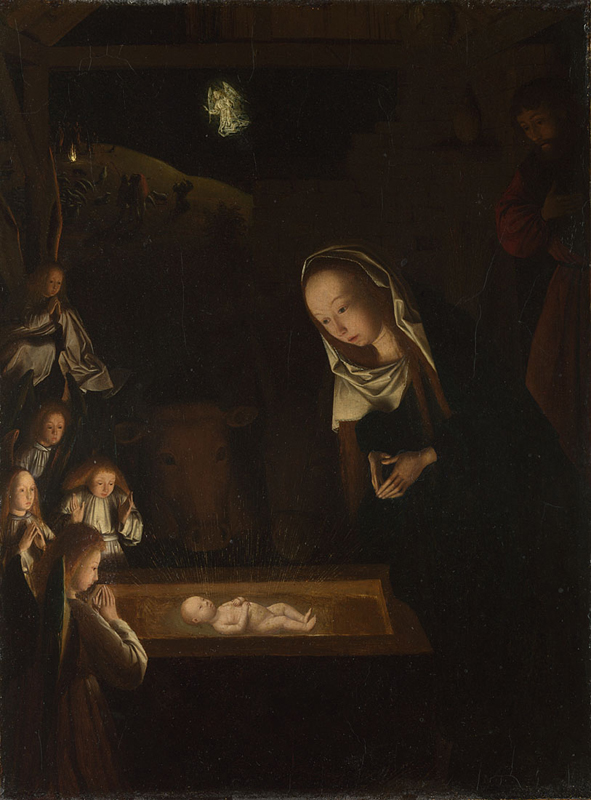
G. Sint Jans, The Nativity at Night (c. 1490), oil on oak, National Gallery (London)

Every year brings with it unexpected blessings, and unexpected challenges. This year has been no different than any other. No matter what life has brought us, there is something extremely beautiful that at the end of the year we are celebrating our reason for hope. Jesus the Christ has been born! The eternal Second Person of the Holy Trinity, the Word of God, has become flesh and dwelt among us. What does this birth in a stable mean to me, to you, to the world? That is the question; the big one. It means that mankind’s reality is being drastically changed. Before Jesus, man was merely a physical being. He was created to be physical and spiritual, but he forfeited his capacity for the spiritual to the power of evil. The grasp of evil is still experienced in many people turning to the secular values of life to find hope, fulfillment, and salvation. Glamour, fame, power, prestige, and money preoccupy much of their attention and energy. Many people, and perhaps, to some degree all of us, look for hope in the wrong places. Jesus Christ is the source of hope. His life is the antithesis of those secular values that so many grasp and that lead so many to despair. He is the King of Kings, yet He is born in a stable. Our nativity scenes often whitewash the fact that stables are dirty places, stinky places. We contemplate Jesus in a manger for his throne, but we forget that a manger is a place for animals to get their food. The One who is the source of hope makes it clear from the first moments of his life outside of his mother that hope is found in God, not in materialism of any sort. Isn’t it sad that many have transformed the day we celebrate the birth of a child in a stable into a celebration of materialism? When St. Francis of Assisi built the first nativity scene in Italy[1], he called upon people to celebrate the life of the Poor One who was in fact our Savior. Jesus Christ is our Savior. His name, Jesus, means God saves. We needed to have our capacity for the spiritual restored. We needed to be saved from eternal death. We needed to be saved from the power of evil, the dominance of Satan. How? How is it that He saves us? Jesus responded to the hatred of the devil with the Love of God. He let evil do its worst to Him, out of obedience to the Father and love for those creatures made in God’s image and likeness. He was born and placed in a manger so He could die on a cross. Satan wanted to be like God. He told Adam, mankind, Eve, mother of the living, and the rest of us that if we immerse ourselves in the material we could be like God, gods ourselves[2]. But the result of our pushing God out of our lives was radically different than expected. It did not make us gods. Instead, our world was filled with hatred, and death. The birth of the child in the manger, Jesus, the Savior, resulted in the Triumph of God. Love conquers all. A child is born for us today. A Savior is given to us. He restores our spiritual life. He gives our lives meaning and purpose and fulfillment. May we view every challenge and every joy from the perspective of the One who is the Center of all Creation. It is here for us. It is here for you. It is here for me. He is here for us. He is here for you. He is here for me. We can have peace. If we keep God in the center of our lives, we will have peace, a peace infinitely greater than any the world could provide. May the Peace of Christ be with you! • AE

[1] 1223, in Grecio. [2] Cf Genesis 3:5


Christmas celebrations 2021 • St. Dominic Catholic Church

Saturday December 25, 2021

12.00 a.m. English Mass (Yes: this mass begins at midnight)

Saturday December 25, 2021

10.00 a.m. English Mass

Sunday, December 26, 2021

(Feast of the Holy Family of Jesus, Mary and Joseph)

7.30 a.m. English Mass @ St. Dominic Catholic Church

10.00 a.m. English Mass @ St. Dominic Catholic Church


Solemnidad de la Natividad del Señor (Navidad)


G. de La Tour, Le Nouveau-né (1648), óleo sobre tela, Museo de Bellas Artes de Rennes (Francia)

La Navidad es mucho más que todo ese ambiente superficial y tan manipulado que se respira estos días en nuestras calles. Una fiesta mucho más honda y gozosa que todos los que podemos tener entre las manos en esta ¡ay! sociedad de consumo. Los creyentes tenemos que recuperar de nuevo el corazón de esta fiesta, descubrir detrás de tanto ruido el misterio que da origen a nuestra alegría. En otras palabras: tenemos que aprender a celebrar la Navidad. No todos saben lo que es celebrar. No todos saben lo que es abrir el corazón a la alegría. Y, sin embargo, no entenderemos la Navidad si no sabemos hacer silencio en nuestro corazón, abrir nuestra alma al misterio de un Dios que se nos acerca, reconciliamos con la vida que se nos ofrece, y saborear la fiesta de la llegada de un Dios Amigo, el Dios con nosotros. En medio de nuestro vivir diario, a veces tan aburrido, apagado y triste, se nos invita a la alegría. No puede haber tristeza cuando nace la vida, decía san León Magno. No se trata de una alegría insulsa y superficial. La alegría de quienes están alegres sin saber por qué. Nosotros tenemos motivos para el júbilo radiante, para la alegría plena y para la fiesta solemne: Dios se ha hecho hombre, y ha venido a habitar entre nosotros, como nos dice el evangelio de hoy[1]. Hay una alegría que sólo la pueden disfrutar quienes se abren a la cercanía de Dios, y se dejan coger por su ternura. Una alegría que nos libera de miedos y desconfianzas delante Dios. ¿Cómo temer a un Dios que se nos acerca como niño? ¿Cómo huir ante quien se nos ofrece como un pequeño frágil e indefenso? Dios no ha venido armado de poder para imponerse a los hombres. Se nos ha acercado en la ternura de un niño a quien podemos hacer sonreír o llorar. Dios no puede ser ya el Ser Omnipotente y Poderoso encerrado en la seriedad y el misterio de un mundo inaccesible. Dios es este niño entregado a la humanidad, este pequeño que busca nuestra mirada, nuestra atención. El hecho de que Dios se haya hecho carne dice mucho más de cómo es Dios, que todas nuestras cavilaciones y especulaciones sobre su misterio. Si supiéramos detenernos en silencio ante este Niño y acoger desde el fondo de nuestro ser toda la cercanía y la ternura de Dios, quizás entenderíamos por que el corazón de un creyente debe estar transido de una alegría diferente estos días de Navidad • AE

[1] Cfr. Jn 1, 1-18 o 1, 1-5. 9-14.


La Virgen Gitana (Villancico Andaluz)

La Virgen como es gitana
A los gitanos camela
San José como es gachón
Se rebela, se rebela

La Virgen lavaba
San José tendía
La Virgen lavaba
San José tendía
Ay, curricuti

Ay curricuti curricutin
Agua le traía, agua le traía, agua le traía
Madroños al niño no le demos más
Que con los madroños se pué emborrachar
Que sí, que no, Rocío se llama la madre de Dios

La Virgen vendió la mula
Porque le daba coraje
San José como es gachon
Atrincó su correaje

La Virgen lavaba
San José tendía
La Virgen lavaba
San José tendía

Ay, curricuti
Ay curricuti curricutin
Agua le traía, agua le traía, agua le traía
Madroños al niño no le demos más
Que con los madroños se pué emborrachar
Que sí, que no, Rocío se llama la madre de Dios


SACRAMENT OF RECONCILIATION

During and after the Christmas holidays, I am available to celebrate the Sacrament of Confession. A good time can be before or after the celebration of the Eucharist at our parish community, but if you need another time due to your schedule, the easiest way to arrange a good time for both of us is by sending me an email (agusestrada@gmail.com); I will reply as soon as possible with some options. Peace! • AE

Fourth Sunday of Advent

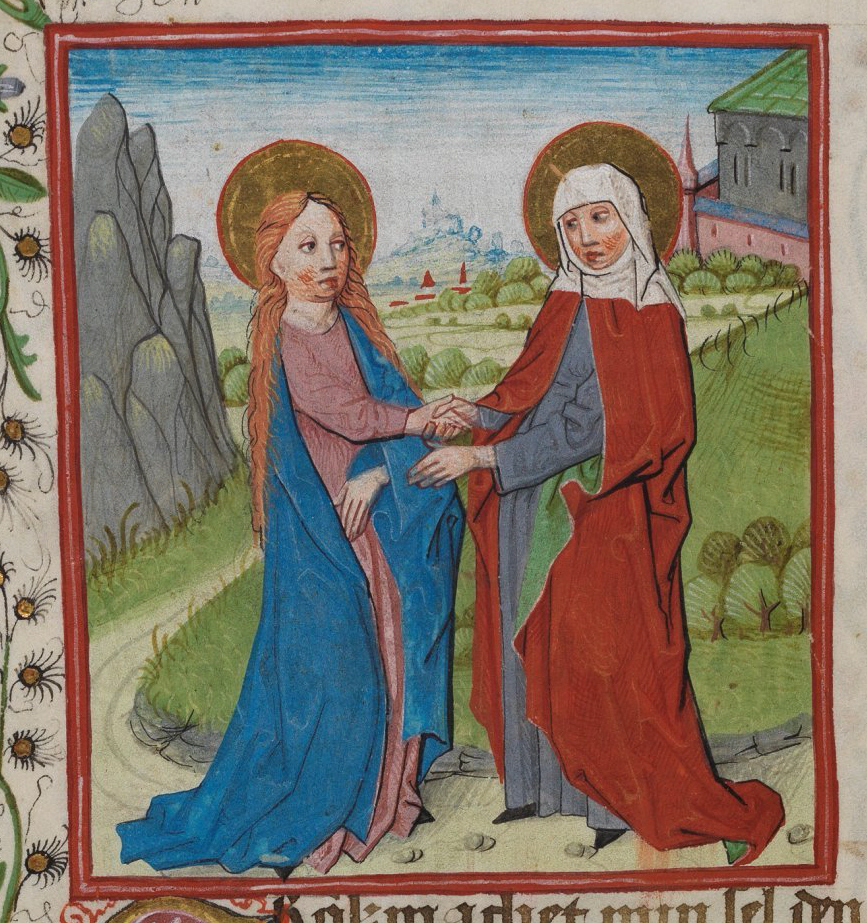
Anonymous artist, The Visitation (1486), miniature of the codex Waldburg-Gebetbuch, Stutgart Library (Germany)

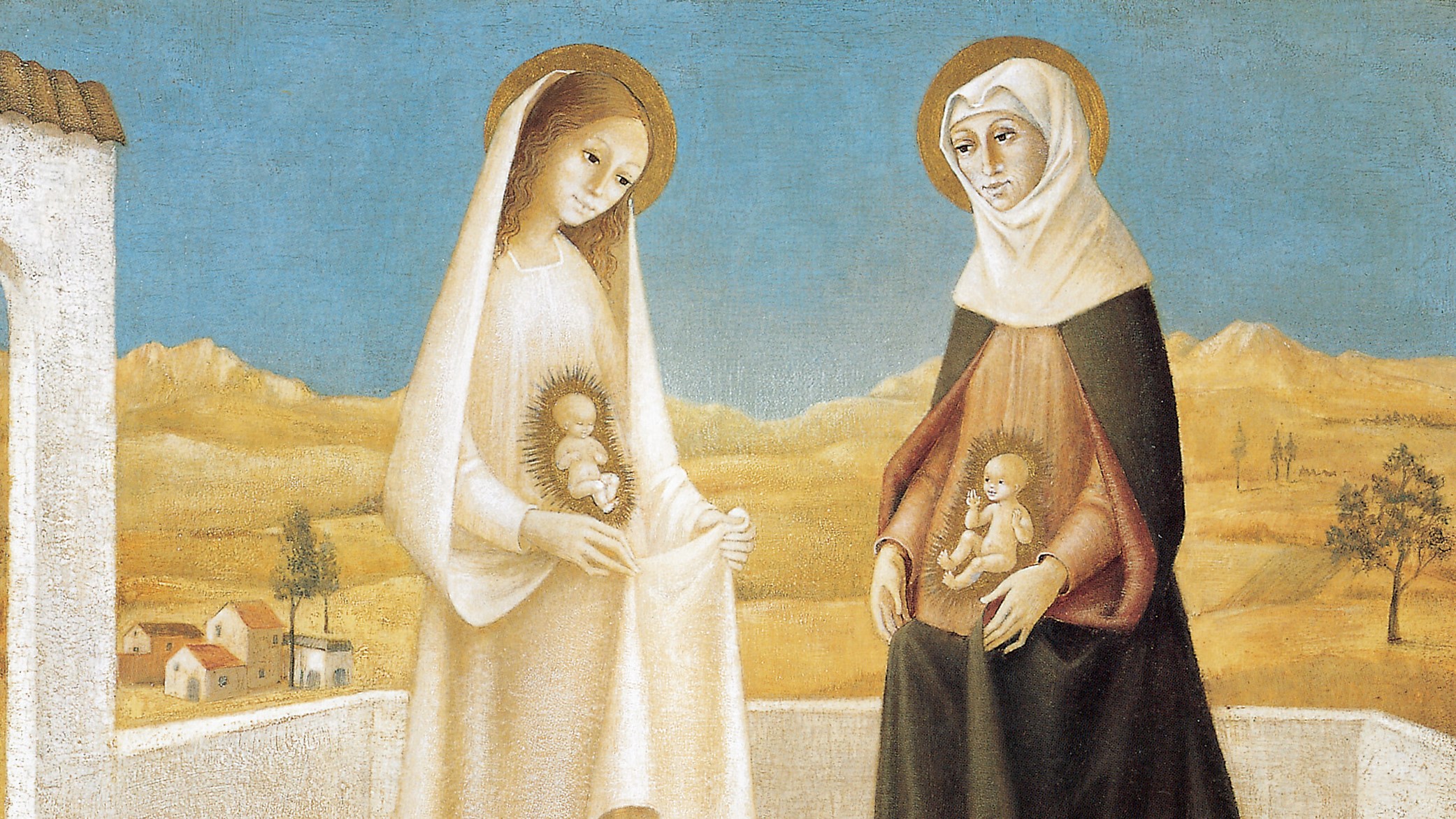
In the Gospel of Luke the Christmas story begins with two women, Mary, and Elizabeth. Today we are presented with these women. One, Mary, is a young girl, Elizabeth, is an older lady. Both are pregnant. The first, Mary, has the Son of God within her. The second, Elizabeth, carries John the Baptist, the last of the Old Testament prophets and the first of the New Testament prophets. The archangel Gabriel announced both pregnancies. When Mary hears about Elizabeth’s pregnancy she takes a journey to the hill country to meet her kinswoman. When they meet, today’s Gospel, Elizabeth feels the baby within her stirring. Some of the spiritual writers feel that this is the first time that John pointed to Jesus. Years later, thirty years later, John the Baptist would point to Jesus and say, “Behold the Lamb of God.” Mary and Elizabeth were women of courage and women of faith. It took tremendous courage for Mary to allow the will of God to take place within her. She had to hope that Joseph would still accept her as his wife and care for her and the baby. She had to put up with the wagging tongues of her neighbors who did the math and were certain that Joseph could not have been the father. Elizabeth also had to be a woman of courage. To become pregnant at her age was a wonderful surprise, but would she survive childbirth? Today’s Gospel does not convey fear. Instead it presents excitement ad a deep joy. Mary and Elizabeth were bursting with excitement. After all, there was a miraculous element to both pregnancies. Perhaps, Mary traveled to Elizabeth because she knew she would find someone who could understand her deep joy. Only Mary and Elizabeth could understand what it was like to be chosen by God for his mission. Only Mary and Elizabeth could understand what joy they had not just to have a child within themselves, but a special child. They needed to share their joy with each other. They needed each other’s care and support. That is why we come to Church every Sunday. That is why we receive communion. We need to be united spiritually and physically to our faith community. We need each other’s support. The meeting of Elizabeth and Mary is the pointing of the Old Testament to the New, the revelation of the Messiah to the people longing for a transformation. It is the message that those who have been chosen to make the Lord present in the world must, like Mary, say yes to God’s plans. For God works His wonders in those who trust in Him. The Lord was with Mary and the Lord is with us. So, we need to call upon Mary to help protect and nurture the Presence of Christ within us • AE


Fr. Agustin Schedule for the Fourth Sunday of Advent (2021)

Saturday, December 18, 2021.

3.00 p.m. Sacrament of Confession.

5.00 p.m. English Mass @ St. Dominic Catholic Church

Sunday, December 19, 2021.

7.30 a.m. English Mass @ St. Dominic Catholic Church

10.00 a.m. English Mass @ St. Dominic Catholic Church


IV Domingo de Adviento (2021)

B. Barth, La Visitación de María a Isabel (1950), óleo sobre tela.

La escena que narra el evangelio de este domingo es conmovedora. El evangelista la puso ahí donde esta para crear la atmósfera de alegría, gozo profundo y alabanza que ha de acompañar al nacimiento de Jesús. La vida cambia cuando es vivida desde la fe. Acontecimientos como el embarazo o el nacimiento de un hijo cobran un sentido nuevo y profundo. Todo sucede en una aldea desconocida, en la montaña de Judá. Dos mujeres embarazadas conversan sobre lo que están viviendo en lo íntimo de su corazón. Los esposos no están presentes, al menos no en el texto evangélico. Son estas dos mujeres, llenas de fe y de Espíritu, quienes mejor captan lo que está sucediendo. María saluda a Isabel. Le desea todo lo mejor. ahora que está esperando un hijo. Su saludo llena de paz y de gozo toda la casa. Hasta el niño que lleva Isabel en su vientre salta de alegría. María es portadora de salvación: es que lleva consigo a Jesús. Hay muchas maneras de saludar y de acercarnos a las personas. María trae paz, alegría y bendición de Dios. San Lucas recordará más tarde que era eso precisamente lo que su hijo Jesús pedía a sus seguidores: en cualquier casa que entren, digan lo primero: Paz a esta casa[1]. Desbordada por la alegría, Isabel exclama: “Bendita tú entre todas las mujeres y bendito el fruto de tu vientre”[2]. Dios está siempre en el origen de la vida. Las madres, portadoras de vida, son mujeres bendecidas por el creador: el fruto de sus vientres es bendito. María es la bendecida por excelencia: con ella nos llega Jesús, la bendición de Dios al mundo. Isabel termina exclamando: Dichosa tú, que has creído[3]. María es feliz porque ha creído. Ahí está su grandeza e Isabel sabe valorarla. Estas dos madres nos invitan a vivir y celebrar desde la fe el misterio de la Navidad. Feliz el pueblo donde hay madres creyentes, portadoras de vida, capaces de irradiar paz y alegría. Feliz la Iglesia donde hay mujeres bendecidas por Dios, mujeres felices que creen y transmiten la fe a sus hijos e hijas. Felices los hogares donde unas madres buenas enseñen a vivir con profundidad el misterio de la Navidad • AE

[1] Cfr Lc 10, 5. [2] Lc 1, 42. [3] Ídem, v. 45


Rorate Caeli

El himno latino Rorate Caeli, toma las palabras del libro del profeta Isaías (45, 8) y forma uno de los himnos más bonitos de la liturgia católica para el tiempo de Adviento. A menudo se emplea como canto llano en la Misa y en el Oficio Divino, donde expresa los anhelos de los Patriarcas y Profetas -y simbólicamente de la Iglesia- hacia la venida del Mesías. A lo largo del Adviento ocurre diariamente como el versículo y la respuesta después del himno en Vísperas • AE