The readings for today’s Solemnity present two crucial passages in the history of the relationship between man and God. The Liturgy of the Word helps us to better understand the origin of good and evil. This is something we can always understand better. The Book of Genesis presents the first no, the original no; the moment when man preferred to gaze upon himself rather than on his Creator; the time when he wanted to go his own way and chose to be self-sufficient[1]. In so doing, he lost his own self and began to fear, to hide himself, and to accuse those who were close by[2]. Here is the origin of all evil and, eventually, all of our sins. And, you know, fear is always a symptom of a no to God; When there is fear, then we start to walk away from Him… Anyway, this dramatic moment in human history is not the end. God did not abandon man, despite his no, immediately God looks for him, and out of love and concern and care, He asks that question: “Where are you?”[3]. It is as if God is saying: “Hey! Stop, think: where are you?” It is the question of a father or a mother looking for a lost child: “What have you done? How did this happen?.” Only parents understands this question deeply and well… God asks this question with admirable patience. Patience to the point of seeking to unite and heal [to unite and heal!] what had been broken with the disobedience of Adam and Eve. So, what is the lesson? What does the Church want us to learn today as we celebrate the Immaculate Conception of Mary? Well, we cannot lose sight of the fact that in the midst of misfortune, or our falls, God is always there: helping us to get up.
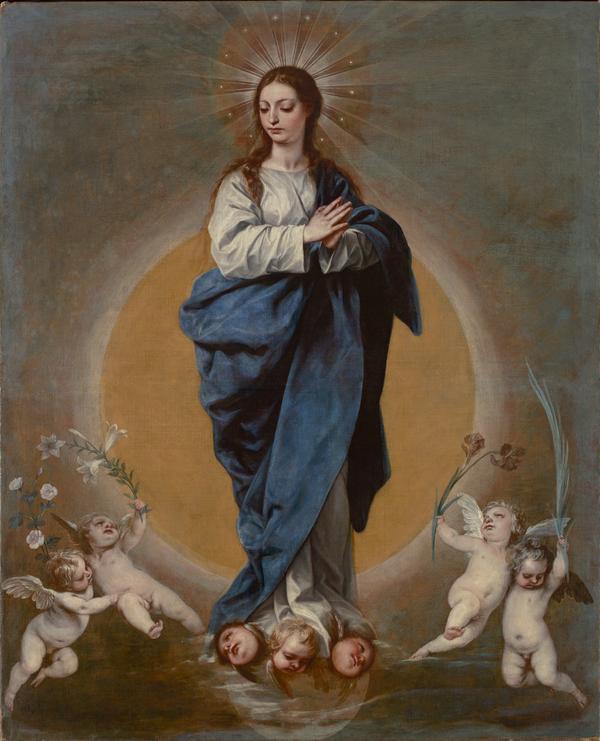
The second important passage, recounted today in the Gospel, is when God comes to live among us, to become like one of us[4]. This was made possible through a great and beautiful yes, the yes of the blessed Virgin Mary at the moment of the Annunciation. Because of her fiat, because of her yes, because of her obedience, Jesus began his journey. Jesus did not appear as a man, grown and strong, but he followed the journey of a human being. He was made equal to us in every way, except one thing: that no. Except sin[5]. For this reason, he prepared Mary, the only creature without sin to be his Mother. In the Gospel, she is called Kecharitomene[6], a beautiful Greek word that means full of grace[7]. In our Lady there is no room for sin, error, or corruption. This is exactly what we are celebrating today, that she is the most beautiful and most perfect and cleanest creature, and that salvation would come from her. This is simply wonderful; this is the reason for our profound happiness today. At the annunciation, our Lady responds to God’s proposal, by saying: “Behold, I am the handmaid of the Lord”[8]. She does not say: “Well, this time I will do God’s will; I will make myself available, then I will see….” No. Hers is a full, total yes, for her entire life, without conditions or reservations; and most important: without fear[9]. And just as the original no from Adam and Eve closed the path between man and God, so Mary’ yes opened the way to God among us. So, [my brother, my sister] Today we are celebrating the woman with the most important yes in history, the humble yes which reverses the prideful original no, the faithful yes that heals disobedience, the willing yes that overturns the vanity of sin. Today, Solemnity of the Immaculate Conception of the Blessed Virgin Mary, who is also the Patroness of our country, we are invited to stop for a moment, to ponder, to reflect, to remember that for each of us too, there is a history of salvation made up of yeses and nos. For the yes we have said, let us thank God; for the no we have said, let us humbly ask for forgiveness. If we say no, out of selfishness and pride, we close the door to goodness, and evil takes advantage of weaknesses. If we say yes, God can work wonders and miracles through us, just as He did in the Mother of His Son[10]. In this Advent journey, every day God awaits our yes, our generosity, our willingness to hear His voice and to do His holy will. Easy? No. Impossible? No. Let us think what yes we must say to God today. If we are quiet at attentive, we will hear the Lord’s voice; He is always saying something. In our prayer time today we can go back to the gospel reading of today’s solemnity, and meditate on each of the words of the Virgin Mary, and humbly ask her to help us to be men and women who always answer yes to God •
[1] Cf Gn 3:9-15, 20 [2] cf. Gen 3:10, 12 [3] v. 9 [4] Cf Lk 1:26-38. [5] Cf Hebrews 4:15 [6] Κεχαριτωμένη [7] Lk 1:28 [8] v. 38 [9] Cf Gn 3:9-15, 20. [10] Cf Luke 1:46-56.

Schedule for Tuesday, December 7 and Wednesday, December 8, 2021. Solemnity of the Immaculate Conception of the Blessed Virgin Mary (Holiday of Obligation)

Tuesday, December 7, Holy Mass in English at 7.00 p.m.
Wednesday, December 8, Holy Mass in English at 8.30 a.m.
Wednesday, December 8, Holy Mass in English at 7.00 p.m.
Solemnidad de la Inmaculada Concepción de la Santísima Virgen María (2021)
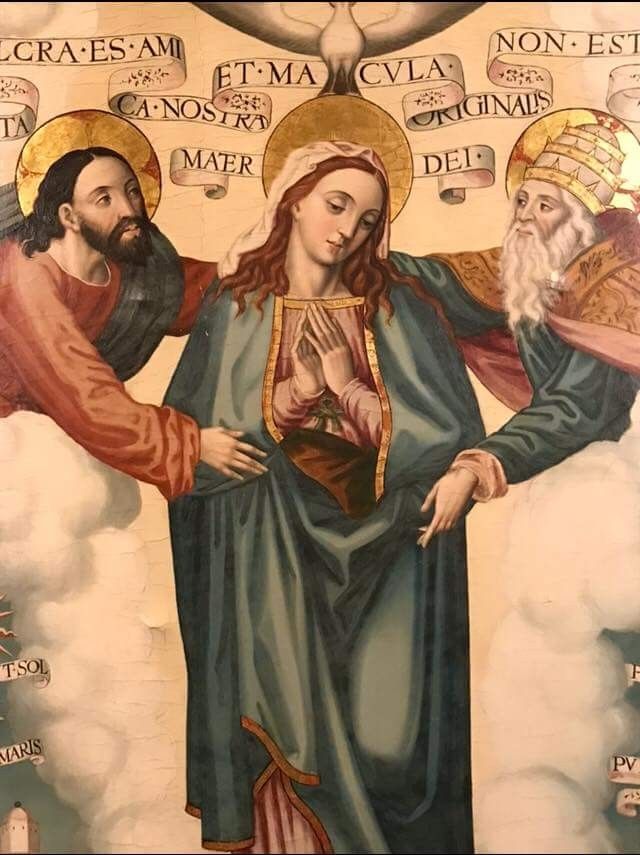
En vísperas de la Navidad, la liturgia nos presenta la figura de María acogiendo en gozo a Dios en su vida. Como subrayó el Concilio, María es modelo para la Iglesia. De ella podemos aprender a ser más fieles a Jesús y su evangelio. ¿Cuáles podrían ser los rasgos de una Iglesia más mariana en nuestros días? Una Iglesia que fomenta la «ternura maternal» hacia todos sus hijos cuidando el calor humano en sus relaciones con ellos. Una Iglesia de brazos abiertos, que no rechaza ni condena, sino que acoge y encuentra un lugar adecuado para cada uno. Una Iglesia que, como María, proclama con alegría la grandeza de Dios y su misericordia también con las generaciones actuales y futuras. Una Iglesia que se convierte en signo de esperanza por su capacidad de dar y transmitir vida. Una Iglesia que sabe decir «sí» a Dios sin saber muy bien a dónde le llevará su obediencia. Una Iglesia que no tiene respuestas para todo, pero busca con confianza, abierta al diálogo con los que no se cierran al bien, la verdad y el amor. Una Iglesia humilde como María, siempre a la escucha de su Señor. Una Iglesia más preocupada por comunicar el Evangelio de Jesús que por tenerlo todo definido. Una Iglesia del «Magníficat», que no se complace en los soberbios, potentados y ricos de este mundo, sino que busca pan y dignidad para los pobres y hambrientos de la Tierra, sabiendo que Dios está de su parte. Una Iglesia atenta al sufrimiento de todo ser humano, que sabe, como María, olvidarse de sí misma y «marchar de prisa» para estar cerca de quien necesita ser ayudado. Una Iglesia preocupada por la felicidad de todos los que «no tienen vino» para celebrar la vida. Una Iglesia que anuncia la hora de la mujer y promueve con gozo su dignidad, responsabilidad y creatividad femenina. Una Iglesia contemplativa que sabe «guardar y meditar en su corazón» el misterio de Dios encamado en Jesús para transmitirlo como experiencia viva. Una Iglesia que cree, ora, sufre y espera la salvación de Dios anunciando con humildad la victoria final del amor • AE

TOTA PULCHRA ES, MARIA
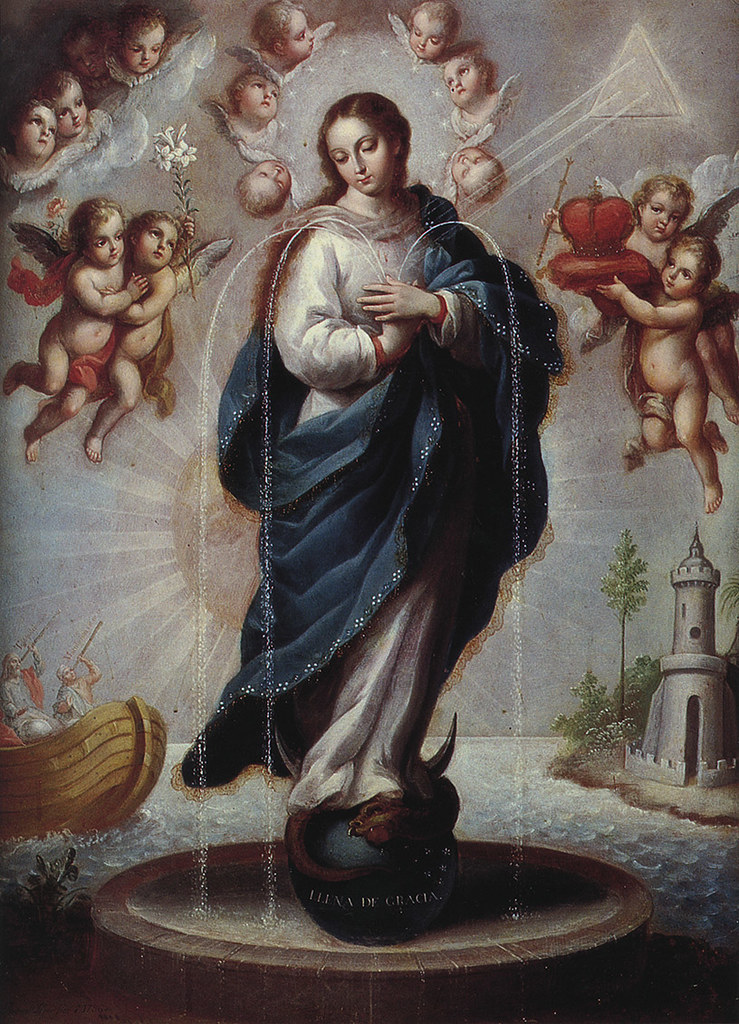
Tota pulchra es, Maria,
et macula originalis non est in te.
Tu gloria Jerusalem,
tu laetitia Israel,
tu honorificentia populi nostri,
tu advocata peccatorum.
¡Oh! Maria, virgo prudentissima,
mater clementissima,
Ora pro nobis,
intercede pro nobis
ad Dominum Jesu Christum.
Tota pulchra es es una antigua oración escrita presumiblemente en el siglo iv. Es una de las cinco antífonas para los salmos de las segundas vísperas de la festividad de la Inmaculada Concepción. El texto está tomado en parte del Libro de Judit y en parte del Cantar de los Cantares. Esta oración ha servido como inspiración para muchos compositores a lo largo de los siglos, entre los que se puede citar por ejemplo Robert Schumann, Anton Bruckner, Pablo Casals, Maurice Duruflé, James MacMillan u Ola Gjeilo • AE
Eres toda belleza, María
y el pecado original no está en ti.
Tú, la gloria de Jerusalén,
tú, alegría de Israel,
tú, honor de nuestro pueblo,
protectora de los pecadores
¡Oh! María, virgen prudentísima,
madre clementísima.
Ruega por nosotros,
intercede por nosotros
ante nuestro Señor Jesucristo.
Tota pulchra es is an old Catholic prayer, written in the fourth century. It is one of the five antiphons for the psalms of Second Vespers for the Feast of the Immaculate Conception. The title means «You are completely beautiful» (referring to the Virgin Mary). It speaks of her immaculate conception. It takes some text from the book of Judith, and other text from Song of Songs, specifically 4:7. Composers to set the prayer to music include Robert Schumann, Anton Bruckner, Pablo Casals and Maurice Duruflé • AE
You are all beautiful, Mary,
and the original stain [spot] (of sin) is not in you.
You are the glory of Jerusalem,
you are the joy of Israel,
you give honour to our people.
You are an advocate of sinners.
O Mary,
Virgin most intelligent,
Mother most merciful.
Pray for us,
Plead for us,
To the Lord Jesus Christ.
 LA MEDITACION DE LA ESPOSA