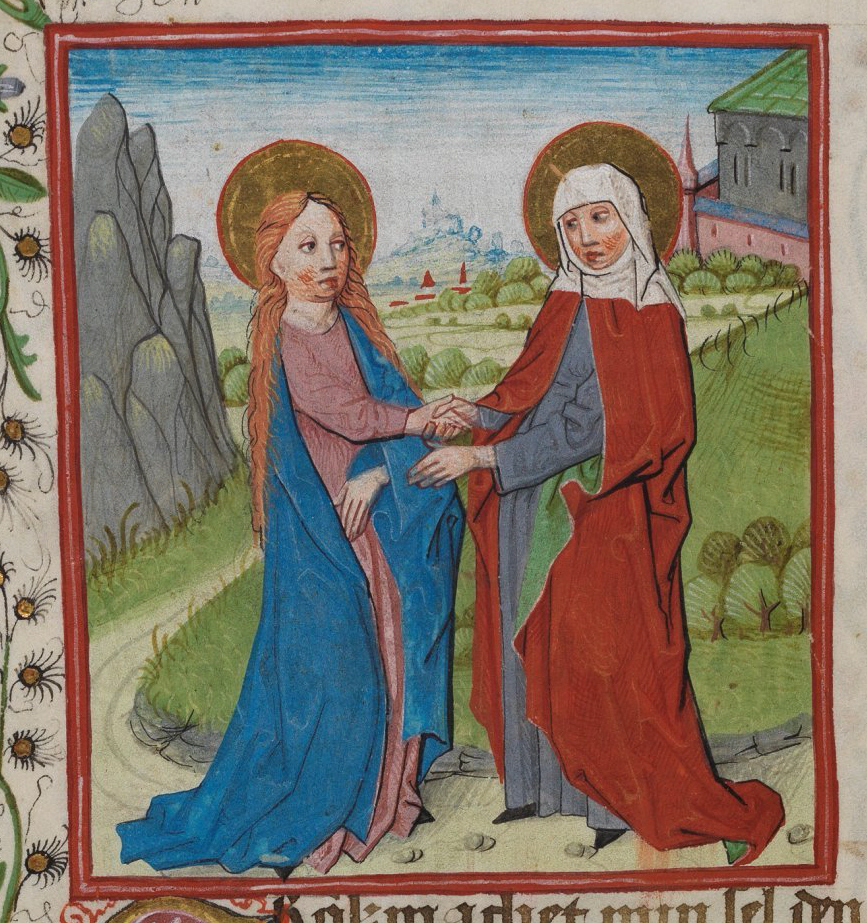
In the Gospel of Luke the Christmas story begins with two women, Mary, and Elizabeth. Today we are presented with these women. One, Mary, is a young girl, Elizabeth, is an older lady. Both are pregnant. The first, Mary, has the Son of God within her. The second, Elizabeth, carries John the Baptist, the last of the Old Testament prophets and the first of the New Testament prophets. The archangel Gabriel announced both pregnancies. When Mary hears about Elizabeth’s pregnancy she takes a journey to the hill country to meet her kinswoman. When they meet, today’s Gospel, Elizabeth feels the baby within her stirring. Some of the spiritual writers feel that this is the first time that John pointed to Jesus. Years later, thirty years later, John the Baptist would point to Jesus and say, “Behold the Lamb of God.” Mary and Elizabeth were women of courage and women of faith. It took tremendous courage for Mary to allow the will of God to take place within her. She had to hope that Joseph would still accept her as his wife and care for her and the baby. She had to put up with the wagging tongues of her neighbors who did the math and were certain that Joseph could not have been the father. Elizabeth also had to be a woman of courage. To become pregnant at her age was a wonderful surprise, but would she survive childbirth? Today’s Gospel does not convey fear. Instead it presents excitement ad a deep joy. Mary and Elizabeth were bursting with excitement. After all, there was a miraculous element to both pregnancies. Perhaps, Mary traveled to Elizabeth because she knew she would find someone who could understand her deep joy. Only Mary and Elizabeth could understand what it was like to be chosen by God for his mission. Only Mary and Elizabeth could understand what joy they had not just to have a child within themselves, but a special child. They needed to share their joy with each other. They needed each other’s care and support. That is why we come to Church every Sunday. That is why we receive communion. We need to be united spiritually and physically to our faith community. We need each other’s support. The meeting of Elizabeth and Mary is the pointing of the Old Testament to the New, the revelation of the Messiah to the people longing for a transformation. It is the message that those who have been chosen to make the Lord present in the world must, like Mary, say yes to God’s plans. For God works His wonders in those who trust in Him. The Lord was with Mary and the Lord is with us. So, we need to call upon Mary to help protect and nurture the Presence of Christ within us • AE

Fr. Agustin Schedule for the Fourth Sunday of Advent (2021)

Saturday, December 18, 2021.
3.00 p.m. Sacrament of Confession.
5.00 p.m. English Mass @ St. Dominic Catholic Church
Sunday, December 19, 2021.
7.30 a.m. English Mass @ St. Dominic Catholic Church
10.00 a.m. English Mass @ St. Dominic Catholic Church
IV Domingo de Adviento (2021)
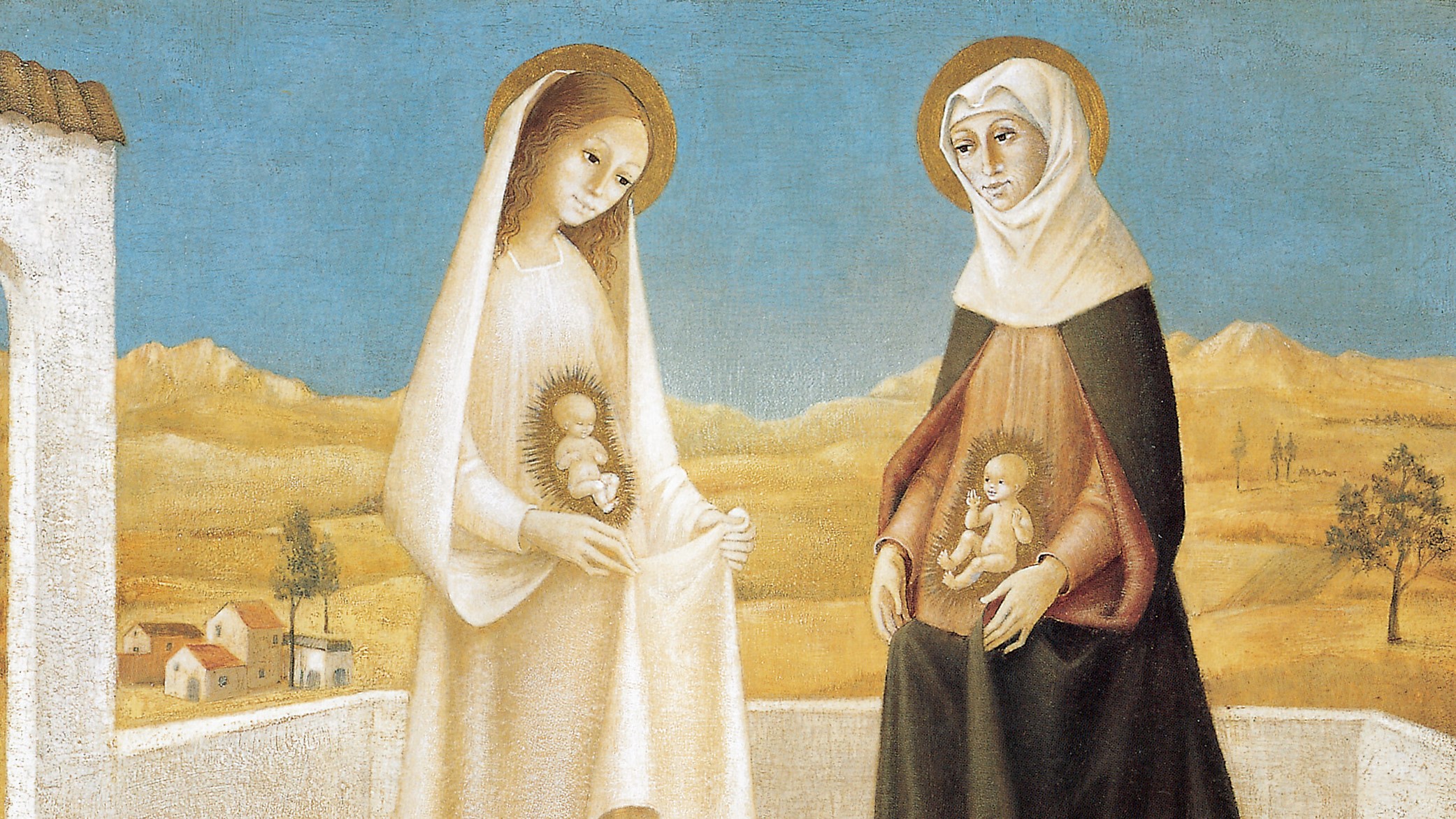
La escena que narra el evangelio de este domingo es conmovedora. El evangelista la puso ahí donde esta para crear la atmósfera de alegría, gozo profundo y alabanza que ha de acompañar al nacimiento de Jesús. La vida cambia cuando es vivida desde la fe. Acontecimientos como el embarazo o el nacimiento de un hijo cobran un sentido nuevo y profundo. Todo sucede en una aldea desconocida, en la montaña de Judá. Dos mujeres embarazadas conversan sobre lo que están viviendo en lo íntimo de su corazón. Los esposos no están presentes, al menos no en el texto evangélico. Son estas dos mujeres, llenas de fe y de Espíritu, quienes mejor captan lo que está sucediendo. María saluda a Isabel. Le desea todo lo mejor. ahora que está esperando un hijo. Su saludo llena de paz y de gozo toda la casa. Hasta el niño que lleva Isabel en su vientre salta de alegría. María es portadora de salvación: es que lleva consigo a Jesús. Hay muchas maneras de saludar y de acercarnos a las personas. María trae paz, alegría y bendición de Dios. San Lucas recordará más tarde que era eso precisamente lo que su hijo Jesús pedía a sus seguidores: en cualquier casa que entren, digan lo primero: Paz a esta casa[1]. Desbordada por la alegría, Isabel exclama: “Bendita tú entre todas las mujeres y bendito el fruto de tu vientre”[2]. Dios está siempre en el origen de la vida. Las madres, portadoras de vida, son mujeres bendecidas por el creador: el fruto de sus vientres es bendito. María es la bendecida por excelencia: con ella nos llega Jesús, la bendición de Dios al mundo. Isabel termina exclamando: Dichosa tú, que has creído[3]. María es feliz porque ha creído. Ahí está su grandeza e Isabel sabe valorarla. Estas dos madres nos invitan a vivir y celebrar desde la fe el misterio de la Navidad. Feliz el pueblo donde hay madres creyentes, portadoras de vida, capaces de irradiar paz y alegría. Feliz la Iglesia donde hay mujeres bendecidas por Dios, mujeres felices que creen y transmiten la fe a sus hijos e hijas. Felices los hogares donde unas madres buenas enseñen a vivir con profundidad el misterio de la Navidad • AE
[1] Cfr Lc 10, 5. [2] Lc 1, 42. [3] Ídem, v. 45
Rorate Caeli
El himno latino Rorate Caeli, toma las palabras del libro del profeta Isaías (45, 8) y forma uno de los himnos más bonitos de la liturgia católica para el tiempo de Adviento. A menudo se emplea como canto llano en la Misa y en el Oficio Divino, donde expresa los anhelos de los Patriarcas y Profetas -y simbólicamente de la Iglesia- hacia la venida del Mesías. A lo largo del Adviento ocurre diariamente como el versículo y la respuesta después del himno en Vísperas • AE
 LA MEDITACION DE LA ESPOSA