
Third Sunday of Advent (Gaudete Sunday of 2021)

This Sunday’s Gospel once more presents John the Baptist. He is the one who pointed to Jesus and called him the Lamb of God. He was the one who lived as a radical prophet, wearing animal skins and eating locusts and demanding a radical change in the way people lived. Our generation likes to close an eye to this aspect of John’s life, but it is this aspect, this demand for continual and radical change, that fascinated the people of the centuries. In today’s Gospel the people gather around John and ask, «What is it that we should do?» Not what should others do to prepare for the Kingdom. Not how should the government change to prepare for the Kingdom. Not how should the Temple worship change to prepare for the Kingdom, but, simply and perhaps more difficult, what shall we do? John told the people to be charitable. They should give the poor their surplus. The tax collectors are told to be honest, not using their position to enrich themselves. The soldiers are told to stop harassing and intimidating people. John the Baptist challenged the people to be lovable. He also challenges us. He challenges us to adopt a whole new attitude in life, an attitude of sacrificial love. This is the love that others will witness in us as a sign that the Kingdom of God is near. St. Paul put it this way to the Philippians. «Let your gentleness be known to everyone, for the Lord is near.» So, what is it we should do to prepare for the Lord? The first thing we should do is to look at how we treat other people and then make and effort to be kind, considerate and lovable. The second thing on our to do list should be to ask for God’s help and forgiveness for those times that we go out of our way not to be lovable. Christmas can be the most hypocritical day of the year when we go through the motions of being at peace with all while at the same time we are still looking for ways to repay insult with insult, upset with upset, nastiness with nastiness. Anger for things that others have said to me or done to me swells up in me when I least expect it and wants to boil over in rage. Now if I am warm and fuzzy with those who have occasioned this anger while I am looking for an opportunity to repay them for their viciousness, I am a hypocrite. John the Baptist was a radical. He called people to make a radical change in their lives. Sometimes we let the sentimentality of Christmas get in the way of our the call of the prophet. Christmas is about a radical change in the world and a radical change in ourselves. Maybe we cannot forget a hurt. But we have no right to let that hurt continually destroy us. We enter into the realm of sin when we let the actions of others be an excuse for our joining them in breaking charity. What shall we do? Well, we need to develop and nurture our prayer lives. We need to make the time to speak to the Lord, giving him at least fifteen minutes a day. Actually, we are not giving the Lord anything. We are making this time for ourselves to come closer to the one who is calling us. I’m sure that all of you, particularly our busy parents with little ones at home, would say, «Come on Father, you have got to be kidding. I am so busy with things that I have to accomplish, how do you think that I am going to squeeze in another half hour in this busiest of seasons.» If something is really important, we make the time for it. It makes no difference how busy we are. This is important. We need to be with the Lord everyday, even if it means getting up a bit earlier or going to sleep a bit later. «Rejoice,» Church tells us on this, Gaudete, or Rejoice Sunday, rejoice in the Lord who is about to come • AE


Fr. Agustin Schedule for the Third Sunday of Advent (Gaudete Sunday)

12.30 p.m. English Mass @ St. Dominic Catholic Church

3.00 p.m. Misa en Español @ St. Dominic Catholic Church


III Domingo de Adviento (Domingo Gaudete)
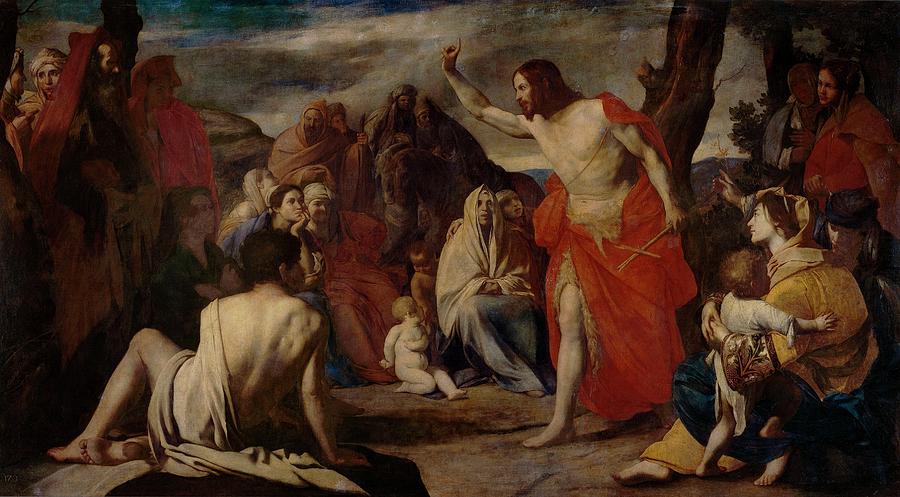
M. Stantzione, La Predicación de Juan el Bautista (1635), óleo sobre tela, Museo Nacional del Prado (Madrid)

La Palabra del Bautista desde el desierto tocó el corazón de quienes lo escuchaban. Su llamada a la conversión y al inicio de una vida más fiel a Dios despertó en muchos de ellos una pregunta concreta: ¿Qué debemos hacer? Es la pregunta que brota siempre en nosotros cuando escuchamos una llamada radical pero no sabemos cómo concretar nuestra respuesta. El Bautista no les propone ritos religiosos ni tampoco normas ni preceptos. No se trata propiamente de hacer cosas ni de asumir deberes, sino de ser de otra manera, vivir de forma más humana, de usar algo que está ya en nuestro corazón: el deseo de una vida más justa, digna y fraterna. Lo más decisivo y realista es abrir nuestro corazón a Dios mirando atentamente a las necesidades de los que sufren. El Bautista sabe resumirles su respuesta con una fórmula genial por su simplicidad y verdad: «El que tenga dos túnicas, que las reparta con el que no tiene; y el que tenga comida, haga lo mismo». Así de simple. ¿Qué podemos decir ante estas palabras quienes vivimos en un mundo donde más de un tercio de la humanidad vive en la miseria luchando cada día por sobrevivir, mientras nosotros seguimos comprando compulsivamente? Y ¿qué podemos decir los cristianos ante esta llamada tan sencilla y tan humana? ¿No hemos de empezar a abrir los ojos de nuestro corazón para tomar conciencia más viva de esa insensibilidad y esclavitud que nos mantiene sometidos a un bienestar que nos impide ser más humanos? Mientras nosotros seguimos preocupados, y con razón, de muchos aspectos del momento actual del cristianismo, no nos damos cuenta de que quizá vivimos cautivos de una religión burguesa. El cristianismo, tal como nosotros lo vivimos, no parece tener fuerza para transformar la sociedad del bienestar. Al contrario, es ésta la que está desvirtuando lo mejor de la religión de Jesús, vaciando nuestro seguimiento a Cristo de valores tan genuinos como la solidaridad, la defensa de los pobres, la compasión y la justicia.Por eso hemos de valorar y agradecer mucho más el esfuerzo de tantas personas que se rebelan contra este cautiverio, comprometiéndose en gestos concretos de solidaridad y cultivando un estilo de vida más sencillo, austero y humano. Mas cristiano, en una palabra • AE
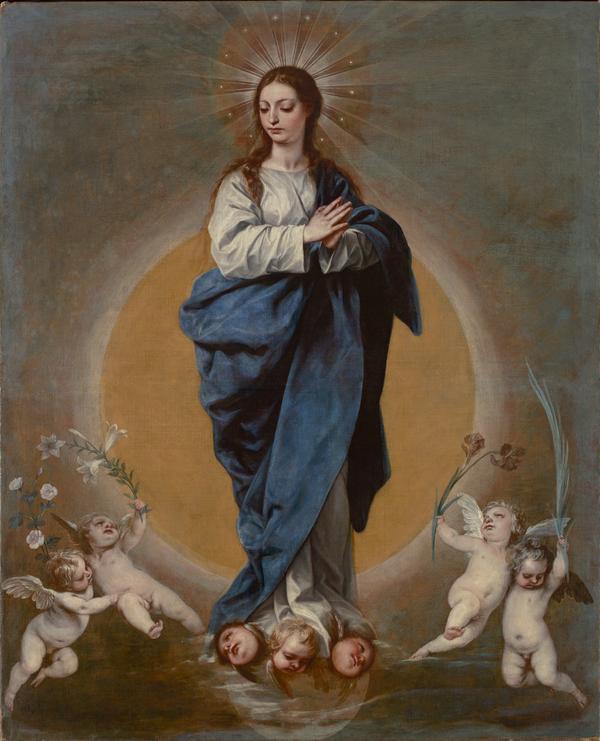

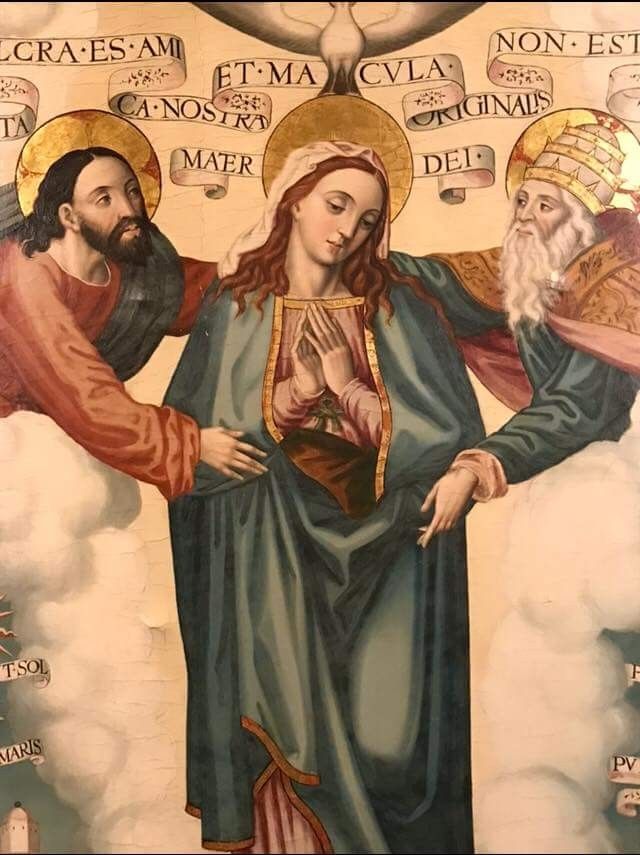
Solemnity of the Immaculate Conception of the Blessed Virgin Mary (2021)

The readings for today’s Solemnity present two crucial passages in the history of the relationship between man and God. The Liturgy of the Word helps us to better understand the origin of good and evil. This is something we can always understand better. The Book of Genesis presents the first no, the original no; the moment when man preferred to gaze upon himself rather than on his Creator; the time when he wanted to go his own way and chose to be self-sufficient[1]. In so doing, he lost his own self and began to fear, to hide himself, and to accuse those who were close by[2]. Here is the origin of all evil and, eventually, all of our sins. And, you know, fear is always a symptom of a no to God; When there is fear, then we start to walk away from Him… Anyway, this dramatic moment in human history is not the end. God did not abandon man, despite his no, immediately God looks for him, and out of love and concern and care, He asks that question: “Where are you?”[3]. It is as if God is saying: “Hey! Stop, think: where are you?” It is the question of a father or a mother looking for a lost child: “What have you done? How did this happen?.”  Only parents understands this question deeply and well… God asks this question with admirable patience. Patience to the point of seeking to unite and heal [to unite and heal!] what had been broken with the disobedience of Adam and Eve. So, what is the lesson?  What does the Church want us to learn today as we celebrate the Immaculate Conception of Mary? Well, we cannot lose sight of the fact that in the midst of misfortune, or our falls, God is always there: helping us to get up.

The second important passage, recounted today in the Gospel, is when God comes to live among us, to become like one of us[4]. This was made possible through a great and beautiful yes, the yes of the blessed Virgin Mary at the moment of the Annunciation. Because of her fiat, because of her yes, because of her obedience, Jesus began his journey. Jesus did not appear as a man, grown and strong, but he followed the journey of a human being. He was made equal to us in every way, except one thing: that no. Except sin[5]. For this reason, he prepared Mary, the only creature without sin to be his Mother. In the Gospel, she is called Kecharitomene[6], a beautiful Greek word that means full of grace[7].  In our Lady there is no room for sin, error, or corruption. This is exactly what we are celebrating today, that she is the most beautiful and most perfect and cleanest creature, and that salvation would come from her. This is simply wonderful; this is the reason for our profound happiness today. At the annunciation, our Lady responds to God’s proposal, by saying: “Behold, I am the handmaid of the Lord”[8]. She does not say: “Well, this time I will do God’s will; I will make myself available, then I will see….” No. Hers is a full, total yes, for her entire life, without conditions or reservations; and most important: without fear[9]. And just as the original no from Adam and Eve closed the path between man and God, so Mary’ yes opened the way to God among us. So, [my brother, my sister] Today we are celebrating the woman with the most important yes in history, the humble yes which reverses the prideful original no, the faithful yes that heals disobedience, the willing yes that overturns the vanity of sin. Today, Solemnity of the Immaculate Conception of the Blessed Virgin Mary, who is also the Patroness of our country, we are invited to stop for a moment, to ponder, to reflect, to remember that for each of us too, there is a history of salvation made up of yeses and nos. For the yes we have said, let us thank God; for the no we have said, let us humbly ask for forgiveness. If we say no, out of selfishness and pride, we close the door to goodness, and evil takes advantage of weaknesses. If we say yes, God can work wonders and miracles through us, just as He did in the Mother of His Son[10]. In this Advent journey, every day God awaits our yes, our generosity, our willingness to hear His voice and to do His holy will. Easy? No. Impossible? No.  Let us think what yes we must say to God today. If we are quiet at attentive, we will hear the Lord’s voice; He is always saying something. In our prayer time today we can go back to the gospel reading of today’s solemnity, and meditate on each of the words of the Virgin Mary, and humbly ask her to help us to be men and women who always answer yes to God •

[1] Cf Gn 3:9-15, 20 [2] cf. Gen 3:10, 12 [3] v. 9 [4] Cf Lk 1:26-38. [5] Cf Hebrews 4:15 [6] Κεχαριτωμένη [7] Lk 1:28 [8] v. 38 [9] Cf Gn 3:9-15, 20. [10] Cf Luke 1:46-56.


Schedule for Tuesday, December 7 and Wednesday, December 8, 2021. Solemnity of the Immaculate Conception of the Blessed Virgin Mary (Holiday of Obligation)

Tuesday, December 7, Holy Mass in English at 7.00 p.m.

Wednesday, December 8, Holy Mass in English at 8.30 a.m.

Wednesday, December 8, Holy Mass in English at 7.00 p.m.


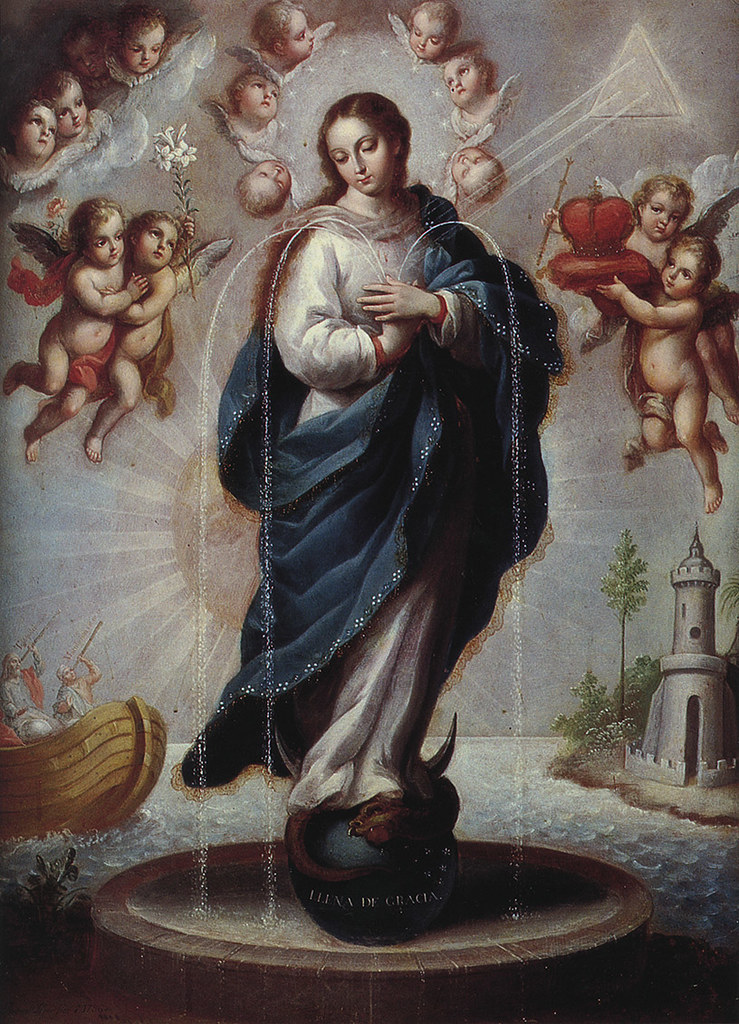
Solemnidad de la Inmaculada Concepción de la Santísima Virgen María (2021)

En vísperas de la Navidad, la liturgia nos presenta la figura de María acogiendo en gozo a Dios en su vida. Como subrayó el Concilio, María es modelo para la Iglesia. De ella podemos aprender a ser más fieles a Jesús y su evangelio. ¿Cuáles podrían ser los rasgos de una Iglesia más mariana en nuestros días? Una Iglesia que fomenta la «ternura maternal» hacia todos sus hijos cuidando el calor humano en sus relaciones con ellos. Una Iglesia de brazos abiertos, que no rechaza ni condena, sino que acoge y encuentra un lugar adecuado para cada uno. Una Iglesia que, como María, proclama con alegría la grandeza de Dios y su misericordia también con las generaciones actuales y futuras. Una Iglesia que se convierte en signo de esperanza por su capacidad de dar y transmitir vida. Una Iglesia que sabe decir «sí» a Dios sin saber muy bien a dónde le llevará su obediencia. Una Iglesia que no tiene respuestas para todo, pero busca con confianza, abierta al diálogo con los que no se cierran al bien, la verdad y el amor. Una Iglesia humilde como María, siempre a la escucha de su Señor. Una Iglesia más preocupada por comunicar el Evangelio de Jesús que por tenerlo todo definido. Una Iglesia del «Magníficat», que no se complace en los soberbios, potentados y ricos de este mundo, sino que busca pan y dignidad para los pobres y hambrientos de la Tierra, sabiendo que Dios está de su parte. Una Iglesia atenta al sufrimiento de todo ser humano, que sabe, como María, olvidarse de sí misma y «marchar de prisa» para estar cerca de quien necesita ser ayudado. Una Iglesia preocupada por la felicidad de todos los que «no tienen vino» para celebrar la vida. Una Iglesia que anuncia la hora de la mujer y promueve con gozo su dignidad, responsabilidad y creatividad femenina. Una Iglesia contemplativa que sabe «guardar y meditar en su corazón» el misterio de Dios encamado en Jesús para transmitirlo como experiencia viva. Una Iglesia que cree, ora, sufre y espera la salvación de Dios anunciando con humildad la victoria final del amor • AE


TOTA PULCHRA ES, MARIA

Tota pulchra es, Maria,

et macula originalis non est in te.

Tu gloria Jerusalem,

tu laetitia Israel,

tu honorificentia populi nostri,

tu advocata peccatorum.

¡Oh! Maria, virgo prudentissima,

mater clementissima,

Ora pro nobis,

intercede pro nobis

ad Dominum Jesu Christum.

Tota pulchra es es una antigua oración escrita presumiblemente en el siglo iv. Es una de las cinco antífonas para los salmos de las segundas vísperas de la festividad de la Inmaculada Concepción. El texto está tomado en parte del Libro de Judit y en parte del Cantar de los Cantares. Esta oración ha servido como inspiración para muchos compositores a lo largo de los siglos, entre los que se puede citar por ejemplo Robert Schumann, Anton Bruckner, Pablo Casals, Maurice Duruflé, James MacMillan u Ola Gjeilo • AE

Eres toda belleza, María

y el pecado original no está en ti.

Tú, la gloria de Jerusalén,

tú, alegría de Israel,

tú, honor de nuestro pueblo,

protectora de los pecadores

¡Oh! María, virgen prudentísima,

madre clementísima.

Ruega por nosotros,

intercede por nosotros

ante nuestro Señor Jesucristo.

Tota pulchra es is an old Catholic prayer, written in the fourth century. It is one of the five antiphons for the psalms of Second Vespers for the Feast of the Immaculate Conception. The title means «You are completely beautiful» (referring to the Virgin Mary). It speaks of her immaculate conception. It takes some text from the book of Judith, and other text from Song of Songs, specifically 4:7. Composers to set the prayer to music include Robert Schumann, Anton Bruckner, Pablo Casals and Maurice Duruflé • AE

You are all beautiful, Mary,

and the original stain [spot] (of sin) is not in you.

You are the glory of Jerusalem,

you are the joy of Israel,

you give honour to our people.

You are an advocate of sinners.

O Mary,

Virgin most intelligent,

Mother most merciful.

Pray for us,

Plead for us,

To the Lord Jesus Christ.

Second Sunday of Advent (Cycle C)

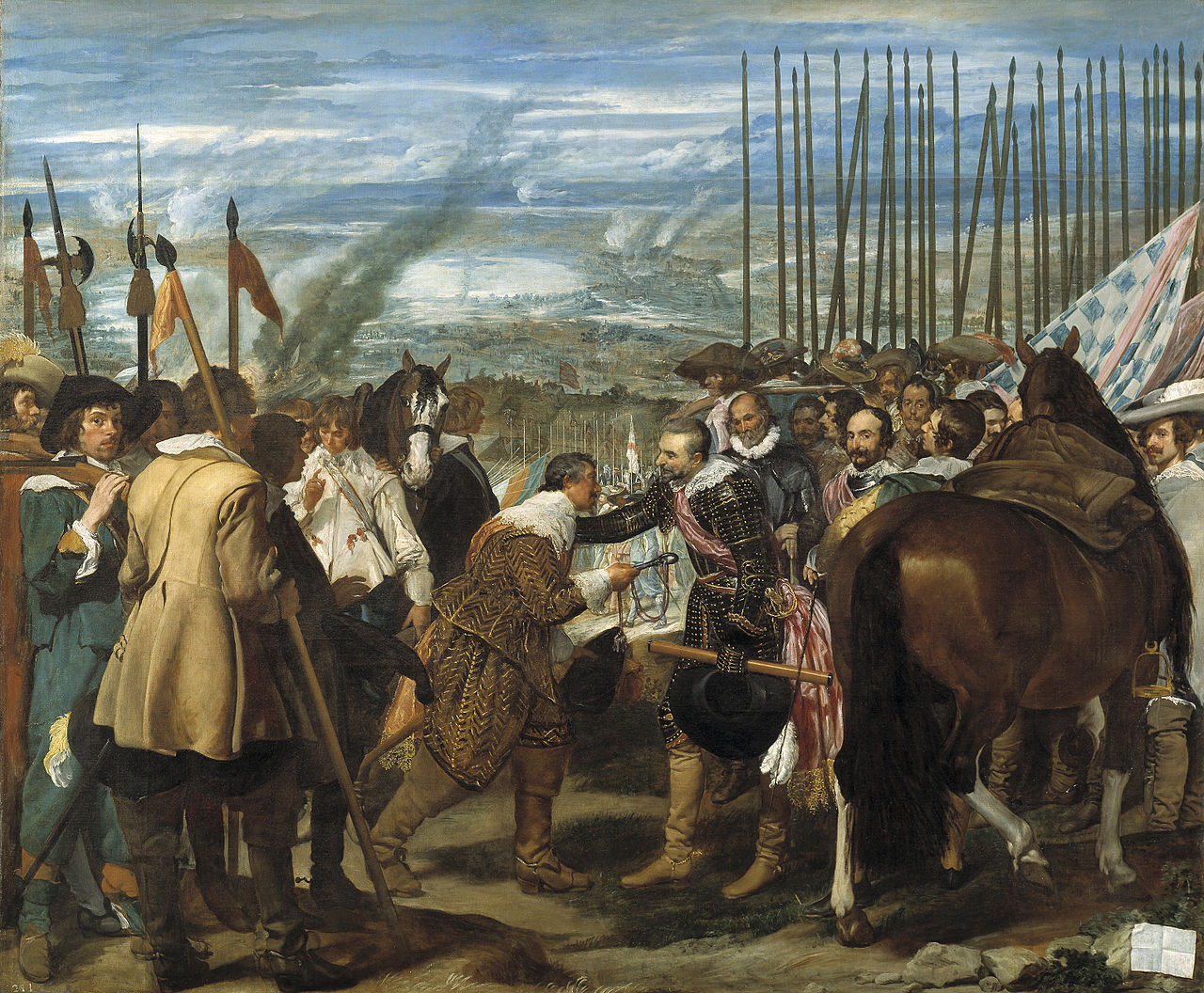
Diego Velázquez, The Surrender of Breda (1634–35), oil on canvas, Museo del Prado (Madrid)

In today’s second reading from the first chapter of Paul’s Letter to the Philippians, Paul’s words are a wonderful gift to the fledgling Christian community at Philippi[1]. He says how much he loved them and how much more, infinitely more, God loves them, so if we want to give someone a really great gift, what we should give them what Paul gave the Philippians, the love of Christ! It is easy to be hard and cold towards people, even at Christmas time. We can give gifts that say nothing more than, «I am fulfilling an obligation.» We can step in our anger and our upset over what has happened in the past. Or we can give the gift of the Lord’s love. If we continue to love someone, even if that person has hurt us, even if that person does not respond to our love, we will give a lasting gift. Maybe the person will remain determined to refuse our love, but God’s love is powerful. The person who has experienced the love of God cannot help but recognize it. This is how we are called to love. This is the gift we are called to give. Perhaps, if we swallow our pride and allow ourselves to love others, we can join the prophet Baruch of our first reading[2]. He spoke to the Jews who were in exile in Babylon. These people knew that they had brought their suffering on themselves. Like Baruch we need to say to those who are hurting in the own self-inflicted pain: «[Jerusalem], take off your robe of mourning and misery; put on the splendor of glory from God forever.» Perhaps, if we set our anger aside, we can join John the Baptist in preparing the way for the Lord into someone’s heart[3]. There is nothing greater that we can give anyone than sincerely loving them as the Lord loves them. The love of the Lord is selfless, sacrificial, and complete. His love is selfless. It is difficult to love in this way, being selfless. This type of love demands that we ignore what the other person thinks about us. We all have people in our lives who respond to our being kind and caring with something like: «So, what got into you?» or «Don’t think that I’m going to forget the past just because you are being nice today.» It is really difficult to take ourselves and our feelings out of the equation and just allow God to love through us. But we are not important. He is. The Love of the Lord is sacrificial. It is also difficult to love in a sacrificial way. It is difficult to put someone before ourselves, particularly when that person scorns us. But that is what Jesus did on the cross. He put everyone before Himself, including those people who mocked and attacked him. He forgave those people who crucified Him, even the brutal executioners. When Jesus commanded us to take up our crosses and follow Him, He was telling us to love like He loved, even though this type of love, sacrificial love, carries a heavy cost. So, how can we give anything more at Christmas than to let people know that they also are loved? They are loved by us, and they are loved by God. What greater gift can we give to others than our prayers that they may grow in the love of the Lord every day of their lives? This is a wonderful time of year. More than any other time of year, we realize the great joy of Christianity: We live wrapped in the arms of our loving God, our God who calls us to join Him in loving His people • AE

[1] Cf Phil 1:4-6, 8-1 [2] Cf Bar 5:1-9[3] Cf Lk 3:1-6


Fr. Agustin Schedule for the Second Sunday of Advent

Saturday, December 4, 2021.
3.00 p.m. Sacrament of Reconciliation
5.00 p.m. English Mass @ St. Dominic Catholic Church
Sunday, December 5, 2021.
7.30 a.m. English Mass @ St. Dominic Catholic Church
10.00 a.m. @ St. Dominic Catholic Church


II Domingo de Adviento (Ciclo C)

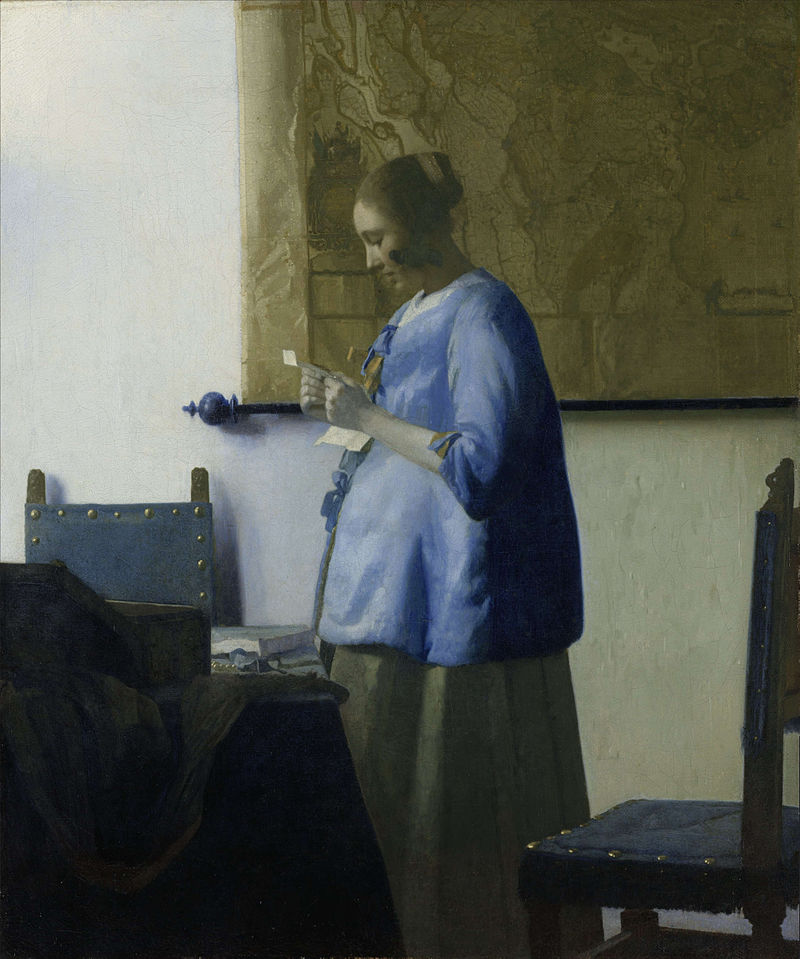
J. Vermeer, Muchacha de azul leyendo una carta (1663), óleo sobre lienzo, Rijksmuseum (Ámsterdam)

Dentro de cada uno de nosotros hay un mundo casi inexplorado que muchos hombres y mujeres no llegan siquiera a sospechar. Viven sólo desde fuera. Ignoran lo que se oculta en el fondo de su ser. No es el mundo de los sentimientos o los afectos. No es el campo de la sicología o la psiquiatría. Es un país más profundo y misterioso. Se llama interioridad. Ahí es donde nace la pregunta más simple y elemental del ser humano: ¿Quién soy yo? Y las demás (preguntas) que brotan sin cesar: ¿De dónde vengo? ¿Por qué estoy en la vida? ¿Para qué? ¿En qué terminará todo esto? Son preguntas que nos colocan inmediatamente ante el misterio. De todo esto sabemos poco; quizá lo único cierto es que caminamos por la vida como a oscuras. Mucha gente no tiene hoy tiempo ni humor para hacerse estas preguntas. Bastante hace uno con vivir, trabajar, sacar adelante una familia y enfrentarse con un poco de ánimo a los problemas de cada día. Y, ciertamente, para adentramos en ese mundo de las preguntas últimas de la vida, se necesita una cierta calma y silencio. La agitación, las prisas o el exceso de actividad impiden al ser humano escucharse hacia adentro. Nos hace falta todos los días, como dice bellamente P. Loidi, «un buen rato de inactividad para adentramos descalzos en nuestro mundo interior».  La mejor manera de adentrarnos es meditando en las palabras de Juan el Bautista en el evangelio de este domingo, y junto a él preparar los caminos del Señor, es decir, hacer silencio interior y escuchar esas preguntas, sencillas pero profundas, que brotan desde nuestro interior, estando más atentos al misterio que nos envuelve y penetra por todas partes. San Anselmo lo decía de manera maravillosa: «Ea, hombrecillo, deja un momento tus ocupaciones habituales, entra un instante en ti mismo, lejos de tus pensamientos. Arroja fuera de ti las preocupaciones agobiantes; aparta de ti tus inquietudes trabajosas. Dedícate algún rato a Dios y descansa siquiera un momento en su presencia»[1] • AE

[1] Cfr. Proslogion, n. 1; El texto completo puede leerse aquí: Anselmo, obispo de Canterbury: Proslogion, 1 (vatican.va)


El Mesías

El Mesías, ​ (en inglés, Messiah), es un oratorio en inglés compuesto por Georg Friedrich Händel en 1741, con un texto bíblico recopilado por Charles Jennens de la Biblia del rey Jacobo. Su estreno tuvo lugar en Dublín el 13 de abril de 1742. Un año después se presentó en Londres. Después de una acogida de público inicial modesta, el oratorio ganó popularidad y finalmente se convirtió en una de las obras corales más conocidas e interpretadas con mayor frecuencia en la música occidental. Händel se había ganado su reputación en Inglaterra, donde vivía desde 1712, gracias a sus composiciones de ópera italiana. Se pasó al oratorio en inglés en la década de 1730 en respuesta a los cambios de gusto del público. La obra comienza, en la Parte I, cantando las profecías de Isaías que hacen referencia al Mesías. La anunciación a los pastores es la única escena tomada de los Evangelios.  Händel escribió El Mesías para conjuntos vocales e instrumentales modestos, con arreglos opcionales para muchos de los efectivos. En los años posteriores a su muerte, se adaptó la obra para la interpretación a una escala mucho mayor, con orquestas y coros gigantes. En otros esfuerzos por actualizarlo, se revisó y amplió su orquestación por, entre otros, Wolfgang Amadeus Mozart (Der Messias). A finales del siglo xix y principios del xx, la tendencia ha sido reproducir con una mayor fidelidad las intenciones originales de Händel, aunque las producciones del «gran Mesías» continúan en aumento. Escuchar El Mesías en estos días de Adviento y en ésta fantástica versión le hace mucho bien al espiritu • AE