
Fourth Sunday in Ordinary Time (Cycle C)

At the parish office we receive emails all the time from people claiming that the Church is run by immoral people. They relegate every priest and bishop who does not bow to their distorted views as purveyors of immorality. I am disgusted by web-sites that promote to be written by real Catholics, but through their hostility, their lack of love, are questionable as Christians, followers of Christ. They certainly are not the real Catholics they purport to be. Of course, there is no use in arguing with these people because they are basically Gnostic. The ancient heresy of Gnosticism never went away. The Gnostic believes that he or she has the inner knowledge, secret knowledge. If you don’t agree with them, that’s because you have not been given the gift of what they call true knowledge. But they don’t have inner knowledge. In fact, they don’t have any knowledge at all, at least not the gift of the Holy Spirit that is knowledge. A Church that bashes people in the head is not the Church that Jesus came to found. I don’t want to be part of a Church that spews hatred. Nor do you. Nor did St. Paul. I am writing all this because of the beginning of today’s second reading, taken from the letter to the Corinthians. There, St. Paul talks about the foundation of our faith: Jesus Christ, and Jesus is Love: «If I speak in human and angelic tongues, but do not have love, I am a resounding gong or a clashing cymbal. And if I have the gift of prophecy, and comprehend all mysteries and all knowledge; if I have all faith so as to move mountains, but do not have love, I am nothing. If I give away everything I own, and if I hand my body over so that I may boast, but do not have love, I gain nothing». (1) We are accustomed to a disconnect between appearance and reality. We are used to learning that this or that person is very rich, or very famous, and at the same time a pathetic human being. We know that we could have riches, fame or power and be miserable people. What we are less accustomed to realizing is that there can be a disconnect between the appearance of greatness and reality when it comes to spiritual things. Someone can be rich in religious experiences, someone can prophesy or speak in tongues, and still be a self aggrandizing misfit. Someone can be famous for care for the poor, and still be a pathetically swollen ego of a person. Someone can even have the power to perform miracles, heal the sick or move mountains, and still be rotten to the core with arrogance and pride. Someone might look to be truly something, and yet still be nothing. No human person can be anything unless he or she reflects the image of the Creator. Our God is a consuming fire, we read in the Letter to the Hebrews (2). He is a consuming fire of love. Without love, no matter what other kind of apparent greatness a person may have, in reality that person is nothing. But with the all consuming love of God, our actions can transform the world. And we can be something, sons and daughters of God. You and I are only something if we are on fire with love. Our actions only have meaning if they are rooted in His Love. Our Christian faith is only worthwhile if it brings the love to the world. Jesus came to establish the Kingdom of God, a Kingdom of love. This love is not a warm feeling of affection that tries to please everybody and never rock the boat. Rather, it is a courageous love, willing to get killed in order to bring good to those it loves. True love, God’s love, embraces everybody. That kind of love is something! And we are nothing unless we have it. We are the Church. We are the ones empowered to establish the Kingdom of God. We need to put up a fight against the vitriol of our times. We can bring God’s love to the world. We must be people grounded in His love •AE

(1) 1 Cor 12:31—13:13 (2) 12:29.


Fr. Agustin Schedule for Fourth Sunday in Ordinary Time.

Saturday, January 29, 2022

Sacrament of Baptism for Lucille Robinson @ St. Peter Prince of the Apostles (10.00 a.m.) 

XV Celebration for Chloe Martinez @ St. Dominic Catholic Church  (12.00 p.m.) 

Sacrament of Baptism for Melrose Walton @ San Francesco di Paola Parish (3.00 p.m.) 

Sunday, January 30, 2022


IV DOMINGO DEL TIEMPO ORDINARIO (CICLO C)

Los evangelistas no nos han ocultado la resistencia, el escándalo y la contradicción que encontró Jesús a su alrededor. Su actuación libre y liberadora resultaba demasiado molesta y acusadora. Su comportamiento ponía en peligro muchos intereses. Y Jesús lo comprende. Es difícil que un hombre que se pone a actuar escuchando fielmente a Dios sea bien aceptado en un pueblo que vive de espaldas a Él, y los cristianos no deberíamos olvidar esto. No podemos seguir a Jesus y no provocar, de alguna manera, la reacción, la extrañeza, la crítica y hasta el rechazo de quienes, por diversos motivos, no pueden estar de acuerdo con un modo de vivir cristiano. ¿No somos los creyentes demasiado «normales» y demasiado bien aceptados en una sociedad que no es tan normal ni tan aceptable cuando se miran las cosas desde la fe? ¿No nos sentimos demasiado a gusto y bien adaptados? Nos da miedo ser diferentes. Hace mucho tiempo que está de moda estar a la moda, una moda que nos impone los gestos, las maneras, el lenguaje, las ideas, las actitudes y las posiciones que debemos defender. Se necesita una gran dosis de coraje y de valor para ser fiel a las propias convicciones, cuando todo el mundo se acomoda y adapta «a lo que se lleva». Es más fácil vivir sin un proyecto de vida personal, dejándose llevar por los acontecimientos y los convencionalismos sociales. Es más fácil instalarse cómodamente en la vida y vivir superficialmente según lo que nos dicten desde fuera. Al principio quizá aún escuchamos esa voz interior que le dice que no es ése el camino acertado, pero pronto nos tranquilizamos: no queremos lucir por un anormal, un extraño o un loco; estamos mas seguros en el rebaño. Y así seguimos caminando: en manada. Sin embargo, el evangelio de Cristo nos sigue invitando a ser fieles a nuestras convicciones, a nuestra identidad, incuso cuando puedan acarrearnos la crítica y el rechazo. ¿De qué nos serviría ganar todo el mundo si al final perdemos el alma? •AE


Third Sunday in Ordinary Time (Cycle C)

The first words of today’s Gospel are the introduction to the entire Gospel of Luke. These four lines are written in a highly artistic style, in classical Greek, not the common everyday Greek of the rest of the Gospel and New Testament [1]. Whit this proclamation a new stage in the world has begun. And we are part of this. You and me. What is it that we each have to offer? We each have unique gifts and talents. Some are prophets, apostles, healers, teachers, mothers, fathers, priests, ministers, artists, handymen, care givers, engineers, service men and women. Some are health care workers, others, protectors of legal rights. Some design buildings, others build them. All are different. Everyone is necessary. Together we each have our roles in the Grand Plan, God’s plan of love for his people. Together we constitute the vehicle for God’s plan. Together we make God’s plan a reality. Together we make up the Body of Christ. We should never think that our role is insignificant. We should never think that our part is too little. We should never reduce ourselves to a number. The Body of Christ needs every part, every person, to fulfill his or her role in life so that God’s plan can triumph over the powers of evil. Perhaps, you work hard to make a life with your husband or wife; you spend endless hours molding your children. Perhaps, you are not married, you are not retired, and you wonder, what significance can there be to your life? How do you treat people? Do they see you as a Christian in the way your approach your life and in the way you respect their lives? Do you reach out to others in their needs with your time? Do you give an example of Christ’s love? Why would you doubt the significance of your role in God’s plan? The scriptures are being fulfilled in our hearing. The world is being recreated. The Body of Christ is transforming the world. We are this Body. Jesus is our head. So, what is it that you, that I, have to offer? We are all part of a grand event. We each have a role to play in this event. What is your role? What is my role? How well do we play our part? So what is it that you have to offer? So what is it that I have to offer? •AE

[1] Most probably the first draft of this Gospel placed these words exactly where today’s Gospel places them, directly before Jesus’ first sermon in the Synagogue in Nazareth. A later editor placed the Lucan infancy narratives, the Lucan Christmas story, between the two. But Luke probably wanted the introduction exactly where we heard it today.


Fr. Agustin Schedule for Third Sunday in Ordinary Time.

Saturday, January 22, 2022.

3.30 p.m. Sacrament of Confession

5.00 p.m. English Mass

Sunday, January 23, 2022.

7.30 a.m. English Mass

10.00 a.m. English Mass


III Domingo del Tiempo Ordinario (Ciclo C)

Al leer este relato de Lucas en el que Jesús se presenta en medio de su pueblo como ungido por el Espíritu del Señor y enviado para proclamar la Buena Noticia a los pobres, regalando luz, liberación y gracia, me pregunto una y otra vez ¿Merece la pena ser sacerdote? ¿Para qué? Tengo la impresión, hoy más que nunca, que los sacerdotes estamos llamados a escuchar los interrogantes, miedos e incertidumbres de tantos hombres y mujeres que han abandonado a un Dios en el que ya no podían creer, y que necesitan que alguien los acompañe en la búsqueda del verdadero rostro del Padre, que ha sido revelado en Jesucristo. Los sacerdotes estaríamos así llamados a regalar esperanza a quienes viven sin horizonte, llenos de cosas pero con el alma vacía y triste, sin saber qué es exactamente aquello que da sentido a su vida. En el evangelio de este domingo san Lucas dice que la gente tenía los ojos clavados en Jesús. La atención de todos pasa del texto leído al Señor, que actúa movido por el Espíritu de Dios. Jesús es el profeta de Dios. No ha sido ungido con aceite de oliva, como se ungía a los reyes para transmitirles el poder de gobierno o a los sumos sacerdotes para investirlos de poder sacro sino ungido por el Espíritu de Dios. No viene a gobernar ni a regir: es el profeta dedicado a liberar la vida. Ser sacerdote significa vivir pues con su espíritu profético. Jesús es Buena Noticia para los pobres, para los más desvalidos, los más necesitados de oír algo bueno; los humillados y olvidados por todos. Los sacerdotes sin duda nos podremos llamar así -sacerdotes- cuando nuestra vida, nuestra actuación y amor solidario pueda ser captado por todos como algo bueno. Jesús vive dedicado a liberar al ser humano de toda clase de esclavitudes; la gente lo percibe como liberador de sufrimientos, opresiones y abusos; los ciegos lo ven como luz que vuelve a sus ojos, los pecadores lo reciben como gracia y perdón. Los sacerdotes seremos como Jesús cuando libremos de aquello que esclaviza, empequeñece o deshumaniza. Es verdad: el sacerdocio ministerial no es tarea fácil: no hacemos mucho dinero, no tenemos un gran prestigio social; rápidamente nos etiquetan y rechazan, sin embargo, nadie podrá nunca quitarnos la alegría de representar al Señor y de vivir haciendo este mundo un poco más humano, más amable, más cordial. Un mundo que se alimente del Evangelio de Jesucristo •AE

Second Sunday in Ordinary Time (Cycle C)

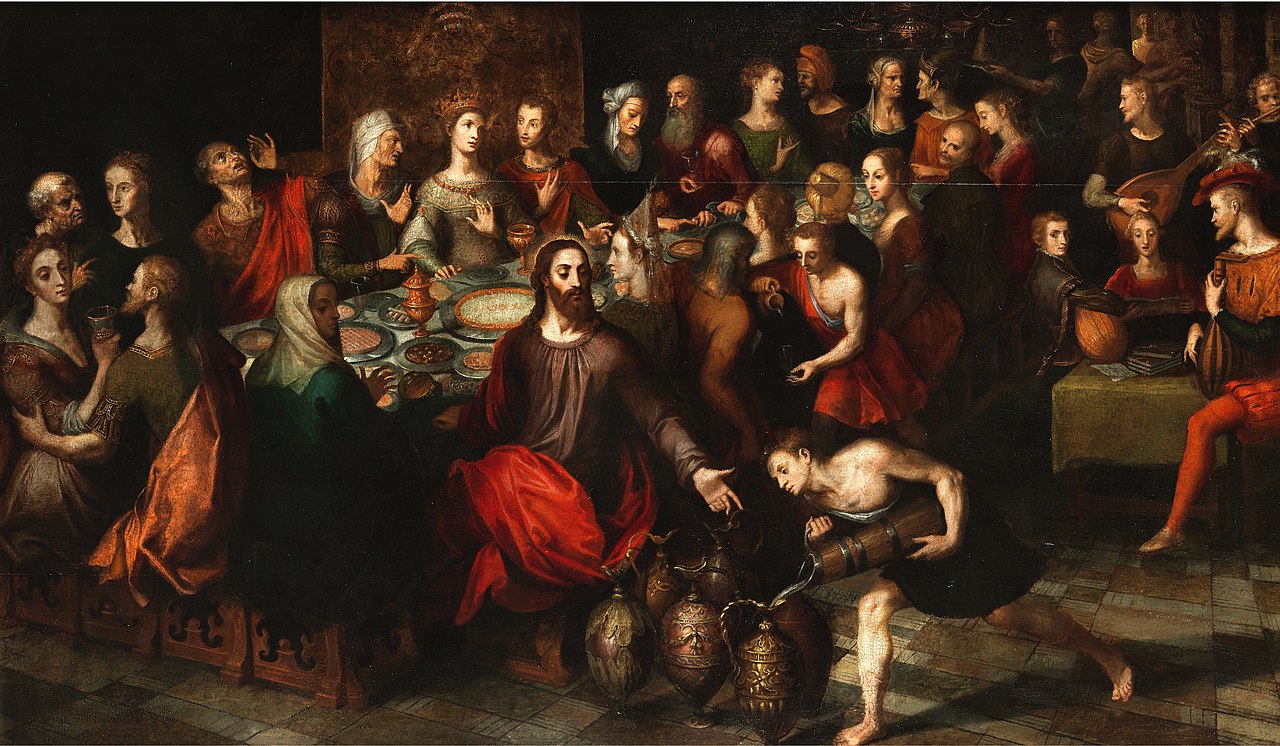
A. van Noort, Wedding at Cana (c. 1590), oil on canvas, Hampel Fine Art Auctions (München, Germany)

At the wedding feast of Cana Jesus turned water into wine. This was the beginning of the hour, the time of the Lord’s passion, death and resurrection. Events would now rush towards that evening when instead of changing water into wine, Jesus would change wine into His Blood, Holy Thursday. Events would rush to that afternoon when the Body and Blood of the Lord would be sacrificed on the cross, Good Friday. Events would rush to that morning when all would be offered the New Life of Lord, Easter Sunday. This is the Lord’s hour, his time to redeem us. The changing of water into wine, the beginning of the hour, teaches us about sacrifice and its meaning in our Christian life. Those marriages that seek the Lord as their Center are seeking to love as He loved, to love with a sacrificial love. The husband must put his wife before himself. The wife must put her husband before herself. The needs of their children must come before the needs of the parents. This is sacrificial love, expressed countless times in the daily routine of the Catholic family. All Christians are called to sacrificial love whether this love is expressed within a marriage or within the life of the committed Catholic single. The great gift of marriage is that the married are continually challenged with ways to love sacrificially. Occasions present themselves daily whether it is doing the shopping or laundry, changing the baby, getting the child to soccer or dance and working harder to provide better. All are expressions of sacrificial love which are the routine of marriage. All are ways of living the sacrament of marriage. Today, as we remember the presence of the Lord at the wedding feast of Cana, we pray that all of our married couples may celebrate the Presence of Christ in the little churches that are their Catholic homes • AE


Fr. Agustin Schedule for the Second Sunday in Ordinary Time 

Sunday, January 16, 2022.

12.30 a.m. English Mass 

3.00 p.m. Misa en Español


II Domingo del Tiempo Ordinario (Ciclo C) 

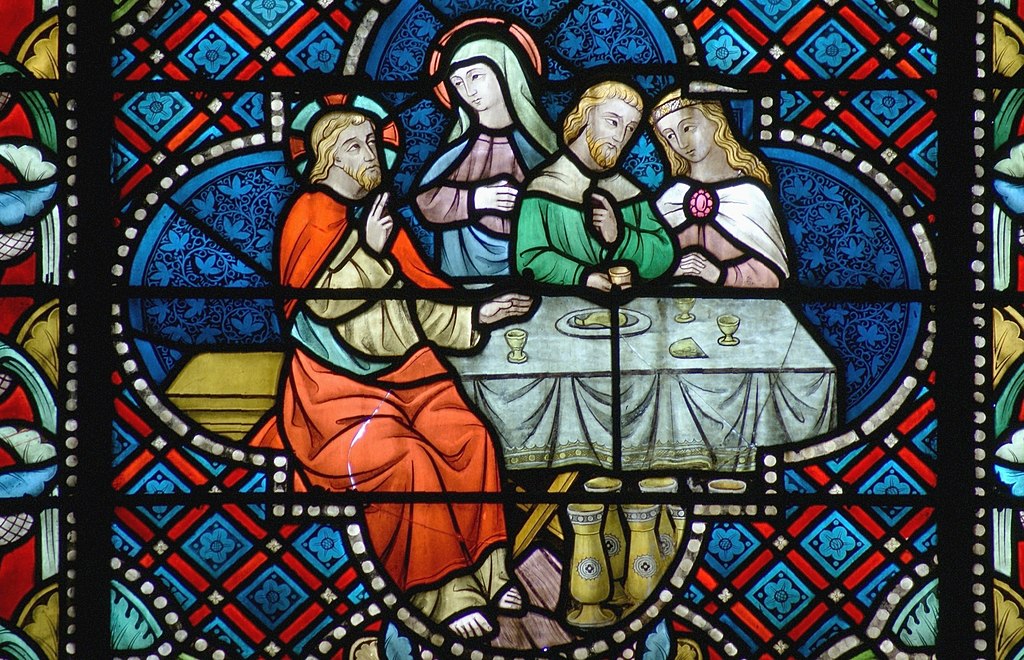
Maestro anónimo, Las bodas de Caná, vitral de la iglesia de Sin Amanduskerk (Amberes, Bélgica)

El evangelio de éste domingo, el segundo del Tiempo Ordinario, habla de una boda en Caná de Galilea, una pequeña aldea de montaña, a quince kilómetros de Nazaret. Sin embargo, la escena tiene un carácter claramente simbólico. Ni la esposa ni el esposo tienen rostro: no hablan ni actúan. El único importante es un invitado que se llama Jesús. Las bodas eran en Galilea la fiesta más esperada y querida entre las gentes del campo. Durante varios días, familiares y amigos acompañaban a los novios comiendo y bebiendo con ellos, bailando danzas de boda y cantando canciones de amor. De pronto, la madre de Jesús le hace notar algo terrible: no les queda vino. ¿Cómo van a seguir con la celebración? El vino es indispensable en una boda. Para aquellas personas el vino era además el símbolo más expresivo del amor y la alegría. «Lo decía la tradición: el vino alegra el corazón del hombre». Lo cantaba la novia a su amado en un precioso canto de amor: «Tus amores son mejores que el vino». ¿Qué puede ser una boda sin alegría y sin amor?, ¿qué se puede celebrar con el corazón triste y vacío de amor? En aquel sitio había seis tinajas de piedra. Están colocadas allí, de manera fija. En ellas se guarda el agua para las purificaciones. Representan la piedad religiosa de aquellas personas que trataban de vivir puros ante Dios. Jesús transforma el agua en vino. Su intervención va a introducir amor y alegría en aquella religión. Esta es su primera aportación. Los cristianos de hoy ¿Cómo podemos pretender seguir a Jesús sin cuidar más entre nosotros la alegría y el amor?, ¿qué puede haber más importante que esto en la Iglesia y en el mundo?, ¿hasta cuándo podremos conservar en tinajas de piedra una fe triste y aburrida?, ¿para qué sirven todos nuestros esfuerzos, si no somos capaces de introducir amor en nuestra religión? Nada puede ser más triste que decir de una comunidad cristiana: no les queda vino • AE


Sacrament of Reconciliation

I am available to celebrate the Sacrament of Confession. A good time can be before or after the celebration of the Eucharist at our parish community of St. Dominic; it could be along the week or during the weekends, however, if you need another time due to your schedule, the easiest way to arrange a good time for both of us is by sending me an e-mail (agusestrada@gmail.com); I will reply as soon as possible with some options. Peace! • AE

The Baptism of the Lord (2022)

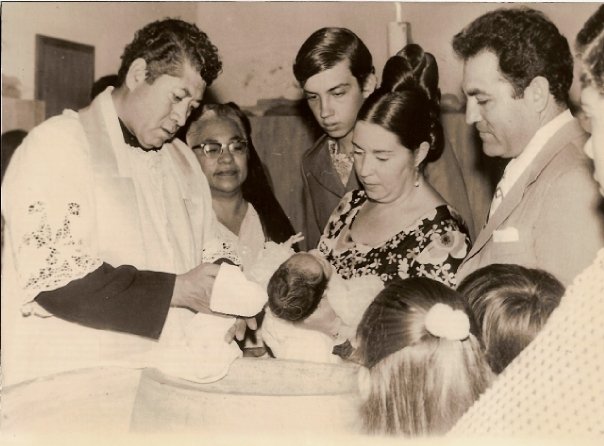
June 4, 1973, Parroquia de Nuestra Señora de la Paz (Guadalajara, México)

It is somewhat ironic, that for most of us as Catholics, the day of our baptism, is not something that we remember.  Most of us were infants when we were baptized.  Our parents brought us to church.  Usually we were dressed up in some special, white baptismal garments.  And almost always, lots of pictures were taken.  They took pictures of us with our godparents.  They took pictures of us with our grandparents.  They took pictures of us with the priest or deacon that baptized us.  We may not remember the actual event.  But thanks to Kodak, and Polaroid, and Nikon, and now the cameras on our phones, we’ve got pictures to prove the event took place. The pictures make the event that much more real for us, who can’t remember that far back. Of course, as we just heard, at Jesus’ Baptism, they didn’t need to take any pictures to make the event memorable. We know, of course, that Jesus didn’t need Baptism.  Baptism is for us.  Sinners need Baptism.  The Son of God did not. By His Baptism though, Jesus makes holy the water of every Baptism that will take place following His. Because of Jesus’ Baptism, we are baptized!  And we also know how important Baptism is really is. Baptism is our way of beginning our walk with Jesus Christ.  It all starts with water, and oils, and fire, and promises. That is the way that we begin the walk that eventually will lead all of us to Heaven.  It all starts with Baptism. And yet, how important it is that all of us remember our baptisms!  As we come to the end of our Christmas season, before we head into Ordinary Time, we take the time to remember that we ARE baptized people. From the moment that all that water poured off our heads, we were a new creation in Christ.  We were born again.  Everything started a new! How important it is for us to NOT forget that! Today we celebrate Jesus’ Baptism and the beginning of His public ministry. But today demands that we also remember our own baptisms and the beginnings of our own walks with Christ.  Our Baptisms not only buy us a whole new way of life, but our Baptisms also get us the job and responsibility of carrying the Good News of Jesus Christ out to many others. May we bear witness to our Baptisms with our lives, not just with our words. May we live out our Faith every day.  And may we put into action, Jesus’ good news, by the way that we care and get involved! • AE


Fr. Agustin Schedule for the Feast of the Baptism of the Lord  (2022)

Saturday, January 8, 2022. 

3.30 p.m. Sacrament of Confession 

5.00 p.m. English Mass 

Sunday, January 9, 2022.

7.30 a.m. English Mass 

10.00 a.m. English Mass 


Fiesta del Bautismo del Señor (2022)

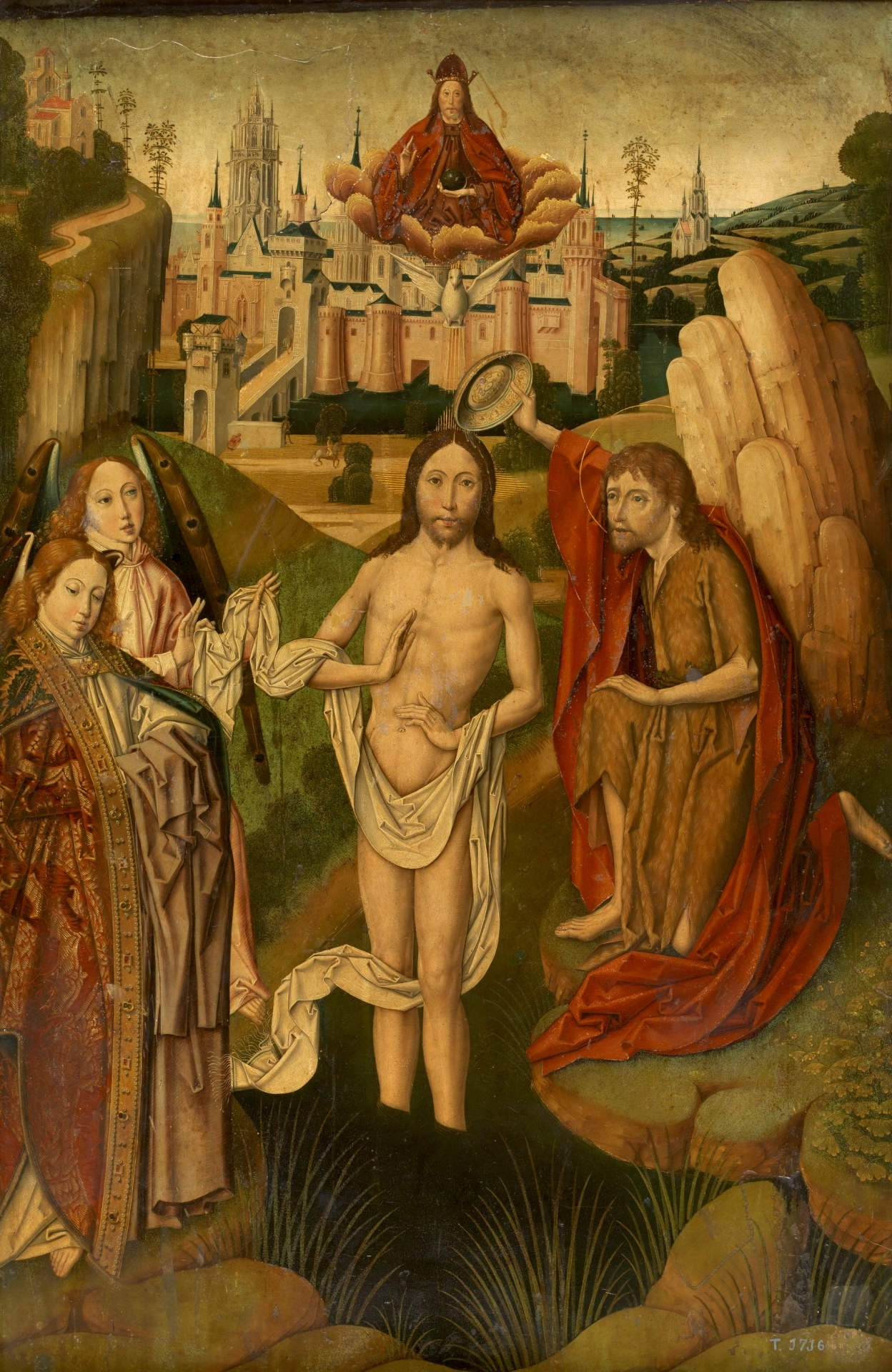
Maestro de Miraflores, El Bautismo de Cristo (c. 1490), técnica mixta sobre tabla, Museo Nacional del Prado (Madrid)

Los hombres y las mujeres de hoy hemos dejado de valorar lo que es la bendición y el sentido profundo que encierra. Los padres ya no bendicen a sus hijos. Las bendiciones litúrgicas han perdido su sabor original. Ya no se sabe lo que es la bendición nupcial, este texto tan bonito que prevee el ritual del Sacramento del Matrimonio. Poco a poco hemos ido olvidando que bendecir (del latín benedicere) significa literalmente «hablar bien», decirle cosas buenas a alguien. Y, sobre todo, decirle nuestro amor y nuestro deseo de que sea feliz. Y sin embargo todos necesitamos oír cosas buenas. Hay entre nosotros demasiada condena. Son muchos los que se sienten maldecidos más que bendecidos. Algunos se maldicen incluso a sí mismos. Se sienten malos, inútiles, sin valor alguno. Bajo una aparente arrogancia se esconde con frecuencia un ser inseguro que, en el fondo, no se aprecia a sí mismo. El problema de muchos no es si aman o no aman, si creen en Dios o no creen. El problema está en que no se aman a sí mismos. Y no es fácil sanar este tipo de heridas. Amarse a sí mismo cuando uno sabe cómo es, puede ser de las tareas más difíciles. Lo que hoy necesitamos escuchar son palabras de bendición. Sabenos amados, a pesar de nuestras caídas y errores. Pero, ¿dónde está la bendición? ¿cómo puede estar uno seguro de que es amado? Una de las mayores desgracias del cristianismo contemporáneo es haber olvidado, en buena parte, esta experiencia nuclear de la fe cristiana: somos amados, no porque seamos buenos, santos y sin pecado, sino porque Dios es bueno y nos ama de manera incondicional y gratuita en su Hijo Jesucristo. Cada uno es amado por Dios ahora mismo, tal como es, antes de empezar a cambiar. Cada uno de los evangelios narra que Jesús, al ser bautizado por Juan, escuchó la bendición de Dios: «Tú eres mi Hijo, el amado». También a nosotros nos alcanza esa bendición de Dios sobre Cristo. Cada uno de nosotros puede escucharla en el fondo de su corazón: «Tú eres mi hijo amado». Eso será también este año lo más importante. Cuando las cosas se pongan difíciles y la vida parezca de un peso insoportable, cosa buena y útil es recordar que Dios nos ama  con amor eterno. Esto es el principio y el fin de todo. Nuestra Alfa y nuestra Omega, la roca sólida sobre la que podemos construir nuestra vida cristiana • AE