
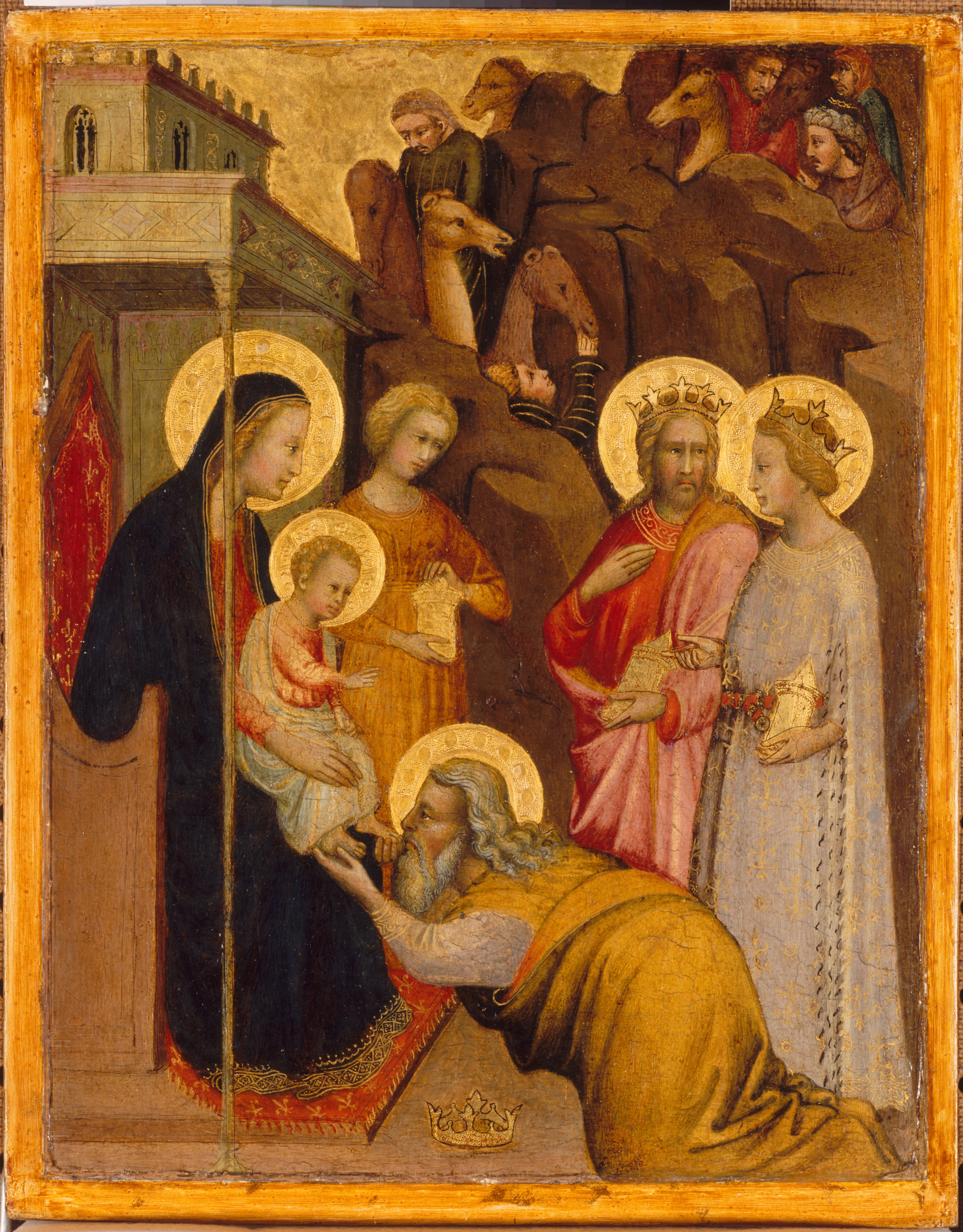
Master of the Strauss Madonna, The Adoration of the Magi (ca. 1400), tempera and gold on panel, Seattle Museum of Art.
G. K. Chesterton, wrote a wonderful essay on three modern wise men. These three heard that there was a city of peace, a city where there would never be wars or disturbances. The men wanted to live in that city, but to do so, they had to past a test. They had to present themselves at the gates of the city with gifts to demonstrating that they belonged there because they were men who would ensure the continual peace of the city. So they journeyed to this wondrous city with what, they were sure, would be gifts that would guarantee peace and earn them admission into the city. When they got to the gates of the city, St. Joseph was there to judge their gifts. The first modern wise man brought gold. He suggested that money was the root of all wars. With the gold that he bought, people could buy all the pleasures of the world and have no need to fight. He was convinced that gold would bring peace. The second modern wise man did not bring frankincense. He brought chemistry. He brought modern science. With his science he could drug the minds of people into a state of perpetual bliss. With his chemistry, he could seed the soil and control the population. People would then have all that they would need so they would never go to war again. The story was developed to present the third modern wise man bringing a split atom, a new myrrh, a new symbol of death. His message was that anyone who opposed the way of peace would face death. This wise man was the father of nuclear deterrence. After they showed him their gifts, St. Joseph refused to let any of them enter. «What more could we have brought to demonstrate that we are men of peace,» they protested. «We carry with us means to provide affluence, control nature and destroy enemies.» St. Joseph whispered something into the ear of each man. Then they turned and went away with heavy hearts. He told them that they had forgotten the child. With all our technology, with all our affluence, with the power we have shown to dominate many forces of nature, we moderns are convinced that we are wise. We are convinced that we can find ways to ensure peace and happiness for everyone. We are convinced that we are wise. This might all seem good, but we have forgotten the child. Peace only comes through the Prince of Peace. Men cannot create peace apart from God. A century ago, the Pope, Benedict XV, decried the Treaty of Versailles. He said that God was not even mentioned in the treaty. The Treaty of Versailles ended WWI the so-called “war to end all wars.” How well did that treaty work? Nineteen years later World War II began. Are we wise? Do we seek him? Or do we have all the answers in our technological pockets? Do Siri, or Alexa or Google hold the answers we really need? Technology cannot answer the deep questions of life. It can only deal with relatively surface issues. The true answer to our big questions is beyond the realm of technology, but one of the first answers provided by faith. We must be convinced that unless our thoughts are Christo-centric, revolve around Jesus Christ, our Way to the Father, not only do we not have the answers about life, we don’t even know the questions that need to be asked. Although the advance of technology continues and this can and does benefit humankind, we have to ask, “Is the unbridled use of technology acceptable? Is AI, Artificial Intelligence, the solution to all problems? Do we need to apply ethics to technology? If, so, how? We seek peace, but we forget the child. First we have to find the child. Then we can enter the City of Peace. There are many messages carried in this feast day. There is the message of the Word of God manifested to the Gentiles. There is the message of God’s secret plan now revealed. There is the message that God calls all people from all nations to Himself. There is a message against prejudice and bigotry. There is also the message that seeking Christ means wanting Him to transform our lives. This transformation will temper our acceptance of advancements in technology and materialism. The Christian way of thinking molds us into wise men and women. And the wise still seek him • AE

Un relato de la Natividad
Solemnidad de la Epifanía del Señor (2022)
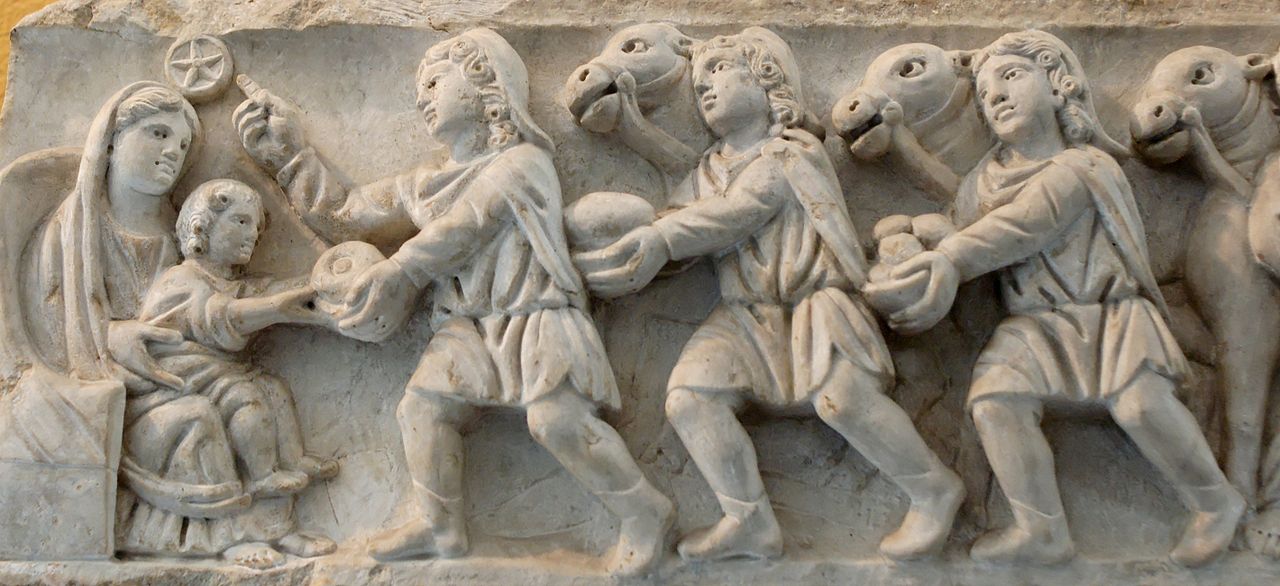
Es tal el ruido en que vivimos y tan grande la ola de materialismo, que casi hemos quedado atrofiados para descubrir a Dios en el día a día. No es que seamos ateos, es que nos hemos vuelto incapaces de relacionarnos con Dios. Cuando buscamos o conocemos el amor bajo formas degeneradas y cuando la vida está movida exclusivamente por intereses egoístas de beneficio o ganancia, algo se seca en nuestro corazón, y perdemos esa capacidad de relacionarnos con Él. Delp, ejecutado por los nazis, veía en este endurecimiento interior el mayor peligro para el hombre moderno: «Entonces deja el hombre de alzar hacia las estrellas las manos de su ser. La incapacidad del hombre actual para adorar, amar, venerar, tiene su causa en su desmedida ambición y en el endurecimiento de la existencia». Es así. Esta incapacidad para adorar a Dios se ha apoderado también de muchos creyentes que sólo buscan un Dios útil. Sólo les interesa un Dios que sirva para sus proyectos privados o sus programas socio-políticos. Dios queda así convertido en un artículo de consumo del que podemos disponer según nuestras conveniencias e intereses. Pero Dios es otra cosa. Dios es Amor infinito, encarnado en nuestra propia existencia, encarnado en la persona -real- de Jesús. Y ante ese Dios, lo primero es adoración, adoración profunda y de rodillas, y también júbilo, acción de gracias. Cuando olvidamos esto el cristianismo corre peligro de convertirse en un esfuerzo gigantesco de humanización, y la Iglesia en una institución eternamente agobiada, con la conciencia de no lograr el éxito moral por el que lucha y se esfuerza, terminando en una agencia que aboga más por el cambio climático que ayudando a sus hijos a alcanzar la salvación. Nuestra fe cristiana, antes que nada, es el descubrimiento de la Bondad de Dios; la certza de que sólo Dios salva. El gesto que nos presenta hoy el evangelio -los Magos arrodillados delante el Niño de Belén- expresa la actitud primera de todo creyente ante Dios. Dios existe. Está ahí, en el fondo de nuestra vida. Somos acogidos por Él. Amados por Él. Constantemente perdonados por Él. No sabemos con exactitud qué nos espera detrás de la muerte, pero hoy podemos vivir con confianza ante el misterio. Ante un Dios del que sólo sabemos que es Amor, no cabe sino el gozo, la adoración y la acción de gracias. El Espíritu nos conceda comenzar el añ nuevo con éstas tres actitudes en nuestro corazón: gozo, la adoración y la acción de gracias • AE
¡Changos y chinitas duérmansen!
Llegaron ya los reyes eran tres
Melchor, Gaspar y el negro Baltasar.
Arrope y miel, le llevaran,
y un poncho blanco de alpaca real.
Changos y chinitas duerman sen
que ya Melchor Gaspar y Baltasar,
todos los regalos traerán
para jugar mañana al despertar.
El Niño Dios muy bien lo agradeció
comió la miel y el poncho lo abrigó
y fue después, que sonrió,
y a media noche el Sol relumbró •
 LA MEDITACION DE LA ESPOSA