
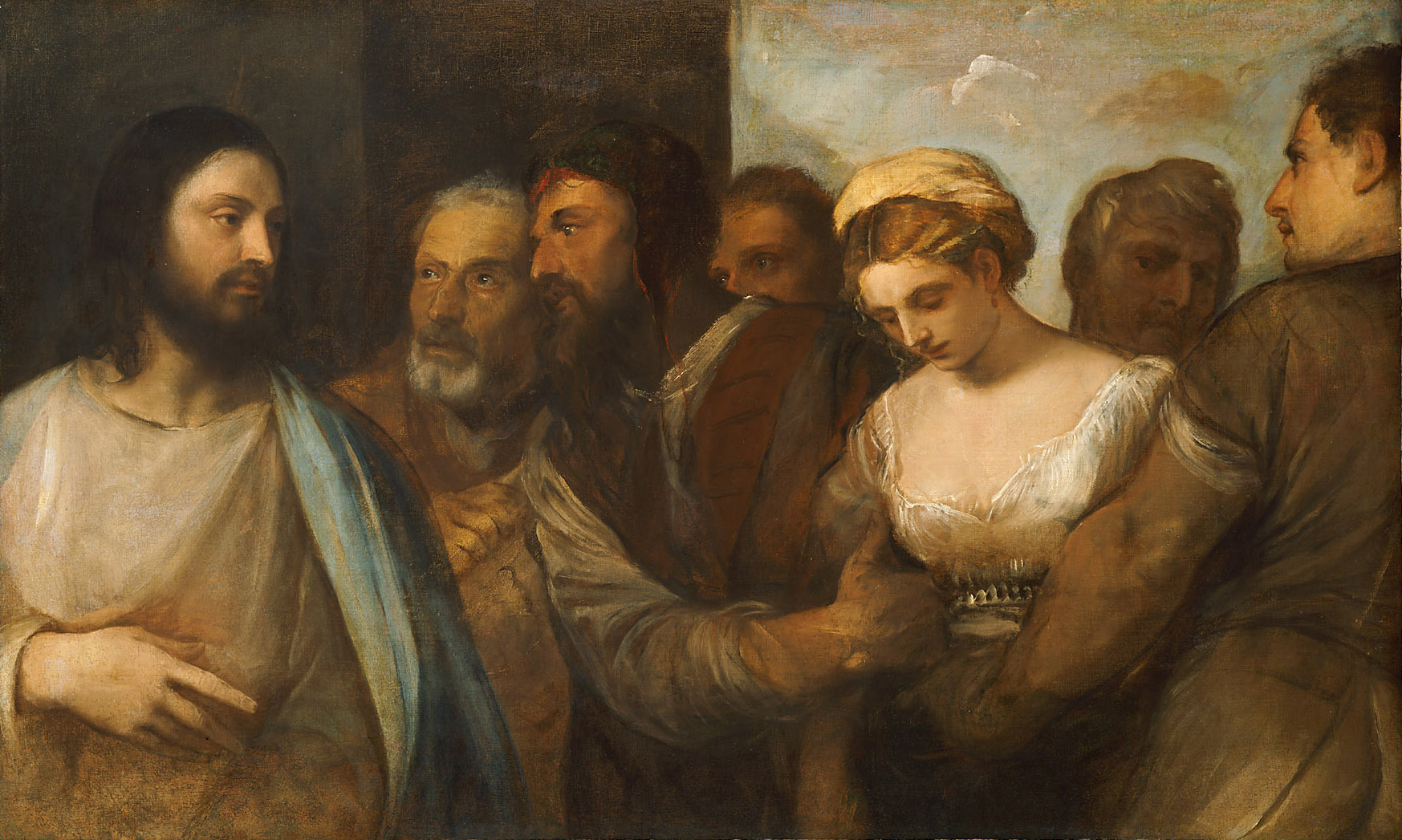
Jesus had spent the night in prayer, as he used to do. He begins the new day and filled with the Spirit he will proclaim the liberation of the captives and he will set the oppressed free[1]. Suddenly, a group of scribes and Pharisees burst in bringing a woman caught in adultery. They are not worried about the terrible future of the woman. No one questions her at all. She is already doomed. The accusers say it clearly: «The Law of Moses commands us to stone adulteresses. What do you say?”[2]. The situation is dramatic: the Pharisees are tense, the woman anguished, the people expectant. Jesus keeps a shocking silence. That woman will be executed. Is this the last word of God on her? Jesus, who is seated, leans towards the ground and begins to write some lines on the ground. He is thinking. The accusers demand an answer in the name of the Law. He will answer them from his experience of God’s mercy: that woman and her accusers, all of them, are in real need of God’s forgiveness. The accusers are only thinking of the sin of the woman and in the condemnation of the Law. As usual, Jesus will change the perspective. He will put the accusers before their own sin. Before God, all must recognize themselves as sinners. All of us need his forgiveness. As they continue to insist more and more, Jesus says, «Let him who is without sin cast the first stone at him.»[3] Who are you to condemn that woman to death, forgetting your own sins and your need for God’s forgiveness and mercy? Those men (the gospel does not mention women), are leaving one after another. Jesus points towards a coexistence where the death penalty cannot be the last word on a human being. Later, Jesus will say solemnly: «I have not come to judge the world but to save it.»[4] So this dialogue with that woman sheds much light about the heart of the Lord. The accusers leave, but the woman has not moved, she stills there and looks like she needs to hear one last word from Jesus. She does not feel liberated yet. Jesus tells him «Neither do I condemn you. Go, and sin no more from now on.» Jesus offers her forgiveness and at the same time invites her to sin no more. So, God’s forgiveness does not cancel responsibility, but requires conversion. Jesus knows it very well: «God does not want the death of the sinner but that he convert and live»[5] • AE
[1] Cf Luke 4:18 [2] Cf Leviticus 20:10 [3] Cf Jn 8:1-11 [4] Cf Id., 12:47 [5] Cf Ezekiel 18:32
Fr. Agustin Schedule for the Fifth Sunday of Lent

Saturday April 2, 2022
3.30 p.m. Sacrament of Reconciliation @ Confessional
5.00 p.m. English Mass @ Main Church
Sunday April 3, 2022
12.30 p.m. English Mass @ Main Church
3.00 p.m. Misa en Español @ Main Church
V Domingo de Cuaresma (Ciclo C)

Sorprende ver a Jesús rodeado de tantas mujeres: amigas entrañables como María Magdalena o las hermanas Marta y María de Betania. Seguidoras fieles como Salomé, madre de una familia de pescadores. Mujeres enfermas, prostitutas de aldea… De ningún profeta se dice algo parecido. ¿Qué encontraban en él las mujeres?, ¿por qué las atraía tanto? La respuesta que ofrecen los relatos evangélicos es clara. Jesús las mira con ojos diferentes. Las trata con una ternura desconocida, defiende su dignidad, las acoge como discípulas. Nadie las había tratado así. La gente las veía como fuente de impureza ritual. Rompiendo tabúes y prejuicios, Jesús se acerca a ellas sin temor alguno, las acepta a su mesa y hasta se deja acariciar por una prostituta agradecida. Los hombres las consideraban como ocasión y fuente de pecado. Desde niños se les advertía para no caer en sus artes de seducción. Jesús, sin embargo, pone el acento en la responsabilidad de los varones: Todo el que mira a una mujer deseándola, ya ha cometido adulterio en su corazón. Se entiende la reacción de Jesús cuando le presentan a una mujer sorprendida en adulterio, con intención de lapidarla. Nadie habla del varón. Es lo que ocurría siempre en aquella sociedad machista. Se condena a la mujer porque ha deshonrado a la familia y se disculpa con facilidad al varón. Jesús no soporta la hipocresía social construida por el dominio de los hombres. Con sencillez y valentía admirables, pone verdad, justicia y compasión: el que esté sin pecado que arroje la primera piedra. Los acusadores se retiran avergonzados. Saben que ellos son los más responsables de los adulterios que se cometen en aquella sociedad. Y entonces Jesús se dirige a aquella mujer humillada con ternura y respeto: “Tampoco yo te condeno. Vete, sigue caminando en tu vida y, en adelante, no peques más”. Jesús confía en ella, le desea lo mejor y le anima a no pecar. Pero, de sus labios no saldrá condena alguna. ¿Quién nos enseñará a mirar hoy a la mujer con los ojos de Jesús?, ¿quién introducirá en la Iglesia y en la sociedad la verdad, la justicia y la defensa de la mujer al estilo de Jesús? • AE















 LA MEDITACION DE LA ESPOSA