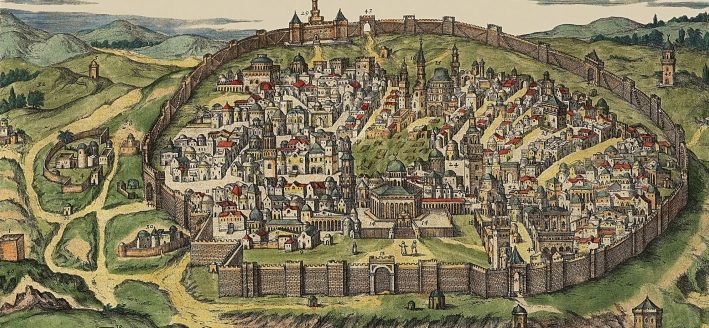

In a second incident, Jesus mentions that eighteen other people were killed when a tower fell in the city of Siloam. Sadly, this is a common tragedy in construction, even in the time of the Lord. But it wasn’t an everyday event for the families of the dead. They were in turmoil. How can anyone make sense of their loss? People have always suffered. Whether it is through disease, or the results of violence, or the result of natural disasters. It is normal for people to ask, as perhaps you have asked, “Has God lost control? Doesn’t he recognize what is happening to his people?” In the Gospel for today Jesus says, «God knows,» but the time is not yet ready for him to come to judge all people, to bring evildoers to their just ends and to protect the innocent victims of evil. Just as the farmer gives the fig tree one more chance to bear fruit, God gives mankind in general and us in particular a little more time to change our ways. This same teaching is found in the Book of Revelations, the Fifth Seal[1]. The Book of God’s Plan for mankind is brought forward, but it is bound by Seven Seals. When the Fifth Seal is broken, the blood of the martyrs is heard calling out to God from underneath the Altar of God, “How long O Lord, Holy and True, how long until you judge those who live on earth and avenge our blood.” And they are each given a white robe and told to rest until the full number of witnesses to the Lord is complete. Then God will come with power, the power of his name. Then all people will recognize him just as the Pharaoh of Egypt was forced to recognize who God was after Moses proclaimed God’s name in power. When the power of God is revealed then we, who are no longer under a cloud of uncertainly as our ancestors of the Old Testament times were, as St. Paul says in today’s second reading, when the power of God comes then we will stand before God and present ourselves and our lives to him[2]. The fig tree only has so long before it has to produce fruit. We are the fig tree. In all of this, Jesus is saying, “Life is short. Make the best use of whatever time you have.” Life is short, and at the same time, life is a journey. On this journey there is joy and there is turmoil. There are continual crises. There are continual celebrations. There’s the drudgery of everyday chores and the joy of completing our chores with and for the ones we love. All of life has meaning to the extent that we walk with the Lord. We have to take the responsibility of letting him into our lives. He wants to walk with us. We still have time. It is Lent, the time for us to face up to the evil that is around us and within us. Lent is the time for reconciliation. Great word, reconciliation. Lent is the time for us to recognize our own participation in the cumulative effects of evil in the world. Lent is a time for us to view our own personal tragedies as resulting from the effect of evil on the innocent. Lent is a time for us to ask for forgiveness and courage so that we might bear fruit. Lent is a time for us to face up to our own failings as we recognize that God can and will heal us and help us. Towers fall. Massacres take place. Loved ones die. But God gives us the strength and the courage to overcome these tragedies. It is not too late! The fig tree has been given another year. May God give us the courage to use his time and our time wisely. May we bear fruit • AE
[1] 6:9- 10 [2] Cf. 1 Cor 10:1-6, 10-12.

Fr. Agustin Schedule for the Third Sunday of Lent

Saturday March 19, 2022
3.30 p.m. Sacrament of Reconciliation @ Confessional
5.00 p.m. English Mass @ Main Church
Sunday, March 19, 2022
12.30 p.m. English Mass @ Main Church
3.00 p.m. Misa en Español @ Main Church
III Domingo de Cuaresma (Ciclo C)

Unos desconocidos le comunican a Jesús la noticia de la horrible matanza de unos galileos en el recinto sagrado del templo. El autor ha sido, una vez más, Pilato. Lo que más los horroriza es que la sangre de aquellos hombres se haya mezclado con la sangre de los animales que estaban ofreciendo a Dios. No sabemos por qué acuden a Jesús. ¿Quieren que les diga algo a las víctimas? ¿Quieren que les explique qué pecado han podido cometer para merecer una muerte así? Y si no han pecado, ¿por qué Dios ha permitido aquella muerte sacrílega en su propio templo? Jesús responde recordando otro acontecimiento dramático ocurrido en Jerusalén: la muerte de dieciocho personas aplastadas por la caída de un torreón. De ambos sucesos hace Jesús la misma afirmación: las víctimas no eran más pecadores que los demás. Y termina su intervención con la misma advertencia: «y si ustedes no se arrepienten, perecerán de manera semejante». La respuesta de Jesús hace pensar. Antes que nada, rechaza la creencia tradicional de que las desgracias son un castigo de Dios. Jesús no piensa en un Dios «justiciero» que va castigando a sus hijos e hijas repartiendo aquí o allá enfermedades, accidentes o desgracias, como respuesta a sus pecados. Después, cambia la perspectiva del planteamiento. No se detiene en teorías sobre el origen último de las desgracias, hablando de la culpa de las víctimas o de la voluntad de Dios. Vuelve su mirada hacia los presentes y los enfrenta consigo mismos: han de escuchar en estos acontecimientos la llamada de Dios a la conversión y al cambio de vida. Estamos estremecidos por la tragedia de la guerra entre Rusia y Ucrania ¿Cómo leer esta tragedia desde la actitud de Jesús? Ciertamente, lo primero no es preguntarnos dónde está Dios, sino dónde estamos nosotros. La pregunta que puede encaminarnos hacia una conversión no es «¿por qué permite Dios esto?», sino «¿Estoy contribuyendo con mis pequeños grandes odios y resentimientos a lastimar la paz?”. Al Dios crucificado no lo encontraremos pidiéndole cuentas a una divinidad lejana, sino identificándonos con las víctimas. No lo descubriremos protestando de su indiferencia o negando su existencia, sino colaborando de mil formas por mitigar el dolor alrededor de nosotros. Entonces, tal vez, intuiremos entre luces y sombras que Dios está en las víctimas, defendiendo su dignidad eterna, y en los que luchan contra el mal, alentando su combate • AE

 LA MEDITACION DE LA ESPOSA