
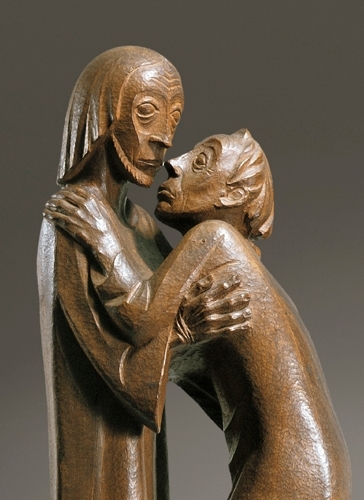
A Prodigal son. A Forgiving Father. We have heard today’s parable so many times that most of us can repeat it almost line for line. It is such a beautiful story told by the Lord with so much drama that we can vividly picture each scene. We can see the nasty younger son, demanding his piece of the inheritance so he can spend it foolishly. We see the scene of his wild parties and then his so-called friends deserting him when his money ran out. We can picture his disgust at the smell of the pigs, and here he was, a Jew, feeding pigs and longing to eat pig slop. We can picture the father, looking out across the fields every day hoping that perhaps his son will return, and then the tears of joy when he saw the boy. We can picture the older brother, furious that the one who had caused his family so much pain was now being welcomed back into the fold. And we can see the pain of the father when the older brother refuses to join in the Banquet of the Father’s Love. Perhaps, though, the parable is so familiar that it has lost its impact. We have to remember over and over that the Forgiving Father does not want us sitting in misery on our rocks, overwhelmed with guilt and shame. No, the Forgiving Father wants to embrace us and bring us home. This is Laetare Sunday, the Sunday where we express joy that the celebration of our redemption is only three weeks away. But there is more to our joy than that. This is the Sunday when we come to a more profound understanding of how deep our Father’s love is for us. He doesn’t care about what we have done. He doesn’t care about how we have hurt him, whether its squandering his money, running away from home and embracing a horrible life, destroying his hard work in the fields, or whatever it is that might lead us to sit on a rock shuddering in shame. All that God the Father cares about is that we were lost, but now are found. He just wants to put his arm around us and say, “Let’s go home.” This beautiful parable gives us a hint at how deep is God’s mercy, and how profound is his compassion. May we have the humility to seek forgiveness. And may we forgive others as we have been forgiven • AE

Fr. Agustin Schedule for the Fourth Sunday of Lent

Saturday March 26, 2022
3.30 p.m. Sacrament of Reconciliation @ Confessional
5.00 p.m. English Mass @ Main Church
Sunday, March 27, 2022
12.30 p.m. English Mass @ Main Church
3.00 p.m. Misa en Español @ Main Church
IV Domingo del Tiempo de Cuaresma (Ciclo C)

Jesús no queria que quienes lo escuchaban sintieran a Dios como un rey, un señor o un juez. Él lo experimentaba como un padre increíblemente bueno, así fue que en esta parábola (que más bien deberíamos llamar «Del padre bueno»), nos presenta la forma en la que él experimenta a su Padre. Dios es como un padre que no piensa en su propia herencia. Respeta las decisiones de sus hijos. No se ofende cuando uno de ellos le da por muerto y le pide su parte de la herencia. Lo ve partir de casa con tristeza, pero nunca lo olvida. Aquel hijo siempre podrá volver a casa sin temor alguno. Cuando un día lo ve venir hambriento y humillado, el padre se conmueve, pierde el control y corre al encuentro de su hijo. Se olvida de su dignidad de señor de la familia, y lo abraza y besa efusivamente, como una madre. Interrumpe su confesión para ahorrarle más humillaciones. Ya ha sufrido bastante. No necesita explicaciones para acogerlo como hijo. No le impone castigo alguno. No le exige un ritual de purificación. No parece sentir siquiera la necesidad de manifestarle su perdón. No hace falta. Nunca ha dejado de amarlo. Siempre ha buscado su felicidad. Él mismo se preocupa de que su hijo se sienta de nuevo bien. Le regala el anillo de la casa y el mejor vestido. Ofrece una fiesta a todo el pueblo. Habrá banquete, música y baile. El hijo ha de conocer junto al padre la fiesta buena de la vida, no la diversión falsa que buscaba entre prostitutas paganas. Así le sentía Jesús a Dios y así lo repetiría también hoy a quienes olvidados de él, se sienten lejos o comienzan a verse como perdidos en medio de la vida. Cualquier teología, predicación o catequesis que olvida esta parábola central de Jesús e impide experimentar a Dios como un Padre respetuoso y bueno, que acoge a sus hijos perdidos ofreciéndoles su perdón gratuito e incondicional, no proviene de Jesús ni transmite su Buena Noticia de Dios. No lo olvidemos • AE

 LA MEDITACION DE LA ESPOSA