
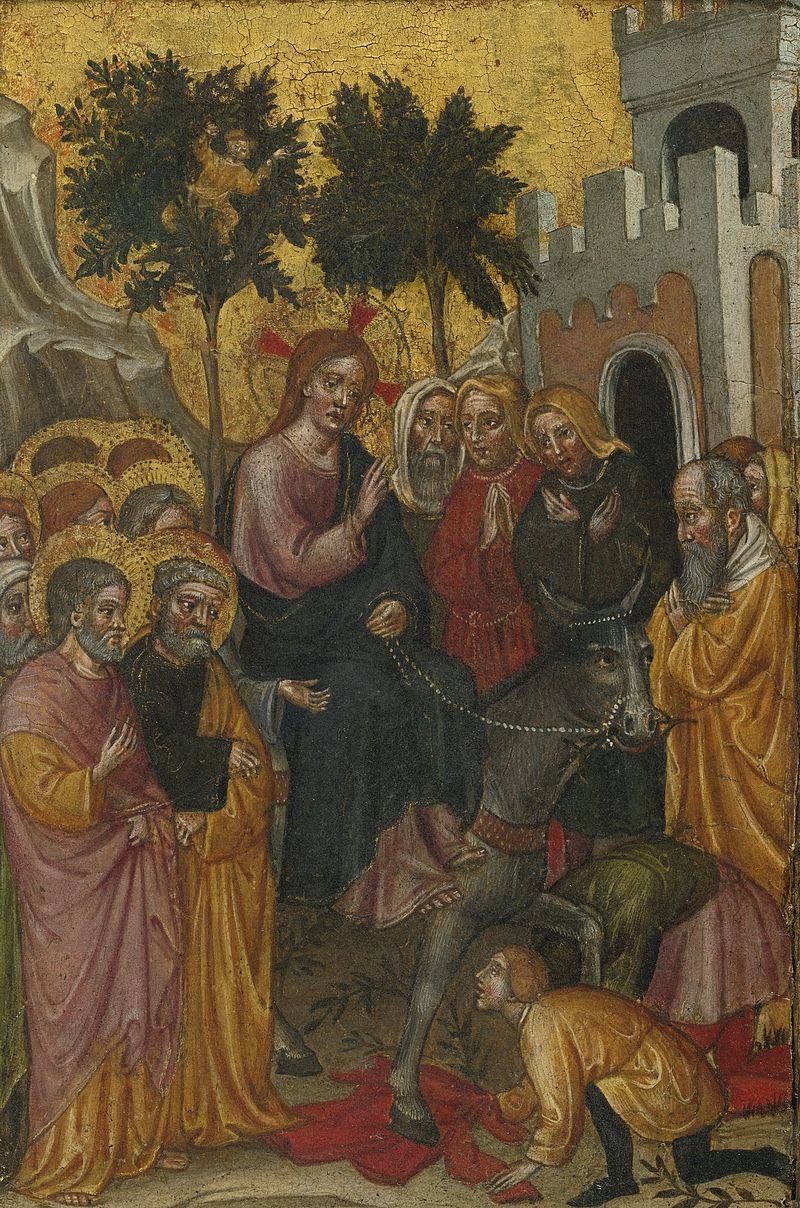
The contrast in today’s liturgy is shocking. We began with the enactment of the Palm Sunday Procession of the Lord into Jerusalem. Jesus comes in riding on a donkey as the prophet Zechariah had foretold. People lay their cloaks before Him. Men and women cheered. Children sang. Jesus remained quiet. He knew that there would be a radical change in the way that most perceived Him. They were ready for a Messiah to rule them. They were not ready for a Messiah to suffer for them. And so we come to that huge contrast, the contrast from palms to passion. We displayed this in our liturgy with the change of music and vestments, from white to red, and from triumphal music proclaiming All Glory Laud and Honor, to the solemn music remembering the cross. O Sacred Head Surrounded by crown of piercing thorns. O Bleeding head so wounded, reviled and put to scorn. The events we commemorate during Holy Week often re-occur in our own lives. One minute we are acclaimed, feted, made to feel altogether good about ourselves. Crowds gather around us wanting to shake our hand, pat us on the back. OK, maybe not that much. But we do have those times when people congratulate us for doing our job well, for getting good grades in school, or for some sport accomplishment, or an accomplishment in dance, music or other areas of fine arts. And then, suddenly, everything changes. Suddenly we are no longer that genius in the office, that brilliant student, that protégé on the stage, that wonder on the athletic field. In this “What have you done for me lately?” world, we can find ourselves feted one moment and forgotten the next. Then when things go wrong, we wonder, “Where did the crowd go?” And we feel very much alone, as Jesus felt when only a handful of people were there to support him on the hill of Calvary. Jesus was there on the hill because he was true to Himself. He lived and died for the Kingdom of God. He lived and died to lead us to the Kingdom of God. Like the Lord, we can and must be true to ourselves. We have to realize that it is not the opinion of the masses that matter. What matters is that we are true to ourselves. If that brings us to our own cross, and it will, if that results in the crowd of supporters being reduced to just a handful of our closest friends and immediate family, and it will, so be it. Standing up for what is right and true, what is moral and just, is never going to be popular. Jesus reminds us this with clear words: “If the world hates you, keep in mind that it hated me first.”[1] What matters is that we are who we were created to be, reflections of God’s love in the world. If standing up for what is right and moral results in our being mocked and rejected, if there are times that we feel very alone in proclaiming and living our faith, then we are in good company. And we lose friends, or at least people we had thought were friends. And we are alone. Welcome to the cross. We need to be true to ourselves. We need to be true to the image of God we were created to reveal to the world. We need to embrace our cross as the Lord embraced His Cross. And when we take those steps of courage, when we leap into a living faith, we need to remember that no matter what is happening around us, no matter whether we are feted or forgotten, the Lord embraces us. So, we remember the Lord’s Passion this week, uniting our own struggles to His. Let us pray for the faith to recognize that the Lord sees us, knows our determination to live for Him, and is present to guide us through the cross to the joy of everlasting life • AE
[1] John 15:18
Fr. Agustin Schedule
Saturday April 9, 2022
3.30 p.m. Sacrament of Reconciliation @ Confessional
5.00 p.m. Blessing of the branches and Mass @ Main Church
Sunday, April 10, 2022
12.30 p.m. Blessing of the branches and Mass @ Main Church
3.00 p.m. Bendición de las palmas y Misa en Español @ Main Church
Domingo de Ramos de la Pasión del Señor (2022)
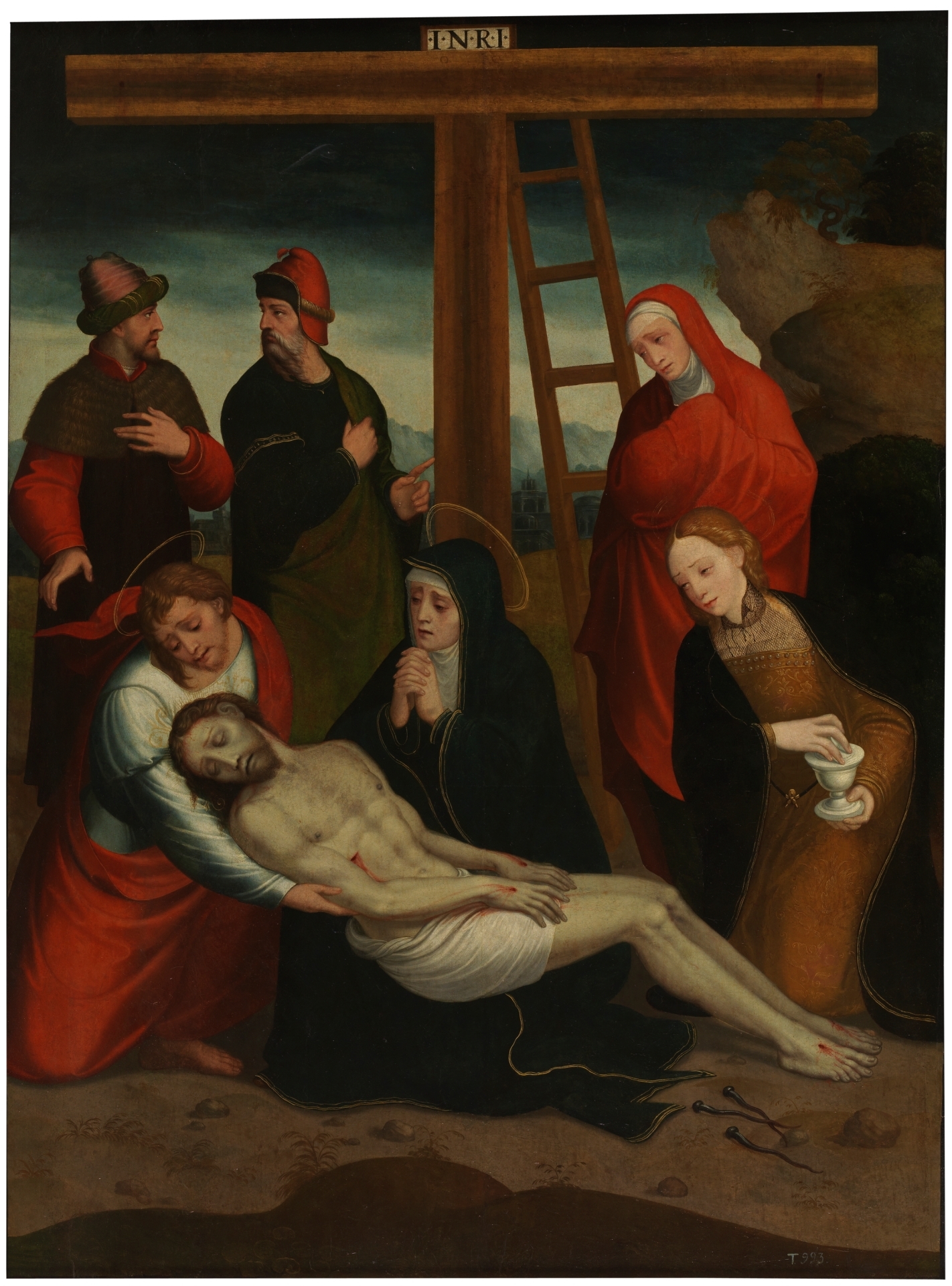
Juan Correa de Vivar, Lamentación ante Cristo muerto (c. 1550), óleo sobre tela, Museo Nacional del Prado (Madrid)
Esta semana que hoy comenzamos vamos a meditar en la muerte y resurrección de Jesús: una buena ocasión para escuchar de manera renovada la llamada evangélica a tomar la cruz y seguir al Señor. Hemos de recordar que el dolor y la enfermedad, los conflictos y tribulaciones de la vida no los ha inventado Cristo ni la teología cristiana. Están ahí como parte integrante de nuestra existencia. Tarde o temprano, todos hemos de enfrentarnos al sufrimiento y la prueba. Por otra parte, cuando Jesús nos llama a tomar la cruz, no nos está invitando a procurarnos una vida todavía más dolorosa y atormentada, añadiendo nuevo sufrimiento a nuestro vivir diario. Tomar la cruz es más bien descubrir cuál es la manera más acertada y sana de vivir ese sufrimiento que ha de aceptar quien quiere ser humano hasta el final. El sufrimiento no tiene ningún valor en sí mismo. Es una experiencia negativa que ningún hombre sano ha de buscar arbitrariamente y sin necesidad. Pero al mismo tiempo, es una experiencia ante la cual hemos de tomar postura. Y es aquí donde los cristianos miramos al Crucificado para aprender a vivir de manera humana los diferentes sufrimientos. Hay un sufrimiento que forma parte de nuestra condición humana, siempre frágil y caduca. Todos estamos expuestos al dolor y la enfermedad. Todos vivimos amenazados por la desgracia y la muerte. Tomar la cruz significa, entonces, vivir esa experiencia dolorosa siguiendo de cerca a Cristo, sostenidos por una confianza absoluta en un Dios que, incluso en los momentos más oscuros, está junto a nosotros y de nuestra parte. Y luego hay un sufrimiento inevitable en todo aquel que busca renovarse y crecer de manera positiva. Estamos tan arraigados en un egoísmo enfermizo que todo aquel que desea liberarse y ser cada día más humano, debe aceptar el precio que exige esa superación constante. Tomar la cruz significa, entonces, asumir y trabajar gozosamente nuestra conversión aceptando las renuncias y sacrificios que nos llevarán a una vida más plenamente humana. Finalmente, hay un sufrimiento que es resultado de seguir fielmente al Señor y de un compromiso inquebrantable por el evangelio. Así, tomar la cruz significa aceptar pacientemente el rechazo, el descrédito o la persecución que nos pueden llegar como consecuencia del seguimiento a Cristo, sabiendo que el destino de quien trata de humanizar la vida como Jesús es compartir también con él la crucifixión. Pero la cruz no es el último destino de quien sigue a Cristo. Si los cristianos asumimos esa cruz inevitable en todo aquel que se esfuerza por ser él mismo más humano y por construir un mundo más habitable, es porque queremos arrancar para siempre del mundo y de nosotros el mal y el sufrimiento. A una vida crucificada corno la de Jesús sólo le espera resurrección • AE
 LA MEDITACION DE LA ESPOSA