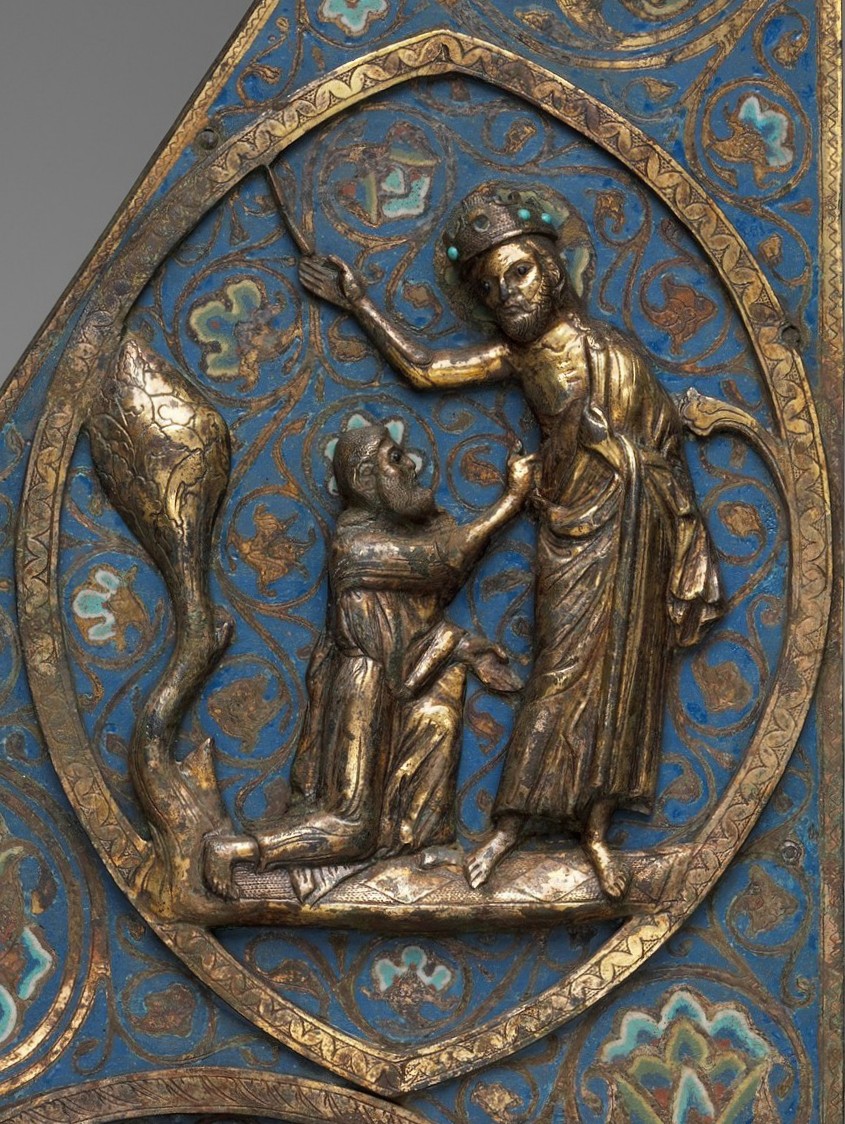
Anonymus artist, The Incredulity of Saint Thomas, from the Tabernacle of Cherves (1220–30), Champlevé enamel and copper, Metropolitan Museum of Art, New York.
On this Second Sunday of Easter, we hear the Gospel of Doubting Thomas. This Gospel leads me pondering two main questions: «Why do we have doubts?» and, «Why do we have faith?» doubting is part of being a human being, but I am still shocked when I read that not only did the disciples doubt the Lord during His ministry on earth and during His Passion, but they also even doubted Him after the Resurrection[1]. Why did they doubt? Well, most probably, their doubts were simply part of being human beings. We are always going to have doubts until we see God face to face, However, the point is in thinking things always positive. We have faith because we have experienced the Love of God in our lives as individuals and as a people. We have faith because we have felt His Love within us at various times in our lives, usually when we least expect it. We have faith when we reflect on how pointless life would be if Jesus had not Risen from the Dead and given us His Life, gifted us with the Spiritual. At the end of today’s Gospel we heard: “Now Jesus did many other signs in the presence of his disciples that are not written in this book. But these are written that you may come to believe that Jesus is the Christ, the Son of God, and that through this belief you may have life in his name”[2]. We have faith because Jesus has given us life. The tomb is empty, but our lives are full. Jesus Christ is our deepest love. His presence makes all life worthwhile. His presence is a guarantee of eternal life. His presence is a guarantee of eternal love. This Sunday is Divine Mercy Sunday. The Lord knows us better than we know ourselves. He sees what is going on inside of us and calls us to trust in Him. We live under the mercy of God • AE
[1] And it was not just Thomas. Look at Matthew 28:16-20. As the disciples gathered on the Mount of the Ascension, Jesus appeared again to them, but, the scripture says, «some still doubted. [2] Jn 20:19-31

Fr. Agustin Schedule for the Second Sunday of Easter (Divine Mercy Sunday 2022)

12.00 p.m. Holy Mass (English Mass @ Main Church)
3.00 p.m. Holy Mass (Misa en Español @ Main Church)
5.00 p.m. Divine Mercy Chaplet with Eucharistic Adoration & Benediction (@ Main Church)
II Domingo de Pascua (Domingo de la Divina Misericordia)
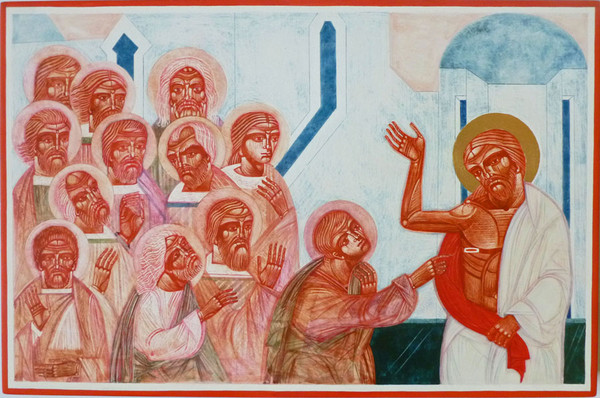
Ulyana Tomkevych, La Duda de Tomás, tempera sobre madera, Contemporary Sacred Art Gallery.
La figura de Tomás como discípulo que se resiste a creer es muy popular entre los cristianos. Sin embargo, el relato evangélico dice mucho más. Jesús resucitado se dirige a él con unas palabras que tienen mucho de llamada apremiante, pero también de invitación amorosa: «No seas incrédulo, sino creyente». Tomás, que lleva una semana resistiéndose a creer, responde a Jesús con la confesión de fe más solemne que podemos leer en los evangelios: «Señor mío y Dios mío»[1]. ¿Qué ha experimentado este discípulo en Jesús resucitado? ¿Qué es lo que ha transformado a aquel que dudaba? ¿Qué recorrido interior lo llevó del escepticismo a la confianza? A lo largo de estos años, hemos cambiado mucho por dentro. Nos hemos hecho más escépticos, pero también más frágiles. Nos hemos hecho más críticos, pero también más inseguros. Cada uno hemos de decidir cómo queremos vivir y cómo queremos morir. Cada uno hemos de responder a esa llamada que, tarde o temprano, de forma inesperada o como fruto de un proceso interior, nos puede llegar de Jesús: «No seas incrédulo, sino creyente». Tal vez, necesitamos despertar más nuestro deseo de verdad. Desarrollar esa sensibilidad interior que todos tenemos para percibir, más allá de lo visible y lo tangible, la presencia del Misterio que sostiene nuestras vidas. Ya no es posible vivir como personas que lo saben todo. No es verdad. Todos, creyentes y no creyentes, ateos y agnósticos, caminamos por la vida envueltos en tinieblas. A Dios lo buscamos a tientas, como nos recuerda el libro de los Hechosecho[2].
¿Por qué no enfrentarnos al misterio de la vida y de la muerte confiando en el Amor como última Realidad de todo? Ésta es la invitación decisiva de Jesús. Más de un creyente siente hoy que su fe se ha ido convirtiendo en algo cada vez más irreal y menos fundamentado. Tal vez, ahora que no podemos ya apoyar nuestra fe en falsas seguridades, estamos aprendiendo a buscar a Dios con un corazón más humilde y sincero. No podemos olvidar que una persona que busca y desea sinceramente creer, para Dios es ya creyente. Muchas veces, no es posible hacer mucho más. Y Dios, que comprende nuestra impotencia y debilidad, tiene sus caminos para encontrarse con cada uno y ofrecerle su salvación • AE

 LA MEDITACION DE LA ESPOSA