
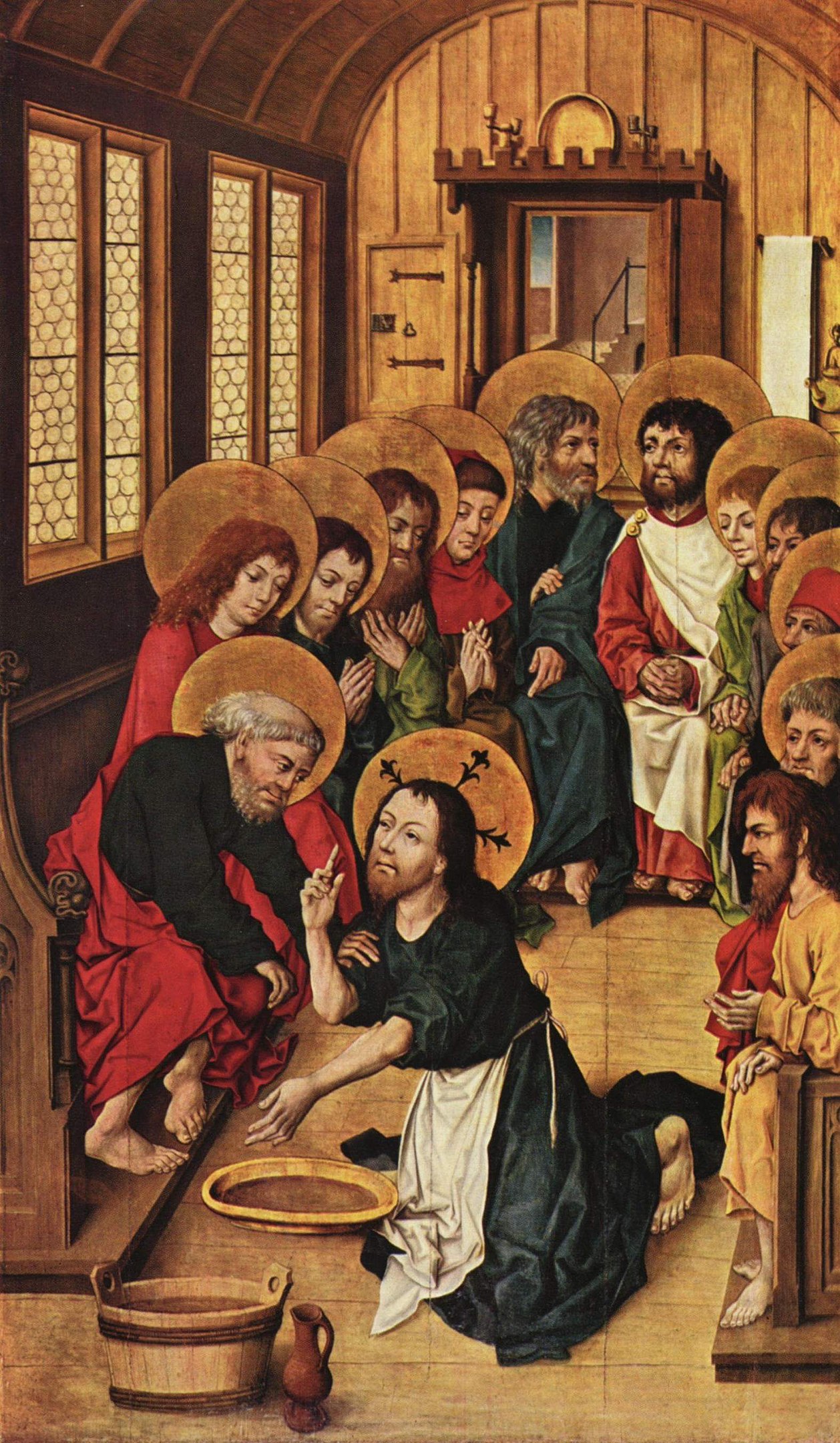
Behold, I make all things New,” the One who sits on the Throne said in the second reading from the Book of Revelations. The old order has passed away. There will be a new heaven, a new earth, a new Jerusalem. This theme of newness is continued in today’s Gospel where Jesus says, “I give you a new commandment: love one another.” There is to be a new relationship with God, and a new relationship with each other. Who do we think that we are that we can just talk to the Almighty Creator of the Universe every day and that He will hear us and respond to us? Who do we think we are? Well, we are who He made us to be. We are His Daughters and Sons! Daughters of God, Sons of God, we are sacred, holy to God. He loves us as a Father loves his children. Of course we can talk to Him all day! And just as good parents love it when their children confide in them, God loves us when we confide in Him. We all feel that we are not good enough. But God makes us good enough. He makes us better than we are, infinitely better than we are. He makes all things new. There is also a new way of living experienced in the way we Christians treat each other and reach out to those in the world around us. “This is how all will know that you are my disciples, if you love one another.” So, the greatest proof of our faith is not a theological or philosophical argument that can be made to defend the faith or some individual dogma, or belief of the faith. The greatest proof of our faith is found in the way we treat each other and the way that we reach out to all others. The vast majority of the people whom I have witnessed coming into the faith, have done so because they want to be part of this Community of Love. The Eucharist is certainly a great draw for them because they want to share this special presence of God with the Catholic community, but the sacramental presence only makes sense to them when they experience the sacrificial love of the Lord in the way that Christians treat each other. Before he gave them the Eucharist, Jesus washed the feet of His disciples and then told them to do the same thing. People experience others being kind, loving and good and say, “I want to be part of that.” This type of love is not the way of the world. It is the Way of Jesus Christ, the Way of the One who has made all things new. Our faith is ever ancient and ever new. It began 2,000 years ago when the Holy Spirit of the Father and the Son, empowered the disciples on Pentecost Sunday to proclaim the Gospel of Christ to the whole world. It is renewed every time each of us renews our relationship with God and lives this relationship in the way we treat others. “See, I make all things new.” in our personal prayer this morning we could say to the Lord: «Thank you, Lord, for making us your Daughters and Sons. Thank you, Lord, for making us sacred, holy. Thank you, Lord, for leading us to make your love real in the world by loving one another. Thank you, Lord, for Easter. Thank you, Lord, for making all things new» • AE

Fr. Agustin Schedule for the Fifth Sunday of Easter (2022)

Saturday May 14, 2022
2.30 p.m. Sacrament of Baptism for Guillermo Salcedo, Jr.
4.00 p.m. Sacrament of Reconciliation (Confessional)
5.00 p.m. Holy Mass (English Mass @ Main Church)
Sunday May 15, 2022
7.30 a.m. Holy Mass (English Mass @ Main Church)
10.00 a.m. Holy Mass (English Mass @ Main Church)
V Domingo de Pascua (Ciclo C)

Los cristianos empezaron a crecer en número en medio de una sociedad en la que había distintos términos para expresar lo que nosotros llamamos hoy amor. La palabra más usada era philia que designaba el afecto hacia una persona cercana y se empleaba para hablar de la amistad, el cariño o el amor a los parientes y amigos. Se hablaba también de eros para designar la inclinación placentera, el amor apasionado o sencillamente el deseo orientado hacia quién produce en nosotros goce y satisfacción. Los primeros cristianos abandonaron prácticamente esta terminología y pusieron de moda otra palabra casi desconocida: ágape, a la que dieron un contenido nuevo y original. No querían que se confundiera con cualquier cosa el amor inspirado en Jesús. De ahí su interés en formular bien el mandamiento nuevo, el del amor: «Os doy un mandato nuevo: que os améis unos a otros como yo os he amado». El estilo de amar de Jesús es inconfundible. No se acerca a las personas buscando su propio interés o satisfacción, su seguridad o bienestar. Sólo parece interesarse en hacer el bien, acoger, regalar lo mejor que él tiene, ofrecer amistad, ayudar a vivir. Lo recordarán así años más tarde en las primeras comunidades cristianas: «Pasó toda su vida haciendo el bien». El amor de Jesus -y por ende el de los cristianos- tiene un carácter servicial. Jesús se pone al servicio de quienes lo pueden necesitar más. Hace sitio en su corazón y en su vida a quienes no tienen sitio en la sociedad ni en la preocupación de las personas. Defiende a los débiles y pequeños, a los que no tienen poder para defenderse a sí mismos, a los que no son grandes o importantes para nadie. Se acerca a quienes están solos y desvalidos, los que no tienen a nadie. Entre nosotros, hoy, lo habitual es amar a quienes nos aprecian y quieren de verdad, ser cariñosos y atentos con nuestros familiares y amigos y al mismo tiempo ¡ay! vivir indiferentes hacia quienes sentimos como extraños y ajenos a nuestro pequeño mundo de intereses. O quienes no piensan como nosotros. Es más, parecería que lo políticamente corrrecto es vivir rechazando y excluyendo a quienes nos rechazan o excluyen. Sin embargo -y este es el punto en el que quiza podríamos detenernos un momento el día de hoy hoy en nuestro momento de oración personal- lo que le distingue al cristiano, al verdadero seguidor de Jesús, no es cualquier amor, sino precisamente ese tipo de amor que consiste en saber acercarse a quienes nos pueden necesitar y que, además, no lo van a agradecer o valorar. Es ahi donde podemos medir la calidad de nuestro amor • AE
 LA MEDITACION DE LA ESPOSA