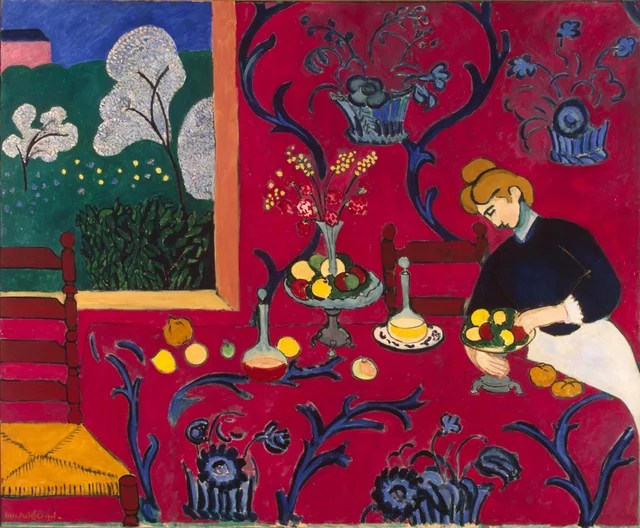
H. Matisse, The Dessert: Harmony in Red (The Red Room), 1908, oil on canvas, Hermitage Museum (St. Petersburg, Rusia)
In today’s Gospel The Lord is not playing Miss Manners. He’s not giving lessons in proper etiquette. He is teaching us the proper way to view ourselves and others. He is teaching us about honor, respect, and, particularly, about humility. The Banquet table in the first part of the Gospel is the Table of the Lord. We are invited to the celebration of God’s Kingdom. Our joy should be that we are invited to this meal. We cannot be concerned with comparing ourselves to the other guests. We are told that we shouldn’t think so highly of ourselves that we put ourselves over other people. Symbolically, we shouldn’t move to the best seat at the banquet thinking that we are so much better than everyone else. Are we better than others because we are here at Mass right now and others are not planning on worshiping this weekend? Is that how the Lord wants us to think? Of course not. I, and I am sure you, run into many people who assert their high spirituality, greater than all others, save those who share their particular experiences. They are part of a particular prayer movement or a spiritual group, or they have visited shrines, they join a traditionalist parish and consider themselves the “faithful Catholics” as in real Catholics opposed to the rest of us. They insinuate, or even say directly: “I’m sorry that you haven’t made this movement, joined this group or visited that shrine. You are really missing out here.” And in this way purport to be so much better than everyone else. What they are in fact saying is, «You haven’t made this movement, you haven’t visited this shrine, well, you’re just not up there, spiritually.» A truly holy person would never belittle the faith-life of another person. The first dinner instruction encourages us to recognize who we are before the Lord, not to be concerned with making believe we are better than others. The second part of the gospel does not speak about the Table of the Lord, but refers to honoring people for favors to come later. The Christian attitude should be to care genuinely for others, not try to buy them. If we are concerned with whom they are, not what they can do for us, then we are honoring the Lord who is present within them. Put both dinner instructions together and we have, simply enough: recognize the presence of the Lord in ourselves and in others and honor that presence. This is Christian humility. Humility is rejoicing in whom we are and who others are before the Lord. If we live this way then we, the humble, will be exalted by the Lord • AE
Fr. Agustin Schedule for the Twenty-Second Sunday in Ordinary Time
St. Dominic Catholic Church
Saturday August 27, 2022
3.30 p.m. Sacrament of Reconciliation (Confessional)
5.00 p.m. (English Mass @ Main Church)
Sunday August 28, 2022
12.30 p.m. Holy Mass (English Mass @ Main Church)
3.00 p.m. Santa Misa en Español (Final del Retiro de ACTS)
XXII Domingo del Tiempo Ordinario (Ciclo C)
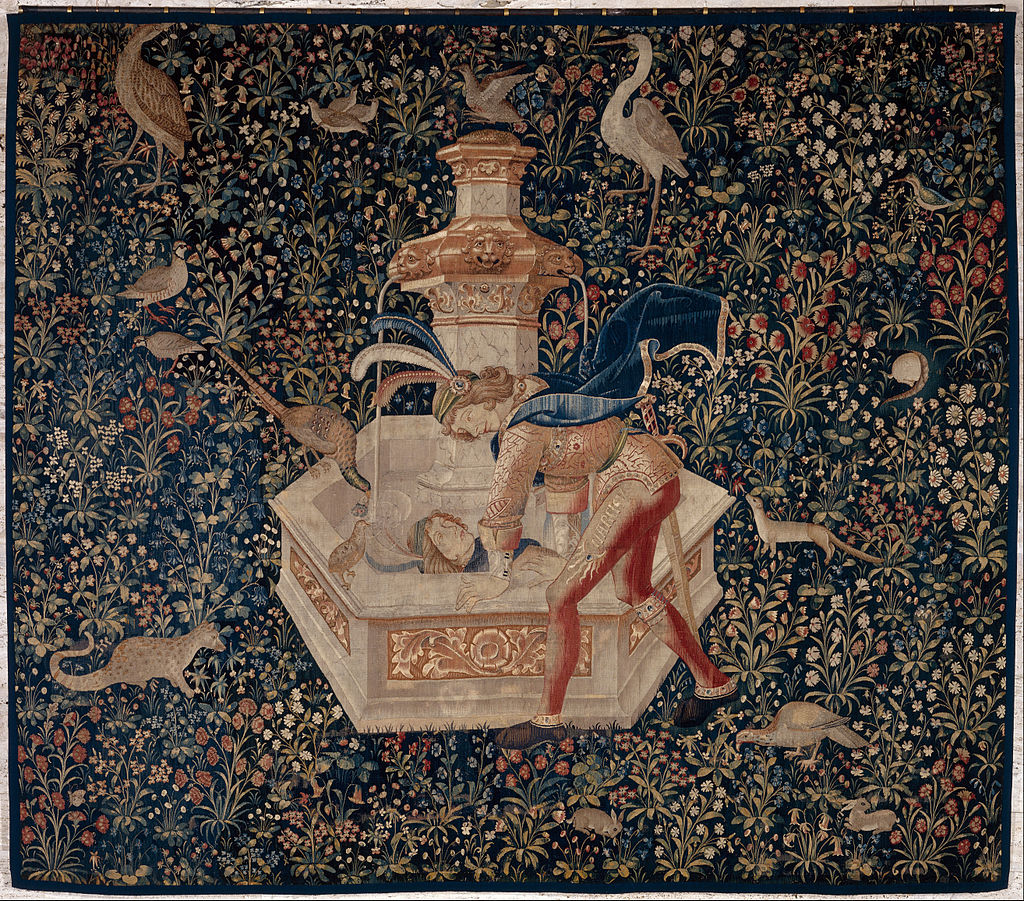
Autor anónimo, Narciso, (c. 1500), tapiz, Museo de Bellas Artes de Boston,
A finales de los años setenta, CH. Lasch escribió La cultura del narcisismo (1979), un libro que podría ayudarnos a entender mejor que el individualismo al que tanto se nos invita, en realidad no es autoafirmación, sino pérdida de identidad, vacío interior y empobrecimiento. Basta tomar nota de algunos de sus rasgos. La personalidad narcisista centra al individuo sobre sí mismo. La meta casi única es el propio bienestar y el equilibrio emocional. Fuera problemas. Lo importante es vivir en paz y tranquilo evitando lo que pueda complicarnos las cosas. En consecuencia, se vive a distancia de aquello que pueda comprometer. No se toma en serio lo que puede significar exigencia y esfuerzo comprometido. Se habla de derechos, pero poco o nada de obligaciones. El individuo defiende por encima de todo su interés personal, y así el resultado es empobrecedor. La persona no crece ni despliega sus posibilidades. Busca seguridad y bienestar. Toda su identidad consiste en vivir cómodamente en cada momento. Todo vale con tal de vivir bien: creencias de cualquier tipo, religión «a la carta», ética de conveniencia, etc. Los problemas personales se magnifican y así poco a poco se cae en la apatía e indiferencia ante los sufrimientos de los demás. El evangelio de este domingo evangelio invita a ver la vida de otra manera: «Hay más alegría en dar que en recibir». Una frase absolutamente contracultural, sin embargo la experiencia nos dice que es verdad para aquel que tenga un espíritu suficientemente humano y que busque verdaderamente seguir al Señor. Más contrarias aún al espíritu de los tiempos son las palabras recogidas por el evangelio de Lucas: «Cuando des un banquete, invita a los pobres, lisiados, cojos y ciegos: dichoso tú porque no pueden pagarte». Reconozcámoslo: tenemos miedo a la verdadera felicidad porque creemos que ésta se encuentra sólo en el placer y no en la entrega generosa. Sin embargo, la sabiduría de ser feliz supone la libertad de desprenderse. Hay una dicha que sólo conoce quien sabe dar sin recibir nada a cambio, amar a fondo perdido. Todo lo contrario a lo que el mundo nos dice, pero todo ello profundamente humano y gratificante y del color del camino de Cristo • AE
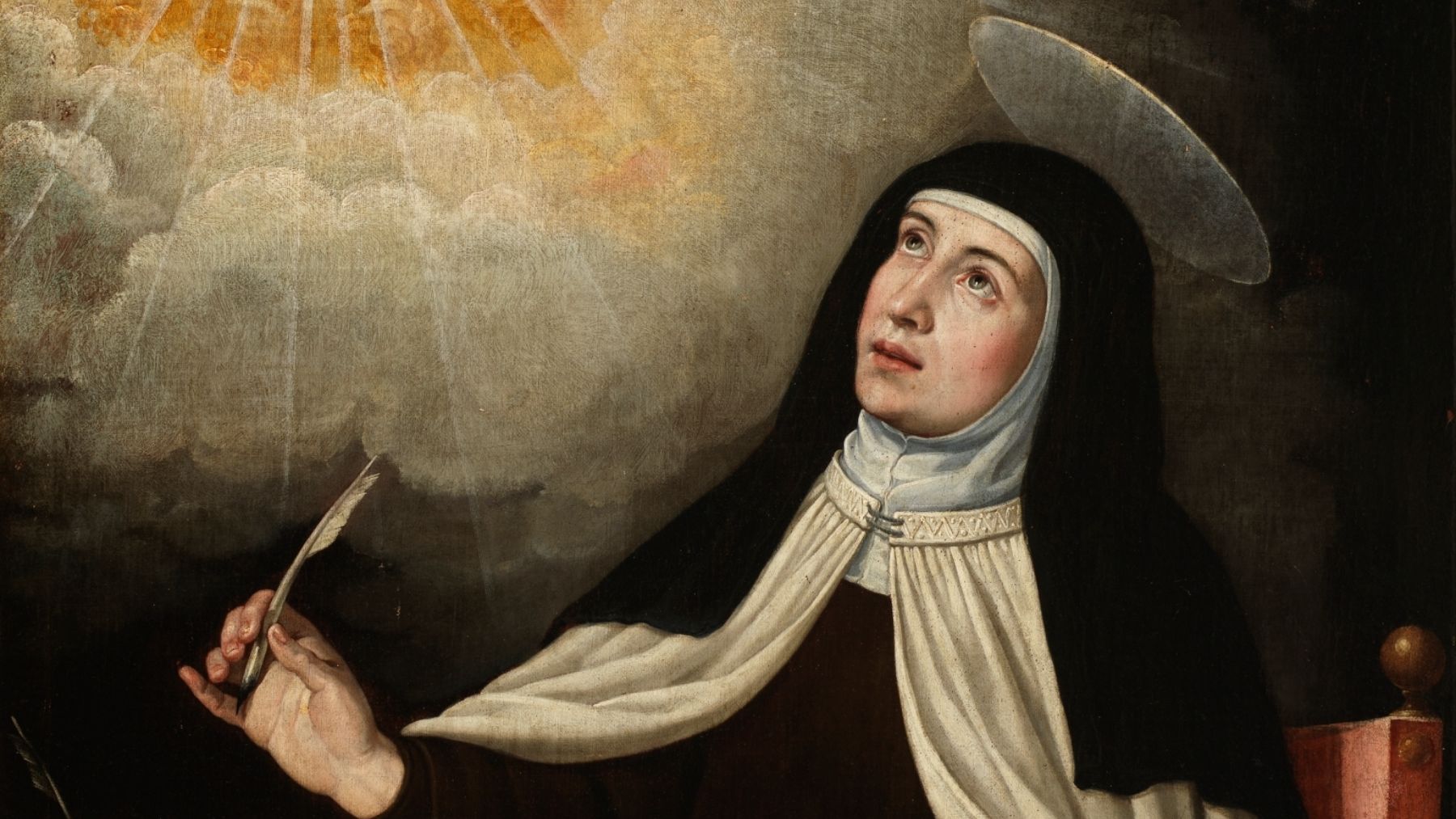
There is a story told by St. Teresa of Jesus, the founder of the Discalced Carmelites, that one time during prayer she complained to the Lord that she had so many trials. Our Lord answered her that that was the way he treated his friends, burden them with trials. She immediately replied, «No wonder you have so few friends». In response to a question whether only few will be saved, Jesus answered, “Strive to enter through the narrow gate, for many, I tell you, will attempt to enter but will not be strong enough.» You probably noticed that in big schools and buildings there is a narrow gate. There is a wide gate for the cars. There is also a narrow gate for individual persons. The structure of this narrow gate is such that it allows only one person at a time to pass through conveniently. This is also what Jesus meant. We are to strive to pass through this narrow gate where only one person passes through at one time. In John´s gospel Jesus speaks twice that he is the gate. In other words it is Jesus himself through whom we pass through. And we do this one by one, not in a group. This means that individually we enter his life, his thoughts, his desires. This is nothing else than becoming friends with him. He says that we strive to pass through him. The word used to translate the word «strive» here is the one from where we get the English word «agonize». This is the word used to describe an athlete struggling with all his strength to compete for a prize. In other words Jesus is telling us to strive with all our might, with all the strength that we have to be his friend, to enter into his life, his way of thinking, speaking, and acting. This is because there are so many things alluring us away from devoting our whole life for Jesus: our family, our friends, our work, our recreation, etc. The Letter to the Hebrews in our second reading tells us that this is a painful process, the putting on of Christ in our life. But it is a condition for us to get saved both from the evils of this present life and those of the life to come. We know that only a few do this. Most of us are contended with discharging our religious obligations and doing what we can to avoid sins. But Jesus is not content with this. He wants us to so desire him with all our strength to be his friend that we can truly say with the psalmist: «Whom have I in heaven but you? and there is none upon earth that I desire besides you» • AE
Fr. Agustin Schedule for the Twenty-First Sunday in Ordinary Time St Dominic Catholic Church (San Antonio, TX)
Saturday August 20, 2022
3.30 p.m. Sacrament of Reconciliation (Confessional)
5.00 p.m. (English Mass @ Main Church)
Sunday August 21, 2022
7.30 a.m. Holy Mass (English Mass @ Main Church)
10.00 a.m. Holy Mass (English Mass @ Main Church)
XXI Domingo Del Tiempo Ordinario (Ciclo C)
Esta de la puerta estrecha es sin duda, una de las frases más duras de Jesús para los oídos del hombre contemporáneo ¿Qué puede significar hoy esta exhortación evangélica? ¿hay que volver de nuevo a un cristianismo tenebroso y amenazador?, ¿hemos de entrar otra vez por el camino de un moralismo estrecho? Aunque la sociedad permisiva parece olvidarlo, el esfuerzo y la disciplina son absolutamente necesarios para alcanzar la madurez personal. No hay otro camino. Si alguien pretende lograr su realización por el camino de lo agradable y placentero, pronto descubrirá que cada vez es menos dueño de sí mismo y de sus actos. Nadie alcanza en la vida una meta realmente valiosa sin renuncia y sacrificio. Esta renuncia no ha de ser entendida como una manera tonta de hacerse daño a sí mismo privándose de la dimensión placentera que entraña el vivir saludable. Se trata de asumir las renuncias necesarias para vivir de manera intensa y positiva. Así, la verdadera vida es armonía. Armonía entre lo que creo, lo que pienso y lo que hago. No siempre es fácil esta armonía personal. Vivir de manera coherente con uno mismo exige renunciar a todo lo que entorpece o impide esa armonía. Pero, sin esta renuncia, la persona no crece. La vida es también verdad. Tiene sentido cuando la persona ama la verdad, la busca y camina tras ella. Pero esto exige esfuerzo y disciplina; renunciar a tanta mentira y autoengaño que desfigura nuestra persona y nos hace vivir en una realidad falsa. La vida es amor. Quien vive encerrado en sus propios intereses, esclavo de sus ambiciones, podrá lograr muchas cosas, pero su vida es un fracaso. Naturalmente, el amor exige renunciar a egoísmos, envidias y resentimientos. Pero, sin esta renuncia no hay amor, y sin amor no hay crecimiento de la persona. La vida es regalo pero es tarea. Ser humano es una dignidad pero es también un trabajo. No hay crecimiento sin desprendimiento; no hay libertad sin sacrificio; no hay vida sin renuncia. Uno de los errores más colosales de la sociedad permisiva es confundir la felicidad con la facilidad. La advertencia del Señor en el evangelio de hoy, pues es importante: Sin renuncia no se gana ni esta vida ni la eterna • AE
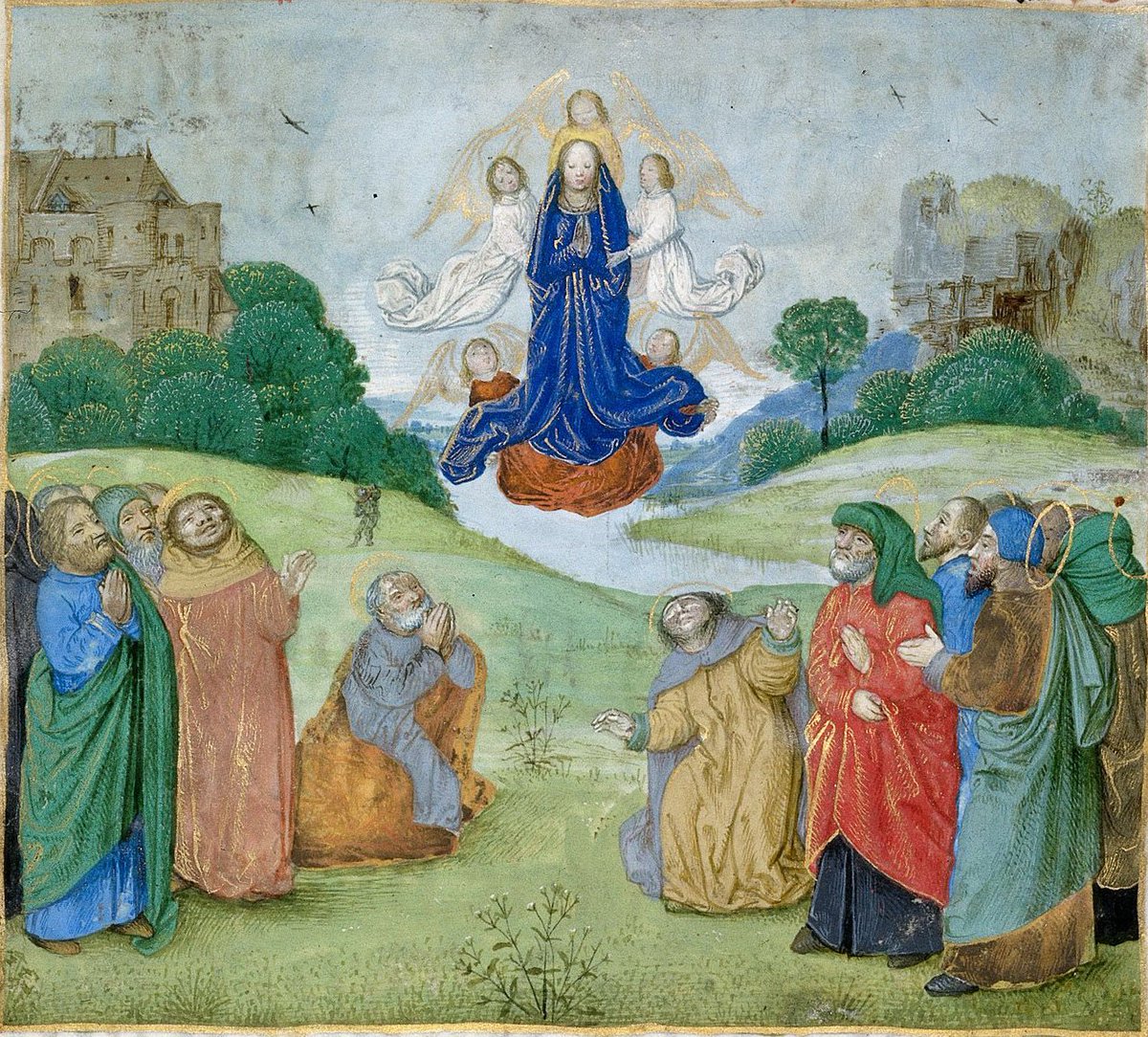
Master of the Dresden Prayerbook, Detail of a miniature of the Assumption of the Virgin, c. XV, British Library MS Royal 20 B II f. 1.
This beautiful celebration, the Assumption, is not just about Mary: It is about all of us, and it is about life, or more exactly, about the greatness of the gift of life! The great things that God has done for the Virgin Mary God desires to do for us all. The transformation that the Virgin Mary now enjoys in heaven is our hope: Our Lady is a sign of sure hope. So why this celebration? Why a solemnity, with two readings, and profession of faith and flowers? First, because today we remember the entrance of the Virgin Mary into the kingdom of heaven, because everything related to Mary must be beautiful, and because we really believe that God will raise us too, body and soul, to new life after our own death. The doctrine of Mary’s assumption into heaven Helps us to understand better that our bodies are destined to be gloriously changed after death. So, here we have another good reason to be men and women who deeply respect and protect life: We Christians believe that life has great value, that life is a gift from God, and that only God can give it and take it away. So, today is a good day to ask the Lord to help us work with strength and enthusiasm to create and promote the culture of life, to give value to all kind of life. All lives matter! We must protect life, we must stop seeing as something normal, cool, or even a right, to kill a baby in its mother’s womb… Abortion, which is a very important issue, is the consequence of another issue that we have not paid much attention, the use of sexuality without limits or Christian guidance. If we are not educating children in Christian values such as fortitude, temperance, moral rectitude, and the use of sexuality in a Christian and responsible way, the first step is for these children to start looking for constant gratification in everything: in sports, in human relationships, in school and, later, when they grow up, in their sexuality: promiscuity, contraceptives and, eventually, abortions. How do we expect our teens to value life if we don’t talk about it and allow them to live without limits? There is much to ponder here. Let us go back to the beginning. How does all this relate to the Assumption of the Virgin? Like our Lady, we are God’s creatures; We were made to be with Him for all eternity and with a glorious body, a body that will be different from the one we have now but resurrected in body and soul. Human life is so precious, and it is sacred. Human sexuality is precious, and it is sacred. We must talk more about these topics; we must understand them in the light of the gospel and under the guidance of the Magisterium of the Church; the Church… she has been in this business for two thousand years: she knows a lot about this; she is wise, and she wants to lead us to heaven, with Jesus and with our Lady. May this solemnity fill our hearts with the resolution to be men and women of faith who have the courage to defend life, all kinds of life, because all life matters, and may Our Lady, the blessed Virgin Mary fill us with her peace and joy. Amen • AE
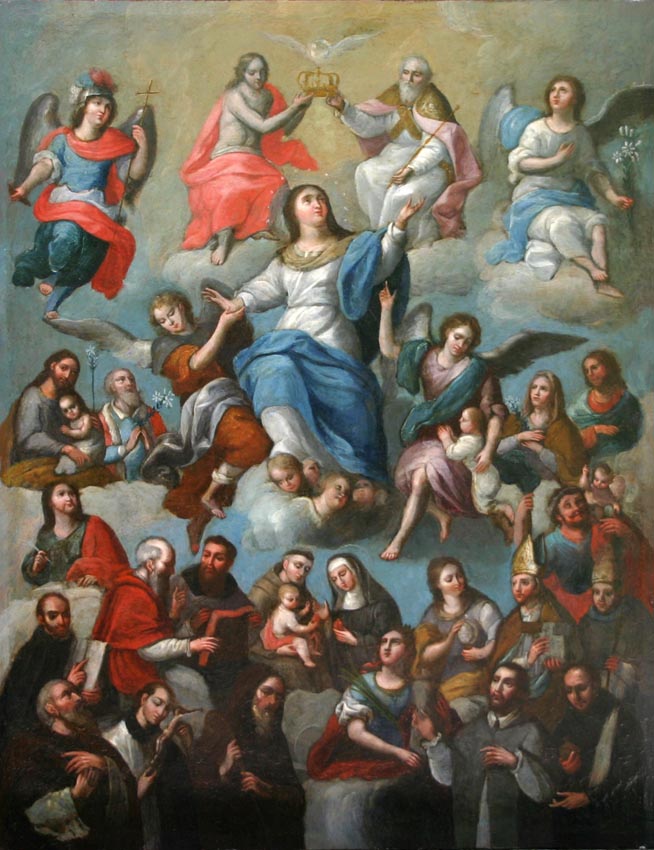
Anónimo, Asunción y coronación de la Virgen María, S. XVIII Oleo sobre lámina de cobre, Museo Blaisten (México)
Himno Akathistos a la Madre de Dios en la solemnidad de su Asunción
Nacido en el Oriente cristiano hace 1.500 años, el Akáthistos es uno de los himnos litúrgicos dedicado a la Madre de Dios (en griego, Theotokos: la que dio a luz a Dios). Literalmente Akáthistos significa “no sentado” y se llama así porque se canta y se escucha de pie en señal de reverencia, como el Evangelio, a diferencia de otros himnos en la liturgia bizantina. Los cristianos se lo cantaban a la Virgen en las celebraciones nocturnas de agradecimiento por sus prodigiosas intervenciones en la ciudad de Constantinopla, consagrada a ella, que recurría a su protección cuando se veía asediada por los bárbaros y le daba gracias con vigilias y cánticos en su honor. Los libros litúrgicos y la mayoría de manuscritos han transmitido el Akáthistos como un himno anónimo. Sin embargo, como señala el Instituto de Teología San Juan Damasceno de la libanesa Universidad del Balamand citando a la Iglesia ortodoxa antioquena, “un himno tan elaborado no se compuso ciertamente en una noche; más que un momento y un arte, expresa una vida”
Salve, por ti resplandece la dicha; Salve, por ti se eclipsa la pena. Salve, levantas a Adán, el caído; Salve, rescatas el llanto de Eva.
Salve, oh cima encumbrada a la mente del hombre; Salve, abismo insondable a los ojos del ángel. Salve, tú eres de veras el trono del Rey; Salve, tú llevas en ti al que todo sostiene.
Salve, lucero que el Sol nos anuncia; Salve, regazo del Dios que se encarna. Salve, por ti la creación se renueva; Salve, por ti el Creador nace niño.
Salve, ¡Virgen y Esposa! Salve, ¡Virgen y Esposa!
Salve, tú guía al eterno consejo; Salve, tú prenda de arcano misterio. Salve, milagro primero de Cristo; Salve, compendio de todos los dogmas.
Salve, celeste escalera que Dios ha bajado; Salve, oh puente que llevas los hombres al cielo. Salve, de angélicos coros solemne portento; Salve, de turba infernal lastimero flagelo.
Salve, inefable, la Luz alumbraste; Salve, a ninguno dijiste el secreto. Salve, del docto rebasas la ciencia; Salve, del fiel iluminas la mente.
Salve, ¡Virgen y Esposa! Salve, ¡Virgen y Esposa!
Salve, oh tallo del verde Retoño;
Salve, oh rama del Fruto incorrupto. Salve, al pío Arador tú cultivas; Salve, tú plantas quien planta la vida. Salve, oh campo fecundo – de gracias copiosas;
Salve, oh mesa repleta – de dones divinos.
Salve, un Prado germinas – de toda delicia;
Salve, al alma preparas – Asilo seguro.
Salve, incienso de grata plegaria; Salve, ofrenda que el mundo concilia. Salve, clemencia de Dios para el hombre; Salve, del hombre con Dios confianza. Salve, ¡Virgen y Esposa!
Salve, Nutriz del Pastor y Cordero; Salve, aprisco de fieles rebaños. Salve, barrera a las fieras hostiles; Salve, ingreso que da al Paraíso. Salve, por ti con la tierra – exultan los cielos;
Salve, por ti con los cielos – se alegra la tierra.
Salve, de Apóstoles boca – que nunca enmudece;
Salve, de Mártires fuerza – que nadie somete.
Salve, de fe inconcuso cimiento; Salve, fulgente estandarte de gracia. Salve, por ti es despojado el averno; Salve, por ti revestimos la gloria. Salve, ¡Virgen y Esposa!
Salve, oh Madre del Sol sin ocaso; Salve, aurora del místico Día. Salve, tú apagas hogueras de errores; Salve, Dios Trino al creyente revelas. Salve, derribas del trono – al tirano enemigo;
Salve, nos muestras a Cristo – el Señor y el Amigo.
Salve, nos has liberado – de bárbaros ritos;
Salve, nos has redimido – de acciones de barro.
Salve, destruyes el culto del fuego; Salve, extingues las llamas del vicio. Salve, camino a la santa templanza; Salve, alegría de todas las gentes. Salve, ¡Virgen y Esposa!
Salve, levantas al género humano; Salve, humillas a todo el infierno. Salve, conculcas engaños y errores; Salve, impugnas del ídolo el fraude. Salve, oh mar que sumerge – al cruel enemigo;
Salve, oh roca que das de beber – a sedientos de Vida.
Salve, columna de fuego – que guía en tinieblas;
Salve, amplísima nube – que cubres el mundo.
Salve, nos diste el Maná verdadero; Salve, nos sirves Manjar de delicias. Salve, oh tierra por Dios prometida; Salve, en ti fluyen la miel y la leche. Salve, ¡Virgen y Esposa!
Salve, azucena de intacta belleza; Salve, corona de noble firmeza. Salve, la suerte futura revelas; Salve, la angélica vida desvelas. Salve, frutal exquisito – que nutre a los fieles;
Salve, ramaje frondoso – que a todos cobija.
Salve, llevaste en el seno – quien guía al errante;
Salve, al mundo entregaste – quien libra al esclavo.
Salve, plegaria ante el Juez verdadero; Salve, perdón del que tuerce el sendero. Salve, atavío que cubre al desnudo; Salve, del hombre supremo deseo. Salve, ¡Virgen y Esposa!
Salve, mansión que contiene el Inmenso; Salve, dintel del augusto Misterio. Salve, de incrédulo equívoco anuncio; Salve, del fiel inequívoco orgullo. Salve, carroza del Santo – que portan querubes;
Salve, sitial del que adoran – sin fin serafines.
Salve, tú sólo has unido – dos cosas opuestas:
Salve, tú sola a la vez – eres Virgen y Madre.
Salve, por ti fue borrada la culpa; Salve, por ti Dios abrió el Paraíso. Salve, tú llave del Reino de Cristo; Salve, esperanza de bienes eternos. Salve, ¡Virgen y Esposa!
Salve, sagrario de arcana Sapiencia; Salve, despensa de la Providencia. Salve, por ti se confunden los sabios; Salve, por ti el orador enmudece. Salve, por ti se aturden – sutiles doctores;
Salve, por ti desfallecen – autores de mitos;
Salve, disuelves enredos – de agudos sofistas;
Salve, rellenas las redes – de los Pescadores.
Salve, levantas de honda ignorancia; Salve, nos llenas de ciencia superna. Salve, navío del que ama salvarse; Salve, oh puerto en el mar de la vida. Salve, ¡Virgen y Esposa!
Salve, columna de sacra pureza; Salve, umbral de la vida perfecta. Salve, tú inicias la nueva progenie; Salve, dispensas bondades divinas. Salve, de nuevo engendraste – al nacido en deshonra;
Salve, talento infundiste – al hombre insensato.
Salve, anulaste a Satán – seductor de las almas;
Salve, nos diste al Señor – sembrador de los castos.
Salve, regazo de nupcias divinas; Salve, unión de los fieles con Cristo. Salve, de vírgenes Madre y Maestra; Salve, al Esposo conduces las almas. Salve, ¡Virgen y Esposa!
Salve, oh rayo del Sol verdadero; Salve, destello de Luz sin ocaso. Salve, fulgor que iluminas las mentes; Salve, cual trueno enemigos aterras. Salve, surgieron de ti – luminosos misterios;
Salve, brotaron en ti – caudalosos arroyos.
Salve, figura eres tú – de salubre piscina;
Salve, tú limpias las manchas – de nuestros pecados.
Salve, oh fuente que lavas las almas; Salve, oh copa que vierte alegría. Salve, fragancia de ungüento de Cristo; Salve, oh Vida del sacro Banquete. Salve, ¡Virgen y Esposa! Salve, oh tienda del Verbo divino; Salve, más grande que el gran Santuario. Salve, oh Arca que Espíritu dora; Salve, tesoro inexhausto de vida. Salve, diadema preciosa – de reyes devotos;
Salve, orgullo glorioso – de sacros ministros.
Salve, firmísimo alcázar – de toda la Iglesia;
Salve, muralla invencible – de todo el Imperio.
Salve, por ti enarbolamos trofeos; Salve, por ti sucumbió el adversario. Salve, remedio eficaz de mi carne; Salve, inmortal salvación de mi alma. Salve, ¡Virgen y Esposa!
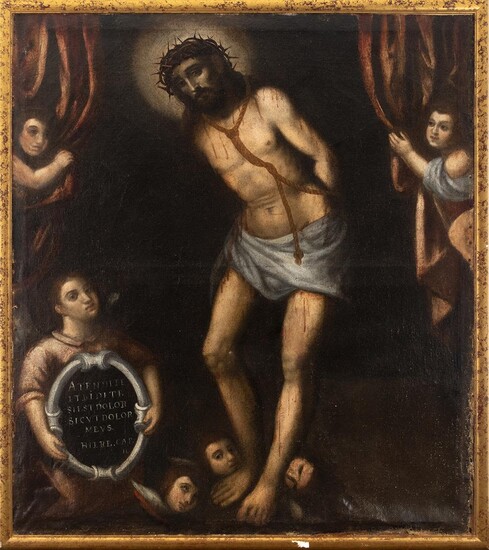
Anonymous author of the Spanish School of the 17th century, Ecce Homo, Oil on canvas, private collection.
So often we think of the Gospel of Christ as a Gospel of Peace—but today’s readings make sure that we are not naïve! True peace can only come with the following of the Lord. There may seem to be a peace which is basically not bothering one another. This is generally what is termed peace in our world. Or when there is no war, we speak of peace. Christian peace is different, it comes only with the doing of God’s will. Jesus can speak strongly about not bringing peace because when we begin to follow the Lord, it often puts us at odds with others. Even within Christian communities we may find strong differences and sometimes outright conflicts. Sometimes such differences and conflicts are truly based on striving to do God’s will but generally they come about because we want to do things our way and are not willing to compromise. To come to true and lasting peace, we must follow the Letter to the Hebrews and struggle with the sin that is within us. We must be willing to lay down our life for others. We must be willing to suffer for the sake of others. So much suffering is brought about by not be willing to give our lives for others. Instead, we insist on our rights and the obligations of others toward us. Jesus must be our leader and our model: willing to speak the truth and willing to give His life up so that others might have life. He always invites but never compels with force. Today, in our quiet time, in our meditation spot let us ask our Father in heaven to deepen us in faith, to help us know the truth that sets us free and to seek peace and pursue it. May God have mercy on us and on our world • AE
Fr. Agustin Schedule for the Twentieth Sunday in Ordinary Time
St. Dominic Catholic Church
Saturday August 13, 2022
3.30 p.m. Sacrament of Reconciliation (Confessional)
5.00 p.m. (English Mass @ Main Church)
Sunday August 14, 2022
7.30 a.m. Holy Mass (English Mass @ Main Church)
10.00 a.m. Holy Mass (English Mass @ Main Church)
Monday, August 15, 2022
Solemnity of the Assumption of the Blessed Virgin Mary
(Not a holiday of obligation on 2022)
8.30 a.m. Holy Mass (English Mass @ Main Church)
5.30 p.m. Holy Rosary
6.00 a.m. Holy Mass (Bilingual Mass @ Main Church)
XX Domingo del Tiempo Ordinario (Ciclo C)
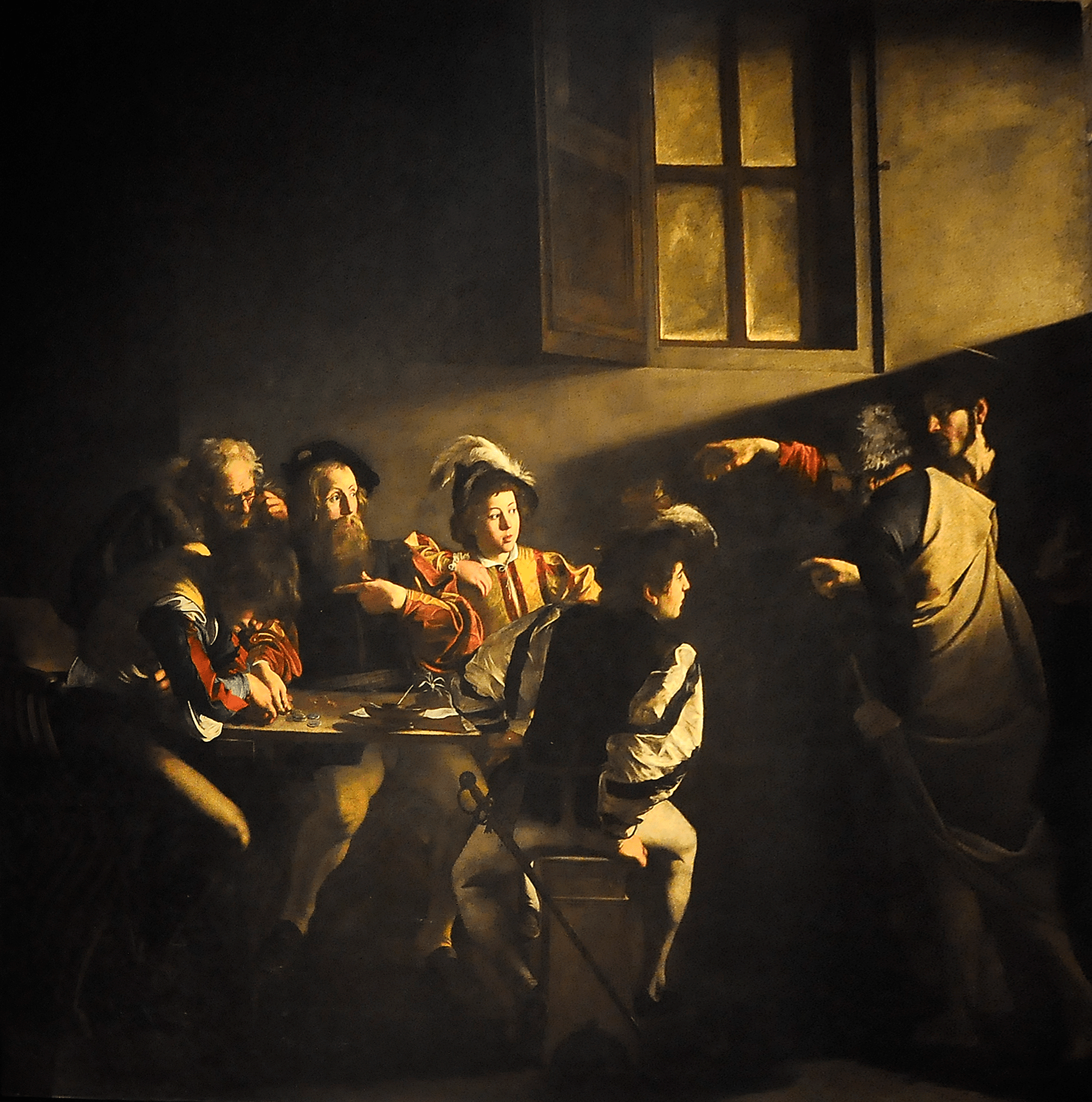
Caravaggio, La vocación de San Mateo, 1599, óleo sobre tela, Capilla Contarelli San Luis de los franceses (Roma)
En un estilo claramente profético el Señor resume su vida entera con unas palabras insólitas: “He venido a traer fuego a la tierra, ¡y cuánto desearía que ya estuviera ardiendo!”[1]. ¿De qué está hablando Jesús? Son palabras enigmáticas. La imagen del fuego nos habla de a acercarnos a su misterio de manera más ardiente y apasionada. El fuego que arde en su interior es la pasión por su Padre y la compasión por los que sufren. Jamás podrá ser desvelado ese amor insondable que anima su vida entera. Su misterio no quedará nunca encerrado en fórmulas dogmáticas ni en libros de sabios. Nadie escribirá un libro definitivo sobre él. Jesús atrae y quema, turba y purifica. Nadie podrá seguirlo con el corazón apagado o con piedad aburrida. La palabra del Señor hace arder los corazones. Se ofrece amistosamente a los más excluidos, despierta la esperanza en las prostitutas y la confianza en los pecadores más despreciados, lucha contra todo lo que hace daño al ser humano. Combate los formalismos religiosos, los rigorismos inhumanos y las interpretaciones estrechas de la ley. Nada ni nadie puede encadenar su libertad para hacer el bien. Nunca podremos seguirlo viviendo en la rutina religiosa o el convencionalismo de lo políticamente correcto. Jesús enciende los conflictos, no los apaga. No ha venido a traer falsa tranquilidad, sino tensiones, enfrentamiento y divisiones. En realidad, introduce el conflicto en nuestro propio corazón. No es posible defenderse de su llamada tras el escudo de ritos religiosos o prácticas sociales únicamente. Ninguna religión nos protegerá de su mirada. Ningún agnosticismo nos librará de su desafío. Jesús nos está llamando a vivir en verdad y a amar sin egoísmos. Su fuego no ha quedado apagado al sumergirse en las aguas profundas de la muerte. Resucitado a una vida nueva, su Espíritu sigue ardiendo a lo largo de la historia. Los primeros discípulos lo sienten arder en sus corazones cuando escuchan sus palabras mientras camina junto a ellos[2]. La gran pregunta que podríamos hacernos este fin de semana es dónde podríamos sentir hoy ese fuego de Jesús, o dónde podríamos experimentar la fuerza de su libertad creadora. ¿Arden nuestros corazones al oír el Evangelio? Pareciera que la fe cristiana está en crisis, pero la realidad es que el fuego traído por Jesús al mundo sigue ardiendo bajo las cenizas. No podemos dejar que se apague. Sin fuego en el corazón no es posible seguir a Jesús • AE
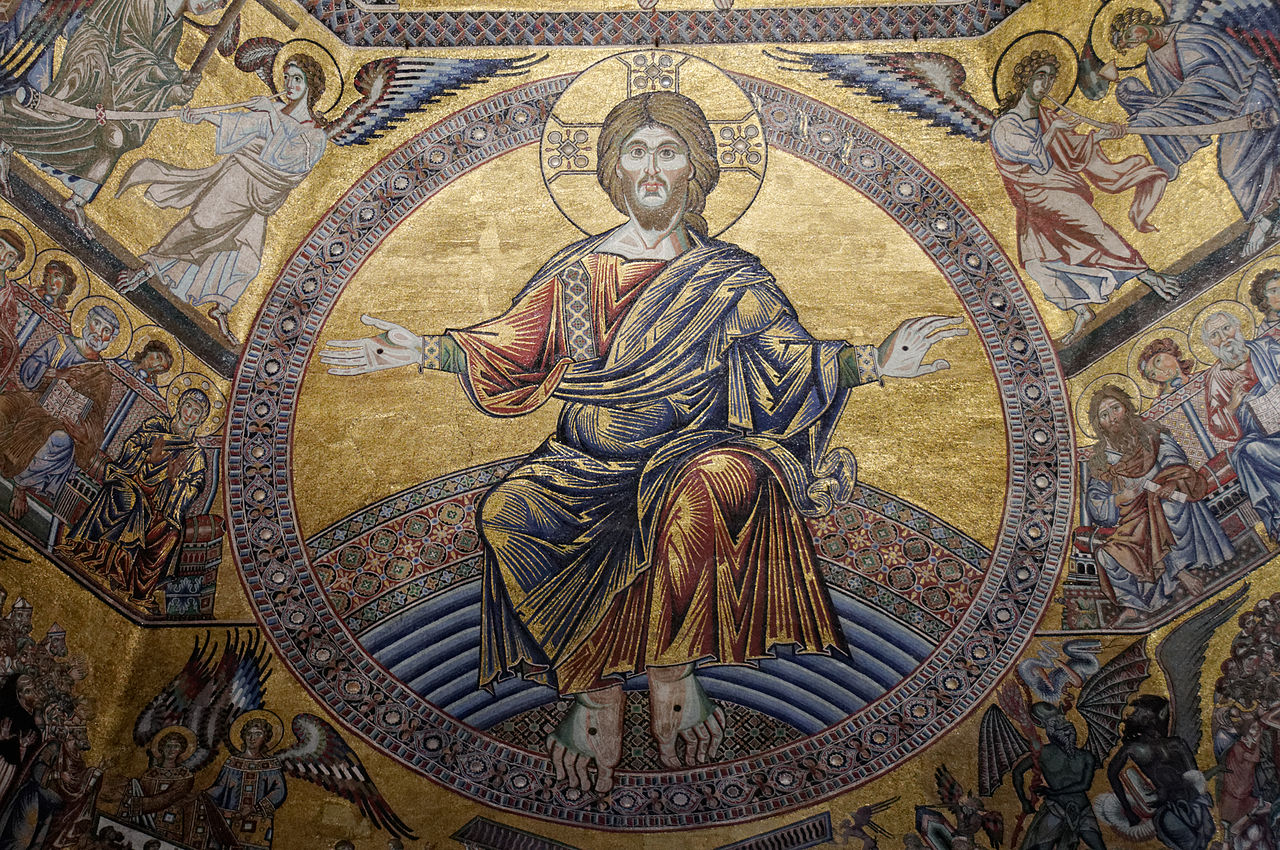
Jesus Christ Pancrator, mosaic at the Baptistery of Saint John, Florence (Italy)
You also must be prepared, for at an hour you do not expect, the Son of Man will come. So, how should we prepare? Not just by looking busy, but by being busy. There is a lot to keep us busy. People are seeking meaning in life. We Christians, Catholics, have been given the gift of recognizing the reason for existence. The answer to all questions is simple: the answer to all questions is Our Lord Jesus Christ, he is the alfa and the omega, the beginning and the end. As Christians we can provide the answer by our attitude in life. We have to be devoted to the Lord, out there, here among us, here within each of us. This complicated world of ours becomes very simple when we make it clear to ourselves that we are enriched by the presence of the Lord. As I come to a deeper understanding of Jesus’ presence in my life, as you come to a deeper understanding of his presence in your lives, then He becomes the pearl of great value that the merchant in the Gospel parable sacrifices all he has to obtain[1]. So, holding on to Jesus keeps us busy. We are always fighting against our imperfections. We are always fighting against temptations. We are continually fighting against those who mock us for our dedication to our faith. Sometimes we feel overwhelmed by the negativity around us. That is particularly when we have to put up a fight for the Lord. That is particularly when we have to be busy, however the Lord is always there. It is not enough for us to just look busy. We have to be busy. And we have to trust in Him. He will respond to our determination to live our faith by caring for us. Let’s try! • AE
Henry Purcell (1658-1682), 10 Sonatas in Four Parts #BaroqueMusic
Fr. Agustin Schedule for the nineteenth Sunday in Ordinary Time St. Dominic Catholic Church
Saturday August 7, 2022
3.30 p.m. Sacrament of Reconciliation (Confessional)
5.00 p.m. (English Mass @ Main Church)
Sunday August 8, 2022
7.30 a.m. Holy Mass (English Mass @ Main Church)
10.00 a.m. Holy Mass (English Mass @ Main Church)
Monday, August 9, 2022
8.30 a.m. Liturgical Fest of St. Dominic (Bilingual Mass @ Main Church)
6.00 p.m. Liturgical Feast of St Dominic (Bilingual Mass @ Main Church)
Domingo XIX del Tiempo Ordinario (Ciclo C)
H. Rousseaun, La Gitana Dormida (1897), óleo sobre tela, Museo de Arte Moderno de New York (MOMA)
Es fácil vivir dormidos. Basta con hacer seguir la moda: imitar, amoldarnos, obedecer, repetirnos una y otra vez. Basta vivir buscando seguridad externa e interna. Basta defender nuestro pequeño bienestar mientras la vida se va apagando en nosotros. Llega un momento en que no sabemos ya reaccionar. Sentimos que nuestra vida está vacía y la llenamos de experiencias, información y diversiones. Nos falta vida interior y nos engañamos viviendo en movimiento continuo, agitados por la prisa y las ocupaciones. Podemos gastar la vida entera haciendo cosas pero sin descubrir en ella nada sagrado. Y lo peor de todo es que tampoco nuestra fe logra despertarnos. Podemos vivir un cristianismo que nos da tranquilidad pero no vida. El Señor repite una y otra vez: donde está su tesoro, ahí estará su corazón. No es fácil escuchar esa llamada, pues, de ordinario, no escuchamos a quien nos dice algo contrario a lo que pensamos. Y los hombres y mujeres de hoy pensamos que somos inteligentes y lúcidos. Para despertar es necesario conocernos mejor. Comenzamos a ser sabios cuando tomamos conciencia de nuestra estupidez. Empezamos a ser más profundos cuando observamos la superficialidad de nuestra vida. La verdad se abre paso cuando reconocemos nuestros engaños. El orden llega a nosotros cuando advertimos el desorden en que vivimos. Despertar es darnos cuenta de que vivimos dormidos. Lo importante para vivir despiertos es caminar más despacio, cuidar mejor el silencio y estar más atentos a las llamadas del corazón. Pero sin, duda, lo decisivo es vivir amando. Sólo quien ama vive intensamente, con alegría y vitalidad, despierto a lo esencial. Para despertar de nuestro letargo religioso (la expresión es dura) sólo hay un camino: buscar más allá de los ritos y las creencias, ahondar más en nuestra verdad ante Dios y abrirnos confiadamente a su misterio. Dichosos aquellos a quienes el Señor, al llegar, los encuentre en vela[1] • AE
Arvo Pärt (1935) es un compositor estonio nacionalizado austríaco de música sacra. Se lo identifica como precursor de la música minimalista, y más específicamente del «minimalismo sacro».










 LA MEDITACION DE LA ESPOSA