

Cicero, the famous Roman scholar once wrote, «Gratitude is not only the greatest of virtues, but the parent of all others.» This Sunday’s gospel narrative reminds us that gratitude is a rare virtue indeed. The virtue of gratitude is the ability to express our thankful appreciation in word or deed, to the person whose words or actions have benefited us in some way. The truly humble and noble person will always be grateful for the benefits received. Ingratitude is an ugly sin. How can the virtue of gratitude be acquired? Fundamentally, cultivating the spirit of gratitude requires us to develop humility. We need to understand that everything that we have and everything that we are is a gift. Next Thanksgiving Day, very soon by the way, we might begin by taking out a pad of paper and a pen and making a list of all of the wonderful gifts that we receive each day of our entire life, all that God has done for us. There is a great story. A man in Budapest who goes to the rabbi and complains, «Life is unbearable. There are nine of us living in one room. What can I do?» The rabbi answers, «Take your goat into the room with you.» The man is incredulous, but the rabbi insists. «Do as I say and come back in a week.» A week later the man comes back looking more distraught than before. «We cannot stand it,» he tells the rabbi. «The goat is filthy.» The rabbi then tells him, «Go home and let the goat out. And come back in a week.» A radiant man returns to the rabbi a week later, exclaiming, «Life is beautiful. We enjoy every minute of it now that there’s no goat — only the nine of us.» The virtue of gratitude can be expressed in very simple ways. We should always express our gratitude. The phrase «thank you» should be a common part of our daily vocabulary. G. K. Chesterton once said: «You say grace before meals. All right. But I say grace before the concert and the opera, and grace before I open a book, and grace before sketching, painting, swimming, fencing, boxing, walking, playing, dancing and grace before I dip the pen in the ink.» He also said, «When we were children we were grateful to those who filled our stockings at Christmas time. Why are we not grateful to God for filling our stockings with legs?» Gratitude is the most exquisite form of courtesy.» The virtue of gratitude is very important. However it is equally important that we serve others with a spirit of detachment. We must not look for recognition or earthly glory. We must continue to love others without seeking anything in return. The Lord calls us to give of ourselves unconditionally and seek as our only reward eternal life in heaven. This is true Christianity. Any other posture is simply rooted in egotism. The standard of greatness for Christianity is not earthly glory, but the Cross of Jesus Christ • AE

OUR LADY OF HOLY ROSARY
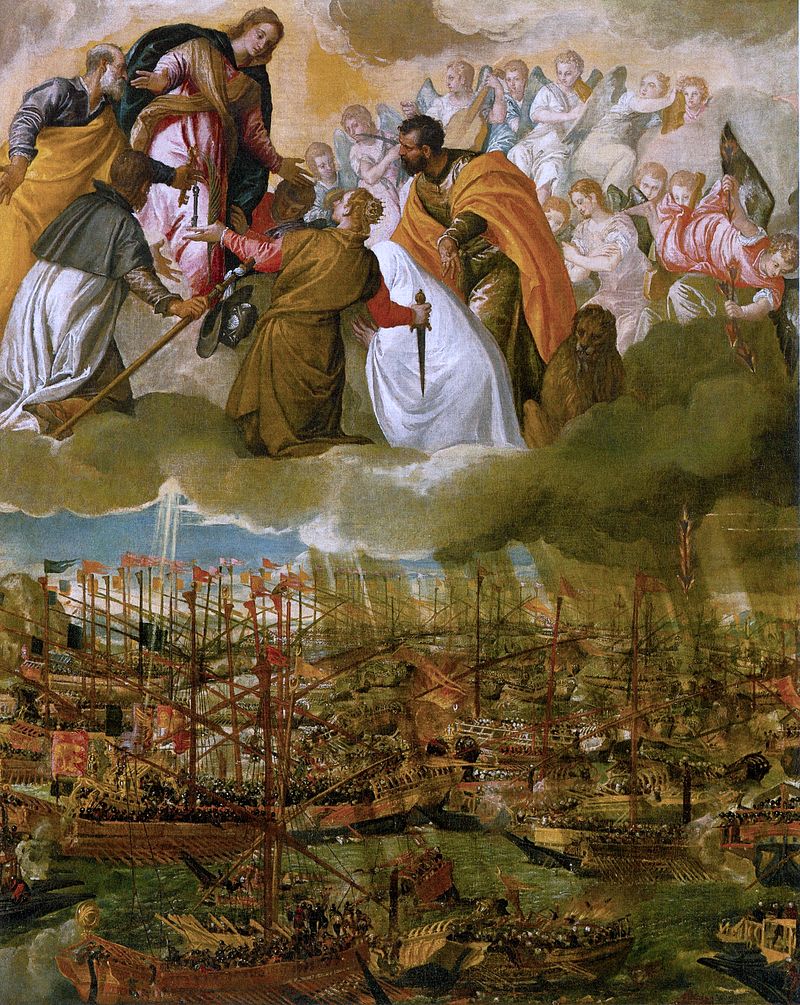
The Feast of Our Lady of the Rosary, formerly known as Feast of Our Lady of Victory and Feast of the Holy Rosary is celebrated on 7 October, the anniversary of the decisive victory of the combined fleet of the Holy League of 1571 over the Ottoman navy at the Battle of Lepanto. After about five hours of fighting on the northern edge of the Gulf of Corinth, off western Greece, the combined navies of the Papal States, Venice and Spain managed to stop the Ottoman navy, slowing the Ottoman advance to the west and denying them access to the Atlantic Ocean and the Americas. If the Ottomans had won, there was a real possibility that an invasion of Italy could have followed so that the Ottoman sultan, already claiming to be emperor of the Romans, would have been in possession of both New and Old Rome. Pius V instituted the feast of Our Lady of Victory in order to commemorate the victory at Lepanto, which he attributed to the Blessed Virgin Mary
Food for Thought
Schedule for the Twenty-Eight Sunday in Ordinary Time
St Dominic Catholic Church (San Antonio, TX)

Saturday October 8, 2022
3.30 p.m. Sacrament of Reconciliation (Confessional)
5.00 p.m. (English Mass @ Main Church)
Sunday October 9, 2022
10.00 a.m. Holy Mass (English Mass @ Main Church)
12.30 p.m. Holy Mass (English Mass @ Main Church)
3.00 p.m. Santa Misa en Español (iglesia principal)
XXVIII Domingo del Tiempo Ordinario (Ciclo C)
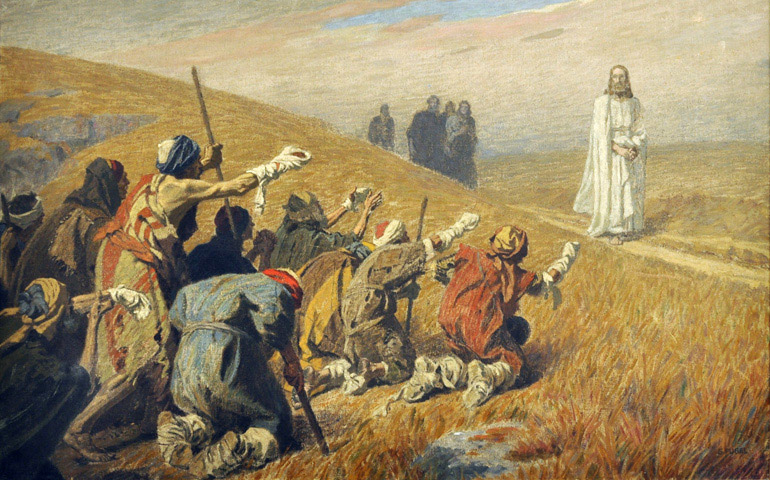
Hay quienes caminan por la vida con aire triste y pesimista. Su mirada se fija siempre en lo desagradable y desalentador. No tienen ojos para ver que, a pesar de todo, la bondad abunda más que la maldad. No saben apreciar tantos gestos nobles, hermosos y admirables que suceden todos los días en cualquier parte del mundo. Tal vez lo ven todo negro porque proyectan sobre las cosas su propia oscuridad. Otros viven siempre en actitud crítica. Se pasan la vida observando todo lo negativo que hay a su alrededor. Nada escapa a su juicio. Se consideran personas lúcidas, perspicaces y objetivas. Sin embargo, nunca alaban, admiran o agradecen. Lo suyo es destacar el mal y condenar a las personas. Hay quien hace el recorrido de la vida indiferente a todo. Estos solo tienen ojos para lo que pueda servir a sus propios intereses. No se dejan sorprender por nada gratuito, no se dejan querer ni bendecir por nadie. Encerrados en su mundo, bastante tienen con defender su pequeño bienestar cada vez más triste y egoísta. De su corazón no brota nunca el agradecimiento. Hay quienes viven de manera monótona y aburrida. Su vida es pura repetición: el mismo horario, el mismo trabajo, las mismas personas, la misma conversación. Nunca descubren un paisaje nuevo en sus vidas. Nunca estrenan día nuevo. Nunca sucede algo diferente que renueve su espíritu. No saben descubrir ni amar de manera nueva a las personas. Su corazón no conoce la alabanza. Para vivir de manera agradecida, lo primero es reconocer la vida como buena. Mirar el mundo con amor y simpatía. Purificar la mirada cargada de negativismo, pesimismo o indiferencia para apreciar todo lo que hay de bueno, hermoso y admirable en las personas y en las cosas. Saber disfrutar de lo que vamos recibiendo de manera gratuita e inmerecida. Cuando san Pablo dice que «hemos sido creados para alabar la gloria de Dios» está diciendo cuál es el sentido y la razón más profunda de nuestra existencia. En el evangelio de este domingo el Señor se extraña de que sólo uno de los leprosos vuelva dando gracias y alabando a Dios». Es el único que ha sabido sorprenderse por la curación y reconocerse agraciado ¡Quién fuera como él! • AE
¿Lecturas En Otoño?

 LA MEDITACION DE LA ESPOSA