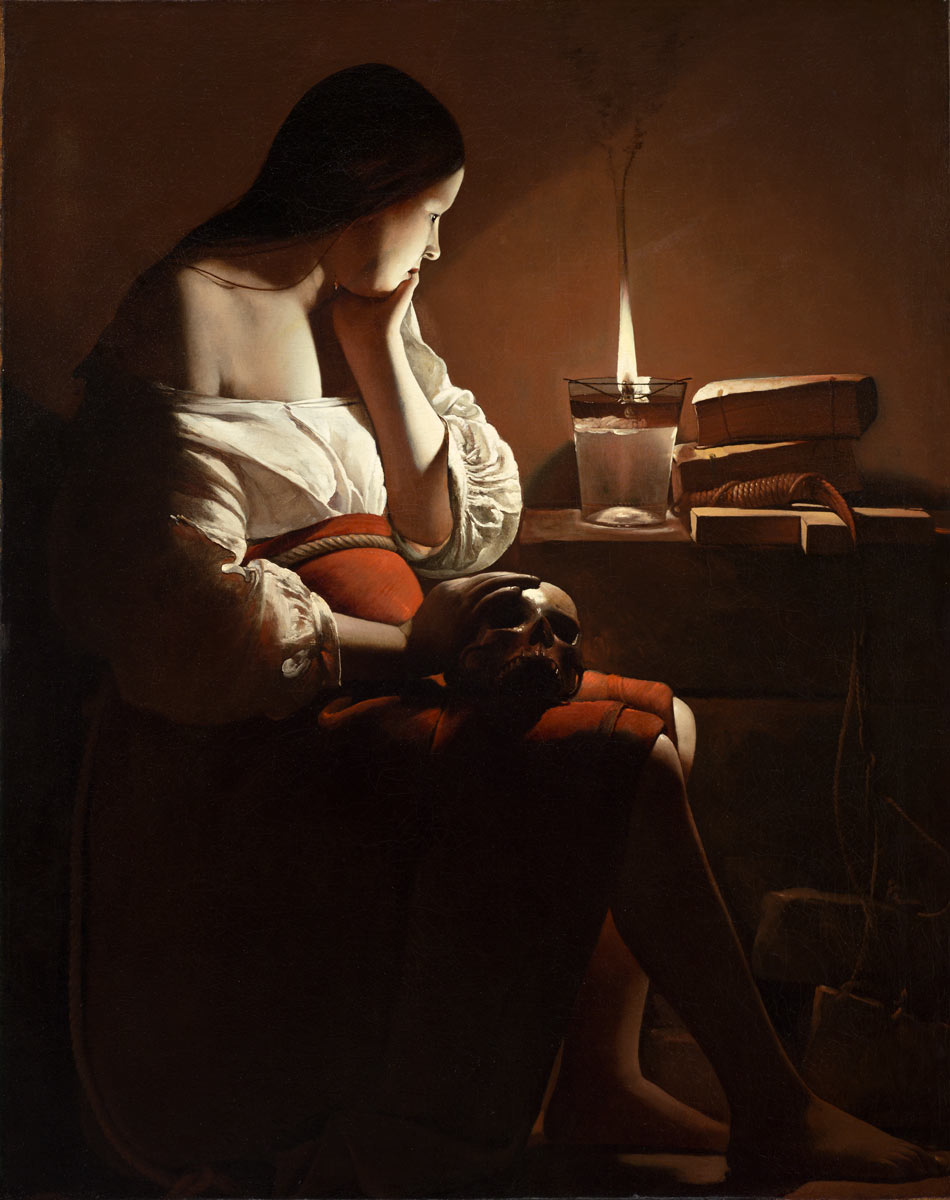
Georges de La Tour (French, 1593–1652), The Magdalen with the Smoking Flame (ca. 1635–37), Oil on canvas. Los Angeles County Museum of Art (California)
The Gospel speaks about the suddenness of the end of time, be that the end of all time or the end of our own particular time. We have to be ready because the Lord will Come a Second Time when we least expect. As long as we are doing our best to live as his sons and daughters, we really don’t have anything to fear. In fact, we can look forward to the times prophesied by the first reading from Isaiah, a time when there will be at peace, a time when swords will be beaten into plowshares and spears into pruning hooks, and aircraft carriers into skateboard parks and tanks into chicken coops. The only thing we have to do, according to the conclusion of the first reading, is walk in the light of the Lord. What does that mean, though, “to walk in the light of the Lord.” St. Paul clarifies this in today’s second reading. He says that we need to throw off the works of darkness and put on the armor of light. We need to conduct ourselves properly as in the day. We need to put on Jesus Christ and make no provision for the desires of the flesh. We need to walk in the Light of the Lord. Isn’t it amazing how things that do not belong to the Lord tend to be covered in darkness? Be they places that no Christian should go or actions that no Christian should do, it seems that there is a commonality to all immorality that much of it takes place in dark places. So we have to ask ourselves, do I want to pray over a particular decision or course of action be it in business, family, work? Or would I rather not pray over it? Would I rather just do something without considering my dignity as a son or daughter of God? Do I prefer the selfishness of the darkness over the selfless ness of the Light of Christ? Do I recognize my responsibility to others to live in the light? So, this First Sunday of Advent is inviting us to stay awake. Awake now and at the end of time. May we have the enough wisdom to distinguish what belongs to the darkness and what to the Light • AE

Fr. Agustin’s Schedule for The First Sunday of Advent (2022)
St Dominic Catholic Church

Saturday November 26, 2022
3.30 p.m. Sacrament of Reconciliation (Confessional)
Sunday November 27, 2022
12.30 p.m. Holy Mass (English Mass @ Main Church)
3.00 p.m. Santa Misa en Español (@ iglesia principal)
Primer Domingo de Adviento (2022)
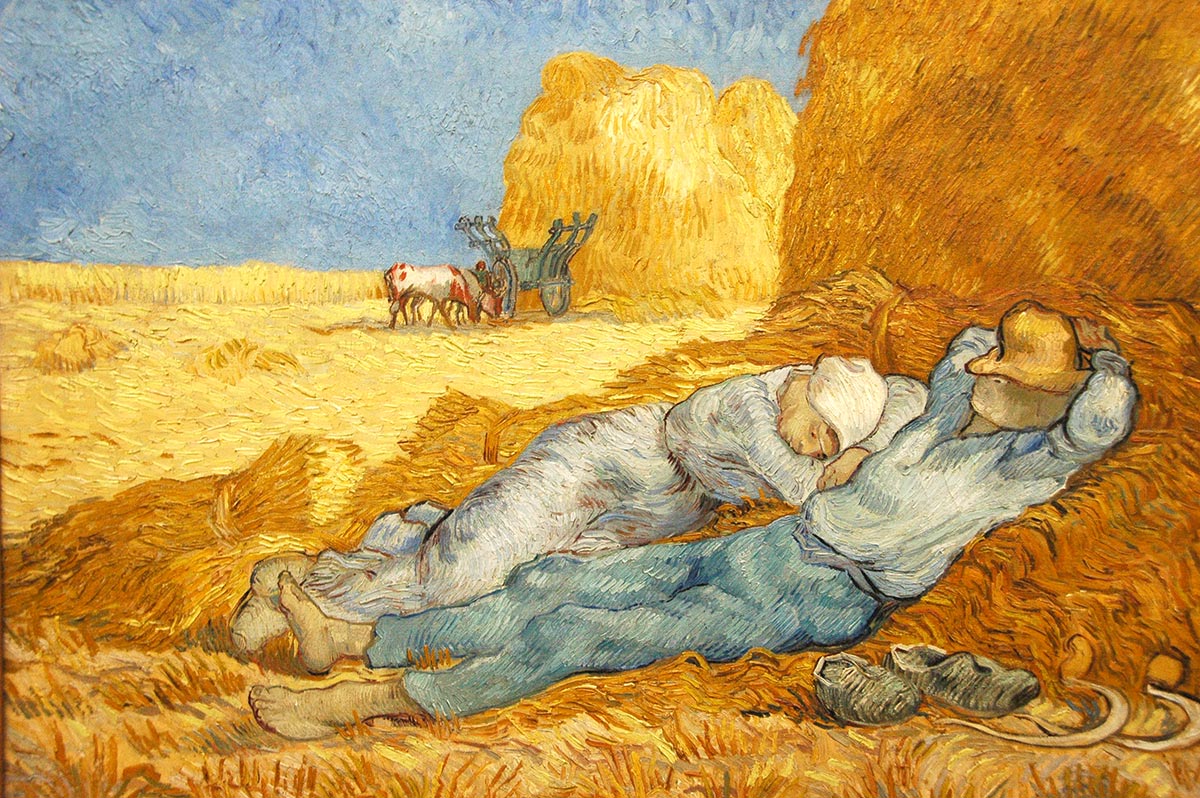
V. Van Gogh, La siesta, (1889), óleo sobre tela, Musée d’Orsay (Paris)
Un día la historia apasionante de los hombres terminará, como termina inevitablemente la vida de cada uno de nosotros. Los evangelios ponen en boca de Jesús un discurso sobre este final, y siempre destacan una exhortación: «vigilad», «estad alerta», «vivid despiertos». Las primeras generaciones cristianas dieron mucha importancia a esta vigilancia. El fin del mundo no llegaba tan pronto como algunos pensaban. Sentían el riesgo de irse olvidando poco a poco de Jesús y no querían que los encontrara un día dormidos. Han pasado muchos siglos desde entonces. ¿Cómo vivimos los cristianos de hoy?¿Seguimos despiertos o nos hemos ido durmiendo poco a poco? ¿Vivimos atraídos por Jesús o distraídos por toda clase de cuestiones secundarias? ¿Le seguimos a él o hemos aprendido a vivir al estilo de todos? Vigilar es antes que nada despertar de la inconsciencia. Vivimos el sueño de ser cristianos cuando, en realidad, no pocas veces nuestros intereses, actitudes y estilo de vivir no son los de Jesús. Este sueño nos protege de buscar nuestra conversión personal y la de la Iglesia. Sin despertar, seguiremos engañándonos a nosotros mismos. Vigilar es vivir atentos a la realidad. Escuchar el llanto del que sufre. Sentir el amor de Dios a la vida. Vivir más atentos a su venida a nuestra vida, a nuestra sociedad y a la tierra. Sin esta sensibilidad, no es posible caminar tras los pasos de Jesús. Vivimos inmunizados a las llamadas del evangelio. Tenemos corazón, pero se nos ha endurecido. Tenemos los ojos abiertos, pero no escuchamos lo que Jesús escuchaba. Tenemos los ojos abiertos, pero ya no vemos la vida como la veía él, no miramos a las personas como él las miraba. Puede ocurrir entonces lo que Jesús quería evitar entre sus seguidores: verlos como «ciegos conduciendo a otros ciegos». Si no despertamos, a todos nos puede ocurrir lo de aquellos de la parábola que todavía, al final de los tiempos, preguntaban: «Señor, ¿cuándo te vimos hambriento o sediento o extranjero o desnudo o enfermo o en la cárcel, y no te asistimos?» • AE






 LA MEDITACION DE LA ESPOSA