The Octave Day of Christmas Solemnity of the Blessed Virgin Mary, the Mother of God (2023)

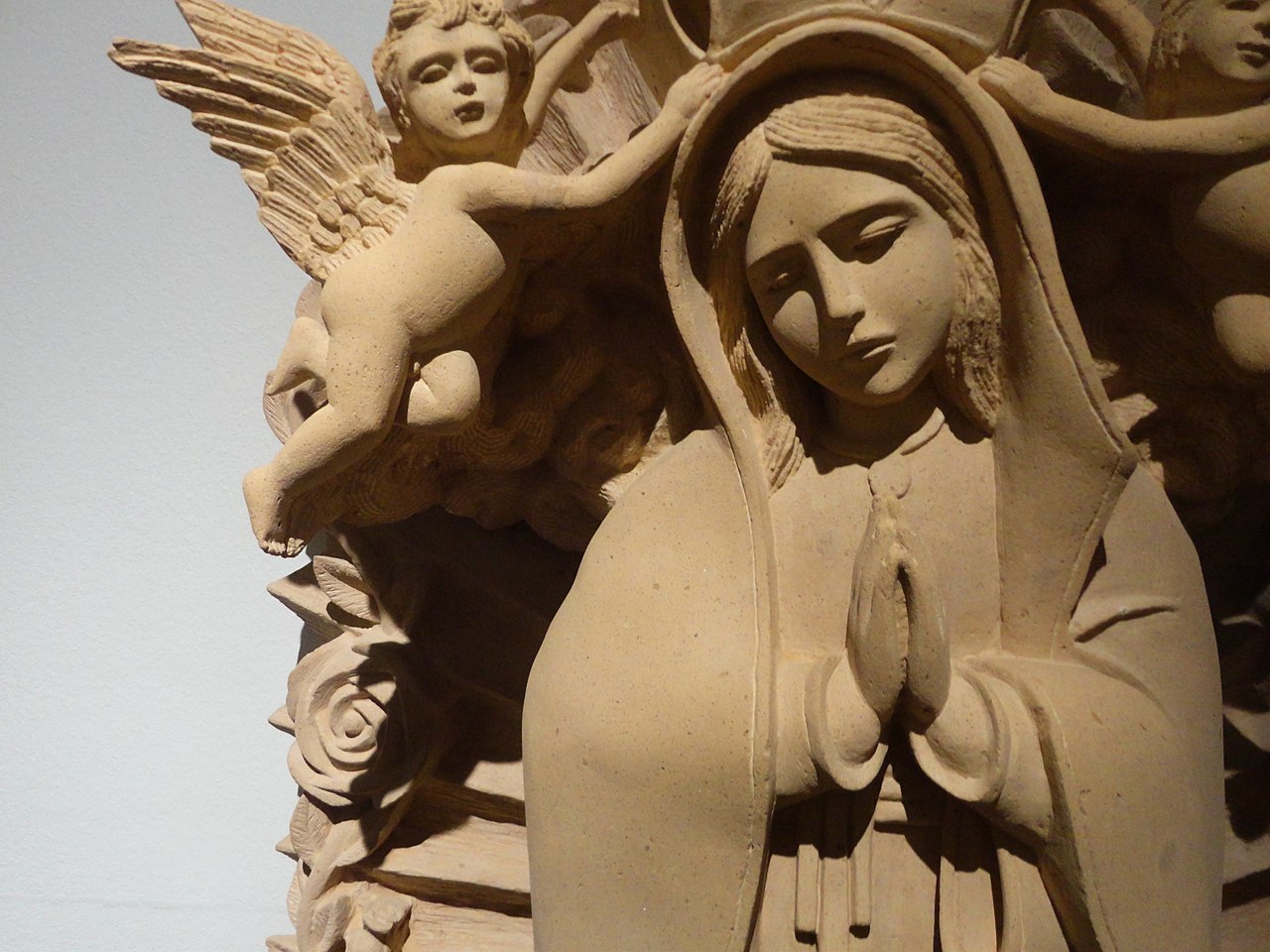
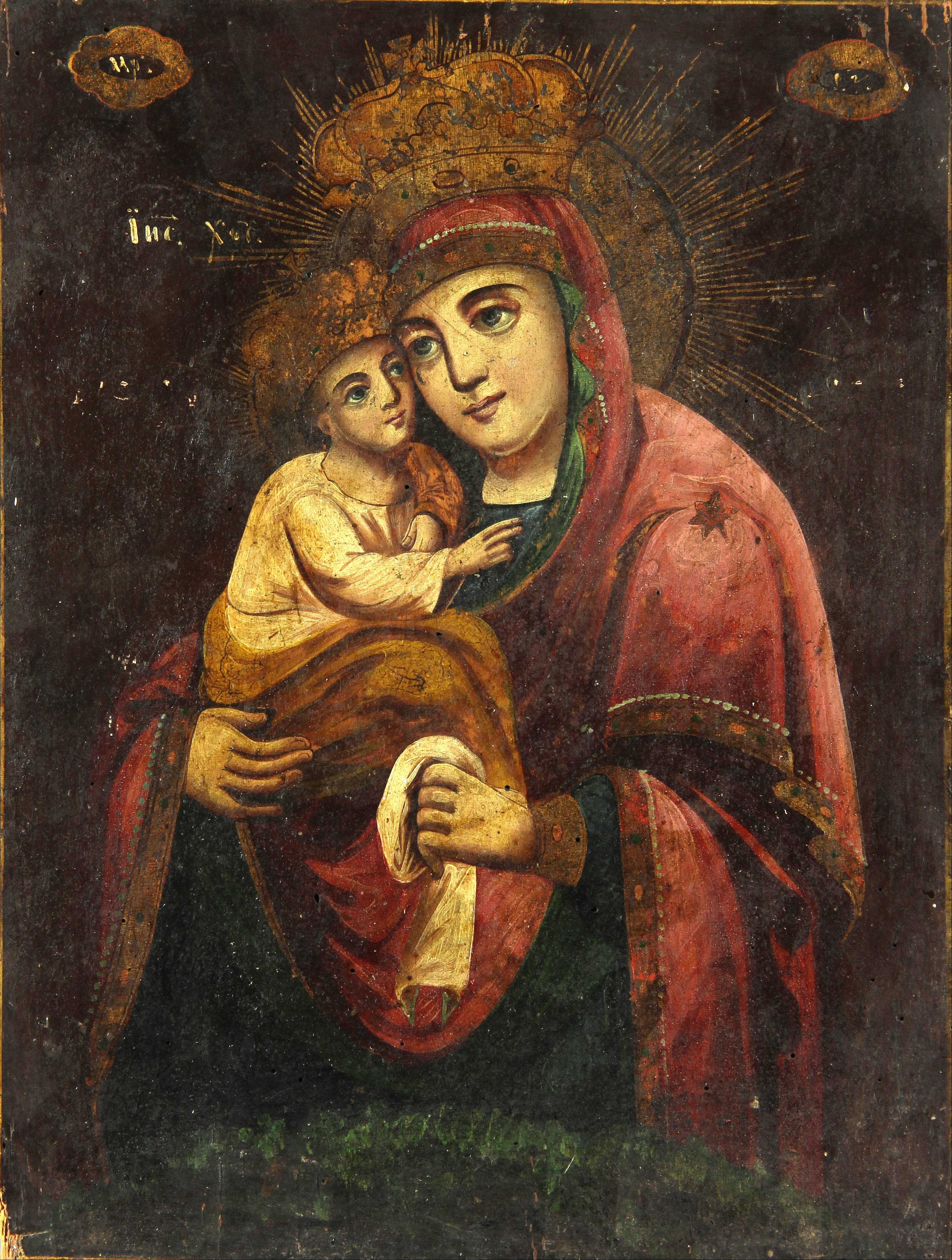
Anonymous artist, The Virgin of Pochaiv (Early 1850), Ivan Honchar Museum (Kiev, Ukraine)

On this the octave day of Christmas, the Church calls us to take a deeper look at the mystery of the Incarnation of the Lord. First of all, we use that word, incarnation, quite often, but we priests often fail to explain what the word means. Incarnation means taking on flesh. Carne is the Latin root word for flesh. A carnivore eats meat, right. When we say, «The Word became flesh,» we are saying the Second Person of the Blessed Trinity, the Word, was incarnated. When did the Incarnation take place–when Mary conceived the child or when the child was born? The ancients were not concerned with the difference between the two events. For them, the incarnation was one event, and the Word was present as a child within Mary during her pregnancy. So, Christmas celebrates the birth of the Word that became flesh within Mary. The title of today’s feast, the Solemnity of Mary, Mother of God, also needs to be explained. Mary was a human being, a human being conceived without sin, but still a human being. But when we say the Hail Mary, we pray, «Holy Mary, mother of God, pray for us sinners now and at the hour of our death, Amen.» Why? Why does she, a human, hold the title of Mother of God? The Eternal Word of God did not cease being Who He Is after the incarnation. That is why we say, Mary is the Mother of God. Mary is the mother of the human nature of the Lord, and she is also the mother of the one Divine Person of the Lord. That is why we pray, “Holy Mary, Mother of God.” She was so holy that the Holy Spirit overshadowed her and the Second Person of the Divine Trinity took flesh through her body. We Catholics still suffer the attacks of anti-Catholic bigots who claim that we worship Mary. Of course, we don’t worship Mary. At the same time, we are not going to tone down the Christian belief that Mary is Mother of God. She is not just another one of the saints, the holy ones, she is the best of them, and the best of us. Mary is the Mother of God and our mother. On the cross Jesus gave her to us. Yes, we dialogue with the Lord, we pray to Jesus. But we also pray to our Mother Mary asking her to intercede with her son for us. Jesus entrusted Mary to us to be our mother. Why then, shouldn’t we call upon her to intercede for us with her son. That is why we say, «Holy Mary, mother of God, pray for us sinners, now and at the hour of our death, Amen.» Did the shepherd comprehend what they had seen in that stable. Did they understand who the child in the manger was? Perhaps not in the theological terms, but they did understand this: God had touched humanity in a wonderful way. They left glorifying and praising the God who loves us so much. How much does our God love us? He loves us so much that he became one of us through Mary. He loves us so much that He suffered and died for us. He loves us so much that he gave us this holy one, his mother, to be our mother • AE


Sub tuum praesidium

Beneath Thy Protection (Ancient Greek: Ὑπὸ τὴν σὴν εὐσπλαγχνίαν; Latin: Sub Tuum Præsidium) is a Christian hymn and prayer. It is both the oldest known Marian prayer and preserved extant hymn to the Blessed Virgin Mary sometimes transliterated as the Theotokos. A copy on papyrus has been dated as early as 259 A.D. The hymn is well attested among the believers of both Catholic Church, the Eastern Orthodox church and the Oriental Orthodox church.

We fly to thy protection,

O Holy Mother of God;

Do not despise our petitions

in our necessities,

but deliver us always

from all dangers,

O Glorious and Blessed Virgin


Fr. Agustin´s Schedule for the celebration of the Solemnity of the Blessed Virgin Mary, the Mother of God (St Dominic Catholic Church)

Saturday, December 31, 2022

3.30 p.m. Sacrament of Reconciliation (Confessional)

Sunday January 1, 2023

7.30 a.m. Holy Mass (English)

10.00 a.m. Holy Mass (English)

12.30 p.m. Holy Mass (English)


Solemnidad de María Santísima, Madre de Dios (2023)
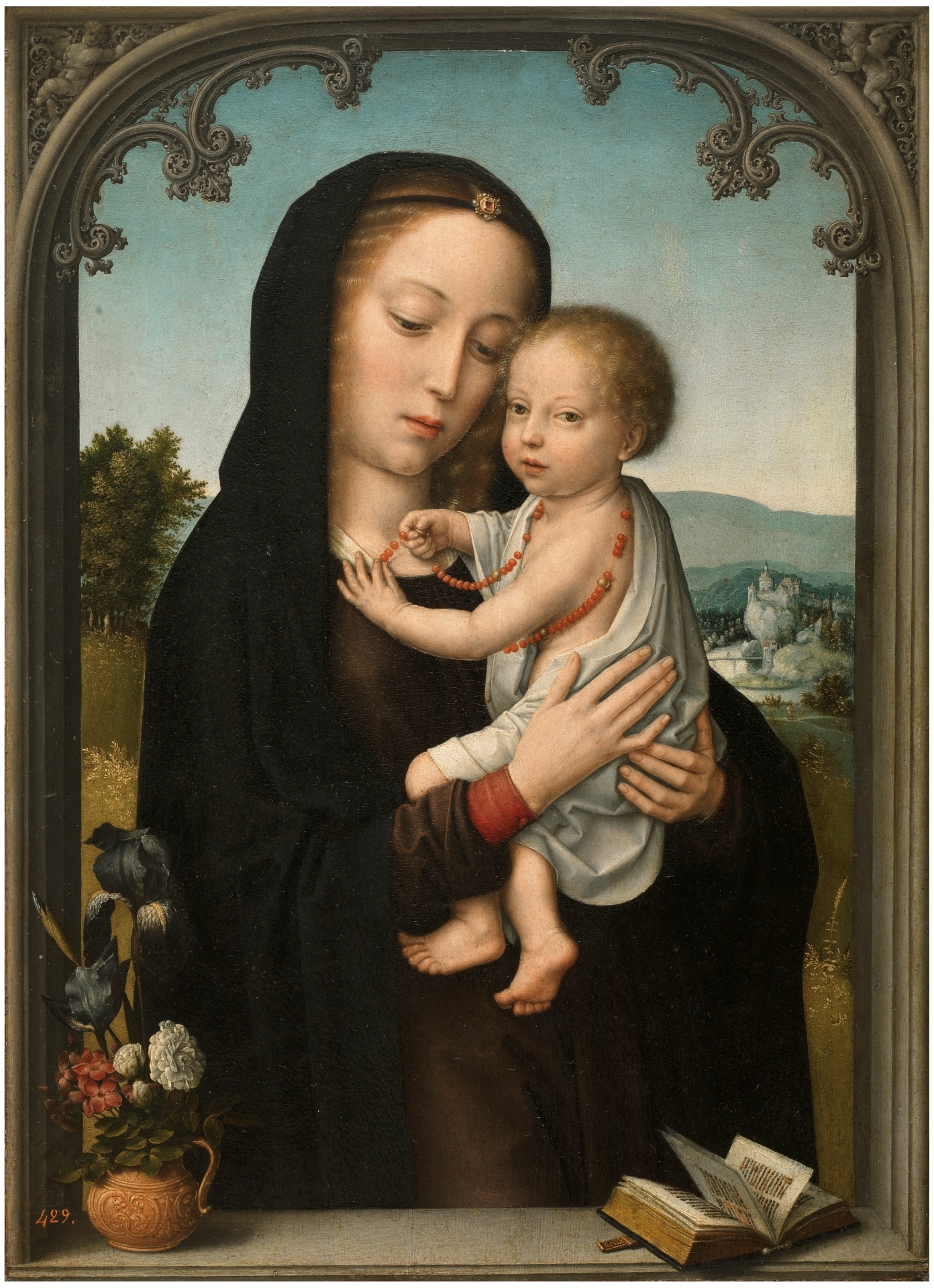
D. Gérard, La Virgen con el Niño (1520), óleo sobre tabla, Museo Nacional del Prado (Madrid)

Celebramos en esta fiesta la asombrosa cercanía de lo humano y lo divino, tal como se dio en esta mujer sencilla, la doncella de Nazaret, en su vientre, y en todo su espíritu. Dios se entrañó en María, y María quedó impregnada para siempre de Dios. A la vez que la madre alimentaba al hijo que llevaba en las entrañas, estaba siendo ella alimentada por el Espíritu del propio Hijo. María preparaba al hijo un vestido de carne, pero el hijo le bordaba a ella un vestido de divinidad. Hoy contemplamos el misterio de este maravilloso intercambio entre Dios y ella; intercambio que no dura sólo nueve meses sino toda su vida. María fue madre de Dios por los meses de gestación y lactancia y porque con el paso de los años, mientras guardaba las cosas en su corazón, se iba ella alimentando de la palabra y del Espíritu de su Hijo[1]. Y como todos y cada uno de los misterios de la Virgen, también éste es motivo de esperanza para nosotros. La maternidad divina de María no es gracia exclusiva, sino gracia para todos en la Iglesia. También nosotros podemos llegar a esa misteriosa cercanía con Dios, a una relación profunda con Él. Lo dijo el mismo Jesús en el evangelio: «Mi madre y mis hermanos son los que oyen la palabra de Dios y la hacen»[2]. Hoy, primer día del año, podríamos tomar la decisión de iniciar esa relación profunda con el Señor, escuchando y acogiendo su Palabra, de manera que crezca con las obras y a pesar de las caídas; a poner delante de él los frutos que vayan madurando en el árbol de nuestra vida, dejando todo nuestro ser a su disposición y servicio, como la Virgen Santísima. Y que María,  la hermosísima Theotokos[3], la Madre de Dios, nos enseñe a vivir cercanos a Él • AE

[1] Cfr Lc 2, 19. [2] Lc 8, 21. [3] Theotokos (en griego antiguo, Θεοτόκος, en latín, Deīpara o Deī genetrix) es una palabra griega que significa Madre de Dios (literalmente, ‘la que dio a luz a Dios’). Su equivalente en español, vía latín, es Deípara. Theotokos es el título que la Iglesia cristiana primitiva le dio a María en referencia a su maternidad divina, título que se definió dogmáticamente en el Concilio de Éfeso de 431.


Akatisthos
Salve, por ti resplandece la dicha;

Salve, por ti se eclipsa la pena.

Salve, levantas a Adán, el caído;

Salve, rescatas el llanto de Eva.

Salve, oh cima encumbrada a la mente del hombre;

Salve, abismo insondable a los ojos del ángel.

Salve, tú eres de veras el trono del Rey;

Salve, tú llevas en ti al que todo sostiene.

Salve, lucero que el Sol nos anuncia;

Salve, regazo del Dios que se encarna.

Salve, por ti la creación se renueva;

Salve, por ti el Creador nace niño.

Salve, ¡Virgen y Esposa!

Salve, ¡Virgen y Esposa!

Salve, tú guía al eterno consejo;

Salve, tú prenda de arcano misterio.

Salve, milagro primero de Cristo;

Salve, compendio de todos los dogmas •

The Nativity of the Lord (Christmas 2022)

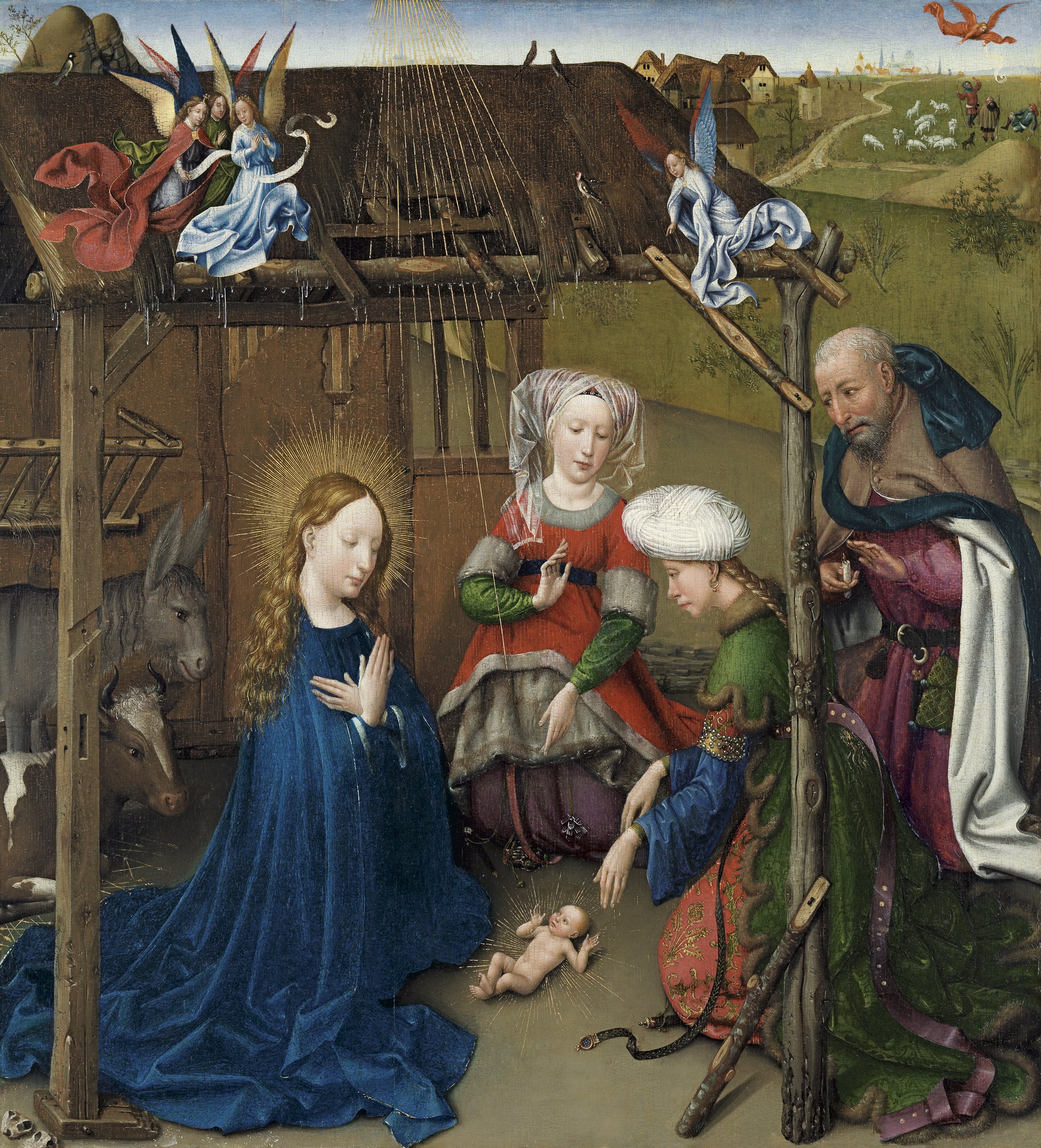
J. Daret, The Nativity (1434) oil on canvas, Museo Nacional Thyssen-Bornemisza (Madrid)

Why do we decorate at Christmas? We do this as an expression of our Christmas joy. Joy. Joy to world. We sing that there is joy because the Savior has come. The world waited for its Savior for ages and then the center of humanity, Jesus the Christ, was born. And the world entered a new age, an age of joy. Joy is real in our lives, even when we are saddened by the loss of those who are very close to us. Christmas is a wonderful time, but it can also be a difficult time. We all carry the memory of loved ones who will never again be at Christmas dinner. We tell stories about Grandma and Grandpa, Mom or Dad, husband or wife, or, and, this is the greatest sadness, the antics of a beautiful child. And we are grieved. But we do not allow grief to determine the course of our lives. We are people of faith. We are convinced that there is infinitely more to the reality of our loved ones who have died than simply our memory of them. We have faith that through the mercy of God they are still alive. We believe that we will once more be fully united with them. Our acceptance of Jesus Christ has given us eternal life. Nothing, not even death, can destroy the joy of the Lord. People need to hear, feel and know the joy of the Gospel. Perhaps it would be good to remember Pope Francis’ first Apostolic Exhortation, Evangelii Gaudium, the Joy of the Gospel. This exhortation promoted the mission of the Church. He called us to communicate the joy of the Gospel to the world. No longer should the leaders of the Church be perceived as unapproachable guardians of the faith. He counseled the hierarchy to refrain from insulating itself from the realities of daily life. He said that the Church must at times get messy. By that he meant that the Church needs to be present to all, even in the mud of those who have no floors in their home. Deeper, than that, the Church needs to be involved in the messiness of all people’s lives. He told us that the main concern of the Church must be to bring the joy of Jesus Christ to the entire world. Our beautiful Catholic Church continues to renew itself.Jesus Christ is the same, yesterday, today and forever. Like the Beauty that St. Augustine finally found in his Confessions, the Church is ever ancient, ever new. Perhaps you remember that passage in Augustine’s Confessions: «Late have I loved you, O Beauty ever ancient, ever new, late have I loved you! You were within me, but I was outside, and it was there that I searched for you. In my unloveliness I plunged into the lovely things which you created. You were with me, but I was not with you. Created things kept me from you; yet if they had not been in you, they would have not been at all. You called, you shouted, and you broke through my deafness. You flashed, you shone, and you dispelled my blindness. You breathed your fragrance on me; I drew in breath and now I pant for you. I have tasted you, now I hunger and thirst for more. You touched me, and I burned for your peace». This is the joy that Christ brings to the world. And we are called to be instruments of His joy • AE


Fr. Agustin´s Schedule for the celebration of the Nativity of the Lord (Christmas)

St Dominic Catholic Church

Saturday, December 24, 2022

6.00 p.m. Holy Mass (English @ Main Church)

Sunday December 25, 2022

Midnight Mass (12.00 a.m. English @ Main Church)

7.30 a.m. Holy Mass (Bilingual Mass @ Main Church)

10.00 a.m. Holy Mass (English @ Main Church)


Os anunciamos un gozo inmenso,
hoy ha nacido el Salvador
en un pesebre sobre las pajas
y entre pañales lo encontrarán

Duerme y no llores, Jesús del alma
Duerme y no llores, mi dulce amor
Duerme y no llores, que esas tus lagrimas
Parten el alma ce compasión

Tus lagrimitas, perlas del cielo
son mi tesoro, prendas de amor
mas calma el llanto, dulce bien mío
de lo contrario me harás llorar

Solemnidad de la Natividad del Señor (Navidad)

La Navidad encierra un secreto profundo que, desgraciadamente, se les escapa a muchos de los que hoy celebrarán algo, sin saber exactamente qué. Muchos no pueden ni siquiera sospechar que la Navidad nos ofrece la clave para descifrar el misterio último de nuestra existencia. Generación tras generación, los hombres han gritado angustiados sus preguntas más hondas. ¿Por qué tenemos que sufrir, si desde lo más íntimo de nuestro ser todo nos llama a la felicidad? ¿Por qué tanta humillación? ¿Por qué la muerte si hemos nacido para la vida? ¿por qué las guerras y el hambre? Los hombres preguntaban y preguntamos hoy a Dios porque, de alguna manera, cuando estamos buscando el sentido último de nuestro ser, estamos apuntando hacia él. Pero Dios parece guardar un silencio impenetrable. Con la Navidad, Dios habla. Tenemos ya su respuesta, que no consiste en palabras hermosas acerca del sufrimiento o profundas lecciones de teología sobre nuestra existencia. Dios no nos ofrece palabras. No. La Palabra de Dios se ha hecho carne. Es decir, Dios más que darnos explicaciones, ha querido sufrir en nuestra propia carne nuestros interrogantes, sufrimientos e impotencia. Dios no da explicaciones sobre el sufrimiento, sino que sufre con nosotros. No responde al porqué de tanto dolor y humillación, sino que él mismo se humilla. Dios no responde con palabras al misterio de nuestra existencia, sino que nace para vivir él mismo nuestra aventura humana. Ya no estamos perdidos en nuestra inmensa soledad. Ya no estamos sumergidos en pura tiniebla. Él está con nosotros. Hay una luz. Dios comparte nuestra existencia. Así todo cambia. Dios mismo ha entrado en nuestra vida. Es posible vivir con esperanza. Merece la pena ser hombre. Dios mismo comparte nuestra vida y con él podemos caminar hacia la plenitud. Por eso, la Navidad es siempre para los creyentes una llamada a renacer. Una invitación a reavivar la alegría, la esperanza, la solidaridad, la fraternidad y la confianza total en el Padre. Recordemos hoy las palabras del poeta: «Aunque Cristo nazca mil veces en Belén, mientras no nazca en tu corazón, estarás perdido para el más allá: habrás nacido en vano» • AE


Fourth Sunday of Advent (Cycle A)

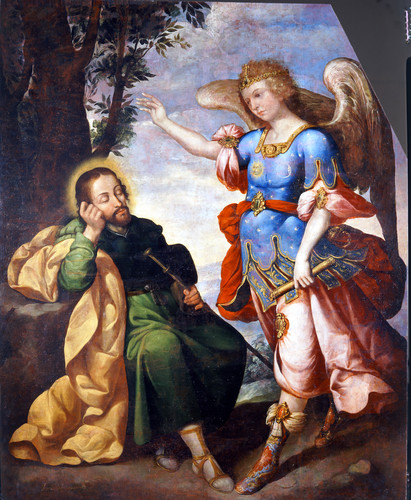
J. R. de Los Santos, St. Joseph´s Dream (1750), Museo Nacional del Virreinato (Mexico City)

Today’s Gospel presents Joseph, a man who was faced with a dilemma. Joseph learned that Mary was pregnant. Now, the reading says that Joseph was an upright man, a just man. According to the common interpretation of the law, he could have declared that Mary was unfaithful, guilty of adultery, and had her put to death. Joseph could have had Mary killed, but he was a just man. He had a real relationship with God. The girl was young. He could not fathom God wanting her dead. He would just send Mary away. Joseph was open to the will of God. And because he was open to God in his life, because he trusted in God rather than his own plans, his own thoughts, Joseph was able to behold the wonders of God’s love in the world. Unlike Ahaz, Joseph chose the way of faith! And he chose well. And the baby was born. What must it have been like for Joseph to hold the King of Kings in his arms? What must it have been like for him to experience the Love of God become flesh? What must it have been like for him to realize that Mary was the polar opposite of his fears? She was not a sinner. She was the one who never sinned. What must it have been like to for Joseph to live in a home filled with the wonders of God? We know that Joseph protected his family, leading them to Egypt to avoid Herod. We know that Joseph returned to Nazareth where he cared for Jesus in his infancy and childhood, even teaching him how to be a carpenter. Joseph had to have been a very happy man, for happiness is found in the presence of God. «Behold!» Mother Church tells us on the Fourth Sunday of Advent. Behold where happiness is found. “Trust in God,” we are told. His wonders are beyond our imagination. Trust in Him and behold His wonders and live in His happiness. Next Sunday we will be giving out Christmas presents. Now, we can give those we love all sorts of things, but we cannot give them happiness. Only God gives happiness. And He gives happiness to those who entrust their lives to Him. And a virgin shall be with child, and bear a son, and his name shall be Immanuel, which means God is with us. Behold Jesus. See and understand. Behold happiness • AE


Winter Readings


Fr. Agustin’s Schedule for the Fourth Sunday of Advent (2022)

St Dominic Catholic Church

Saturday December 17, 2022

2.00 p.m. Quince Mass for Montserrat Carreño

3.30 p.m. Sacrament of Reconciliation (Confessional)

5.00 p.m. Holy Mass (English @ Main Church)

Sunday November 18, 2022

7.30 a.m. Holy Mass (English @ Main Church)

10.00 a.m. Holy Mass (English @ Main Church)


IV Domingo de Adviento (Ciclo A)

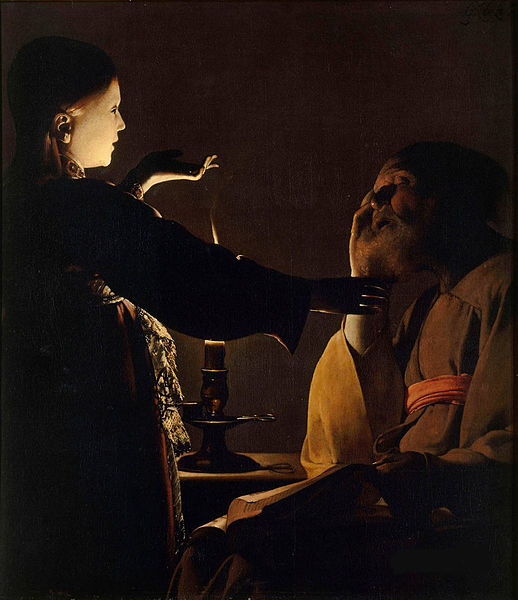
G. de La Tour, Aparición del ángel a José (c. 1628), óleo sobre tela, Museo de Arte de Nantes (Francia)

Antes de que nazca Jesús en Belén, el evangelista dice que llevará el nombre de «Emmanuel», que significa «Dios-con-nosotros». Esto no deja de ser sorprendente, pues no es el nombre con que Jesús fue conocido, y el evangelista lo sabe bien. En realidad, Mateo está ofreciendo a sus lectores la clave para acercarnos al relato que nos va a ofrecer de Jesús, viendo en su persona, en sus gestos, en su mensaje y en su vida entera el misterio de Dios compartiendo nuestra vida. Esta fe anima y sostiene a quienes seguimos a Jesús. Dios está con nosotros, es decir, nopertenece a una religión u otra. No es propiedad de los cristianos. Tampoco de los buenos. Es de todos sus hijos e hijas. Está con los que lo invocan y con los que lo ignoran, pues habita en todo corazón humano, acompañando a cada uno en sus gozos y sus penas. Nadie vive sin su bendición. Dios está con nosotros. No escuchamos su voz. No vemos su rostro. Su presencia humilde y discreta, cercana e íntima, nos puede pasar inadvertida. Si no ahondamos en nuestro corazón, nos parecerá que caminamos solos por la vida. Dios está con nosotros. No grita. No fuerza a nadie. Respeta siempre. Es nuestro mejor amigo. Nos atrae hacia lo bueno, lo hermoso, lo justo. En él podemos encontrar luz humilde y fuerza vigorosa para enfrentarnos a la dureza de la vida y al misterio de la muerte. Dios está con nosotros. Cuando nadie nos comprende, él nos acoge. En momentos de dolor y depresión, nos consuela. En la debilidad y la impotencia nos sostiene. Siempre nos está invitando a amar la vida, a cuidarla y hacerla siempre mejor. Dios está con nosotros. Está en los oprimidos defendiendo su dignidad, y en los que luchan contra la opresión alentando su esfuerzo. Y en todos está llamándonos a construir una vida más justa y fraterna, más digna para todos, empezando por los últimos. Dios está con nosotros. Despierta nuestra responsabilidad y dignidad. Fortalece nuestro espíritu para no terminar esclavos de cualquier ídolo. Está con nosotros salvando lo que nosotros podemos echar a perder. Dios está con nosotros. Está en la vida y estará en la muerte. Nos acompaña cada día y nos acogerá en la hora final. También entonces estará abrazando a cada hijo o hija, rescatándonos para la vida eterna. Dios está con nosotros. Esto es lo que celebramos los cristianos en las fiestas de Navidad: creyentes, menos creyentes, malos creyentes y casi increyentes. Esta fe sostiene nuestra esperanza y pone alegría en nuestras vidas • AE


Feast of Our Lady of Guadalupe (2022)

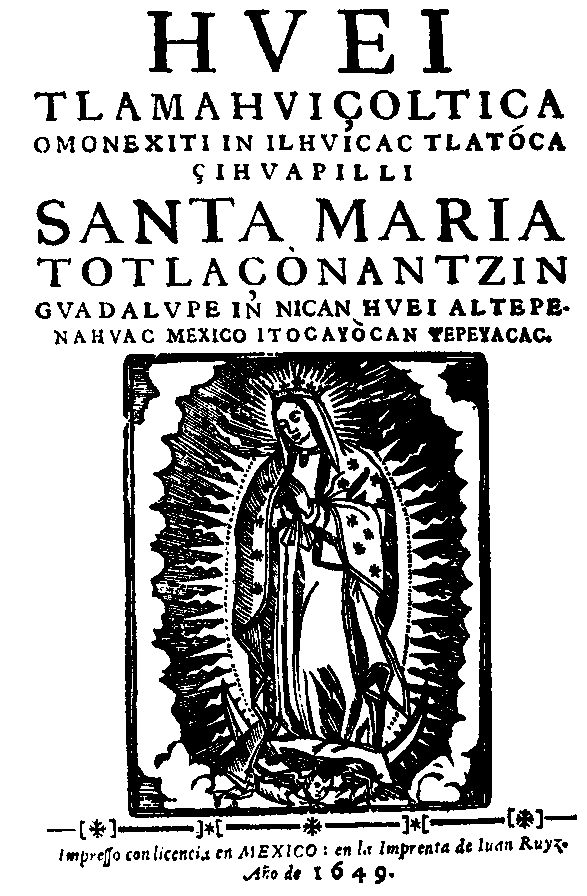
Today we celebrate the Feast of Our Lady of Guadalupe, a day when we remember how the Blessed Virgin Mary appeared to St. Juan Diego in 1531 in Mexico. The story of her appearance resulted in the conversion of many people, so on today we ask for her intercession, that she may pray for each of our hearts to be ever more fully converted to her Son. Today we are invited to look at her sweet face, and look at her eyes full of peace, talk to her and tell her everything that is in our hearts. Today more than ever, we need to feel her maternal tenderness. Deep in her heart, Mary is a mother who loves us. She doesn’t ask for anything for herself. All for Jesus! Last Sunday, our first reading at Mass was from the prophet Isaiah. It talked about John the Baptist being the voice that cried out in the wilderness, urging the people of Israel to prepare the way of the Lord. John the Baptist was the fulfillment of the prophecy of Isaiah that a messenger would come before the Messiah. As Mary visits her sister, as soon as Elizabeth hears Mary’s greeting, John leaps in the womb. He was aware of the presence of the Son of God and it made Elizabeth aware. And it allowed her to give honor to Mary, who had such an incredible faith that, even in spite of the uncertainty of being asked to be the mother of the Savior, believed that God would take care of her. Mary believed that the Lord would be with her, accompanying her throughout this journey into motherhood. Do we have that same faith? Do we believe that in the uncertainty of our lives that the Lord will always be there with us in the midst of it? Do we believe that He dwells among us? As Christians, we have become sons and daughters of God, we have become members of the new Chosen People. And so, the promise that He made to the Israelites has now been extended to us. God has also come to dwell among us. Because of our baptism, the Spirit of God dwells within us. We simply have to cooperate with the Spirit and allow Him to transform our hearts so that we can become ever more aware of that presence. As we journey through the remainder of Advent, let’s continue to make that our prayer…that the Lord may continue to prepare the way of the Lord within our hearts, transforming them from the inside out • AE


Fr. Agustin´s Schedule for the Feast of Our Lady of Guadalupe (2022)

Monday December 12, 2022

5.30 a.m. Mañanitas a la Santísima Virgen y Santo Rosario at the main church

6.00 a.m. Bilingual Mass at the main church

8.30 a.m. English Mass at the main church

6.00 p.m. Bilingual Mass at the main church


Fiesta de Nuestra Señora de Guadalupe (2022)

Concepción Avila, Nuestra Señora de Guadalupe (1885), óleo sobre cobre, Brigham Young University Museum of Art

(Del Nicán Mopohua, relato del escritor indígena del siglo dieciséis don Antonio Valeriano)

El año de 1531, pasados algunos días del mes de diciembre, sucedió que un indio pobre y afable, llamado Juan Diego, originario, según se dice, de Cuauhtitlan, cuyo cuidado pastoral pertenecía a los religiosos de Tlaltelolco, un sábado, muy de mañana, iba a Tlaltelolco en pos de las cosas divinas. Mas al llegar a la colina llamada Tepeyac, ya amanecía. Escuchó un canto de arriba del cerrillo, y, cuando cesó y no se escuchó más, oyó que lo llamaban desde la cumbre de la colina: «Amado Juan Diego», le decía. De inmediato se atrevió a subir allá a donde era llamado.

Cuando llegó a la cima, vio a una Señora que estaba ahí de pie, que le llamó junto a sí. Cuando llegó a su presencia, quedo estupefacto de cuán bella era: su vestido resplandecía como el sol. En seguida la Virgen le declaró su voluntad. Le dice: «Entérate, hijo queridísimo, que soy la perfecta siempre Virgen Santa María, Madre del verdaderísimo Dios, Autor de la vida, el que creó y sostiene todas las cosas, del Señor del Cielo y de la Tierra. Muchísimo quiero, ardientemente deseo, que en este lugar se edifique mi templo donde lo mostraré, lo alabaré al manifestarlo, lo entregaré a Él que es todo mi Amor, Compasión, Auxilio y Defensa, porque, en verdad yo soy vuestra Madre compasiva, tuya y la de todos los que en esta tierra estáis en uno, y de cualesquiera otros que me aman, que me buscan, que devota y confiadamente me invoquen. Allí escucharé sus lágrimas y tristezas, los auxiliaré en sus angustias y brindaré remedio a toda tribulación. Y para que se cumpla este deseo mío, ve a la Ciudad de México al palacio del Obispo. Le dirás que yo te envío, para hacerle saber cómo yo deseo que se me edifique aquí una casa, que se me erija aquí en el llano un templo.»

Cuando llegó a la ciudad, en seguida fue a la casa del Obispo, cuyo nombre era Juan de Zumárraga, de la Orden de San Francisco, pero cuando el prelado escuchó a Juan Diego, no creyéndole del todo, le respondió: «Hijo, vendrás de nuevo y aún te oiré. Yo pensaré qué conviene hacer respecto a tu voluntad, tu deseo.»

Otro día vio a la Reina del Cielo que bajaba de donde la había visto, y le vino al encuentro junto a la colina, lo detuvo y le dijo: «Escucha, hijo amado, de ninguna manera temas ni se angustie tu corazón, ni hagas nada por la enfermedad de tu tío o por cualquier otra angustia. ¿Acaso no estoy yo aquí, que soy tu madre? ¿Acaso no estás bajo mi sombra y amparo? ¿No soy yo la fuente de tu vida y alegría? ¿No te llevo en mi regazo, en el cruce de mis brazos? ¿Acaso necesitas cualquier otra cosa? No te aflijas ni te acongojes. Sube -le dijo- hijo querido, al cerrito, al lugar donde me viste y hablé contigo. Allí verás diversas flores. Córtalas y reúnelas y luego baja para traerlas ante mí.»

Bajó, pues, Juan Diego y le trajo a la Reina del Cielo las flores que había recogido. Ella, al verlas, las tomó con sus venerables manos y volvió a colocarlas en la tilma de Juan Diego, diciéndole: «Hijo amadísimo, estas flores son la señal que llevarás al Obispo. Y tú, tú eres mi mensajero a cuya fidelidad me encomiendo. Te mando con rigor que no despliegues tu tilma ante nadie que no sea el Obispo, y le muestres lo que llevas. Así mismo le contarás cómo te ordené que subieras al cerrito y que allí recogieras las flores, y todo lo que viste y admiraste, para que te crea y se encargue de erigir el templo que deseo.»

Habiéndole mandado esto la Reina del Cielo, tomó el camino a México. Iba alegre, porque todo saldría bien. Habiendo entrado, se postró ante el Obispo y le refirió todo lo que había visto y a lo que había sido mandado con él. Le dijo: «Señor, cumplí lo que me pediste. Fui a decirle a mi Señora, la Reina del Cielo, Santa María, la Madre de Dios, que tú pedías una señal para creerme y para que levantes el templo que la misma Virgen desea. Le dije que te había dado mi palabra de traerte algún signo de su voluntad. Oyó lo que deseabas y lo aceptó de buen grado que lo pidieras para cumplir su voluntad y hoy, muy temprano, me mandó que viniera a verte de nuevo.»

Acudió toda la ciudad, observaban la venerable imagen, se admiraban, la veían como obra divina, le rezaban. Y ese día dijo el tío de Juan Diego cuál debía ser la advocación de la Virgen, y que su imagen se llamara Santa María siempre Virgen de Guadalupe •


Third Sunday of Advent (Gaudete Sunday-Cycle A)

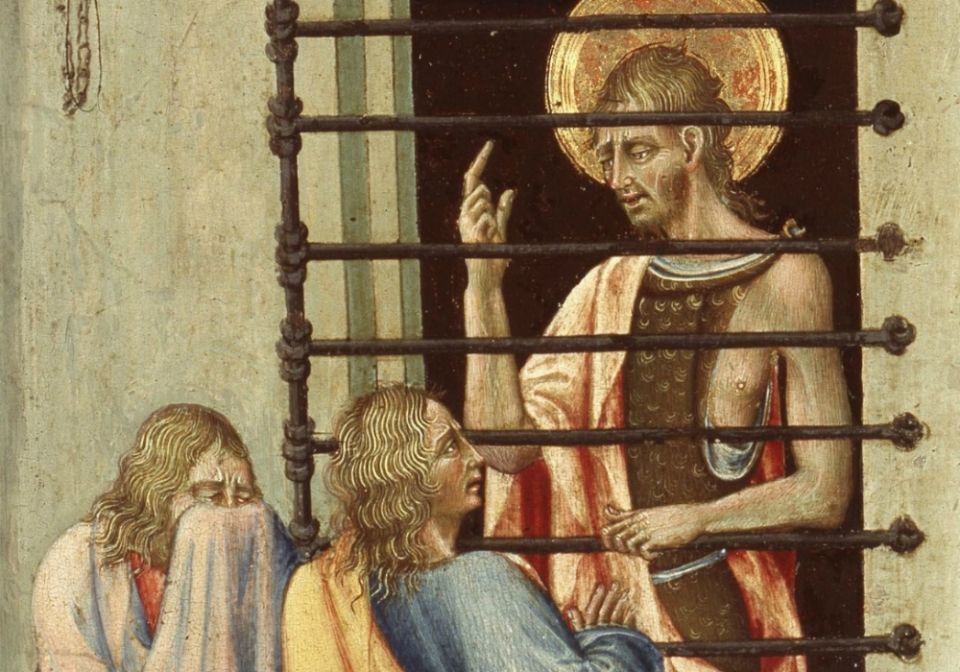
Giovanni di Paolo, Saint John the Baptist in Prison Visited by Two Disciples (1455), oil on canvas, Art Institute of Chicago

Even in the prison of Machaerus, where he’s locked up by Antipas, news of Jesus reaches John the Baptist. What he hears is really…disturbing, or at least confusing; it doesn’t respond to his expectations. He awaits a Messiah who prevails with the terrible power of God’s judgment, saving those who welcomed his baptism, and condemning those who have rejected it. So, who is this Jesus? To resolve his doubts, he charges two of his disciples to ask Jesus about his true identity: «Are you the one who is to come or are we to expect someone else? » This question was crucial in the first days of Christianity. Jesus’ answer is very concrete and precise: tell John «What you hear and see». They’re asking him about his identity, and Jesus answers them with his healing action serving the sick, the poor, and the unfortunate who he meets throughout the villages of Galilee, without resources or hope for a better life: «The blind see again, and the lame walk, those suffering from virulent skin-diseases are cleansed, and the deaf hear, the dead are raised to life and the good news is proclaimed to the poor». So, in order to get to know Jesus better, we have to see to whom He is dedicated. In order to capture well his identity, it’s not enough to confess theoretically that he is the Messiah, the Son of God. It’s necessary to focus on his way of being Messiah, that means relieving suffering, healing life and opening up a horizon of hope for the poor. Jesus knows that his answer can disappoint those who dream of a powerful Messiah. That’s why he adds: «Blessed is anyone who does not find me a cause of falling». So, let no one wait for another Messiah doing any other kinds of works; let no one invent another Christ more to our liking, since the Son has been sent to make life more dignified and happier for everyone. What kind of Messiah do we Christians, Catholic people follow today? Do we dedicate ourselves to do the works that Jesus did? And if we do not do them, what are we doing in the midst of our world? What do people see and hear in Jesus’ Church? What do they see in our particular lives? What do they hear in our words? As you can see, this morning we have many and serious questions for our prayer and coffee time (both) with the Lord • AE

Gaudete in Domino semper: iterum dico, gaudete!

Rejoice greatly, O daughter of Zion,

shout, O daughter of Jerusalem,

behold, thy King cometh unto thee.

He is the righteous Saviour,

and He shall speak peace unto the heathen.

Rejoice greatly, O daughter of Zion,

shout, O daughter of Jerusalem,

behold, thy King cometh unto thee.

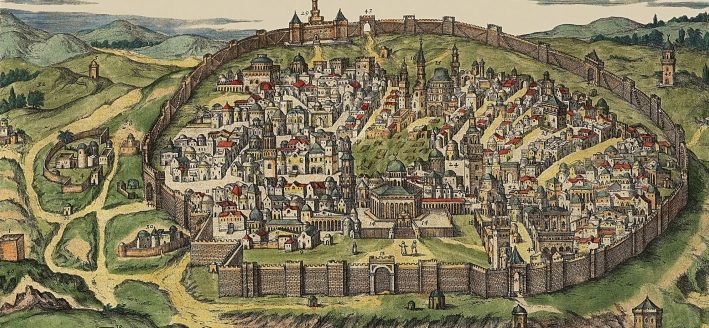
The “daughter of Zion” is mentioned several times in the Old Testament, usually in prophecy and once in poetry. “Zion” meant Jerusalem and, later, Israel as the people of God. “Daughter of Zion,” then, does not refer to a specific person. It’s a metaphor for Israel and the loving, caring, patient relationship God has with His chosen people.


Fr. Agustin´s Schedule for Third Sunday of Advent (Gaudete Sunday)

Saturday, December 10, 2022

Sacrament of Baptism for Francis Anthony Canada @ 10.00 a.m. (Main Church)

Sacrament of Reconciliation @ 3.00 p.m. (Confessional)

Sunday, December 11, 2022

12.00 p.m. Holy Mass @ Main Church

3.00 p.m. Santa Misa en Español @ Main Church


III Domingo de Adviento (Ciclo A)

Francisco de Goya, El entierro de la sardina (1812-1819), óleo sobre tela, Real Academia de Bellas Artes de San Fernando, (Madrid)

Chesterton pone en boca de sus mejores personajes, el Padre Brown, una frase que siempre me ha gustado mucho: “La alegría es el gigantesco secreto del cristiano»[1]. Sí: nuestra fe cristiana es una gran fuente  de alegría. Verdad vieja. Tan vieja como las cartas de S. Ignacio de Antioquia, que incluso cuando ya se sabía trigo de Cristo, se dirigía a sus fieles deseándoles «muchísima alegría”[2]. En el mundo también hay alegría, es cierto; pero una alegría que dura poco. Alegría como de diversiones estúpidas. La fuente de nuestra perenne alegría debe brotar más hondo: la alegría viene de un fondo de serenidad que hay en el alma. El motivo de nuestra alegría es porque Dios está cerca y porque viene a nosotros como Salvador, como Libertador. Ahí está la raíz de nuestra alegría, en que hemos sido rescatados del poder del pecado e invitados al recibir constantemente la gracia. En que Dios se ha hecho de nuestra carne y de nuestra sangre. En que su Madre es también madre nuestra y su vida es nuestra vida. En que somos pequeños y miserables, y llenos de defectos, para que en nosotros resplandezca el poder y la misericordia de Dios. Este domingo, el tercero de Adviento al que la Iglesia lo llama Gaudete[3], volvemos a ir la voz del Bautista, de ese hombre cuy vida áspera y dura está comprendida humanamente por dos soledades: la soledad del desierto y la soledad de la prisión, pero al mismo tiempo se apoya en momentos de júbilo y de alegría. Dijo su madre Isabel: “Apenas llegó a mis oídos la voz de tu saludo saltó de gozo el niño en mi seno”[4]. Estamos en el corazón del Adviento. El mensaje de la Palabra es optimista. El Señor nos invita a estar alegres, pero alegres . Él quiere cambiar nuestro corazón. Él nos anima a trabajar para transformar nuestra vida y nuestra sociedad. En efecto, el Señor está cerca, el Señor está entre nosotros. No podemos aceptar las cosas tal como son. Debemos ser portadores de la Buena Noticia, de la alegría y de la esperanza • AE

[1] Gilbert Keith Chesterton (1874-1936), más conocido como G. K. Chesterton, fue un escritor y periodista británico de inicios del siglo XX. Cultivó, entre otros géneros, el ensayo, la narración, la biografía, la lírica, el periodismo y el libro de viajes. Se han referido a él como el «príncipe de las paradojas».

[2] Ignacio de Antioquía es uno de los padres de la Iglesia y, más concretamente, uno de los padres apostólicos por su cercanía cronológica con el tiempo de los apóstoles. Es autor de siete cartas que redactó en el transcurso de unas pocas semanas, mientras era conducido desde Siria a Roma para ser ejecutado. El descubrimiento y la identificación de las cartas de Ignacio se produjeron a lo largo de los siglos XVI y XVII, tras un arduo y polémico proceso. La temática «procatólica» de las cartas soliviantó los ánimos de teólogos protestantes como Juan Calvino, que las impugnaron enérgicamente. La polémica entre católicos y protestantes continuó hasta el siglo XIX, en que se alcanzó un consenso sobre cuántas cartas, cuáles y en qué medida fueron escritas realmente por Ignacio. Desde entonces, la opinión mayoritaria, pero no indiscutida, es que Ignacio escribió cartas a las comunidades cristianas de Éfeso, Magnesia del Meandro, Trales, Roma, Filadelfia y Esmirna, además de una carta personal al obispo Policarpo de Esmirna.

[3] En latín Gaudete quiere decir «regocijaos», «alégrense», «estad alegres». Se define así a este día por ser Gaudete la primera palabra que se menciona en la celebración litúrgica, específicamente en el introito. El uso del término deriva de un pasaje de la Epístola a los filipenses.

[4] Lc 1, 44.