Solemnity of the Immaculate Conception of the Blessed Virgin Mary (2022)

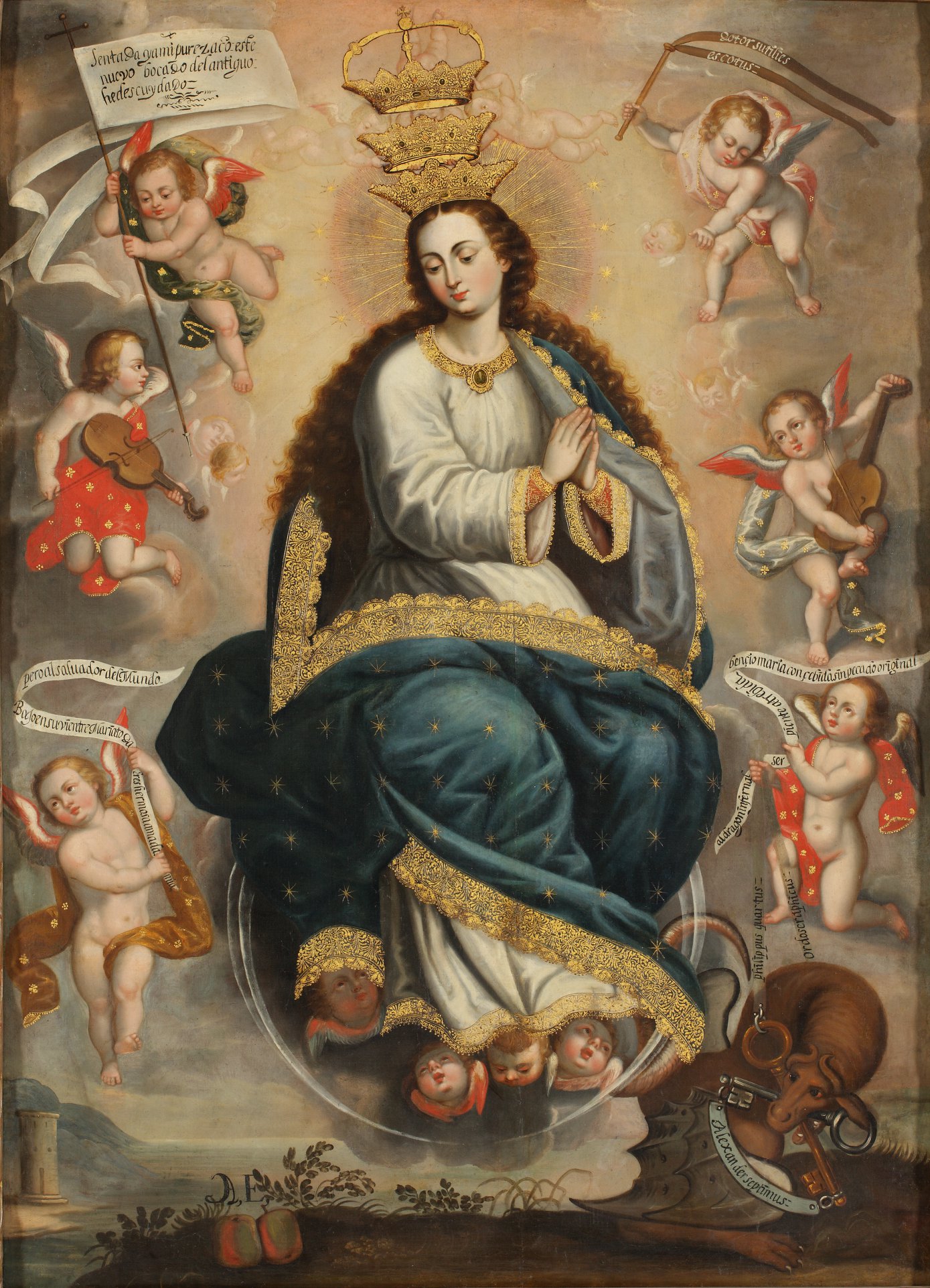
Basilio de Santa Cruz Pumacallao, Immaculate Virgin Victorious over the Serpent of Heresy (ca. 1680), oil on canvas, Lima Museum of Art (Peru)

This is a bit confusing. This celebration, the Immaculate Conception of the Blessed Virgin Mary, is about Mary’s beginning within her mother, Anne, nine months before she was born.  The feast is about her conception.  But the Gospel is the Gospel of the Annunciation.  The Gospel is about Jesus’ conception within Mary. If we delve deeper into the celebration, though, today’s gospel is really the right gospel for this feast.   God had a plan to restore His life to mankind. His holiness would come into the world as the New Adam, the Perfect One. The Perfect One would respond to the God the Father with obedience. The Perfect One would save mankind through sacrificial love. The Perfect One would become a human being.  But how could God’s holiness be formed within a sinful person? How could someone whose soul carried the death of sin give birth to the Lord of Life?  A woman would have to be formed who would be fully related to God. The future Grace of the Resurrection would be given to her. And so Mary was conceived without sin, the Immaculate Conception. Still, God’s plan was not forced on Mary.  She could have chosen not to become the mother of the Lord. She was without sin, but not without free will! Adam and Eve were created without sin. But they chose not to be obedient to God’s plan. Big difference. Mary could have done the same.  She could have thought that others would persecute her and mock her for getting pregnant before living with her husband.  She could have feared that Joseph would reject her. She could have realized that her life would be very difficult if she said “Yes”.  Only, she chose God no matter what toll this would take on her. She chose to allow God to enact His plan. So, today’s Gospel is the right one for the Immaculate Conception because it relates how the Immaculate Conception bore fruit: Mary remained united to God.  She would allow his plan to take place within her. We who are related to God by the grace of our baptism are also given opportunity after opportunity to allow his plan to reach its fulfillment within us.  We are called upon to be loving in a world that celebrates hatred.  We are called to be giving to those who want to take everything they can from us. We can choose just as Mary chose. Or we can reject God and follow the choice of Adam and Eve. Choosing God’s plan may appear to be so much harder than pushing God aside and caring only for ourselves.  But happiness and joy can only be present where God is present. Has there ever been a saint, canonized or not canonized, who has not died happy? All people who die united to God die with the deep joy of knowing that they have been part of His Plan. Like Mary, we have the choice of our lives set before us. Will we choose God or choose to go our own way?  Let us ask today for the intercession of Our Lady to obtain for us the grace we need to assume our role in God’s plan • AE


TOTA PULCHRA EST MARIA!


Fr. Agustin Schedule for the Solemnity of the Immaculate Conception of the Blessed Virgin Mary (2022)

St. Dominic Catholic Church

Wednesday December 7, 2022

4.00 p.m. to 6.00 p.m. Sacrament of Reconciliation (@ Main Church)

6.00 p.m. Vigil Mass (@ Main Church)

Thursday December 8, 2022

8.30 a.m. English Mass (@ Main Church)

6.00 p.m.  Bilingual Mass (@ Main Church)


Solemnidad de la Inmaculada Concepción de la Santisima Virgen María (2022)

Francisco de Zurbarán, La Inmaculada Concepción (1632), óleo sobre tela, Museo Nacional de Arte de Cataluña (Barcelona)

En vísperas de la Navidad, la liturgia nos presenta la figura de María acogiendo en gozo a Dios en su vida. Como nos enseñó el Concilio, María es modelo para la Iglesia. De ella podemos aprender a ser más fieles a Jesús y su evangelio. ¿Cuáles podrían ser los rasgos de una Iglesia más mariana en nuestros días? Una Iglesia que fomenta la «ternura maternal» hacia todos sus hijos cuidando el calor humano en sus relaciones con ellos. Una Iglesia de brazos abiertos, que no rechaza ni condena, sino que acoge y encuentra un lugar adecuado para cada uno. Una Iglesia que, como María, proclama con alegría la grandeza de Dios y su misericordia también con las generaciones actuales y futuras. Una Iglesia que se convierte en signo de esperanza por su capacidad de dar y transmitir vida. Una Iglesia que sabe decir «sí» a Dios sin saber muy bien a dónde le llevará su obediencia. Una Iglesia que no tiene respuestas para todo, pero busca con confianza, abierta al diálogo con los que no se cierran al bien, la verdad y el amor. Una Iglesia humilde como María, siempre a la escucha de su Señor. Una Iglesia más preocupada por comunicar el Evangelio de Jesús que por tenerlo todo definido. Una Iglesia del Magníficat, que no se complace en los soberbios y ricos de este mundo, sino que busca pan y dignidad para los pobres y hambrientos de la Tierra, sabiendo que Dios está de su parte. Una Iglesia atenta al sufrimiento de todo ser humano, que sabe, como María, olvidarse de sí misma y salir de prisa para estar cerca de quien necesita ser ayudado. Una Iglesia preocupada por la felicidad de todos los que «no tienen vino» para celebrar la vida. Una Iglesia que anuncia la hora de la mujer y promueve con gozo su dignidad, responsabilidad y creatividad femenina. Una Iglesia contemplativa que sabe guardar y meditar en su corazón el misterio de Dios encamado en Jesús para transmitirlo como experiencia viva. Una Iglesia que cree, ora, sufre y espera la salvación de Dios anunciando con humildad la victoria final del amor • AE

¡SALVE MADRE!


Second Sunday of Advent (Cycle A)

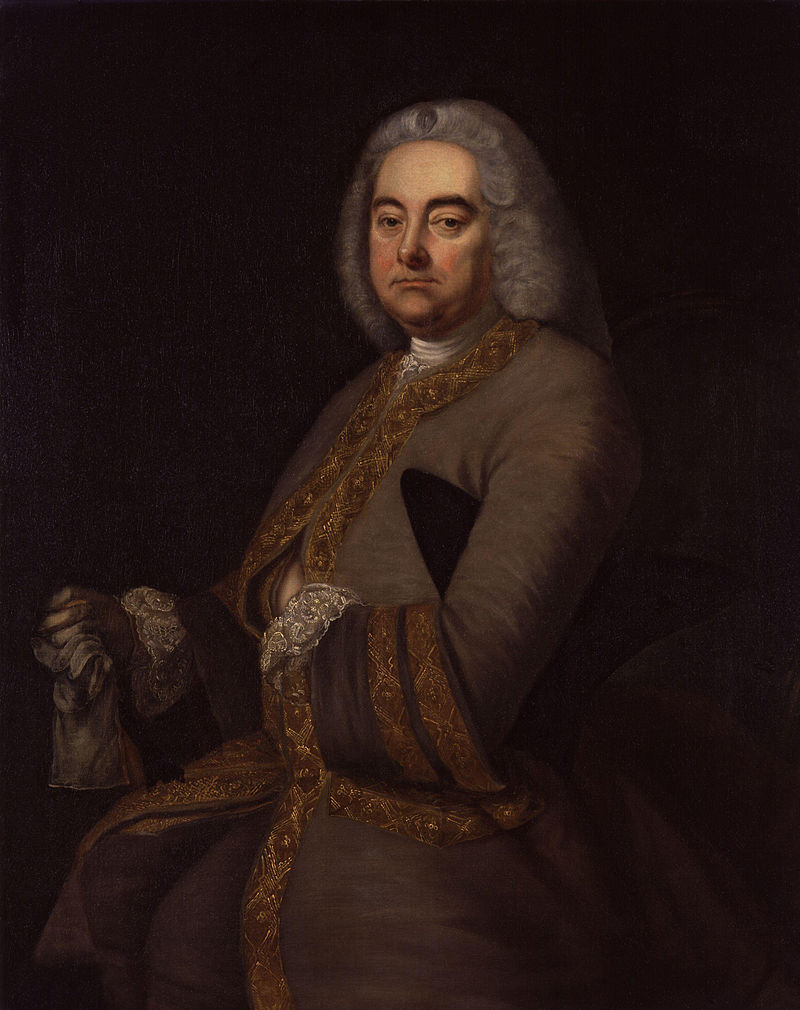
Thomas Hudson, George Frideric Handel, oil on canvas, National Gallery of Art (London)

In today’s Gospel reading John the Baptist confronted people who thought they were entitled. The Sadducees and Pharisees and many of the people He spoke to thought they were entitled to the Kingdom of God simply because they were Jewish. He called them a brood of vipers. They thought that they had a right to salvation simply because they were sons of Abraham, Hebrews. “God can raise up sons of Abraham from these rocks,” the Baptist yelled. «Stop making presumptions,» the Baptist warns them….and us. The message for the Second Sunday of Advent is «prepare» or, more precisely, «Don’t presume; instead prepare.» We have been brought into the sacred through the merciful gift of God that is our baptism. When we refuse to live our faith, we are treating our baptism as a mere ritual act. We are entitled to nothing other than the fruit of our Christian life. George Frederick Handel understood this. He lived during the first half of the 18th century. All of us, even if we have only a smattering of knowledge of classical music, are well aware of his greatest work, the Messiah Oratorio. Christmastime brings innumerable performances this masterpiece and its rousing conclusion, the Hallelujah Chorus. Did you know that Handel never received a penny for this his greatest work? Whatever money the work made in his lifetime went to the London Foundling Hospital, a poor orphanage. It was not that Handel was a rich man at that time. In fact he was very poor. He had gone bankrupt. And then he suffered a paralyzing stroke. Handel had been rich and famous. There was a day when he was the most important composer in Europe. He was lured to England to direct the London Royal Academy of Music. But 25 years later, his operas lost their appeal. By age 52 he was deeply in debt. And then he had the stroke. A few years later, in 1742, Handel was asked to write an oratorio based on meditations on the Life of Christ written by one his close friends, Charles Jennen. Handel felt inspired by God. He completed the work in 24 days. He refused any commission for the initial performances because he said that this was God’s work. He had received the gift of music from the Lord and was paying Him back by giving the gift of loving God through music to the Lord’s people. Although the Oratorio was acclaimed, the London clergy was vehemently against it. It was too modern for them. Some called it a sacrilege and even blasphemy. The Anglican Church influenced what would be performed in the concert halls of London, so The Messiah would not be performed there. This made no difference to Handel. He gave the piece to the London Foundling Hospital for its fund raising. Every year for the next 20 years, Handel rehearsed and directed the Oratorio at sites determined by the hospital. And he did this for free. Handel did not feel entitled to anything other than that which the Lord gives to His faithful servants. Handel did not presume. He prepared. Entitlement is the way of the selfish. Sacrifice is the way of the Christian. «Prepare the way to the Lord,» John the Baptist enjoins us. Live in such a way that others will welcome the Lord into their lives. «Stay awake,» we heard last week. «Prepare,» we hear this week. Stay awake for the opportunities to serve the Lord. Prepare to find Him • AE


Readings for the Season of Advent


Fr. Agustin’s Schedule for The Second Sunday of Advent (2022)

St Dominic Catholic Church

Saturday November 3, 2022

10.00 a.m. Sacrament of Baptism for Aiden Arguello.

11.00 a.m. Sacrament of Baptism for Humberto Celis.

1.30 p.m. Funeral Mass for Deacon Harry Flavin (Our Lady of Grace Catholic Church)

3.30 p.m. Sacrament of Reconciliation (Confessional)

5.00 p.m. Holy Mass (English @ Main Church)

Sunday November 4, 2022

7.30 a.m. Holy Mass (English @ Main Church)

10.00 a.m. Holy Mass (English @ Main Church)


Segundo Domingo de Adviento (Ciclo A)

Francesco Solimena, San Juan Bautista (1730), óleo sobre tela, Museo Nacional del Prado (Madrid)

La figura del Bautista resulta a veces un tanto sombría. Su predicación gira en torno al juicio inminente de Dios. Llega ya el Juez Supremo. Nadie se librará de su terrible juicio. «Ya está el hacha puesta a la raíz de los árboles» (Mt 3, 10). Lo único que nos queda es hacer penitencia, volver al cumplimiento de la ley para evitar el castigo. No son sólo palabras. El Bautista se convierte con su vida en símbolo de este mensaje amenazador. Se retira al desierto y hace vida de ayuno y penitencia. El Bautista no acoge a los que sufren, no se acerca a los leprosos, no cura a los enfermos, no perdona a los pecadores, no bendice a los niños. Lo suyo es predicar el juicio de Dios, bautizar y llamar a hacer penitencia. El Bautista introduce en los corazones un poco de miedo, entiende la religión como espera y preparación de su juicio terrible. Pero he aqui que la aparición de Jesús representa algo nuevo y sorprendente. Su predicación ya no se centra en el juicio de Dios. El que llega no es un Juez airado, sino un Padre que quiere reinar y ser acogido y que busca una vida más digna y dichosa para todos. Desde luego que Jesús no oculta el riesgo de quedarse fuera, pero Dios ofrece su perdón gratuito a todos, incluso a los paganos y pecadores. El mismo Jesús se convierte en el mejor símbolo de ese Dios bueno. No vive ayunando en el desierto, sino comiendo con pecadores. No le llaman bautizador, sino «amigo de publicanos y pecadores». Jesús defiende a los débiles, cura a los enfermos, perdona a los pecadores, bendice a los niños. Jesús introduce en los corazones confianza en un Dios bueno porque entiende la religión no como la preparación de un juicio, sino como la acogida de un Dios Padre que quiere vernos convivir como hermanos. Juan fue un gran hombre. Según Jesús, «el mayor entre los nacidos de mujer». Pero entre Juan y Jesús no hay confusión posible. «La Ley y los Profetas llegaron hasta Juan; a partir de entonces se anuncia la Buena Noticia del Reinado de Dios». No nos podemos quedarnos solamente en Juan. Los cristianos seguimos a Jesús, no al Bautista. La nuestra no es una religión fincada en el miedo, sino de la confianza en Dios. La penitencia es una parte del camino, y la actitud es ser misericordiosos como el Padre es misericordioso • AE


Lecturas para el Tiempo de Adviento