Fourth Sunday in Ordinary Time (Cycle A)

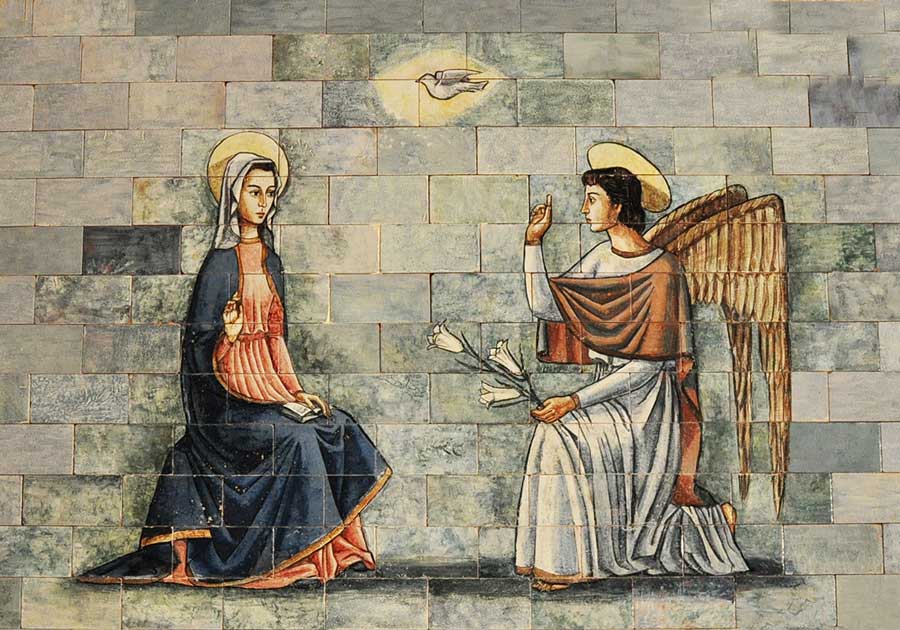
Anonymous artist, The Annunciation, mosaic, Marian Sanctuary of Torreciudad (Huesca, Spain)

All three of today’s readings refer to the virtue of humility. The prophet Zephaniah calls the faithful Israelites the humble of the earth. Humility is being open to God’s presence. A proud person does not need God. He or she is a god to himself or herself. The original sin described in Genesis was the sin of pride. Adam and Eve were too full of themselves to need God. The serpent touched a sensitive nerve when he told them that if they ate the apple they would be like gods. They did not eat because they were hungry. They ate because they were proud. A humble person needs God. A humble person fears what he or she might become without God in his or her life. A humble person recognizes God’s presence in others, God’s truth in different ways of thought, and God’s action in his own life. A humble person seeks the Lord wherever He may be found. In the gospel reading, Jesus went up a mountain and there he began to teach them: «How blest are the poor in spirit: the reign of God is theirs…. And Jesus went up a mountain and said, “Simplify your lives. Let me simplify your lives. Just trust in God, don’t let your lives revolve around other things. Be poor in spirit. Don’t mourn the loss of possessions, mourn for those who have lost their souls. Accept the presence of God in your lives, recognize your need for God and inherit the Promised Land. Don’t be two faced, and double dealing. Be simple and single hearted and you will be capable of enjoying the Vision of God. Bring God’s peace to others and assume the mission of his angels, be sons of God. And if you are mocked for this simplicity, this humility, so what? Your reward in heaven is great.” At the end of the day only a humble person can have a spiritual life, because only a humble person senses the need for a spiritual life. Humility is not looking negatively at ourselves. Humility is not berating everything we do. Humility is recognizing that God has made us wonderful and will continue to work His wonders in us! The humble enter into a dialogue with God to seek that which really matters. And the only things that matter in life are those that flow from God and those that lead back to God. Today let us ask the Lord this specific and wonderful virtue, and let us do it trough the intercession of the most humble and simple creature: the Blessed Virgin Mary. no one has been born and lived in as much humility as her. She, the Mother of God, introduces herself as the handmaid of the Lord. There is so much to learn from her!• AE


A Few More Readings

St. Dominic Catholic Schedule for the Fourth Sunday in Ordinary Time

Saturday January 28, 2023

4.00 p.m. Sacrament of Reconciliation

5.00 p.m. Holy Mass (English)

Sunday January 29, 2023

7.30 a.m. Holy Mass (English)

10.00 a.m. Holy Mass (English)

12.30 p.m. Holy Mass (English)

3.00 p.m. Holy Mass (Spanish)


IV Domingo del Tiempo Ordinario (Ciclo A)
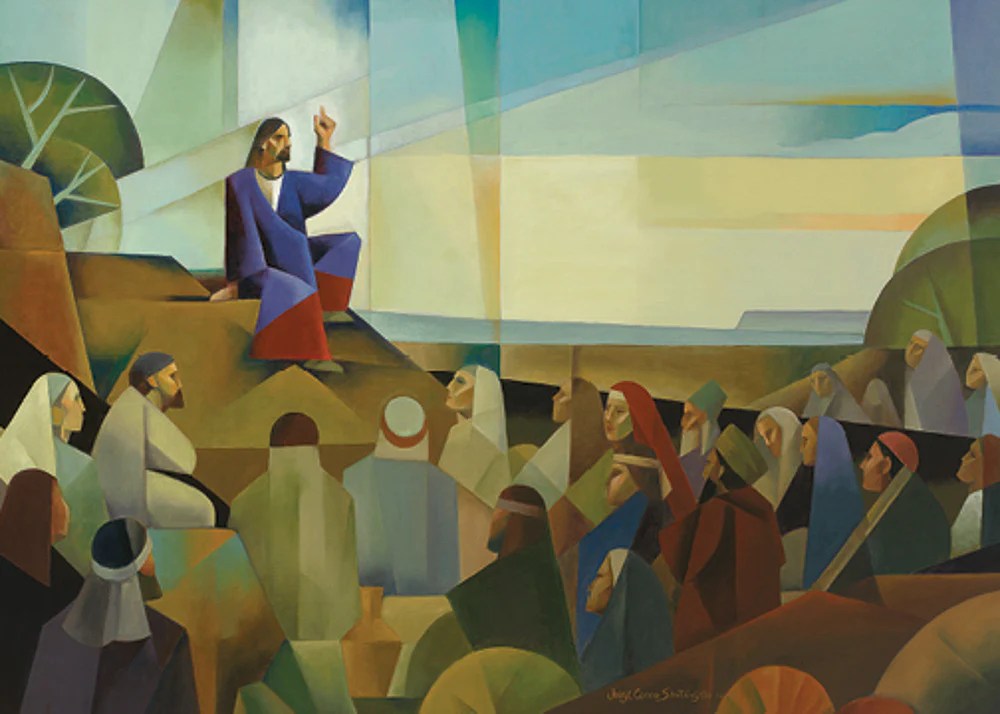
J. Cocco, El Sermón de la Montaña, óleo sobre tabla, Museo de Arte Biblico (Dallas, Texas)

Cuando Jesús sube a la montaña y se sienta para anunciar las bienaventuranzas, hay mucha gente alrededor, pero dice el evangelio que sólo los discípulos se acercan a él para escuchar mejor su mensaje. ¿Qué escuchamos hoy los discípulos de Jesús si nos acercamos a Jesús? Dichosos los pobres de espíritu, los que saben vivir con poco, confiando siempre en Dios. Dichosa una Iglesia con alma de pobre porque tendrá menos problemas, estará más atenta a los necesitados y vivirá el evangelio con más libertad. De ella es el reino de los cielos. Dichosos los sufridos que vacían su corazón de resentimiento y agresividad. Dichosa una Iglesia llena de mansedumbre. Será un regalo para este mundo lleno de violencia. Ella heredará la tierra prometida. Dichosos los que lloran porque padecen injustamente sufrimientos y marginación. Con ellos se puede crear un mundo mejor y más digno. Dichosa la Iglesia que sufre por ser fiel a Jesús. Un día será consolada por Dios. Dichosos los que tienen hambre y sed de justicia, los que no han perdido el deseo de ser más justos ni el afán de hacer un mundo más digno. Dichosa la Iglesia que busca con pasión el reino de Dios y su justicia. En ella alentará lo mejor del espíritu humano. Un día su anhelo será saciado. Dichosos los misericordiosos que actúan, trabajan y viven movidos por la compasión. Son los que, en la tierra, más se parecen al Padre del cielo. Dichosa la Iglesia a la que Dios le arranca el corazón de piedra y le da un corazón de carne. Ella alcanzará misericordia. Dichosos los que trabajan por la paz con paciencia y fe, buscando el bien para todos. Dichosa la Iglesia que introduce en el mundo paz y no discordia, reconciliación y no enfrentamiento. Ella será Hija de Dios. Dichosos los que, perseguidos a causa de la justicia, responden con mansedumbre a las injusticias y ofensas. Ellos nos ayudan a vencer el mal con el bien. Dichosa la Iglesia perseguida por seguir a Jesús. De ella es el Reino de los cielos • AE


Más Lecturas

Third Sunday in Ordinary Time (Cycle A)

Caravaggio, The Calling of Peter and Andrew (1603), oil on canvas, Royal Collection (London)

In the first reading from the prophet Isaiah, we heard that the lands of Zebulun and Naphtali had suffered the results of their sins. But God made it all right. He brought light to their darkness. He gave them joy and rejoicing. He sent them His Son. He sent us His Son. Our hope, our joy, and our peace are all in Jesus Christ. Our rest is in the Lord. Other people might attempt to attack our peace. We might be threatened with exclusion from the community if we don’t join its immorality (as every middle school, high school and college student, and every adult Christian is threatened!), but our peace is grounded in the Lord, not in being part of the crowd. As simple as this. We ask ourselves, «Is it really important what they say about me, think about me? No, if I have to choose, I’d rather choose to live with the Lord than have the approval of those whose actions are in fact rejecting Him, even if they claim to be Christians themselves. We might be challenged with difficult situations in our family as those we love rejects us for taking our faith so seriously. Our homes should be places of peace, but sometimes others in our family are in turmoil and spread this turmoil throughout the house. We can calm the chaos by increasing our prayer life, by intensifying our relationship of love with the Lord. There are many ways that our peace is threatened, but nothing can remove this peace from our lives No one can take Jesus from us. In fact for us determined, committed Christians, the more difficult the challenge in life, the stronger our faith can become. We trust in our Lord to be with us forever. Anguish has taken wing. The darkness is dispelled. And the people who walked in darkness have seen a great light. And Jesus preaches to us, and teaches us and tells us the reason for our joy, «The Kingdom of God is at hand.» And Peter and Andrew and James and John are called to proclaim the Gospel to us, the Good News of Jesus Christ. And we are called to proclaim to Good News to those who are still in darkness. We tell them that no matter what the world throws at us, life is beautiful when it is Christ’s life. Like St. Agnes, St. Maximilian Kolbe, St. Stephen, we can conquer all that attacks us. We can remain in peace despite what is happening around us or within us. We must, give witness to Jesus Christ and we will live in His Peace • AE


Fr. Agustin´s Schedule for Third Sunday in Ordinary Time

Saturday January 21, 2023

10.30 a.m. Graveside Ceremony for Mr. Edward Ashley (+)

3.30 p.m. Sacrament of Reconciliation @ Confessional

Sunday January 22, 2023

12.30 p.m. Holy Mass (English)

3.00 p.m. Holy Mass (Español)


III Domingo del Tiempo Ordinario (Ciclo A)

El cristianismo inició su expansión en una sociedad en la que había diferentes palabras para expresar lo que nosotros llamamos hoy amor. La palabra más usada era philia que designaba el afecto hacia una persona cercana, y se empleaba para hablar de la amistad, el cariño o el amor a los parientes y amigos. Se hablaba también del eros para designar la inclinación placentera, el amor apasionado o sencillamente el deseo orientado hacia quien produce en nosotros goce y satisfacción. El cristianismo abandonó prácticamente esta terminología y puso de moda otra palabra casi desconocida, agape, a la que dieron un contenido nuevo y original. No querían que se confundiera con cualquier cosa el amor inspirado en Jesucristo. De ahí su interés en formular bien el mandato nuevo del amor: «Les doy un mandato nuevo: que os améis unos a otros como yo os he amado»[1]. El estilo de amar de Jesús es inconfundible. No se acerca a las personas buscando su propio interés o satisfacción, su seguridad o bienestar. Sólo parece interesarse en hacer el bien, acoger, regalar lo mejor que él tiene, ofrecer amistad, ayudar a vivir. Lo recordarán así años más tarde en las primeras comunidades cristianas: «Pasó toda su vida haciendo el bien», decían. Su amor tiene un carácter servicial. Jesús se pone al servicio de quienes lo pueden necesitar más. Hace sitio en su corazón y en su vida a quienes no tienen sitio en la sociedad ni en la preocupación de las gentes. Defiende a los débiles y pequeños, los que no tienen poder para defenderse a sí mismos, los que no son grandes o importantes para nadie. Se acerca a quienes están solos y desvalidos, los que no tienen quien se preocupe de ellos. Lo habitual entre nosotros es amar a quienes nos aprecian y quieren de verdad; ser cariñosos y atentos con nuestros familiares y amigos; vivir indiferentes hacia quienes sentimos como extraños y ajenos a nuestro pequeño mundo de intereses. Hasta parece correcto vivir rechazando y excluyendo a quienes nos rechazan o excluyen. Lo que le distingue al seguidor de Jesús no es cualquier amor, sino precisamente ese estilo de amar que consiste en saber acercarse a quienes sufren olvidados de todos. San Mateo nos recuerda cómo vivía Jesús en Galilea y cómo era su estilo de actuar: «Recorría toda Galilea, proclamando el Evangelio del Reino y curando las enfermedades y dolencias del pueblo.» Así era Jesús. No lo deberíamos olvidar • AE

[1] Jn 13, 34


Second Sunday in Ordinary Time (Cycle A)

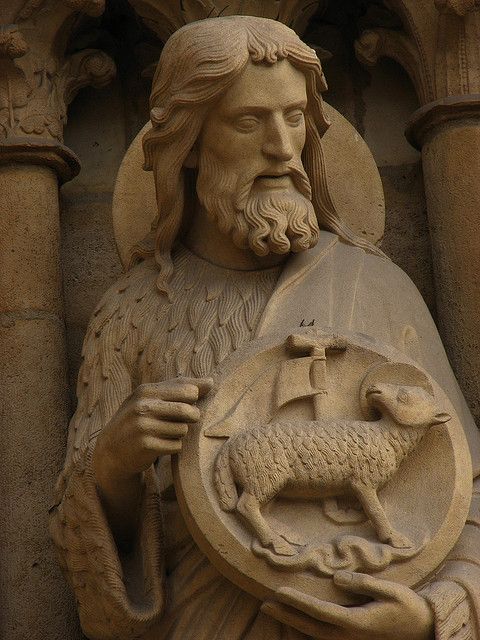
Anonymous artist, John the Baptist pointing the Lamb of God, façade of Notre Dame Cathedral (Paris)

Every time that we prepare for holy Communion, we hear the priest say, “Behold the Lamb of God who takes away the sins of the world.” What do we mean by this? Are we merely speaking figuratively or is there a concrete application of this concept to reality here in the twenty-first century? Throughout human history, there have been multiple attempts to heal society, to take away the sins of the world. I want to begin today by pointing out three of these attempts from the last century. All three were complete failures. The first was prohibition. In the beginning of the century, it was clear to many people that alcohol abuse was destroying people, families and society. Criminal behavior, wife and child abuse, homelessness and unemployment were all blamed on alcohol. Prohibition was seen as the lamb that would eliminate the sin of the world. In 1933, prohibition was repealed. This attempt to take away sins of the world was a failure. The second was communism. The communists saw inequality in society between the rich and the poor and claimed that the poor were doing all the work and the rich were getting all the benefits. Their solution was to take the property of the rich and distribute it throughout the country. All would be equal comrades. What they ended up doing was destroying all incentives for people to work as well as create a rich political caste. This attempt to eliminate the sins of the world and heal society was a complete failure. The third was relativism. The end of the last century saw a movement mostly in the western world to eliminate guilt through a rejection of morality. We still are experiencing this movement. Relativism has become common as many claim that there are no universal truths. Political correctness has become gospel. John looked at Jesus and said, “Here is the one who takes away the sins of the world.” John was referring to the Suffering Servant of Isaiah who would sacrifice his life to win his people from the power of the devil, from sin. He was pointing to Jesus, declaring that Jesus, whose name means God Saves, is in fact the Savior. “You have been sanctified in Christ Jesus and called to be holy,” St. Paul tells the Corinthians in today’s second reading. If we stay united to Christ, then He, the Savior, will heal the ills of society through us. If we instead put our trust in other people, we will be disappointed and will not become vehicles of healing. There is a saying that sometimes people look for love in all the wrong places. Well, similarly, many people look for deliverance from evil in all the wrong places. As a result, eyes are closed to gross immorality. We all feel overburdened by the ills of society, and the pressure of living a just moral life among those who give lip service to religion. Mankind cannot solve its own problems. It can make attempts, but ultimately, mankind will fail. Only Jesus can save us. He is the Lamb of God who takes away the sins of the world. We need to look to Jesus for healing, and for redemption from sin. We put our trust in the Lord. We are People of God. We are holy, sanctified by Jesus Christ. We unite our ever decision to Him. We need to listen to John the Baptist and behold the Lamb of God. We need to recognize the power of the Lord. He and he alone rescue us from sin • AE


New Year, New Readings


Fr. Agustin´s Schedule for the Second Sunday in Ordinary Time

Saturday, January 14, 2023

12.00 p.m. Commissioning Mass @ San Fernando

3.30 p.m. Sacrament of Reconciliation (Confessional)

Sunday January 15, 2023

7.30 a.m. Holy Mass (English)

10.00 a.m. Holy Mass (English)

12.30 p.m. Holy Mass (English)


II Domingo del Tiempo Ordinario (Ciclo A)

(La ilustración es de Joaquín Salvador Lavado Tejón, mejor conocido bajo el seudónimo de Quino)

Son bastantes las personas que llevan en el fondo de su alma la caricatura de un Dios desfigurado que tiene muy poco que ver con el verdadero rostro del Dios que se nos ha revelado en Jesús. Dios sigue siendo para ellos el tirano que impone su voluntad caprichosa, nos complica la vida con toda clase de prohibiciones y nos impide ser todo lo felices que nuestro corazón anhela. Todavía no han comprendido que Dios no es un dictador, celoso de la felicidad del hombre, controlador implacable de nuestros pecados, sino una mano tendida con ternura, empeñada en quitar el pecado del mundo. Son bastantes los que necesitan liberarse de un grave malentendido. Las cosas no son malas porque Dios ha querido que sean pecado. Es, exactamente, al revés. Precisamente porque son malas y destruyen nuestra felicidad, son pecado que Dios quiere quitar del corazón del mundo. A los hombres se nos olvida, con frecuencia, que, al pecar, no somos sólo culpables, sino también víctimas. Cuando pecamos, nos hacemos daño a nosotros mismos, nos preparamos una trampa trágica, pues agudizamos la tristeza de nuestra vida, cuando precisamente creíamos hacerla más feliz. No olvidemos la experiencia amarga del pecado. Pecar es renunciar a ser humanos, dar la espalda a la verdad, llenar nuestra vida de oscuridad. Pecar es matar la esperanza, apagar nuestra alegría interior, dar muerte a la vida. Pecar es aislamos de los demás, hundirnos en la soledad. Pecar es contaminar la vida, hacer un mundo injusto e inhumano, destruir la fiesta y la fraternidad. Por eso, cuando Juan nos presenta a Jesús como el que quita el pecado del mundo, no está pensando en una acción moralizante, una especie de saneamiento de costumbres. Está anunciándonos que Dios está de nuestro lado frente al mal. Que Dios nos ofrece la posibilidad de liberamos de nuestra tristeza, infelicidad e injusticia. Que Dios nos ofrece su amor, su apoyo, su alegría, para liberamos del mal. El cristianismo sólo puede ser vivido sin ser traicionado, cuando se experimenta a Jesucristo como liberación gozosa que cambia nuestra existencia, perdón que nos purifica del pecado, respiro ancho que renueva nuestro vivir, todos los días • AE


Año Nuevo, Nuevas Lecturas


¡GRACIAS, SANTO PADRE, GRACIAS!

Se marchó un gran hombre. Uno que mantuvo una actitud de fondo toda su vida: «Respeto la providencia y no me interesa saber de qué herramientas se sirve», dijo en una ocasión; y luego, en un texto de 1997, escribió: «No me dedico a planificar (en realidad nunca lo he hecho), sino que me dejo simplemente llevar por la divina providencia. Y, en realidad, no me ha ido mal así, aunque todo haya salido de forma muy distinta de como yo me lo imaginaba». Benedicto XVI era una de esas personas que dicen lo que piensan y hacen lo que dicen. No era un político. Para él no había una próxima elección, sino solo el juicio final, por lo que, para entenderlo, no sirven los esquemas simples izquierda-derecha o progresista-conservador. El Papa alemán aparece como un personaje que se acabó imponiendo por su bondad, su sencillez, su capacidad de alegrarse por las cosas más mínimas, su disposición para escuchar, su talante siempre calmado y la valentía serena con la que siempre supo afrontar los problemas. Intelectualmente fueron asombrosas la solidez y coherencia de su pensamiento, su enorme categoría intelectual y su don, trabajado durante años, para exponer las cosas con extraordinaria claridad y siempre lejos de cualquier radicalismo. Sí, Benedicto XVI era un gigante. En algún momento se dirigió a quienes lo elegirían en el cónclave: «Todos los hombres quieren dejar una huella que permanezca, pero lo que permanece no es ni el dinero, ni los edificios, ni los libros, pues todo desaparece, y, al fin, lo único que permanece eternamente es el alma humana, el hombre creado por Dios para la eternidad. Por tanto, el fruto que permanece es todo lo que hemos sembrado en las almas humanas: el amor, el conocimiento, el gesto capaz de tocar el corazón; la palabra que abre el alma a la alegría del Señor». ¡Gracias, y al cielo con él! • AE


The Solemnity of the Epiphany of the Lord (2023)

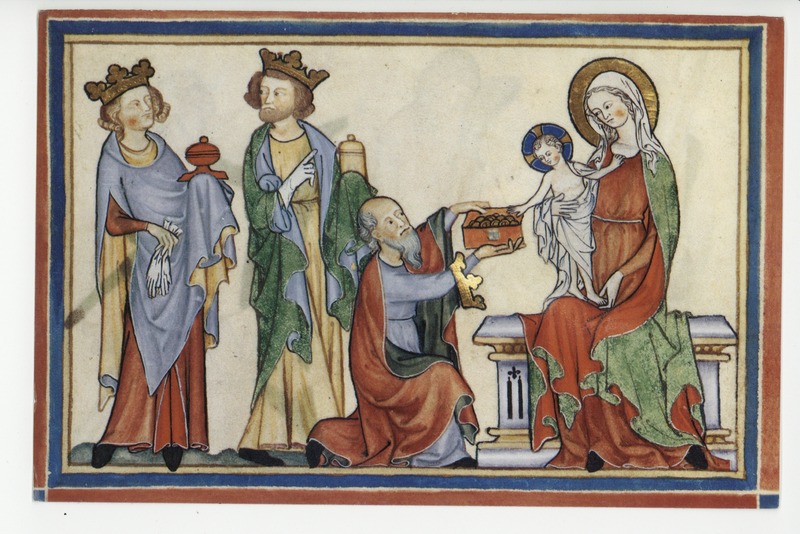
Anonymous Master, Adoration of the Magi, French illuminated manuscript, French; circa 1330.

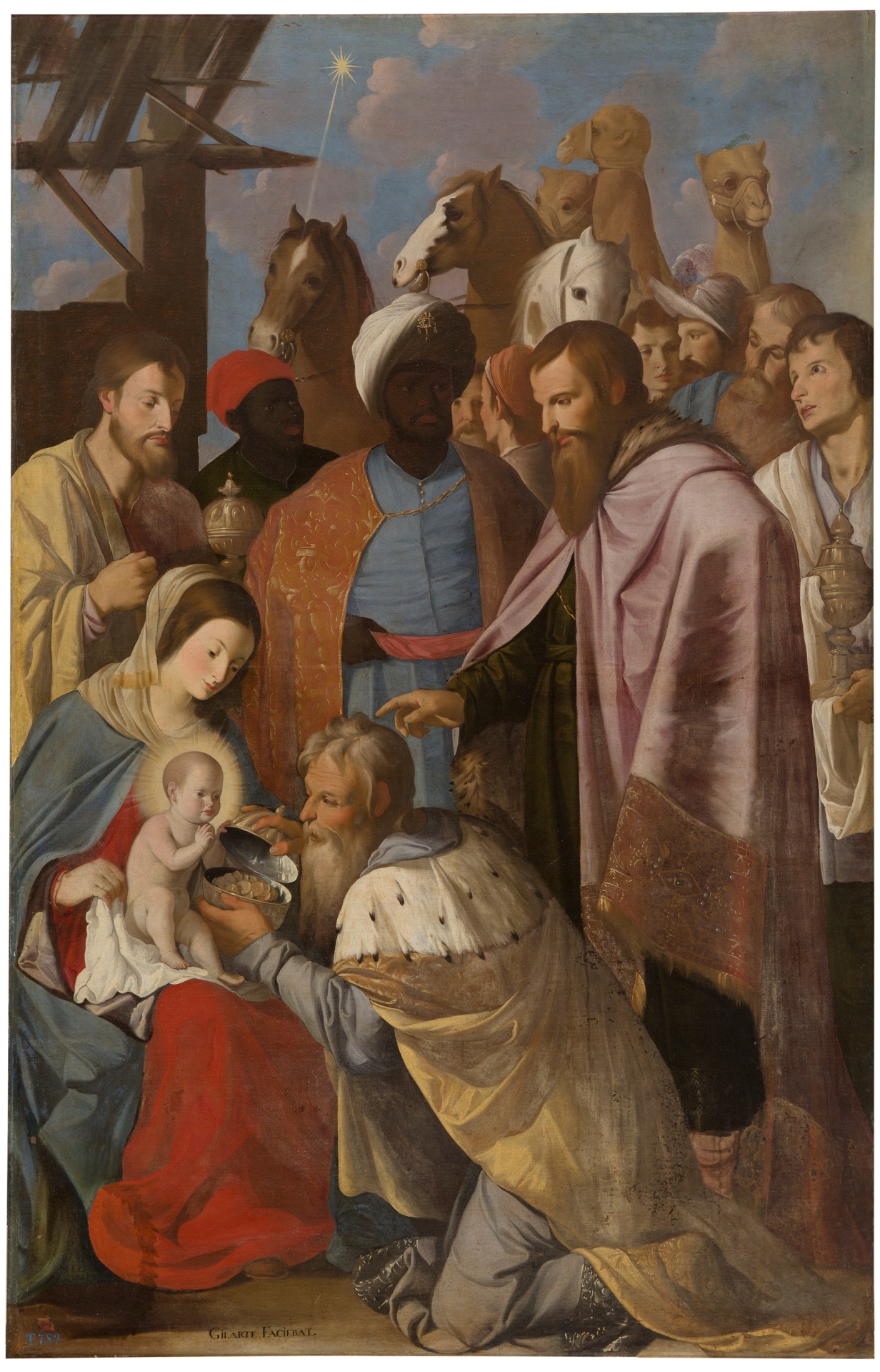
There is message that is fundamental to the Epiphany that we might not reflect on as thoroughly as we should. We hear this message in today’s second reading. The message is a message of mystery. St. Paul speaks about a great mystery that has been revealed. The mystery is simply this: «the Gentiles are coheirs with the Jews, members of the same body, and copartners of the promise of Christ in the gospel.» The wise men came from the East. They were pagan astrologers called to the manger, called to faith. Their journey is our journey, the journey of people throughout the world and throughout history being called to the manger, being called to faith. The Epiphany is the celebration of our being included in the Mystery of Jesus Christ; no, not just included, more than included. The Epiphany is the celebration of our being equal to the very people chosen to be the physical ancestors of the human nature of our Lord. This was certainly difficult for the Jewish people of the first century to understand. They normally referred to those who were not Jews, the Gentiles, as dogs. Yes: dogs. It was mind overwhelming for them to think that God would consider the Gentiles their equals. The Jews were the chosen people. Would God include others in His Plan for their salvation? Yes, the Epiphany tells us, this was always God’s plan! He never intended to be the God for only one portion of mankind. Even more, all people would be co-heirs of the Grace of Christ. It was difficult for Jewish Christians to buy into the message of the Epiphany. It is also difficult for many of us. When we envision the birth of the Lord, we tend to see him in the viewpoint of our own frame of reference. Most of the pictures of Mary and Jesus are from European painters. Mary is often a fair skinned girl with a bouncing, blue eyed baby. But Jesus and Mary were not Europeans, not even Italian, as hard as that is to believe. Mary and Jesus were Semitic. There is a certain arrogance that many Catholics have that is evident when they look down on people who are not from their culture. The Epiphany tells us that African Catholics are as Catholic as Asian Catholics and European Catholics and all Catholics.  We Catholics do not have the right to assume a spiritual superiority over any members of our faith whose background may be different than ours, or whose history in the Church might be shorter than ours. If we are intolerant of others, then others will be denied seeing his presence in us. Spiritual arrogance, whether that of ancient pharisees or modern ones, hides the presence of the Lord.  We have to keep searching for the Lord until the day we die. If we are not physically dead when we stop searching for him, we will be spiritually dead. The word Epiphany means a showing or manifestation of the Lord. He was first shown to the wise men, astrologers whose faith guided them to Bethlehem. We need to show Him to all people seeking the spiritual body where they can be one with God • AE


Let us approach the mystery with awe and reverence


Fr. Agustin´s Schedule for the Epiphany of the Lord (2023)

Saturday January 7, 2023

Sacrament of Matrimony for Brendan & Hannah @ 3.00 p.m. (Our Lady of Grace Catholic Church)

Sunday January 8, 2023

12.00 p.m. Holy Mass @ Main Church

3.00 p.m. Santa Misa en Español @ Main Church


Solemnidad de la Epifanía del Señor (2023)

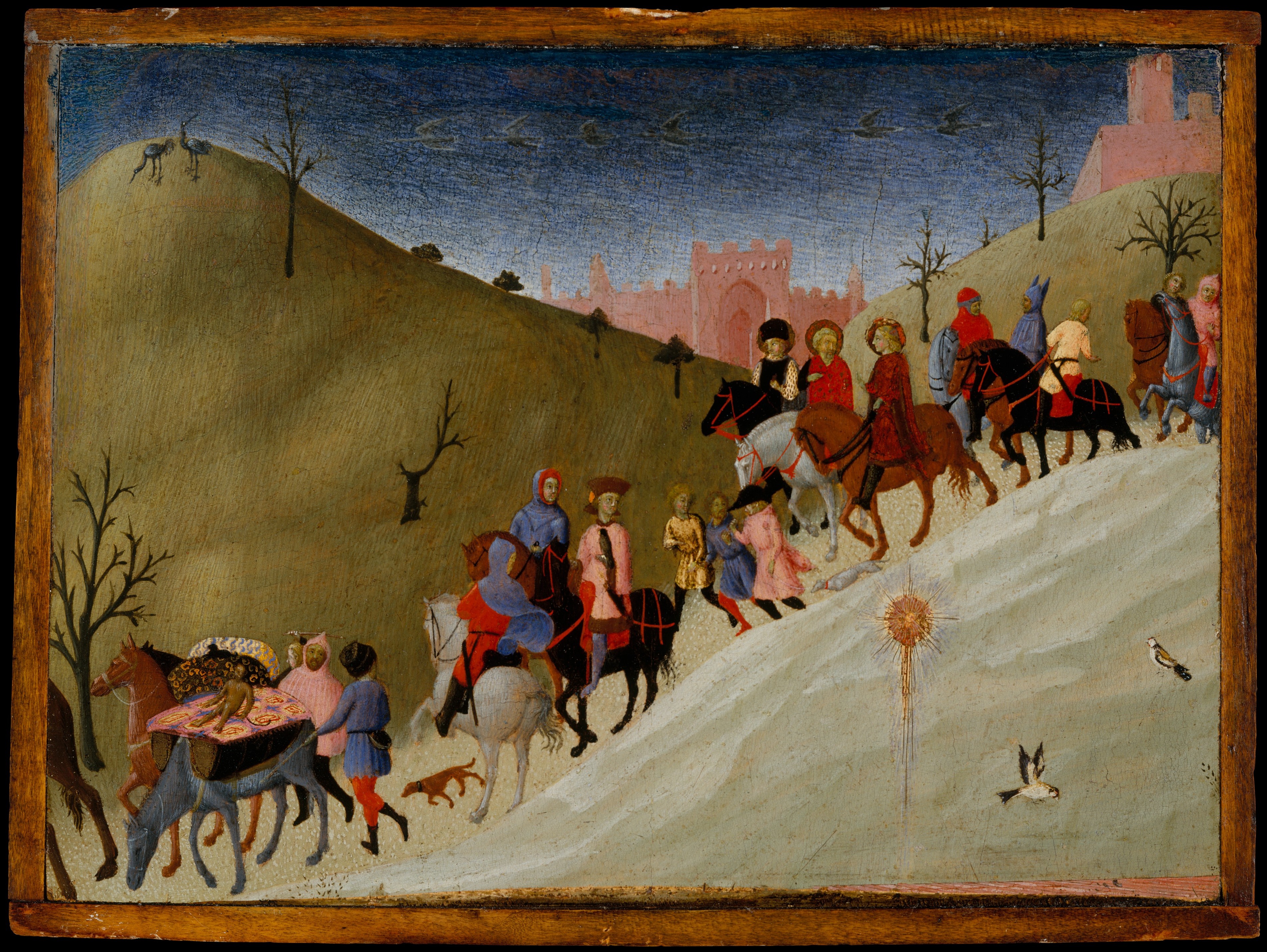
Sassetta, El Viaje de los Magos (1433), tempera y oro sobre madera, Metropolitan Museum of Art (New York)

Los magos vienen del Oriente, un lugar que evoca en los judíos la patria de la astrología y de otras ciencias extrañas. Son paganos. No conocen las Escrituras Sagradas de Israel, pero sí el lenguaje de las estrellas. Buscan la verdad y se ponen en marcha para descubrirla. Se dejan guiar por el misterio, sienten necesidad de adorar. Su presencia provoca un sobresalto en todo Jerusalén. Ellos vieron brillar una estrella nueva que les hace pensar que ya ha nacido el rey de los judíos y deciden buscarlo para adorarlo Este rey no es Augusto. Tampoco Herodes. ¿Dónde está? Ésta es su pregunta. La gran pregunta. Herodes se sobresalta. La noticia le cae en el hígado. Él es quien ha sido designado por Roma rey de los judíos, por lo tanto habrá que acabar con el recién nacido: ¿dónde está ese rival extraño? Los sumos sacerdotes y los escribas conocen las Escrituras y saben que ha de nacer en Belén, pero no se interesan por el niño ni se ponen en marcha para adorarlo. Esto es lo que encontrará Jesús a lo largo de su vida: hostilidad y rechazo en los representantes del poder político; indiferencia y resistencia en los dirigentes religiosos. Sólo quienes buscan el reino de Dios y su justicia lo acogerán. Aquellos magos prosiguen su larga búsqueda. A veces, la estrella que los guía desaparece dejándolos en la incertidumbre. Otras veces, brilla de nuevo. Por fin encuentran al Niño y cayendo de rodillas, lo adoran. Después, ponen a su servicio las riquezas que tienen y los tesoros más valiosos que poseen, reconociéndolo como su Rey y Señor. En su aparente ingenuidad, este relato nos plantea preguntas decisivas: ¿ante quién nos arrodillamos nosotros?, ¿cómo se llama el dios que adoramos en el fondo de nuestro ser? Nos decimos cristianos, pero ¿vivimos adorando al Niño de Belén?, ¿ponemos a sus pies nuestras riquezas y nuestro bienestar?, ¿estamos dispuestos a escuchar su llamada a entrar en el reino de Dios y su justicia? En nuestras vidas siempre hay alguna estrella que nos guía hacia Belén • AE


¡Llegaron ya los Reyes y eran tres!

Llegaron ya los reyes y eran tres
Melchor, Gaspar y el negro Baltasar
Arrope y miel, le llevarán
Y un poncho blanco de alpaca real

Llegaron ya los reyes y eran tres
Melchor, Gaspar y el negro Baltasar
Arrope y miel le llevarán
Y un poncho blanco de alpaca real

Changos y chinitas duérmanse
Que ya Melchor, Gaspar y Baltasar
Todos los regalos traerán
Para jugar mañana al despertar

El niño Dios muy bien lo agradeció
Comió la miel y el poncho lo abrigó
Y fue despues que sonrió
Y a media noche el sol relumbró