
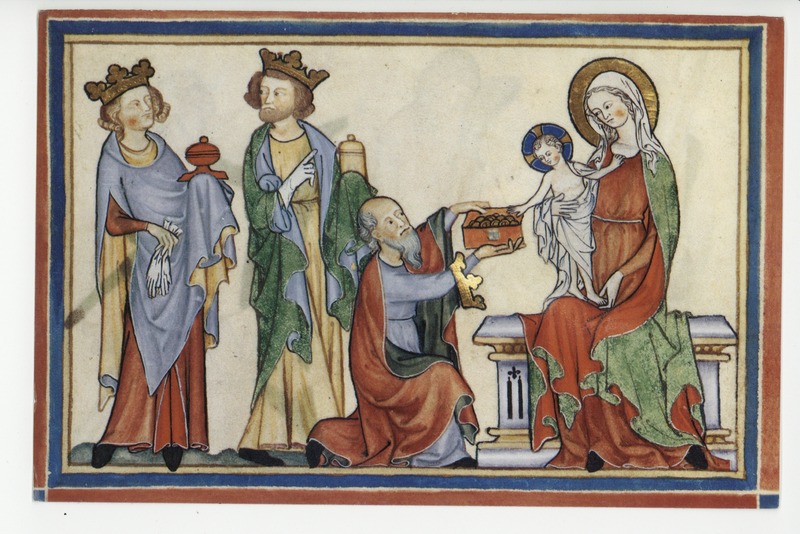
Anonymous Master, Adoration of the Magi, French illuminated manuscript, French; circa 1330.
There is message that is fundamental to the Epiphany that we might not reflect on as thoroughly as we should. We hear this message in today’s second reading. The message is a message of mystery. St. Paul speaks about a great mystery that has been revealed. The mystery is simply this: «the Gentiles are coheirs with the Jews, members of the same body, and copartners of the promise of Christ in the gospel.» The wise men came from the East. They were pagan astrologers called to the manger, called to faith. Their journey is our journey, the journey of people throughout the world and throughout history being called to the manger, being called to faith. The Epiphany is the celebration of our being included in the Mystery of Jesus Christ; no, not just included, more than included. The Epiphany is the celebration of our being equal to the very people chosen to be the physical ancestors of the human nature of our Lord. This was certainly difficult for the Jewish people of the first century to understand. They normally referred to those who were not Jews, the Gentiles, as dogs. Yes: dogs. It was mind overwhelming for them to think that God would consider the Gentiles their equals. The Jews were the chosen people. Would God include others in His Plan for their salvation? Yes, the Epiphany tells us, this was always God’s plan! He never intended to be the God for only one portion of mankind. Even more, all people would be co-heirs of the Grace of Christ. It was difficult for Jewish Christians to buy into the message of the Epiphany. It is also difficult for many of us. When we envision the birth of the Lord, we tend to see him in the viewpoint of our own frame of reference. Most of the pictures of Mary and Jesus are from European painters. Mary is often a fair skinned girl with a bouncing, blue eyed baby. But Jesus and Mary were not Europeans, not even Italian, as hard as that is to believe. Mary and Jesus were Semitic. There is a certain arrogance that many Catholics have that is evident when they look down on people who are not from their culture. The Epiphany tells us that African Catholics are as Catholic as Asian Catholics and European Catholics and all Catholics. We Catholics do not have the right to assume a spiritual superiority over any members of our faith whose background may be different than ours, or whose history in the Church might be shorter than ours. If we are intolerant of others, then others will be denied seeing his presence in us. Spiritual arrogance, whether that of ancient pharisees or modern ones, hides the presence of the Lord. We have to keep searching for the Lord until the day we die. If we are not physically dead when we stop searching for him, we will be spiritually dead. The word Epiphany means a showing or manifestation of the Lord. He was first shown to the wise men, astrologers whose faith guided them to Bethlehem. We need to show Him to all people seeking the spiritual body where they can be one with God • AE

Let us approach the mystery with awe and reverence
Fr. Agustin´s Schedule for the Epiphany of the Lord (2023)

Saturday January 7, 2023
Sacrament of Matrimony for Brendan & Hannah @ 3.00 p.m. (Our Lady of Grace Catholic Church)
Sunday January 8, 2023
12.00 p.m. Holy Mass @ Main Church
3.00 p.m. Santa Misa en Español @ Main Church
Solemnidad de la Epifanía del Señor (2023)
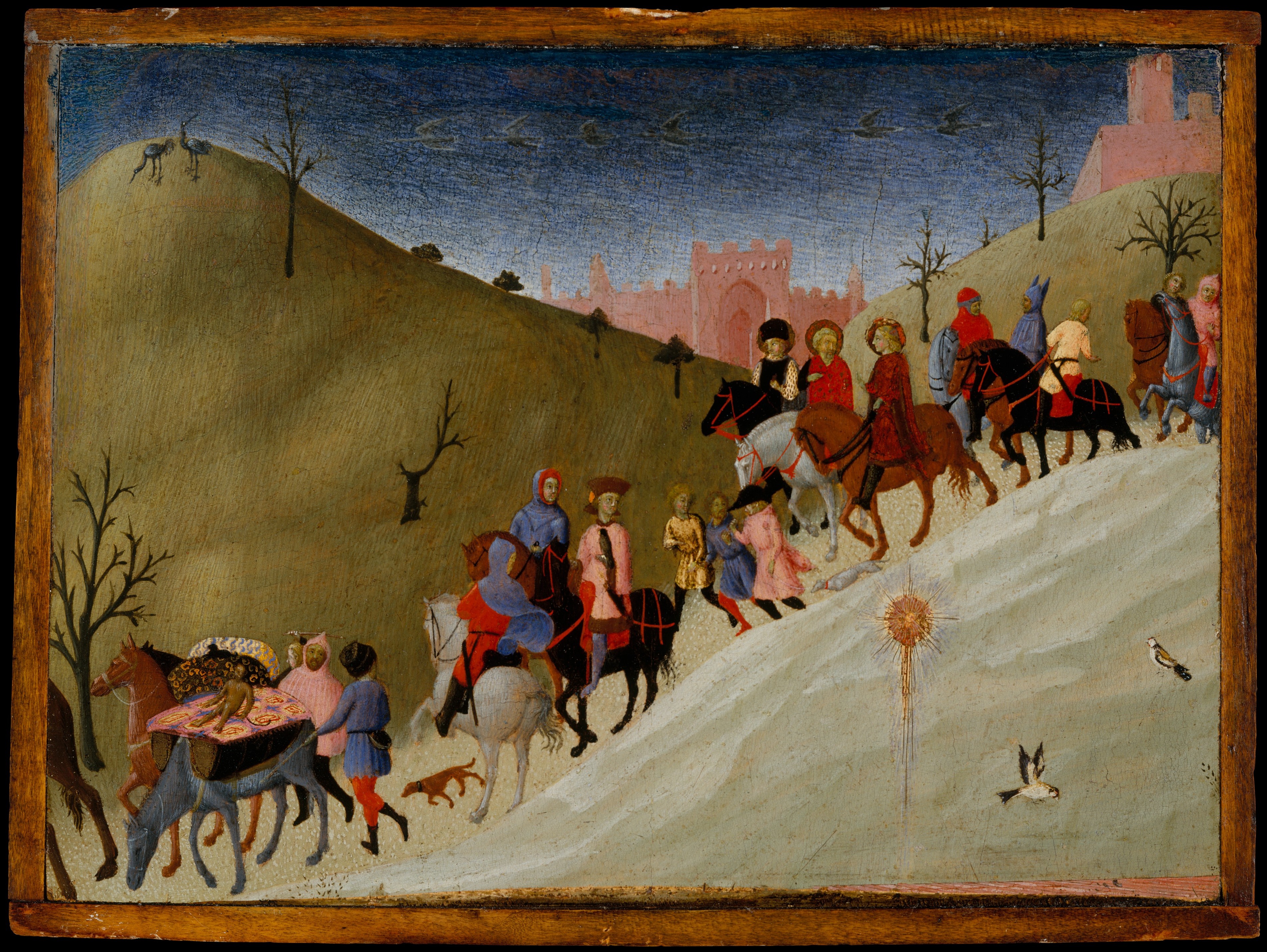
Sassetta, El Viaje de los Magos (1433), tempera y oro sobre madera, Metropolitan Museum of Art (New York)
Los magos vienen del Oriente, un lugar que evoca en los judíos la patria de la astrología y de otras ciencias extrañas. Son paganos. No conocen las Escrituras Sagradas de Israel, pero sí el lenguaje de las estrellas. Buscan la verdad y se ponen en marcha para descubrirla. Se dejan guiar por el misterio, sienten necesidad de adorar. Su presencia provoca un sobresalto en todo Jerusalén. Ellos vieron brillar una estrella nueva que les hace pensar que ya ha nacido el rey de los judíos y deciden buscarlo para adorarlo Este rey no es Augusto. Tampoco Herodes. ¿Dónde está? Ésta es su pregunta. La gran pregunta. Herodes se sobresalta. La noticia le cae en el hígado. Él es quien ha sido designado por Roma rey de los judíos, por lo tanto habrá que acabar con el recién nacido: ¿dónde está ese rival extraño? Los sumos sacerdotes y los escribas conocen las Escrituras y saben que ha de nacer en Belén, pero no se interesan por el niño ni se ponen en marcha para adorarlo. Esto es lo que encontrará Jesús a lo largo de su vida: hostilidad y rechazo en los representantes del poder político; indiferencia y resistencia en los dirigentes religiosos. Sólo quienes buscan el reino de Dios y su justicia lo acogerán. Aquellos magos prosiguen su larga búsqueda. A veces, la estrella que los guía desaparece dejándolos en la incertidumbre. Otras veces, brilla de nuevo. Por fin encuentran al Niño y cayendo de rodillas, lo adoran. Después, ponen a su servicio las riquezas que tienen y los tesoros más valiosos que poseen, reconociéndolo como su Rey y Señor. En su aparente ingenuidad, este relato nos plantea preguntas decisivas: ¿ante quién nos arrodillamos nosotros?, ¿cómo se llama el dios que adoramos en el fondo de nuestro ser? Nos decimos cristianos, pero ¿vivimos adorando al Niño de Belén?, ¿ponemos a sus pies nuestras riquezas y nuestro bienestar?, ¿estamos dispuestos a escuchar su llamada a entrar en el reino de Dios y su justicia? En nuestras vidas siempre hay alguna estrella que nos guía hacia Belén • AE

¡Llegaron ya los Reyes y eran tres!
Llegaron ya los reyes y eran tres
Melchor, Gaspar y el negro Baltasar
Arrope y miel, le llevarán
Y un poncho blanco de alpaca real
Llegaron ya los reyes y eran tres
Melchor, Gaspar y el negro Baltasar
Arrope y miel le llevarán
Y un poncho blanco de alpaca real
Changos y chinitas duérmanse
Que ya Melchor, Gaspar y Baltasar
Todos los regalos traerán
Para jugar mañana al despertar
El niño Dios muy bien lo agradeció
Comió la miel y el poncho lo abrigó
Y fue despues que sonrió
Y a media noche el sol relumbró
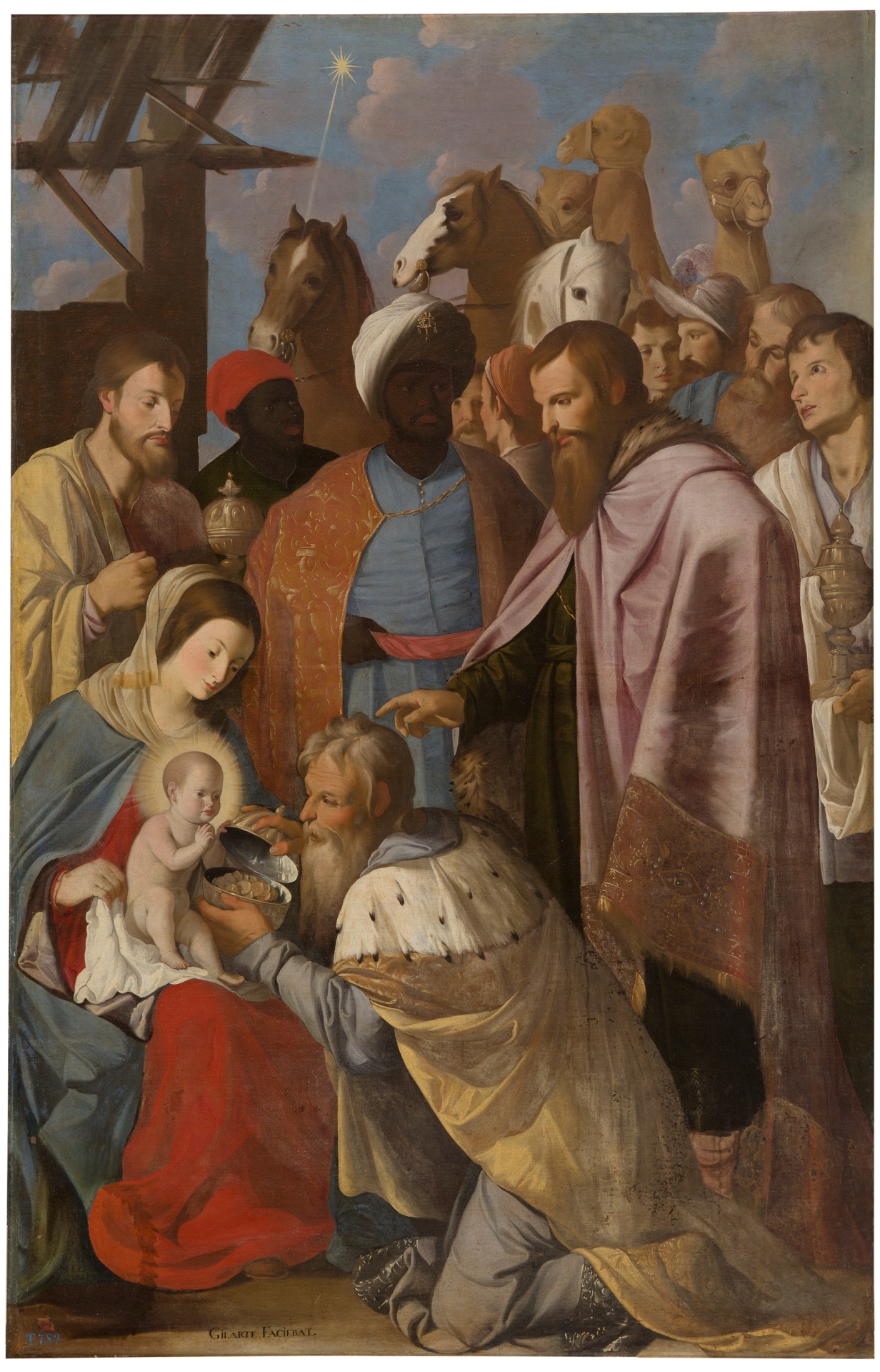
 LA MEDITACION DE LA ESPOSA