
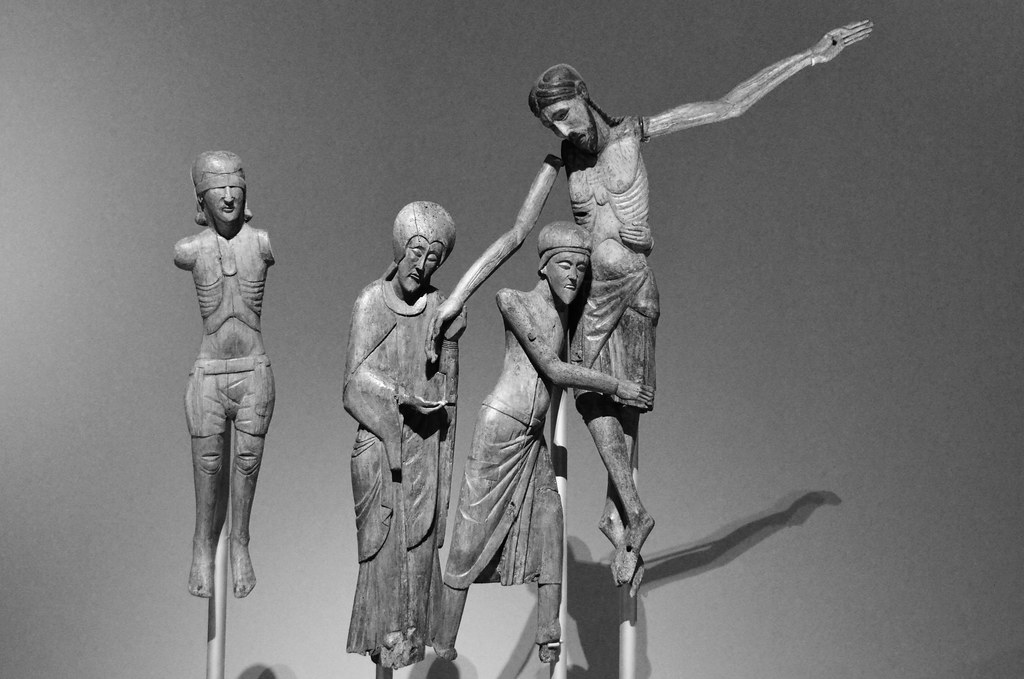
Descent from the Cross, 12th century, Romanesque Art (From left to right the thief Dimes, the Virgin Mary Joseph of Arimatea and Christ. There are missing the thief Gestes and St. John and Nicodem)
Hatred kills. That’s for sure. Wars demonstrate this. There are people who hate other people and who do everything they can to eliminate the other people. There are atrocities taking place every day. They’re two victims of hatred: the person who is physically hurt and the person who hates. The foremost victim of hatred is the person who hates. Hatred transforms a person from a compassionate human being to a person whose main concern is to seek vengeance on someone who the person feels has wronged them. Life is consumed with the desire for retaliation and reprisal. Maybe this vengeance will not be seen in a physical attack. It very well may result in a verbal attack or a destruction of another person’s reputation. The fact is that the person who hates has transformed his or her life. This person cannot be the loving person Christ called him or her to be. Hatred kills. If God is love, then how can a Christian hate? The Christian who hates is sacrificing Christianity for the sake of the hate. Again, the Christian who hates is the first victim of hate. Hatred kills. We have got to let go of the past. We cannot let the past destroy us. We can still love those who have hurt us. In fact, we have to love them. Perhaps it was with tongue in cheek that St. Paul tells us and the Romans to love our enemies because it will drive them crazy: «if your enemies are hungry, feed them; if they are thirsty, give them something to drink; for by doing this you will heap burning coals on their heads.» (Romans12:20). What drives them crazy is that it is difficult to respond to kindness with nastiness. Many will continue to try to be nasty, but it isn’t easy. Still, the call to love those who hurt us does not mean that we should seek their company so we can endure further hurt. Sometimes it is just the best thing to have less contact with someone who has caused us bad feelings. The important thing to consider today is that we limit our contact not to hurt the other person, but to control the feelings within us which can lead to the destruction of our own lives through hatred. We cannot let hatred kill us. We are invited to live and love in the same way that Christ did. Let us raise our eyes and look at the crucifix • AE

Fr. Agustin´s Schedule for the Seventh Sunday in Ordinary Time

Saturday February 18, 2023
3.00 p.m. Sacrament of Reconciliation (Confessional)
Sunday February 19, 2023
7.30 a.m. Holy Mass (English)
10.00 a.m. Holy Mass (English)
VII Domingo del Tiempo Ordinario (Ciclo A)

Diego Velázquez, La Rendición de Breda (1634), óleo sobre tela, Museo Nacional del Prado (Madrid). La obra representa el momento en que Justino de Nassau rindió la ciudad de Breda, en 1625, a las tropas españolas al mando del general Ambrosio Spínola, que aparece recibiendo las llaves de la ciudad de manos de su enemigo.
Amen a sus enemigos, hagan el bien a los que los odian y rueguen por los que los persiguen ¿Qué podemos hacer los creyentes de hoy ante estas palabras de Jesús? ¿Suprimirlas del Evangelio? ¿Borrarlas del fondo de nuestra conciencia? ¿Dejarlas para tiempos mejores? No cambia mucho la postura básica de los hombres ante el enemigo, es decir, ante alguien de quien sólo se han de esperar daños y peligros. Lisias, en el siglo V antes de Cristo) decía algo que, sin duda, sería bien acogida en nuestros tiempos: «Considero como norma establecida que uno tiene que procurar hacer daño a sus enemigos y ponerse al servicio de sus amigos.» Por eso, hemos de destacar todavía más la importancia del amor al enemigo, in duda el punto más radical de todo el mensaje del Señor. Cuando Jesús habla del amor al enemigo no está pensando en un sentimiento de afecto y cariño hacia él (philia), menos todavía en una entrega apasionada (eros), sino en una apertura radicalmente humana, de interés positivo, por la persona del enemigo (agapè). El hombre es humano cuando el amor está en la base de toda su actuación. Y ni siquiera la relación con los enemigos debe ser una excepción. Quien es humano hasta el final, descubre y respeta la dignidad humana del enemigo por muy desfigurada que se nos pueda presentar. Y no adopta ante él una postura excluyente de maldición, sino una actitud positiva de interés real por su bien. Quien quiera ser cristiano y actuar como tal en el contexto de violencia generado entre nosotros ha de vivir todo este conflicto sin renunciar a amar, cualquiera que sea su posición política o ideológica. Este amor cristiano al enemigo parece casi imposible en el clima en el que vivimos hoy en día. Sólo recordar las palabras evangélicas puede resultar irritante para algunos. Y, sin embargo, es necesario hacerlo si queremos vemos libres de la deshumanización que generan el odio y la venganza. Hay dos cosas que los cristianos podemos y debemos recordar hoy en medio de esta sociedad, aun a precio de ser rechazados. Amar al delincuente injusto y violento no significa en absoluto dar por buena su actuación injusta y violenta. Por otra parte, condenar de manera tajante la injusticia y crueldad de la violencia terrorista no debe llevar necesariamente al odio hacia quienes la instigan o llevan a cabo • AE
 LA MEDITACION DE LA ESPOSA