

E. Hopper, Rooms by the sea (1951), oil on canvas, Yale University Art Gallery
The Man Born Blind, had experienced the worst of times and was continuing to experience them. He had been born blind. He had never seen his mother and father. There was nothing for him to do in the world except beg, which he did every day by the Pool of Siloam. Perhaps, his parents brought him there every day with the hope that he might got a little help. Or maybe his parents had put him out of the house once he reached a certain age. The man lived in a dark world. Then Jesus came and healed the man. He gave him sight. Now the man was attacked by the Pharisees for daring to say that this Jesus was a prophet. He was thrown out of the Temple, shunned by society. The man did not need the Temple anymore. Nor did he need society. He had Jesus. As the drama progresses, he grows in faith until at the end he worships Jesus. He was living in the best of times. Throughout our lives we all struggle through times of darkness, grasping for light. When will the darkness be over? When will we see the light at the end of the tunnel. Well, we do not know our struggles will come to an end. But we do know this: we can already see the light. Perhaps we are caring for a loved one who is lingering on in a slow death. Or maybe we are going from one crisis to another and wondering if we will ever see light again. We will. We will because the light is there for us. That light is the light of the Lord. A few verses before today’s Gospel, Jesus called out: «I am the Light of the world; he who follows Me will not walk in the darkness, but will have the Light of life.» Jesus is not just setting the scene for the drama of the Man Born Blind. He is speaking directly to us, to you and to me. He is telling us to put our trust in Him, to rest in him, and to know that no matter what happens in this world, good or bad, positive or negative, we will always enjoy the Light of Life. Together let us pray this morning for all who are suffering in anyway. We pray that they and all of us can recognize that Jesus provides us with the Light to guide us through the worst of times to the best of times • AE

Fr. Agustin´s Schedule for the Fourth Sunday of Lent

Saturday, March 18, 2023
3.30 p.m. Sacrament of Reconciliation (Confessional)
5.00 Holy Mass (main church)
Sunday, March 19, 2023
7.30 Holy Mass (main church)
10.00 Holy Mass (main church)
IV Domingo del Tiempo Ordinario (Ciclo A)
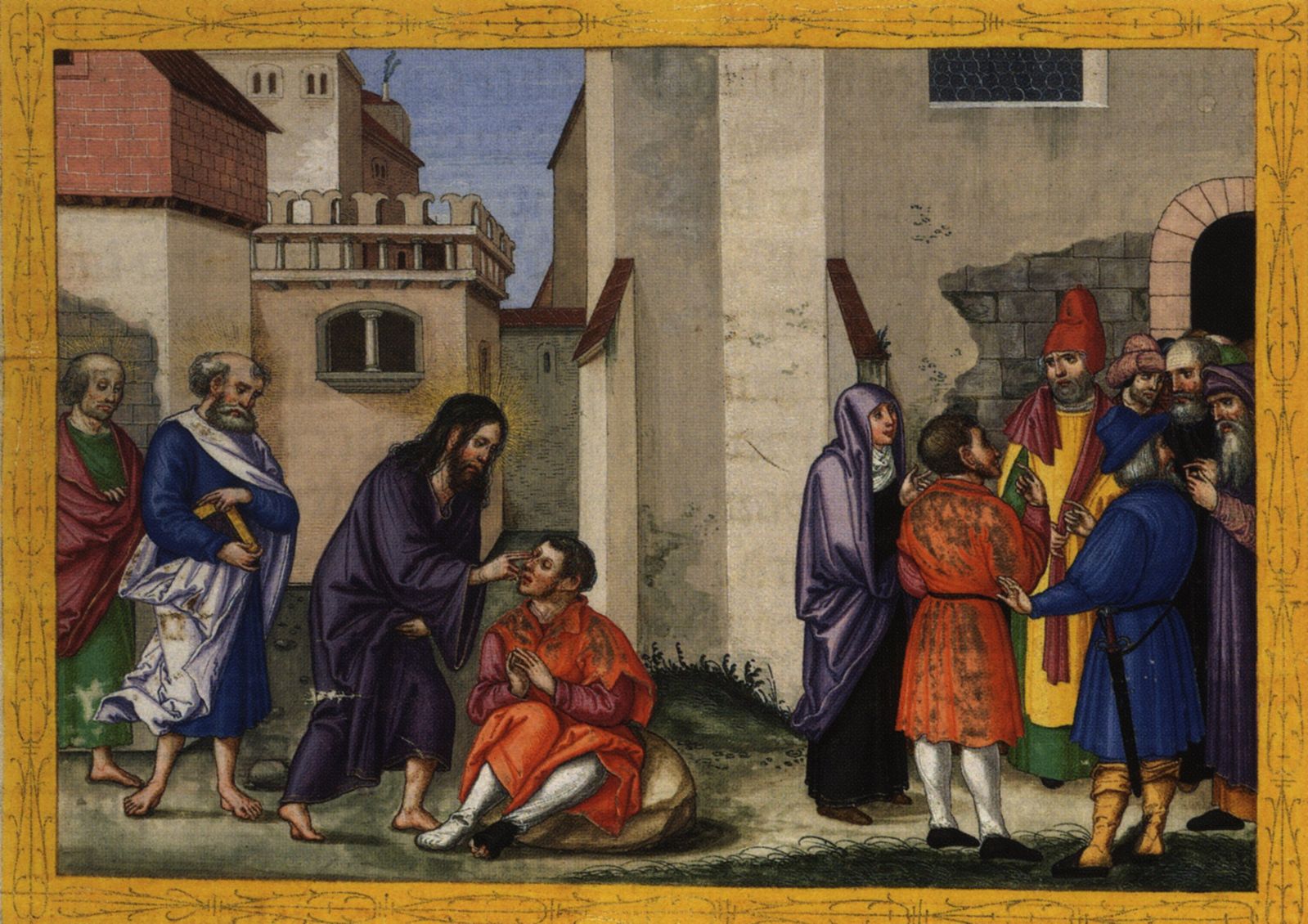
M. Gerung, La Curación del Ciego de Nacimiento (1430), Ottheinrich–Bibel, Biblioteca estatal de Baviera (Munich)
Es «ciego de nacimiento». No sabe lo que es la luz. Nunca la ha conocido. Ni él ni sus padres tienen la culpa, pero allí está él, sentado, pidiendo limosna. Su destino es vivir en tinieblas. Un día, al pasar Jesús por allí, ve al ciego. El evangelista dice que Jesús es nada menos que la «Luz del mundo». Tal vez recuerda las palabras del viejo profeta Isaías asegurando que un día llegaría a Israel alguien que «gritaría a los cautivos: ¡salid! y a los que están en tinieblas: ¡venid a la luz!». Jesús trabaja los ojos del pobre ciego con barro y saliva para infundirle su fuerza vital. La curación no es automática. También el ciego ha de colaborar. Hace lo que Jesús le medica: se lava los ojos, limpia su mirada y comienza a ver. Cuando la gente le pregunta quién lo ha curado, no sabe cómo contestar. Ha sido «un hombre llamado Jesús». No sabe decir más. Tampoco sabe dónde está. Sólo sabe que, gracias a este hombre, puede vivir la vida de manera completamente nueva. Esto es lo importante. Cuando los fariseos y entendidos en religión le acosan con sus preguntas, el hombre contesta con toda sencillez: pienso que «es un profeta». No lo sabe muy bien, pero alguien capaz de abrir los ojos tiene que venir de Dios. Entonces los fariseos se enfurecen, lo insultan y lo «expulsan» de su comunidad religiosa. La reacción de Jesús es conmovedora. «Cuando se enteró de que lo habían echado fuera, fue a buscarlo». Así es Jesús. No lo hemos de olvidar nunca: el que viene al encuentro de los hombres y mujeres que se sienten echados de la religión. Jesús no abandona a quien lo busca y lo ama, aunque sea excluido de su comunidad religiosa.El diálogo es breve: «¿Crees tú en el Hijo del Hombre?». Él está dispuesto a creer. Su corazón ya es creyente, pero lo ignora todo: «¿Y quién es, Señor para que crea en él?». Jesús le dice: no está lejos de ti. «Lo estás viendo: el que te está hablando, ése es». Según el evangelista, esta historia sucedió en Jerusalén hacia el año treinta, pero sigue ocurriendo hoy entre nosotros en pleno 2023 • AE
 LA MEDITACION DE LA ESPOSA