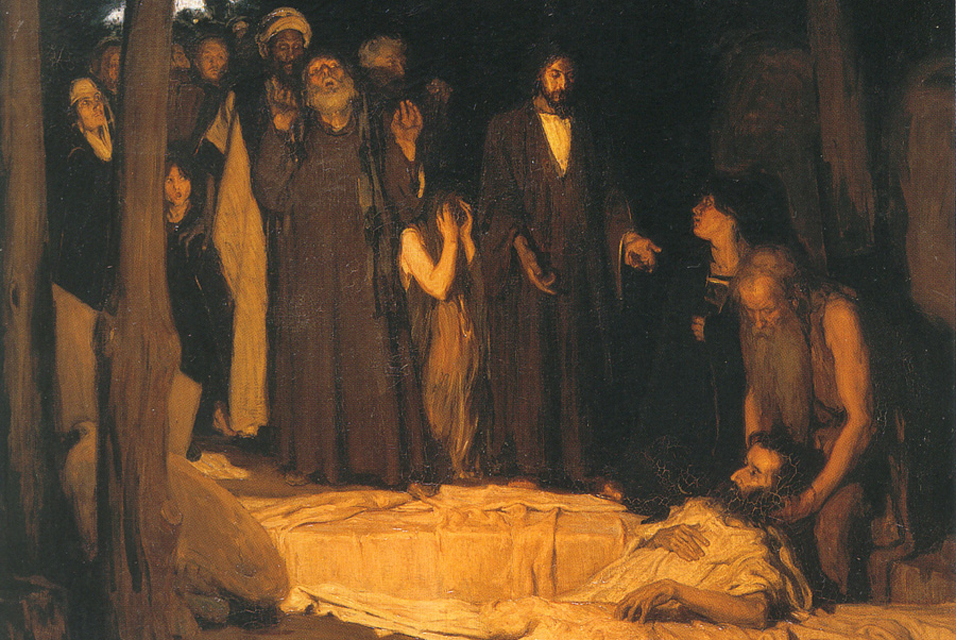
H. Ossawa Tanner, The Resurrection of Lazarus, (1896), oil on canvas, Musee d’Orsay (Paris)
Lazarus come out from that tomb! We all need to come out of the tombs we find ourselves in, whether we put ourselves in those tombs or we were put into the tombs by circumstances beyond our control. The voice of the Lord calls us outside of our sick rooms, calls us to know that if we walk to Him, we will have life. No sickness can take the Lord away from us. Some people are in tombs of their own making. They may feel that there is no hope. But if they listen, they can hear the voice of the Lord, calling them, saying, “Come out of that tomb.” And with the Lord they can walk once more into the light. When Jesus came to the tomb where that dear friend of his had been lain, he wept. That is the shortest verse in scripture. Jesus wept. He wept at what death did to the man he loved. He weeps at what death is doing to us. He does not want us in tombs, whether they are tombs others put us into or tombs we create for ourselves. He calls us out of the tombs. He calls us into the beauty of His world. We have to take the step. We have to decide to leave that which is destroying us and walk out of the tomb. This walk might be difficult. We might have to walk despite the burial clothes tied around us. “Unbind him,” Jesus said to those standing with Him after Lazarus stumbled out of the tomb. “Unbind Him,” the Lord says to the Christian community whenever anyone takes those first uncertain steps into the light. “Unbind Him,” the Lord says to all around us. We recognize our frailty, and allow others to care for us, as we are called to care for them. “Lazarus come out!” Come out. You and I do not belong in cold dark tombs. We belong in the light. We belong dancing in the flowers with the Lord of Life. In two weeks we will be celebrating Easter. We will be celebrating because the One who is the Lord of Life has called us to come out into the Fullness of His Life • AE

Fr. Agustin´s Schedule for the Fifth Sunday of Lent

Saturday March 25, 2023
3.30 p.m. Sacrament of Reconciliation (confessional)
Sunday, March 26, 2023
7.30 a.m. Holy Mass
10.00 a.m. Holy Mass
V DOMINGO DE CUARESMA (CICLO A)

Autor anónimo, La resurrección de Lázaro (1800), vidriera de la iglesia de San Nicolás en Örebro (sur de Suecia)
El relato de la resurrección de Lázaro es sorprendente. Por una parte, nunca se nos presenta a Jesús tan humano, frágil y entrañable como en este momento en que se le muere uno de sus mejores amigos. Por otra parte, nunca se nos invita tan directamente a creer en su poder salvador: «Yo soy la resurrección y la vida: el que cree en mí, aunque muera, vivirá… ¿Crees esto?» Jesús no oculta su cariño hacia estos tres hermanos de Betania que, seguramente, lo acogen en su casa siempre que viene a Jerusalén. Cuando llega Jesús a la aldea, Lázaro lleva cuatro días enterrado. Ya nadie le podrá devolver la vida. La familia está rota. Cuando se presenta Jesús, María rompe a llorar. Nadie la puede consolar. Al ver los sollozos de su amiga, Jesús no puede contenerse y también él se echa a llorar. Se le rompe el alma al sentir la impotencia de todos ante la muerte. ¿Quién nos podrá consolar? Hay en nosotros un deseo insaciable de vida. Nos pasamos los días y los años luchando por vivir. Nos agarramos a la ciencia y, sobre todo, a la medicina para prolongar esta vida biológica, pero siempre llega una última enfermedad de la que nadie nos puede curar. Tampoco nos serviría vivir esta vida para siempre. Sería horrible un mundo envejecido, lleno de viejos y viejas, cada vez con menos espacio para los jóvenes, un mundo en el que no se renovara la vida. Lo que anhelamos es una vida diferente, sin dolor ni vejez, sin hambres ni guerras, una vida plenamente dichosa para todos. Hoy vivimos en una sociedad que ha sido descrita como «una sociedad de incertidumbre» (Z. Bauman). Nunca había tenido el ser humano tanto poder para avanzar hacia una vida más feliz. Y, sin embargo, nunca tal vez se ha sentido tan impotente ante un futuro incierto y amenazador. ¿En qué podemos esperar? Como los humanos de todos los tiempos, también nosotros vivimos rodeados de tinieblas. ¿Qué es la vida? ¿Qué es la muerte? ¿Cómo hay que vivir? ¿Cómo hay que morir? Antes de resucitar a Lázaro, Jesús dice a Marta esas palabras que son para todos los cristianos un reto decisivo: «Yo soy la resurrección y la vida: el que crea en mí, aunque haya muerto vivirá… ¿Crees esto?». A pesar de dudas y oscuridades, los cristianos creemos en Jesús, Señor de la vida y de la muerte. Sólo en él encontramos luz y fuerza para luchar por la vida y para enfrentarnos a la muerte. Sólo en él encontramos una esperanza de vida más allá de la vida • AE

 LA MEDITACION DE LA ESPOSA