
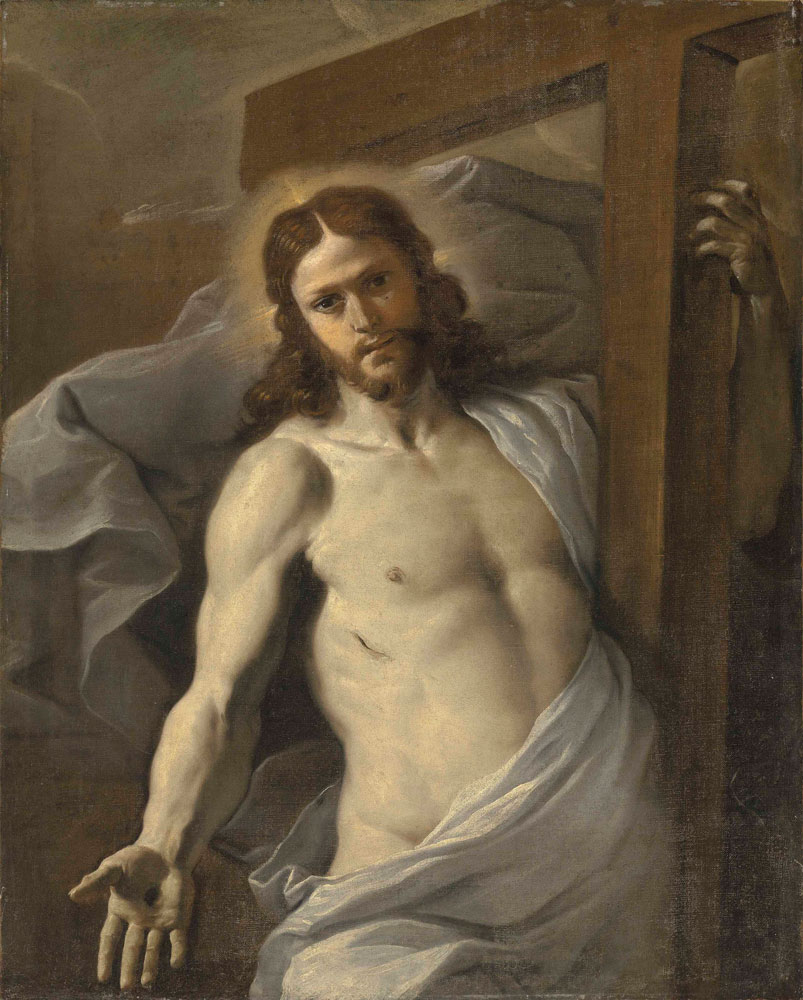
Mattia Preti, The Risen Christ, Oil on canvas, Christie’s (London)
The Resurrection of the Lord (2023)

Unknown author, Christ Appearing to Mary Magdalene as a Gardener (Noli me tangere) (1504), illuminated manuscript, National Library of Wales
According to the gospel reading, Mary Magdalen is the first to discovers that the tomb is empty. She is missing Jesus. She really wants to see again her Master whom she had faithfully followed to the end. Who will she follow now? So, she cries: «They have taken the Lord from the tomb, and we do not know where they have put him»[1]. We don’t know where they have put him. These words of Mary Magdalen express so well our feelings in our time: What have we done with Jesus? Who has taken him? Where have we put him? The Lord in whom we believe… is He a Christ full of life, or a Christ whose memory is disappearing from hearts? More than ever is urgent to seek Jesus, and at the same time we cannot look for more «evidence» to believe more firmly. We cannot rely only into the Magisterium of the Church to find answers. It is useless to look only into the sermons or speeches of scholars, or Bible experts. To meet the Risen Lord, it is necessary to have a daily and personal communication with Him. This morning we only hear the first part of the narrative of resurrection, I challenge you to read the second part, because there you will see how Mary Magdalen is from one place to another looking for her Master. That is what we should do: Searching without rest. Maybe it happens that we do not see Him, or we do not recognize Him, but we can be sure that he will be shown. At some point Mary thinks he is the landscape gardener. And then Jesus asks two questions. Only two. «Woman, why are you crying? Whom are you looking for? »[2]. Well, today is the right time to ask ourselves similar questions: What is it that I am looking for so anxious? Where is the origin of my sadness? What does my heart really want? Mary Magdalene does not recognize Jesus Because she is focused on her own pain, on her own problems, and its right there when Jesus calls her by name, and he does it with tenderness and affection, «Mary! », he says, and she responded quickly: «Rabbuni, Teacher». Mary Magdalen recognizes Jesus when she feels personally called by him. This is the point! Two thousand years later, the Lord continues doing exactly the same: calling each of us personally. Calling us by name. He did it at the day of our Baptism. He does it at the Sacrament of Confession. And he keeps calling us by name at Holy Communion. It is easter Sunday. Today we have a wonderful opportunity to renew our faith; to recover our commitment; to restore our covenant of love with Him. Today is a great chance to tell the Lord that despite our fatigue, boredom, our sins… we want to keep walking; we want to keep trying; we want to do our best to be with Him. So, today let us ask the Lord for one gift. Only one: A brave, passionate heart like the one of Mary Magdalen. She searched and searched for Jesus, until she found him, and then she announced him to others. That is the model of the Christian: a man, a woman, who constantly seeks Christ, and when he or she finds Him, he speaks of Him to others. We are invited to do the same. We have already found the Lord here, in the celebration of the Eucharist, in listening to His Word. What else should we do? We must continue to seek him in ordinary life; in the tasks of each day; in the stuff what we usually do, and for this we need a passionate, burning heart, and clear eyes. So, let us ask for this exactly: May ay the Lord Jesus give us a heart on fire, full of determination, full of love, so like Mary Magdalen, we can recognize Him every day of our lives and in all situations: in joy, in pain, in sadness, in success, in family life. In everything and always. And let us not forget the other Mary. The Mother of the Lord. Mary was the only light that remained lit in the Passion. That is why we call her: «Our Life, our sweetness and our hope». May she also intercede for us today. Happy Easter to you all • AE
[1] Cf Jn 20:1-9. [2] Id., 20: 15

EASTER SUNDAY OF THE RESURRECTION OF THE LORD (APRIL 9, 2023)

7.30 a.m. Fr. Mike Horan
10.00 a.m. Fr. Mike Horan
12.30 p.m. Fr. Agustin Estrada
3.00 p.m. Fr. Agustin Estrada
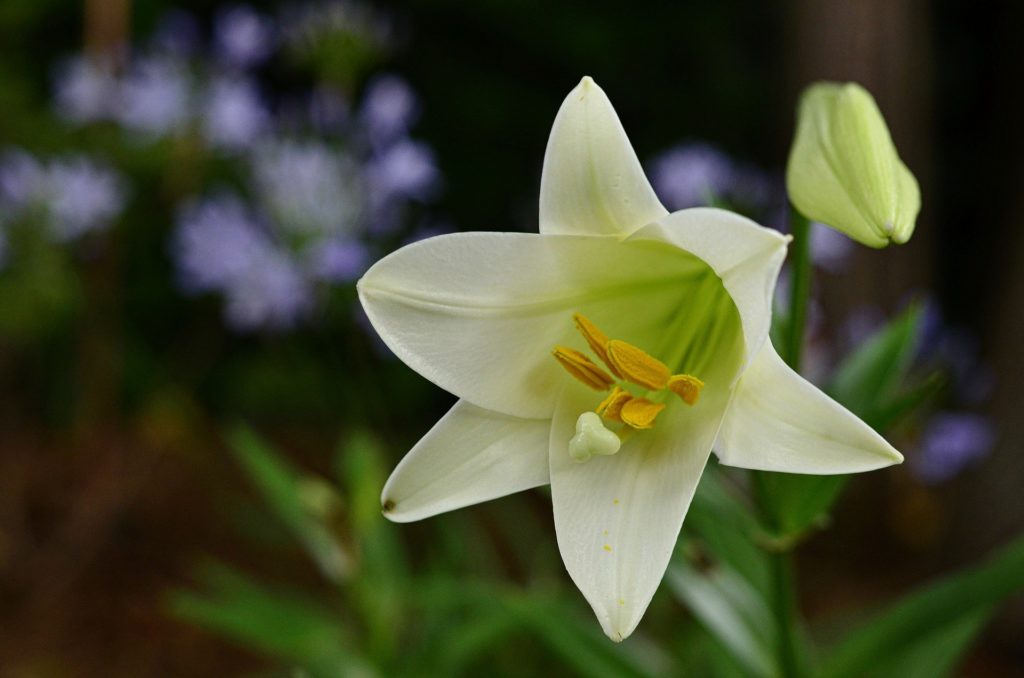
La bella flor que en el suelo
plantada se vio marchita
ya torna, ya resucita,
ya su olor inunda el cielo.
De tierra estuvo cubierto,
pero no fructificó
del todo, hasta que quedó
en un árbol seco injerto.
Y, aunque a los ojos del suelo
se puso después marchita,
ya torna, ya resucita,
ya su olor inunda el cielo.
Toda es de flores la fiesta,
flores de finos olores,
más no se irá todo en flores,
porque flor de fruto es ésta.
Y, mientras su Iglesia grita
mendigando algún consuelo,
ya torna, ya resucita,
ya su olor inunda el cielo.
Que nadie se sienta muerto
cuando resucita Dios,
que, si el barco llega al puerto,
llegamos junto con vos.
Hoy la cristiandad se quita
sus vestiduras de duelo.
Ya torna, ya resucita,
ya su olor inunda el cielo •
Domingo de Pascua (2023)
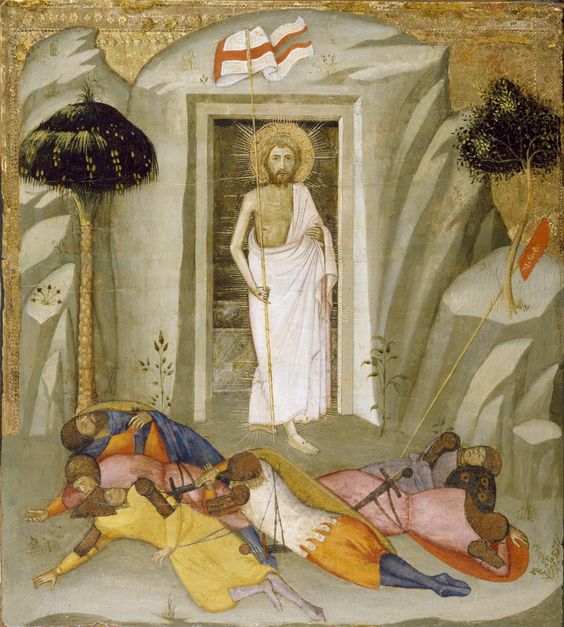
Andrea di Bartolo, La Resurrección (1390), óleo sobre madera, Museo de Arte Walters (Baltimore)
Según el relato de Juan, María de Magdala es la primera que va al sepulcro, cuando todavía está oscuro, y descubre desconsolada que está vacío ¡Le falta Jesús! El Maestro que la había comprendido y curado. El Profeta al que había seguido fielmente hasta el final. ¿A quién seguirá ahora? Así se lamenta ante los discípulos: «Se han llevado del sepulcro al Señor y no sabemos dónde lo han puesto». Estas palabras de María podrían expresar la experiencia que viven hoy no pocos cristianos: ¿Qué hemos hecho de Jesús resucitado? ¿Quién se lo ha llevado? ¿Dónde lo hemos puesto? El Señor en quien creemos, ¿es un Cristo lleno de vida o un Cristo cuyo recuerdo se va apagando poco a poco en los corazones? Es un error que busquemos «pruebas» para creer con más firmeza. No basta acudir al magisterio de la Iglesia. Es inútil indagar en las exposiciones de los teólogos. Para encontrarnos con el Resucitado es necesario, ante todo, hacer un recorrido interior. Si no lo encontramos dentro de nosotros, no lo encontraremos en ninguna parte. Juan describe, un poco más tarde, a María corriendo de una parte a otra para buscar alguna información. Y, cuando ve a Jesús, cegada por el dolor y las lágrimas, no logra reconocerlo. Piensa que es el encargado del huerto. Jesús solo le hace una pregunta: «Mujer, ¿por qué lloras? ¿a quién buscas?». Tal vez hemos de preguntarnos también nosotros algo semejante. ¿Por qué nuestra fe es a veces tan triste? ¿Cuál es la causa última de esa falta de alegría entre nosotros? ¿Qué buscamos los cristianos de hoy? ¿Qué añoramos? ¿Andamos buscando a un Jesús al que necesitamos sentir lleno de vida en nuestras comunidades? Según el relato, Jesús está hablando con María, pero ella no sabe que es Jesús. Es entonces cuando Jesús la llama por su nombre, con la misma ternura que ponía en su voz cuando caminaban por Galilea: «¡María!». Ella se vuelve rápida: «Rabbuní, Maestro». María se encuentra con el Resucitado cuando se siente llamada personalmente por él. Es así. Jesús se nos muestra lleno de vida, cuando nos sentimos llamados por nuestro propio nombre, y escuchamos la invitación que nos hace a cada uno. Es entonces cuando nuestra fe crece. No reavivaremos nuestra fe en Cristo resucitado alimentándola solo desde fuera. No nos encontraremos con él, si no buscamos el contacto vivo con su persona. Probablemente, es el amor a Jesús conocido por los evangelios y buscado personalmente en el fondo de nuestro corazón, el que mejor puede conducirnos al encuentro con el Resucitado • AE

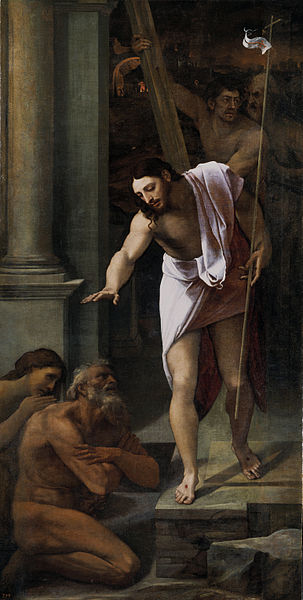


 LA MEDITACION DE LA ESPOSA