Pentecost Sunday (2023)

Come, Holy Ghost, Creator blest,
And deign within our souls to rest;
Come with Thy grace and heavenly aid,
To fill the hearts which Thou hast made.

To Thee, the comforter, we cry;
To Thee the Gift of God most High;
The Fount of life, the Fire of love,
The soul’s Anointing from above.

All Praise to God the Father be;
All thanks eternal Son to Thee;
All glory as is ever meet,
To God the Holy Paraclete.
To God the Holy Paraclete •
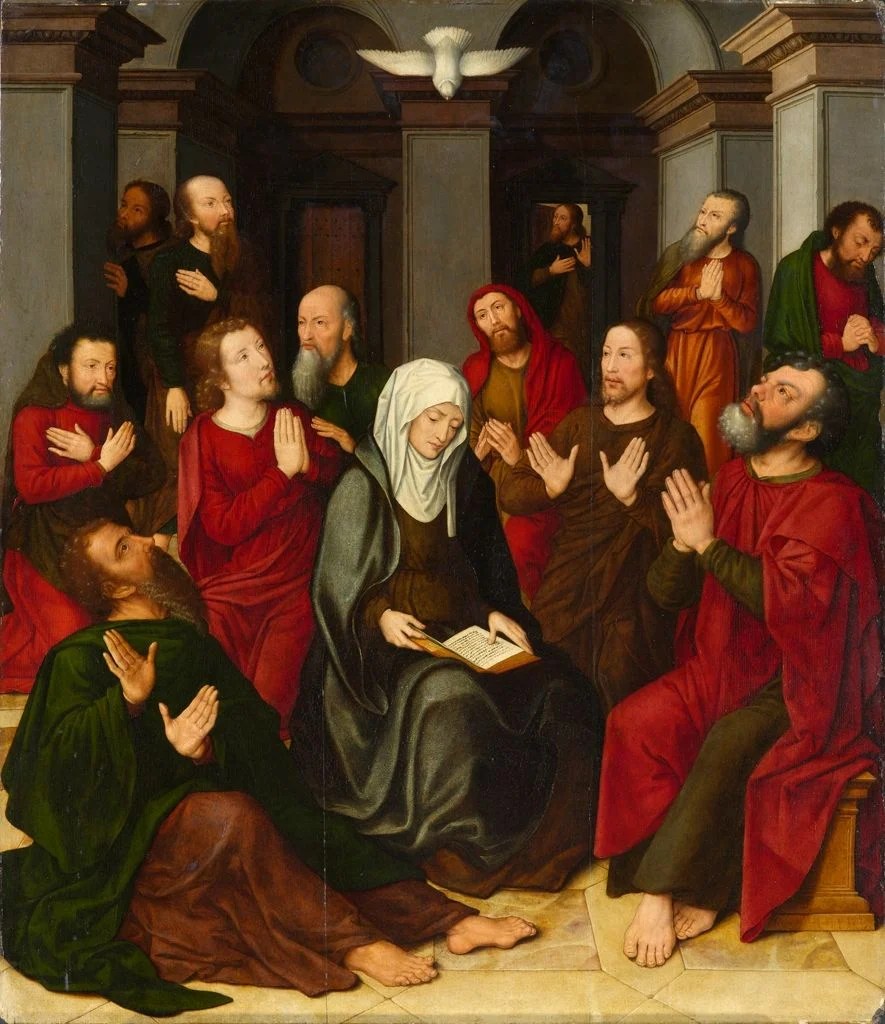
A. Benson, Pentecost, oil on canvas, North Carolina Museum of Art

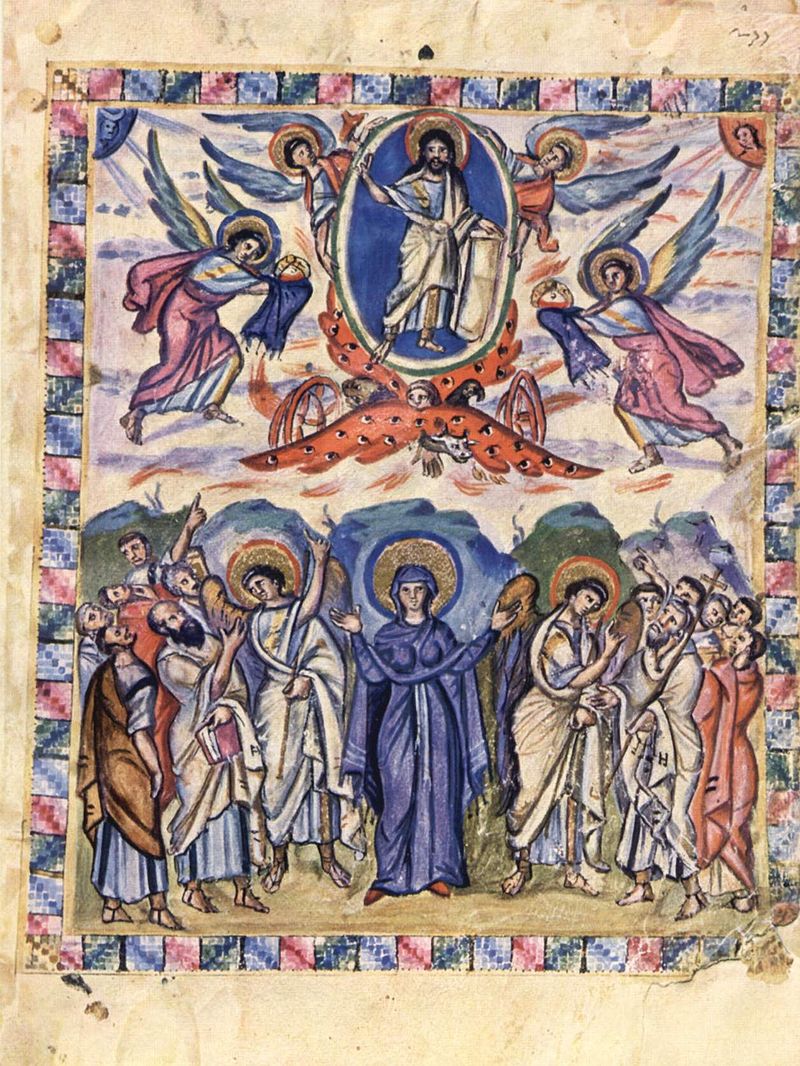
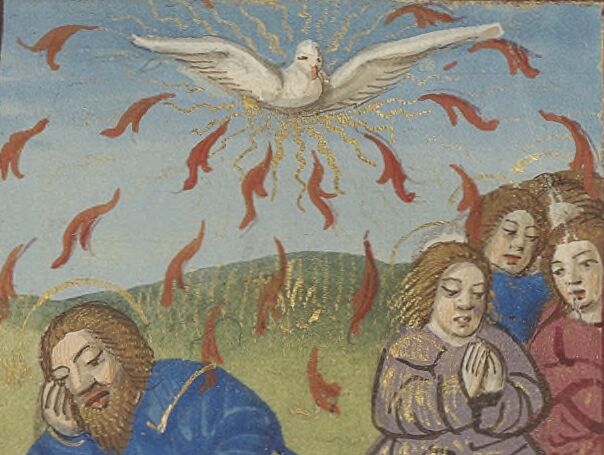
Pentecost is the empowering by the Lord to complete his mission. Jesus entrusted his work to his prized disciples. He gave them the Third Person of the Trinity, the Holy Spirit, and they allowed his Spirit to flow through them. And the Church was born. And the Church is being born. And the mission of Jesus continues. The disciples became apostles on Pentecost Sunday. The learners, disciples, were empowered by the Holy Spirit to become missionaries, apostles. Their faith in Jesus Christ was confirmed by the presence of the Holy Spirit. It is the same for us. When we received the sacrament of Confirmation, we were confirmed in the faith of our Baptism. Just as Baptism can be called a Personal Easter, Confirmation can be called a Personal Pentecost. How can we use this great gift, the gift of the Holy Spirit? How can we allow the Spirit to work through us? How can we bring Christ to others and others to Christ? First of all, we need to be thoroughly committed to our union with Christ. This is far more than avoiding serious sin. We need to encourage our union with Christ through our prayer life, daily as individuals and at least weekly as a community. If we do this then our proclamation of Christ flows naturally through us. The things we say or do actually become secondary to the action of the Spirit through us. Second, we need to reach out to those in the world who are longing for a Savior. This is not limited to those who have never heard of Christ. It also refers to those leading desperate lives of insignificant drudgery. It refers to those who are caught up in the dictates of secular society, busy doing all sorts of things that fade away except the one thing that lasts, uniting themselves to the Lord. Thirdly, we need to remember that God supplies the words and actions that lead others to Him. We are merely vehicles for the Lord. At the same time, a vehicle is useless if it stays in the garage. We need to do our best, and let the Spirit do the rest. How is it that we are all here in church? How is it that billions celebrate Jesus Christ? Was there a huge miracle that caused so many to become Christians? Was there a sign in the sky that said, «Go to Church?» Of course not! We are here because the Holy Spirit worked through others. I am here because others, particularly in my case as in most your cases, my parents, took their Catholicism seriously. God uses His People to spread his Gospel. He empowers them with His Spirit, inspiring them and others through them to choose Christ. God uses us to do the work of His Kingdom. He has empowered us with the Holy Spirit. May we have the courage to continue the work of our Lord Jesus Christ! • AE


Fr Agustin´s Schedule for the solemnity of Pentecost of 2023

Saturday May 27, 2023.

3.00 p.m. Sacrament of Reconciliation (Confessional)

5.00 p.m. Holy Mass

Sunday May 28, 2023.

12.30 a.m. Holy Mass with First Communions

3.00 p.m. Misa en Español con Primeras Comuniones


Solemnidad de Pentecostés (2023)
En la cultura actual el corazón es la sede del amor. No ha sido siempre así. Según una tradición que hunde sus raíces en la Sagrada Escritura y que fue cultivada por grandes místicos de los primeros siglos, el corazón es lo más íntimo de la persona, el lugar desde donde el individuo puede integrar y armonizar todas las dimensiones de su ser. La visión de estos padres y madres del desierto es grandiosa. El ser humano no es sólo un compuesto biológico: un alma aprisionada en la carne, un pobre animal zarandeado por toda clase de fuerzas y pulsiones. En lo más íntimo de su corazón hay un espacio donde puede acoger al Espíritu de Dios que es fuente de vida, integración y armonía de toda la persona. En la soledad del desierto, estos hombres y mujeres llegaron a conocerse interiormente de una manera difícil de superar. Para ellos, el pecado no es un asunto moral, sino la fuerza que descentra al individuo, lo disgrega y le hace perder su armonía destruyendo la alegría interior. Así lo peor que le puede suceder a una persona es vivir con un corazón de piedra, reseco y endurecido, incapaz de abrirse al Espíritu Santo; un corazón cerrado al amor y la ternura, dividido y disperso, sin fuerza para unificar su ser y alimentar su vida. Los hombres y mujeres de hoy creemos saber mucho de todo y no sabemos siquiera cuidar nuestro corazón. Víctimas de nuestra frivolidad, no conocemos una vida armoniosa e integrada: vivimos aburridos a fuerza de buscar diversión; siempre cambiando y siempre perseguidos por la monotonía; siempre en busca de bienestar y siempre decepcionados. Nos falta un corazón abierto al Espíritu de Dios que nos haga conocer dónde está la fuente de vida. Por eso, invocar al Espíritu de Dios no es una oración más. Gritar desde el fondo de nuestro ser: «Ven, Espíritu Santo», es desear vida nueva. Nuestro corazón de piedra se puede convertir en corazón de carne; nuestro vacío interior se puede llenar de Espíritu. La fiesta cristiana de Pentecostés vivida en esta actitud de invocación debería ser punto de partida de una vida renovada por el Espíritu • AE


¡Eres Tú!
Como una promesa, eres tú, eres tú.
Como una mañana de verano.
Como una sonrisa, eres tú, eres tú.
Así, así, eres tú.

Toda mi esperanza, eres tú, eres tú.
Como lluvia fresca en mis manos
como fuerte brisa, eres tú, eres tú.
Así, así, eres tú.

Eres tú como el agua de mi fuente (algo así eres tú)
Eres tú el fuego de mi hogar
Eres tú como el fuego de mi hoguera
Eres tú el trigo de mi pan.

Como mi poema, eres tú, eres tú.
Como una guitarra en la noche,
todo mi horizonte eres tú, eres tú.
Así, así, eres tú •

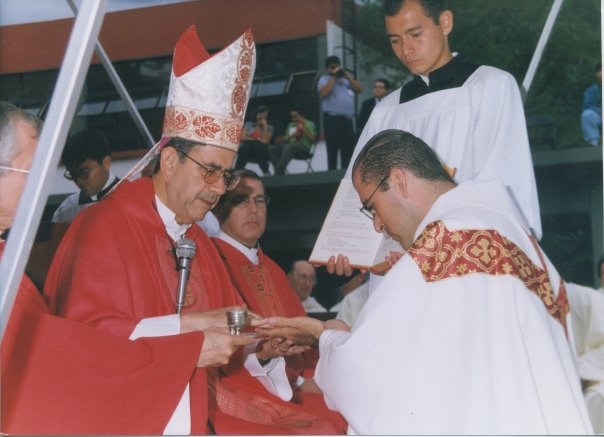
Esta canción, inspirada en la devoción al Espíritu Santo e interpretada por el grupo musical de origen vasco, Mocedades, ganó el concurso de Eurovisión en 1973, el año en que nací. 27 años después sería ordenado sacerdote de Jesucristo en el Seminario de Aguascalientes (México), y así hasta el sol de hoy, Domingo de Pentecostes, en que celebro 23 años de sacerdocio al servicio del Señor y de su Iglesia.


The Ascension of the Lord (2023)

The Solemnity of the Ascension is a wonderful call for us to tell the world that Jesus is still with us. And how do we do this? Simply by utilizing the gifts the Lord has given us. Do you make friends easily? Then, befriend those who are alone in the world. Perhaps that loner in school, that elderly man in his apartment, that cousin no one talks to, perhaps they and many others need to know that they are not alone. Your friendship can help them understand their value before the Lord. Do you multitask well? Are you one of those people who can do three things at once, while texting in the background. Then use your talent to do things for others. Fill your day in giving witness to Jesus. Be loving and caring. Tell the world that Jesus lives. Do you have a particular expertise that can help others? Are you a teacher, a lawyer, a doctor, a nurse, a paramedic, or one of the many other service professionals? Well, stop seeing people as paying customers and start seeing them as people sent to you so you can use your expertise to help them find God. That’s how you can tell them that Jesus lives. He often calls us out of our comfort zone. So, go out and do it! Tell the world that Jesus lives. People are led to the Lord by other people, people who give witness to the living presence of Jesus Christ by their actions. People are led to the Lord by people like us who stop gazing up into the sky and go out to proclaim to the world that Jesus lives • AE


Schedule of Fr. Agustin for the solemnity of the Ascension of the Lord

Saturday May 20, 20230.

Celebration of the Sacrament of Matrimony for Danny & Elizabeth @ Lafayette (Louisiana)

Sunday May 21, 2023.

Traveling


Solemnidad de la Ascencion del Señor (2023)

   ¿Y dejas, Pastor santo,            

tu grey en este valle hondo, escuro,        

con soledad y llanto,          

y tú, rompiendo el puro             

aire, te vas al inmortal seguro?        


Los antes bienhadados           

y los agora tristes y afligidos,            

¡a tus pechos criados,        

de Ti desposeídos,              

¿a dó convertirán ya sus sentidos?          


¿Qué mirarán los ojos             

que vieron de tu rostro la hermosura,            

que no les sea enojos?               

Quien oyó tu dulzura          

¿qué no tendrá por sordo y desventura?       


  Aqueste mar turbado              

¿quién le pondrá ya freno? ¿Quién concierto        

al viento fiero, airado?       

Estando tú encubierto,              

¿qué norte guiará la nave al puerto?               

   ¡Ay!, nube envidiosa        

aun deste breve gozo, ¿qué te aquejas?         

¿Dó vuelas presurosa?       

¡Cuán rica tú te alejas!       

¡Cuán pobres y cuán ciegos, ay, nos dejas! •

Fray Luis de Leon (1528-1591)

La Ascensión es la gran llamada a seguir esperando a pesar de las decepciones, desengaños y desalientos que amenazan de continuo nuestro caminar hacia el hogar definitivo. A lo largo de la vida podemos sentir una doble tentación: o bien desistir de la marcha porque el camino nos resulta demasiado fatigoso, o bien anticipar la llegada a la meta porque el camino se nos hace demasiado largo. La Ascensión es un buen día para escuchar la exhortación de la Carta de Santiago: « Tened paciencia hasta que llegue el día del Señor». Hoy se habla poco de la paciencia. Tenemos miedo de caer en una postura de resignación o debilidad, indigna del ser humano. Olvidamos que, según S. Pablo, la paciencia engendra esperanza (Rom 5, 4). Naturalmente, hemos de entenderla bien, pues la paciencia no consiste en adoptar una postura de dimisión ante la vida. Al contrario, el hombre paciente resiste activamente a las adversidades, manteniendo un espíritu firme y fuerte ante el desgaste de los años. Pero en nuestros días hemos de recordar, sobre todo, que la paciencia se opone a esa prisa y ansiedad que nos hacen vivir inquietos y agitados, siempre corriendo, aunque no sepamos muy bien hacia donde. Hemos de aprender a respetar el ritmo de la vida. Cada cosa tiene su tiempo. Es una insensatez estirar el tallo de una planta para acelerar su crecimiento. Lo inteligente es regar bien la vida y saber esperar. Tener paciencia con nosotros mismos y con el caminar de la historia. Es peligrosa la huida hacia adelante del impaciente que adopta siempre las posiciones que cree mas progresistas sólo para sacudirse de encima el pasado, que se casa cuanto antes sólo por alejarse del hogar paterno o que busca un nuevo amor sólo por olvidar mejor su anterior fracaso amoroso. Hemos de aprender a recorrer pacientemente nuestro propio camino. Un camino único y original. Con sus gozos y sus tristezas, sus logros sus fracasos, sus momentos buenos y sus momentos malos. Recordemos los versos llenos de fe y de verdad de León Felipe. «Nadie fue ayer ni va hoy, ni irá mañana hacia Dios, por este camino que yo voy. Para cada hombre guarda un rayo nuevo de luz el sol, y un camino virgen Dios». En ese caminar, los creyentes sabemos que no estamos solos. Nos acompaña el Resucitado. Su presencia nos sostiene, sus palabras nos llenan de nuevo aliento: «Yo estaré con vosotros todos los días hasta el fin del mundo» • AE


Sixth Sunday of Easter (Cycle A)

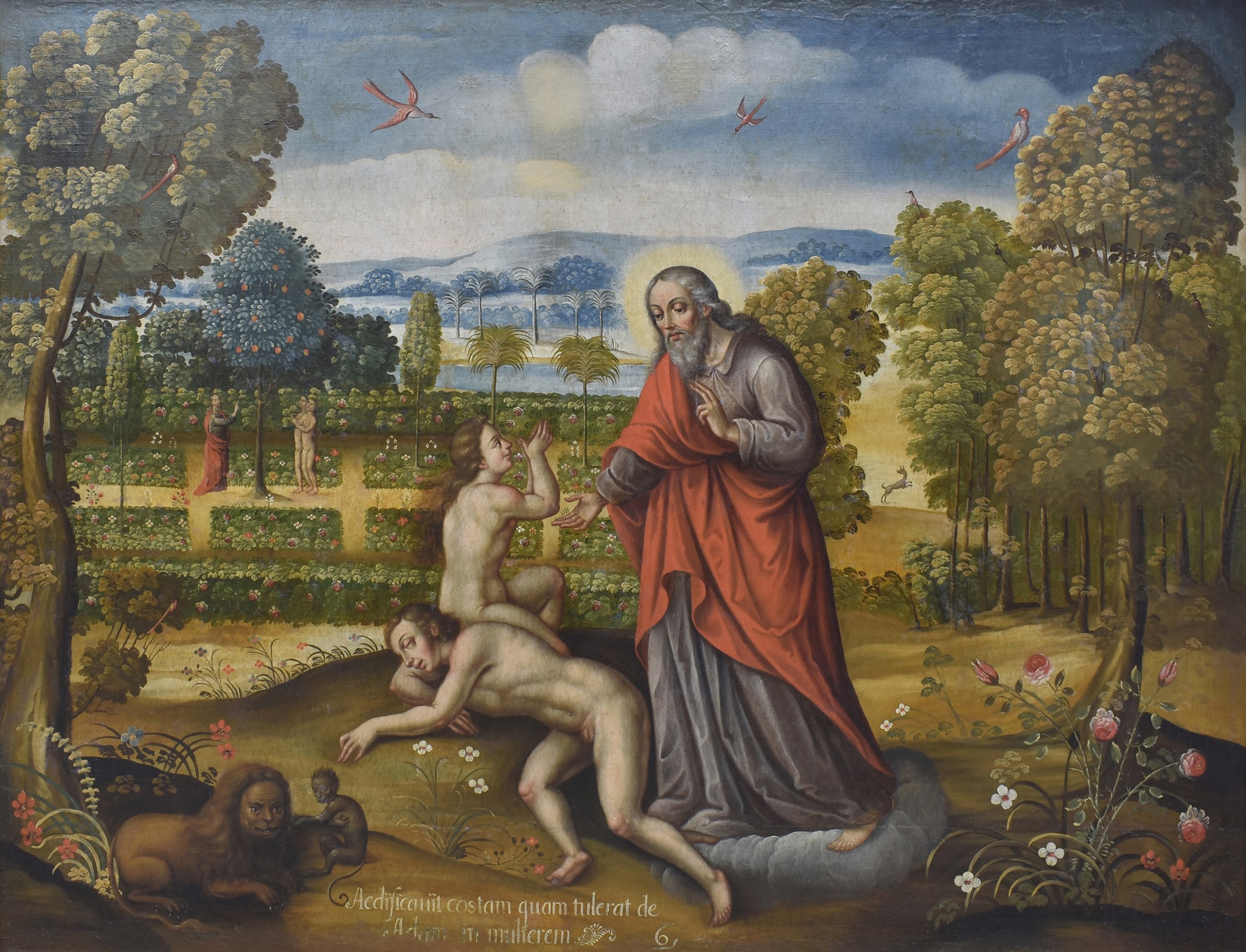
Anonymous author, The Creation of Adam & Eve (17th century), oil on canvas, Collection of the Ministry of Culture of Peru

Have you ever had feelings like those Samaritans must have had before Philip visited them with the Gospel? Have you ever felt that you were not good enough to receive the gifts of the Lord? Have you ever looked at another person in the Church and wished you could be half as good as he or she is? Perhaps we have all felt that way at various times throughout our lives. This reading tells us that in the eyes of God we are good enough. He makes us good enough. He calls us to faith, and then showers us with the gifts of faith. The joy that the Samaritans had is our joy. We are loved by God. He gave us His very life. He gave us his very spirit, the Holy Spirit. Many of us are still bogged down in the negative self images we suffered from during our adolescence or our teenage years. Some of these negative images are due to our not meeting our own unreal expectations. Sadly, some of the negative attitudes of our lives have been forced on us by people whom we should respect but who have treated us with disrespect. Perhaps it has been conveyed to us that we are a disappointment to our parents, our teachers, our employers, or even, for those who are married, to their spouses or their children. We are precious in the eyes of God. We are also precious in the eyes of all who truly proclaim God. It is a mistake for me to compare myself with other priests. It is wrong for you to compare yourselves with other people at whatever stage of life you are in. It is a mistake for parents to compare themselves with other parents, for men to compare themselves with other men, for women to compare themselves with other women. We are individuals, not clones. It is wrong for any of us to think, as the Samaritans must have thought, that we are not as good as others.

God loves each of us for whom we are, not for what we think we should be like. He loves us for whom He created us to be. We are created in the image and likeness of God; yet in the mystery of God’s creation, each of us is a unique reflection of this image and likeness. He loves us for whom we are. We are not rejects. We are not half breeds, only part Christians. We are precious, precious in the eyes of God, and precious in the eyes of all those who really love the Lord. And He gave us His Son. We possess Jesus Christ. In the Gospel reading Jesus says, «I am in the Father. You are in me, and I am in you.» We are not orphans. We are not alone in the world. We are not rejects from the society that matters. For the society that matters is the Kingdom of God. Every other society has value only to the degree that it participates in the Kingdom of God. We belong to God. He belongs to us. “I am in the Father. You are in me, and I am in you.” The Samaritans embraced the New Way, embraced Jesus because He first embraced them through the teaching of Philip. This is the way of Grace. Grace always begins with God’s gifts of love. It reaches its goal when we respond by loving God in return. We have received grace. God has showered us with His love. Now He calls us to give witness to the world that His love is real. We can do this. We can proclaim Jesus Christ with our lives. We are good enough, plenty good enough. We are sons and daughters of God • AE


Fr Agustin´s Schedule for the Sixth Sunday of Easter of 2023

Saturday May 13

11.00 a.m. First Communion

3.00 p.m. Sacrament of Reconciliation (Confessional)

5.00 p.m. Holy Mass

Sunday May 14

7.30 a.m. Holy Mass

10.00 a.m. Holy Mass


VI Domingo del Tiempo de Pascua (Ciclo A)

Hay algo que no siempre se señala al estudiar la crisis religiosa de nuestros días. Unos se alejan de la religión, otros la han reducido al mínimo, no pocos viven una fe apagada. Pero, con frecuencia, todo esto se está produciendo sin que las personas se planteen de forma consciente qué actitud quieren adoptar ante Dios y por qué. Se actúa casi siempre sin criterios de referencia. Por otra parte, es fácil observar que muchas veces se habla de Dios como de oídas, es decir, no hay experiencia personal. Olvidamos, que diria W. Schmidt, que «la religión sólo puede captarse con verdad desde dentro», por eso es que corremos el peligro de hablar de ella «como hablaría un ciego de los colores». La fe en Dios se puede debilitar o apagar de muchas maneras, pero sólo conozco un camino para reavivarla: la oración personal. Ese ponerse ante Dios en silencio y a solas. No sé de nadie que haya vuelto a Dios sin haberlo escuchado como amigo en el fondo de su ser. La fe se despierta cuando la persona invoca a Dios, lo busca, lo llama, lo interroga, lo desea. Y es que Dios no se oculta a quien lo busca así. Más aún. Está ya presente en esa búsqueda. El hermoso texto del evangelio de este domingo, el sexto dentro del tiempo de Pascua, nos recuerda que dentro de nosotros vive un Defensor que está siempre con nosotros y nos alienta y nos anima. Es el Espíritu de Dios. El mundo no lo ve ni lo conoce, pero él vive con los creyentes y está con ellos. Hay, sin duda, muchos caminos para encontrarse con Dios, pero todos ellos llevan a él sólo si escuchamos en nuestro interior a ese Espíritu de la verdad y mantenos una converesación con él. Eso: café y conversación. Es Domingo • AE


Salve Madre

Salve, Madre, en la tierra de mis amores

te saludan los cantos que alza el amor.

Reina de nuestras almas, flor de las flores,

muestra aquí de tu gloria los resplandores,

que en el cielo tan sólo te aman mejor.

Virgen Santa, Virgen pura, vida, esperanza y dulzura

del alma que en ti confía, Madre de Dios, Madre mía,

mientras mi vida alentare, todo mi amor para ti,

mas si mi amor te olvidare, Madre mía, Madre mía,

aunque mi amor te olvidare tú no te olvides de mí •


Fifth Sunday of Easter (Cycle A)

In today’s second reading St. Peter talks about rocks. He first says that Jesus is a stone, a rock, but not an inanimate mineral. He says that Jesus is a living rock. How can a rock be alive? That must have seemed absurd to the people who first heard or read this. Peter makes an even seemingly crazier assertion: not only is Jesus a living stone, but his followers are also called to be living stones. What does Peter mean by this? Or, more properly, what is the Holy Spirit saying through Peter? When Peter called Jesus the living stone, he particularly referred to the cornerstone of the building, the stone that unites all the other stones. We are called to be living stones, stones that unite all other stones together to form the Building of the Lord, the Church. We are living stones. We have Dignity. We have received dignity from the Lord. We have been chosen by God. We are the building that is the church.

Like our Lord our lives have to be intertwined with all those around us. The cornerstone connects the walls of a building. It supports the walls. We have to be people who connect others to God. We have to be people who support others. Our Christian charity is a statement of who we are. We are followers of the One who is the Living Rock. As living rocks ourselves we support and strengthen each other and all others. The Church is the building of the spirit of God. We are the Church. Jesus is the great high priest who was rejected by the status quo and thrown out of the Temple. He was crucified outside the city. We are rejected by the intellectually arrogant atheists who control so much of our media and society. We are thrown out of the City of Man and laughed at as naive remnants of an ignorant age. But we remain here in the City of God. We are a holy priesthood, people carrying on the priestly ministry by making God present to others and others present to God.  What dignity we have! We have the dignity of Jesus Christ. We need to walk through this world with our heads held up high. We need to proclaim to all the people of the world that the gifts of the Father, the special place set aside for his followers, is offered also to them. We cannot be pet rocks that really do nothing. No, we are called to be the living stones of an eternal home • AE


Fr Agustin´s Schedule for the Fifth Sunday of Easter of 2023

Saturday May 6

3.30 p.m. Sacrament of Reconciliation (Confessional)

5.00 p.m. Holy Mass

Sunday May 7

10.00 a.m. Holy Mass

12.30 p.m. Holy Mass

3.00 p.m. Santa Misa


V Domingo del Tiempo de Pascua (Ciclo A)

Los cristianos de la primera y segunda generación probablemente no llegaron a pensar que con ellos estaba naciendo una religión. De hecho, no sabían con qué nombre designar a aquel movimiento que iba creciendo de manera insospechada. Todavía vivían impactados por el recuerdo de Jesús al que sentían vivo en medio de ellos. Por eso los grupos que se reunían en ciudades como Corinto o Éfeso comenzaron a llamarse «iglesias», es decir, comunidades que iban creciendo y haciéndose fuertes en una misma fe, la fe en Jesús. En otras partes, al cristianismo lo llamaban «el camino». La (preciosa) Carta a los hebreos dice que es un «camino nuevo y vivo» para enfrentarse a la vida. El camino inaugurado por Jesús y que hay que recorrer con los ojos fijos en él. De esto no hay duda alguna. Para estos primeros creyentes, el cristianismo no era propiamente una religión sino una forma nueva de vivir. Lo primero para ellos no era vivir dentro de una institución religiosa, sino aprender juntos, a vivir como Jesús o con el estilo de vida de Jesús en medio del imperio Romano. Ahí estaba su fuerza. Esto era lo que podían ofrecer a todos. De ahí podríamos entender mejor las palabras que el evangelista pone boca del Señor: «Yo soy el camino, la verdad y la vida». Este es el punto de arranque del cristianismo. Cristiano es un hombre o una mujer que en Jesús va descubriendo el camino más acertado para vivir, la verdad más segura para orientarse, el secreto más esperanzador de la vida. Este camino es muy concreto. De poco sirve sentirse conservador o declararse progresista. La opción que hemos de hacer es otra. O nos organizamos la vida a nuestra manera, o aprendemos a vivir desde Jesús. O es blanco, o es negro, en realidad no hay gris. Es preciso elegir:  Indiferencia hacia los que sufren, o compasión bajo todas sus formas. Sólo bienestar para mí y los míos, o un mundo más humano para todos. Intolerancia y exclusión de quienes son diferentes, o actitud acogedora hacia todos. Olvido de Dios, o comunicación confiada en el Padre de todos. Fatalismo y resignación o esperanza última para la creación entera. Son muchas las preguntas y solo una es la respuesta: Jesucristo, Camino, Verdad y Vida • AE