

Rembrandt, Head of Christ (1648), oil on panel, Gemaldegalerie (Berlin)
Today’s second reading, from the sixth chapter of St. Paul’s Letter to the Romans is the new Testament reading during the Solemn Easter Vigil, and emphasizes our role in the Easter Mystery. We are not just observers of the historical event of the Lord’s death and resurrection. We are participants. Our baptism is a baptism into his death. The water poured over us signifies a death to the world without God. As Christ rose from the dead, we, at our baptism, embrace a new life, His Life. The resurrection of the Lord has changed everything for us. Through Baptism we have a spiritual life. Our physical lives are temporary. We all die. But our spiritual life that is eternal. It cannot be taken from us. It can only be surrendered by us. Our lives have been transformed. We are intimately united to Jesus Christ. We need to keep this in mind when we find ourselves getting all caught up in the events taking place around us. We have to view everything from the perspective of Jesus Christ. We need to ask ourselves, “How can we transform the mundane events of the world into celebrations of the Lord’s love?” Our relationship to the Lord must be the center and the foundation of all the relationships of our lives. Next to it, all other relationships are secondary, even those relationships that carry the greatest impact in our lives. Jesus Christ must be the center and goal of these relationships. If He is not, then even our most cherished relationships are destructive instead of life giving. It is what Jesus is saying in the Gospel reading, “Whoever loves father or mother more than me is not worthy of me, and whoever loves son or daughter more than me is not worthy of me.” The love we experience in our families has to reflect the deep love we have for our Lord. If it does not, then that love is not real love. Any love that does not make Jesus Christ present, is not true love. It ultimately is a selfish love. So what Jesus is saying in that difficult passage is that he must be at the center of our love, our love for our parents, our love for our children, the love of husbands and wives, and our love for each other. Furthermore, the love of Jesus Christ is sacrificial love. It is a love that puts the other before the self. If we do not love that way, then we are really not loving at all, but are taking for ourselves. But when we put others before ourselves, then the Presence of Christ becomes real in our world. It is easy for us to slip into selfishness. So, what is the reason for the living of your life, of my life? What is the reason for being of your life, of my life? What motivates us? What give meaning to our lives? The answer to these questions is Jesus Christ. Are we not aware of what happened at our baptism and what continues to happen as we live the Christian life? We are transformed by the Love of God! • AE

Schedule for the Thirteenth Sunday in Ordinary Time

Saturday July 1, 2023
3.30 p.m. Sacrament of Reconciliation (Confessional; Fr. Agustin Estrada)
Sunday July 2, 2023
7.30 a.m. Fr. Agustin Estrada
10.00 a.m. Fr. Agustin Estrada
12.30 p.m. Fr. Jaime Paniagua, new pastor.
3.00 p.m. (Misa en Español), Fr. Jaime Paniagua, new pastor.
XIII Domingo del Tiempo Ordinario (Ciclo A)
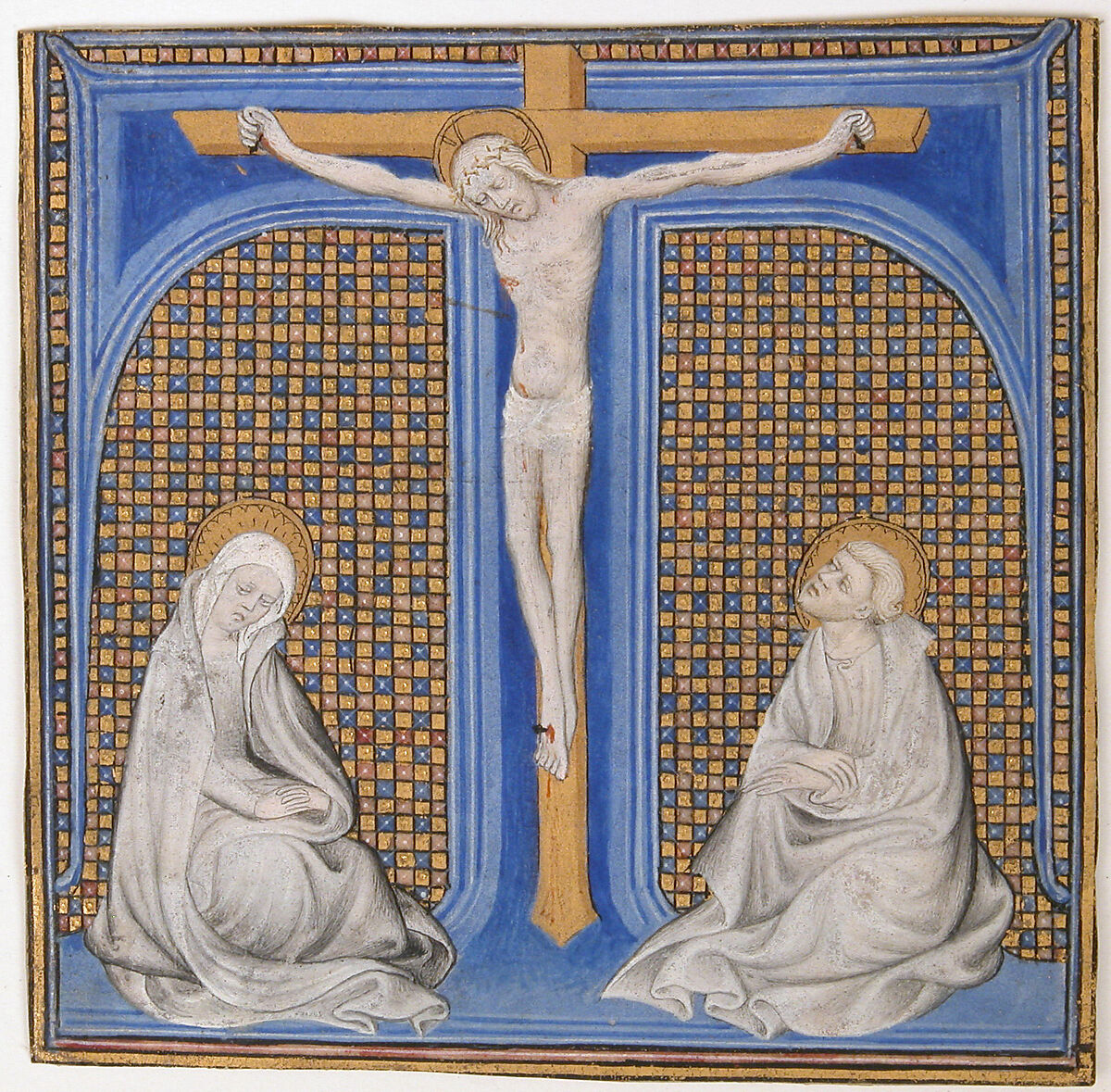
Autor anónimo, Cristo en la Cruz, manuscrito iluminado S. XV, Metropolitan Museum of Art (New York)
El gran riesgo de hoy es que los cristianos pasemos de una religión que tiene su centro en la cruz de Cristo una especie de espiritualidad del bienestar. Decía Reinhoid Niebuhr que corremos el riesgo de vivir una fe sin agujón, que predica a un Dios sin cólera que conduce a unos hombres sin pecado hacia un reino sin juicio por medio de un Cristo sin cruz. El peligro es real y lo hemos de evitar. Insistir en el amor incondicional de un Dios Amigo no ha de significar nunca fabricarnos un Dios a nuestra conveniencia, el Dios permisivo que legitime una religión burguesa, como decía Metz. Ser cristiano no es buscar el Dios que me conviene y me dice que sí a todo, sino el Dios que, precisamente por ser Amigo, despierta mi responsabilidad y, más de una vez, me hace sufrir, gritar y callar. Descubrir el evangelio como fuente de vida y estímulo de crecimiento sano no significa entender la fe cristiana como una inmunización frente al sufrimiento. El evangelio no es un complemento tranquilizante para una vida organizada al servicio de nuestros fantasmas de placer y bienestar. Cristo hace gozar y hace sufrir, consuela e inquieta, apoya y contradice. Sólo así es camino, verdad y vida. Creer en un Dios Salvador que, ya desde ahora y sin esperar al más allá, busca liberamos de lo que nos hace daño, no ha de llevarnos a entender la fe cristiana como una religión de uso privado al servicio de los propios problemas y sufrimientos. El Dios de Jesucristo nos pone siempre mirando al que sufre. El evangelio no centra a la persona en su propio sufrimiento sino en el de los otros. Sólo así se vive la fe como experiencia de salvación. En la fe como en el amor todo suele andar muy mezclado: la entrega confiada y el deseo de posesión, la generosidad y el egoísmo. Por eso, no hemos de borrar del evangelio esas palabras de Jesús que, por duras que parezcan, nos ponen ante la verdad de nuestra fe: «El que no toma su cruz y me sigue, no es digno de mí. El que encuentre su vida, la perderá y el que pierda su vida por mí la encontrará» • AE
 LA MEDITACION DE LA ESPOSA