
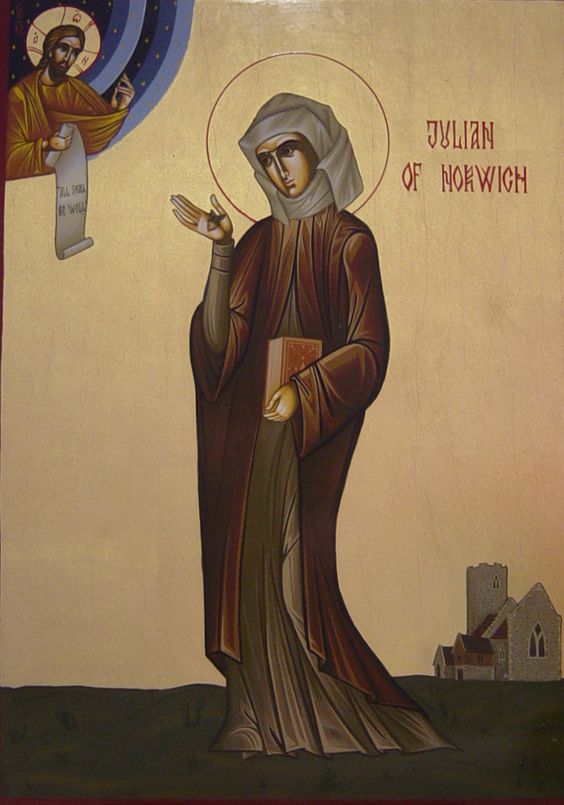
The Gospel tells us to be united to the Lord, to turn our burdens over to him and to allow him to refresh us. We need to turn everything over to the Lord: our feelings of being overwhelmed with financial burdens, the down times in our relationships, the boring aspects of our jobs, our continual concern for our children, our concern for our parents or our children or our own health. We need to turn it all over to the Lord and be at peace. We need to have faith that no matter what happens, if we have union with the Lord, as Julian of Norwich, that mystic of the late fourteenth and early fifteenth century wrote, «All shall be well, and all shall be well, and all manner of things shall be well.» The first reading, from the prophet Zechariah, tells us to rejoice because the Savior has come. God is not far away from us. He is right here, in our hearts. The saints, even the martyrs, especially the martyrs, were people of joy. It is said that the martyrs marched into the Coliseum singing. No matter what happened to them, they died at peace. St. Ignatius of Antioch, who lived from 32 to 120, was the bishop of what was at that time the second largest city in the Roman Empire. He wrote to the various Christian communities to be strong and courageous in the faith. When Ignatius was quite elderly, he was arrested and put to the test. Either offer incense to the Emperor and deny Christ, or be killed. He would not turn from the Lord. Ignatius was found guilty of being a Christian, and sentenced to be killed by the wild animals in the Colosseum in Rome. Rome was far away from Antioch, so it would be a long trip of two to three years for the elderly Ignatius and the soldiers guarding him. There were many Christians who wanted to save him. The Roman soldiers could easily be bribed to release him. A judge could be bought to overturn the verdict. But Ignatius wrote to those Christians and told them not to interfere. He valued it a gift to be allowed to suffer for being a Christian. He pleaded with them to allow him to die in joy. We believe that God became one of us to join us in our turmoil so he could lead us to the joy of his peace. «But, Father,» you might say. «You have no idea of the grief I have. A loved one has died recently. Am I not to grieve, not to cry?» No, grieve, cry! That is a sign of the love you have. No one cries over the death of someone they did not love. But remember, in your grief, your inner turmoil, remember that the life of your loved one is transformed, not ended. Mourn missing him or her here, but know that your loved one is in the peace and love of Jesus Christ. Even in sorrow we Christians have fundamental joy. The Lord says, «Come to me all you who are weary with life, and I will give you rest.» Yes, we commemorate the Passion of the Lord solemnly during Lent. But the tears of Good Friday magnify the joy of Easter Sunday. We are the Easter people, filled with the joy of the Risen Lord! Death has been defeated by eternal life. We should not be so somber, so serious, so negative, so out and out gloomy. Maybe some of us, beginning with priests, need this reminder: if your heart is filled with the joy of the Lord, kindly tell it to inform your face. The presence of the Lord brings joy, peace and refreshment to the soul • AE

St. Dominic Catholic Church •
Fourteenth Sunday in Ordinary Time

Saturday July 8, 2023
3.30 p.m. Sacrament of Reconciliation (Confessional) Fr. Agustin
5. 00 p.m. Fr. Jaime Paniagua
Sunday July 9, 2023
7.30 a.m. Fr. Jaime
10.00 a.m. Fr. Jaime
12.30 p.m. Fr. Agustin
3.00 p.m. Fr. Agustin (Misa en Español).
XIV Domingo del Tiempo Ordinario (Ciclo A)

G. Seurat, Tarde de domingo en la isla de la Grande Jatte (1884), óleo sobre tela, Art Institute (Chicago)
Hay cansancios típicos en la sociedad actual que no se curan con las vacaciones. No desaparecen por el mero hecho de irnos a descansar unos días. La razón es sencilla. Las vacaciones pueden ayudar a rehacemos un poco, pero no pueden darnos el descanso interior, la paz del corazón y la tranquilidad de espíritu que necesitamos. Hay un primer cansancio que proviene de un activismo agotador. No respetamos los ritmos naturales de la vida. Hacemos cada vez más cosas en menos tiempo. De un día queremos sacar dos. Vivimos acelerados, en desgaste permanente, deshaciéndonos cada día un poco más. Ya llegarán las vacaciones para «cargar pilas». Es un error. Las vacaciones no sirven para resolver este cansancio. No basta desconectar de todo. A la vuelta de vacaciones todo seguirá igual. Lo que necesitamos es no acelerar más nuestra vida, imponernos un ritmo más humano, dejar de hacer algunas cosas, vivir más despacio y de manera más descansada. Hay otro tipo de cansancio que nace de la saturación. Vivimos un exceso de actividades, relaciones, citas, encuentros, comidas. Por otra parte, el contestador automático, el móvil, el ordenador, el correo electrónico facilitan nuestro trabajo, pero introducen en nuestra vida una saturación. Estamos en todas partes, siempre localizables, siempre conectados. Ya llegarán las vacaciones para desaparecer y perdernos. Otro error. Lo que necesitamos es aprender a ordenar nuestra vida: elegir lo importante, relativizar lo accidental, dedicar más tiempo a lo que nos da paz interior y sosiego. Hay también un cansancio difuso, difícil de precisar. Vivimos cansados de nosotros mismos, hartos de nuestra mediocridad, sin encontrar lo que desde el fondo anhela nuestro corazón. ¿Cómo nos van a curar unas vacaciones? No es superfluo escuchar las palabras del Señor este domingo (domingo de verano, por cierto): «Vengan a mí los que están cansados y agobiados y yo los aliviaré». Hay una paz y un descanso que sólo se puede encontrar en el misterio de Dios acogido en Jesús • AE
Lecturas para el Verano

 LA MEDITACION DE LA ESPOSA