

The big question for this weekend could be: What we have to do to have that rich and fertile soil that Jesus mention in the gospel today? The best way is through prayer, of course. Without prayer, without a genuine prayerful life, we will be easily persuaded, tempted and finally turned away from God and His path. This warm morning of July, in the middle of Ordinary Time, in the middle of the summer … let’s go a little further; let’s take more step asking ourselves a personal, intimate, and honest question: What can I do to make my soul become rich and fertile soil? What must I do so that my heart is well prepared to receive the seed of the Word of God? We must return to a topic in which, perhaps, we have not gone deep: silence. Silence is the beginning of spiritual life. Silence is a good medicine for mind, body, And inner world. Silence is a good remedy for anxiety; silence helps improve relationships with others; silence helps, above all, to listen to the voice of conscience. If we do not cultivate this silence, how can we find God? Let´s be honest: We barely have silence in our lives, from the beginning to the last hours of the day we listen to rumors, news, radio, cell phone, music, We live wrapped in noise. So, where’s the solution? How to break that addiction to noise that we have? What is the recipe for achieving silence? Well, keeping silent is not a spontaneous or natural attitude. It demands a decision and a purpose. To enter into silence, FIRST we must want it, and SECOND we must know why we want it. If we intend to become men and women of silence, we must assume responsibility for our quest. Actually silence is a peaceful listening of the heart that allows God to enter through all its doors. Again: silence is a tranquil listening of the heart that allows God to enter through all its doors. If we really want God to enter into our life, we must spend time every day in silence. That could be the opening of the soil preparation In order to receive the seed. So, let’s try this sometime this week we start today. Let us stop everything and pause for… 60 seconds. 60 seconds in silence, not looking at our phone, but simply… in silence. This is a very small action, and it may seem silly to you, but it may be the beginning of a great bonfire, a silent bonfire that warms our inner world • AE

St. Dominic Catholic Church •
Fifteenth Sunday in Ordinary Time

Saturday July 15, 2023
2.30 p.m. Sacrament of Matrimony for Alessandra and Abram (Fr. Agustin)
4.00 p.m. Sacrament of Reconciliation (Confessional) Fr. Agustin
5. 00 p.m. Fr. Agustin
Sunday July 9, 2023
7.30 a.m. Fr. Agustin
10.00 a.m. Fr. Agustin
12.30 p.m. Fr. Jaime
3.00 p.m. Fr. Jaime (Misa en Español)
XV Domingo Del Tiempo Ordinario (Ciclo A)
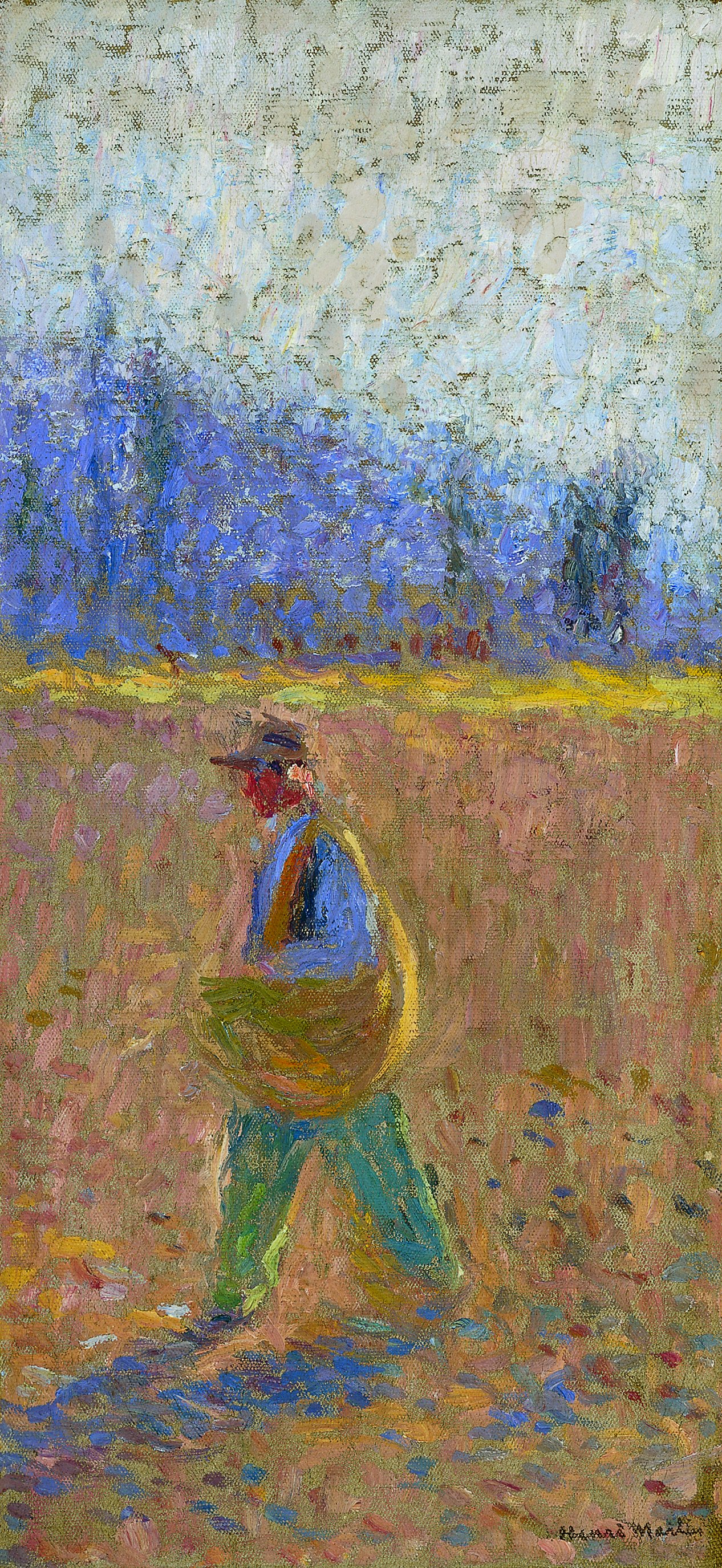
H. Martin, El Sembrador (1914), óleo sobre tela, Museo Nacional Tyssen-Bornemiza (Madrid)
Al terminar el relato de la parábola del sembrador, Jesús hace esta llamada: “El que tenga oídos para oír, que oiga”. Se nos pide que prestemos mucha atención a la parábola. Pero, ¿en qué hemos de reflexionar? ¿En el sembrador? ¿En la semilla? ¿En los diferentes terrenos? Tradicionalmente, los cristianos nos hemos fijado casi exclusivamente en los terrenos en que cae la semilla, para revisar cuál es nuestra actitud al escuchar el Evangelio. Sin embargo es importante prestar atención al sembrador y a su modo de sembrar. Es lo primero que dice el relato: “Salió el sembrador a sembrar”. Lo hace con una confianza sorprendente. Siembra de manera abundante. La semilla cae y cae por todas partes, incluso donde parece difícil que la semilla pueda germinar. Así lo hacían los campesinos de Galilea, que sembraban incluso al borde de los caminos y en terrenos pedregosos. A la gente no le es difícil identificar al sembrador. Así siembra Jesús su mensaje. Lo ven salir todas las mañanas a anunciar la Buena Noticia de Dios. Siembra su Palabra entre la gente sencilla que lo acoge, y también entre los escribas y fariseos que lo rechazan. Nunca se desalienta. Su siembra no será estéril. Desbordados por una fuerte crisis religiosa, podemos pensar que el Evangelio ha perdido su fuerza original y que el mensaje de Jesús ya no tiene garra para atraer la atención del hombre o la mujer de hoy. Ciertamente, no es el momento de “cosechar” éxitos llamativos, sino de aprender a sembrar sin desalentarnos, con más humildad y verdad. No es el Evangelio el que ha perdido fuerza humanizadora, somos nosotros los que lo estamos anunciando con una fe débil y vacilante. No es Jesús el que ha perdido poder de atracción. Somos nosotros los que lo desvirtuamos con nuestras incoherencias y contradicciones. El Santo Padre Francisco dice que, cuando un cristiano no vive una adhesión fuerte a Jesús, pronto pierde el entusiasmo y deja de estar seguro de lo que transmite, le falta fuerza y pasión. Y una persona que no está convencida, entusiasmada, segura, enamorada, no convence a nadie. Evangelizar no es propagar una doctrina, sino hacer presente en medio de la sociedad y en el corazón de las personas la fuerza humanizadora y salvadora de Jesús. Y esto no se puede hacer de cualquier manera. Lo más decisivo no es el número de predicadores, catequistas y enseñantes de religión, sino la calidad evangélica que podamos irradiar los cristianos. ¿Qué contagiamos? ¿Indiferencia o fe convencida? ¿Mediocridad o pasión por una vida más humana? • AE

+ lEcTurAs para el vErAno



 LA MEDITACION DE LA ESPOSA